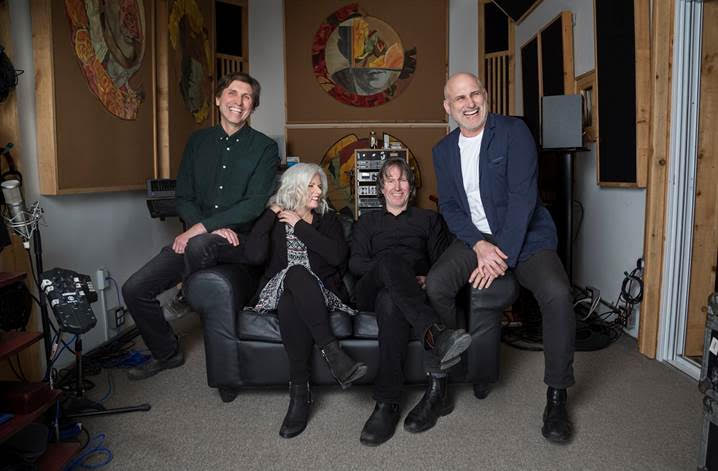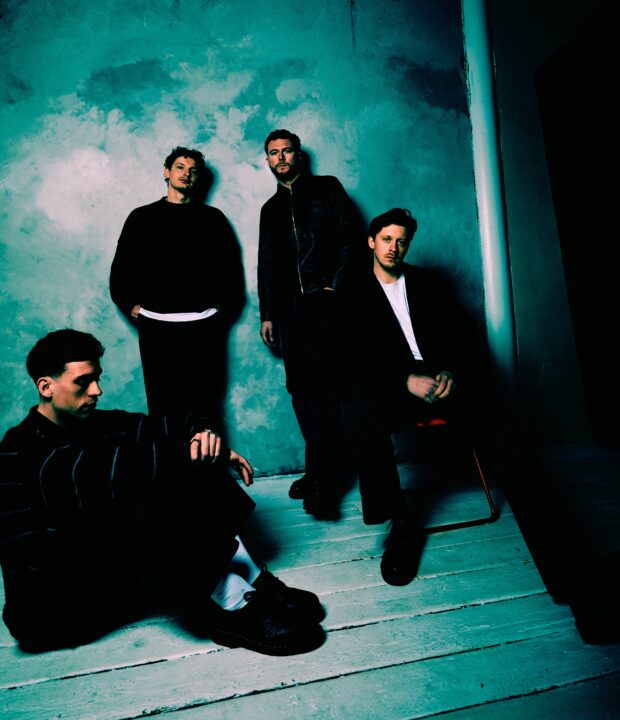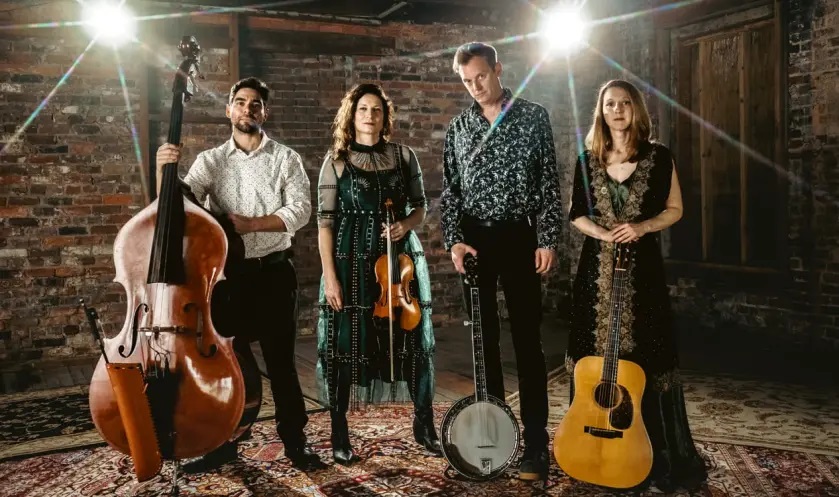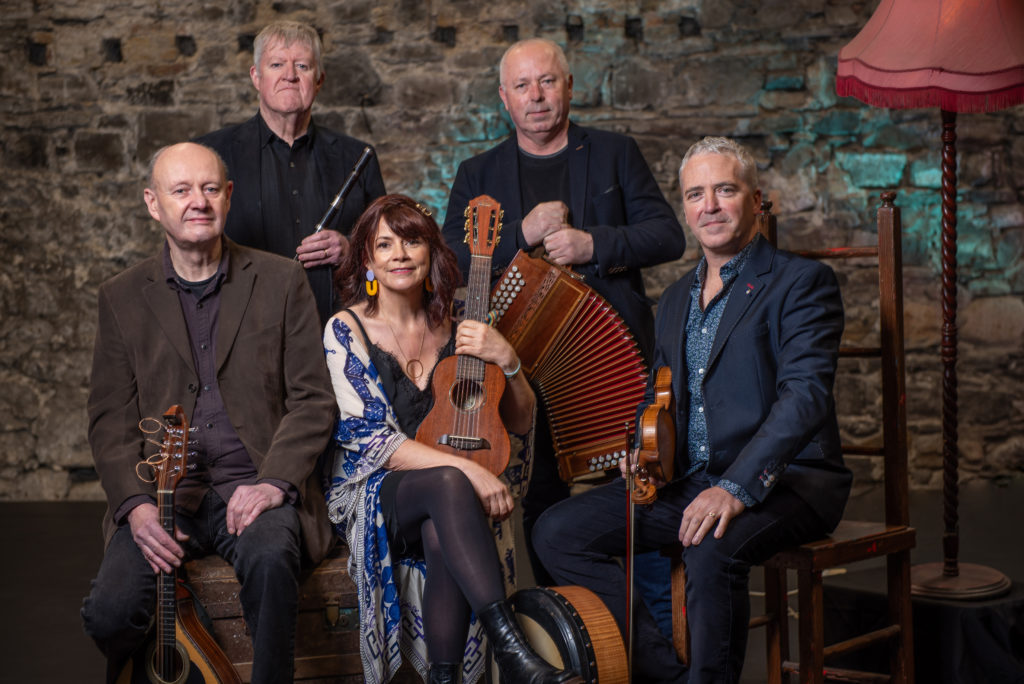
IRISH folk band The Jeremiahs make their York debut tomorrow night at the National Centre of Early Music on the second night of a six-date tour.
“We’ve played the Swaledale Festival in North Yorkshire, but this will be our first time in York,” says singer and occasional whistle player Joe Gibney, whose tour is supported by Culture Ireland.
“We’re putting a route together around the UK, where we’ve played a lot, and lovely York came out second on our list, so we’re playing there on the second night.” Newcastle tonight, Cardiff, on Thursday, Crediton in Devon on Friday, Chidham on Saturday, and Woodbridge on Sunday complete the travels.
Joining Joe on that intense itinerary will be fellow founder James Ryan, from County Kildare, on guitar, New York-born Mat Mancuso, on fiddle and vocals, and Conor Crimmins, from County Clare, on flute.
“The Jeremiahs were formed by James and myself in 2013 and we had two French lads playing with us, one for seven and a half years in fact, but they were settling down and wanted to do less travelling. Mat joined two and a half years ago,” says Joe. “Though he’s from New York, he lives in Armagh, and people on the Irish music circuit recommended to us. It’s worked out well for us.”
The Jeremiahs are a band regularly on the move. “We’ve travelled a lot, playing Denmark, Germany and the USA, where we go three or four times a year, like playing upstate where you can play two or three gigs within two or three hours of each other,” says Joe.
“We must have played 26 states in The USA so far. Everybody wants to be Irish, and when you trace back, there are a lot of Irish roots there. It’s great to keep going across the Pond. There might be some jetlag, but I’m not complaining!”
Looking ahead tomorrow’s set list for an early-December gig, Joe says: “We might put a couple of Christmas songs in there, a couple of nice Christmas Carols, without changing the set too much. The lads might try to get me to wear a Santa hat, but I might put my foot down.”
The set will feature predominantly The Jeremiahs’ own material but with a nod to tradition too. “We like to write our own songs and tunes, but we’re mindful that there’s so much good stuff out there that we usually pick songs that we like too – and the audiences agree with our choices!” says Joe.
“The last Jeremiahs’ album [Misery Hill & Other Stories] came out in 2023 with nine originals and one cover version on it, so it’s usually 80 per cent originals and 20 per cent covers in the shows. We also like to do 60 per cent songs to 40 per cent tunes, so there are a good few instrumentals in there, as there are thousands and thousands of traditional tunes around.
“It’s a chance for me to step off stage and let the lads do what they like to do, and you can see the joy they get from that, as I sit at the side of the stage watching them.”
Should you wondering why they are called The Jeremiahs, here is Joe’s explanation. “When we started back in 2013, we didn’t have a name, so we temporarily chose The Jeremiahs, as James’s grandfather was called Jeremiah,” he says. “At the time, we had long beards, so people thought we must be Amish, but we’ve stuck with it and people seem to like our ‘temporary’ name for 12 years now!”
Putting Joe on the spot as to why Irish music is so popular across the globe, he says: “It’s hard to say why. People have tried to put their finger on it. I think there’s a simplicity to it that’s not taking away from the technicality, but it’s so catchy, like all those melodies in the songs of The Dubliners. Sometimes it’s just nice to have that melody there.
“There are 70 million Irish passport holders across the wold, and with that Irish diaspora, you can imagine the impact that has had on bringing Irish music to all corners. There’s even a Japanese band called Pinch Of Snuff who come to Ireland to play trad Irish music – and they look good too!”
The Jeremiahs play National Centre for Early Music, St Margaret’s Church, Walmgate, York, on December 3 at 7.30pm. Box office: 01904 658338 or ncem.co.uk.
Ellie Gowers at Rise: “Brightening even the most colourless winter evenings”. All pictures: Paul Rhodes
LIKE sundew on her beloved Dartmoor, Ellie Gowers’ music can brighten even the most colourless winter evenings.
Gowers is a regular in York (she was last here as one of the Magpies at the NCEM on November 1). This time around she had found time for glider ducking at Sutton Bank and, before that, a recording session with this evening’s opener Gary Stewart.
Hearing Stewart sing is always a treat, his light Scottish burr and mellow finger-picking guitar beaming directly from that halcyon 1970s’ era of singer-songwriters.
Gary Stewart: Opening November 30’s gig at Rise
It wasn’t his finest hour, in truth, but even in ruffled form there were gems. Use It Or Lose It (recorded that very day with Gowers) was the best of them, somehow combining Paul Simon wisdom with a love of Hornsea mugs. Nothing, sadly, from his wonderful lockdown creation, Lost, Now Found.
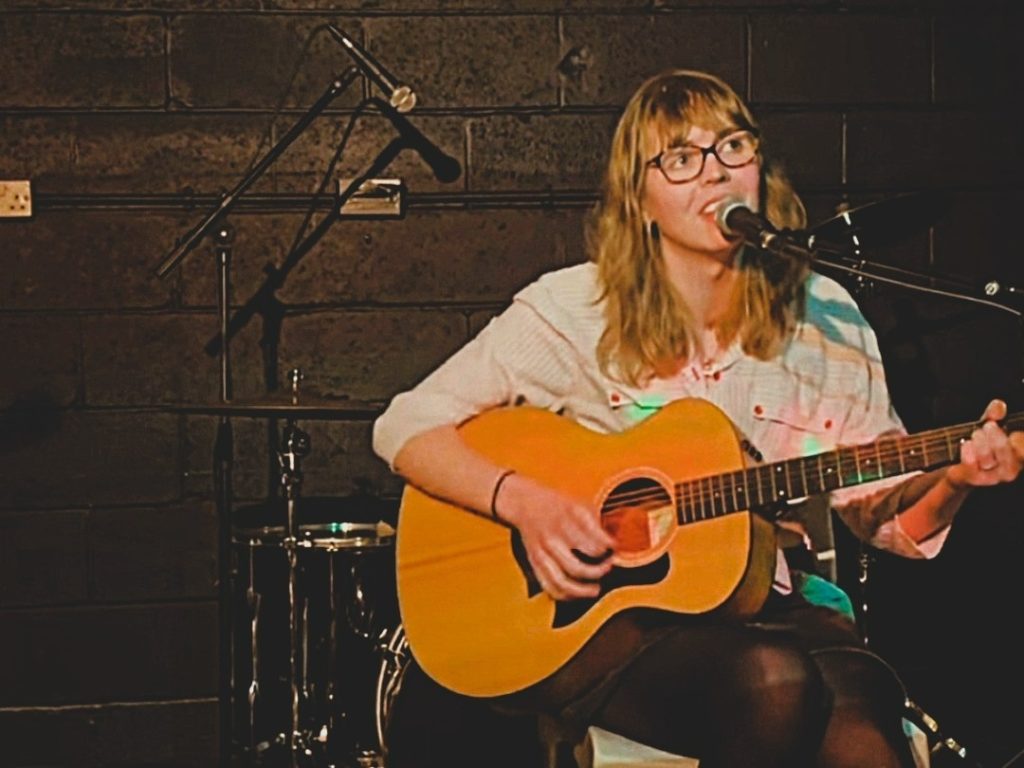
As a performer and impresario, Gowers’ confidence on stage has come on apace. She was totally in control of her surroundings, very comfortable talking and tuning (while not standing on her tiptoes). The 50-minute, eight-song set was just right for showcasing her new EP You, The Passenger before the rapt crowd.
Ellie Gowers defending the right to roam in The Stars Are Oursat Rise
The EP takes a different direction from her full album, Dwelling By The Weir’s set of folk songs from her native Warwickshire. No cuts from that; instead, we found Gowers in singer-songwriter mode.
While using Joni Mitchell as a comparison is normally far-fetched, there were echoes of the Canadian’s For The Roses album. It’s a personal record (not Blue personal), in part inspired by her visits to Nova Scotia. A Moment was a more muscular performance, while I Can Be Right For You was beautifully sung and plaintive.
The brightest moment in the set was her anthem to defend the right to roam, The Stars Are Ours, a stellar clarion call for freedom, which sees Gowers transcend her influences. Definitely a name to watch as her star ascends.
Review by Paul Rhodes
The Magpies’ Ellie Gowers performing solo at Rise@Bluebird Bakery
The deep freeze: Snow goes underground in A Winter Wonderland at JORVIK Viking Centre
A FESTIVE trail, treasured exhibition and snow reboot, pantomime and A Christmas Carol spell out that winter staples aplenty are up and running, as Charles Hutchinson reports.
Time travel of the week: A Winter Adventure at JORVIK Viking Centre, York, until February 22 2026
A WINTER Adventure brings a new wintery experience to the underground York visitor attraction, where the 10th century Vikings are preparing to celebrate Yule with natural decorations hung on their houses. For the first time, visitors can peer through Bright White’s time portal into the blacksmith’s house excavated on this site in the 1970s, seeing what it would have been like to live there.
They will then board a time sleigh to travel back in time around the backstreets, transformed for winter by Wetherby set dressers EPH Creative, who have covered streets and houses in a thick blanket of snow, bathed in cold blue lighting.Pre-booking is essential for all visits to JORVIK at jorvikvikingcentre.co.uk.
Christmas at The Bar Convent. Illustration by Nick Ellwood
Activity trail of the week: Christmas At The Convent, The Bar Convent Living Heritage Centre, Blossom Street, York, until December 22, Monday to Saturday, 10am to 5pm, last admission 4pm
DECEMBER visitors to The Bar Convent can uncover fascinating festive traditions through the centuries in a family-friendly activity trail through the exhibition that combines the convent’s history with the Advent season.
Families can enjoy finding clues, making decorations, dressing up, discovering traditions from Christmas past and much more. Look out for the traditional crib scene in the chapel. Tickets: barconvent.co.uk.
Garlands galore at An Inspired Christmas at Treasurer’s House, York. Picture: National Trust, Anthony Chappel-Ross
Festive exhibition of the week: An Inspired Christmas at Fairfax House, York, until December 21,open Saturday to Wednesday, 11am to 4pm, last entry 3.30pm
TREASURER’S House has undergone a winter transformation, where stories of its past residents come to life through handcrafted decoration as rooms are re-imagined by the National Trust with festive flair, inspired by the 17th-century house’s rich history.
Each room is styled to reflect the personalities and tales of those who once called Treasurer’s House home, from last occupant Frank Green, the visionary industrialist who gifted the property to the National Trust, to the Young family, Jane Squire, Ann Eliza Morritt, Elizabeth Montague, Sarah Scott, John Goodricke and Royal visitor Queen Alexandra, wife to King Edward VII. No booking is required, with free entry for National Trust members and under-fives.
Guy Masterson’s Ebenezer Scrooge in A Christmas Carol, on tour at Theatre@41, Monkgate, York
Festive ghostly return of the week: Guy Masterson in A Christmas Carol, Theatre@41, Monkgate, York, today, 2pm 7.30pm
HEADING back to Theatre@41 for the fourth time, Olivier Award winner Guy Masterson presents Charles Dickens’s Christmas fable anew, bringing multiple characters to vivid life as ever, from Scrooge and Marley to the Cratchits and the Ghosts of Christmas Past, Present and Yet To Come.
Be dazzled, be enchanted by a performance destined to linger long in the memory. “It’s guaranteed to get you into the Christmas Spirit – in many more ways than one,” says Masters. Box office: tickets.41monkgate.co.uk.
Ellie Gowers: Songs exploring distance, longing and identity at Rise@Bluebird Bakery
Ecological songs of the week:Ellie Gowers, Rise@Bluebird Bakery, Acomb, York, Sunday, 8pm, doors 7.30pm
WARWICKSHIRE singer-songwriter – and Morris dancer to boot – Ellie Gowers blends contemporary acoustic sounds with the storytelling traditions of folk. Her 2022 debut album Dwelling By The Weir addressed ecological themes and her 2024 EP You The Passenger received airplay on Mark Radcliffe and Stuart Maconie’s BBC 6Music show.
Her influences range from Mipso to Jeff Buckley is songs that explore distance, longing and identity. An extended version of the EP arrives this autumn 2025. Easingwold singer-songwriter Gary Stewart supports. Box office: bluebirdbakery.co.uk/rise.
St Agnes Fountain: Promoting new Christmas album Flakes & Flurries at NCEM, York
Folk gig of the week: Black Swan Folk Club presents St Agnes Fountain, National Centre for Early Music, York, December 1, 7.30pm
AFFECTIONATELY known as “the Aggies”, Chris While, Julie Matthews and Chris Leslie bring their Christmas cheer to the NCEM, presenting carols with a curve. They celebrate 25 years together with material from new festive album Flakes & Flurries (Fat Cat Records), old Aggie classics and a doff of the fedora to founder member David Hughes, who died in 2021. Box office: 01904 658338 or ncem.co.uk.
Name of the dame: Robin Simpson will be playing Nurse Nellie in Sleeping Beauty at York Theatre Royal
Pantomime opening of the week: Sleeping Beauty, York Theatre Royal, December 2 to January 4 2026
THEATRE Royal creative director Juliet Forster directs returnee dame Robin Simpson’s Nurse Nellie, Jocasta Almgill’s Carabosse, Tommy Carmichael’s Jangles, CBeebies star Jennie Dale’s Fairy Moonbeam, Aoife Kenny’s Aurora and Harrogate actor Christian Mortimer’s Prince Michael in Sleeping Beauty.
Written once more by Paul Hendy, the Theatre Royal’s festive extravaganza is co-produced with award-winning Evolution Productions, the same team behind All New Adventures Of Peter Pan, Jack And The Beanstalk and last winter’s Aladdin. Box office: 01904 623568 or yorktheatreroyal.co.uk.
Mark Thomas in Ed Edwards’s play Ordinary Decent Criminal at York Theatre Royal Studio. Picture: Pamela Raith Photography
Recommended but sold out already: Paines Plough presents Mark Thomas in Ordinary Decent Criminal, York Theatre Royal Studio, December 2 and 3, 7.30pm
MEET recovering addict Frankie, played by political comedian Mark Thomas in his second acting role for playwright Ed Edwards after England & Son in 2023. In Ordinary Decent Criminal’s tale of freedom, revolution and messy love, Frankie has been sentenced to three and a half years in jail for dealing drugs.
On his arrival, none of his fellow convicts are what they seem, but with his typewriter, activist soul and sore lack of a right hook, he somehow finds his way into their troubled hearts, and they into his. In the most unexpected of places, Frankie discovers that the revolution is not dead, only sleeping. Box office for returns only: 01904 623568 or yorktheatreroyal.co.uk.
The Jeremiahs: Irish folk band play York for the first time on December 3. Picture: Tony Gavin
York debut craic of the week: The Jeremiahs, National Centre for Early Music, York, December 3, 7.30pm
IRISH band The Jeremiahs have travelled extensively, including playing 26 states in the USA, performing rousing new songs and tunes in the folk genre, peppered with picks from the trad folk catalogue. Lead vocalist and occasional whistle player Joe Gibney, from County Dublin, is joined by his fellow founder, Dublin guitarist James Ryan, New York-born fiddler Matt Mancuso and County Clare flautist Conor Crimmins. Box office: 01904 658338 or ncem.co.uk.
The one and only Jesca Hoop: Playing NCEMon December 4
Singer-songwriter of the week: Brudenell Presents and Please Please You present Jesca Hoop, National Centre for Early Music, York, December 4, 7.30pm
DISCOVERED by Tom Waits, invited on tour by Peter Gabriel and encouraged to relocate to the UK by Elbow’s Guy Garvey, Jesca Hoop left California for Manchester to carve out a singular path across six albums of original material. Collaborations with producers John Parish (PJ Harvey), Blake Mills (Feist), and Tony Berg (Phoebe Bridgers) have only sharpened the intricacy of her craft.
Now she has released Selective Memory, an unplugged reworking of 2017’s Memories Are Now, recorded live at home with bandmates Chloe Foy and Rachel Rimmer for Last Laugh Records. Box office: thecrescentyork.com/events/jesca-hoop-at-the-ncem-york/.
University Symphony Orchestra conductor John Stringer
WE are apt to forget that York has three full-size symphony orchestras: York Guildhall Orchestra and York Symphony Orchestra, of course, but also the university’s own orchestra, culled from throughout the campus. All are worthy of our attention.
The University Symphony Orchestra (USO) reminded us of its quality with this appearance under its regular conductor John Stringer.
It involved four northern European composers: Denmark’s Poul Ruders, Estonia’s Arvo Pärt and Finland’s Sibelius, before dipping southwards for Belgium’s Franck.
The Ruders was a UK premiere, despite being written as long ago as 1994: The Return Of The Light, music to accompany a ten-minute film on the Christmas gospel. It began with amorphous dissonance, until a drumbeat emerged and high strings evoked a chilly night.
Figments of a chorale floated into view and for the first time the announced sampled sounds on tape began to clarify, delivering watery sounds. Finally, woodwinds launched into a return of the chorale. One suspects this work is more successful as soundtrack than as a concert piece.
Pärt’s Greater Antiphons for strings is equally seasonal, based on the church’s Advent antiphons, or ‘O antiphons’ as they are known (since each of the seven – preludes to the Magnificat – opens with the exclamation ‘O’). They are brief but distinctive, if similar in general atmosphere to the Ruders.
After a gently rocking ‘O Adonai’, there was a bolder line in ‘O Root Of Jesse’ and some urgency in ‘O Key Of David’. ‘O Emmanuel’ was well worked, its major-chord lullaby becoming a fanfare before fading out.
Uncertain horns fuzzied the start of the Intermezzo in Sibelius’s Karelia Suite, although it firmed up when the string tremolos appeared. The Ballade was distinguished by fine string tutti and a sturdy cor anglais solo. The blending of the march’s two themes made a resplendent finish.
The lingering lethargy at the start of Franck’s Symphony in D minor was immediately dispelled by a vivid Allegro. Here was plenty of evidence, if any were needed, of what a fine body of violins the university boasts at the moment, always persuasive. They would also have been more shapely had contrasts been more marked, since in this relatively small hall everything tends to sound loud unless rigorously controlled.
Franck himself characterised the second half of the Allegretto as a scherzo, which makes the movement almost a scherzo and trio, but in reverse. The melancholy chromaticism of the opening was affecting but it was the violins’ pianissimo in the alleged scherzo that was absolutely magical.
The main theme in the finale needed more bite from the cellos who were a touch lightweight all evening. Not so the reply in the brass, who were in the forefront as the themes from earlier movements were recollected, resulting in an enormous climax as we reached a triumphant D major.
OCTANDRE is a piano quintet, with a double bass replacing the second violin. Think, in other words, of the instrumentation in Schubert’s ‘Trout’ quintet – which ended the programme here.
Before it, we heard works by Nicola LeFanu, her late husband David Lumsdaine and Christian Mason, who happens to be a co-artistic director of Octandre.
But before a note had been played, we were treated to an excerpt from Lumsdaine’s Soundscape 4: Butcher Birds Of Spirey Creek, a dawn chorus recorded in the Warrumbungles, a mountain range in his native New South Wales. Without risking a description, we can say that this remarkable bird has tonal instincts.
Next up was Mason’s Shadowy Fish (2020), which he subtitles ‘Hommage à Schubert’, although its title originates in a Pablo Neruda poem. In three sections, with the outer two labelled “mysterious” amongst other epithets, it is clearly a very personal reaction to the poetry of Schubert’s setting (actually by Christian Schubart), but without obvious relevance to the composer himself.
A viola interlude interrupts the angular motifs that jostle for attention at the start, and there is a viola solo near the close, which may mean that the instrument represents the trout. The plaintive slitherings in the middle – “slow, with a heavy heart” – against sforzando chords in the piano, might have been the fisherman’s moment of truth and the spaced high chords at the close offered the possibility of lament. But one struggled to detect much in the way of water, a mystery indeed.
Much more decisive because more vivid was LeFanu’s briefer Night Song With Frogs, originally a cimbalom solo, dating from 2004. With the strings now accompanied by harpsichord, the original score formed the basis of an improvisation, accompanied by an edited Lumsdaine tape of frogs on the Darling River.
Paradoxically, this sounded quite structured, with the strings flitting like insects around the frogs: motifs like little jigs, sometimes pizzicato, sometimes rapidly bowed, intrigued the ear and came close to blending with the tape, even elaborating upon it.
Lumsdaine’s solo cello piece Blue Upon Blue (1991) continued the theme of dawn and dark, since its title comes from a Buddhist poem about distant hills under evening clouds. The work is almost a duet: against an unpretentious though lyrical melody there is accompaniment of pizzicato and glissandos.
These come into the foreground along with rapid tremolos as the melody fades. It made a tricky combination, but was deftly handled by Corentin Chassard.
It cannot have been easy for the players, switching from the contemporary to the classical in Schubert’s ‘Trout’ quintet. Perhaps for that reason, this was not a particularly Viennese account, but also partly because the pianist, Joseph Houston, dominated most of the textures, more or less rigidly adhering to his own view of the score. There was little sense that he was responding to his colleagues.
Most of the melodic lines in the piano, although competently drawn, were a touch more forceful than would have been ideal for balance.
That said, there were compensating joys. After an edgy scherzo, the trio, taken at a more leisurely pace, was pleasingly smooth. The ‘trout’ theme itself was played without vibrato, a cute move, and the variations upon it strongly varied. Overall, the work would have benefited from a more relaxed approach that reflected Schubert’s own light-heartedness.
The Gonzaga Band members Jamie Savan, Steven Devine and Faye Newton: Teaming up with National Centre for Early Music, York, and BBC Radio 3 for Young Composers Award 2026
THE deadline to register online entries for the National Centre for Early Music Young Composers Award 2026 in York is 12 noon on Friday, February 2 2026.
Launched on BBC Radio 3’s Early Music Show, this annual award is presented by the NCEM in association with regular partners BBC Radio 3.
For the 2026 instalment, young composers will be working with The Gonzaga Band, specialists in late-Renaissance and early-Baroque repertoire.
The deadline for submission of scores will be Friday, March 2. Successful shortlisted candidates will be informed on Monday, March 1 and then be invited to attend the award day at the NCEM, St Margaret’s Church, Walmgate, York, on Thursday, April 16. The NCEM will meet reasonable travel and accommodation costs from within the UK.
Young composers are invited to compose a new song setting for soprano, cornett and keyboard, to be performed by Gonzaga Band musicians Jamie Savan, cornett, Faye Newton, soprano, and Steven Devine, keyboards, who are renowned for innovative programming, underpinned by cutting-edge research.
The song should take inspiration from the experimental and innovative music of Claudio Monteverdi and his contemporaries, evoked in The Gonzaga Band’s recital programme Love’s Labyrinth, released as a recording on the Deux-Elles Classical Recording label in July 2025.
On this album, The Gonzaga Band navigate a path between the ardour and anguish of love, from the most exquisitely wrought madrigals of Monteverdi to the lively and sensuous dance rhythms of popular canzonettas.
Owain Park, right: Former winner of NCEM Young Composers Award, now director of the BBC Singers and The Gesualdo Six
In the process, they explore the development of a new style in Italian composition and performance practice, through which musicians were striving to find new ways of expressing and heightening the emotional power of their poetic texts.
Their distinctive arrangements, drawn from sources connected to the ducal court of Ferrara as well as Venice and Florence, heighten the intimate connection between the cornett and the human voice, interweaving in duet.
Award candidates should write a song setting that explores the theme of love through the relationship between the voice and instruments, setting a poem by Lady Mary Wrath, a contemporary of Shakespeare.
Composers selected for the final are invited to a collaborative workshop day in York on April 16 2026, led by composer Christopher Fox and Gonzaga Band members. This will be followed by a public performance of all the selected compositions at the NCEM.
The winning entries will be premiered by The Gonzaga Band in a lunchtime concert at the Royal Birmingham Conservatoire on Tuesday, October 27 2026, to be recorded for broadcast on BBC Radio 3’s Early Music Show and BBC Sounds.
This major national annual award is open to young composers up to the age of 25 resident in the UK and is divided into two categories: age 18 and under and age 19 to 25.
NCEM director Dr Delma Tomlin says: “The Young Composers Award is one of the annual highlights at the NCEM, and we always enjoy welcoming and nurturing the extraordinary array of talent these young composers have to offer.
Anna Disley-Simpson: Alumna of NCEM Young Composers Award
“Alumni of the award include: Owain Park, now director of BBC Singers and The Gesualdo Six; Sarah Cattley; Kristina Arakelyen; Kerensa Briggs and Anna Disley-Simpson, whose new work was performed last year as part of the York Early Music Festival.
“The award truly makes a difference to young composers’ career paths – it has proved to be an important stepping stone in the careers of these young people. We are very proud of our success to date and look forward to welcoming composers from across the UK to join with us in partnership with The Gonzaga Band.”
Les Pratt, producer of BBC Radio 3’s The Early Music Show, says: “We’re delighted to continue to support this award here at BBC Radio 3, now looking ahead to its 19th edition. It’s hugely important to challenge and nurture young talent, and what’s most gratifying is seeing past winners and entrants who are now making their way in the professional world.
“We are really looking forward to sharing next year’s compositions for The Gonzaga Band with our audiences at home on The Early Music Show.”
Jamie Savan, of The Gonzaga Band, enthuses: “We’re excited to collaborate with the NCEM and BBC Radio 3 on the Young Composers Award for 2026. We’re passionate about expanding the contemporary repertoire for cornett (the most ‘vocal’ of instruments), together with soprano voice and historical keyboards, and we can’t wait to work with the next generation of composers on this project.”
Terms and conditions and details of how to take part in the NCEM Young Composers Award 2025 are available at: https://www.youngcomposersaward.co.uk or by emailing info.composers@ncem.co.uk.
The Gonzaga Band: back story
The Gonzaga Band’s Faye Newton, Jamie Savan, centre, and Steve Devine
FORMED by cornettist Jamie Savan in 1997 with a mission to explore the intimate relationship between vocal and instrumental performance practice in the Early Modern period.
The ensemble takes its name from the ducal family of Mantua: the Gonzagas were powerful and influential patrons of the arts in the late Renaissance, who employed Claudio Monteverdi as their maestro della musica at the turn of the 17th century.
Monteverdi wrote some of his most innovative music for the Gonzagas: his third, fourth and fifth books of madrigals, the operas Orfeo and Arianna and the Vespers of 1610.
Performing most often as a chamber ensemble with a core of soprano voice, cornett and keyboards, and expanding on occasion according to the particular requirements of each programme, The Gonzaga Band can perform in a variety of combinations, ranging from a trio to a full period-instrument orchestra and vocal consort.
The Gonzaga Band is renowned for its innovative programming, underpinned by cutting-edge research, shining new light on the repertoire and its interpretation.
The band has five internationally acclaimed recordings to its credit, including Sacred Garland on Chandos/Chaconne and Venice 1629 on the Resonus Classics label. Its latest release is Love’s Labyrinth on the Deux-Elles label (2025). For more information, visit www.gonzagaband.com.
Apollo’s Cabinet: Playing opening concert at 2025 York Early Music Christmas Festival on December 5
THE 2025 York Early Music Christmas Festival will open on December 5 for a Yuletide feast of music spanning the centuries complemented by contemporary tunes.
Most concerts take place in the home of the National Centre for Early Music (NCEM), in the medieval setting of St Margaret’s Church, in Walmgate, where audiences can enjoy warming mulled wine and mince pies in “the perfect recipe for a heart-warming Christmas experience”.
NCEM Platform Artists Apollo’s Cabinet will kick off the festival with their Christmas edition of Apollo’s Jukebox Menu, where the audience will call the shots in this musical menu of Baroque favourites, bawdy ballads, delightful dances and streetwise scandals from 7pm to 8.15pm.
“Following their prize-winning successes over the past year, when they won the 2024 Friends Prize at our International Young Artists Competition ,and the launch of their debut album [Musical Wanderlust], we’re delighted that Apollo’s Cabinet are returning to the NCEM stage,” says festival director Delma Tomlin.
“They’re having a fantastic career already, appealing to a broad market, where they hit the sweet spot of entertaining as well as engaging audiences.
Mezzo-soprano Helen Charlston: Presenting A Lyrical Interlude on December 6
“At December 5’s concert, you should forget stuffy concerts with velvet seats and polite applause. Apollo’s Jukebox takes you back to the 18th-century music rooms where tunes weren’t just played – they were ordered. It’s all about good music, great stories and a proper pint.”
Rory McLeery, artistic director of festival act The Marian Consort, will host December 6’s 10.15am Choral Workshop at Bedern Hall , where he will take a journey through music by members of the Bach family, Schutz and Palestrina, to be followed at 4pm by an informal concert performance by the participants, who have been sent music online to practise in advance.
McCleery will direct The Marian Consort in their December 6 concert with the English Cornett & Sackbut Ensemble, directed by Gawain Glenton, in a festive 6.30pm programmed entitled Looking Bach To Palestrina, marking Palestrina’s 500th birthday.
York Early Music Festival artistic advisor and mezzo-soprano Helen Charlston will team up with her regular pianist, Sholto Kynoch, for A Lyrical Interlude at the NCEM on December 6, when her 12.30pm programme will embrace 18th century works by Fanny Hensel, Felix Mendelssohn and Carl Loewe.
This will lead to Robert Schumann’s song cycle Dichterliebe as Charlston explores themes of love, loss, longing and the power of memory and imagination to shape experiences of love, its joy and pain.
The Marion Consort: Teaming up with English Cornett & Sackbut Ensemble for December 6 concert. Picture: Ben Tomlin
Festival stalwarts Yorkshire Bach Choir & Yorkshire Baroque Soloists will unite once more under conductor Peter Seymour for Hayden’s 1798 magnus opus, The Creation, at the Sir Jack Lyons Concert Hall, University of York, on December 6 at 7.30pm.
“From its revolutionary ‘Representations of Chaos’ and the ensuing, electrifying arrival of light, the oratorio unfolds with boundless musical invention, painting vibrant sonic landscapes of land, sea, flora, celestial bodies, fauna and ultimately, humankind,” says Delma.
“Brimming with humanity and life-affirming joy, this work stands as a towering testament to the illuminating spirit of the Enlightenment.”
Reflecting on The Marian Consort’s December 8 programme, John Bryan, Emertitus Professor of Music at the University of Huddersfield, will give a 10.15am talk on December 7 on Contrast and Continuity: From the Renaissance to the Baroque.
The Dowland’s Foundry duo of tenor Daniel Thomson and lutenist Sam Brown will present Facets Of Time at a sold-out Bedern Hall on December 7, when their 2pm performance will combine music by Dowland, Daniel, Ferrabasco and Morley and words by William Shakespeare.
Irish folk singer Cara Dillon: On song in Upon A Winter’s Night on December 13
The Chiaroscuro Quartet and the BBC New Generation ArtistsConsone String Quartet will make a rare appearance together at the NCEM on December 7 for a 6.30pm programme featuring one of the 19th century’s most remarkable works, Mendelssohn’s Octet in E flat major Op 20, composed when he was 16, preceded by Haydn and Beethoven string quartets.
“Effectively this is the highlight of the festival. Having these two absolutely world-class quartets play together is extraordinary on what will be a magical night,” says Delma.
“Both quartets have played here before, so we have a great relationship with them, and I’ve wanted to programme the Mendelssohn Octet in the festival forever.”
Apollo5 will conjure the wonder of the winter’s changing landscape through contemporary choral writing for the season, interwoven with early music favourites by William Byrd and Guerrero in The Crimson Sun at the NCEM on December 9 at 6.30pm.
Lowe Ensemble, a Spanish family group, will perform Handel’s rare Spanish cantata No Se Emendara Jamas plus Iberian-Baroque festive music in Echoes Of The Baroque at the NCEM on December 12 at 12 noon.
Lowe Ensemble: Performing Echoes of the Baroque at York Early Music Christmas Festival on December 12
Fieri Consort Singers and Camerata Øresund will perform From the Church to the Tavern: Christmas Cantatas by Christopher Graupner and English Tavern Songs at the NCEM on December 12 at 6pm. Expect festive jollity as heard in the taverns of 17th and 18th centuries at this exclusive concert for the 2025 Christmas festival.
Irish folk singer Cara Dillon’s beloved Christmas concert, Upon A Winter’s Night , will blend ancient carols with modern songs and and Celtic rhythms at a sold-out NCEM on December 13 at 7.30pm.
The festival will conclude with Joglaresa’s Here We Come A’Carolling at the NCEM on December 14 at 6.30pm. “We’re delighted to welcome back this effervescent ensemble with a programme of music guaranteed to chase out the Christmas chill,” says Delma.
Summing up the 2025 festival, she says: “Once again, we look forward to welcome friends old and new to our Christmas festival, which is always a very special time for all of us here at the NCEM.
“The York Early Music Christmas Festival was created in 1997 to introduce audiences to the extraordinary wealth of music associated with Advent, Christmas and Epiphany, from the Medieval to the Baroque, intertwined with the sagas, stories and tales of the north. We hope you will enjoy this year’s wonderful line up of artists performing an array music through the ages.” Box office: 01904 658338 or https://ncem.co.uk/yemcf/.
Dowland’s Foundry to play free Baroque Around The Books shows in Explore York community library tour on Dec 8 and 9
Dowland Foundry’s Sam Brown, left, and Daniel Thomson
IN the latest National Centre for Early Music cultural wellbeing initiative, the NCEM and Explore York library service are bringing award-winning tenor Daniel Thomson and Sam Brown, “the Eric Clapton of the lute”, to York for Baroque Around The Books.
On December 8 and 9, the Dowland’s Foundry duo will present a mini-tour of Facets Of Time, a dramatic performance based around Elizabethan England’s most iconic artists, William Shakespeare and John Dowland.
Daniel and Sam will be staying in York for this short residency and musical tour of community libraries after their December 7 appearance at the 2025 York Early Music Christmas Festival at a sold-out Bedern Hall, when their 2pm performance will combine music by Dowland, Daniel, Ferrabasco and Morley with words by Shakespeare.
Dowland’s Foundrywill play Tang Hall Explore on December 8 at 11am; Clifton Explore, December 8, 2pm; Haxby & Wigginton Library, December 9, 11am, and York Explore, December 9, 2pm.
Tickets are FREE for these informal concerts – and no booking is required – thanks to this NCEM initiative, working in association with Explore York, supported by the Mayfield Valley Arts Trust and funds raised in the 2025 Christmas Big Give Campaign.
Thomson and Brown have performed widely across the UK. Originally from Melbourne, Australia, Thomson is known for his expressive text-based performance with major groups across the UK, Europe and Australia.
Flutes & Frets’ Beth Stones and Dan Murphy: Played Baroque Around The Books tour shows in York in 2024
Brown is a graduate of London’s Royal College of Music and one of the leading chordophonists of his generation, admired for his sensitive interpretation of Elizabethan music in performances across Europe, China and Kenya.
Dowland’s Foundry are undertaking the third Baroque Around the Books tour, after successful tours in 2024 by Flutes & Frets (flautist Beth Stones and frets player Dan Murphy) and Intesa(European viol and vocal musicians Lucine Musaelian and Nathan Giorgetti).
Each one brings free and accessible Early Music performances to the communities of York in a unique opportunity to celebrate and discover Early Music with two talented young performers.
“The NCEM is dedicated to promoting the extraordinary array of talent from Europe’s vibrant Early Music scene and Baroque Around The Books reinforces our ongoing commitment to support, encourage and nurture the skills of emerging artists in the UK and beyond,” says NCEM director Delma Tomlin.
“It’s wonderful to be working with our partner Explore York Libraries & Archives once again. Sam and Daniel have developed a sincere love and understanding of lute song that we look forward to sharing with new audiences from York communities.”
Explore York chief executive Jenny Layfield enthuses: “This partnership with NCEM is truly inspiring. There’s something wonderful about bringing such talented musicians into library spaces, offering our communities the chance to stumble upon a high-quality experience.
“I had the pleasure of attending one of the Baroque Around The Books sessions organised by the NCEM last year, and I absolutely loved it. If you have the opportunity to attend a performance at one of our Explore Centres this December, I wholeheartedly recommend it.”
Reactions to 2024’s Baroque Around The Books tours by Flutes & Frets and Intesa
Intesa musicians Lucine Musaelian and Nathan Giorgetti
“Uplifting, beautiful. Exquisite singing and playing. I felt privileged to experience this in a local library.”
“It was an unexpectedly moving experience.”
“I cannot tell you how glorious the last 20 was. I called in to collect a book and thought I’d gone to heaven.”
“It was truly beautiful and amazing that we could see this at our local library!”
“This was a delightful surprise as I just popped in to get a book. Even though I had other things to do, I stayed for the whole performance, which I loved. A quality experience.”
‘‘It was wonderful, it felt like it was a gift to York. Thank you so much. Thes are difficult times for many of us. This really felt so positive and generous.”
The artwork for James’s new compilation, Nothing But Love – The Definitive Best Of
JAMES are promoting their Nothing But Love – The Definitive Best Of album with a signing session at Crash Records, The Headrow, Leeds, at 6pm this evening. Unlike upcoming appearances in Liverpool (Cavern) tomorrow and Kingston (Circuit) on Friday, there will be no acoustic set or Q&A.
Released on November 21 on UMR in triple CD, five LP and double LP formats, as well as all download and streaming platforms, the album is a comprehensive, career-spanning collection, documenting the Manchester band’s journey from their early singles through to fan favourites and special selections curated by band members.
The 3-CD deluxe version takes fans on a chronological journey and includes a booklet with exclusive track commentary from the band and features the original Sit Down (Rough Trade Version), available to buy for the first time in 35 years.
James in 2025. In the line-up areTim Booth, Jim Glennie, Saul Davies, Adrian Oxaal, David Baynton-Power, Mark Hunter, Andy Diagram, Chloe Alper and Deborah Knox-Hewson. Picture: Ehud Lazin
The 5-LP vinyl set includes tracks from Yummy and is housed in a rigid slipcase with accompanying booklet, with 14 tracks and versions being made available on vinyl for the first time. The 2-LP colour vinyl set is a highlights selection of the tracks.
All three versions include two new numbers, Wake Up Superman and Hallelujah Anyhow, both produced by Leo Abrahams, who worked with James on their chart-topping 2024 album Yummy.
Fronted by Boston Spa-raised singer Tim Booth, James have announced their biggest-ever UK arena tour for next spring with Wilmslow band Doves as special guests. The eight dates on the Love Is The Answer itinerary include a return to Leeds First Direct Arena on April 4 2026. Tickets are available from wearejames.com,gigsandtours.com or ticketmaster.co.uk.
Nothing But Love’s indie store events, including today’s signing session at Crash Records, Leeds
James: back story
FORMED In Manchester in 1982, James have chalked up more than 30 million albums over a longstanding career, making them among the most commercially and artistically successful English alt. rock bands of their era.
After gathering a cult following around art rock gallops such as Johnny Yen and Hymn From A Village in the 1980s, they broke through to mainstream success with 1990 major label debut Gold Mother, followed by a slew of euphoric anthems, led off by Come Home and Sit Down.
Fifth album Laid saw them break the American charts in 1993, while Whiplash (1997), Millionaires (1999) and Pleased To Meet You (2001) cemented their standing, typified by Tomorrow, She’s A Star and Just Like Fred Astaire.
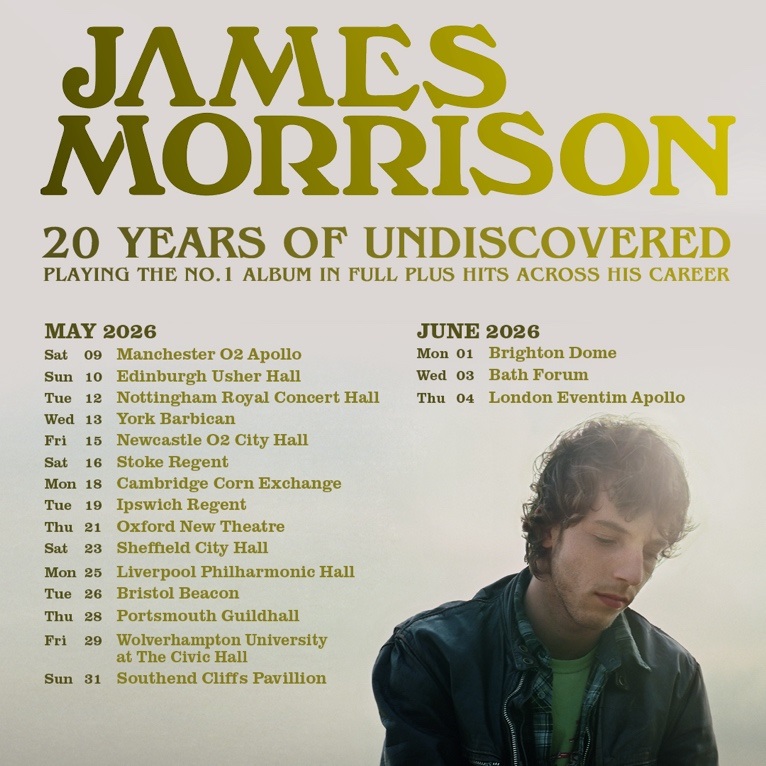
The itinerary for James’s biggest-ever UK arena travels on the Love Is The Answer Tournext April
James returned from a six-year hiatus in 2008 with Hey Ma, followed by Girl At The End Of The World (2016), Living In Extraordinary Times (2018) and All The Colours Of You (2021), returning the band to a sustained run in the upper echelons of the album charts.
In 2023, James celebrated their 40th anniversary with the release of Be Opened By The Wonderful, a double album of orchestral re-workings of their biggest hits and rare cuts, and were presented with The PRS For Music Icon Award at the Ivor Novello Awards, a testament to their enduring influence and contribution to British song-writing.
In April 2024 James released 18th album Yummy, their first-ever studio album to reach number one. Songs addressed the subjects of politics, AI and conspiracy theories, documenting the creative process of a band that continues to evolve and defy expectations.
James: Continuing to evolve and defy expectations after more than 40 years
They played their largest UK Arena tour to date in 2024, selling out the 20,000-capacity Co-op Live Arena in Manchester and The O2 in London, followed up by a co-headline tour with Johnny Marr in the USA and Canada.
This year, their multiple shows across the globe included performing to 20,000 people on the streets of Penamacor, Portugal, and opening the summer season at The Piece Hall, Halifax, on June 6 and 7.
Now comes Nothing But Love – The Definitive Best Of, their sixth compilation after the chart-topping The Best Of (Mercury/Fontana) in March 1998; B-Sides Ultra (Mercury), December 2001; The Collection (Spectrum Music), October 2004; Fresh As A Daisy – The Singles (Mercury), April 2007, and Justhipper – The Complete Sire & Blanco Y Negro Recordings 1986- 1988 (Cherry Red Records), July 2017.
THIS was a strange programme. Ostensibly a celebration of the Chapter House Choir’s upcoming 60th anniversary in December, it somehow morphed into marking the season of remembrance. Celebration and remembrance do not often make easy bedfellows.
Furthermore, the choir’s founder, Andrew Carter – who is also a distinguished choral composer – was in the audience. But he barely got a mention in the programme, was not invited to take a bow and had none of his works performed. Taken together, these were inexcusable omissions.
Judging by the programme, the two conductors involved were much more interested in furthering their own careers than seeing themselves as part of a noble chamber-choir tradition in York, which Chapter House Choir has spearheaded.
The nearest we came to a sense of celebration was in Roderick Williams’s setting of Siegfried Sassoon’s Everyone Sang, given a lusty account by the full forces here: the Chapter House Choir itself, the Chapter House Youth Choir and the octet Jervaulx Singers, making a grand total of nearly 60 singers, with Benjamin Morris conducting.
Otherwise, the mood was restrained, bordering on lugubrious, with mainly slow tempos. The full group opened with Arvo Pärt’s setting of Bogoroditse Djevo (the Russian Orthodox version of the ‘Hail, Mary’) and John Tavener’s take on it. Conducted by Charlie Gower-Smith, it was impressively sung by rote.
He also directed the Youth Choir in Sullivan’s The Long Day Closes, which was nicely phrased even if its relevance here was doubtful.
The Chapter House Choir alone, under Morris, developed an excellent atmosphere in Elgar’s They Are At Rest, R.I.P. piece if ever there were. Rather less engaging was Owain Park’s Footsteps, which apparently uses texts by no less than nine different authors, but has a restricted harmonic palette that lends it a nebulous feel. It outstayed its welcome.
Jonathan Dove’s Into Thy Hands, sung by the Jervaulx Singers alone, was much more focused as a piece and well modulated.
Howells’ Requiem, a marvellous work, concluded the evening. For all its glories, it seemed out of keeping with the stated headline of celebration. But it was treated with considerable reverence: its smooth, prayerful invocation benefited from beautifully sustained lines.
Psalm 121, with a noble baritone solo, brought hope; sopranos were impassioned, not to say fearless, in the subsequent Requiem before the elegiac composure of the final bars. But let us hope that this is not the final celebration of Chapter House Choir’s anniversary.
TOO rarely do we get the chance to hear and acknowledge the professional musicians living in our midst.
The clarinettist Lesley Schatzberger has played internationally with several distinguished orchestras and ensembles, but makes her home in York. She also spearheads Amabile, whose other members are pianist Paul Nicholson – like her, a University of York graduate – and cellist Nicola Tait Baxter. All three have enjoyed successful solo careers.
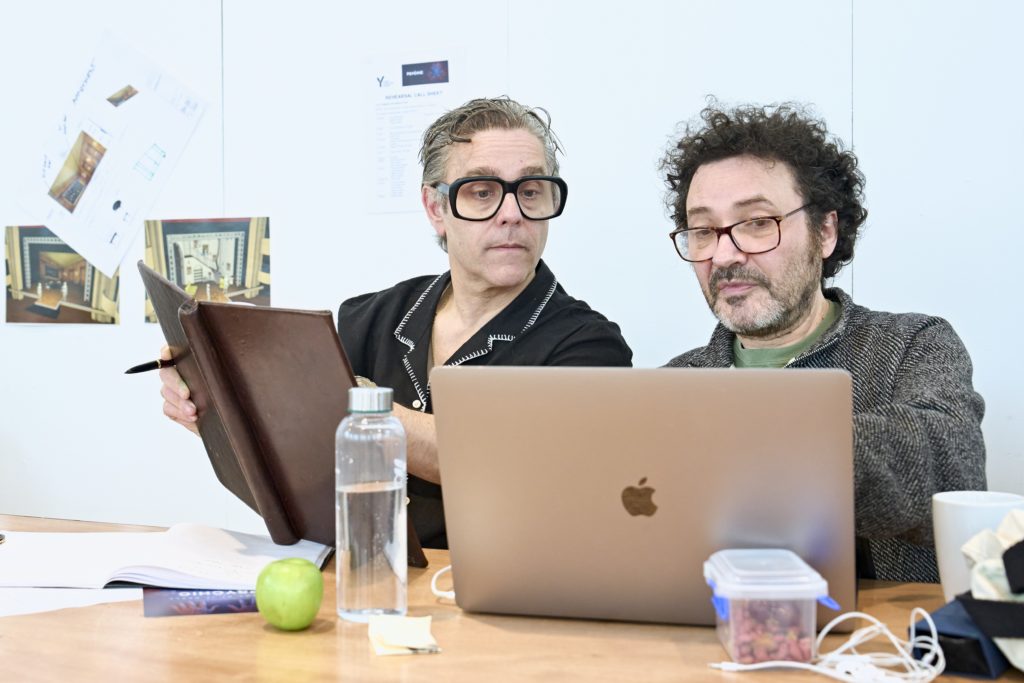
Not all soloists coalesce easily into chamber music. This British Music Society concert proved otherwise, with works by Shostakovich and York composer Steve Crowther framed by trios from Clara Schumann and Brahms.
Clara’s Piano Trio in G minor, her first chamber piece, is widely regarded as her finest achievement. Its violin part converts easily for the clarinet. Immediately there was lovely shading, as the voices ducked in and out of the texture.
The skittish scherzo has an attractive cello melody in its trio section which Tait Baxter relished. The centre of the Andante was aptly nervy and the spicy fugue shone out of the finale. Best of all, the players did not attempt to press Clara’s cause; they allowed the score to unfold naturally.
The mellow music of Brahms’s last decade regularly relies on the clarinet and Schatzberger’s smoothly fluent tone brought a perfect touch of velvet to his Clarinet Trio in A minor. The ebb and flow in the broad sweeps of the opening typified Romantic yearning.
Eloquent cello led the way in the slow movement. In the lilting scherzo-substitute that follows, Nicholson’s piano backing was a model of restraint. Yet in the finale, after the pause, he re-electrified the momentum for a dramatic finish.
Steve Crowther’s Morris Dances (2012) are a theme and 11 variations, originally for piano solo, dedicated to Philip Morris. In the last two years he has orchestrated six of them for clarinet trio.
They remain delightful cameos of friends and family but have here gained in colour. They always had a tendency to minimalism, but their emotional range is wide, from nervous energy and angry argument to hesitancy and nostalgia. The trio seemed to enjoy them as much as the audience.
Tait Baxter had tackled Shostakovich’s only cello sonata with a laser focus. Thrown straight into the fray by the frenetic opening, she yet found a proper moodiness for its second theme. There was wry humour to follow, another allegro that is essentially a literal ‘scherzo’ (joke). One had to marvel at the sotto voce ending to the slow movement.
She and Nicholson were alive, too, to the martial connotations of the finale’s scatty melody. Indeed he was a tower of strength throughout, never pushy, but always urging.
Amabile is a trio of experts brilliantly submerging their solo instincts to make much more than the sum of their parts.