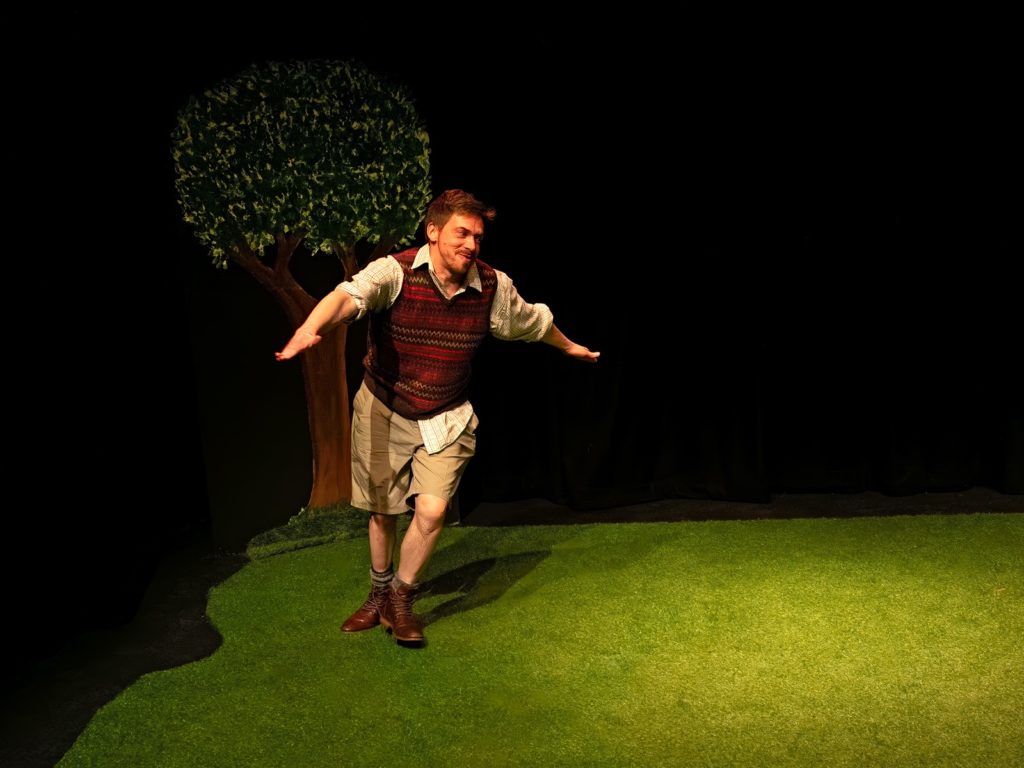
Child’s play: Mark Simmonds’ Willie impersonating a bomber plane in Blue Remembered Hills. Picture: John Saunders
FLEUR Hebditch, former Stephen Joseph Theatre dramaturg for a decade in Scarborough, is making her Settlement Players directorial debut with Dennis Potter’s stage adaptation of his 1979 BBC Play For Today drama.
She brings together actors very familiar to York audiences (Mark Simmonds, Victoria Delaney, Jess Murray), three from York Theatre Royal’s 2025 community play, His Last Report (Andrew Wrenn, Jon Cook and Thom Feeney) and one who moved to York only four months ago (Rich Wareham).
Each is playing a seven-year-old child on a hot summer’s day in the Forest of Dean in wartime 1943, where their child’s play in the woods mimics and mirrors the adult world at war, whether Simmonds’ Willie dive-bombing like a war plane or impersonating the bogeyman figure of an escaped Italian prisoner of war from a nearby camp.
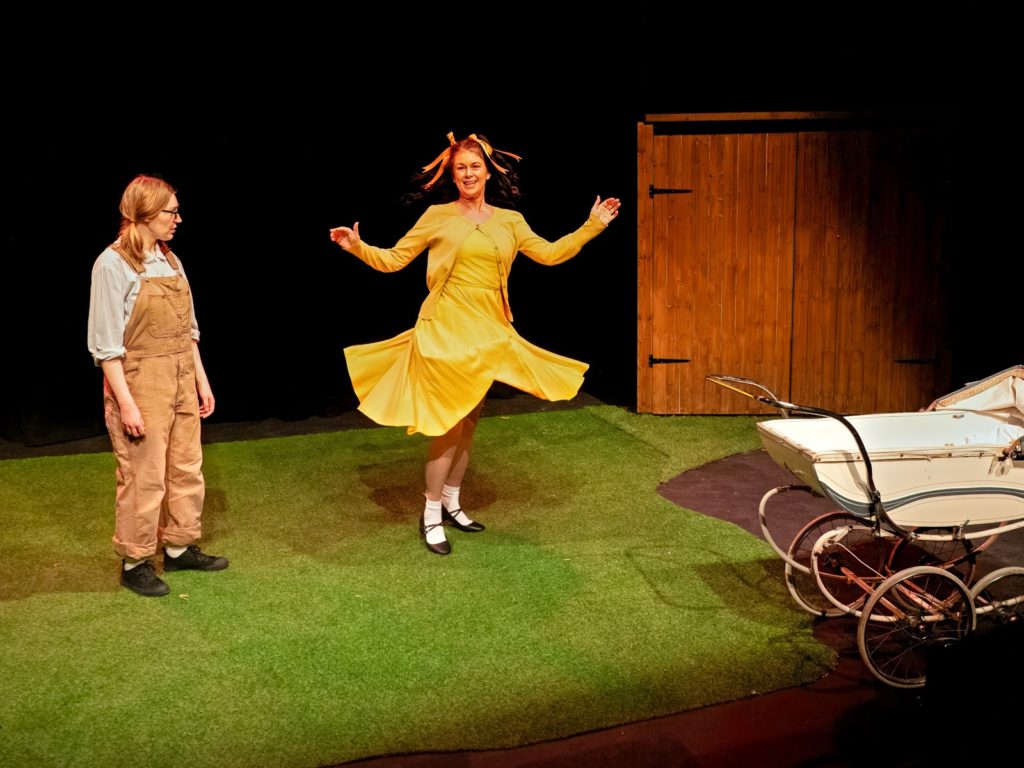
Jess Murray’s Audrey, left, and Victoria Delaney’s Angela in Blue Remembered Hills. Picture: John Saunders
Each is pictured in their programme profile aged seven – the director included – whether with big glasses, bigger teeth, white hair band, a giant Rupert Bear, an apple-cheeked cheeky grin or reading a comic.
No pictorial aid, however, is needed to see their transformation into Potter’s West Country boys and girls, one achieved through movement, mannerism, voice and Judith Ireland’s typically exemplary wardrobe, from the boys’ 1940s’ tank tops and baggy shorts to Murray’s Audrey in dungarees and Delaney’s Angela, forever pushing a pram and carrying a dolly, in cornfield yellow party dress and matching bows in her hair.
Simmonds and Wareham retain full beards but the boy inside emerges through the bristle thicket. Richard Hampton’s set design could be a child’s primitive drawing: to one side, barn doors with a milk churn, pail and straw bale inside; to the other, a painterly tree; in the centre, an expanse of grass, all seen as if through the children’s perspective.
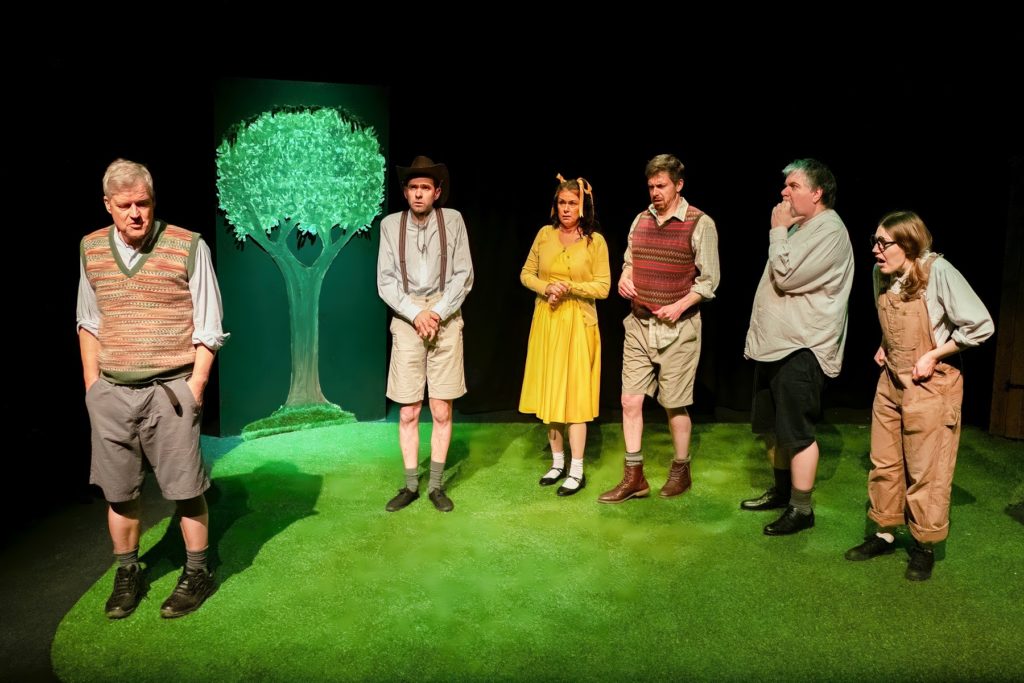
All eyes are on Andrew Wrenn’s John, left, as Jon Cook’s Raymond, Victoria Delaney’s Angela, Mark Simmonds’ Willie, Rich Wareham’s Peter and Jess Murray’s Audrey look on. Picture: John Saunders
As sage ancient Greek philosopher and polymath Aristotle proclaimed: “Give a me a child until he is seven and I will show you the man.” In turn, Potter will show you both the man and the woman, and the inner child within both, as he “takes you back to your own childhoods, the laughter, the fun, the freedom, but also the heartache and pain”.
That heartache and pain is expressed in the absence of fathers, away on war duty, both in tears and the boastful my-dad’s better/bigger/smarter/more important-than-yours fisticuffs of Wareham’s Peter and Wrenn’s John, and in the teasing of Feeney’s loner Donald “Duck”, hiding away, playing on his own in the barn.
There is machismo menace beneath the surface, much like in William Golding’s Lord Of The Flies, as adult traits are forged in the children’s pecking order that finds Cook’s kindly, gentle Raymond always playing second or, rather, fourth fiddle to ringleader Peter, John and Willie.
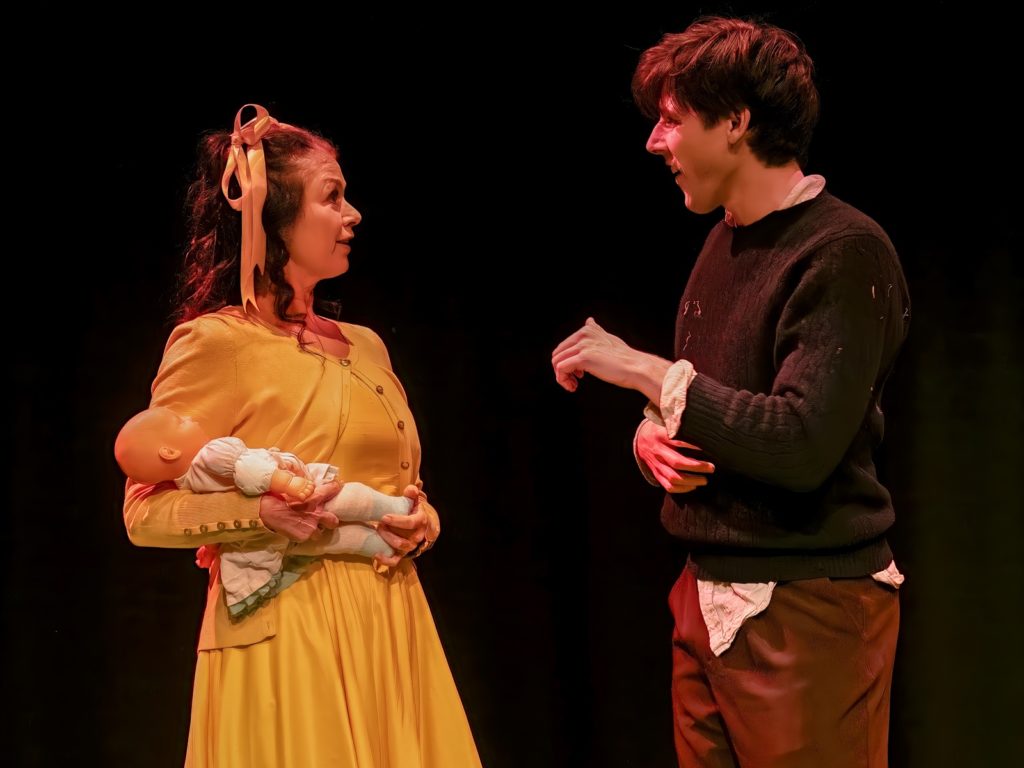
Victoria Delaney’s Angela and Thom Feeney’s Donald “Duck”
Or fifth fiddle, if you were to include the never-seen but respected leader Wallace Wilson. The girls, meanwhile, don’t compete for such roles, Murray’s Audrey fitting in as a tomboy and Delaney’s Angela as an aspirational mother in the making.
Hebditch asked her actors not only to connect with their inner child (Delaney incidentally first trod the Theatre Royal boards aged eight), but also to “focus on instinct rather than intellectual consequences”. Good advice that bears fruit in performances that capture how “emotions flit in the blink of an eye” and “relish in the pure emotions of children”.
Performances are suitably individual too yet collectively excellent, full of the freedom to play like children in Rowntree Park, yet darkened by the claustrophobic shadow of war, even amid the bucolic beauty of the woods.
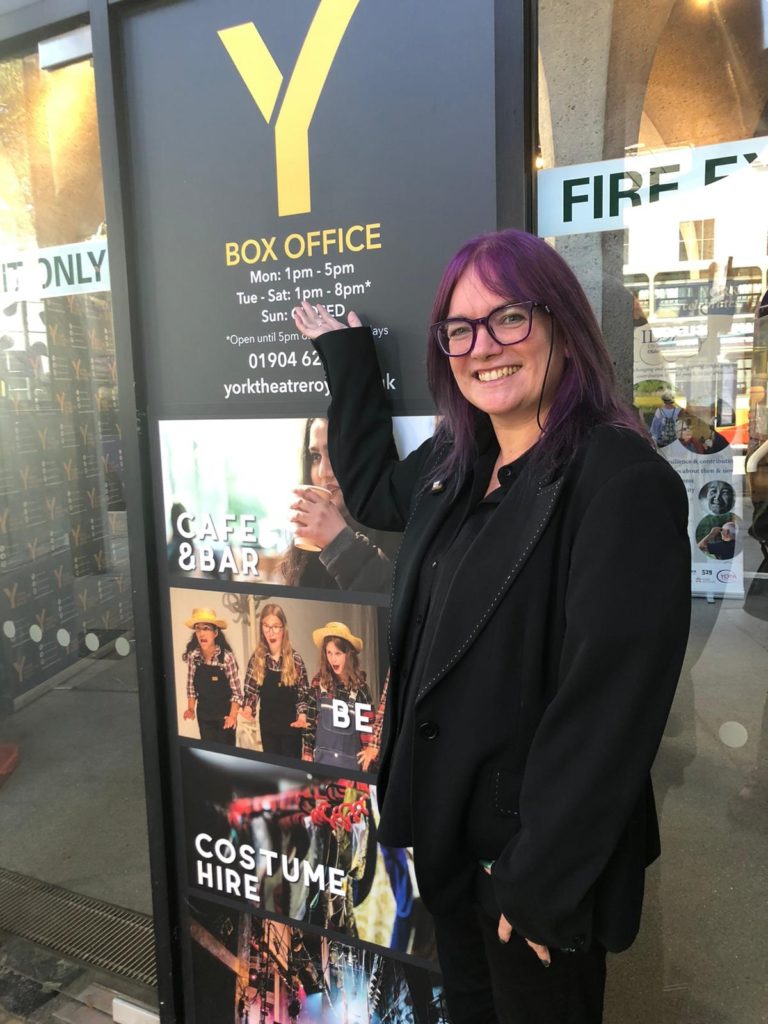
Blue Remembered Hills director Fleur Hebditch
Like Donald, Hebditch lights a match under Potter’s play, then watches it catch fire and burn with increasingly fierce heat.
As the children blame each other, then exonerate themselves of any guilt – it was ever thus in the slithering grown-up world too – an adult voice reads from A E Housman’s poem that gave Potter’s play its title with its account of the happy highways making way for the land of lost content.
The play makes that very same journey, from fun to fear, from afternoon tease to sucker punch, from innocence to experience, all too quickly to need an interval. Short, and sharp as Willie’s cooking apple, Blue Remembered Hills still shocks.
York Settlement Community Players, Blue Remembered Hills, York Theatre Royal Studio, until February 28, 7.45pm nightly, resuming Tuesday to Saturday, plus 2pm Saturday matinee. Box office: 01904 623568 or yorktheatreroyal.co.uk.
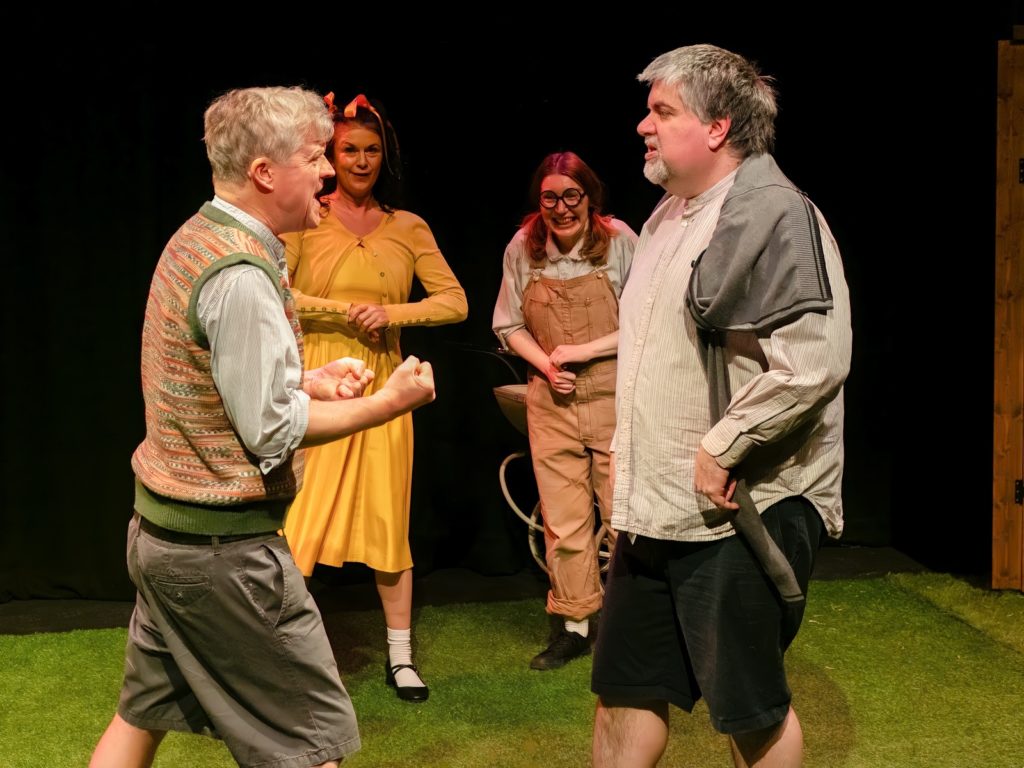
Fisticuffs: Andrew Wrenn’s John, left, clashes Rich Wareham’s bully Peter as Victoria Delaney’s Angela and Jess Murray’s Audrey egg them on. Picture: John Saunders