York Stage’s Come From Away is ready to touch down for York musical premiere at Grand Opera House from tomorrow

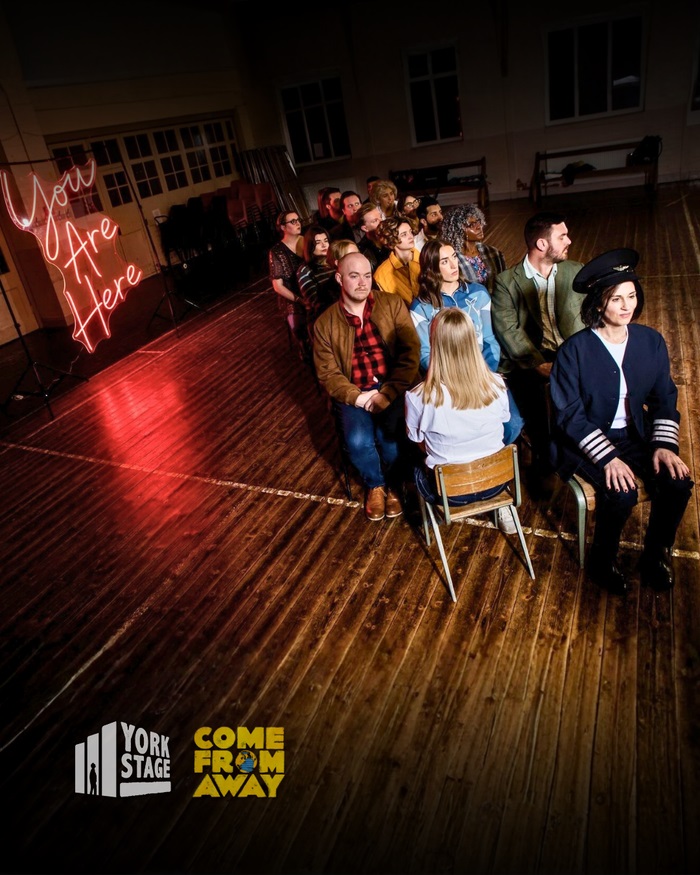
York Stage’s full cast takes a seat for the York premiere of Come From Away. Picture: Matthew Kitchen

THE York premiere of Irene Sankoff and David Hein’s global hit musical Come From Away will land at the Grand Opera House tomorrow (10/4/2026).

“It’s one of the most powerful true stories ever told on stage,” says Nik Briggs, who is directing a cast of 19 in the Olivier and Tony Award winner. “If you’ve heard the buzz around this show worldwide, now is your chance to experience it right here in York.

“With just one day to go until opening night, excitement is building fast for what’s already becoming one of York Stage’s fastest-selling shows to date.”

Come From Away charts the real-life story of 7,000 air passengers being grounded in Canada in the immediate aftermath of 9/11, when 38 planes are diverted to the remote Newfoundland town of Gander, population 9,400, almost doubling that total in two hours.

The community responds by inviting these “come from aways” into their lives with open hearts as unexpected friendships form, changing thousands of lives forever.
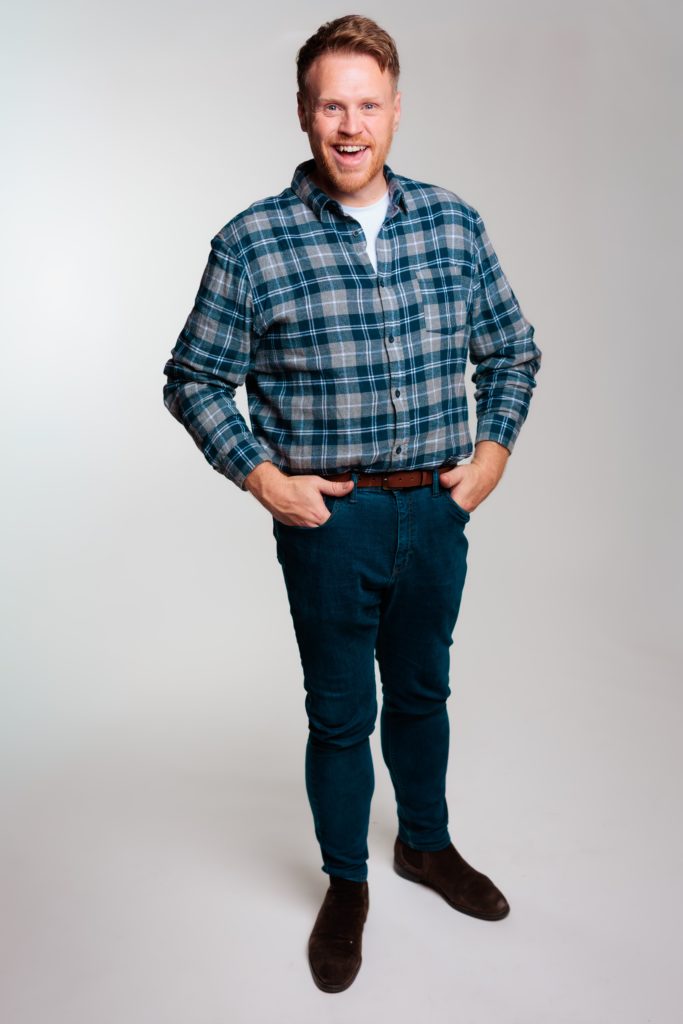
From Bake Off to take-off: York Stage director Nik Briggs, at the controls of Come From Away after starring in The Great British Bake-Off Musical last November

“Come From Away is more than just a musical,” says Nik. “It’s a celebration of humanity, resilience and the power of community. Step into a world where kindness conquers all, brought to life with invigorating, electrifying music and stories that will make you laugh, cry, and believe in the goodness of people.”

He recalls his introduction to the show. “One day, on a drive from York to Sunderland, setting off at 6am, I put the soundtrack on – one hour 40 minutes – and as I pulled up in the car park, I had to compose myself as I was sitting there sobbing,” says Nik. “For me, structurally, and the way the piece is brought together, it’s just perfection.”

He has a philosophy on tears being shed in the theatre. “I’m a big believer that, to make an audience cry, you don’t want to see crying on stage,” he says. 

“I love working with emotional texts and I like to think York Stage has had success with them over the years, but there’s something about how, in real life, when you see someone at their worst, as a human being, you want to embrace them and be there for them, whereas if you see someone being brave, or just carrying on or holding back the tears, that’s when you’ll cry more. That’s always been the approach I’ve had with shows where there’s real emotion.”

Nik continues: “Albeit that Come From Away’s story is associated with the events of 9/11, it’s not about that tragedy, but the ripple effect it had: how a Canadian community came together with compassion. That’s what’s celebrated in this show; that humanity.
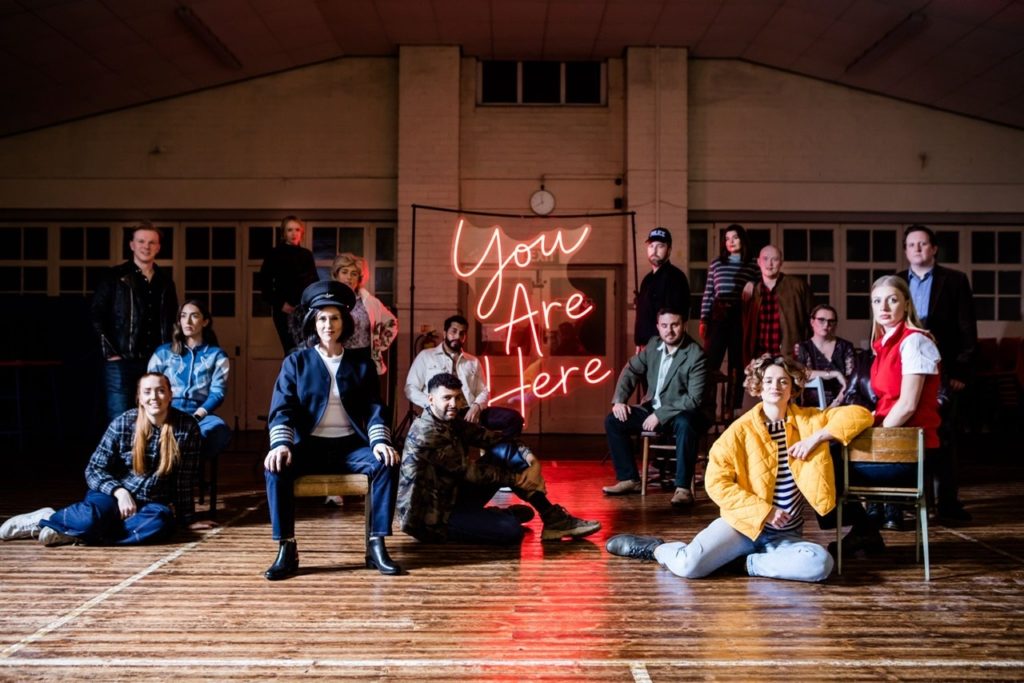
Just landed: York Stage’s cast for Come From Away. Picture: Matthew Kitchen

“Twenty-five years on from those terrorist attacks, the compassion and humanity shown in Gander is what’s needed in the world now, and some would argue even more so. There’s no baddie in Come From Away. We all know what’s going on in New York that day, where there is a baddie, but though we see fear, we see uneasiness, and at first we see prejudices in Gander, we don’t see a villain. This is a show about something totally different from that.”

Come From Away stands apart in its instrumentation and musical arrangements too. “It’s not typical musical theatre instrumentation,” says Nik, who is working in tandem with musical director Stephen Hackshaw. “Instead it features musical instruments associated with Newfoundland, such as the bodhran [drum] and the ‘ugly stick’, a welly boot fitted with a mop head, bottle tops and tin cans.”

Thanks to cast member Jacqueline Bell, who will play Captain Beverley Bass, York Stage’s show will feature the aforementioned ‘ugly stick’, and thereby hangs a tale. “After getting the part in our production and doing some research, she had some time off booked to go on holiday but hadn’t booked anywhere,” says Nik.

“She said she just felt compelled to go to Gander – I said I felt the same! – and so off she went! What you hear about Operation Yellow Ribbon [Canada’s handling of the diversion of civilian airline flights in response to the 9/11 attacks] may sound too good to be true, or you wonder if it has been slightly ‘musical theatre-ised’ in Come From Away, but no, that community spirit was very much present.

“Before going there in February, Jacqui emailed a few places, saying, ‘I know you’re not running tours at this time of year, but I’m in the cast for the show in York, can you help?’. The Gander community put out a plea to put together a personal tour for her.”
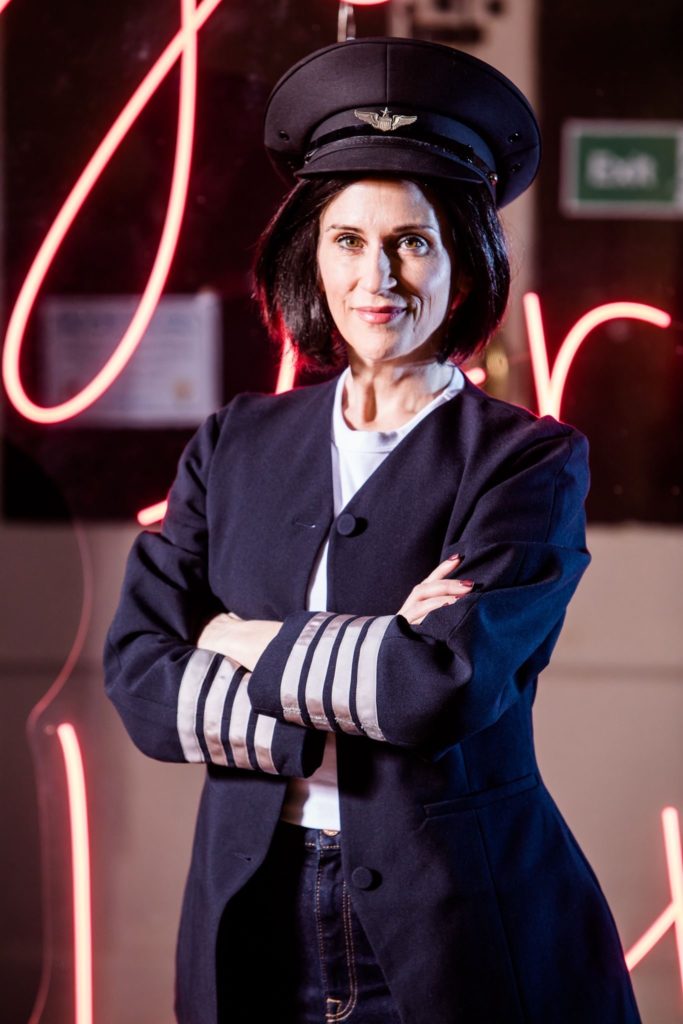
Jacqueline Bell, who will play Captain Beverley Bass and Annette in Come From Away, flew out to Gander and returned with an ‘ugly stick’. Picture: Matthew Kitchen

What happened next? “Rodgers TV reporter Brian Mosher, on whom one of the Come From Away characters is partly based, turned up and surprised Jacqui! He took her round all the places that featured in the story – and she stayed in the hotel where Captain Beverley Bass had stayed,” says Nik, who recommends looking up Jacqui’s video blogs from Gander on York Stage’s Facebook site.

“On her return to rehearsals, she said that everything that was ‘too good to be true’ about the people of Gander was true. Apparently, there was even one thing that had happened that the musical producers decided ‘we can’t have that in the show as no-one would believe it’ – when a rainbow formed as the last of the 38 planes took off again.”

Jacqueline brought back the all-important ‘ugly stick’, bought for the equivalent of £100. “We’ve affectionately called it ‘Brian Mosher’ in rehearsals,” says Nik.

As for his travel plans, they extend rather further than York to Sunderland as dawn breaks. “Gander is somewhere I’m determined to visit now,” he vows.  

York Stage presents Come From Away, Grand Opera House, York, tomorrow (10/4/2026) to April 18, 7.30pm nightly, except Sunday and Monday; 2.30pm, Saturday matinees; 4pm, Sunday matinee. Box office: atgtickets.com/york.
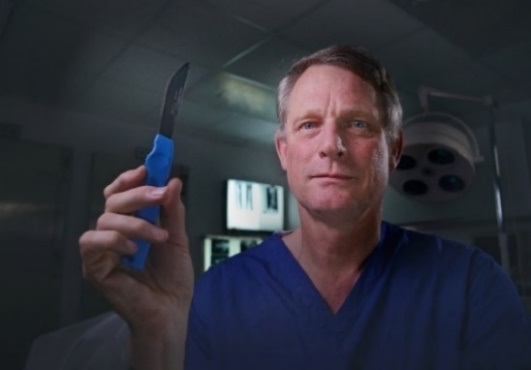
‘I’m a nice bloke doing a terrible job with care and compassion,’ says pathologist Dr Richard Shepherd, ahead of York talk

Dr Richard Shepherd: Pathologist, professor, lecturer, author, apiarist and aviator, presenting Unnatural Causes at York Theatre Royal on Thursday and Leeds City Varieties on Friday

FORENSIC pathologist Dr Richard Shepherd is unearthing Unnatural Causes on his 22-date autumn tour, visiting York Theatre Royal on Thursday and Leeds City Varieties the next night.

Already this autumn, his latest true crime television series, The Truth About My Murder, has been running on CBS Reality since September 21, wherein he revisits high-profile cases from Great Britain and the United States of America.

“I know how the living send out signals which are designed to appeal to our hearts. But the dead can only tell the unadorned truth. I listen to their stories,” he says.

Now retired, Dr Shepherd, 69, has worked for the Home Office on multiple cases and was the forensic expert for the Bloody Sunday inquiry, the Hungerford Massacre and the death of Princess Diana, also advising on the management of British fatalities following 9/11 in New York.

He has performed more than 23,000 autopsies and is a detective in his own right,solving the mysteries of countless sudden and unexplained deaths. He has faced serial killers, natural disasters, perfect murders and freak accidents. 

His evidence has put killers behind bars, freed the innocent and turned open-and-shut cases on their heads. Yet all this has come at personal cost, having been diagnosed with diagnosed with Post-Traumatic Stress Disorder after suffering flashbacks.

Heading out on tour from Wednesday (12/10/2022) to November 11 with Unnatural Causes, a title shared with his book that spent ten weeks on the Sunday Times bestseller chart, Dr Shepherdtells the stories of the cases and bodies that have both fascinated and haunted him the most.

Additionally, he will explain his admiration for the complexities of the human body and examine how he has lived a life steeped in death. This week’s York and Leeds audiences can take part in solving a real-life crime scene mystery too when he invites their involvement.

Why pick pathology as a career choice, Dr Shepherd? “Really, it’s quite simple,” he says. “It was a Damascene moment. A schoolmate’s dad was a GP and when he smuggled a book on forensic medicine into the classroom, like any curious 14-year-old boy, I thought that’s amazing and took it home,” he recalls.

“My dad was quite an ‘anorak bloke’, and instead of saying ‘that’s disgusting, you shouldn’t be interested in that’, he said, ‘you have to work hard if you’re interested in that’, and I ended up going to medical school. All because of that moment at Watford High School.” 

Dr Shepherd trained as a doctor at St George’s Hospital medical school from October 1971, qualifying in 1977. It was a great place to be, at that time a very small school at Hyde Park Corner – it’s since moved to Tooting – with a very forensic component to it.

“I oscillated a bit around pathology. Bizarrely, I really liked obstetrics, but came back to qualifying in forensic pathology.”

Thirteen years later, in 1984, he was fully qualified, studies completed in Gower Street. “Most of those years, you’re being paid, remember, which makes it easier to study,” says Dr Shepherd, who took up a post at Guy’s Hospital in 1987. “It’s important to say that though I studied for 13 years, that’s the usual time for most consultants, but you do have a clear finishing point of a fellowship at the Royal College of Pathologists.”

Pathologist, author, professor and lecturer, Dr Shepherd spread his wings into television presenting (The Death Detective, Autopsy: The Last Hours Of…, Murder, Mystery And My Family) and theatre tours.

“I always did a lot of lecturing, mainly to medical student groups, but also to Rotary groups sometimes, and then did The Death Detective. It was going to be called Dr Dick, bit it was pointed out, ‘No, that might not be appropriate’!

“I wanted to not only tell the story of a case, putting the jigsaw pieces together, but also to say, ‘here is the face of forensic pathology’,” says Dr Shepherd. “I’m a nice bloke doing a terrible job with care and compassion.”

Looking back over the years, Dr Shepherd says: “I think society has changed. Often people don’t talk about ‘death’ now but about ‘passing’ and ‘passing on’, and we’re beginning to fudge the process; I suspect it’s becoming more hidden,” he says.

“I had to have my 14-year-old Jack Russell put down in my arms, and I thought it was important to feel that emotion in death, whereas now people are turning funerals into a bit of a media presentation with My Way and You’ll Never Walk Alone.”

Dr Shepherd does not watch such series as Silent Witness. “Not because I dislike them, but because they are so far from what I know to be the truth, like not showing bits of a brain. The reality is not there, but then people think that what they see on TV must be close to reality, but then it happens to them and it’s not like it is on the TV,  and it’s a double blow. Deaths are sanitised, even in Casualty,” he says.

“A lot of people love how the forensic pathologists looks very clever on Silent Witness, and it all looks very exciting, but the reality is I don’t go around arresting people.”

How does he transfer his forensic expertise to the theatre stage? “I can talk about how I see things in my profession, but I can also talk about more about emotions; how the body has failed; how I can detect injuries and how they’ve been caused,” says Dr Shepherd.

“I have to be very careful for it not to be like a forensic lecture that I would give to students about how they would deal with injuries. On this tour, I’ll bring an imitation ‘body’ on stage with a knife sticking out of the chest. It’s a theatrical moment, and it’s always great to hear the audience gasp, so it’s close to reality, with no fudging. It’s the truth, but not the absolute truth because that’s too hard. The reality is, it’s that thing of life and death and going from one to the other.”

You may have seen Dr Shepherd contributing to Channel 4’s documentary Investigating Diana: Death In Paris on the 25th anniversary of her death in August. “It’s one of those deaths that I can feel viscerally, as many of us do,” he says, but he does not buy into any conspiracy theories. “She should have put her seat belt on.”

This month, his forensic mind is on his Unnatural Causes tour. “It’s the starting pointy of every report I’ve written: ‘Death is not due to natural causes’. ‘Death is due to unnatural causes’. It’s a phrase I have used all my professional life.”

Dr Richard Shepherd, Unnatural Causes, York Theatre Royal, Thursday; Leeds City Varieties Music Hall, Friday, both 7.30pm. Box office: York, 01904 623568 or yorktheatreroyal.co.uk; Leeds, 0113 243 0808 or leedsheritagetheatres.co.uk .

CBS Reality’s The Truth About My Murder is available on Freeview (67), Sky (146), Virgin (148) and Freesat (135). From a state-of-the-art laboratory, with ground-breaking digital technology, viewers will hear directly from the victim as Dr Shepherd uncovers the truth behind these perplexing crimes as told through the victims’ bodies.

These victims’ narratives are often re-written, hidden, manipulated, weaponised and concealed by their evil killers. In each case, Dr Shepherd will “separate fact from fiction and ensure the truth always prevails”.

Did you know?

Dr Richard Shepherd is an apiarist (beekeeper) and aviator (with a private pilot’s licence since 2004).

Did you know too?

His latest book, The Seven Ages Of Death, explores what death can teach us about living.