
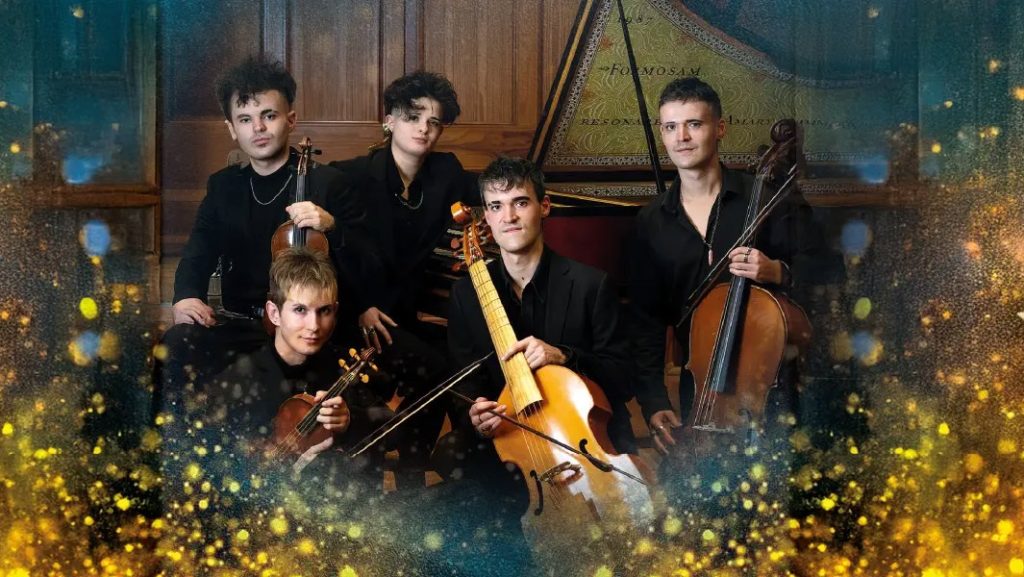
Lowe Ensemble: Echoes of the Spanish Baroque programme at York Early Music Christmas Festival
THERE cannot be many early music groups in which no less than five siblings are involved. The Lowes grew up in Madrid, although now based in London, so their Echoes of the Spanish Baroque programme may be said to have come naturally to them.
The ensemble – soprano, two violins and two cellos – was completed here by Daniel Murphy, doubling on theorbo and Baroque guitar: he fitted smoothly into the family setting.
In a sense, this programme was back to front, first revealing Spanish influence on other countries, before returning to Spanish originals. Lully’s comédie-ballet Le bourgeois Gentilhomme offered the perfect opening. It guys a rich man’s efforts to become cultured which, tellingly, includes acquaintance with Spanish music and dance.
The instruments were pleasingly jaunty in the Air des Espagnols before soprano Myriam Lowe joined with a more measured account of love’s delightful pains.
A Spanish sarabande for gamba and theorbo by Marais was a touch leaden even for this stately dance; it might have been amusingly compared to the 16th century zarabanda, quite a different animal.
But the melancholy rocking of Henri de Bailly’s Yo Soy La Locura (I Am Madness), with pizzicato accompaniment, revealed a Frenchman truly intoxicated by Spain. Similarly an Italian, Andrea Falconieri, used rapid tremolos in lower strings to demonstrate his excitement over a señora.
Before that we had the surprise of hearing Handel setting a Spanish love-song during his sojourn in Italy. Thereafter we were in Spain itself. After the sadness of delivering a José Marín tono, Myriam took to the harpsichord, joining the others in the refined variations of Santiago de Murcia’s Grabe.
More typical – to the outsider – Spanish repertoire came with Mateo Flecha’s lovelorn Florida Estava la Rosa (The Rose Was In Full bloom), slow at first but eventually rhythmically vivid, with guitar introduced.
Finally, the players let their hair down with a couple of fandangos. Alessandro Scarlatti’s wasvigorous enough, but Soler’s was idiomatic to the core, a joyful conclusion. The Basque carol The Angel Gabriel, beautifully slow, made a touching seasonal encore.
This is a fine group, with a bright future. They took their time to achieve full alegría de vivir (joie de vivre), but when the early tension had dissipated they arrived there in the end. I hope they will return soon.
Review by Martin Dreyer