Tinkling joy arrives at York Station as public piano is installed by Richard Shephard Music Foundation, LNER and Piano Equals

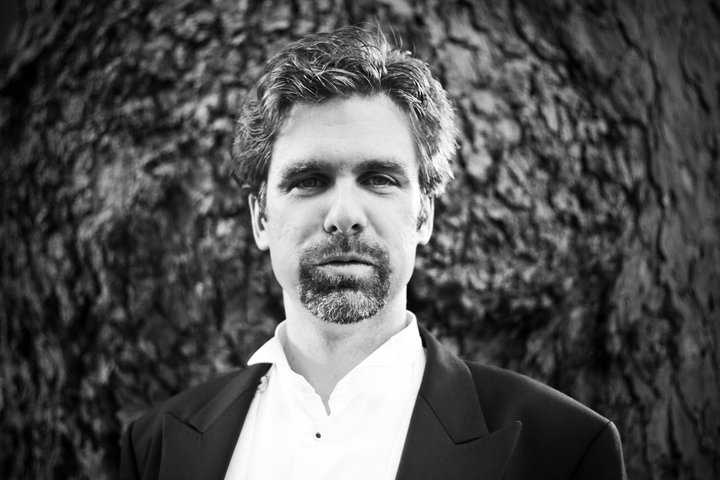
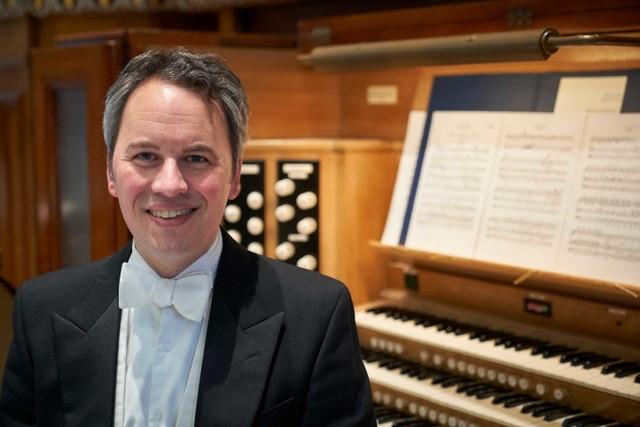
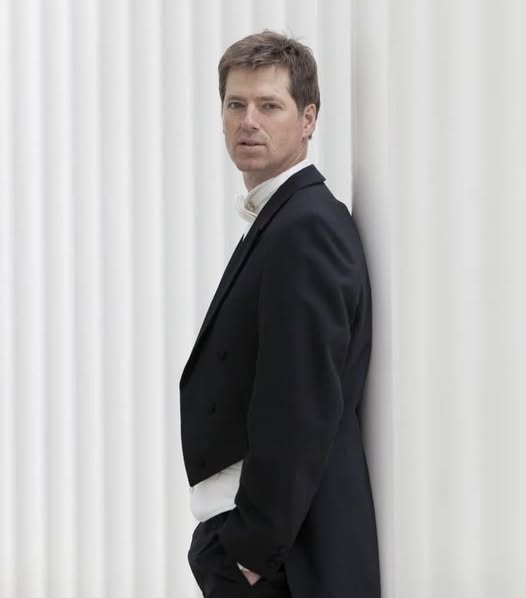
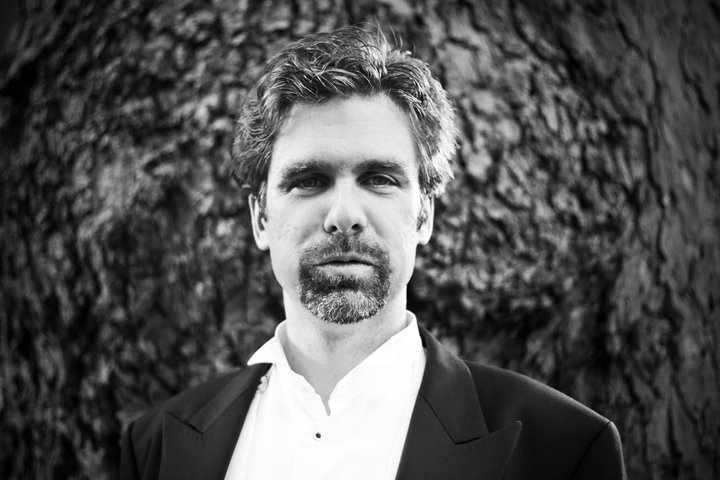
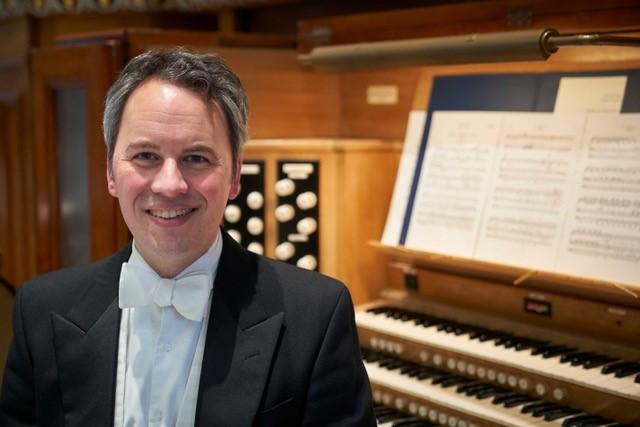
David Pipe: Performing at public piano launch on York Station front foyer on Thursday afternoon

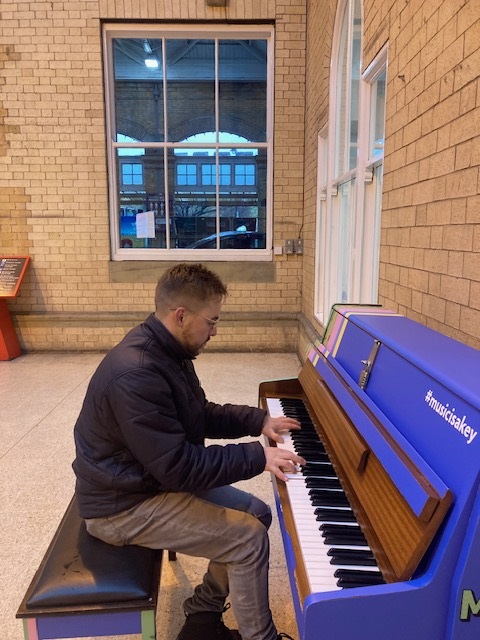
A PUBLIC piano is being installed at York Station in a collaboration between the Richard Shephard Music Foundation (RSMF), London North Eastern Railway (LNER) and Piano Equals, the piano re-use initiative.

Trustees from the RSMF will gather at the piano on the front foyer on Thursday (15/1/2026) when David Pipe will play Richard Shephard’s Let Him Who Seeks for commuters, among other music.

This joyful piano installation will bring music to a public space while also supporting young musicians across Yorkshire and the North East and raising awareness of the RSMF charity’s work.

Founded in 2021 in memory of Dr Richard Shephard, church and secular music composer and Minster School headmaster from 1985 to 2004, the RSMF has celebrated its most successful year to date, when more than 8,685 children received weekly music lessons through partnerships with 34 schools in 2025.

This milestone marks significant progress toward the foundation’s goal of teaching 10,000 children every week by 2026:  a target that will mean almost one in seven primary-aged children in the region will have regular access to high-quality music education.

“Music inspires, unites and empowers,” says Andrea Hayes, former head teacher and foundation trustee. “The foundation brings that power into classrooms, ensuring every child, whatever their background, can access high-quality music teaching.”

Key highlights from the Richard Shephard Music the Foundation’s 2024–25 Impact Report:

8,685 children received weekly music lessons, totalling 8,250 hours of high-quality musiceducation.

34 partner schools participated, including new additions in East Yorkshire, Saltburn, Darlington, Richmond, and Selby.

50 children joined the foundation’s biggest-ever Make Music Day, celebrating creativity and collaboration through live workshops and performances.

Ten free “Music Explorers” holiday clubs reached 263 children, with an average of 57 per cent eligible for Free School Meals, rising to 85 per cent in Scarborough.

1,943 children took part in foundation-led events, concerts and community performances.

Independent evaluations and teacher feedback revealed transformative results:

99 per cent of staff reported improved confidence among pupils.

 97 per cent saw enhanced musical knowledge.

92 per cent observed improvements in wellbeing.

94 per cent said their school’s standard of music teaching had improved.

Reaching communities that need it most

HALF of the foundation’s partner schools have more than 30 per cent of pupils eligible for Free School Meals, 12 being based in Arts Council England’s Priority Places. By focusing on these areas, RSMF is ensuring access to the social, emotional and educational benefits of music for children who might otherwise miss out.

How you can be involved

WHETHER you are a parent, musician or member of the public passionate about music education, RSMF invites you to become a Friend of the Foundation by committing to a monthly donation, as small or large as suits you.

You will receive updates from the foundation and invitations to events. To join and donate, visit: donate.rsmf.org.uk.

“Research highlights time and time again that music education is not an equal playing field,” says foundation chief executive officer Cathy Grant. “The Child of the North report found that 93 per cent of children are being excluded from arts and cultural education due to a lack of funding in state schools, with almost half (42 per cent) of secondary schools no longer entering pupils for GCSE Music.

“The same report outlined how participation in arts activities also correlates strongly with socioeconomic status – with children from the most affluent backgrounds being three times more likely to sing in a choir or play in an orchestra than those in deprived areas.

“Our work directly addresses these inequalities,aiming to level the playing field for children across our region.”

REVIEW: Steve Crowther’s verdict on York Musical Society, Christmas Concert, St Lawrence Parish Church, York, 13/12/2025

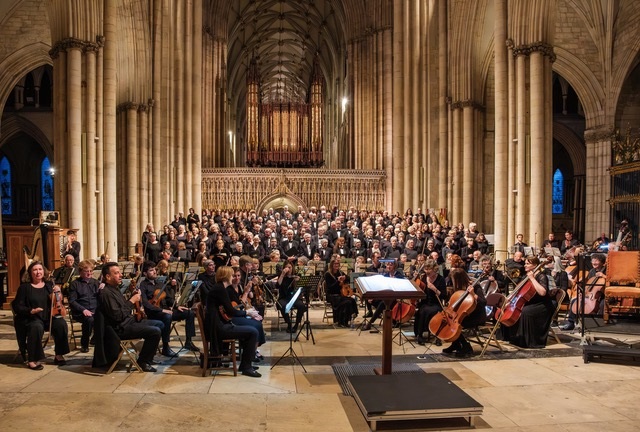
York Musical Society in concert at St Lawrence Parish Church, York

WHAT was immediately striking at the start of the concert was the vertigo-inducing podium from which musical director David Pipe conducted the choir.

Indeed, if he had swapped his baton for a paintbrush, he could have given Michelangelo a run for his money and painted a few contemporary murals whilst he was up there.

York Musical Society’s concert opened with five excerpts from Handel’s Messiah. And The Glory Of The Lord was tight; the imitative lines were clearly articulated and the soprano high notes well executed. Like the male voices, I struggled with the over-articulation of the consonants in the quick, fugal chorus, And He Shall Purify.

Ellie Miles-Kingston was a delight; the recitative (There Were Shepherds) and the aria (Rejoice Greatly) – duetting with the excellent organist, Shaun Turnbull – were beautifully delivered. The set closed with a lovely performance of His Yoke Is Easy.

David Willcocks’ arrangement of the English traditional Sussex Carol sounded both joyful and effortless. This is no easy thing as the writing is deceptively difficult, especially for the sopranos. This was followed by an utterly splendid performance of O Come, All Ye Faithful by us, the People’s Choir.

Interlude on The Coventry Carol by the splendidly named William Southcombe Lloyd Webber inhabits an entirely different sound-world to that of the Willcocks or indeed the later Rutter: austere, internal and actually technically quite challenging.

David Pipe’s performance was nothing short of poetic: emotional restraint, long unbroken lines, the carol tune always audible – tricky when played using the pedals. A real concert highlight.

Richard Shephard’s Christmas Cantata (after Corelli) was extremely effective and, on the whole, enjoyable. The writing for the sopranos was attractive, but I thought the tessitura sat high for too long with a tendency to drift sharp-wards. I really enjoyed the solo contribution from tenor Leo Fulwell. On the whole, I found the Cantata stylistically ambiguous but that’s probably just me and not the fine performance.

We, the People’s Choir, returned with yet another flawless performance, this time in the uplifting It Came Upon The Midnight Clear.

William Mathias was a truly outstanding composer. As this exuberant performance of his Sir Christèmas clearly shows, what seems like surface good, festive fun – fast tempos, bright brass-like organ writing, motor rhythms – is also a really well-crafted piece of music. The choir captured the energy and drive, and I heard a joy that was forged rather than decorative. Impressive.

What’s not to like about David Willcocks’ Silent Night? Given this rendition, clearly very little indeed. The YMS Choir delivered justice to the composer/arranger’s setting, enhancing the carol’s natural beauty.

Indeed, what’s not to like about John Rutter’s Shepherd’s Pipe Carol too? Again, given this rendition, clearly very little indeed. I just loved the persistent ‘dum-da-dum’ ostinato, which gave the music groove as opposed to flow. Add the syncopation into the mix and we are closer to pop, even jazz, rather than the traditional Christmas carol.

David Pipe’s performance of Leroy Anderson’s Sleigh Ride, arranged by Thomas Trotter, was a festive joy. We heard trotting hooves, bell-like figurations, crisp winter air, a season of goodwill and Butlin’s. I’ll get my coat.

After a standing, standout blast of Hark! The Herald Angels Sing – us again – the choir wished us a merry Christmas and directed us to free glasses of mulled wine. I felt we had earned them.

Review by Steve Crowther

REVIEW: Martin Dreyer’s verdict on York Musical Society, St Lawrence Parish Church, York, November 8

David Pipe: “Charismatic conductor with a knack for motivating his charges”

YORK Musical Society abandoned York Minster, the traditional venue for its autumn concert, in favour of a much cheaper option, St Lawrence on Hull Road.

The church’s acoustics are clearer than the Minster’s, but it meant squeezing 130 singers into the choir and chancel and leaving no room for an orchestra. So we heard Vivaldi’s Gloria in D, RV 589 and Haydn’s ‘Nelson’ Mass with accompaniment from organ and timpani.

The hero of the hour was certainly Shaun Turnbull, whose organ accompaniments were a sterling replacement for the tricky violin parts of both these works, demanding focus and stamina. The timpani were skilfully handled by Taneli Clarke, although at the front of the aisle he was too far forward for balance with the organ.

David Pipe is a charismatic conductor with a knack for motivating his charges. There was no lack of willing on their part. But there was a feeling on the night that several passages were not as assured as they might be.

The Vivaldi got off to a vivid start, but ‘Et in terra’ suffered from an unvarying dynamic, apart from the diminuendo at its close. In the ‘Domine Deus, Agnus Dei’, the choir’s responses to the alto soloist’s intercessions were too forceful, out of keeping with the prayerful mood. It takes a confident choir to sing softly.

Thereafter the choir was in good form, both in its brief ‘Qui tollis’ and especially in the fugal ‘Cum sancto spiritu’, which was pleasingly lively. The soloists, soprano Ellie Miles-Kingston and mezzo-soprano Holly Gowen, had blended neatly in ‘Laudamus te’ and the former’s straight tone was an asset in ‘Domine Deus, Rex coelestis’, but their diction was more or less non-existent. It should be a given that soloists use words as an aid to projection.

The Haydn gets off to a dramatic start. For all her bravery, the youthful Miles-Kingston does not yet have the weight of tone needed for the ‘Kyrie eleison’, perhaps the most taxing solo passage in all Haydn’s masses. It requires full-on operatic treatment with coloratura to match.

But her ‘Et incarnatus’ was effective and she led the solo quartet well; here it was tenor who needed to give more. The bass Dominic Rose might have been more convincing in ‘Qui tollis peccata’ had he raised his eyes from his copy more often.

The choir brought considerable conviction to the start of the ‘Credo’, with bold lines in all voices. ‘Hosanna in excelsis’ took off admirably. There were signs of sagging stamina in the ‘Agnus Dei’, with not all sopranos reaching the high entries cleanly. But given the cramped conditions the choir deserves congratulations for its perseverance.

Review by Martin Dreyer

REVIEW: Martin Dreyer’s verdict on York Musical Society Choir & Orchestra, Verdi Requiem, York Minster, June 21

Soprano Elinor Rolfe Johnson

YORK Musical Society has lately developed a love affair with Verdi’s Messa da Requiem. After giving a mere three performances in the 20th century, it has now chalked up four since 2000. Saturday evening showed why.

David Pipe was clearly enjoying his third outing here in this work with a choir numbering 140 voices. He has grown as a conductor with each performance. I cannot remember when this choir has been so riveted to his every gesture.

He also had the orchestra watching him very carefully, with Nicola Rainger as his leader for the last time after 18 notable years in that position. So much for statistics. He also had a first-rate solo quartet at his disposal. Pipe aligned all these talents superbly.

Any choir can sing loudly, but a choral pianissimo can be much more telling: the whispered opening here was just what was needed for atmosphere and the a cappella Te Decet built upon it reverently.

At the other end of the spectrum was the quartet’s strongly pleading Christe, Eleison. Similarly, the Dies Irae began powerfully enough, with truly heraldic trumpets and thunderous off-beat percussion, but much more terrifying was Trevor Eliot Bowes’s bass Mors…Mors, subtly spaced and sotto voce.

Alison Kettlewell declaimed the wide mezzo-soprano span of Liber Scriptus comfortably. After the choral basses had dug into Rex Tremendae with gusto, there was a restrained delicacy to Recordare, involving Kettlewell and the fluent soprano Elinor Rolfe Johnson. They later conjured a nicely controlled Agnus Dei with the chorus in respectful attendance. Peter Davoren’s tenor had opened a touch effortfully, but he trod carefully though the Ingemisco, sustaining a pleasing line.

The soloists blended beautifully in a touching Lacrymosa, with the orchestra rounding off the entire Dies Irae tenderly. The double-choir Sanctus, surely an evocation of heaven, was taken at a brisk pace, which the chorus thoroughly relished.

But they had enough left in the tank for a truly impassioned Libera Me, in which Rolfe Johnson came into her own with marvellous control and yet enough power to gleam at the top. We could only marvel at the majestic grandeur of it all. This was York Musical Society – both choir and orchestra – at the peak of its powers.

Review by Martin Dreyer

REVIEW: York Musical Society, Bach’s Mass in B minor, York Minster, March 15

Baritone soloist David John Pike

FOLLOWING a call to prayer, the concert opened with a gravitas-laden Kyrie. It took a moment or two to get into the groove, but despite the ever-generous Minster acoustic, I could hear the choral fugue weaving its way through to a pleasing cadence.

The Christe soprano duet— Zoë Brookshaw and Philippa Boyle — with obbligato violins was in the altogether sunnier key of D major. The singers’ clear, confident deliveries and crisp string articulation brought a welcome relief and respite.

But then back to a second Kyrie fugue. This worked much better; maybe the choir were more at ease with the vocal demands, but I think the greater clarity and confidence benefited from Bach’s doubling of instruments and voices.

Assured string and clear trumpet playing added much to the celebratory opening of the – D major again – Gloria. I did lose a bit of choral detail, but this is a given in this acoustic. Nicola Rainger was on fine form with a disciplined, technically challenging violin obbligato accompaniment to Philippa Boyle’s captivating Laudamus Te.

Despite the impressive, soaring trumpet contribution, the Gratias Agimus Tibi seemed to have that ‘morning after’ quality. The balance between soprano (Zoë Brookshaw), tenor (Nicholas Watts) and flute obbligato (Della Blood) with muted strings was nigh-on perfect.

Indeed, David Pipe’s judgement was an impressive feature throughout the concert. The Qui Sedes Ad Dexteram Patris was sung by countertenor Tom Lilburn, and very well indeed. The clarity, almost purity of tone, worked really well with Jane Wright’s oboe d’amore obbligato accompaniment.

Baritone David John Pike fared less well in the following Quoniam Tu Solus Sanctus. I lost detail in the lower register, but as the aria is scored for the bass voice, this really wasn’t surprising. Janus Wadsworth was excellent on horn, but again I found it tricky to hear the bassoon playing with any real clarity.

The closing Cum Sancto Spiritu proved to be an enjoyable fugal first-half signing-off. The tempo was suitably energetic, and the strings in good nick with fine, crisp articulation.

This brought us to a welcome 15-minute break where the audience seemed to bypass chat about the performance in favour of how cold it was.

The Credo is in itself an altogether satisfying movement, probably on account of its clearly defined symmetrical structure. There was an impressive account of Et In Unum Dominum Jesus Christum from Zoë Brookshaw (soprano) and Tom Lilburn (countertenor) with sympathetic string commentary.

The aria Et In Spiritum Sanctum was more suited to the baritone range and gave David John Pike the chance to showcase what a very fine singer he really is. The oboe d’amore obbligati support was really well judged too. However, I could have sworn they were placed stage left. But not so. Of the three central choral sections, the opening five-part chorus Et Incarnatus Est De Spiritu Sancto fared best. In a quiet setting, the performance shone brightly.

By the time we reached the end of the Sanctus, it was clear that, to use a footballing metaphor, there were a lot of tired legs out there. The demands on the chorus are massive and unrelenting.

Yet, following a poignant Agnus Dei performed by Tom Lilburn with yearning string commentary, they rallied to deliver a splendid Dona Nobis Pacem to bring this enormous spiritual journey to a satisfying conclusion.

Finally, we should mention the consistent quality support from organist Shaun Turnbull and the authoritative direction of conductor David Pipe. But I am going to leave the last word with tenor Nicholas Watts. His performance of the Benedictus aria— with lovely flute accompaniment (Louise Evans, I think) — was, for me, the highlight of the concert.

Review by Steve Crowther

REVIEW: Steve Crowther’s verdict on The Creation, York Musical Society, York Minster, 22/6/2024

Alexandra Kidgell: Soprano soloist for The Creation at York Minster

AS tradition decrees, the concert was introduced by the Dean of York Minster, the Very Reverend Dominic Barrington.

I only mention this because, in the midst of all the usual ‘great music, please switch off mobile phones and the loos are over there’, was a joke. In case of the fire alarm going off, it will not be a practice and therefore can I ask you to remain in your seats. Well, it made me chuckle.

The opening Representation of Chaos of Haydn’s oratorio is utterly unexpected in that it is so radical. The York Musical Society Orchestra superbly caught the haunting evocation of chaos, putting down a marker of excellence that they displayed throughout.

Baritone Thomas Humphreys sang the weighty opening narrative with a lovely clean tone (good lower register) and apposite nobility. The spine-tingling blast of C major enlightenment gets me every time, and here was no exception.

Nathan Vale has a lovely lyrical tenor voice, although I did lose some of the lowest register, but his aria Now Vanish Before The Holy Beams, complemented with assured string support, was right on the money.

The choir delivered an infectious A New Created World chorus, embracing the music’s almost child-like innocence. The balance wasn’t quite right for The Marvellous Work Beholds, the orchestra obscuring much of soprano Alexandra Kidgell’s singing.

This was quickly remedied in the later With Verdure Clad The Fields Appear where this fine soprano was allowed to deliver the aria with both clarity and infectious charm.

Conductor and musical dirtector David Pipe: “Directed the performance with an assured, understated authority”

As ever, in an impressive performance of a truly great work, there are fresh moments of insight. For example, the gorgeous window illuminated during Nathan Vale’s singing of With Softer Beams And Milder Light. It came across as so gentle, so unexpected.

Then there was the ghost of Mozart I hadn’t noticed before: With Flying Mane And Fiery Look (The Magic Flute) and On Thee Each Living Soul Awaits (The Marriage Of Figaro). Maybe it’s just a senior moment.

The closing The Heavens Are Telling (Part One) chorus was splendid. The string playing at the opening of the aria On Mighty Pens Uplifted Soars was delivered with crisp, clean articulation. There were also lovely flute (Della Blood) and clarinet (Andrew Cavell) solo contributions.

Haydn clearly relished the musical tone-painting opportunities; for example the musical depiction of the merry larks and cooing doves. In The Scream (Cave Birds), Ted Hughes said that the worms in the ground were doing a good job. Well, not here they’re not, and as for the outrageous raspberry tart signing off the heavy beasts, the contrabassoon pitch seemed to emanate from the very bowels of Hell itself.

Back in the heavenly spheres, the love duet By Thee With Bliss, sung by Thomas Humphreys and Alexandra Kidgell, was simply divine and the soaring oboe (Jane Wright) angelic.

The closing The Lord Is Great, with its monumental double fugue, brought the best out of a very good choir. There was fine work throughout the orchestra, the violins in particular, along with Shaun Turnbull (organ continuo), while Oliver Bryant (contrabassoon) should get a pay rise for that one low note alone.

Finally, conductor David Pipe had mercifully decided against the irritating musical windmill-on-speed approach, choosing instead to direct the performance with an assured, understated authority.

Review by Steve Crowther

REVIEW: Steve Crowther’s verdict on York Musical Society Orchestra and Chorus, York Barbican, March 23

Bass-baritone Alex Ashworth: “Convincing sombre performance”. Picture: Debbie Scanlan

DVORAK’S Deum dispenses with the sober, contemplative settings associated with the standard Latin text in favour of optimism, of celebration.

The York Musical Society’s performance really did capture that all-important festive splendour. A forceful hello from the timpani set the mood of driving energy and melodic invention. The contrasting Sanctus featured a delightful soprano solo from Anita Watson; richly romantic and a lovely tone.

The movement returns to the energetic Allegro moderato before crashing headlong into the serious world of the Tu Rex Gloriae, Christe. Bass-baritone Alex Ashworth delivered a convincing sombre performance dripping with appropriate gravitas. Fine brass support.

To be sure, I heard the distinct Czech folk music-inspired melodies, but the overwhelming mood was of a music written to appeal to a new audience, America – upbeat vocal lines, funky rhythms and percussion. I was even reminded, particularly in the Vivace third movement, of John Adams’s Short Ride in a (spiritual) Fast Machine. Maybe.

Next up was Brahms’s terrific thank-you note to the University of Breslau (which had bestowed an honorary doctorate on the great man), the Academic Festival Overture. I love the letter of request from conductor Bernard Scholtz, which said: “Compose a fine symphony for us! But well-orchestrated…not too uniformly thick!”

Whether the conductor was referencing the orchestral texture or the academic limitations of the student faculty, remains uncertain. Anyway, back to the review.

The YMS Orchestra’s performance of the work sparkled with energy and delight – as well as displaying some considerable technical skill. They caught the humour, not a quality usually associated with the composer, particularly in his use of the popular student drinking songs. We had the hilarious buffo bassoons and a brilliantly inebriated Gaudeamus Igitur conclusion. So maybe we do have the answer to the earlier conundrum. Much credit here must go the clear direction of conductor David Pipe.

The second half of the programme was dedicated to Brahms’s magnificent Ein Deutsches Requiem. And very good it was too. The orchestra conveyed the all-important serenity of the opening scene. As ever, I was struck by Brahms’s inspired orchestration that leaves out the violins, clarinet and trumpets, thus resulting in a rich texture of divided violas and cellos.

The chorus entry was nicely balanced, singing a text that addresses the forces of life rather than death. There were some fine flute and oboe contributions and notes of optimism delivered by the harp arpeggios towards the end of the movement.

The second movement, however, is a musical meditation on mortality (“For all flesh is grass…”), patience (“unto the coming of the Lord”), the omnipresence of God and the Christian theme of hope and redemption (although there is no actual reference to Christ in the text for the Requiem).

The choir really delivered the burst of sunshine (“Aber des Herrn Wort bleibet in Ewigkeit”) – committed, good diction, and the orchestral tone painting of the pitter, patter “evening” rain drops – flute, harp and pizzicato violins – was spot on. Indeed, the gentle coda – trumpets and timpani – was quite magical.

But it is the gorgeous Bb minor (I think) opening that always does it for me. I know it is designed to be world-weary, maybe with a touch of “heavy burden” thrown in, but yet again I found it so seductive, so sensuous and the timpani and brass climax so satisfying.

The third movement saw Alex Ashworth deliver a very persuasive baritone solo, asking, or rather, imploring God to “know mine end…”.  This leads to a demanding choral fugue. I thought the choir rose to the challenge with real energy.

The chorus “Wie lieblich sind deine Wohnungen” was very touching, as was the gesture of returning the conductor’s baton before the movement began. Soprano Anita Watson delivered a moving solo in “Ihr habt nun Traurigkeit”; so full of warmth and humanity. The closing “Ich will euch trosten, wie einen seine Mutter trostet” nearly drew a tear from my eye. Nearly.

The climatic sixth movement saw Alex Ashworth brilliantly lead the chorus through this most dramatic of movements. It culminated in a somewhat forced chorus demanding “Death where is thy sting”, followed by vigorous charging strings directly into the famous C major (the key of enlightenment) fugue.

The singing was again full-on committed, but the utterly uncompromising demands made on the singers, and the sopranos in particular, began to take their toll. They sounded strained and possibly a tad exhausted.

Bear in mind, however, that there was absolutely no support from this most unsympathetic, driest of acoustics. The closing “Selig sind die Toten” provided a welcome soft landing forboth singers and audience alike.

The YMS Orchestra were splendid throughout the programme; the clarity of direction from conductor David Pipe was always clean, musical and authoritative. But the last word must go to the YMS singers and the sopranos in particular, who gave it their all.

Review by Steve Crowther

York Late Music opens 2023-24 season with Friday and Saturday day and night concerts at St Saviourgate Unitarian Chapel

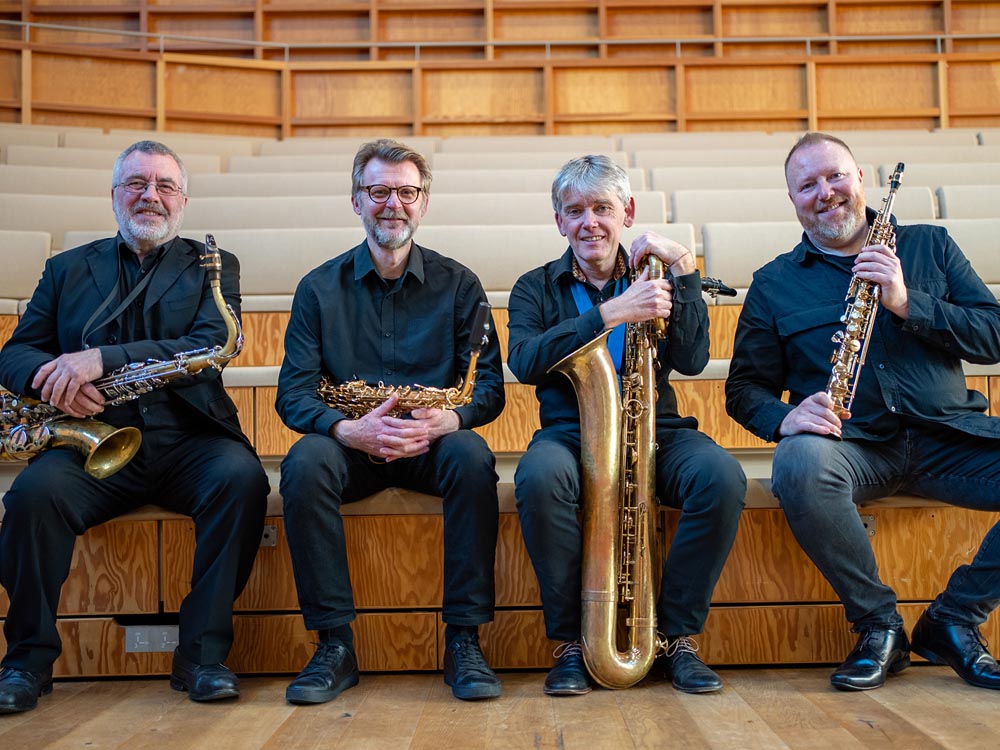
Delta Saxophone Quartet: Martland, Soft Machine and new works on Saturday

WHO better than the Delta Saxophone Quartet to give York Late Music’s 2023-2024 concert season early momentum on Saturday?

A double celebration this weekend will mark not only 40 years of Late Music, but also the ruby anniversary of the Delta musicians, regular participants in the York series.

Saturday’s 7.30pm programme at the Unitarian Chapel, St Saviourgate, York, will be “typically Delta-eclectic”, featuring the music of Steve Martland, The Soft Machine and some new works.

Stuart O’Hara: Season-opening concert of English songs

The new series will begin on Friday at 1.30pm when bass singer Stuart O’Hara and pianist Marianna Cortesi take a tour through some of the finest English songs from the past decade: works by La Monte Young, Richard Rodney Bennett and Jonathan Harvey, complemented by world premieres of York composers’ settings of words by local poets.

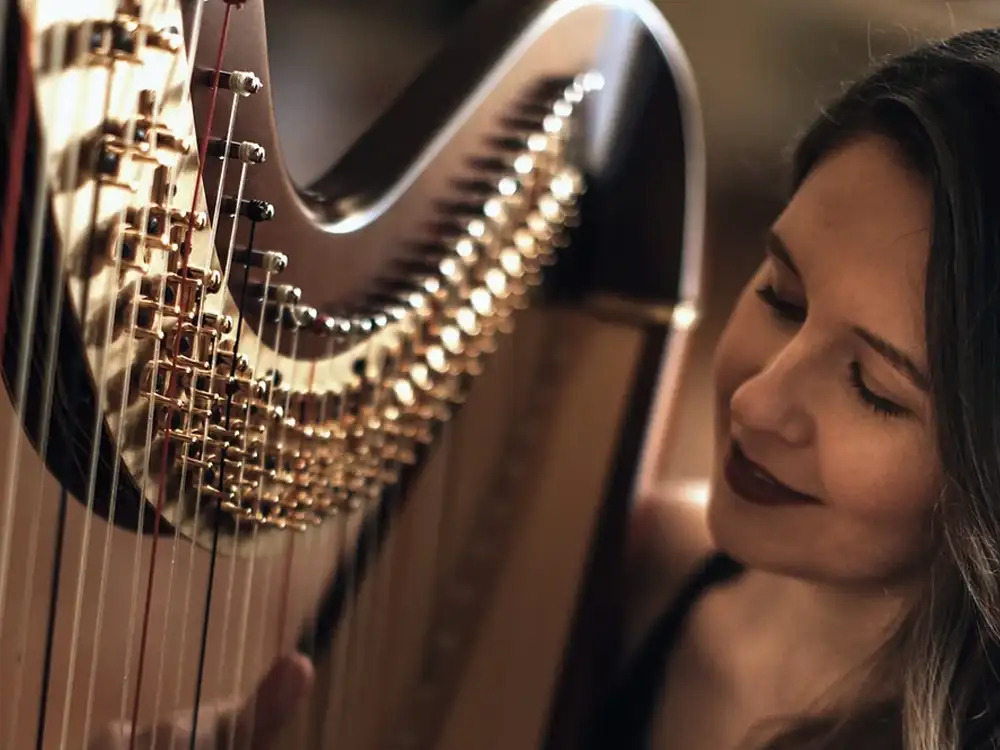
On Friday evening, Late Music will pose the intriguing question: would you attend a concert where all the music was played twice? Would it help you appreciate the music more? Late Music wants to discover the answers in Ruth Lee’s innovative concert of music for harp and electronics. This one is a free/pay-what-you-like event. You could even choose to pay twice!

If your knowledge of accordion is limited to scene-setting via Hollywood movie conceptions of Paris – as sent up by American filmmaker Woody Allen in Everyone Says I Love You – Saturday’s lunchtime concert will put you right.

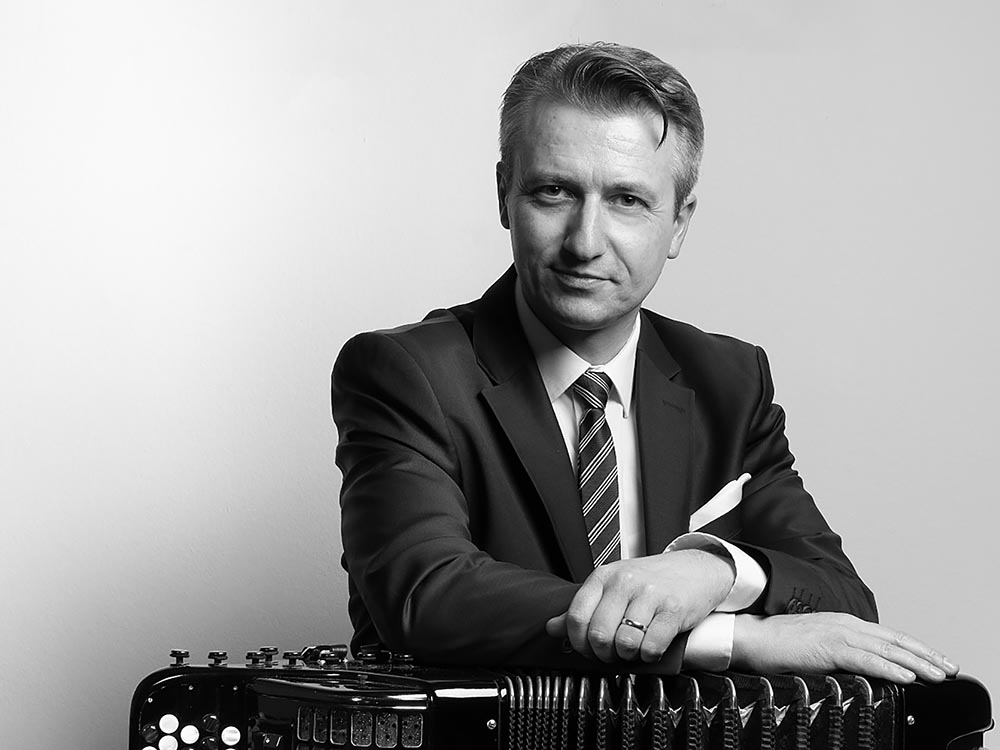
Franko Bozac: Never underestimate the accordion

Virtuoso Franko Bozac will showcase the reasons why this instrument should not be underestimated in his 1pm programme, featuring a collaboration between composer James Williamson and visual artist Romey T Brough, presented in tandem with Blossom Street Gallery, York.

November 4’s lunchtime concert will be a tribute to Dylan Thomas to mark the 70th anniversary of his death. Tenor Christopher Gorman and pianist David Pipe will present new settings of the Welshman’s poetry by composers Philip Grange, Sadie Harrison, Hayley Jenkins, David Lancaster and Rhian Samuel at 1pm.

In the evening, Beethoven will feature via Franz Liszt piano transcriptions, played by another Late Music favourite, Ian Pace. His 7.30pm programme will include Michael Finnissy’s Gershwin song transcriptions and Late Music concert administrator Steve Crowther’s Piano Sonata No. 4. Box office: latemusic.org.

Ruth Lee: Innovative concert of music for harp and electronics

REVIEW: Martin Dreyer’s verdict on York Musical Society & Philharmonischer Chor Münster, York Minster, June 10. PREVIEW: Academy of St Olave’s Summer Concert, June 17

Soprano soloist Elinor Rolfe Johnson

THREE early works by Vaughan Williams made an invigorating evening, when the choir of York’s twin

city, Münster, joined forces with York Musical Society’s choir and orchestra, all conducted by David Pipe.

The programme was dedicated to Philip Moore, organist emeritus of York Minster, who celebrates his 80th birthday in September. It also marked 25 years since Martin Henning – present here as a tenor – became conductor of the Münster choir.

Vaughan Williams’s first essay into symphonic realms, A Sea Symphony, was premiered at the Leeds Festival of October 1910, with the composer conducting and Edward Bairstow as organist. But he revised it extensively over the years until 1923.

He emphasised that the words are used symphonically, as a vehicle for the choir, which must therefore be considered an extension of the orchestral textures. Walt Whitman’s poetry is not unimportant, but the overall theme of human endeavour and the brotherhood of man is what really matters.

This message was at the heart of its success here. The symphony is a rambling affair, well over an hour, and not easy to distil. But Pipe kept his eye on the ball and his singers’ eyes on him, nursing them deftly through the work’s many minefields.

We must not, however, forget the sterling contribution made by the orchestra led by Nicola Rainger. The strings worked with ferocious devotion, while the brass – who have a much easier time of it – made hay, never looking back after blasting out the crucial opening fanfare triumphantly.

Solo soprano Elinor Rolfe Johnson was straight into her stride in Flaunt Out, O Sea, doubtless inspired by several thunderous moments in the first movement. She generated considerable resonance throughout the work with a cutting edge that was ideal in this company. The choral sopranos took courage from her and sustained their high tessitura superbly.

Julian Tovey’s pleasing baritone was at his best in the slow movement On The Beach At Night, Alone, evoking a “vast similitude” under a starry sky against a gentle orchestral swell. The movement ended marvellously quiet.

In the scherzo The Waves, string tremolos offered exciting underpinning to the gurgling ocean, where the choir really laid into their lines with relish. Its finish was thrilling.

The finale is long and floundering, not easy to sustain. But the choirs’ reserves of stamina carried the day. Pipe’s broad tempos were excellently judged for this vast acoustic; he wisely concentrated on the wood, not the trees, and took us from climax to climax with increasing fervour. The offstage semi-chorus provided by the Ebor Singers was eerily effective.

In their duet, the baritone did not quite balance the soprano, needing more operatic heft; he compensated on his own later. What mattered, though, was the exhilarating timelessness of Whitman’s vision, crystallised here in the ultra-soft ending.

The evening had begun with the composer’s first work to capture the attention of critics and public alike, Toward The Unknown Region (1907), a setting of Whitman’s Whispers Of Heavenly Death. Its opening was amorphous, even nervy, where the choral basses needed to deliver more. But it came to a fighting finish, spearheaded by the excellent sopranos.

Earlier still was the composer’s first orchestral work, Serenade in A minor (1898) for small orchestra, which followed. The orchestra enjoyed – and deserved – the spotlight it offered. The cellos framed a tidy Prelude and the galloping Scherzo was redolent of rural pursuits.

The Intermezzo found Vaughan Williams experimenting with different groupings, but the rhapsodic Romance had a pleasing clarinet solo and an unforgettable passage of very high coloratura for the first violins, which was despatched with panache. The Finale had a martial flow, ending with a fanfare flourish. It was well worth exhuming.

Review by Martin Dreyer

PREVIEW: Academy of St Olave’s Summer Concert, St OLave’s Church, Marygate, York, June 17, 8pm

The poster for the Academy of St Olave’s summer concert

THE Academy of St Olave chamber orchestra rounds off its 2022-23 season with a summer concert centred on England’s musical legacy, from symphonies written for
London audiences by the great Austrian composers Mozart and Haydn, to works by
English composers Frederick Delius, Ralph Vaughan Williams and Paul Patterson.

The concert is book-ended by Mozart’s first symphony and Haydn’s 100th, known as “The
Military”. Mozart composed his work in London during his family’s Grand Tour of
Europe in 1764, when the boy wonder was eight.

Likewise, Haydn’s composition was one of his 12 “London symphonies”, to be performed during his second visit to England in 1794-95. The prominent fanfares and percussion effects employed in the second and fourth movements prompted its “Military” moniker.

Delius’s Summer Night On The River and Vaughan Williams’s rarely heard Harnham Down are short impressionistic tone poems, with each composer taking inspiration from continental counterparts: in Delius’ case, Debussy, whereas the young Vaughan Williams was clearly still working under the influence of Wagner.

The programme is completed by Paul Patterson’s Westerly Winds, a four-movement suite for wind quintet commissioned in 1999 by the Galliard Ensemble. The composer describes it as “essentially a sequence of four short fantasias based on West Country folk tunes”, including Farmer Giles and Linden Lea.

Musical director Alan George says: “While our summer concert has a nominally
English theme, the programme also serves to demonstrate the rich cultural exchanges with
European neighbours that have helped form today’s musical landscape, with pieces originating from more than two centuries apart.

“I’m sure our audience will be delighted by the range of music on offer, including some relative rarities, all performed by the highly skilled musicians of the academy.”

The concert is in aid of St Leonard’s Hospice, the independent York charity that provides specialist palliative care and support for those with life-limiting illnesses. 

Tickets cost £15 or £5 for accompanied children (18 and under) at academyofstolaves.org.uk or on the door, if any are unsold.

REVIEW: Martin Dreyer’s verdict on York Musical Society, Requiem Aeternam, York Minster, March 11

Brittany King: Soprano soloist

TWO Requiems, one familiar, one rarely heard, were combined for this Lenten concert which, despite the biting cold both inside and out, attracted a considerable audience.

This was the ninth time that York Musical Society had given Fauré’s Requiem, dating back to its York premiere in 1949. By contrast, Michael Haydn’s Requiem in C minor had never been heard here before.

Haydn was a prolific composer, but never quite emerged from the shadow of Joseph, his elder brother by five years. His style was more conservative and thus also more predictable, rarely straying far from convention.

He was a good craftsman, however, and everything in his Requiem, written in December 1771 after the death of Archbishop Sigismund Schrattenbach – and in the wake of his infant daughter’s death – is neatly tailored and politely ordered. Just what the doctor ordered, in fact, for a decent funeral.

It found the choir in good voice, if at first more cautious than inspired. The Introit eerily heralded what Mozart was to produce fully two decades later. Haydn’s Dies Irae, although not as terrifying as Mozart’s, was strong, with the four soloists well led by Brittany King’s vibrant soprano; she was ably partnered by the contralto-toned mezzo of Marie Elliott.

Robert Anthony Gardiner’s tenor lacked heft in the latter stages of the Dies Irae, but he negotiated the opening of the Offertorium smoothly. Felix Kemp’s baritone offered a firm underpinning to the solo quartet, which was at its best in the Benedictus.

The choir really warmed to their task in the fugal passages at the end of the Offertorium, and although the Agnus Dei moves at a stately plod, it had a certain majesty here. The orchestra, with four seemingly omnipresent trumpets in fine voice, responded keenly to David Pipe’s authoritative beat, despite a bass line that barely pauses for breath.

Fauré’s justifiably well-loved Requiem was on a different plane. Faces were out of copies and engagement throughout the choir ranks was total. As a result, we had a lively Sanctus, much enhanced by the harp of Georgina Wells. We needed a touch more bite from the tenor line in the Agnus Dei, but there was plenty of fire in all voices for the ‘Dies illa, dies irae’ section of the Libera Me. The sopranos were truly angelic for the In Paradisum.

The two soloists were first-class. Felix Kemp found excellent legato for the ‘Hostias’ section of the Offertory and forthright resonance for the start of the Libera Me. Brittany King adopted a much straighter tone for the Pie Jesu and sustained it beautifully, making it sound much easier than it really is.

The violas, mellow and dusky, really came into their own in the orchestra – which only lacked flutes – and Pipe’s baton cajoled the choir as needed. Alhough he is now based in Leeds, we must hope that he maintains this valuable connection with York.

Review by Martin Dreyer