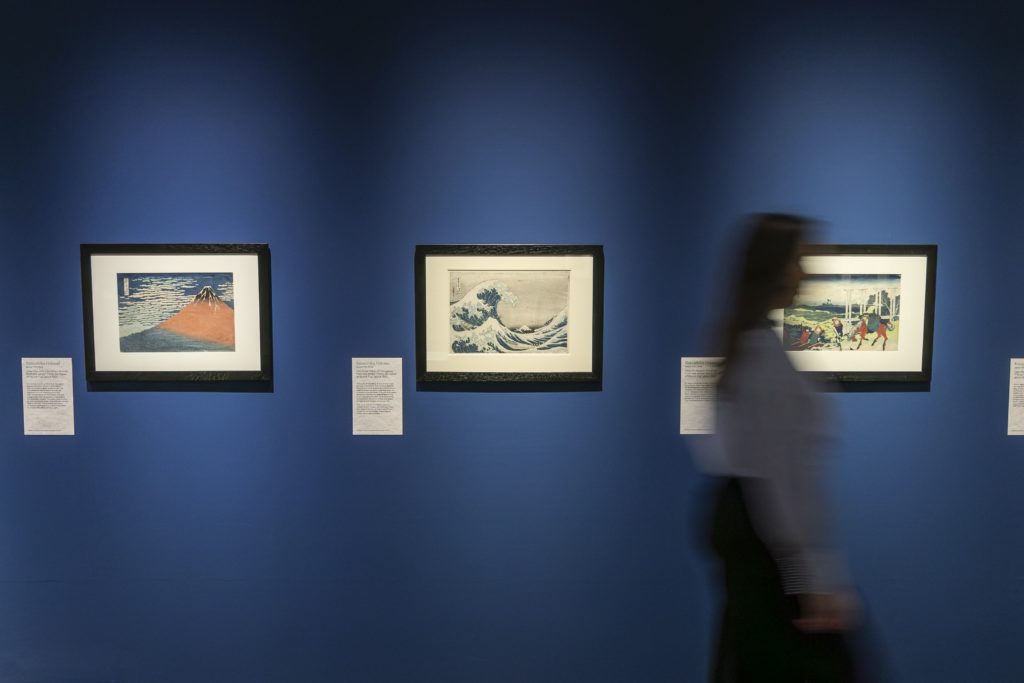
Waves in motion: Making Waves at York Art Gallery. Picture: Lee McLean
MAKING Waves: The Art of Japanese Woodblock Print has taken a year of preparation at York Art Gallery.
On show until August 30, the display of Japanese art and culture brings together more than 100 striking and iconic works from renowned artists such as Katsushika Hokusai, Utagawa Hiroshige and Kitagawa Utamaro, amongst many others, complemented by armoury from the Royal Armoury In Leeds and kimonos from Durham Oriental Museum at Durham University.
To provide an insight into the history and development of Japanese woodblock printing, the exhibition brings together exhibits from York Art Gallery’s extensive collection of Japanese prints, some never exhibited previously, together with prints loaned from Maidstone Museum, Ashmolean Museum and the British Museum and early printed books from the British Library.
Covering more than 300 years of printing history, from the 17th to 21st centuries, Making Waves places particular emphasis on the heyday of Japanese woodblock printing in the 18th and 19th centuries.
At its epicentre is the chance to see Katsushika Hokusai’s The Great Wave off Kanagawa, one of the most recognisable and celebrated artworks in the world. This original print has been lent to York Art Gallery by Maidstone Museum, and like encountering Leonardo da Vinci’s 16th century portrait of the Mona Lisa at the Musée u de Louvre, the work is smaller than you might expect but just as impactful.
Spread across three rooms, Making Waves invites visitors on a journey that begins with a guide to the origins and techniques of early printmaking, before looking at major themes, including the “floating world” of urban entertainments, the beauty of Japanese landscapes, legendary heroes and adventurers from fantastical tales and historical epics, actors and Samurai warriors (representing martial prowess, courage, loyalty and honour). Festivals and seasonal celebrations feature too.
Finally, the exhibition explores how print artists responded to major changes in Japanese society, from Japan’s development into a modern industrial nation in the late 19th century through to the present day.
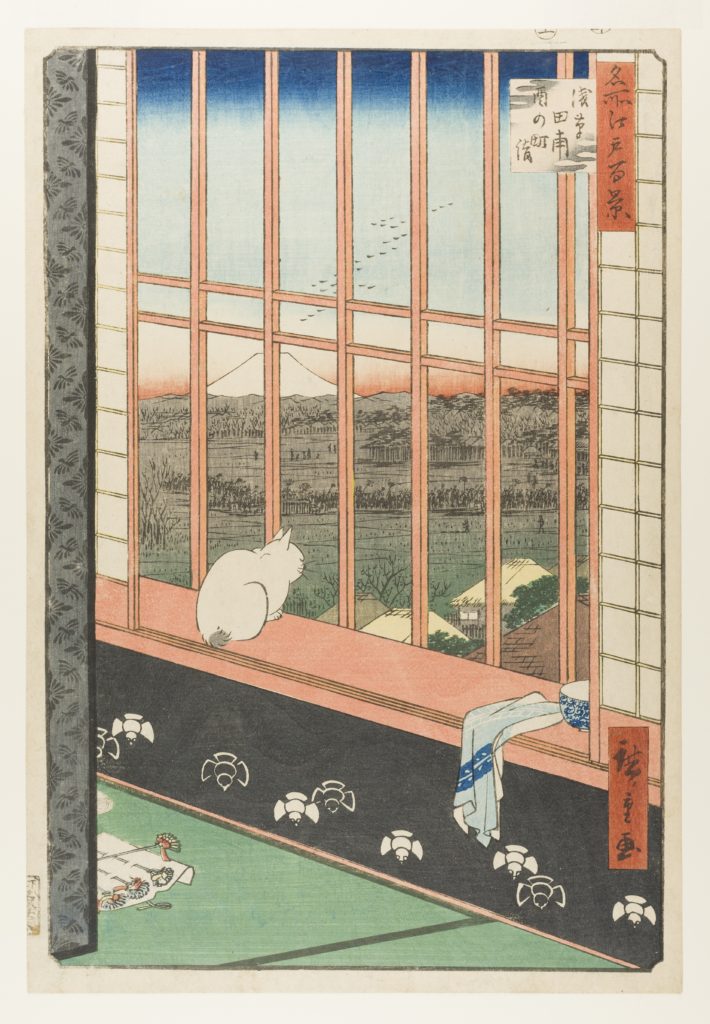
Utagawa Hiroshige’s Asakusa Rice-fields and Torinomachi Festival, from the series One Hundred Famous Views of Edo, part 4 Winter, 1857, York Art Gallery collection. Picture courtesy of York Museums Trust
Contemporary Japanese woodblock prints feature too in the third room, including several works by Royal Academy of Arts president Rebecca Salter, created in collaboration with Sato Woodblock Workshop, Kyoto, plus Japanese woodblock prints depicting the North York Moors by Scottish artist Laura Boswell, such as Rhubarb Sky.
Look out too for works by London-based artist Nana Shiomi, whose 2001 print, Hokusai’s Wave – Happy Carp is displayed alongside the very woodblocks Shiomi used to produce it, enabling visitors to gain an understanding of the technical process of printing.
Entertainment and festivals, folklore and seasons and travel and adventure all play a major role in these vibrant images, whose dynamic designs remain popular centuries later.
Making Waves marks the debut of Eleanor Jackson as curator of fine art at York Art Gallery. “I started here in January last year and was given this exhibition to curate straight away. To hit the ground running and to turn it round in a year has been challenging but it’s worked out well,” she says.
“Arranging the loans is by far the most time-consuming part of organising the exhibition, so that was the first task I did, researching potential loans and contacting leading institutions.”
Eleanor continues: “Ever since Japan was opened to Western trade in the 1850s, Japanese art has become increasingly popular in the West and Europe, causing a sensation when first exhibited in Paris, introducing audiences to the woodblock print, and now there are so many fantastic collections in the UK.”
One key curatorial decision was to address the need to add contrast to “the prints being mostly 2D and small”. “It was important to bring in bigger items, such as the armour and kimonos, to provide dramatic sightlines, and to give a fuller flavour of Japanese culture in that period,” says Eleanor. “We also asked our exhibition designers, Journal, from Leeds, to provide a sense of scale.”
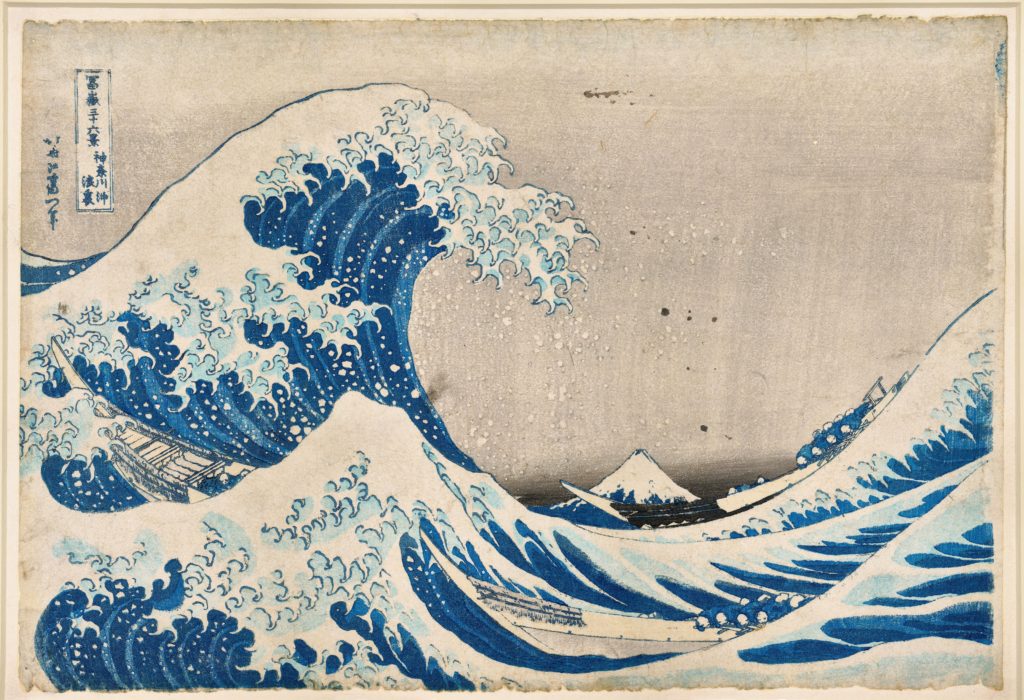
The Great Wave off Kanagawa, by Katsushika Hokusai, circa 1829-32. Image courtesy of Maidstone Museum, on loan at York Art Gallery
In addition, the exhibition focus on woodblock print techniques is intended to be of interest to artists, while visitors can “have a go” at woodblock printing”. “It’s important to understand the art of woodblock and the huge amount of work and skill that goes into each one. Even though they are prints, they are unique because they all have imperfections,” says Eleanor.
Summing up the significance of Making Waves, she enthuses: “To bring these works together in this way has been a privilege, and we are so excited to unveil the exhibition.
“The support of national and regional museums, as well as contemporary artists, has been instrumental in allowing us to tell the story of this gorgeous art form. We are grateful to them for lending their precious works to York Art Gallery for this exhibition.”
Making Waves will extend into York Museum Gardens, where a new Japanese- style garden is being installed, ready for the spring and summer months. A Japanese dry garden, or “karesansui”, created in the space behind the gallery, takes inspiration from traditional Japanese gardens with a contemporary interpretation linked to the history of the site.
Often called a “zen”’ garden, the Japanese dry garden is constructed simply using wood, stone and bamboo to create a space for calm contemplation and meditation, inviting people to take time out from their day.
Steve Williams, garden manager at York Museums Trust, says: “Four blossom trees will be a key feature in the garden as we head into spring 2026: three cherry trees and an apricot tree. Blossom trees hold a cultural significance in Japan, symbolising beauty, impermanence and renewal, which reflect the transient nature of life.
“All the materials included in the Japanese-style garden have been sourced with the intention of longer-term use, and they will be repurposed elsewhere in Museum Gardens following the exhibition.”
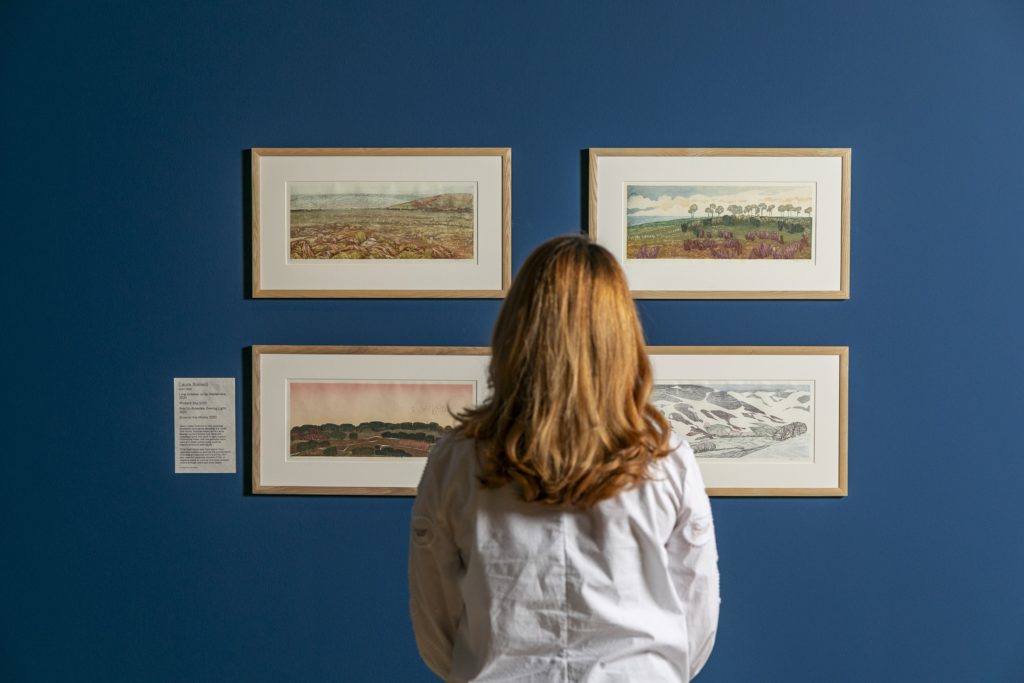
Japanese woodblock prints depicting the North York Moors by Scottish-based artist Laura Boswell from Making waves at York Art Gallery. Picture: Lee McLean
Making Waves is accompanied by interactive programme of activities and events, including specialist talks from artists, makers and curators throughout the exhibition run. Interactive guided workshops for over-16s will enable participants to “get to grips” with printing techniques, bookbinding and Ikebana flower arranging throughout the summer months and to create bespoke art to take home.
Siona Mackelworth, head of audience and programme at York Museums Trust, says: “The associated programme and events are designed for all ages to make connections to Japanese art and get involved with the gallery.
“We’re delighted to play host to more internationally important art, building on the success of our Claude Monet and William Morris exhibitions last year, and to share the stories and processes behind Japanese printing by showcasing technically complex and visually impactful artworks.”
Making Waves: The Art of Japanese Woodblock Print, York Arts Gallery, on show until August 30. Entry is included in general admission to York Art Gallery. Tickets: yorkartgallery.co.uk.
Did you know?
THE Japanese art aesthetic of Making Waves extends into York Art Gallery’s two shops, where prints, souvenirs and kimono jackets are on sale. For the creative, Kintsugi kits and sketchbooks are stocked, as well as themed gifts such as fun socks, chopsticks and lucky welcome soaps.
Many products display art from the gallery collection or are sourced directly from Japan. In addition, a new print inspired by Japan and York Art Gallery has been created by York artist Lincoln Lightfoot.
The balcony ceramics shop offers tea bowls and other handcrafted ceramics inspired by Japanese Pottery.
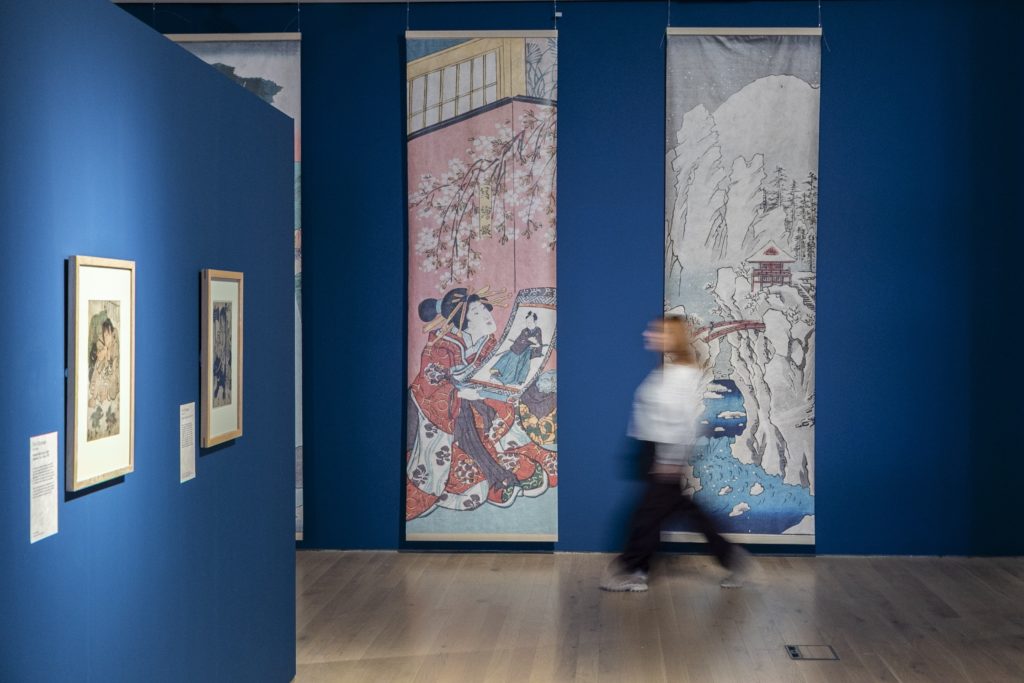
Exhibition designers Journal bringing “a sense of scale” to Making Waves at York Art Gallery. Picture: Lee McLean
Did you know too?
PRUSSIAN Blue, the world’s first synthetic pigment, was available widely in Japan from 1
Utagawa Kunisada (1786-1864): back story
THE most prolific, popular and commercially successful print artist of his time, Kunisada designed at least 20,00 prints during his 50-year career, where he was assisted by dozens of students employed in his studio.
While Kunisada tried his hand at a wide range of genres, theatre prints made up around 60 per cent of his output. Usually published to coincide with particular performances, theatre prints became outdated quickly. Kunisada’s rapid production and commercial acumen, however, enabled him to keep up with public demand for up-to-the-minute prints.
Kunisada excelled at conveying drama, expressions and gorgeous costumes of the theatre. His prints are typically beautifully detailed, busy in composition and intense in emotion.