REVIEW: Martin Dreyer’s verdict on Opera North in The Sound Of Music, Leeds Grand Theatre, until August 1

Katie Bird’s Maria in Opera North’s The Sound Of Music

IF your memories of The Sound Of Music come with the emotional baggage of the 1965 film starring Julie Andrews, you will be more than pleasantly surprised by this reconstituted stage version.

Miss Andrews was a huge talent and the film proved a blockbuster, but its sugar-rush has been supplanted in this Nikolai Foster production (revived here by Ollie Khurshid) by a great deal more substance, political, emotional and geographical.

First seen in Leicester’s Curve Theatre last November, it now has the benefit of a full-size (40-piece) professional orchestra and chorus. Operatic purists may recoil to learn that all the singers are miked – which certainly helps the children’s voices – but they will get over it.

Two numbers cut from the film are restored, How Can Love Survive? and No Way To Stop It. Both refer candidly to the Nazi backdrop. This musical has a serious side that the film version all but ignored.

When a messenger boy in uniform arrives with a telegram “from Berlin” and bellows a Nazi ‘Heil!’ salute, you can almost hear the audience gasp. It recalls the Anschluss (Germany’s annexation of Austria in 1938).

The message commands Captain von Trapp to join the German navy, which he is naturally loath to do. So it has a decisive effect – and gives us chilling context.

Michael Taylor’s set is exemplary. A nursery slope of the mountains around Salzburg, which are seen in the background – instantly paralleled by Maria’s “the hills are alive” at the start – has an angled path running down across the stage.

 In the final scene, the nine members of the Trapp family, now refugees, are silhouetted against the night sky as they escape through the mountains to the New World. We understand at once: history never really changes.
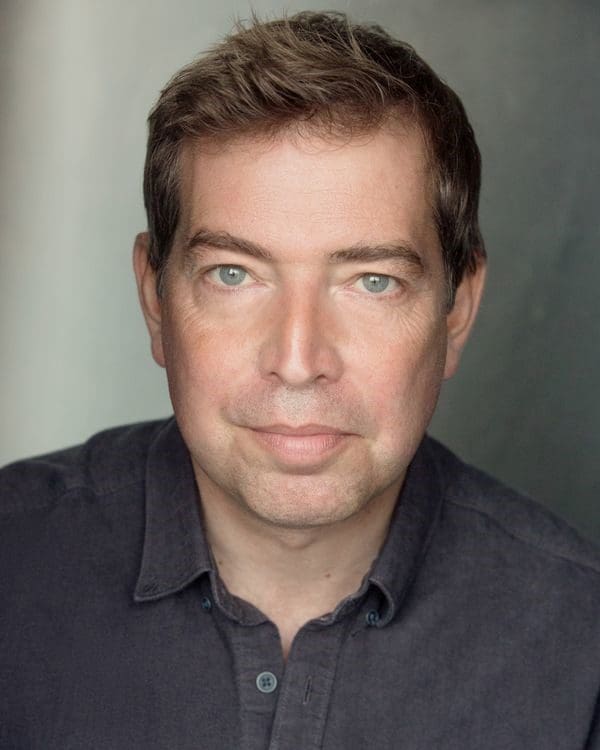
Edward Bennett: Playing Captain von Trapp in Opera North’s The Sound Of Music

When he needs to be in the abbey with the nuns, he lowers a great pointed ecclesiastical window-frame. In the castle, there are grand doors instead.

Needless to say, the musical side of the evening is stunning. Katie Bird makes Maria her own, conflicted over her true calling, firm in her principles, but tender with the children. ‘Do-Re-Mi’ is charming and ‘My Favourite Things’ is life-loving. She gives us all sides of a truly appealing character.

Edward Bennett is an actor rather than a singer, but his baritone is perfectly adequate for the role of Captain von Trapp, as in his duet with Maria, ‘Something Good’, and in Edelweiss’ with the family.

There is one truly glorious piece of singing from Katherine Broderick as Mother Abbess: she gives us full Wagnerian splendour in ‘Climb Ev’ry Mountain’ at the end of each act, soaring above the tumult.

The seven children – all are double-cast (this was the ‘Drop’ group) – sing with great conviction and clarity and they move with impressive discipline.

Amy Freston delivers a nicely haughty Baroness Elsa, whom the Captain discards for Maria, while other members of the pro-Nazi camp are neatly defined by Nicholas Butterfield as Max and Kamil Bien as Rolf. A variety of colourful cameos come from other members of the Opera North chorus, notably as nuns.

Ebony Molina’s choreography avoids traditional ‘song-and-dance’ routines in favour of more restrained and more engagingly lifelike dance. Oliver Rundell conducts with panache and his orchestra takes to the idiom like ducks to water, bursting with rhythmic pizzazz. The big choral numbers are thrilling.

This may not be The Sound Of Music as you imagined it, but it rings absolutely true. You dare not miss it.

Opera North in The Sound Of Music, Leeds Grand Theatre, until August 1. Box office: 0113 223 3600 or operanorth.co.uk.

Review by Martin Dreyer

REVIEW: Theatre Royal Bath Productions and Jonathan Church Theatre Productions in A Man For All Seasons, Grand Opera House, York, until Saturday ****

Principled politician: Martin Shaw’s Sir Thomas More in A Man For All Seasons. Picture: Simon Annand

SHAKESPEARE’S history plays still pop up. So too the ancient Greek tragedies and the Jacobean revengers’ tales, yet rarely do they tour, but why not in this turbulent political age?

Theatre should be more than an escape, more than yet another transfer from film to musical, a belief reinforced by the political dramas of David Hare and James Graham and indeed His Last Report, York Theatre Royal’s on-going community play about York social reformer Seebohm Rowntree.

Theatre Royal Bath Productions and Jonathan Church Theatre Productions’ West End-bound revival of Robert Bolt’s witty, wise and waspish A Man For All Seasons only emphasises how there should be a more regular place on our stages for proper, heavyweight political dramas that make us look at the malpractice of our own times.

Latterly in theatreland, Henry VIII has been infamous for his wives’ revenge musical, SIX, conducted like a cross between a pop concert and a rap battle. Harry makes no appearance in that show, where he is given six of the best in pugilistic putdowns. 

Gary Wilmot: Comedic star turn as The Common Man in A Man For All Seasons. Picture: Simon Annand

In Bolt’s 1960 play, Henry is restricted to a cameo, a look-at-me, pouting, petulant flash Harry in the manner of Rik Mayall’s Lord Flashheart in Blackadder, but his constant threat, his greater-than-God arrogance, is omnipresent.

Orlando James was absent on press night, but understudy Huw Brentnall did such a fine job that his rowdy, ruthless, buffoonish Henry received pantomime villain boos for all his narcissism, boasting of his best-in-class legs, boat, grasp of Latin (only to be outdone by Rebecca Collingwood’s bright spark Margaret More) and song-writing.

Bolt’s humour, such a strong suit throughout, is at its best here, and all the while, it is impossible not to think of President Trump and his need to be centre of attention, his need for an instant response, his constant craving of change.

By dint of his restriction to one scene, Bolt’s Henry III is a caricature, but the man for all seasons of the title, Martin Shaw’s Sir Thomas More is wholly rounded, a legal brain in the tradition of the brightest barriers, treated with due gravitas by Bolt.

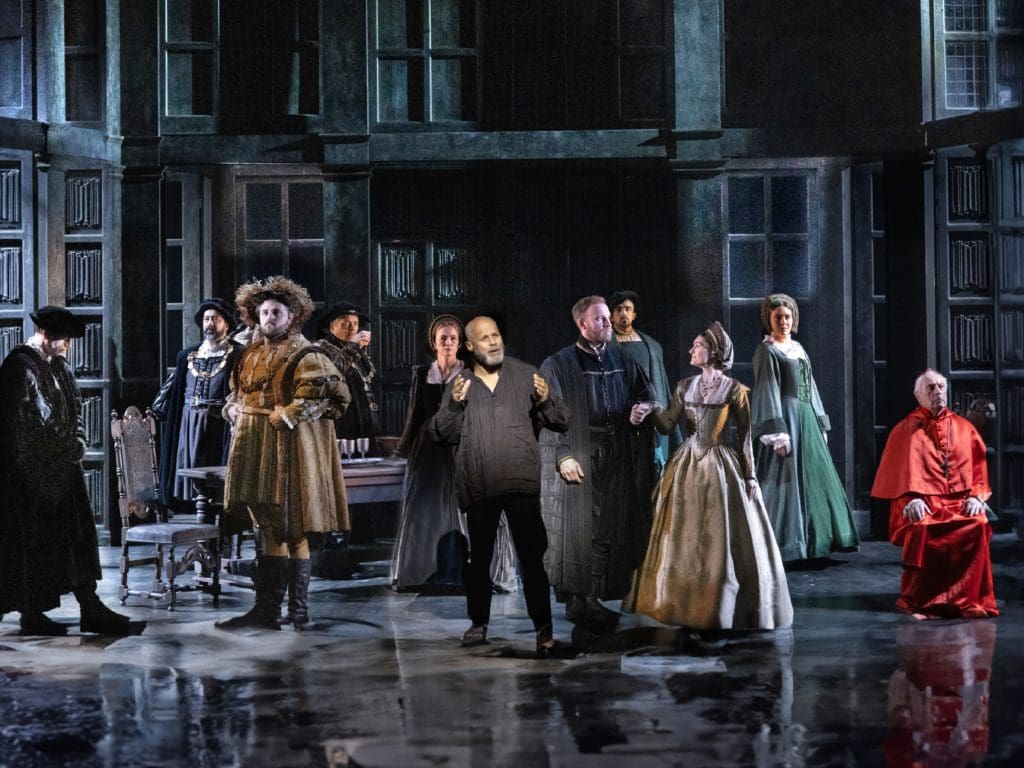
Political intrigue and religious conflicts in A Man For All Seasons, on tour at Grand Opera House, York. Picture: Simon Annand

Shaw had first played him in 2006 and wanted more of his More in 2025 for all manner of reasons: a chance to work again with Jonathan Church after their West End collaboration on Hobson’s Choice in 2016; a return to the beautiful Theatre Royal Bath; his appreciation of Bolt’s writing and his relish for playing More.

At 80, the erstwhile star of The Professionals, Judge John Deed and Inspector George Gently retains stage presence, theatrical heft and the timing and know-how of delivery, but the absence of amplification exposes his voice, which sometimes loses clarity in Act One, although he then over-compensates in his stentorian last speech. 

That said, his principled, prayerful Lord Chancellor More, refusing to endorse Henry’s divorce from Catherine of Aragon, is a wholly admirable, decent and dignified figure, sticking to his religious beliefs under the kind of pressure that would have modern-day politicians buckling.

If Shaw’s More is steadfast, Gary Wilmot’s comedic star turn, The Common Man, is the chameleon with the survival instincts of a cat, playing all manner of downstairs roles, from messenger to pub landlord to jobsworth jailor. 

Orlando James’s Henry VIII making demands of Martin Shaw’s Sir Thomas More in A Man For All Seasons. Picture: Simon Annand

Each one finds him seeking to outwit yet live off the upstairs world at a price, tirelessly breaking down theatre’s fourth wall in direct address to the audience that recalls Shakespeare’s smart fools. Living on his wits, Wilmot’s Common Man is a radiant joy throughout, cheeky yet somehow never in danger of the chop amid the mayhem of all the political machinations around him.

Central to those machinations, as Henry VIII imposes the Church of England in a breakaway from Rome, is the relentless quest of Henry’s hitman, Edward Bennett’s venal Thomas Cromwell, to bring down More by stealth, applying every trick in the book, bending the truth, with cruel humour to boot.

Church’s direction brings out all the nuances, the intelligence, the lyricism, the delight in verbal jousts in Bolt’s supreme script, and while A Man For All Seasons may feel old-fashioned, right down to Simon Higlett’s dark, austere wooden set, that is only because plays of such depth, such vision, such brio, are too rarely staged today.

A Man For All Seasons runs at Grand Opera House, York, until Saturday, 7.30pm plus 2.30pm Thursday and Saturday matinees. Box office: atgtickets.com/york.