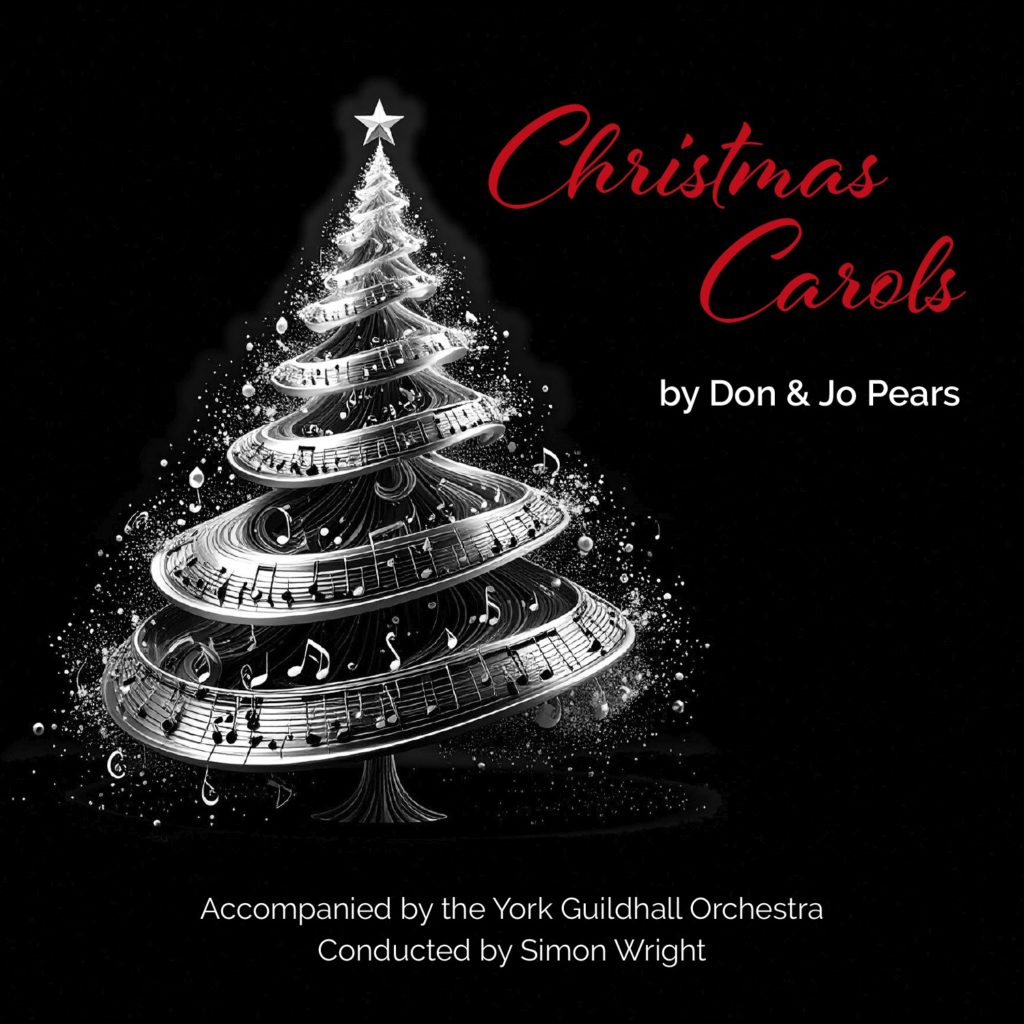
The cover artwork for Don and Jo Pears’ festive album Christmas Carols
YORK musical stalwarts Don and Jo Pears are releasing a festive album, Christmas Carols – A Musical Celebration of Tradition and Talent.
The CD comprises 23 beautifully arranged carols written by the duo as “the culmination of decades of musical passion and collaboration, dedicated to Don’s late mother, Rhoda Robinson, and her family for their unwavering support”.
Don’s musical journey began in the small mining village of Leadgate, County Durham, where his love for music was nurtured in the Methodist Church choir under the guidance of Mr L. T. Whaley.
His career spans more than 34 years as head of music in schools and includes studies at Huddersfield University, The Guildhall, King’s College London, and Bretton Hall, West Yorkshire.
Today, Don is a legendary figure in York’s musical community, built around strong ties to the Joseph Rowntree Theatre.
Jo Pears, a well-known singer in York, has starred in numerous musicals and performed with the York Guildhall Orchestra at York Barbican.
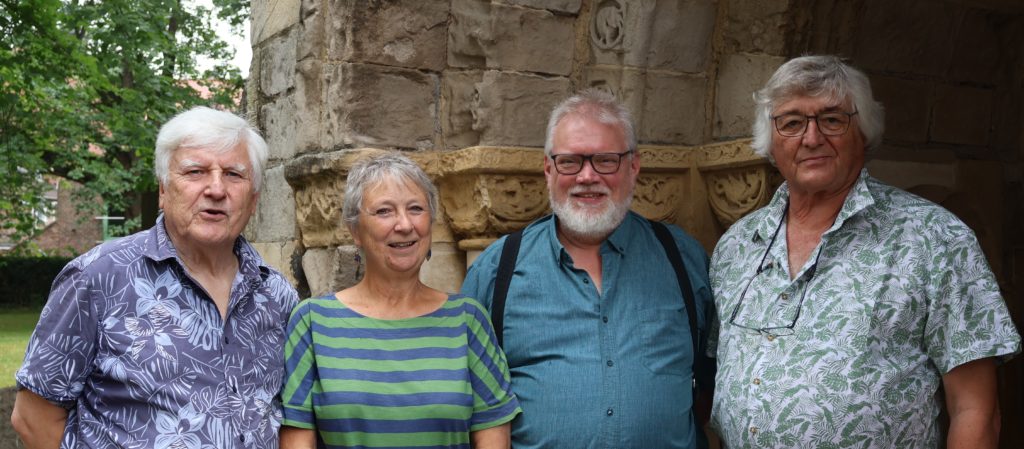
Christmas Carolscomposer Don Pears, left, York Guildhall Orchestra leader Fiona Love, producer Bob Whitney and conductor Simon Wright
Together, Don and Jo have helped raise funds to support the Joseph Rowntree Theatre, a cherished cultural landmark and beacon for community arts.
Performing together for decades, composer Don and lyricist Jo have written songs and carols since the early 2000s. Their music is created for everyone to enjoy and reflects their lifelong dedication to the arts and community.
The album was recorded at the National Centre for Early Music, St Margartet’s Church, in Walmgate, with the York Guildhall Orchestra and a specially formed choir of friends, who were conducted by musician and Guildhall Orchestra director Simon Wright.
The Singphonia Singers, a group of talented performers formed by Don, will showcase some of the carols at A Christmas Selection Box: A Music Night Production at the Rowntree Theatre on Sunday, December 14 at 7pm. Tickets are on sale on 01904 501935, at josephrowntreetheatre.co.uk or on the door, priced £12 to £15.
The Christmas Carols CD will be on sale at Sunday’s concert or can be downloaded from Spotify, Apple iTunes and Amazon Music.
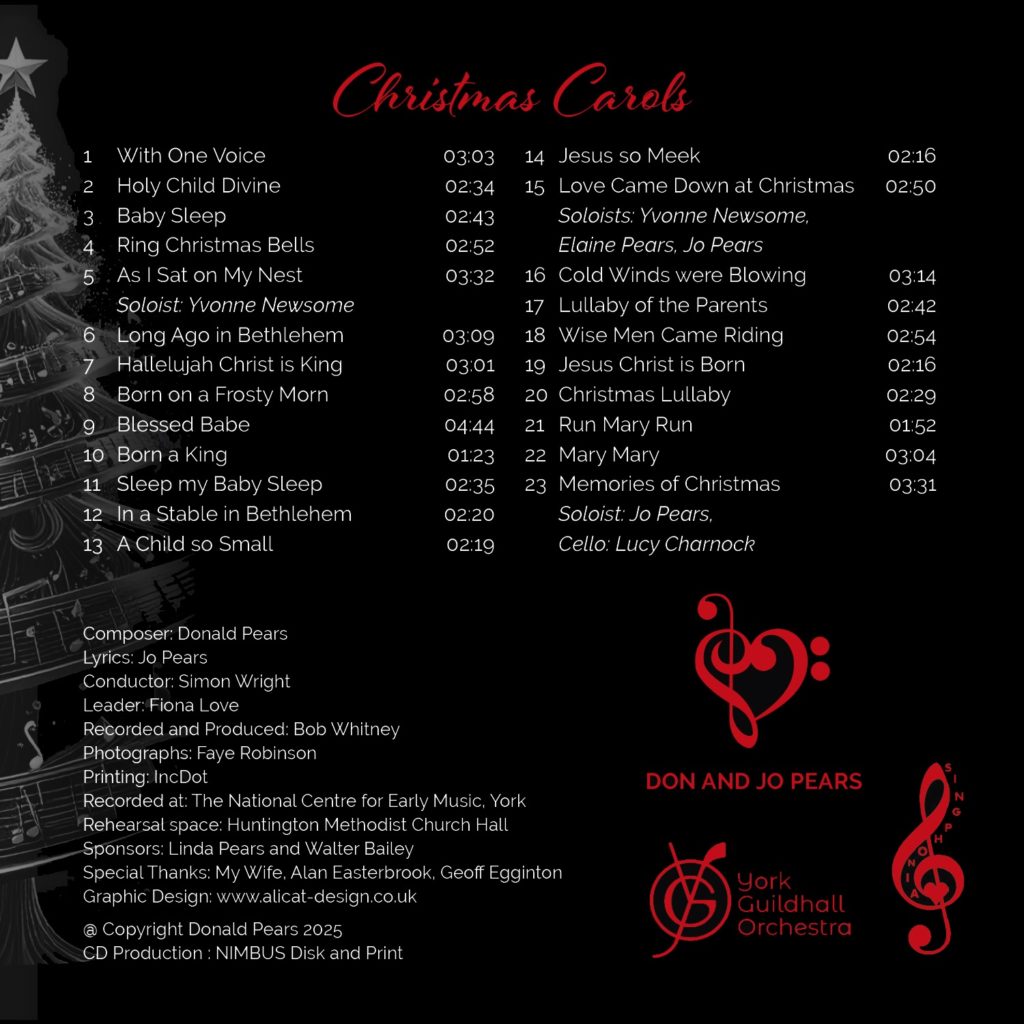
The track listing for Don and Jo Pears’ album Christmas Carols
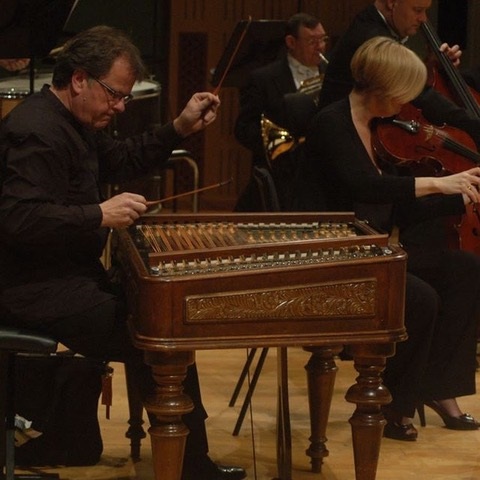
Chris Bradley playing the cimbalon at York Guildhall Orchestra’s concert
THIS fascinating programme could hardly have been more contrasting: Zoltán Kodály’s eclectic, charming Háry János Suite, Op. 15, and Dmitri Shostakovich’s dark, brooding Tenth Symphony in E minor, Op. 93.
The Prelude opened with a convincing “orchestral sneeze” – a Hungarian superstition that sneezing before telling a story confirms its truth. This was very much a scene-setter: atmospheric orchestral textures with fine woodwind and string contributions, and a nicely judged balance overall.
The Viennese Musical Clock was delightful – toy-clock imagery created by the absence of strings in favour of playful percussion sounds (notably glockenspiel), and fine solos from Jane Wright (oboe) and others.
The lyrical Song featured fine solos from Moira Challoner (viola), Andrew Cavell (clarinet), and Wright again on oboe, plus a charming appearance by the delicate cimbalom (Chris Bradley).
The Battle And Defeat Of Napoleon was delightfully bonkers – a comedic, stylised battle with trombone calls to arms, doleful saxophone responses, military rhythms and a closing funeral procession. Fine playing again, with Simon Wright judging the balance expertly.
The highlight, however, was the Intermezzo. Here the Hungarian folk influence was most obvious, and Chris Bradley made a serious contribution – one he (and we) clearly relished. True, the cimbalom was sometimes drowned out by full orchestral textures, but that was almost inevitable given its intimate timbre.
I rather wish the Suite had ended here – it would have made a splendid sign-off. The final Entrance of the Emperor and His Court was dramatically fine – a ceremonial, deliciously pompous march – but musically, it didn’t add much. For me, anyway.
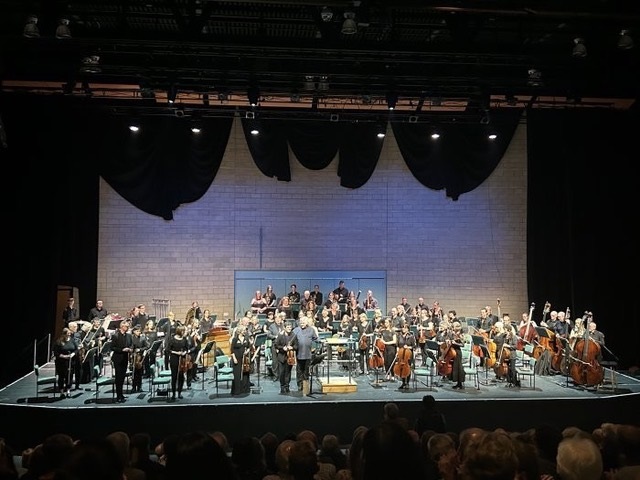
York Guildhall Orchestra in concert at York Barbican on October 12
Before we trotted off for our interval ice creams, Mr Bradley performed an attractive folksong tune which, he noted, quietly endorsed God’s Own County, Lancashire. I’ll get my coat.
Shostakovich’s Tenth Symphony was, according to his own account, composed in the months following Stalin’s death in 1953; it was premiered that December by the Leningrad Philharmonic under Yevgeny Mravinsky.
The opening Moderato is massive – both in length (it occupies about half of the symphony) and in emotional tone. The sense of torment seems undeniable; I was reminded of Bob Dylan’s song Not Dark Yet: “Sometimes my burden is more than I can bear/It’s not dark yet, but it’s gettin’ there”.
Simon Wright’s direction conveyed a real sense of organic purpose. The playing was commendably strong, with impressive contributions from clarinet, flute (Della Blood), oboe and bassoon (Isabel Dowell). The distant horn solo (Janus Wadsworth) added welcome warmth and humanity, and the chamber-like intimacy of the viola and cello solos (Moira Challoner and Sally Ladds) recalled Mahler in its emotional directness.
The relentless drive of the second-movement Allegro – “a musical portrait of Stalin” (Testimony) – came across with brutal intensity. After the murky depths of the first movement, its savage energy felt almost cathartic. Biting trumpet and trombone fanfares, quasi-martial snare drum and screaming woodwinds made this genuinely edge-of-the-seat stuff.
The third-movement Allegretto is a waltz – although not of the civilised Strauss variety. The tone is calmer, but still uneasy. It was fascinating to hear how the DSCH motif is woven into the fabric, alongside a counter-motif (E–A–E–D–A) attributed to Elmira Nazirova, a talented composition student.
The two form a kind of coded dialogue: the horn plays the rising “Elmira” theme – beautifully realised by Janus Wadsworth – discreetly answered by Andrew Cavell on clarinet. If love was indeed in the air, flute and oboe seemed to mock it. The performance projected a kind of chamber concerto for horn and woodwind.
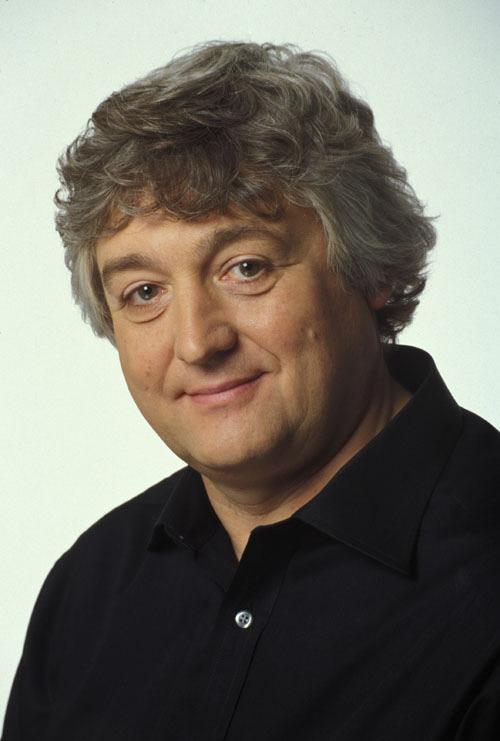
Simon Wright: “His direction conveyed a real sense of organic purpose”
There were some issues with the closing Andante–Allegro. The rapid, heavily accented syncopated rhythms at the start of the Allegro weren’t quite as tight as they could have been, and the alternation between massive tuttis and chamber-like conversations didn’t always convince – although the dry acoustic did the players no favours.
That said, there was much to admire. Wright judged the opening superbly: out of the almost eerie stillness emerged Della Blood’s haunting flute solo, her breath control and purity of tone capturing the fragility and tentative hope of the moment. It surely represents the first real breath after the long darkness of the symphonic journey so far.
Clarinet and bassoon then picked up fragments of the flute’s melody, responding in lower, darker timbres – deepening the colour and grounding the fragile flute tone. The woodwind exchanges continued the chamber-like intimacy and were strongly convincing.
They were joined by the horn, playing the distinctive “Elmira” motif and linking the finale to the personal world of the third movement. Wadsworth again impressed, particularly in the soft, sustained horn solo in the upper register – exposed and difficult for both intonation and breath support.
As the Allegro section began, the first violins – admirably led by Fiona Love – gradually assumed the melodic lead. Their lyrical yet forceful lines cut through the rhythmic engine with long, arching phrases, demonstrating impressive bow control.
In the end, the final word belonged to the timpani – Francesca Rochester on fine form throughout – rhythmically hammering out the DSCH motif (D–E♭–C–B), Shostakovich’s personal signature. Its insistent, obsessive repetition drives the symphony to its defiant E-major conclusion.
Given the technical, physical and emotional demands of this remarkable symphony – and the unsympathetic acoustic – this performance was a real achievement.