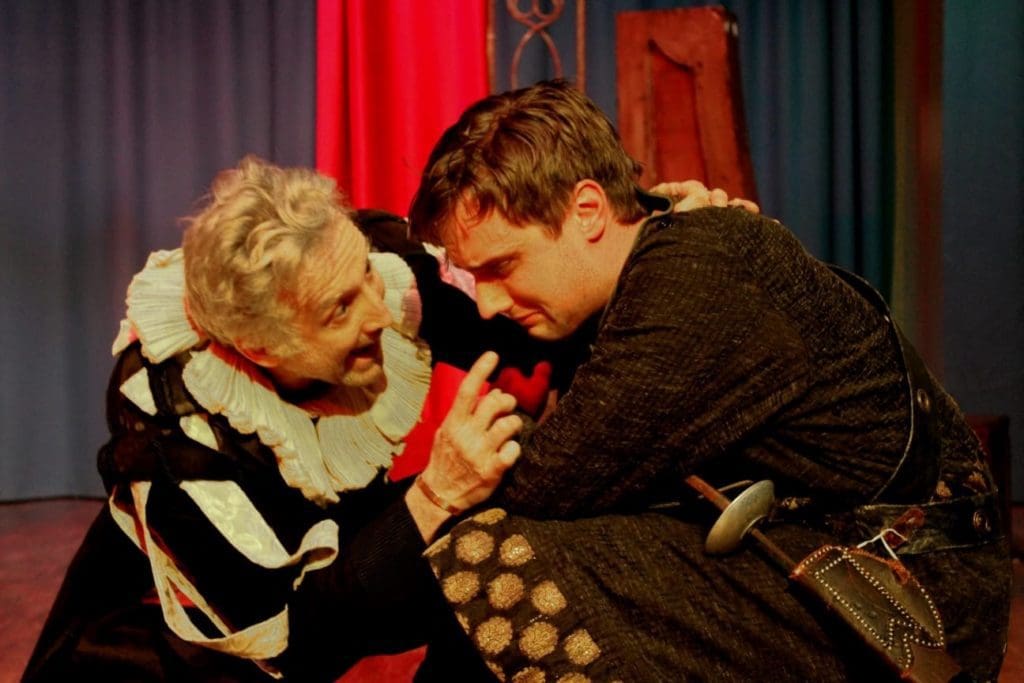
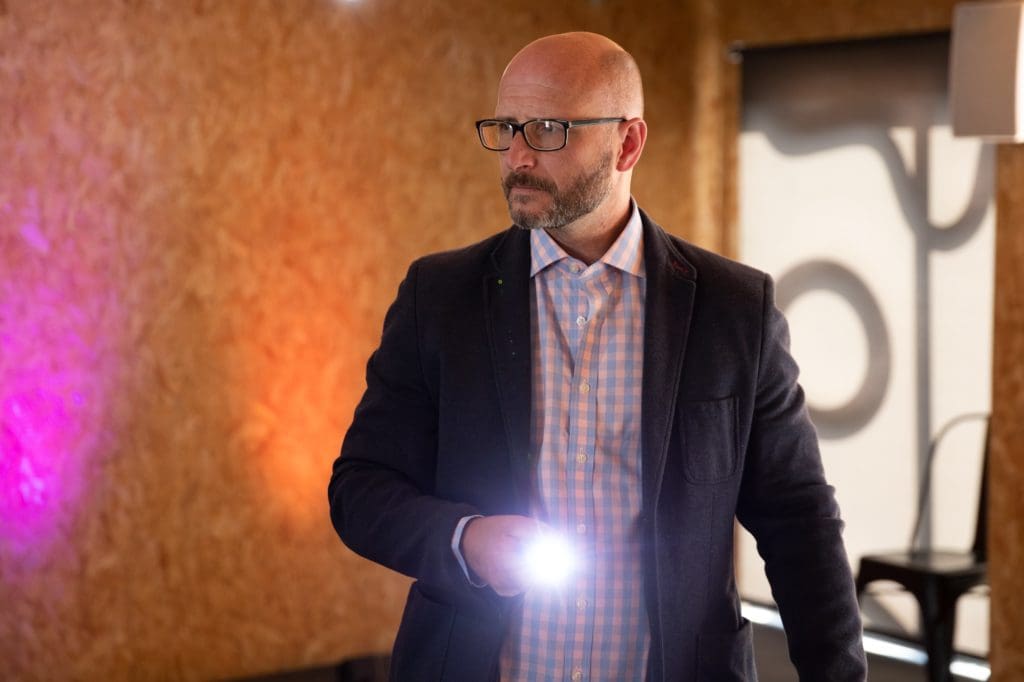
Nathan Brocklebank and Lydia Keating in rehearsals for Common Ground Theatre‘s Hamlet. Picture: Magdalini Brouma
COMMON Ground Theatre’s innovative new touring production of Hamlet plays York International Shakespeare Festival at York St John University Creative Centre Auditorium on Saturday at 7.30pm and Sunday at 4pm.
Championing accessibility, inclusion and bold storytelling, Sadie Jemmett’s company is bringing Shakespeare’s most iconic tragedy to theatres, festivals and communities across the UK and internationally this spring and summer.
Known for its visually striking, music-infused, highly accessible interpretations of Shakespeare, Common Ground Theatre continues its mission to break down barriers to the arts, taking Hamlet to venues ranging from outdoor amphitheatres and rural community spaces to international festivals, including the Craiova International Shakespeare Festival in Romania, Europe’s biggest celebration of the Bard.
The company also will visit locations across Yorkshire, Sheffield, the Midlands, Suffolk, Dorset and Cornwall. At the heart of the tour is a partnership with The Mount Camphill Community in Wadhurst, East Sussex, where performances will take place in the Stage in the Woods amphitheatre.
This collaboration reflects the company’s commitment to inclusive, community-driven performance, offering audiences an immersive theatrical experience in an inspiring natural setting.
Accessibility and inclusion are central to Common Ground Theatre’s ethos. Jemmett’s production features Nathan Brocklebank, who has dyslexia, in the title role of Hamlet, highlighting the company’s dedication to creating opportunities for neurodiverse performers.
Director Jemmett and Brocklebank worked closely to develop innovative and personalised techniques for learning the role: an undertaking involving approximately 1,500 lines of text. This collaborative process not only supported the actor’s performance but also re-imagined traditional rehearsal methods, demonstrating how classic works can be approached in new and inclusive ways.
“I was very nervous about learning the text at first, as sight reading is a real challenge for me, and Shakespeare is especially difficult,” says Nathan. “But by using audio methods, deep diving into the meaning of the text, working with my body and finding the rhythm in the verse, the lines began to stick in a completely new way.”
Alongside the tour, Common Ground Theatre continues its extensive educational outreach programme. The company works with schools, community groups and aspiring performers to deliver workshops, masterclasses and vocational training opportunities, with a particular focus on supporting neurodiverse individuals.
Nathan Brocklebank’s Hamlet in a scene from Common Ground Theatre’s Hamlet. Picture: Magdalini Brouma
These initiatives are designed to demystify Shakespeare, making his work engaging, relevant and accessible for all. “We believe Shakespeare belongs to everyone,” says Sadie. “This tour is about meeting audiences where they are – geographically, culturally, and personally – and creating theatre that is open, inclusive and alive.”
Fuelled by its bold artistic vision, commitment to accessibility and passion for storytelling, Common Ground Theatre’s Hamlet promises to be a powerful and thought-provoking production that will resonate with audiences from all walks of life.
“Infused with the raw power of live music and song, our production of Hamlet shifts the focus from revenge to the emotional impact of grief, mental health and family breakdown,” says Sadie. “At the heart of the play are three young people, Hamlet, Ophelia and Laertes, each struggling to cope with profound personal loss and intense expectations.
“After his father’s death and his mother’s sudden remarriage, Hamlet is driven into a deep inner conflict by revelations of betrayal. Ophelia, wounded by distance and her father’s death, becomes overwhelmed by spiralling sorrow. Laertes, returning to a shattered home, finds his family broken and his anger rising.
“Through these characters, audiences are invited to reflect on their own experiences of love, loss and grief. This is Hamlet told with empathy, clarity and relevance – a powerful exploration of the emotional truths at the heart of Shakespeare’s work.”
For tickets, go to: yorkshakes.co.uk.
Common Ground Theatre director Sadie Jemmett. Picture: Molly Hughes
Common Ground Theatre: back story
FOUNDED by director Sadie Jemmett and Lydia Keating out of Footsbarn Travelling Theatre Company, where Jemmett served as artistic director for three years before departing in 2025.
The company marks a new chapter in bold, visually driven and accessible touring theatre. Keating, a Lecoq-trained performer and collaborator, brings a strong physical theatre and devising background to the partnership.
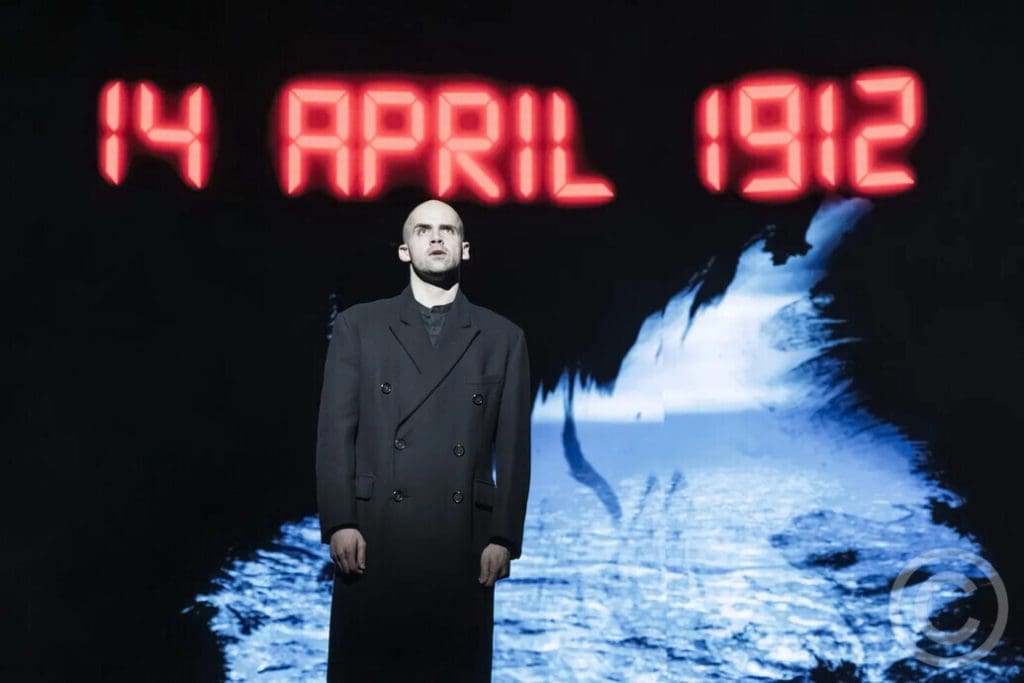
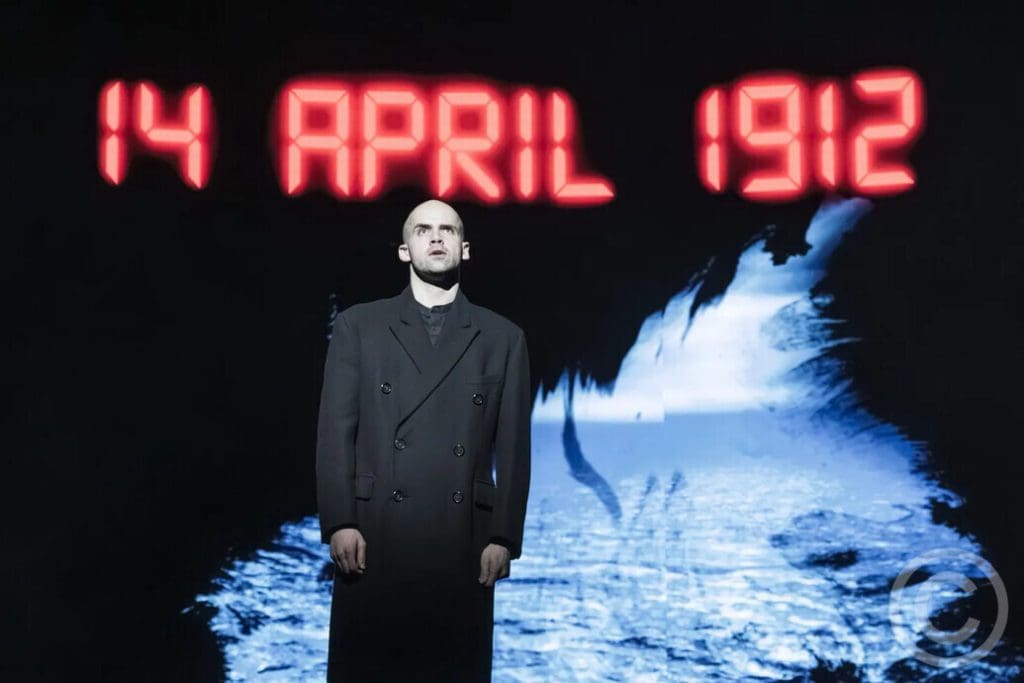
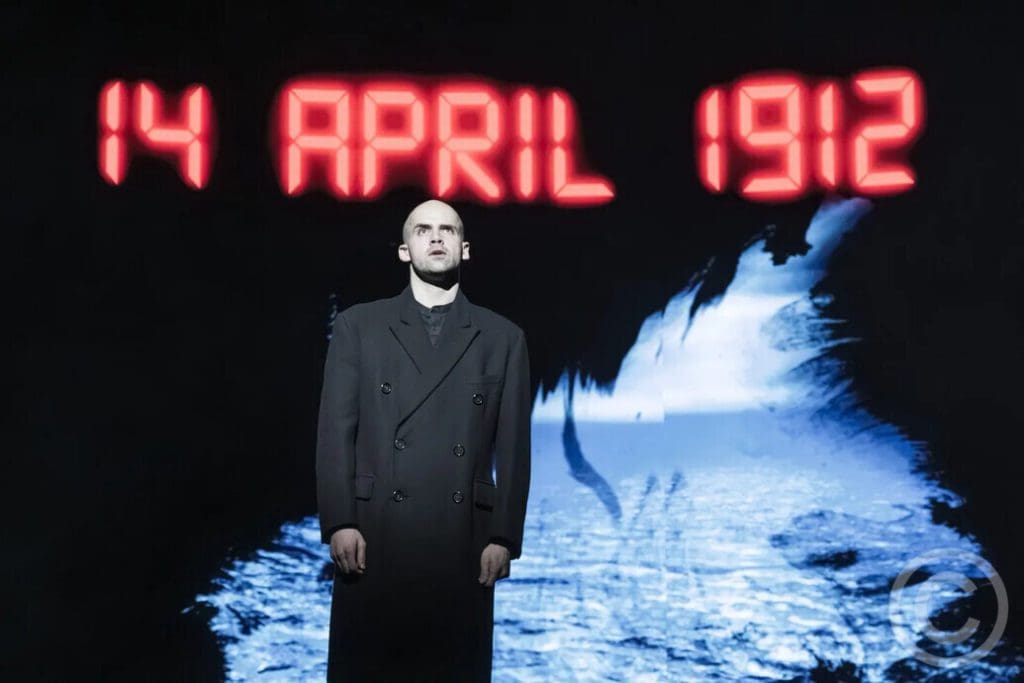
All aboard for the Royal Shakespeare Company’s Hamlet, set on a sinking ship in 1912. Picture: Marc Brenner
SOMETHING is still rotten in the state of Denmark, but now on board a sinking – not stinking – ship in 1912, rather than at Kronborg Castle, Elsinore.
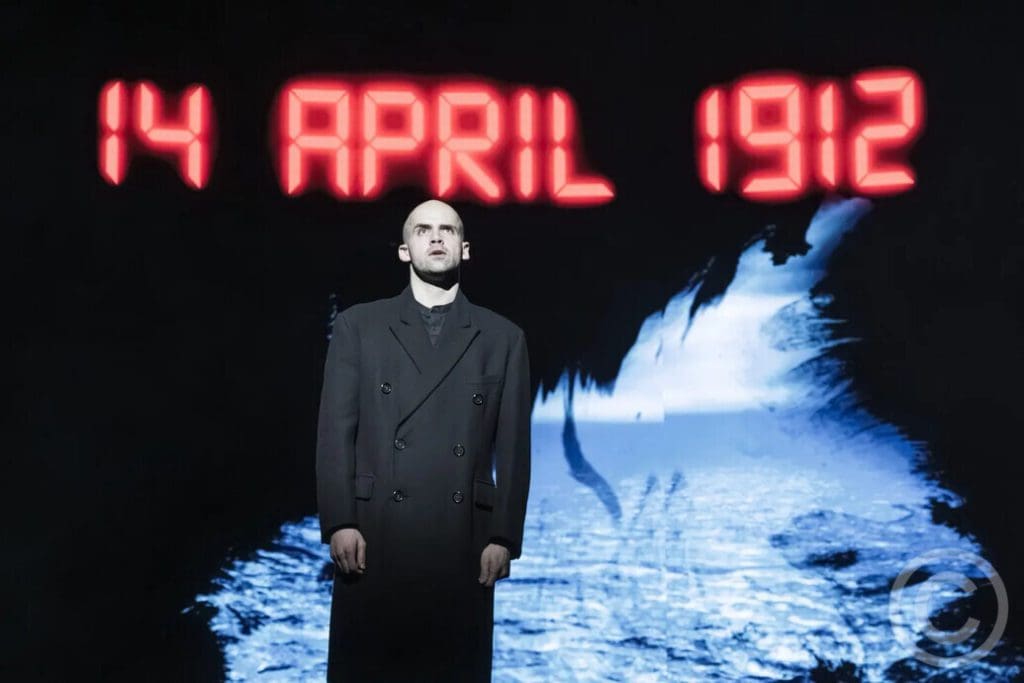
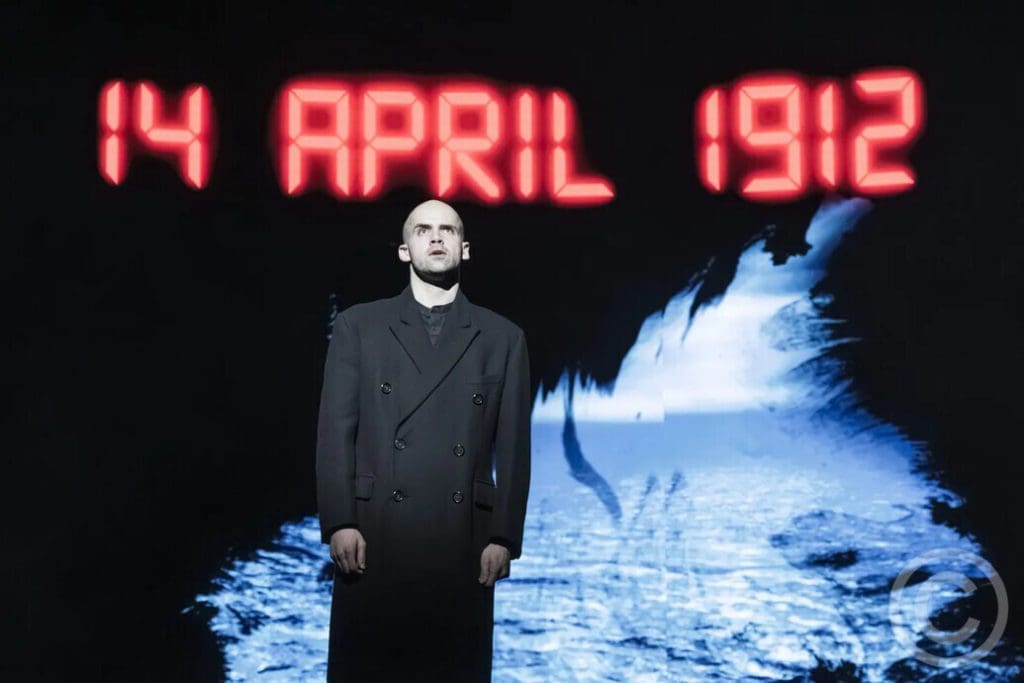
Steered on tour by revival director Sophie Drake (what a good surname for nautical adventures), Rupert Goold’s Royal Shakespeare Company production takes to the seas on April 14 as the clocks to each side of the stage click round to midnight and beyond, marking the 114th anniversary of the demise of the RMS Titanic.
As chance would have it, the York Theatre Royal run opened that night, adding to the poignancy of the occasion. Hamlet is played out in Es Devlin’s design on an expansive deck that restores a spectacular rake to the Theatre Royal stage for the first time since the 2016 renovation, recalling the days when nervous touring companies and repertory shows alike used anti-rake furniture to defy the steep incline.
Complemented by Adam Cork’s sound design of the sea’s swirling motions and hum of the engine, the ship’s bow crests the waves in Akhila Krishnan’s video projections of the ever-rising, whirling, freezing waters, into which the coffin of King Hamlet is tossed, wrapped in the flag of Denmark.
“Hamlet is a play about the inevitability of death: the death of fathers, the death of kings, the mortality facing each and every one of us, but it is also a play about how to live, what makes a good life and a just one too, however brief our allotted time,” says Goold, in a concise summary of Shakespeare’s greatest play.
As happened on the Titanic, Hamlet’s tragedy will “come to pass in a little over two and a half hours”, taking place in real time, lending urgency to Goold and Shakespeare’s quest to answer the question of “what it means to be human and decisive when time is running out”.
In doing so, Goold achieves his desired balance of catastrophic thriller and poetic meditation, a wish made flesh in Ralph Davis’s Hamlet, who is as physical in the sound of speech as he is in movement.
Shaven head meets skull as Ralph Davis’s Hamlet recalls his childhood encounters with late jester Yorick in the RSC’s Hamlet. Picture: Marc Brenner
On occasion, you need to suspend disbelief and go with the flow instead, bathing in the innovation and imagination of an audacious production that is shipshape and Bristol fashion in its delivery. Georgia-May Myers’ Ophelia still dies by drowning; Davis’s Hamlet kills Richard Cant’s delightfully camp, theatrical Polonius with a pistol (referred to as a “rapier”) but fights Benjamin Westerby’s hot-headed Laertes with a sword.
Hamlet will be sent off to England as usual, only to return minutes later, but that is fine. The claustrophobia of a ship from which he cannot escape is a physical manifestation of his mental descent into Elsinore being a prison. Such constraints compound his “madness”.
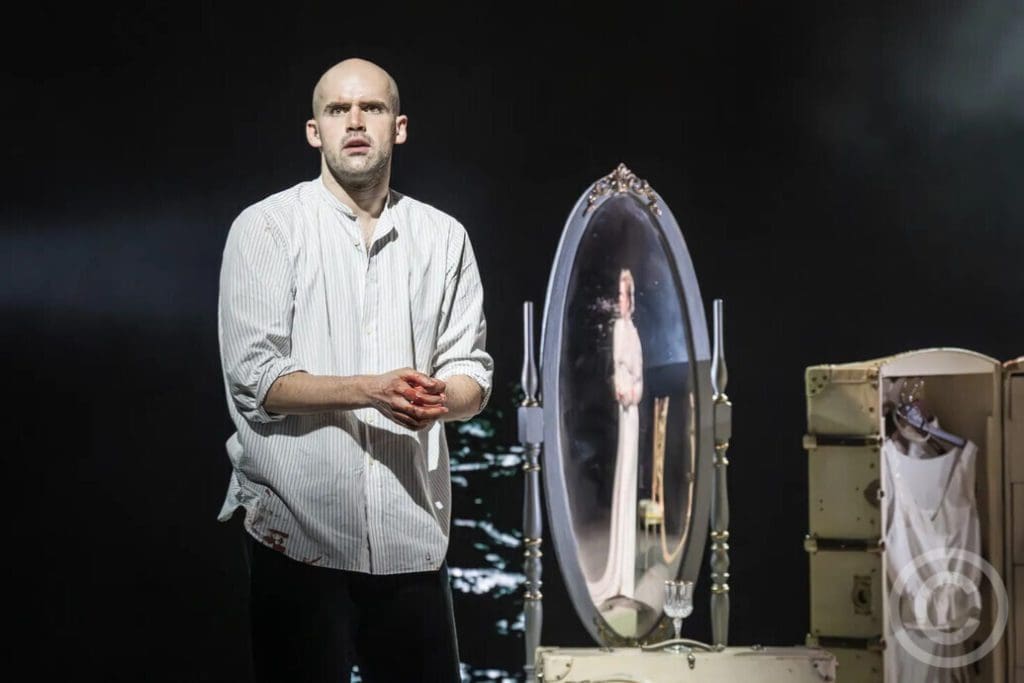
Davis’s tall, lithe, shaven-headed Hamlet, often bare footed and in rolled-up trousers, is a chameleon in appearance, matching his mood, whether in dark coat, baggy white shirt, red jumper and shorts, ship’s captain’s cap or bowler hat and tails.
His voice keeps shifting gear and accent too, poised and reflective in his set-piece soliloquies; quick to anger with mother Gertrude (Poppy Miller) and murderous Claudius (Raymond Coulthard); haunted in his encounter with the Ghost of his father (Ian Hughes); sometimes playful yet earnest too with best friend Horatio (Colin Ryan) and the Player King (Ian Hughes); ever-changing in tone with Ophelia.
He can be mocking too, mimicking the American accents of dandy, cloth-headed old school friends Rosencrantz (Jamie Sayers) and Guildenstern (Julia Kass). Further impersonations bring out the theatrical in Hamlet (who commissions the incriminating play The Mousetrap), whether in mannerism or voice. At one point, Davis seems to assume a Belgian accent to say “murder” in the manner of David Suchet’s Poirot.
The auditorium may have felt as hot as the ship’s engine room, but setting a play full of water imagery on an icy ship is a voyage of re-discovery that brings out that sinking feeling, the depths of despair in Hamlet to full fathom five. If ‘to sea or not to sea’ is the question, the answer is See It Now.
Royal Shakespeare Company in Hamlet, York Theatre Royal, 7pm tonight; 2pm and 7pm tomorrow. Box office: 01904 623568 or yorktheatreroyal.co.uk.
Depths of despair: Ralph Davis’s Hamlet, adrift at sea in an undertaker’s coat in the RSC’s Hamlet. Picture: Marc Brenner
Amabile Clarinet Trio: Playing innovative programme at York Late Music concert
HAMLET on a sinking ship, family politics on a calamitous wedding day and artists’ studios opening on two weekends are the headline acts on Charles Hutchinson’s latest bill of arts delights.
Classical concert of the week: York Late Music presents Amabile Clarinet Trio, Unitarian Chapel, St Saviourgate, York, April 11, 7.30pm
THE Amabile Clarinet Trio – York clarinettist Lesley Schatzberger, cellist Nicola Tait Baxter and pianist Paul Nicholson – presents an innovative programme featuring two premieres plus Thea Musgrave’s Canta Canta!, patron Nicola LeFanu’s Lullaby and Nocturne, American composer Robert Muczynski’s rarely played Fantasy Trio and the first York performance ofAlexander von Zemlinsky’s Trio in D minor.
The UK premiere of David Lancaster’s Canzone Sospesoand a world premiere from composer David Power will be complemented by a set of Morris newly transcribed by York composer Steve Crowther. Lancaster gives a pre-concert talk at 6.45pm, to be enjoyed with a complimentary glass of wine or juice. Tickets: latemusic.org or on the door.
Lesley Jones and Steve Coates: Teaming up for the last time for Swing When You Sing
Farewell concert of the week: Steve Coates Music Productions present Swing When You Sing, Joseph Rowntree Theatre, York, April 12, 7.30pm
BEV Jones Music Company and The Jubilee Celebration Singers producer Lesley Jones bids farewell to the York stage after 20 years of mounting shows with Swing When You Sing, presented with Steve Coates Music Productions.
Alan Owens’s 16-piece big band will be joined on stage by singers Ruth McNeil, Annabel van Griethuysen, Hayley Bamford, Johanna Hartley, Adele Barlow, Larry Gibson, Terry Ford, Stephen Wilson, David Hartley and Geoff Walker to perform Rat Pack, Minnie The Moocher, Boogie Woogie Bugle Boy, Under The Sea, Cheek To Cheek, Sway (Latin), Fever, Mr Bojangles, Amy Winehouse’s Back To Black and Sing, Sing, Sing (with Bob Fosse-style dancing). “Varied? Yes! Upbeat? Yes! Emotional? Yes!” says Lesley. Box office: 01904 501935 or josephrowntreetheatre.co.uk.
The poster for the launch of Bishy Road Community Choir
Start-up of the week: Bishy Road Community Choir, Stables Yoga Centre, Nunmill Street, York, from April 13
THE Stables Yoga Centre and Rachel Davies are setting up the Bishy Road Community Choir to run on Mondays from 5pm to 5.50pm at £5 a session from April 13. This welcoming, musically accessible group will use song to promote happiness, wellbeing and community. No experience or musical skills are needed; only enthusiasm to try feel-good singing. To book a place, visit stablesyoga.co.uk/timetable.
Wedded bliss amid wedding-day blisters: Darren Barrott’s Marek and Joy Warner’s Sylvia in York Actors Collective’s Till The Stars Come Down
Family politics of the week: York Actors Collective in Till The Stars Come Down, Theatre@41, Monkgate, York, April14 to 18, 7.30pm, Tuesday to Friday; 2pm and 6pm, Saturday
PREMIERED at the National Theatre in 2024 and now receiving its York premiere, Beth Steel’s contemporary British family drama is set on the wedding day of Sylvia and Marek in a South Yorkshire mining town.
Directed by Angie Millard, Till The Stars Come Down explores the tumultuous dynamics of a working-class family in a changing world of economic decline and political shifts as long-held secrets, passions, and tensions surrounding class, immigration, and social change spill over into chaos and tragedy. Box office: tickets.41monkgate.co.uk.
Ralph Davis’s Hamlet in the Royal Shakespeare Company’s Hamlet, set on a sinking ship, on tour at York Theatre Royal
Titanic anniversary event of the week: Royal Shakespeare Company in Hamlet, York Theatre Royal, April 14 to 18,7pm plus 1.30pm, April 16 and 2pm, April 18
LET director Rupert Goold introduces the Royal Shakespeare Company’s Hamlet, starring Ralph Davis, as the tour sets sail for York on the 114th anniversary of the Titanic’s descent to the depths. “Our production is set aboard a ship but one that is soon to founder, going down with all hands,” he says.
“Its inspiration comes from the most famous sinking in history, and just as that icy tragedy came to pass in a little over two and a half hours, our play takes place in real time and for about as long, as much catastrophic thriller as poetic meditation. This production asks what it means to be human and decisive when time is running out.” Box office: 01904 623568 or yorktheatreroyal.co.uk.
Jan Brierton and Henry Normal: Poetic humour at Milton Rooms, Malton
Poetry at the double: Edge Street Live presents Henry Normal and Jan Brierton, Milton Rooms, Malton, April 16, 7.30pm
WRITER, poet, television & film producer and Manchester Poetry Festival founder Henry Normal is joined by Dubliner Jan Brierton for an evening of poetry and humour. Normal, whose credits include co-writing The Mrs Merton Show and the first series of The Royle Family, will be reading from his new book A Quiet Promise.
Brierton riffs on modern life, love and friendships, wellness and ageing, rage and domestic exasperation in her poetic reflections on being a wife, mother, daughter, sister and retired raver, plus plenty of stuff about tea, lipstick and biscuits. Box office: 01653 696240 or themiltonrooms.com.
Aggers & Tuffers: The chatter of cricket and the clatter of wickets at York Barbican
Not just cricket: Jonathan Agnew and Phil Tufnell in An Audience With Aggers & Tuffers, York Barbican, April 16, 7.30pm
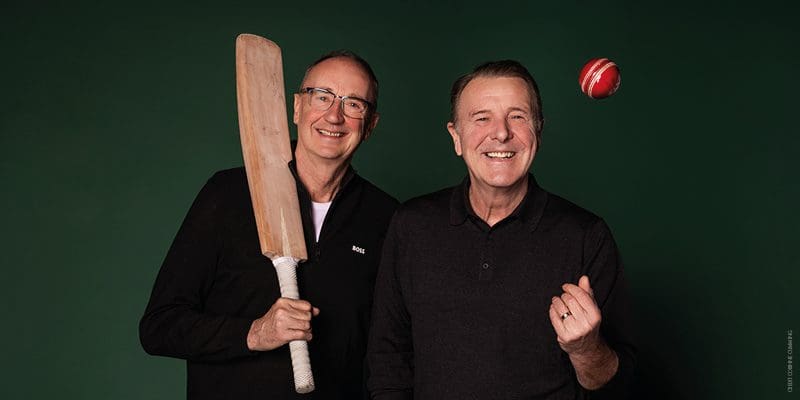
TEST Match Special commentator-and-pundit duo Jonathan Agnew and Phil Tufnell take to the road for more cricket chat from beyond the boundary. Former Leicestershire and England fast bowler and three-decade BBC cricket correspondent Aggers teams up anew with record-breaking former England spin bowler and crowd favourite Tuffers, who gives his spin on his maverick playing days and second wind as a media personality on I’m A Celebrity, Get Me Out Of Here, Strictly Come Dancing and A Question Of Sport. Box office update: limited availability at yorkbarbican.co.uk.
Maureen Onwunali: Slam champ spinning words at Say Owt
Slam champ of the week: Say Owt presents Maureen Onwunali, The Crescent, York, April 17, 7.30pm
YORK spoken-word collective Sat Owt’s guest poet for April’s gathering will be Dublin-born Nigerian poet and two-time national slam champion Maureen Onwunali.
Rich with political observations and carefully crafted verse, her work has been featured by musicians, radio shows and organisations, such as the British Film Institute, Penguin, BBC, Roundhouse, Apples and Snakes, Obsidian Foundation and the Poetry Society. Box office: seetickets.com/event/say-owt-slam-featuring-maureen-onwunali/the-crescent/3588134.
Jacqueline James: Demonstrating her hand-woven rug-making in Rosslyn Street, Clifton, at York Open Studios
Art event of the month: York Open Studios, York and beyond, April 18 & 19 and April 25 & 26, 10am to 5pm
ARTISTS and makers involved in York Open Studios are putting the final touches to their workplaces and studios within York and a ten-mile radius of the city, in readiness to welcome visitors across two weekends.
This annual event offers the chance to gain a sneak peek into where the artists work, their methods and inspirations, whether a regular participant or the 27 newcomers, spanning traditional and contemporary painting and print, illustration, drawing, ceramics, mixed media, glass, sculpture, jewellery, textiles and photography. For more information, visit yorkopenstudios.co.uk; access the interactive map at yorkopenstudios.co.uk/map.
Book launch event of the week: Michelle Hughes, Printing Birds and Wildlife in Linocut, The Harriet Room, York Cemetery, York, April 15, 6.30pm
Michelle Hughes at work on a linocut. Picture: Jackson Portraiture
YORK printmaker Michelle Hughes is holding a special evening to celebrate the launch of her book Printing Birds and Wildlife in Linocut and her upcoming tenth anniversary in business.
Published in February, Michelle’s beautifully illustrated book shares how to design, carve and print birds and wildlife using traditional linocut techniques, guiding readers from simple one-colour prints through to more advanced multi-colour methods, including jigsaw, reduction and multi-block printing.
“Whether you are completely new to linocut or already exploring printmaking, the book offers clear step-by-step guidance, practical tips and creative inspiration for capturing birds and wildlife in this rewarding craft,” says Michelle.
She started her creative business on June 1 2016 in the wake of her fourth redundancy. After a 25-year career in design, she decided to take a leap by working for herself.
The cover artwork for Michelle Hughes’s book Printings Birds and Wildlife in Linocut
What began with freelance graphic design and a few linocut prints has grown into a thriving creative practice. Today, Michelle creates limited-edition linocut prints, teaches in-person workshops, runs online courses for students around the world and produces commissions for organisations, including the National Trust.
What to expect at the event:
A short talk about Michelle’s journey to becoming a professional printmaker
Behind-the-scenes insights into how the book was created
The chance to see original prints and lino blocks featured in the book
A Q&A session about linocut printmaking
Book signing
Opportunity to buy signed copies
“Come and celebrate wildlife, printmaking and the joy of carving and printing by hand,” says Michelle, who will be participating in York Open Studios 2026 at Venue 37, in Holgate, York, on April 18 & 19 and April 25 & 26, 10am to 5pm.
Ralph Davis’s Hamlet in the Royal Shakespeare Company’s Hamlet, set on a sinking ship, on tour at York Theatre Royal. Picture: Marc Brenner
HAMLET on a sinking ship, family politics on a calamitous wedding day and artists’ studios opening on two weekends are the headline acts on Charles Hutchinson’s latest bill of arts delights.
Titanic anniversary event of the week: Royal Shakespeare Company in Hamlet, York Theatre Royal, until Saturday,7pm plus 1.30pm, April 16 and 2pm, April 18
LET director Rupert Goold introduce the Royal Shakespeare Company’s Hamlet, starring Ralph Davis, as the tour sets sail for York on the 114th anniversary of the Titanic’s descent to the depths. “Our production is set aboard a ship but one that is soon to founder, going down with all hands,” he says.
“Its inspiration comes from the most famous sinking in history, and just as that icy tragedy came to pass in a little over two and a half hours, our play takes place in real time and for about as long, as much catastrophic thriller as poetic meditation. This production asks what it means to be human and decisive when time is running out.” Box office: 01904 623568 or yorktheatreroyal.co.uk.
Wedded bliss amid wedding-day blisters: Darren Barrott’s Marek and Joy Warner’s Sylvia in York Actors Collective’s Till The Stars Come Down
Family politics of the week: York Actors Collective in Till The Stars Come Down, Theatre@41, Monkgate, York, 7.30pm, tonight to Friday; 2pm and 6pm, Saturday
PREMIERED at the National Theatre in 2024 and now receiving its York premiere, Beth Steel’s contemporary British family drama is set on the wedding day of Sylvia and Marek in a South Yorkshire mining town.
Directed by Angie Millard, Till The Stars Come Down explores the tumultuous dynamics of a working-class family in a changing world of economic decline and political shifts as long-held secrets, passions, and tensions surrounding class, immigration, and social change spill over into chaos and tragedy. Box office: tickets.41monkgate.co.uk.
Aggers & Tuffers: The chatter of cricket and the clatter of wickets at York Barbican
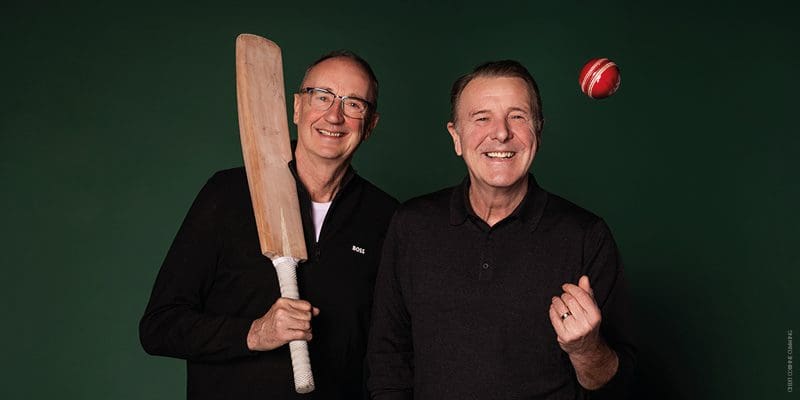
Not just cricket: Jonathan Agnew and Phil Tufnell in An Audience With Aggers & Tuffers, York Barbican, tomorrow, 7.30pm
TEST Match Special commentator-and-pundit duo Jonathan Agnew and Phil Tufnell take to the road for more cricket chat from beyond the boundary. Former Leicestershire and England fast bowler and three-decade BBC cricket correspondent Aggers teams up anew with record-breaking former England spin bowler and crowd favourite Tuffers, who gives his spin on his maverick playing days and second wind as a media personality on I’m A Celebrity, Get Me Out Of Here, Strictly Come Dancing and A Question Of Sport. Box office update: limited availability at yorkbarbican.co.uk.
Patricia Veale School of Dance: Showcasing young talent in Show Dance
Dance show of the week: Patricia Veale School of Dance in Show Dance, Joseph Rowntree Theatre, York, Friday, 7.30pm, and Saturday, 2.30pm and 7.30pm
IN an exciting celebration of dance, the Patricia Veale School of Dance showcases its talented dancers in their very first Show Dance, drawing inspiration from classic musicals on film and Broadway, complete with top hats, flair and razzle-dazzle. Expect a vibrant mix of ballet, jazz, contemporary, tap and much more besides. Box office: 01904 501935 or josephrowntreetheatre.co.uk.
Rainey’s Revue: Evoking A Night In Harlem in….Helmsley
Jazz gig of the week: Rainey’s Revue: A Night In Harlem, Helmsley Arts Centre, Friday, 7.30pm
LED by Richard Exall on tenor saxophone and clarinet and musical director Dom Barnett on piano, Rainey’s Revue presents meticulous arrangements of Ma Rainey’s songs while capturing the essence of the 1920s, 1930s and 1940s.
Sam Kelly, on drums, and Marianne Windham, on double bass, set the rhythmic foundation for the enchanting voices of Chrissie Myles and Emily Windham, whose vocals evoke the jazz clubs of yesteryear. Box office: 01439 771700 or helmsleyarts.co.uk.
Comedy gig of the week: Hilarity Bites Comedy Club presents David Eagle, Anth Young and Nicola Mantalios, Milton Rooms, Malton, Friday, 8pm
HILARITY Bites headliner David Eagle has performed on BBC Radio 2’s topical comedy series The Now Show, supports Boothby Graffoe on tour frequently and is one third of three-time BBC Radio 2 Folk Award-winning band The Young’uns. Being blind, his comedy often explores how his disability means the most ordinary, commonplace events are turned into surreal and convoluted dramas.
Fellow north eastern act Anth Young finished runner-up in the Great Yorkshire Fringe New Comedian of the Year competition in 2017 in York. Completing the bill, Greek-Geordie bisexual comedian Nicola Mantalios won the 2025 Funny Women Stage Awards, hosts weekend shows at Newcastle Stand and runs her own gigs, such as Queers and Beers, in Newcastle. Box office: 01653 696240 or themiltonrooms.com.
The Rollin Stoned: Covering the hits and deeper cuts from The Rolling Stones’ 1960s’ catalogue at Milton Rooms, Malton
Tribute gig of the week: The Rollin Stoned, Milton Rooms, Malton, Saturday, 8pm
THE rock’n’roll circus rolls into Malton for a tribute to The Rolling Stones that focuses on the Brian Jones years from 1964 to 1969. Now in its 27th year, in The Rollin Stoned show the costumes are shamelessly camp, gaudy and fabulous, the instruments vintage, the wit irreverent, the trademark tongue never far from the cheek, but never to the detriment of the music.
As Keith Richards’ late mother, Doris, once remarked of the line-up featuring Mick Jaguar, Byron Jones, Keith Retched, Bill Wymandy, Charlie Waits and pianist Nicky Popkins: “Phenomenal…I can’t wait to tell Keith and Mick that you could easily stand in for them.” Box office: 01653 696240 or themiltonrooms.com.
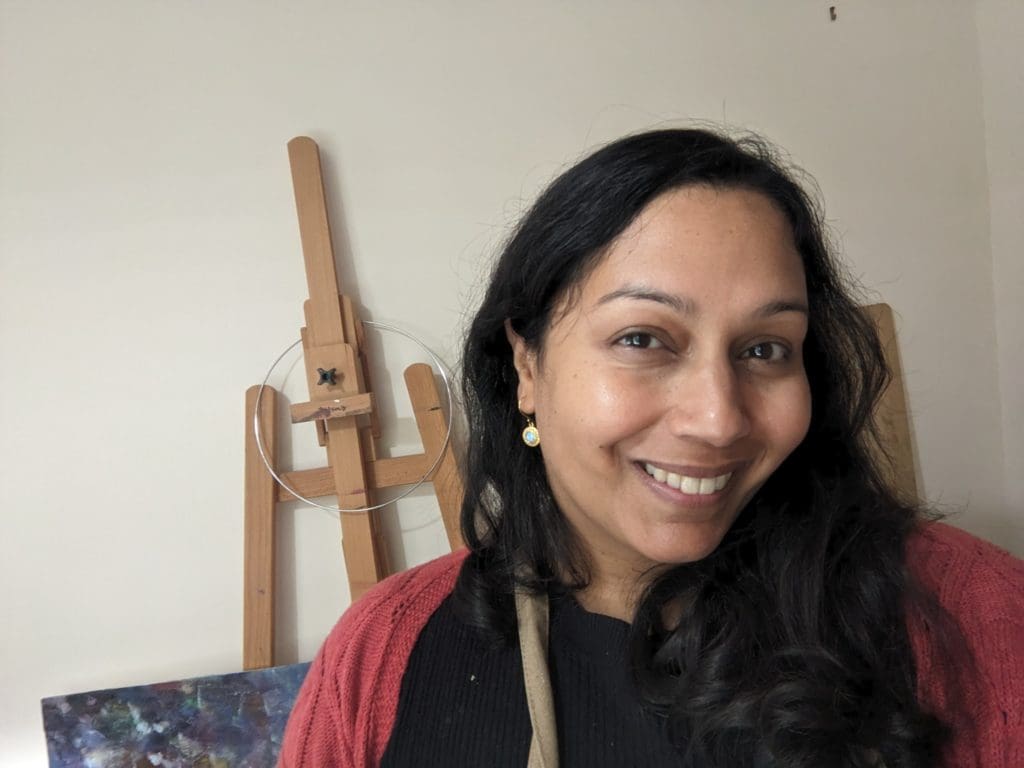
Prachi Bhatnagar: Making York Open Studios debut at her Ouse Lea studio in York
Art event of the month: York Open Studios, York and beyond, April 18 & 19 and April 25 & 26, 10am to 5pm
ARTISTS and makers involved in York Open Studios are putting the final touches to their workplaces and studios within York and a ten-mile radius of the city, in readiness to welcome visitors across two weekends.
This annual event offers the chance to gain a sneak peek into where the artists work, their methods and inspirations, whether a regular participant or the 27 newcomers, spanning traditional and contemporary painting and print, illustration, drawing, ceramics, mixed media, glass, sculpture, jewellery, textiles and photography. For more information, visit yorkopenstudios.co.uk; access the interactive map at yorkopenstudios.co.uk/map.
Depths of despair: Ralph Davis’s Hamlet in the Royal Shakespeare Company’s Hamlet, docking at York Theatre Royal from April 14 to 18. Picture: Marc Brenner
THE Royal Shakespeare Company’s visit to York Theatre Royal with Rupert Goold’s production of Hamlet, set on a sinking ship, will coincide with the 114th anniversary of RMS Titanic’s demise on the night of April 14-15 in 1912.
Around 1,500 people perished at sea that night from the estimated 2,240 on board. Death stalks Shakespeare’s tragedy too, Polonius, Ophelia, Rosencrantz, Guildenstern, Queen Gertrude, Laertes, King Claudius and Hamlet himself joining his already dead father, King Hamlet.
“Hamlet is a play about the inevitability of death: the death of fathers, the death of kings, the mortality facing each and every one of us, but it is also a play about how to live, what makes a good life and a just one too, however brief our allotted time,” says Goold.
“Our production is set aboard a ship but one that is soon to founder, going down with all hands,” says Goold. “Its inspiration comes from the most famous sinking in history, and just as that icy tragedy came to pass in a little over two and a half hours, our play takes place in real time and for about as long, as much catastrophic thriller as poetic meditation. It’s a production that asks what it means to be human and decisive when time is running out.”
Among those joining Ralph Davis’s Hamlet in Goold and revival director Sophie Drake’s touring cast in Shakespeare’s epic family drama of deceit and murder is Royal Shakespeare Company regular Ian Hughes in the roles of King Hamlet’s Ghost and the Player King.
From April 14 to 18, he will be returning to York Theatre Royal, 38 years since he made his professional debut in the 1988 pantomime Peter Pan, in the days when Frank Barrie played the dame. “Frank had made his debut there too in 1959 in Henry IV, Part 2, the play that marked my debut for the RSC in the 1990s – and I’ve learned that Frank had played Hamlet at the Theatre Royal in [March] 1974,” says Ian.
Ian Hughes, front, in the Royal Shakespeare Company’s Hamlet. Picture: Marc Brenner
“In another Yorkshire connection, Harrogate Theatre artistic director Andrew Manley saw me in Peter Pan and said afterwards, ‘do you fancy joining my Harrogate rep company?’. “I was a Kit Kat Girl in Cabaret; we also did Mrs Warren’s Profession, the regional premiere of Caryl Churchill’s Serious Money, Alan Bennett’s Forty Years On and the panto.
“Because I didn’t go to drama school, those Harrogate shows with Andrew were effectively my drama school after starting with the Theatre Royal panto, when I played John Darling, the boy with the top hat and the round glasses – and we got to ‘fly’!
“The Theatre Royal was beautiful, and it was so lovely to play there, when Frank made me so welcome. He was marvellous, dry-humoured company with his wonderful anecdotes of who he had worked with as an actor from an earlier time, when he had performed with [Laurence] Olivier.”
Ian was born in the South Wales Valleys, growing up in Merthyr Tydfil and joining the National Youth Theatre of Wales at 16 to work under director Alan Vaughan Williams, who nurtured the talents of Rob Brydon, Michael Sheen and Ruth Jones too. “Alan took no prisoners, treating us like professionals,” he recalls. “It was invaluable for me. I loved it.”
Only seven years later, Ian would be understudying Kenneth Branagh’s Hamlet in Adrian Noble’s production at the RSC. “I was 23, so I have a long connection with the play. I had to learn every line of the Second Quarto version, which runs to more than four hours [making Hamlet the role with the most lines in Shakespeare’s 37 plays] – and I never went on once!
“Kenneth kept saying ‘people are flying in to see me, I have to go on’, so I never had the chance, despite learning all those lines.”
That sinking feeling: The Royal Shakespeare Company staging Hamlet on a ship in 1912. Picture: Marc Brenner
Instead, Ian had to content himself with playing Polonius’s servant Reynaldo and Fortinbras. “Part of the reason that I joined the RSC was because I’d just won the inaugural Ian Charleson Award for my [title] role in Johann Wolfgang von Goethe’s Torquato Tasso at the Lyric Hammersmith,” he says.
“I didn’t know anything about the award. I got asked to go to the National Theatre and found I was up against Simon Russell Beale in the RSC’s Edward II, thinking ‘I’m just this young actor from South Wales’. I won £5,000 and was presented with the award by Sir Alec Guinness. What a wonderful start to a career.”
Ian has gone on to play multiple parts for the RSC, most recently appearing in The Merry Wives Of Windsor two summers ago. Now he returns as the Ghost and Player King. “These parts appealed to me as a character actor,” he says. “I thought, ‘I fancy a go at these’, because of the interest in Hamlet, and the short tour appealed too.”
Analysing the impact of setting Hamlet on a ship,” Ian says. “In a nutshell, it brings out the claustrophobia. That exacerbates Hamlet’s feeling of frustration that he can’t escape. The sinking of the ship is effectively the metaphor of Denmark being a prison for Hamlet, and I think that works very well. Shakespeare’s plays are open to reinterpretation, and this reinterpretation is very powerful, with all its technical accomplishments too.
“Because Hamlet has so many water and sea references, you could be drowning in the play.”
Royal Shakespeare Company in Hamlet, York Theatre Royal, April 14 to 18, 7pm plus 1.30pm, Thursday, and 2pm, Saturday. Box office: 01904 623568 or yorktheatreroyal.co.uk.
Djibril Ramsey’s Barnardo , Ralph Davis’s Hamlet and Colin Ryan’s Horatio in the Royal Shakespeare Company’s Hamlet. Picture: Marc Brenner
THE Royal Shakespeare Company will present multi award-winning Rupert Goold’s touring production of Hamlet at York Theatre Royal from April 14 to 18.
“Hamlet is a play about the inevitability of death: the death of fathers, the death of kings, the mortality facing each and everyone of us, but it is also a play about how to live, what makes a good life and a just one too, however brief our allotted time,” says Goold.
The York run will coincide with the 114th anniversary of the sinking of the RMS Titanic on the night of April 14-15 in 1912.
“Our production is set aboard a ship but one that is soon to founder, going down with all hands,” says Goold. “Its inspiration comes from the most famous sinking in history, and just as that icy tragedy came to pass in a little over two and a half hours, our play takes place in real time and for about as long, as much catastrophic thriller as poetic meditation. It’s a production that asks what it means to be human and decisive when time is running out.”
Georgia-Mae Myers’ Ophelia. Picture: Marc Brenner, Royal Shakespeare Company
Shakespeare’s epic family drama of deceit and murder will feature classical actor Ralph Davis in the title role of Hamlet. He was nominated for the 2023 Ian Charleson Award for his performance as Benedick in Much Ado About Nothing, appeared as Edmund in King Lear, both at Shakespeare’s Globe, and played Iago in Othello at the Sam Wanamaker Playhouse, for which he came second in the 2025 Ian Charleson Awards.
As well as theatre credits at the Almeida, Chichester Festival Theatre, Ustinov Studio and elsewhere, Davis’s RSC credits include Tamburlaine, Timon Of Athens, Richard III and King John.
Davis co-wrote, created and starred in Film Club for the BBC in 2025. His other screen credits include House Of The Dragon for HBO, Big Boys for Channel 4 and SAS: Rogue Heroes, Life After Life and Steve McQueen’s Small Axe for the BBC.
Ship shape: Rupert Goold’s cast in the Royal Shakespeare Company’s Hamlet. Picture: Marc Brenner
Alongside Davis’s Hamlet in the RSC cast will be Rob Alexander-Adams (Voltemand); Richard Cant (Polonius); Kat Collings (Ensemble); Raymond Coulthard (Claudius); Maximus Evans (Marcellus); Ian Hughes (Ghost/Player King); CJ Johnson (Player Queen); Julia Kass (Guildenstern); Poppy Miller (Gertrude); Georgia-Mae Myers (Ophelia); Mark Oosterveen (Cornelius/Priest); Djibril Ramsey (Barnardo); Colin Ryan (Horatio); Jonathan Savage (Ensemble); Jamie Sayers (Rosencrantz); Leo Shak (Francisco) and Benjamin Westerby (Laertes).
Goold directed Dear England for the National Theatre and Romeo And Juliet and The Merchant Of Venice (RSC). This year he will take up the role of artistic director of The Old Vic after 13 years at the Almeida Theatre.
He has received Olivier, Critics’ Circle and Evening Standard awards for best director twice and won a Peabody Award in 2011 for Macbeth. In 2017 he received a CBE in the New Year’s Honours for services to drama.
Joining Goold on the creative team are revival director Sophie Drake; set designer Es Devlin; costume designer Evie Gurney; lighting designer Jack Knowles; composer and sound designer Adam Cork; movement director Hannes Langolf; video designer Akhila Krishnan; fight director Kev McCurdy; dramaturg Rebecca Latham and casting director Matthew Dewsbury.
Poppy Miller’s Gertrude and Raymond Coulthard’s Claudius in the Royal Shakespeare Company’s Hamlet. Marc Brenner
Sophie says: “I’m so looking forward to taking this exciting show on the road. We’ve assembled a wonderful cast, led by Ralph Davis, who promises to make a great Hamlet. It’s probably Shakespeare’s most famous play, but I’m sure no-one will have seen a Hamlet like this before. I can’t wait for audiences to see it.”
The Hamlet tour is supported by the National Lottery through Arts Council England, whose funding makes it possible for the RSC to expand its tour to work in partnership with more places across England.
Royal Shakespeare Company in Hamlet, York Theatre Royal, April 14 to 18, 7pm plus 1.30pm, April 16 and 2pm, April 18. Post-show discussion, April 17. Box office: 01904 623568 or yorktheatreroyal.co.uk.
Hamlet is touring to Truro, Bradford, Norwich, Nottingham, Blackpool, Newcastle, York and Canterbury, from February to April 2026.
Here Ralph Davis discusses his role as Hamlet and why Shakespeare is “the best”.
What can audiences expect from this particular production of Hamlet, Ralph?
“They can expect something epic and cinematic. We’re doing it on a scale that will be very exciting to watch but also relatable. The play deals with a deeply human experience – Hamlet has to deal with the fallout of his father being murdered, and everything that spirals from that. So yes, I hope audiences will be both riveted and moved.”
Where is Rupert Goold’s production set?
“It’s set on a sinking ship, which is reminiscent of a particular disaster that happened in 1912. It will be a real spectacle. We’ve got these amazing projections of the sea and storms, and a huge, raked stage.
“Hamlet is a play that feels big, and putting it right in the middle of the sea on a ship takes the audience to a very exciting place.
“That said, we’re not literally setting it on the Titanic: I don’t see all these characters as sinking and drowning. The play deals with the theme of justice, and the point of it when we’re all dying anyway.
“So the setting Rupert has chosen feels appropriately dangerous, with death and disaster all around whilst Hamlet is trying to work out what he should do when he’s told that his uncle has killed his father.”
Ralph Davis’s Hamlet clashing with Raymond Coulthard’s Claudius in the RSC’s Hamlet. Picture: Mark Brenner
How did you feel when you were picked to play Hamlet, probably the most famous stage role of all?
“I found out when I was sitting alone in my flat in Camberwell. It had been a few days since the audition, and I thought I’d given a fairly good account of myself, and I had a good feeling about things.
“Anyway I found I’d got the role, and, to use Hamlet’s words, I was ‘struck so to the soul’. I couldn’t believe it. I was so giddy and excited.
“Partly because I’ve already done quite a lot of Shakespeare, people have always asked me if Hamlet was a role I wanted to play. And I’d always said ‘no, it wasn’t something I was interested in’. But I know I was just saying that in case it never happened!
“I found out that I’d got the part quite a long time before rehearsals began, so I had a while to be excited about it. Of course I then read the play again, and thought, ‘God. What am I going to do with this?’”
How are you approaching it?
“I’m trying to approach it like any other role. It is different, of course, because it’s so iconic, and there are so many different preconceived ideas about what the part is and what the play is.
Skull’s out: Ralph Davis’s Hamlet contemplates once knowing Yorick well in Hamlet. Picture: Marc Brenner
“I’m stripping all of that away, getting rid of all of that noise, and reading it like it is a new play. And trusting my instinct of what I think the role is.
“So I’ve been very resistant to knowing how anyone else has done it in the past. I’m just working from the words on the page – what’s happening in this scene? What’s this relationship about? Why is he saying these words at this point? I’m treating it like it’s a new play.”
What was your route into acting?
“My mum dropped me off at Playbox, a theatre company for young people, in Warwick when I was literally 18 months old. I don’t think you’re capable of acting at 18 months, but I was there for some sort of storytelling session.
“That place became a second home to me. It was a tremendously professional and exciting environment for a young person to be in, and I just did play after play after play there.
“And then I was at the RSC as a child actor. At the age of ten, I was in King John alongside actors like Richard McCabe and Tamsin Greig. Then, still as a boy, I was in Richard III, directed by Michael Boyd and with Jonathan Slinger in the lead.
“I’m treating it like it’s a new play,” says Ralph Davis of playing Hamlet. Picture: Marc Brenner
“I also did lots of plays at Warwick School. I actually played Hamlet at school. That was set on a ship as well, although it was set pre-World War Two, so a bit later than the show we are touring. I think I was probably terrible because I was trying to do my A-levels at the same time!
“I went straight to RADA from school, and since then I’ve done a lot of Shakespeare, including a season at the RSC, and I’ve played Edmund in King Lear, Benedick in Much Ado and Iago in Othello at the Globe.”
Does Shakespeare particularly interest you?
“Yes. I’m just very old fashioned, or I’m just influenced by the people I would watch growing up. Those actors that I saw on stage would do a lot of Shakespeare until they were in their 40s, and then they’d make the leap to TV. And that’s what I wanted to do. And that’s sort of what I’ve done.
“I think my life was changed and shaped by the Shakespeare I saw at the RSC growing up, particularly Michael Boyd’s productions of the History plays. I think watching Jonathan Slinger in those plays probably did change my life.
“I thought, ‘that is something worth doing’. I find Shakespeare easier to do than modern texts sometimes because Shakespeare’s writing is the best there is.”
Ralph Davis’s Hamlet and Poppy Miller’s Gertrude in the RSC’s Hamlet. Picture: Marc Brenner
What were the highlights from the roles you have played?
“I enjoyed playing Benedick in Much Ado. I was 26, which is a young age to be playing that part, but I was leading a company at the Globe. It was shortly after Covid, during which I thought my dream of playing lead roles was perhaps over.
“Both Benedick and Iago were a real test of my abilities. And now, in rehearsals for Hamlet, I feel – and I know this might sound pretentious – that this part is going to change me. It’s such a challenge. Shakespeare really stretched the actor who played the role originally, because I think the play meant so much personally to Shakespeare.
“I also had a great time when I was in A Streetcar Named Desire at the Almeida, alongside the likes of Paul Mescal and Patsy Ferran. I had quite a small role, but it was such a fun company.
“What’s so nice about Hamlet is that I haven’t been on stage for about a year, and it’s lovely to be back in a company putting on a play.”
As well as acting, you write…
“Yes, I spent all of last year writing. I feel very fulfilled by making something and putting it in front of an audience. At RADA it was understandably all about acting, but I knew I also wanted to create things.
“I think Shakespeare’s stories are the best stories,” says Ralph Davis. Picture: Marc Brenner
“I co-wrote the BBC show Film Club. There’s a lot of work in getting something on TV, pitching it is a really tough process. But then you end up making it with all these talented people pulling in the same direction. I really like that feeling.
“In the future I’d like to direct as well. All of that said, I certainly feel fulfilled now working on Hamlet.”
How would you persuade audiences to see this production if they think Shakespeare is not for them?
“What I’m seeing in the rehearsal room is people speaking Shakespeare’s words, which really are words that we use nowadays, but just put in a more poetic and perfect order. People speaking the language like you and I are speaking now. And when actors harness those words and make them real, then I think there’s nothing more thrilling.
“And there’s no reason for anyone to be scared about the play, or feeling that they won’t be able to follow the story.
“I think people sometimes feel alienated because they hear words like ‘thee’ and ‘thou’ and certain words that are a little strange to the ear, but they make perfect sense when an actor delivers them right. And I think Shakespeare’s stories are the best stories. They are stirring and have fantastic characters.
“I’m really pleased that we’re taking this show on tour and reaching lots of different parts of the country, and perhaps people who’ve never seen Shakespeare before. I hope they find the experience as exciting as I did when I saw my first Shakespeare. Just don’t be scared of it – Shakespeare’s the best.”
Harry Summers’ Hieronimo: “The Hamlet of the piece” in Thomas Kyd’s The Spanish Tragedy. All pictures: John Saunders
BACK in the Elizabethan day, Thomas Kyd’s The Spanish Tragedy outsold Hamlet.
Truth be told, he was pretty much a one-hit wonder, (even “the one and only” Chesney Hawkes had a minor second hit, I’m A Man Not A Boy in 1991), and Kyd has been long dead and buried, like most of his players in what is now viewed as the groundbreaking template for revenge tragedies.
York Shakespeare Project’s decision to expand the focus beyond the Bard in its 25-year second cycle of the First Folio facilitates the revival of rival works of Ben Jonson, the ill-fated Christopher “Kit” Marlowe and, yes, one Thomas Kyd (1558-1594), the tragic trailblazer.
After the Pop Art explosion and drag and cancel culture of director-designer Tom Straszewski’s take on Marlowe’s Edward II in October 2023, Paul Toy returns to the YSP director’s chair after a 14-year hiatus to steer his fourth YSP production.
Toy had first read The Spanish Tragedy as part of his university Renaissance Theatre course, playing the insouciant wrong’un Pedringano to boot. He was struck by how so many of its ideas – “a ghost seeking revenge, feigned or real madness, a play within a play” – would be echoed in Hamlet by Shakespeare, the alchemist of playwrights. Better lines, better characters, better gags.
The Spanish Tragedy, however, turns out to have been well worth digging up out of its neglected grave. Yes, it is no match for Hamlet, but this is a meaty work, full of myriad theatre styles, as Toy notes, from dumb shows to execution as street theatre, tragedy as classical as Greek dramas, and not least a Last Judgement scene redolent of the York Mystery Plays. And, boy, does Kyd enjoy piling up the bodies till the last man standing.
The price of love: Emma Scott’s Bel-imperia and Yousef Ismail’s Horatioin York Shakespeare Project’s The Spanish Tragedy
Working in tandem with set designer and choreographer Viv Wilson and mask maker Tempest Wisdom, plus a rotating team of trainee make-up artists from York College (Grace Gilboy, Beth Shearstone, Keira Hosker, Abigail Horton and Ethan Thorpe), Toy gives The Spanish Tragedy the look of the Day of the Dead, with a nod in Wednesday’s make-up to Heath Ledger’s Joker in The Dark Knight.
Relocated to York from Seattle, Wilson is a sound engineer at Theatre@41, has contributed YSP sets for The Taming Of The Shrew and Two Gentlemen Of Verona, and once toured the world in a dance group and performed burlesque acts on three continents.
From that portfolio, you see how all life is here in YSP, as it should be in a long-running project, and now Wilson makes her debut in “legitimate theatre” as Revenge, resplendent in red and black, her face skeletal and ghostly white, her voice like a 60-fags-a-day midnight hag. Her mood is intemperate, her mission on a par with the Grim Reaper, but with better putdowns.
Wilson’s Revenge takes her seat to one side of the mezzanine level, reached by a staircase with a platform above for executions and such like. To the other is the “ghost seeking revenge”, YSP debutant David Lee’s Ghost of Andrea, drained of all colour by way of contrast with Wilson’s crimson Revenge. They will watch on, like the Chorus in Greek dramas, but with an impact more akin to Macbeth’s witches.
At the heart of The Spanish Tragedy is Harry Summers’ Hieronimo, Marshal of Spain, the vengeful Hamlet of the piece, with almost as many lines, but older, enervated. Summers already had his winter of discontent as Richard III and more woe as Coriolanus, and his ninth YSP role is best yet, delivering on “the power of rhetoric” that struck Toy above all else.
The theme of the failure of justice resonates with the rotting modern world, as Toy turns his audience into judge and jury, for Summers’ Hieronimo and Emma Scott’s equally impressive Bel-imperia in particular to make their case. Not for the first time in YSP colours, Scott’s diction is a delight; likewise her emotional range.
Plotters and rotters: PJ Gregan’s Balthazar, left, and Thomas Jennings’s Lorenzoin The Spanish Tragedy
Courtly roles go to YSP stalwarts, Tony Froud’s King of Spain, Emily Hansen’s Duchess of Castile and Nick Jones’s Viceroy of Portugal , while Tim Holman’s makes his first YSP appearance since 2004’s Titus Andronicus in a brace of roles.
On the dark side are Yousef Ismail’s Horatio, YSP newcomer P J Gregan’s Balthazar and Thomas Jennings’ malevolent Lorenzo, breaking the fourth wall with scene-pinching elan, on trademark crop-haired hitman duty again.
Isabel Azar, Cassi Roberts, Martina Meyer and Ben Reeves Rowley fit the the plot-thickening brief to good effect and Sally Mitcham is the play’s moral conscience as Hieronimo’s troubled wife.
Toy directs as playfully as his name would suggest, even using exquisite choral music by the wife-and-her-lover-murdering Gesualdo pre-show and in the interval. When a hanging takes place, darkness descends on the moment of Alan Sharp’s deadpan Hangman administers the drop, whereupon a scroll of The Hanged Man falls into place. Intricate sword-dancing adds to the spectacle, as do all manner of masks.
By the live nature of theatre, anything can happen. What were the odds of a letter dropped from above by Scott’s Bel-imperia landing in the curtain, out of Summers’ Hieronimo’s sight, no matter where he looked. To the rescue rode the director, in the back row. “Top of the curtain,” he bellowed, bringing the house down. Just one of many good decisions he made in this fruitful resurrection of Kyd’s play of men – and women – behaving very badly.
York Shakespeare Project in The Spanish Tragedy, Theatre@41, Monkgate, York, until Saturday, 7.30pm and 2.30pm Saturday matinee. Box office: tickets.41monkgate.co.uk.
The cold touch: PJ Gregan’s Balthazar and Emma Scott’s Bel-imperia in York Shakespeare Project’s The Spanish Tragedy
James Lewis Knight, left, as Jimmy and Matt Stradling as James in Operation Hummingbird. Picture: James Drury
YORK community arts collective Next Door But One are teaming up with Explore York for a library tour of Matt Harper-Hardcastle’s Operation Hummingbird from Thursday.
James Lewis Knight will play Jimmy and Matt Stradling, James, in a one-act two-hander that takes the form of a conversation across the decades about a sudden family death, realising an opportunity that we all wish we could do at some point in our life: to go back to talk to our younger self.
Death, dying and bereavement have been prevalent factors in Next Door But One’s artistic programme for many years now, led by artistic director Matt’s own loss in 2016.
“When my mum was diagnosed with terminal cancer, my whole family turned to what they did best: some looking after all the paperwork, others the planning of appointments and medication, while I turned to what I knew, telling stories,” he says.
“From keeping a blog up to date so that friends and family were in the loop of what was going on, to telling stories of my mum to keep her memory alive”.
This quickly transferred to the stage in 2016 when Next Door But One produced Matt’s autobiographical play about his relationship with his mum, Any Mother Would. “The reaction to this relatively low-key performance was quite remarkable, with audiences saying they wished they had the space and tools to share memories and process their own grief in this way,” he recalls.
This set in motion a core strand of activity for Next Door But One, who ran a series of creative Death Cafés; hosted Playback Theatre performances for people to share stories of loved ones who had died; ran art and bereavement workshops for carers and produced Laura Wade’s Colder Than Here as part of York’s Dead Good Festival 2019.
Alongside this, Matt’s original blog was published as a book by The Writing Tree under the title of The Day The Alien Came. In response to this memoir of his mother’s death and his experience of living with loss, “people were then asking, ‘do you think your book will ever become a play?’,” he says.
“We’re not good at talking about death, even though deep down we know we need to,” says Operation Hummingbird writer-director Matt Harper-Hardcastle
“I didn’t feel I could make it into a play but wanted to create something from the book’s themes and the parallels between the different experiences that have been shared with Next Door But One over the years”.
The result is Operation Hummingbird, to be performed on August 5 at New Earswick Folk Hall at 3.30pm and Dringhouses Library at 7pm and on August 12 at York Explore, 2pm, and Hungate Reading Café, 7pm. Seating will be limited to ensure Covid safety.
The mini-tour will finish in September with a closed performance, hosted by The Gillygate pub, in Gillygate, specifically for members of York Carers Centre, who have recent experiences of loss. Tickets are on sale at: nextdoorbutone.co.uk/Operation-Hummingbird.php
Commenting on the partnership with Explore York, creative producer El Stannage says: “We felt it made sense to partner with Explore on this production, as not only is the play connected to a story and a book, but after 18 months we have all experienced different losses through the pandemic.
“This way we are able to connect with audiences to the north, south and centre of York, providing them with a heartfelt portrayal of an experience we hope they can relate to.”
Next Door But One are not only excited to be taking their work out into the community once more, but also buoyed by taking up resident status at The Gillygate after re-launching live performances in Step 2 lockdown-eased York with Yorkshire Trios in the new outdoor theatre space in Brian Furey’s pub garden on April 23 and 24.
“We now have a home, a place to create and rehearse in the heart of the city, and with the support of The Gillygate, and their shared ethos of community engagement, our potential is rapidly expanding,” says Matt.
James Lewis Knight ‘s James playing on a games console in Operation Hummingbird. Picture: James Drury
Ahead of Thursday’s opening performance, Matt answers CharlesHutchPress’s questions on play titles, dealing with death, talking to our younger selves, Hamlet versus King Lear, working with Explore York and taking up a residency at The Gillygate.
What is the significance of the title Operation Hummingbird, Matt?
“The title alludes to the central character’s childhood coping mechanism for dealing with his mother’s terminal diagnosis; rather than trying to grapple with medical terminology he draws parallels to battles he is more familiar with, like those on his games console.
“The hummingbird is a reference to who the character’s mum hopes she can become ‘afterwards’. So together, ‘Operation Hummingbird’ is the character’s fight to save his mum, which turns into his journey of living with loss.”
Death is a difficult subject to discuss; for some it is still taboo. Yet facing up to your mother’s death instead has awoken the need for you to contemplate grief in myriad ways. What has been the impact of all that creativity, both on others and on yourself?
“Well, it’s been a real snowball effect. We’re not good at talking about death, even though deep down we know we need to. Many people just need an opportunity presented to them that feels safe and more recognisable.
“People came to watch Any Mother Would and wanted to write their own stories, which led to us running the Death Cafés and Playback Theatre on loss, which gained momentum and put us at the heart of York’s Dead Good Fest 2019.
“The experience of grief can be a very lonely and isolating one and the main impact we’ve seen from participants and audiences is reassurance that their feelings are valid and shared by others.
Shining a light as Matt Stradling’s James talks to his younger self in Matt Harper-Hardcastle’s Operation Hummingbird. Picture: James Drury
“For me personally, I thought I would be completely consumed by the grief of my mam’s death, but through creativity, I’ve been able to own it and take control over how it manifests itself in my life. So, strength is the impact it’s had on me.”
Given how widely you have addressed this theme already, what new elements are you looking to bring out in Operation Hummingbird?
“In writing the play, even though I’ve leaned into themes and emotions I’ve experienced myself, it’s been really important to weave in all the stories of death, dying and bereavement that have been shared with us over the years so that they are represented as the collective they’ve become.
“In terms of how Operation Hummingbird complements our existing repertoire on this topic…we’ve had the celebration of a life lived (Any Mother Would), the reaction to a terminal diagnosis (Colder Than Here) and now we are looking at the long-term impact of bereavement and the role it plays in shaping our identity as we age (Operation Hummingbird).
“So, quite serendipitously, we’ve ended up with almost a trilogy of death, dying and bereavement spanning from 2016 to the current day.”
Knowing that we can’t go back to talk to our younger selves, but wish we could, why do we wish it? Some would see it as a futile exercise, but here you are devoting a play to that theme. For what reason? Are you addressing other selves who are still young?
“It’s actually the futility you mention that is central to the narrative; often we wish we could fast forward grief, that someone could give us an end date, or that someone has all the answers on how we ‘get over it’. When, in reality, the only way to deal with grief is to live through it, to feel every emotion, to articulate what’s going on and find a way to live alongside it.
“I guess that’s the take-away message of the play. Even when presented with this unachievable opportunity, our older character struggles with how much to tell his younger self for fear of changing the person he becomes.”
James Lewis Knight, left, and Matt Stradling in a scene from Operation Hummingbird, whose Explore York library tour opens on Thursday. Picture: James Drury
How did you settle on the play’s structure of a conversation across the decades (about a sudden family death)?
“As you said before, we can’t actually have this conversation between younger and older self, so there’s something really freeing as a writer to set a play in this liminal, non-attainable space where the usual rules of time and conversation can be blurred.
“I’ve always found inspiration in Emily Dickinson’s ‘Tell all the truth but tell it slant’; the cold hard truth given to us directly can make us disengage, but set reality on a fictional foundation and look at it through a creative lens and it becomes easier to digest. Meaning that something classed as ‘taboo’ can be moved closer toward, rather than running away from.”
In Operation Hummingbird, you ask: “Does our grief age as we do?”.As I grow older, King Lear is becoming more significant to me than Hamlet, and yet Ian McKellen is playing Hamlet at 82, having already played Lear. Interesting! Discuss!
“Very interesting! Maybe it’s just because I’m in the throes of Operation Hummingbird, but maybe casting McKellen as Hamlet is to show the power that grief and loss can hold over us at any age?
“I wonder what the interpretation of a 28-year-old Lear would be? Discuss!”
How long will the show be?
“The play is 45 minutes in length. I think lockdown has solidified my preference for a one-act play.”
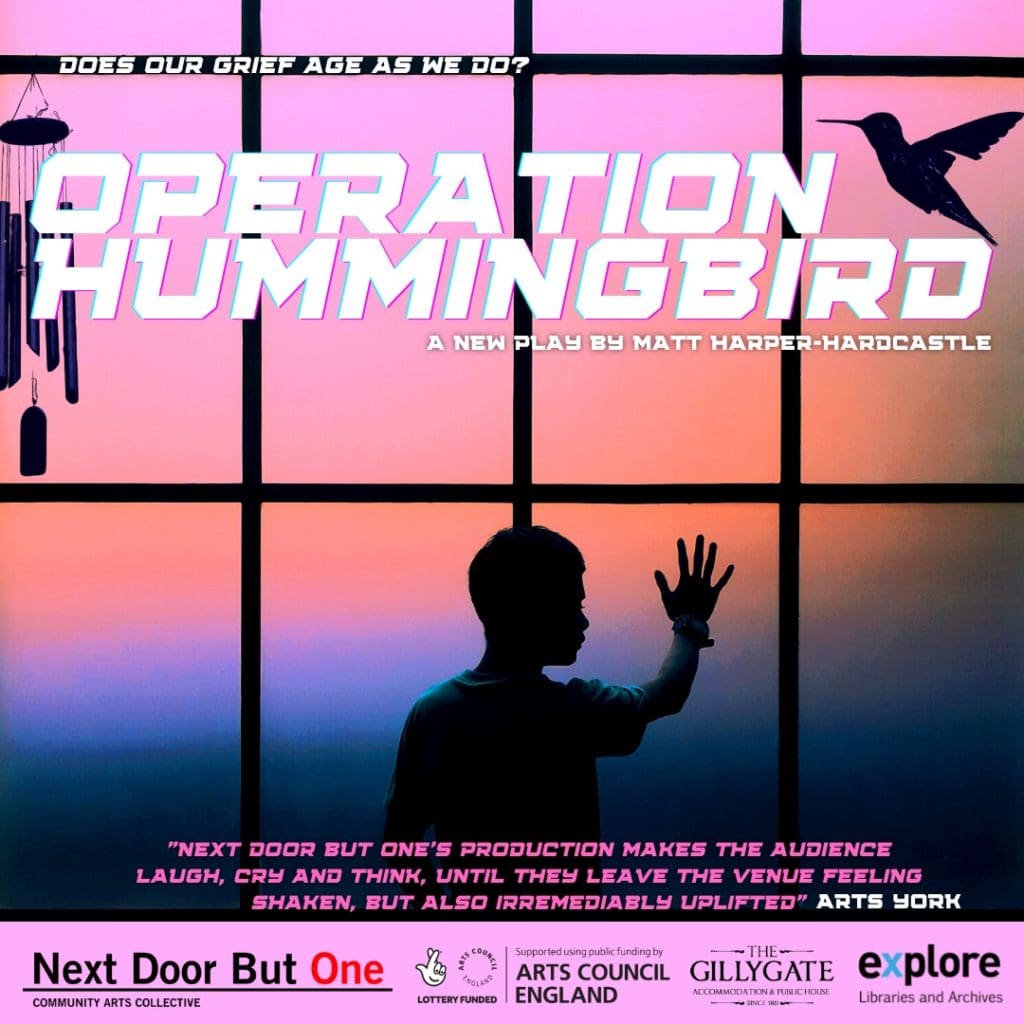
Next Door But One’s playbill for Operation Hummingbird
What is the significance of linking up with Explore York for this library tour?
“There are three key reasons. Firstly, we wanted to bring live theatre closer to people, especially in light of Covid. So, having performances to the north and south of the city, as well as centrally, should hopefully give a space for everyone.
“Secondly, libraries are buildings that exist to house stories, so why not make a live one happen there too.
“Thirdly, some slight inspiration from my late mam. She was a librarian in west Cumbria and saw the building as central to the community. It’s where people connect with others, learn skills, tap into new interests, seek help, understand the area they live in, and that’s true to the ethos of Next Door But One’s work, so it seemed like the perfect partnership.”
The Gillygate’s Brian Furey is a good friend to the arts, whether putting on Alexander Wright’s shows, both indoors and in a tent, or your York Trios shows. How did you cement the relationship to become the company in residence? What benefits will it bring to Next Door But One?
“There’s a genuine generosity that The Gillygate has to its staff and community that we admire. Little did we know that the Fureys were also admiring the same qualities in us when supporting Yorkshire Trios.
“The residency was cemented by us both discussing the fundamentals of what we were trying to achieve and realising that it was the same; we want to bring members of the community together to enjoy and benefit from a shared experience.
“So, in its simplest form, ‘two heads (or companies) are better than one’ when there’s a shared goal. As a company it now means that we have a home; we have office, rehearsal and performance space, giving us more autonomy over our programming.
“But above all, partnering with The Gillygate means we have a real community champion in our corner and that’s invaluable.”
Artistic director Matt Harper-Hardcastle at the door to Next Door But One’s new home at The Gillygate pub in Gillygate, York