REVIEW: Martin Dreyer’s verdict on North York Moors Chamber Music Festival, Dialogue and The Dividing Line, St Hilda’s, Danby and St Hedda’s, Egton Bridge, August 11 and 13

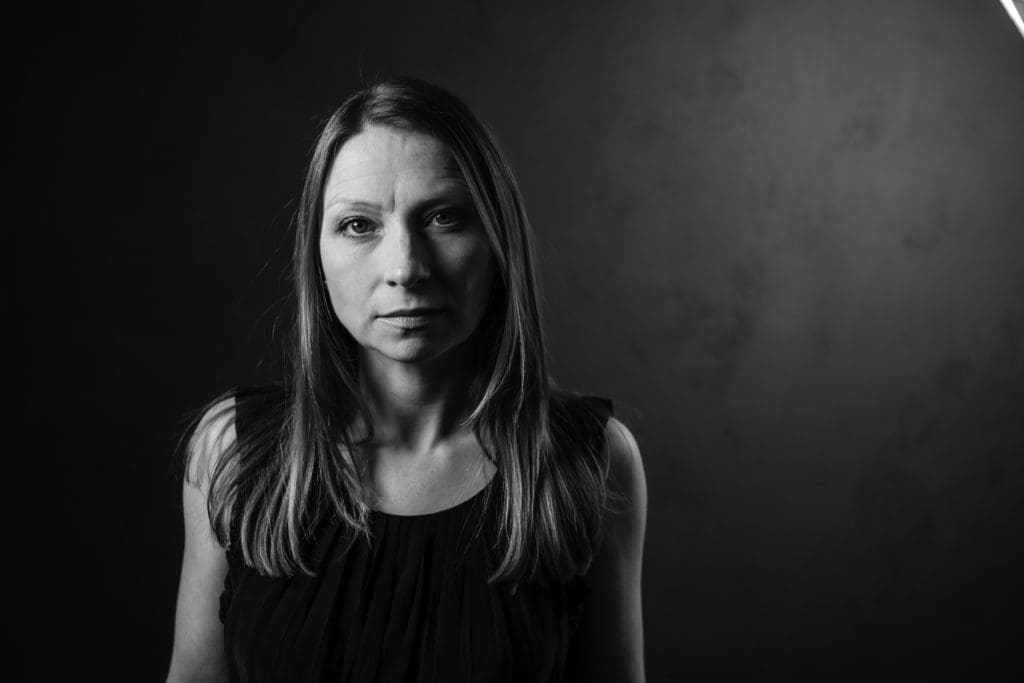
Violinist Charlotte Scott

THE titles – the festival’s own – give a rough indication of where we are in this year’s theme of Creation.

Dialogue is self-explanatory; the Dividing Line is that between earth and sky. Each of these recitals in churches on the northern edge of the North York Moors featured a world premiere, in a context of related works, old and new.

The afternoon in Danby involved only three violinists: Alena Baeva, Benjamin Baker and Charlotte Scott. Two pieces each by Bach and Berio framed two dances by Saariaho and the world premiere of Creation by Isabella Gellis, the only work in the programme involving all three players.

She describes it as a reimagining of an aria about a butterfly, sung by the Child in her 2024 opera The Devil’s Den, which was staged by Opera North last November. The role requires some daunting vocal pyrotechnics.

In the earlier part of its eight minutes, a glissando and close harmony set up a sense of lament. These recurred later, but the highest voice emerged gently at first and then with full-throated lyricism before lower, slower voices suggested the butterfly temporarily at rest.

It was not long before a series of high-note signposts, against tremolo accompaniment, grew ever more intense, keenly reflecting the original aria. Finally this dissipated into hovering harmony, in a pianissimo that stopped abruptly. Even without the visual reference, the piece stands alone most effectively.

Charlotte Scott despatched an immaculate if slightly deliberate account of Bach’s Second Partita for solo violin at the start, which was more than matched by Alena Baeva’s concluding no-holds-barred version of his taxing Chaconne, in which the three voices within the score emerged clearly.

Benjamin Baker teamed up with each of them in turn in five of Berio’s Duetti, bringing out the more lyrical sides of the composer’s human portraits. All three players warmed up for the Gellis with a suitably balletic approach to Saariaho’s two Danses des Flocons.

There were no less than a baker’s dozen of players on hand two afternoons later in Egton Bridge. The first half of the programme culminated in the world premiere of Charlotte Bray’s That Which You Wove Of Lightest Thread, I Wear To Honour Stone, for horn and string quartet.

Its title is taken from Paul Celan’s poem Totenhemd (‘death shirt’). What made this unusual was its close affiliation with a woven installation by the artist Caroline Burraway, which was on display in the nave. It consisted of a number of largely dessicated leaves woven together with human hair. It was deliberately designed to fall apart over time.

Bray’s music had a similar feel. Most of the action was in the solo horn, now in brief fanfares or calls to action, now less affirmative, more faltering. Its lines were brief rather than lyrical. Underneath the

string quartet wavered uncertainly, as if quaking at the horn’s decisiveness and fearful of its dominance. It was as if the horn was a tyrant, the strings his cowering people. This was musical impressionism in modern guise.

It had been preceded without a break by Thea Musgrave’s evocative Dawn, for oboe solo (Nicholas Daniel), followed by Kurtag’s Ligatura (from The Answered Unanswered Question), in the version for two violins, two cellos and celeste, and Ives’s The Unanswered Question, with Ben Goldscheider’s horn standing in for the trumpet and the wind quartet ‘chorus’ playing from behind the audience, attempting to answer the question of the title. The three works made an effective sequence and a useful prologue to the Bray.

Schubert’s String Quintet after the interval got off to a less than persuasive start, where slightly stronger accents might been more effective. The second movement hovered as it should and there was a welcome injection of light-heartedness in the Scherzo.

The finale came together with some force, the instruments now seeming more settled with each other. Much of the ensemble’s energy seemed to radiate not so much from the first violin, Alena Baeva, but from the centrally positioned viola, Sascha Bota, whose glances in all directions acted as a focus for his colleagues. It was a solidly competent rather a memorable account.

Oboe player Nicholas Daniel

Highlights from the Second Week, North York Moors Chamber Music Festival, August 17 to 22, at Welburn Manor Marquee unless otherwise stated

IN retrospect, the first half of ‘From the Silence’ (August 17) was relatively unexciting. The sudden rhythmic interjections in Thomas Adès’s piano work Traced Overhead, played by Joseph Havlat, and the largely slow-paced and thoroughly thought-laden And Other Things by Isabella Gellis, for clarinet, cello and piano, threatened to outstay their welcomes.

Dream, by Huw Watkins, for clarinet, violin and piano, was much more incident-packed, belying its title. From a quiet start, it exploded into fire. The piano calmed things down, but the other instruments lost patience with this and erupted again. Stimulating.  Adès’s Four Berceuses were surely ironically titled: definitely not recommended for lulling a child to sleep.

After the interval, reverting to Mozart and Beethoven, we might have expected classical normality. We were wrong. In Mozart’s Oboe Quartet in F, the typical approach is for oboe to dominate and the supporting strings to fill in where needed. This was quite different. All four players were totally engaged, the strings not to be outdone by the soloist and making their presence felt at every opportunity, weaving in and out of the texture with deft inflexions all round.

The slow movement was utterly soulful, rivetingly so up to and including its final cadence. In the finale, with all four going hell for leather, ensemble remained taut. This was the most exciting account of the work one could ever expect to hear, sensational in its daring and impact, certainly not what one might anticipate in a work that can easily sound bland. This was anything but. The deft oboist was Nicholas Daniel, with violinist Benjamin Baker, viola player Simone van der Giessen and cellist Tim Posner in close attendance.

By the time we reached Beethoven’s ‘Ghost’ Trio, Op 70 No 1, rain lashing the canvas made life difficult for players and audience alike. It had its compensations, however. The first movement was exceptionally fiery – a matter of self-defence – yet with some exceptionally subtle phrasing in its development section.

The Largo took on an extra layer of creepiness in this weather. The finale took time to outweigh the demons conjured in the Largo, but eventually – with the rain now letting up – moved into sunnier, pastoral climes. It was a brave and ultimately satisfying account.

* * * * *

THE next afternoon in a packed St Mary’s, Lastingham (August 18), ‘The Architect’s Hand’ offered Mozart’s Clarinet Quintet, partnered by the world premiere of an oboe quartet by Huw Watkins, whose String Trio made such a profound effect in this venue last year.

The Mozart was marked by clarinettist Matthew Hunt’s clear attempt to blend as smoothly as possible with the strings, made possible only by his extraordinary breath control. His duetting with first violinist Charlotte Scott in the slow movement, for example, was ideally balanced, all strings being muted here.

The strings made a shapely impact in the first of the Scherzo’s trios (where clarinet is silent). But it was in the six variations of the finale that Hunt really came into his own. Skipping between octaves in the first variation, bubbling in chalumeau register in the second, he was particularly effervescent in the fourth. In the more chromatic final two variations, the ensemble delivered some teasing pauses and tempo-changes.

Oboist-in-residence Nicholas Daniel returned to the front line in Watkins’s exciting new work. He was partnered by violinist Benjamin Baker, viola player Simone van der Giessen and cellist Jamie Walton, very much an ‘A’ Team. Into some fierce opening string chords, the oboe crept gingerly before building furiously as its tessitura rose, against highly syncopated strings. This movement faded dreamily at its close.

In a largely slow movement, Baker’s violin was much the most agitated participant, its decorative roulades contrasting with the largely calm, pastoral mood of the oboe and lower strings. The oboe’s legato line was a delight. Virtuoso runs in the oboe dominated the finale, where all four players were kept busy.

It was if the oboe were challenging the others to follow him. This they did after the opening triplet motif made a reappearance, whereupon all four took flight, the oboe rising ever higher towards an extremelyeffective, hushed ending.

* * * * *

‘NIGHTFALL’ (August 20) opened with the pianist Katya Apekisheva playing another three of Schumann’s Fantasiestucke Op 12, which have been featured throughout the festival. Aptly, her phrasing was particularly lovely in Des Abends (‘In the evening’).

It was the prelude to the UK premiere of Tom Coult’s Two Nocturnes And A Maze, for horn, violin and piano, which was written for performance in a hillside church in the Swiss Alps.

As one might expect, there were echoes of Alpine horn in Nocturne I, to which piano responded chordally and violin in jerky fashion. Nocturne II was much closer to Bartok’s night-music, with a repeated-note motif batted between horn and violin, as the horn became gradually higher and more sustained. It finished sparsely, with single notes from each player.

In between, Maze, with horn now muted at first, the texture was lighter and airier, with pizzicato violin and staccato piano. The relationship between the three parts was vague but the combinations were engaging.

Daniel Lebhardt followed the opening movement of Beethoven’s ‘Moonlight’ Sonata, with the slow movement of Schubert’s Piano Sonata in B flat, D.960. He was splendidly grand in its bold central section.

Apekisheva returned, with violinist Benjamin Baker and cellist Jamie Walton, the festival director, for an affecting account of Schubert’s single-movement Trio D.897 (nicknamed – not by Schubert – ‘Notturno’). Its opening is curiously marked pianissimo and appassionato. We certainly sensed the passion here.

* * * * *

THE closing afternoon concert (August 22), ‘…In The End’, juxtaposed Mozart’s First Piano Quartet, K.478 with Schumann’s Piano Quintet, a lusciously attractive combination. In the Mozart, Lebhardt was the pianist, supporting Alessandro Ruisi (violin), Emma Wernig (viola) and Bartholomew LaFollette (cello). It took the repeat of the exposition for it to be clearly defined, after which the ensemble mined the rich seam of drama in the development section.

The slow movement was as tender as could be imagined. In the rondo finale, Lebhardt turned the various returns to the theme into fascinating mini-cadenzas,  but the four players were a little tentative in their interactions.

A more familiar combination of players turned out for the Schumann. Baker’s fellow-violinist was Oliver Heath, alongside Simone van der Giessen (viola) and Jamie Walton (cello), underpinned by Apekisheva’s piano. Oddly enough, this is the first work in the repertoire for this particular combination of instruments.

The second theme in the first movement, shared between cello and viola, was delightfully lyrical, straight from the heart of the Romantic era. The slow movement, more or less a funeral march, ebbed and flowed tellingly, before an ending delivered without vibrato.

 In the whirlwind Scherzo, the passage-work from the strings was especially crisp, leading into a finale that reminded us just how expert Apekisheva can be in a supporting role: she sustained an immaculate balance with the strings rather than turning it into a mini-piano concerto, particularly in the concluding fugato. The thunderous applause was appropriate, as much for the work itself as for the ending of another highly successful festival.

Reviews by Martin Dreyer
More Things To Do in York and beyond. Hutch’s List No. 32, from The York Press

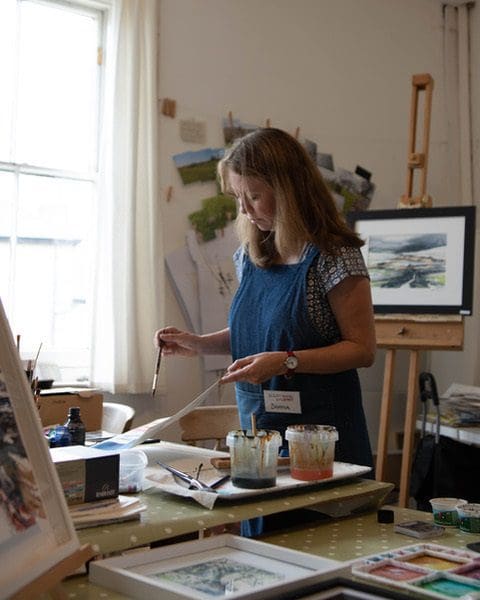
Donna Maria Taylor in her South Bank Studios studio

GEORGIAN celebrations, a brace of art fairs, Shakespeare sonnets on the tennis court and The Magpies’ folk festival should outshine Wednesday’s solar eclipse, reckons Charles Hutchinson.

Artists in situ: South Bank Studios’ Summer Artists Open Doors, Southlands Methodist Church, Bishopthorpe Road, York, today, 10am to 4pm

MEET the South Bank artists and makers who work in a broad range of disciplines, from textile art, painting, drawing and photography, to mixed media, letterpress and linocut printmaking.

Visit their studios to see their creative processes in a day of art to buy, art demonstrations and activities, including the loft studios, not usually on view to the public. The cafe will be open for refreshments. Entry is free; all welcome.  

Masquerade Ball at the 2026 York Georgian Festival tonight

York festival of the week: York Georgian Festival, until August 10

HIGHLIGHTING the sights and sounds of 18th century life, York Mansion House and beyond plays host to the fourth York Georgian Festival in a festival programme that ranges from free displays of dancing and military drills in St Helen’s Square to the York Georgian Masquerade Ball at the Grand Assembly Rooms tonight. Talk, tours, performances and workshops feature too. For full listings and booking details, go to: yorkgeorgianfestival.co.uk.

Carlton Main Colliery Band: Brass At The Proms at Selby Abbey

Rousing concert of the week: Brass At The Proms, Carlton Main Colliery Band, Selby Abbey, tonight, 7pm

JOIN Carlton Main Frickley Colliery Band on its return to the former coalfield town of Selby for a Last Night of the Proms brass concert featuring a vibrant mix of rousing favourites. Seating in the Main Nave will be allocated, with seat and row numbers; Rear Nave seating will be filled on a first-come, first-served basis. Box office: selbytownhall.co.uk.

Futureproof’s logo for a night of poetry, drag, monologues and comedy

Art and science bonding exercise of the week: Futureproof presents Opposites Attract Scratch Night, York Theatre Royal Studio, tonight, 7.30pm

EIGHT acts perform a mixture of poetry, drag, monologues and comedy. Expect biochemistry, molecular biology, sewing, chalk stream-inspired dance and more tonight.

The theme, Opposites Attract, derives from the idea that many things will give people joy, purpose, belonging and entertainment — such as maths and science — that seem to be mutually exclusive to theatre. Futureproof invites creatives to consider these ostensible contrasts, alongside the concept that theatre is meant to reflect our world and/or be a tool to create new ones. Box office: 01904 623568 or yorktheatreroyal.co.uk.

Comedy event of the week: Kevin Bridges: Warm Up, Grand Opera House, York, today and tomorrow, 8pm

CLYDEBANK comedian Kevin Bridges performs two warm-up shows in York ahead of his UK stand-up tour Here If You Need Me. Tonight’s gig has sold out but tickets are still available for tomorrow, as well as for his Leeds First Direct Bank Arena tour show on November 19. Box office: York, atgtickets.com/york; Leeds, axs.com/uk/events/1240964/kevin-bridges-tickets?skin=leeds.

On the stretch: Jamie McKeller’s Lionel, left, and Stuart Lindsay’s Charles limbering up for the doubles in York Shakespeare Project’s Summer Sonnets: What the Deuce? Picture: John Saunders

New balls please: York Shakespeare Project presents 2026 Summer Sonnets: What The Deuce?, Holy Trinity Churchyard, Goodramgate, York, until August 15, except August 11, 6pm & 7.30pm, plus 4.30pm Saturday shows

SUMMER at the Goodramgate Lawn Tennis Club finds four doubles teams competing for the chance to play in a Wimbledon amateur tournament, whereupon partnerships and rivalries lead to sabotage and break point. Who has the advantage? Who is at fault? Will the score be love?

Expect further tennis puns aplenty as Rosy Rowley directs Stuart Green’s script that asks a new collection of ten characters to play out this new sporting and unsporting situation where each finds a way to share a Shakespeare sonnet. Taking part will be James Robert Ball, Oscar Langford, Helen Clarke, Sarah McKeagney, Stuart Lindsay, Alexa Williams, Jamie McKeller, Alan Sharp, Christine Bramwell and Effie Warboys. Box office: tickets.41monkgate.co.uk.

The poster fort York River Art Market 2026. Illustration by Elliot Harrison (@York360)

Open-air art event of the month: York River Art Market, Dame Judi Dench Walk, York, today and tomorrow, then August 15 & 16, 10am to 5.30pm

YORK River Art Market returns for its 11th year, bringing more than 30 artists from multiple disciplines to the Ouse riverside each day, this year presenting art and design market stalls on both sides of the pathway.

Described as York’s answer to the Left Bank in Paris, the event is being run for the first time this summer by Caroline Turner, a professional potter and ceramics teacher at Clay Space York. Admission is free.

York River Art Market 2026 organiser Caroline Turner with artist Lincoln Lightfoot on the Dame Judi Dench Walk pathway

Tribute gig of the week: SWT presents Pulp’d vs Blur 2, Milton Rooms, Malton, today, 8pm

PULP’D and Blur2 team up for a double-header of Britpop royalty tonight. Born and raised in Sheffield, passionate Pulp fans Pulp’d came together to re-create the hits, passion and Jarvis Cocker moves.

Blur2 bring the very best of Blur to every show: the energy, the fun, the sound, the looks and the musicianship of Damon Albarn, Graham Coxon, Alex James and co. Box office: 01653 696240 or themiltonrooms.com.

Scissor Sisters: Heading to the Scarborough coast tonight

Coastal gigs of the week: Scarborough Open Air Theatre presents Scissor Sisters, today; Holly Johnson, ABC and Heaven 17, August 14,  gates 6pm

AFTER their 2025 UK arena reunion tour and that summer’s Saturday night Glastonbury set, Scissor Sisters bring their trademark blend of glam, grit and glorious to Scarborough Open Air Theatre this weekend. Jake Shears, Babydaddy, Del Marquis and co will be rolling out such favourites as Take Your Mama, Laura, I Don’t Feel Like Dancin, Let’s Have A Kiki, Only The Horses and Filthy/Gorgeous.

Holly Johnson: Frankie says Relax in Scarborough

Flamboyant, unapologetically bold Frankie Goes To Hollywood lead vocalist and lyricist Holly Johnson tops the 1980s’ triple bill next Friday, when he performs the chart-topping trio of  Relax, Two Tribes and The Power Of Love, further Frankie smashes Welcome To The Pleasure Dome and Rage Hard and solo hits Love Train, Americanos and Atomic City. Sheffield bands ABC and Heaven 17 support. Box office: scarboroughopenairtheatre.com.

The Magpies: Hosting their folk festival at Sutton Park

Folk festival of the month: The Magpies Festival, Sutton Park, near York, August 14 and 15

RUN by the folk trio of Bella Gaffney, Holly Brandon and Ellie Gowers, The Magpies Festival presents next Friday’s Main Stage bill of Daraa Tribes (6pm), The Magpies (8pm) and headliners Manran (10pm) and Brass Castle Stage bill of True Foxes (5pm), Elizabeth Davidson-Blythe & Daniel Quayle (7pm), SupaLung (9pm) and New York Brass Band (11pm).

Next Saturday’s line-up on the Main Stage comprises Steady Habits (12 noon), Alex Hart (2pm), Blair Dunlop (4pm), Katherine Priddy (6pm), Gnoss (8pm) and headliners Cut Capers (10pm). The Brass Castle Stage plays host to Songs In The Round, with Katherine Priddy, Blair Dunlop and Chloe Foy (1pm), Tarren (3pm), Ophelia’s Beard (5pm), Around About Dusk (7pm) and Suntou Susso & The Gambian Superstars (9pm). Box office: themagpiesfestival.co.uk/tickets.

Composer Thomas Adès: Presenting new composition at Creation-themed North York Moors Chamber Music Festival. Picture: Marco Borggreve

In Focus: North York Moors Chamber Music Festival, August 8 to 22

THE North York Moors Chamber Music Festival celebrates its 18th consecutive year with the premieres of six works by contemporary British composers.

Aptly named Creation, the 2026 festival will run from August 8 to 22, featuring new compositions by Thomas Adès, Huw Watkins (both of whom will perform at the festival), Charlotte Bray, Tom Coult, Isabella Gellis and Helen Grime.

“Our 2026 festival celebrates the wonder of beginnings and features six newly commissioned premieres that evoke the six days of the universe’s creation, woven through the festival theme, by six of our country’s very finest composers,” says festival director and cellist Jamie Walton.

Charlotte Bray: Premiering That Which You Wove Of Lightest Thread, I Wear To Honour Stone at North York Moors Chamber Music Festival. Picture: David Beecroft

“As part of this narrative, the Sabbath (Sunday) remains a day of rest – and each concert includes works that were themselves groundbreaking or innovative in their time, reflecting music’s timeless power to create, to renew, and to tell a universal story through sound.”

Jamie continues: “Thomas Adès is widely regarded as one of the world’s greatest living composers, so it’s a real coup to have him both write for us and come to premiere the piece, Flower Variations [in the Landspeak concert on August 14 at 7pm at Welburn Manor].

“We’re really proud of the fact that, alongside these six outstanding composers, we have such a stellar line-up of international artists.

Helen Grime: Premiering Time Be Brief. Picture: Benjamin Ealovega

“We’re also continuing to champion visual artists from the moors in the brochure, pairing their work with concert titles. We’ve done this for the past two years and it’s a wonderful way to cross-pollinate and collaborate with more artists.”

Charlotte Bray’s piece for horn and string quartet, That Which You Wove Of Lightest Thread, I Wear To Honour Stone,  will be accompanied by a collaborative artwork by Caroline Burraway, exhibited on stage at St Hedda’s, Egton Bridge during The Dividing Line performance on August 13 at 2pm.

Isabella Gellis’s Creation will be premiered in August 11’s Dialogue concert at St Hilda’s, Danby, at 2pm; Helen Grime’s Time Be Brief, at Metamorphoses concert, Welburn Abbey, August 15, 7pm; Huw Watkins’s Oboe Quartet, The Architect’s Hand concert, St Mary’s, Lastingham, August  18, 2pm, and Tom Coult’s Two Nocturnes and A Maze, in its UK premiere, Nightfall concert, Welburn Abbey, August 20, 7pm.

Huw Watkins: Premiering his Oboe Quartet in festival appearance. Picture: Benjamin Ealovega

The festival will take place in four historic moorland churches – St Hilda’s, Danby, St Hedda’s, Egton Bridge, St Michael’s, Coxwold, and St Mary’s, Lastingham – along with the majority of concerts being staged in the grounds of Welburn Manor, near Kirkbymoorside, where the acoustically-treated venue has been enlarged this year to reflect the festival’s increasing popularity.  

The festival was named a Best of British Fund Winner 2026 by Airbnb, representing Yorkshire as part of the North York Moors Beacon for the Arts.

Jamie says: “Our festival celebrates the art of collaboration in an awe-inspiring setting, taking our audience on a musical quest each year through interwoven themes within a central storyline.

Isabella Gellis: Premiering Creation in August 11’s Dialogue concert at St Hilda’s, Danby. Picture: Ella Pavlides

“Over 18 years, we have built a reputation for breaking down barriers to make exceptional music accessible to all, fostering community and cultural connection through friendship and trust. Uncompromising even amid pandemic challenges, our festival was one of the few to present full, live performances in 2020 and 2021.

“August, when the heather is in full bloom, brings the North York Moors to life. Artists are immersed in the National Park, rehearsing and living in a deeply holistic environment, while audiences are welcome to enjoy picnics on the grounds of Welburn Manor, attend concerts, and explore the region’s historic churches and priories.”

The event continues to attract international artists, 28 this year, many of them committing to the entire fortnight by taking up residencies in a festival of 13 concerts featuring 58 chamber works from 32 composers spanning 300 years to the present day. 

Tom Coult: Premiering Two Nocturnes and A Maze on August 20. Picture: Matthew Johnson

This year, these include Alena Baeva, Benjamin Baker, Oliver Cave, Oliver Heath, Alessandro Ruisi and Charlotte Scott (violin); Sascha Bota, Meghan Cassidy,  Emma Wernig and Simone van der Giessen (viola); Rebecca Gilliver, Tim Posner and Jamie Walton (cello) and Will Duerden (double bass).

Taking part too are: Thomas Adès, Katya Apekisheva, Joseph Havlat, Roman Kosyakov, Daniel Lebhardt and Huw Watkins (piano); Ben Goldscheider (French horn); Nicholas Daniel (oboe); Matthew Hunt (clarinet); Jonathan Davies (bassoon) and James Gilchrist (tenor). Completing the line-up will be the festival’s award-winning Young Artists ensemble, The Davidoff Trio.

Tickets for individual concerts are £18; a season ticket for all 13 costs £190. As ever, under-30s gain free entry to any of the concerts. To book, email [email protected], call 07722 038990 or visit www.northyorkmoorsfestival.com. The full programme can be downloaded via https://www.northyorkmoorsfestival.com/.

Our 2026 festival celebrates the wonder of beginnings and features six newly commissioned premieres that evoke the six days of the universe’s creation,” says North York Moors Chamber Music Festival director Jamie Walton. Picture: Matthew Johnson

Secret Link