REVIEW: Steve Crowther’s verdict on Imago Mundi: Tears Into Light, York Early Music Festival 2026, National Centre for Early Music, York, July 6

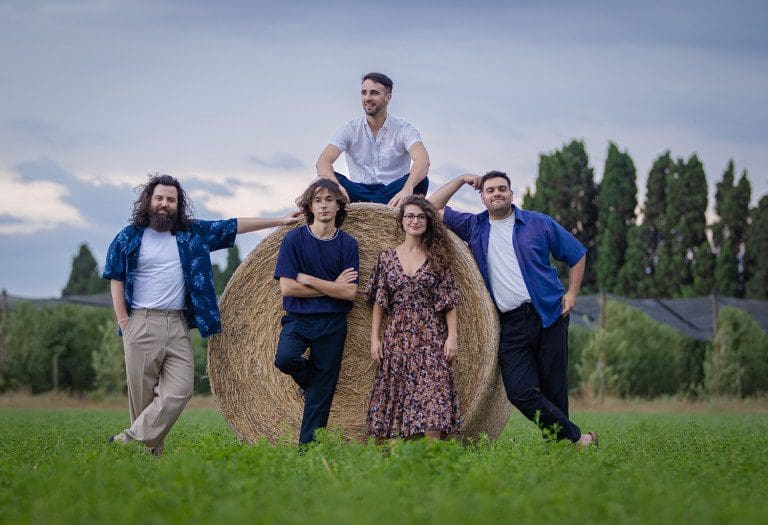
Sofie Vanden Eynde: Artistic direction and lute for Imago Mundi’s Tears Into Light concert at York Early Music Festival

DESCRIBED in the festival programme as “a contemporary reimagining of John Dowland’s Lachrimae”, Imago Mundi’s Tears Into Light uses Seven Tears as the point of departure for a contemporary meditation in which Renaissance song, Armenian tradition, newly composed music by Vladimir Gorlinsky and spoken reflections become successive stages of a journey from melancholy towards hope.

The spoken narrative, by Fleur Pierets, functions as a series of meditations drawn from conversations with residents of a Belgian care home and palliative day centre.

They become a sequence of poetic monologues – intimate reflections on ageing, memory, regret, companionship and death:

I walk through cities made of memories,

where echoes whisper, soft and low.

Each breath is heavy with remembering,

each step moves tides I cannot slow.

There is a sound the dark remembers

a hum that aches beneath my bones.

– The Distant Light (dark to horizon)

Although there are echoes of Sufi imagery – I walk (journey); a hum that aches beneath my bones (listening from within); memory as spiritual experience – I was more affected, however, by the personalisation of these texts: We; Eli; Carlos; Eric; Danielle; Frédéric and Rose-Marie – they are almost certainly the individuals at the care home and palliative centre.

It was obvious that these spoken texts were repeated in close imitation. This subtly reinforced the theme of echo and memory; the individual transforming into collective – repeated entries blurring the identity of the individual speaker and creating a bridge between speech and music. Canon, based on exact imitation, is one of the simplest and most recognisable musical devices that can be applied to speech.

So, rather than interrupting the music, these meditations broadened its emotional landscape, perhaps suggesting that Dowland’s melancholy remains as resonant today as four centuries ago.

Another fascinating aspect of Tears Into Light was the inclusion of the Armenian duduk. At first glance, Dowland and Armenian traditional music seemed an unlikely pairing. Yet the duduk, long associated in Armenian culture with remembrance, lamentation and funeral rites, proved a natural companion to Dowland’s world of melancholy.

Its warm, breath-infused tone carried an unmistakable sense of grief and longing, while Vardan Hovanissian’s subtle and deeply expressive playing was illuminating, revealing just how naturally the instrument could inhabit Dowland’s emotional landscape.

Although the programme credited visual artist Ria Verhaeghe as a collaborator, the performance itself was experienced principally as a dialogue between music and spoken word. I assumed the visual contribution was deliberately understated.

Rather than projected imagery unfolding alongside the performance, what seemed to be a single image remained behind the performers throughout. Maybe I simply missed it.

As far as I could tell, the Dowland pavan and songs remained recognisable and largely intact, whilst Vladimir Gorlinsky contributed new pieces, transitions and soundscapes around it, rather than rewriting the Renaissance music itself.

His music featured sustained sonorities, drones, sparse textures, slow-moving harmonic fields and, tellingly, moments where electronic sound blends almost imperceptibly with acoustic instruments.

Without his music the programme would probably have felt episodic – song, speech, song, speech. His contributions helped to make it feel like a single, continuous journey. This leads nicely to his Rumi’s meditation – Rumi being one of the most significant Sufi poets; the mystical tradition within Islam.

To be honest, I wasn’t quite sure what to make of it: a gentle, reflective minimalist pattern interrupted by an anguished cry of despair before gradually finding a measure of resolution.

The performance of Sorrow was quite simply a thing of beauty. Eugénie De Mey’s singing had a gorgeous, seductive tone and was gently amplified and supported by Sofie Vanden Eynde’s subtle lute accompaniment.

Like Vardan Hovanissian, Eugénie De Mey (mezzo-soprano) and Sofie Vanden Eynde (lute) were a joy throughout. Ms De Mey’s singing was so immersed in the performance, her tone had a velvety-rich quality. She focused on intimacy and textual clarity – particularly noticeable in the lower register – which suited the reflective atmosphere of the work and allowed the spoken texts and songs to coexist naturally.

Ms Vanden Eynde’s lute playing struck me as invariably understated and yet quietly authoritative. I admired the refinement of her lute playing and beautifully shaped phrasing. She was the performance’s anchor, allowing Dowland’s music to breathe without becoming an exercise in historical reconstruction.

Finally, I was impressed by Sofie Vanden Eynde’s curatorial approach: this included imaginative programming and willingness to rethink what an early music concert can be.

Eugénie De Mey,  voice;  Vardan Hovanissian , duduk; Sofie Vanden Eynde,  artistic direction & lute; Jo Thielemans, sound engineer. Texts, Fleur Pierets; music, John Dowland & Vladimir Gorlinsky (composition & arrangements); visuals, Ria Verhaeghe.

Review by Steve Crowther

Who will be playing at York Early Music Festival from July 3 to 11? Find out here


I Fagiolini, with director Robert Hollingworth, centre, with sparkler: Performing opening concert of 2026 York Early Music Festival

THE 50th anniversary York Early Music Festival will run from July 3 to 11 with the theme of Beyond Borders.

More than 30 concerts will take place in York’s medieval churches, historic buildings and York Minster over nine days.

The festival was created in 1977 by a small group of Early Music enthusiasts and is long established as the premier British Early Music festival, attracting artists and visitors from far and wide.

Anacronia: Making York Early Music Festival on July 4

The festival will open with Monteverdi’s Vespers of 1610, presented by I Fagiolini with the English Cornett & Sackbut Ensemble, under Robert Hollingworth’s direction, on July 3 at 7pm at the sold-out Sir Jack Lyons Concert Hall, University of York. This concert will be broadcast on BBC Radio 3 on July 8.

Last in York for the 2025 York Early Music Christmas Festival, Solomon’s Knot will provide a spectacular summer festival finale at The Quire, York Minster, on July 10 at 7.30pm, when Jonathan Sells will direct singers and musicians performing Friedrich Nicolaus Bruhns’ St Mark Passion by heart.  

The festival will mark the 400th anniversary of the death of the great English composer and lutenist John Dowland by dedicating a whole day to his works on A Day Of Dowland on July 6.

Organist Ben Horden: To Lubeck and Bach concert at Sir Jack Lyons Concert Hall on July 7

Katherine Butler, associate professor at Northumbria University, will open the day with her sold-out 10.30am talk at Bedern Hall entitled Dowland’s Dolour: Music, Melancholy and Self-Fashioning in Elizabethan England.

Lutenist Thomas Dunford will present a selection of Dowland’s 90-plus compositions in The Rarest Musician at the sold-out St Olave’s Church, Marygate, at 1pm, and the Rose Consort of Viols, featuring lutenist Jamie Akers, will perform Dowland’s Teares Of Sorrowe And Gladnesse in the Undercroft, Merchant Adventurers’ Hall (again sold out,) at 6pm. Music by Orlande de Lassus and Alfonso Ferrabosco will complement works both sorrowful and joyful by Dowland.

Dowland’s day will end with Tears Into Light: A Contemporary Reimagining of John Dowland’s Lachrimae, performed by Imago Mundi, directed by Sofie Vanden Eynde, at the National Centre for Early Music, St Margaret’s Church, Walmgate, at 8.30pm.

Top: Lutenist Thomas Dunford. Bottom: Imago Mundi director and lutenist Sofie Vanden Eynde. Both taking part in A Day of Dowland on July 6

Drawing on the insights of scholar-philosophers and the concept of inspired melancholy, Tears Into Light explores how melancholy has been understood through history and how it offers a lens for viewing the present. Dowland’s Lachrimae will be interwoven with American traditional music in a reminder that light can always emerge from darkness.

The opening of the 50th festival will be heralded by the York Fanfare, a specially commissioned piece by Wakefield-born Sam Meredith for the 2026 ensemble-in-residence, the historical wind band [hanse] Pfeyfferey, comprising Lilli Patzold, cornetto, Alexandra Mikheeva, slide trumpet and trombone, and Laura Dumpelmann, shawm.

York Fanfare will herald the festival opening, ahead of July 3’s first concert, on the grass outside the Sir Jack Lyons Concert Hall, and then be performed around the city during the opening weekend, including outside the West Door of York Minster before The Sixteen’s 7.30pm concert there on July 4.

The Sixteen: Presenting Siglo de Oro, Music from the Spanish Renaissance, at York Minster on July 4. Picture: Johnny Millar

Directed as ever by Harry Christophers, The Sixteen will present Siglo de Oro, Music from the Spanish Renaissance, featuring works by Sebastian de Vivanc and Cristobal de Morales, Sir James MacMillan’s Nothing In Vain and the world premiere of NCEM Composers Award alumna Kerensa Briggs’s Lead, Kindly Light. BBC Radio 3 will air this concert on July 9.

The Great Noyze, organised by the International Guild of Town Pipers, has moved from College Green, York Minster, to St Sampson’s Square on July at 4pm.

Further highlights will be Minster Minstrels, From Holborne To Handel, at the NCEM on July 5, 11am; University of York Baroque Ensemble, with Ensemble Hesperi (in-house band at University of York), in The Music Party, NCEM, July 7, 12.30pm; organist Ben Horden, To Lubeck and Bach, Sir Jack Lyons Concert Hall, July 7, 6pm, and Ghent’s B’Rock Orchestra & Vocal Consort, Da Pacem: Sacred Music by Heinrich Schutz and Contemporaries, Sir Jack Lyons Concert Hall, July 7, 7.30pm.

Mezzo-soprano Helen Charlston: Teaming up with tenor Paul Agnew and lutenist Sergio Buchel for A Gentle Air at Merchant Taylors’ Hall on July 9

Clavichord player Steven Devine’s Preludes, Fugues and Fantasies, at All Saints Church, North Street, on July 8 at 12.30pm, has sold out; Yorkshire Baroque Soloists will perform Amphion Anglicus, Chapter House, York Minster, July 8, 7.30pm, and Early Music will meet jazz and modernity in Duo Gambelin’s All’Improviso, Undercroft, Merchant Adventurers’ Hall, July 8, 9.30pm.

On July 9 at 7pm, mezzo-soprano Helen Charlston, tenor Paul Agnew and lutenist Sergio Buchel will feature French songs by Michel Lambert and Sebastien Le Camus in A Gentle Air at the Merchant Taylors’ Hall. In July 10’s Concert by Candlelight at Holy Trinity Church, Goodramgate, soprano Hannah Ely, alto Rebekah Jones and tenor Paul Bentley-Angell will perform songs from the courts of 12th-century France in Love From Afar.

Contre le temps: Le Baiser de la Rose programme at NCEM on July 5

At the heart of the festival is the NCEM’s year-round commitment to supporting emerging talent, this year represented by two young European ensembles, NCEM Platform Artists Anacronía, from Spain, in their festival debut at the NCEM on July 4 at 1.30pm, and the Franco/American medievalists Contre le temps, whose Le Baiser de la Rose programme at the NCEM on July 5 at 8.30pm will be recorded for BBC Radio 3’s Early Music Show for broadcast on a date yet to be confirmed.

Held every two years, the prestigious York Early Music International Young Artists Competition will feature 40 musicians in nine ensembles competing for a series of prizes in a day of thrilling concerts at the NCEM on July 11 from 10am to 5pm.

Duo Gambelin: Early Music meets jazz and modernity in All’Improviso concert at Undercroft, Merchant Adventurers’ Hall, on July 8

This year’s finalists are: I Mastricelli; Il Parrasio; La Mandorle; Lagrime; Nari Baroque Ensemble; Ossian’s Dream; Quarterino; Tra Noi and The Lyons Mouth (formed at the University of York).  

The full programme can be found at ncem.co.uk/whats-on/yemf. Box office: 01904 658338; email at boxoffice@ncem.co.uk; ncem.co.uk or in person from the NCEM.

Festival director Dr Delma Tomlin says: “We’re very excited to be staging our 50th festival, which is brimming with musical delights. The very first festival took place in 1977 and has gone from strength to strength, inspiring the restoration of St Margaret’s Church and the creation of the National Centre for Early Music in 2000.”

York Early Music Festival director Delma Tomlin

“Our 50th edition features world-class ensembles and emerging artists; celebrates the genius of John Dowland; hosts the prestigious York Early Music International Young Artists Competitionand has commissioned the York Fanfare to open the proceedings, making sure the festival gets off to a flying start.

“Last but not least, our media partners, BBC Radio 3 will be back, broadcasting the hugely popular Early Music Show live from the NCEM, presented by Hannah French on July 5 at 5pm with a line-up of guest artists from the festival. We hope you can join us in York for this very special celebration.”

The full programme can be found at ncem.co.uk/whats-on/yemf. Box office: 01904 658338; email at boxoffice@ncem.co.uk; ncem.co.uk or in person from the NCEM.

Solomon’s Knot: Festival finale at York Minster on July 10