REVIEW: Black Sheep Theatre Productions in Parade, Joseph Rowntree Theatre, York, until tomorrow ***1/2

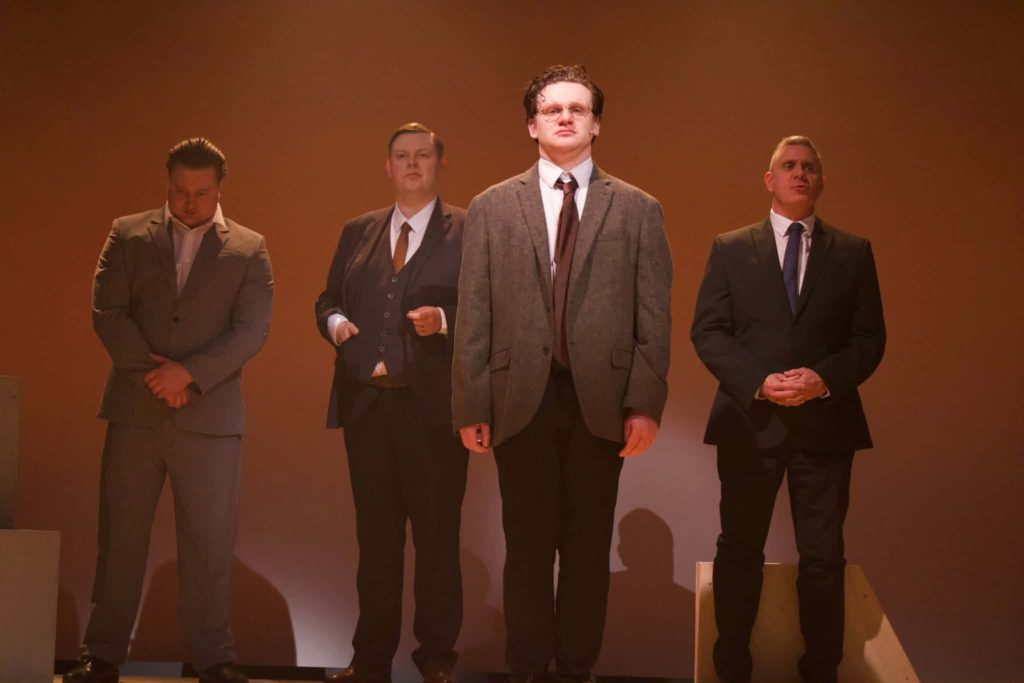
On trial: Dan Poppitt’s Leo Frank, front, with Jack James Fry’s defence lawyer Luther Rosser, left, Jack Hooper’s prosecution lawyer Hugh Dorsey and David Copley Martin’s Judge Roan

IN an age of programmes being plucked from the ether via QR codes or reduced to a piece of paper with a cast list and production team, Black Sheep Theatre Productions buck the cost-cutting trend by printing a superb, glossy-covered yet earnest old-school version in A4 size.

Written in the style of a newspaper article for The Atlanta Georgian, the highly detailed two-page synopsis is followed by lead actor Dan Poppitt’s fascinating essay The Truth Behind The Tale, exploring this controversial slice of American history from 1913.

Cast profiles are comprehensive too, revealing the wide range of theatre backgrounds and diverse experience, from Leeds performer and entertainer Reggie Challenger, best known for his Bob Marley and reggae tribute act, to University of York English Literature student Eloise Shneck and theatre, writing, directing and performance student Oskar Nuttall.
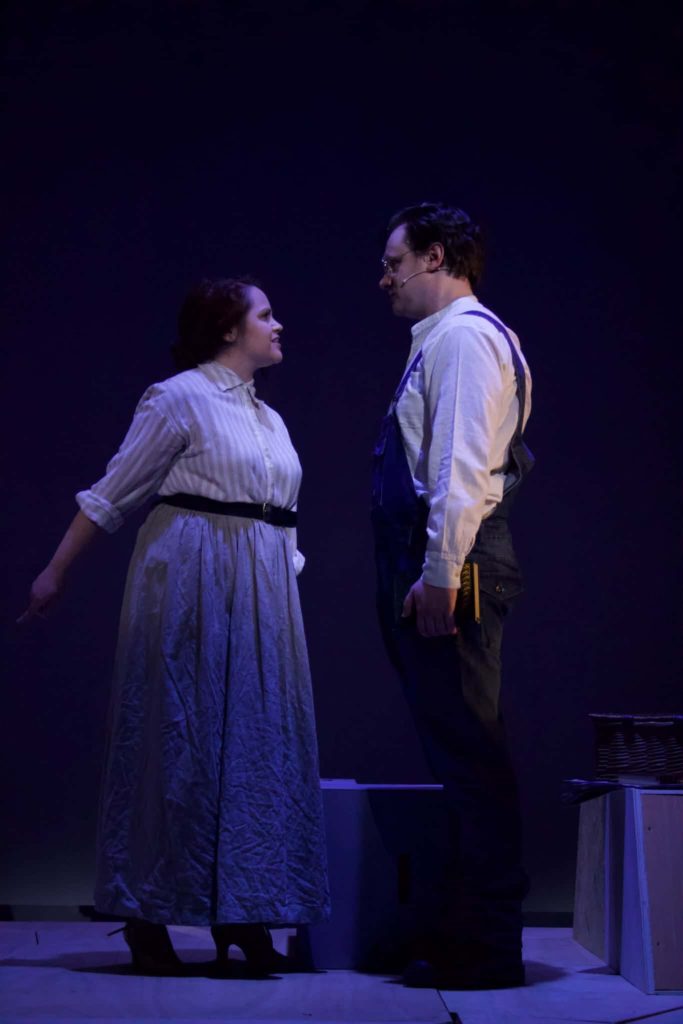
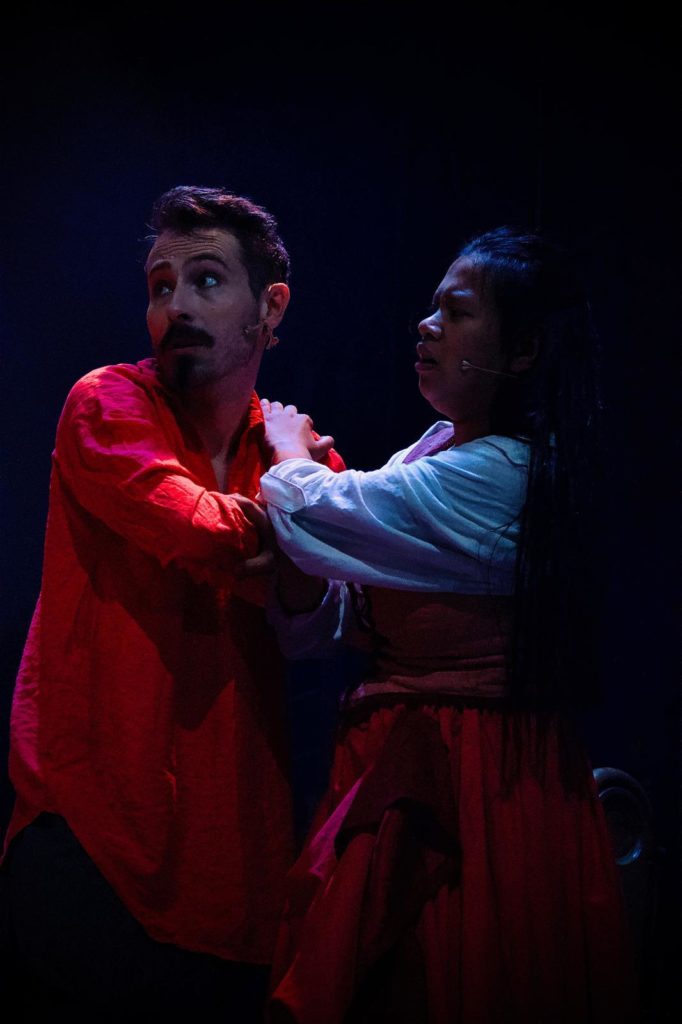
Molly Whitehouse’s Lucille Frank and Dan Poppitt’s Leo Frank in Black Sheep Theatre Productions’ Parade

Bringing it all together is company founder, director and musical director Matthew Peter Clare, whose programme note speaks of the York company being dedicated to “creating bold, emotionally resonant and artistically ambitious works”, born out of a shared desire to challenge expectations of what amateur theatre can achieve through its depth of storytelling.

Black Sheep are committed to telling “very human stories, interrogating identity, morality, relationships and the complexities of the human condition”, from Elegies For Angels, Punks & Raging Queens to Songs For The New World, The Hunchback Of Notre Dame to Clare’s own work Inner Selves, a study trauma, mental health and fractured bonds, in an exploration of “otherness, politics, prejudice and queer media”.

Parade fits that bill in its 1913 story of the persecution/prosecution of Leo Frank, a studious, eloquent Jewish factory manager from Brooklyn, who had taken up a superintendent’s post at a Marietta pencil factory, near Atlanta, Georgia, swapping New York for the Deep South somewhat cautiously  after his wife Lucille’s uncle invites him to join the company. Leo (Dan Poppitt) will end up being charged with the murder of 13-year-old factory worker Mary Phagan (Eloise Shneck).
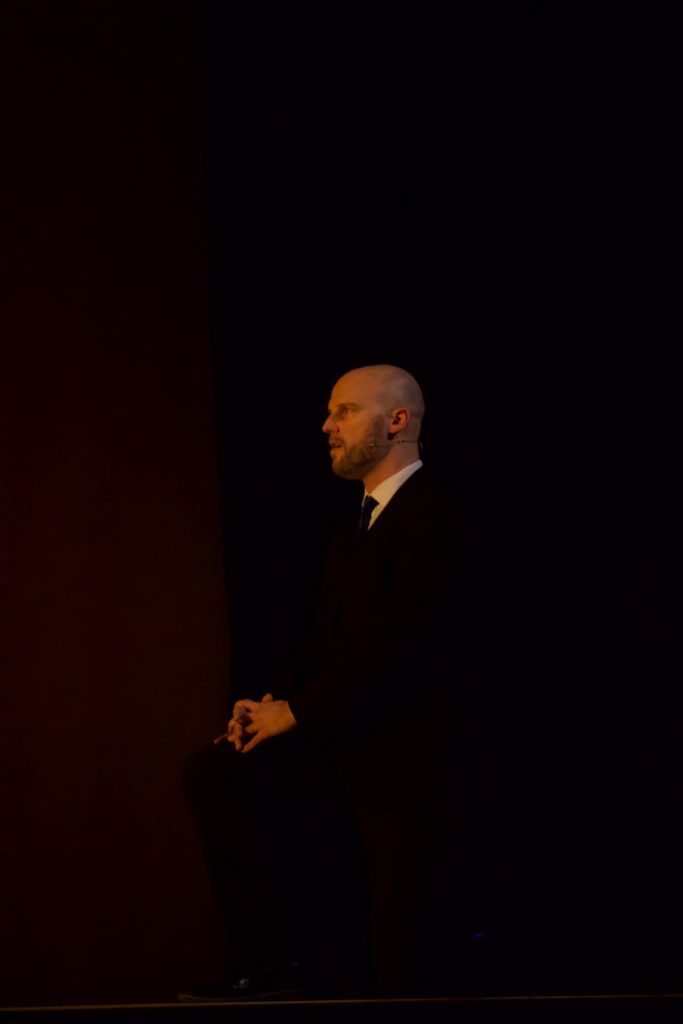
Jonny Holbek’s zealot Tom Watson, reprising the role he first played in 2009 for Encore Theatre Productions, this time stepping in at three weeks’ notice

No spoiler alert is required here because Parade is based on a true story, one that ends with Leo’s lynching and clan hanging, but still shocks in its brutality, not least in the starkness applied by Clare, who likes his productions to “place emphasis on substance over spectacle”.

Despite this Tony Award-winning 1998 show being the work of Driving Miss Daisy’s Alfred Uhry and The Last 5 Years’ Jason Robert Brown,  the chances are that you may not be familiar with Parade or its Dixie, blues, gospel and R&B songs, given that your reviewer can find only one reference in The York Press files to a past production here.

Directed by Gilly Adam and Craig Kirby and produced by Jenny Scoullar, it formed  Encore Theatre Productions’ debut show in the Alan Ayckbourn Theatre at York College in its first and seemingly only York staging in October 2009. Whatever happened to Encore Theatre Productions, by the way?
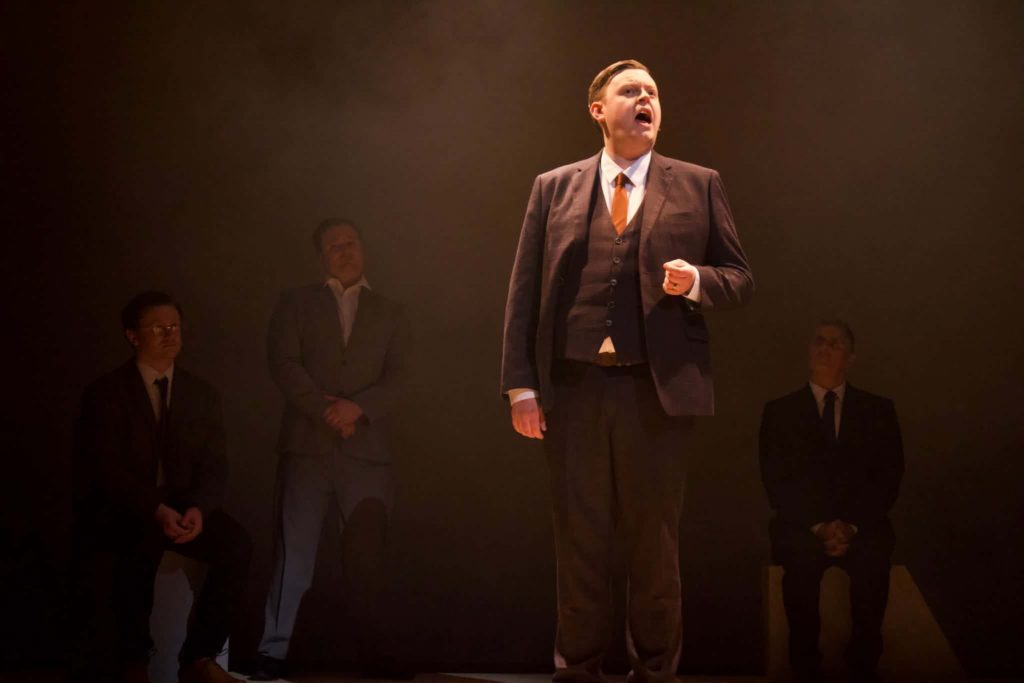
Jack Hooper’s bent prosecution lawyer Hugh Dorsey holds the floor. In the courtroom shadows are Dan Poppitt’s defendant Leo Frank, left, Jack James Fry’s defence lawyer Luther Rosser and David Copley Martin’s Judge Roan

Parade is back on parade in York at a time of rising media coverage of anti-Semitism, chiming with Leo Frank’s own experience in 1913 when such sentiments were prevalent, against a backdrop of post-American Civil War poverty and prejudice.

Faced by bent prosecution lawyer Hugh Dorsey (Jack Hooper), the salacious reporting of Atlanta Constitution hack Britt Craig (Richard Bayton); the white supremacist poison of zealot politician Tom Watson (Jonny Holbek, reprising his scary 2009 role) and the unreliable testimony of chief prosecution witness Jim Conley (Reggie Challenger), the heavy-drinking factory janitor, how did Leo ever stand the chance of a fair trial?

Within that framework, a re-kindling of a love story plays out between the stern, strict, Hebrew-reciting Leo and his wife Lucille (Molly Whitehouse). She is described as “assimilated” for putting being Georgian first, compromising her Jewish faith in his eyes, only for her to find new strength in adversity when standing by her convicted husband in challenging the verdict by confronting Georgia’s principled  Governor, John Slaton (Mark Simmonds).
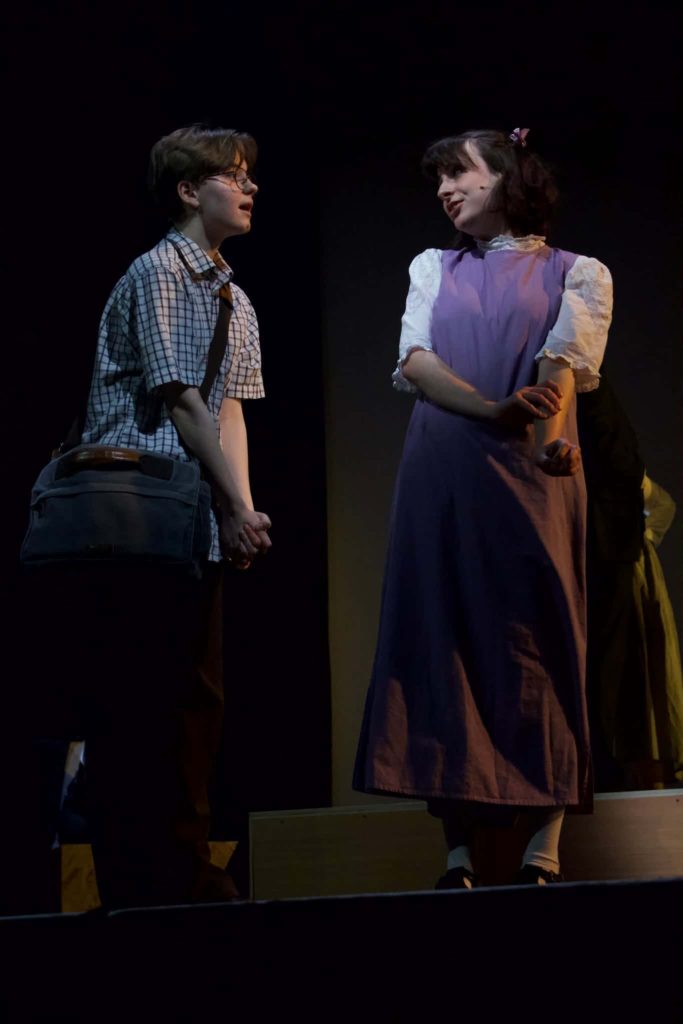
University of York students Oskar Nuttall and Eloise Shneck in the roles of Frankie Epps and Mary Phagan respectively

The original New York production ran for only 94 performances from 1998 to 1999, but its songs are better than that, all the more so for being placed wholly in the spotlight when the staging and lighting is minimalist (combining most effectively on the bare backdrop to evoke “the old Red Hills “ of Georgia). A raised platform with a hole for Mary Phagan’s coffin and boxes that double as seating suffice for set design.

The impact, therefore, is emotional rather than visual, albeit that physicality plays its part too. Poppitt gives a lead performance of serious, outspoken demeanour, his singing his best yet on the York stage; Whitehouse’s Molly grows ever more impressive in her resolve. Hooper’s Dorsey has plenty of the night about him; Simmonds cuts a lone, principled figure as Slaton; Nuttall and Shneck announce talents to watch.

The multi-role playing choreographer Charlie Clarke, Bayton’s duplicitous reporter Craig, Jack James Fry’s dual roles as defence lawyer and prison guard, Joycelyn Searles Duncan’s Minner McKnight, David Copley Martin’s Judge Roan and Georgina Burt’s lying Iola Stover make their mark too. Challenger’s That’s What He Said is the most characterful, soulful vocal of all.
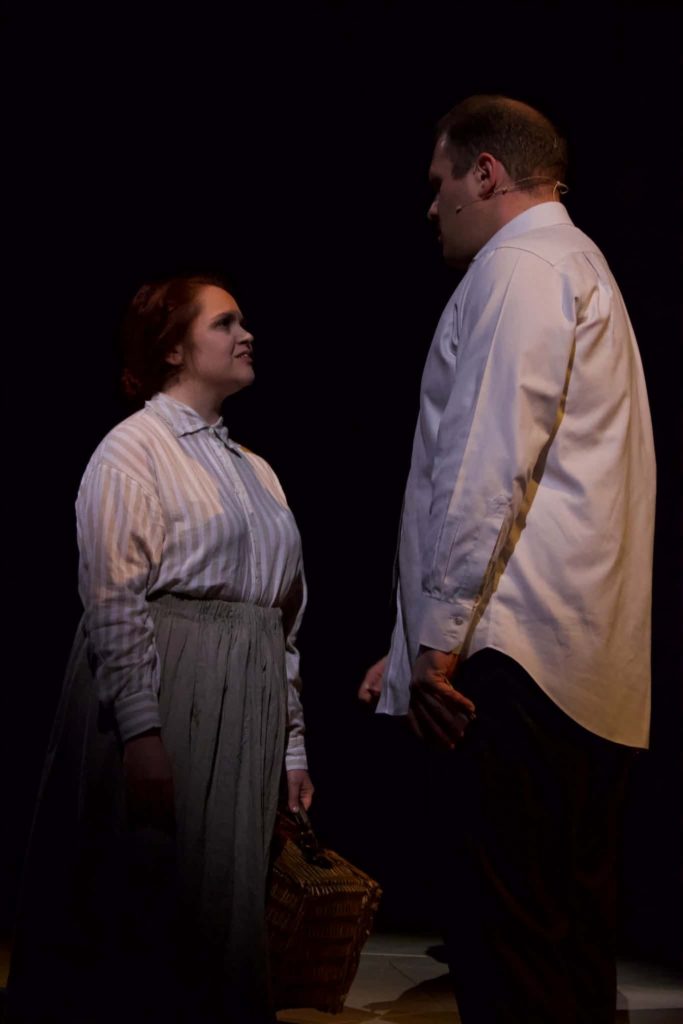
Molly Whitehouse’s Lucille Frank in discussion with Richard Bayton’s court reporter Britt Craig

Clare leads his eight-piece band with typical conviction, driving its diversity of reeds, horns and strings, topped off by Jez Smith, on particularly striking form on drums and percussion.

Parade remains a brave, stark, challenging musical, delivered in that manner by a progressive York company unafraid to explore, to jolt, to ask questions and demand answers.   

Black Sheep Theatre Productions present Parade, Joseph Rowntree Theatre, York, tonight, 7.30pm; tomorrow, 2.30pm and 7.30pm. Box office: 01904 501935 or josephrwontreetheatre.co.uk.
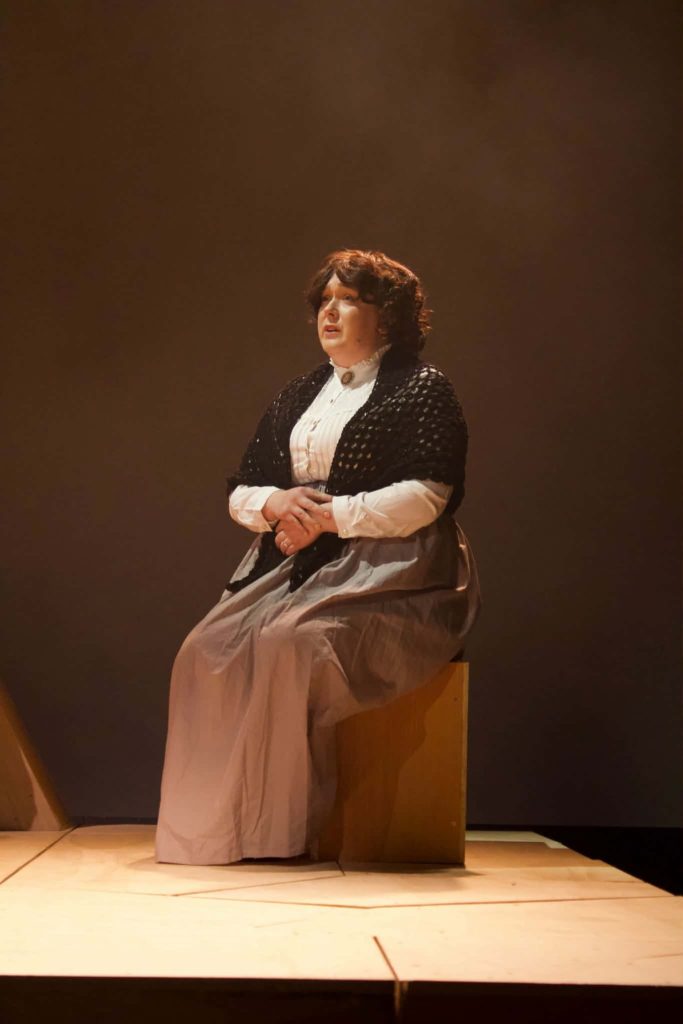
Charlie Clarke: Parade assistant director and choreographer in her role as Mrs Phagan
REVIEW: Black Sheep Theatre Productions in The Hunchback Of Notre Dame, Joseph Rowntree Theatre, York *** 1/2

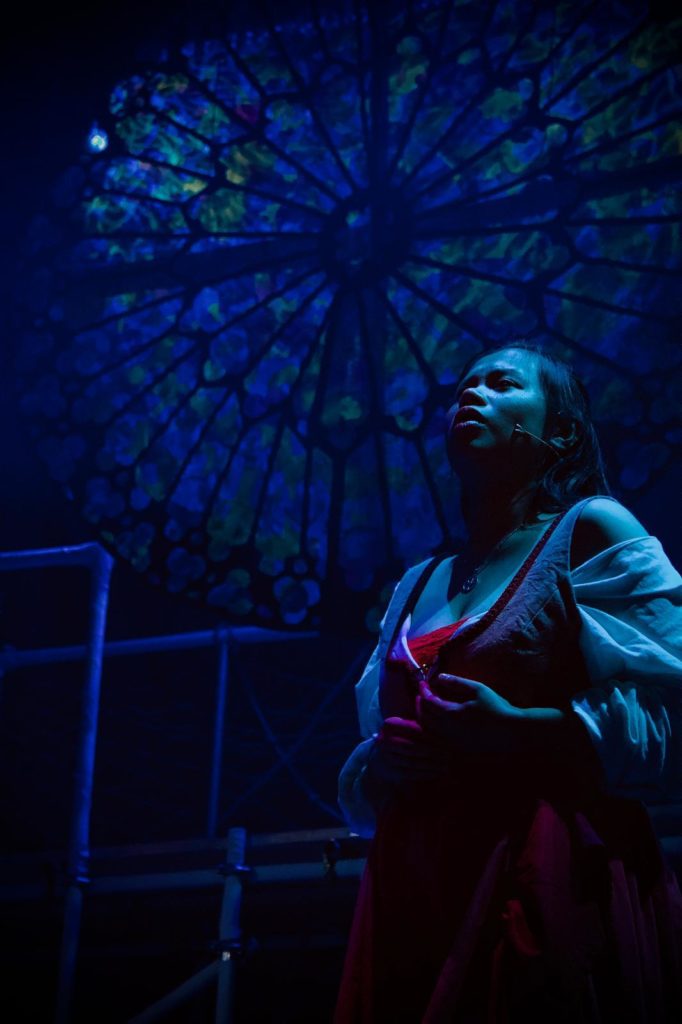
Ayana Beatrice Poblete’s Esmerelda in Black Sheep Theatre Productions’ The Hunchback Of Notre Dame. All pictures: Ryan Healey

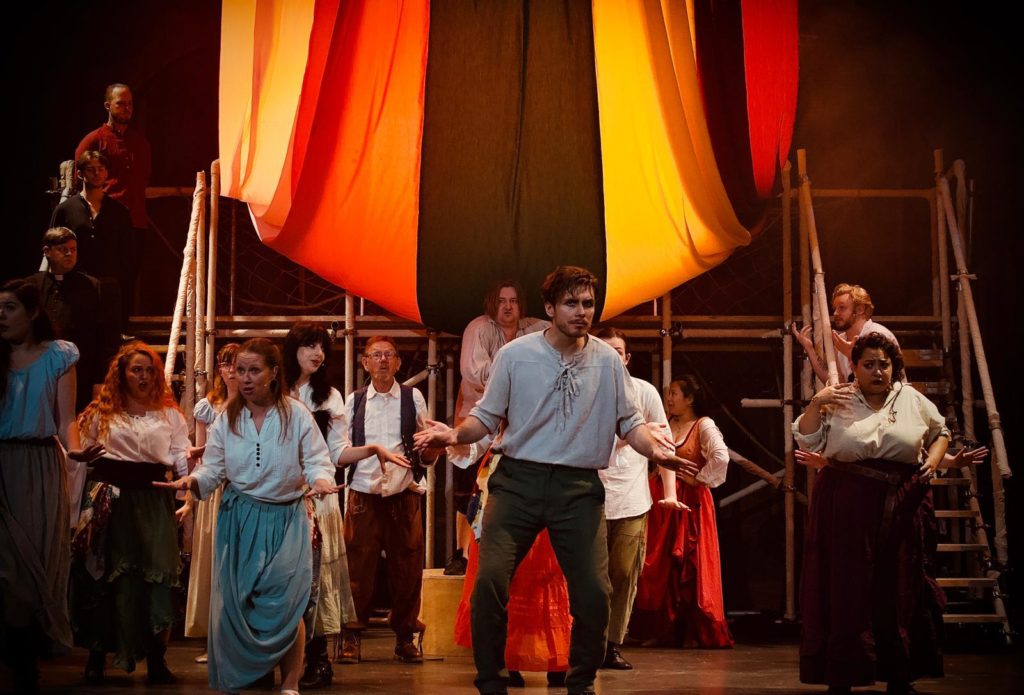
THIS is Black Sheep Theatre Productions’ biggest show – by far.  Company founder and director Matthew Peter Clare has assembled five leads, an ensemble of seven and a choir of 23; numbers to match the grandeur of Notre Dame cathedral.

Alas ticket booking has not been of a matching scale: last Thursday’s first night and Sunday’s two shows were pulled, and maybe Black Sheep are unfortunate to be playing against the irresistible tidal wave of SIX The Musical’s sold-out return to the Grand Opera House this week.

Or, sometimes, who knows why, a show just does not light a flame at the box office, but in the case of ‘Hunchback’, that is baffling. Both Victor Hugo’s 1831 source novel and Disney’s animated 1996 film are ever popular, and the stage show is all the better for adding more Alan Menken and Stephen Schwartz songs and for being closer in tone to the book.

Imagine a show more aligned to the dramatic heft and impassioned song of another French tale, Alain Boublil and Claude-Michel Schönberg’s Les Miserables, et voila, ‘Hunchback’.

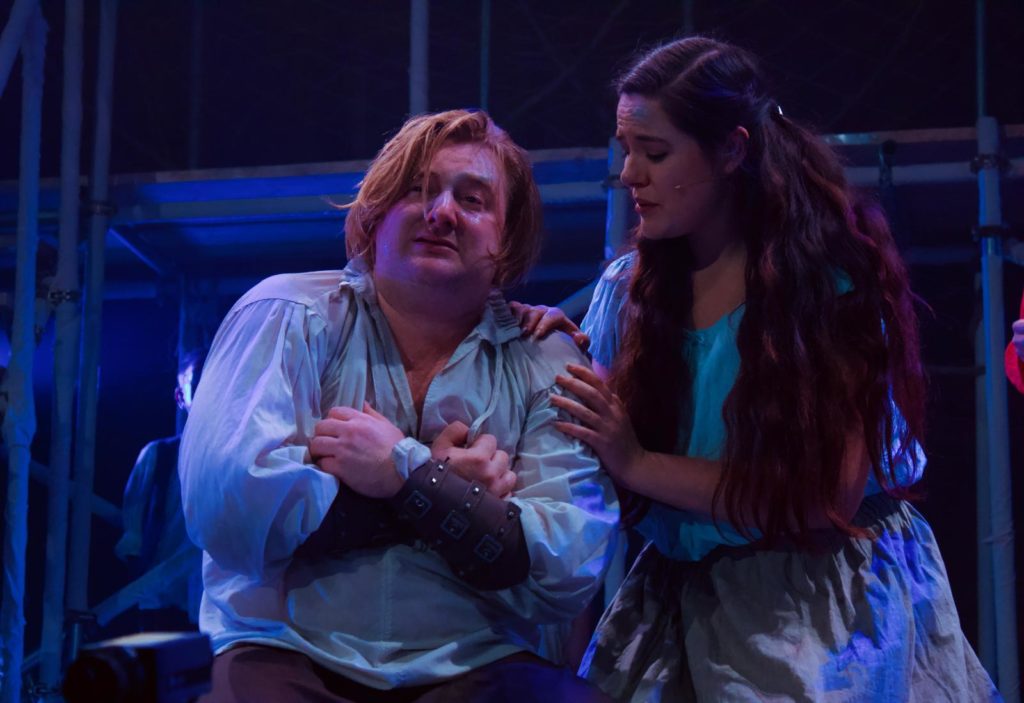
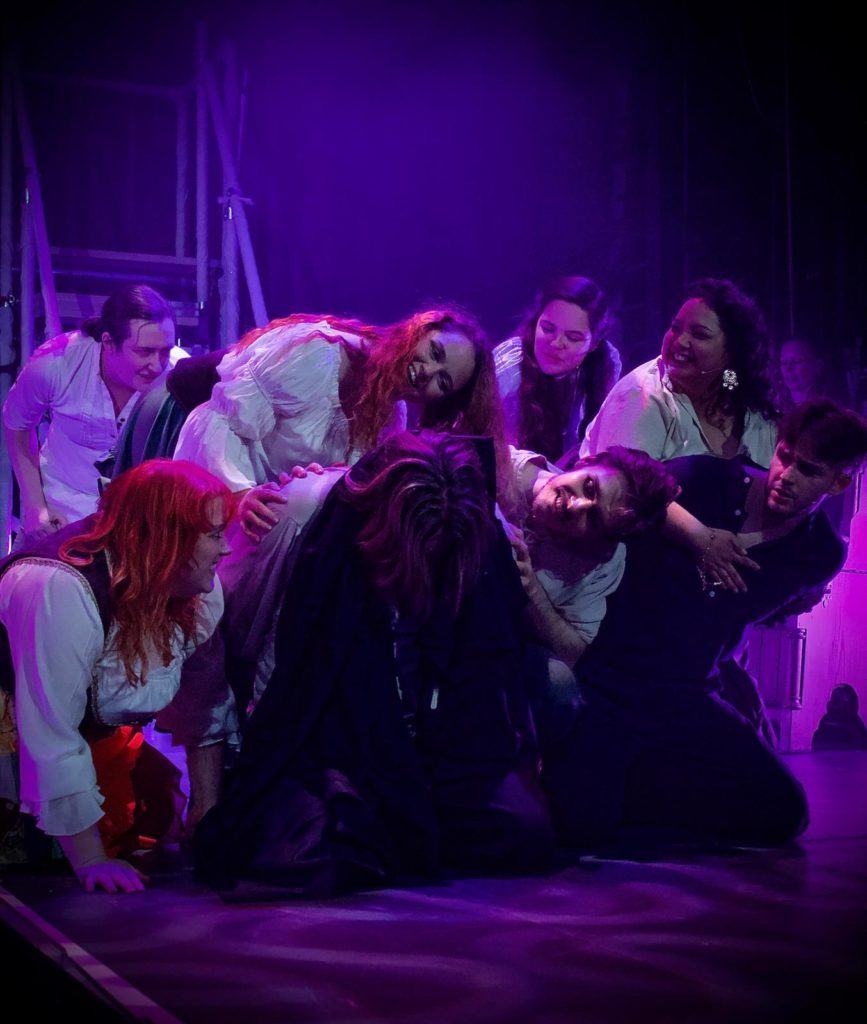
The people of Paris taunting Jack James Fry’s Quasimodo in The Hunchback Of Notre Dame

“Our mission has been art with a point,” says Clare, who relocated Black Sheep to York in 2022 from Lancashire beginnings. “Art that matters and art that connects with the human experience, in its glories or its pain.”

In those words in his programme note, you can hear his zeal for making theatre that “speaks to the heart of everyone watching” and see why he wanted to present ‘Hunchback’ as his next big challenge, one that could not be more topically timed in light of the rising intolerance of immigrants and “otherness”.

Clare’s resulting choral production is not only his largest but his most ambitious too, hence the big cast that must be accommodated on the JoRo stage, making their entry, heads covered, in cloaks, mysterious and full of foreboding.

Like a church building, he has kept much of the stage bare, save for scaffolding that provides a mezzanine level for the cathedral bell tower and a row of church pews to either side below.

Robbie Wallwork’s Captain Phoebus in an ensemble number in The Hunchback Of Notre Dame

The choir either stands behind them or beneath the scaffolding, in view but always rather distant, to the extent that it is not always clear who is singing when it is a solo voice.

Furthermore, on press night, that individual singing could not always be heard, although one should make allowance for technical tweaks to remedy what is a difficult sound balance with so many players on the fringes of the stage.

I stress, however, that there was no deficiency in commitment, and the presence of a choir adds a new element to Black Sheep. Hopefully, their impact can be at full throttle for the rest of the run in Ollie Nash’s sound design.

Clare is an audaciously talented musical director, and here he leads his 13-strong band through the intricacies of Menken’s score with elan. Every gorgeous note, every soaring climax, breathes with passion and the highly technical playing is beautifully balanced, heart-felt, dynamic, moving.     

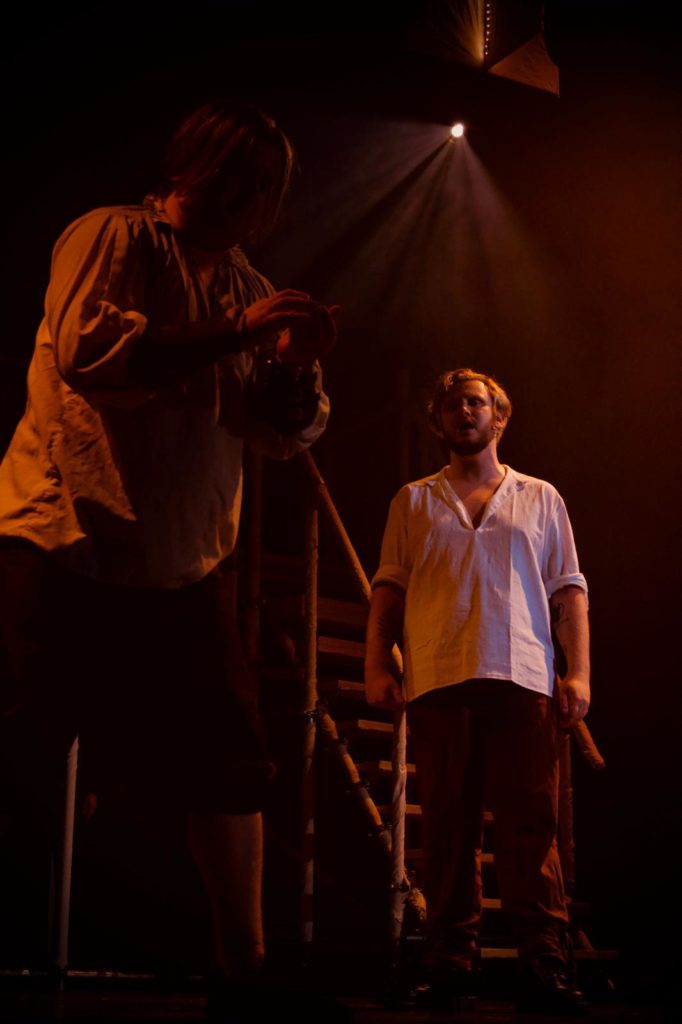
At the double: Jack James Fry as Quasimodo and Dan Poppitt as the Voice of Quasimodo, a five-star partnership at the heart of Black Sheep Theatre Productions’ show

The big talking point, the big selling point too, is the role of Quasimodo, here impeded more by loss of hearing from all that bell ringing than his bodily disfigurement that does not rob him of his extraordinary physical strength. He is isolated by his powers to communicate being so denuded.

Quasimodo is played by two actors; one, the deaf Jack James Fry, being his physical embodiment, utilising British Sign Language that has sound and fury, but huge human heart too, signifying everything as Quasimodo craves understanding and acceptance.  He can sure swing a bell rope too.

The other, Dan Poppitt, is Quasimodo’s voice, interpreting the sign language in speech and song by Fry’s side. Poppitt has been a rising light on the York stage as Tunny in Green Day’s American Idiot, Alonso in The Tempest and Roger in Rent. Now he rises higher still, whether mirroring Fry’s movements or in the show’s most powerful, dramatic singing.  What a magnetic, heartbreaking partnership he and Fry make.

Quasimodo’s fellow “outsider”, the gypsy dancer Esmerelda, is played with fearless fervour by Filipino-born Ayana Beatrice Poblete, while Emily Pratt’s Florika has the show’s outstanding female voice, classically pure in tone.

Jack James Fry’s Quasimodo and Emily Pratt’s Florika

Robbie Wallwork’s Captain Phoebus, caught between the romantic heroic figure of the Disney film and the flash vainglorious womaniser of Hugo’s novel, favours the former but his performance could be more assertive.

James Robert Ball, ever nimble, quick, light as a Malteser, recalls his Puck in York Stage’s A Midsummer Night’s Dream in May, taking the narrator’s role as Clopin Trouillefou, jester, Romani leader and Festival of Fools master of ceremonies, but this time beneath the mischief-making front lies a darker soul, saddened by experience, closer to Cabaret’s Emcee.

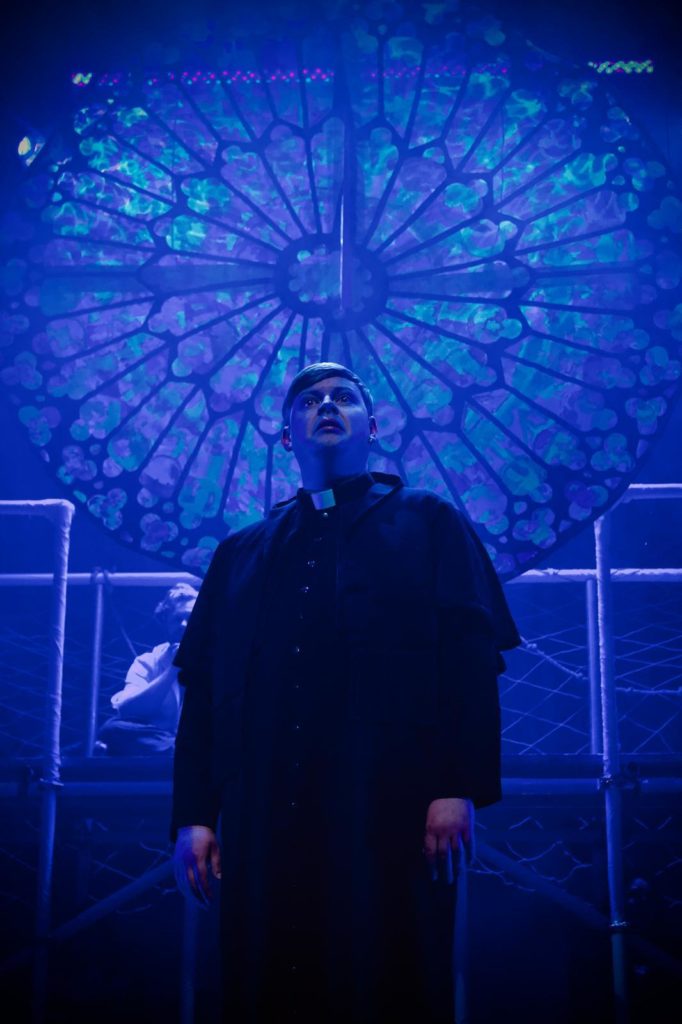
Clare plays the joker in casting Jack Hooper as the turbulent Judge Claude Frollo, the embittered Minister of Justice and guardian of Quasimodo.

From such roles as bubbly Mr Poppy in Nativity and the profusely sweaty cop Eddie Souther in Sister Act, we know of his comic prowess, but now he switches to the dark side in a transition to rival Alan Carr’s treachery in Celebrity Traitors. Hell fire, villainy suits him in his buttoned-up, suppressive air, the balloon popper of the piece, topped off by his raging version of Hellfire.

Darkness descends: Jack Hooper’s volte face into villainy as Judge Claude Frollo

In a further directorial decision that pays off, the full “carcase” of the stage is left exposed, and so we can see the flymen, Jon Drewry and Georgia Legg, in action on the ropes, pulling both a stained glass window and three bells of Notre Dame into view, matching Quasimodo’s own rope work.

Adam Kirkwood’s lighting design works best in scenes of close-up focus but less so for the choir, lost in the shadows. Charlie Clarke’s choreography, however  draws the production forward to fill the stage with life in big numbers, as if in defiance of Frollo.

Take a hunch by ignoring the disappointing box office so far and booking to see the Hunchback, especially for Fry & Poppitt.

Black Sheep Theatre Productions in The Hunchback Of Notre Dame, Joseph Rowntree Theatre, York, 7.30pm, Tuesday to Saturday, plus 2.30pm Saturday matinee. Box office: 01904 501395 or josephrowntreetheatre.co.uk.

James Robert Ball’s Clopin Trouillefou and Ayana Beatrice Poblete’s Esmerelda at the Court of Miracles in The Hunchback Of Notre Dame

Black Sheep Theatre Productions go larger than life for The Hunchback Of Notre Dame musical at Joseph Rowntree Theatre

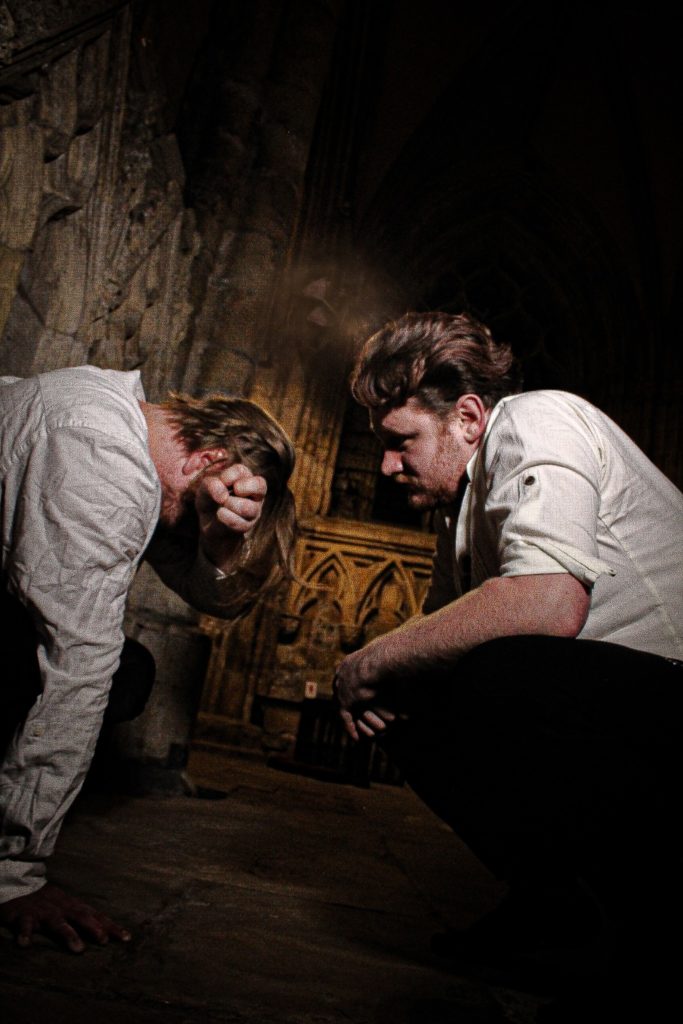
Black Sheep Theatre Productions’ Jack Fry as Quasimodo, left, and Dan Poppitt as the Voice of Quasimodo in The Hunchback Of Notre Dame, pictured at Selby Abbey

BLACK Sheep Theatre Productions will stage their biggest show yet when presenting The Hunchback Of Notre Dame from October 10 to 18.

Matthew Peter Clare’s “larger-than-life” production marks the York company’s return to the Joseph Rowntree Theatre for the first time since mounting the UK amateur premiere of William Finn and James Lapine’s Falsettos in August 2023.

Combining the forces of Alan Menken, Stephen Schwartz, Peter Parnell and Victor Hugo, ‘Hunchback’ features songs from Walt Disney’s 1996 animated gothic film with special arrangement from Music Theatre International. “We’re presenting the score in its entirety, as seen on Broadway,” says Matthew, whose cast comprises five leads, an ensemble of seven and a choir of 23.

“We have the songs from the film, such as Hellfire and Out There. However, Menken and Schwartz, have expanded on that on a quite incredible scale, usually bringing a darker tone that they really wanted to go for in the film and maybe were not allowed to. They’ve expanded on that theme incredibly well, making it a much more mature piece than the film.”

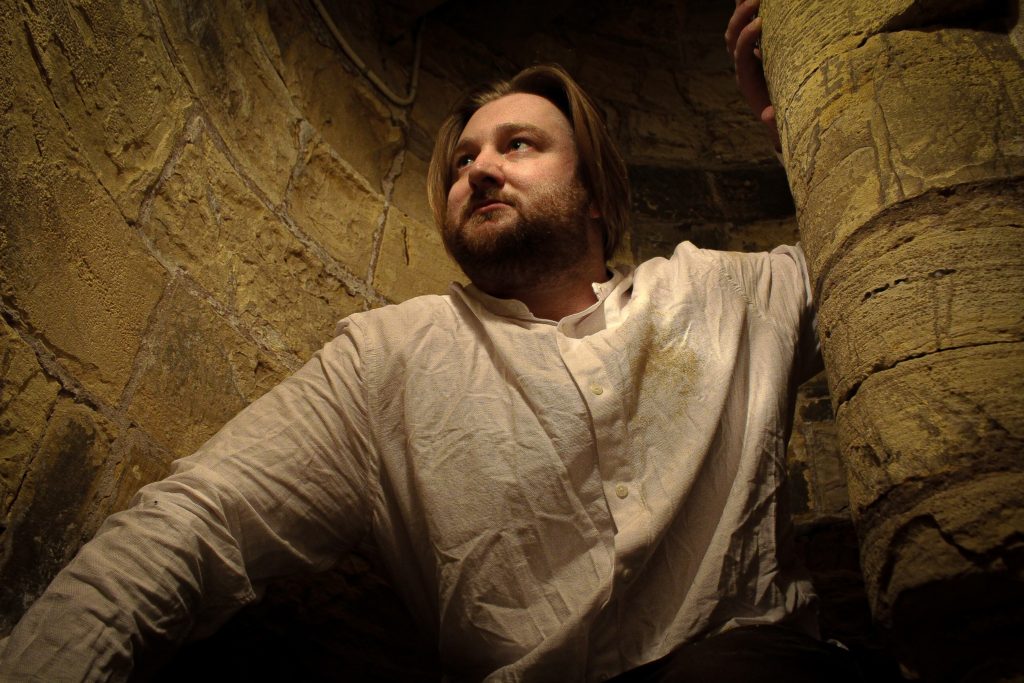
Jack Fry’s Quasimodo at Black Sheep Theatre Productions’ photoshoot at Selby Abbey

‘Hunchback’ addresses themes of love, acceptance and the nature of good and evil.  “Our production revolves around the question of what makes a man and what makes a monster,” says Matthew. “That’s the framing device we’re using to ask both the audience and ourselves.”

In a cast where Matthew has his actors presenting the story, within which they then take on roles, Black Sheep regular Dan Poppitt will play the Voice of Quasimodo in tandem with Jack James Fry’s physical embodiment of the bell-ringer of Notre Dame cathedral in 15th century Paris. 

“There are parts we’ve taken from Victor Hugo’s 1831 book, such as whereas the Disney film has them all accepting Quasimodo, the implication in the book is that Quasimodo falls very deeply down a pit of despair,” he says.

“There’s a lyric in Someday that says, ‘some day life will be kinder, love will be blinder’, and that’s the key theme in a time when Quasimodo and her entire gypsy community were not accepted.”

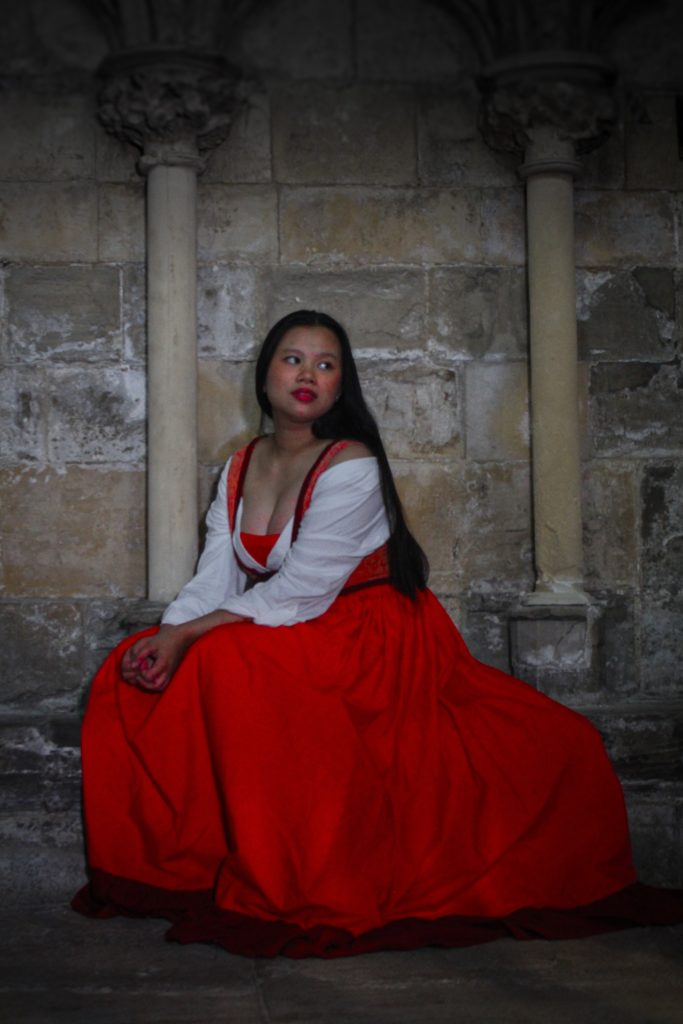
Ayana Beatrice Poblete’s Esmerelda

Choreographer Charlie Clarke adds. “Unfortunately, it’s a timely motif for what’s going on now, where there is always this idea of being ‘other’ in this world.”

Quasimodo, the “hunchback” of the title, is best known for his deformity, but Black Sheep will be highlighting his other, arguably more significant impediment.

 “The key idea we’re exploring is the fact that in the text and every iteration of Quasimodo,  he has been at least partially deaf,” says Dan.

“Jack is a deaf actor who specialises in BSL (British Sign Language), so he performs Quasimodo’s dialogue through signs and I’m there as his interpreter, speaking his lines and singing his songs  – and the only person on stage who acknowledges my presence is Jack’s Quasimodo.

“And I will say that Jack, as the embodiment of Quasimodo, puts every emotion that he can into the dialogue and songs.”

Matthew Peter Clare: Black Sheep Theatre Productions founder and The Hunchback Of Notre Dame director

Matthew says: “We’re making more of Quasimodo’s deafness, rather than his deformity, because deafness makes it harder for him to communicate. His deformity doesn’t stop him communicating, though it doesn’t help, as far as society around him is concerned, but the thing that hurts him and affects him is that he can’t communicate.”

Charlie adds: “Jack is such an incredible dancer too, and it’s so beautiful to watch him incorporating dancing into his BSL signing. It’s not just the words. He throws his entire body into it, so it’s like watching a contemporary dancer.”

Filipino-born Ayana Beatrice Poblete will play the other ‘outsider’, the gypsy – or more correctly French Roma – girl Esmerelda, and she reckons the production could not be better timed, given the heated debate on immigration bubbling over in British politics.

“It’s a good reminder to bring it back to the point that there will always be a ‘separation’ because people are always on edge as they haven’t been exposed to it for a long time, so they think everything is dangerous, but hopefully it will be seen in our show as curiosity,” she says.

“I’m really blessed to get the chance to sing God Help The Outsiders, not only in representing that community, but also because they are outcasts in society and so they feel imposter syndrome, and this is Esmerelda’s response.”

Black Sheep Theatre Productions cast member Jack Hooper, pictured at Selby Abbey

Matthew adds: “This might sound bleak, but I would argue that Esmerelda is the only one in the show who starts out hopeful and remains hopeful despite what happens. It’s a show with twists, and storylines are developed, but her hopefulness is the through-line of the story.”

Ayana rejoins: I actually thought at first, maybe Esmerelda is too positive, when everything is so toxic, but that positivity is not meant for her, but for passing on to others.”

Charlie says: “Esmerelda is the only one that Frolo [the Catholic clergyman and antagonist of Hugo’s tale] sees as anything comparable to a god, and maybe that is why he’s fearful as he thinks of her as an ethereal being, comparing her to an angel. That’s what scares him, whereas Quasimodo and Phoebus see the love that radiates from within her.

“The other factor that marks her out is that not only is she Romani but she is a woman too.”

Black Sheep Theatre Productions n The Hunchback Of Notre Dame, Joseph Rowntree Theatre, York, October 9 to 18. Performances: 7.30pm, October 10, 11 and 14 to 18; 2.30pm, October 11 and 18. Box office: 01904 501935 or josephrowntreetheatre.co.uk.