Who’s taking part in 2026 Northern Aldborough Festival? Find out here

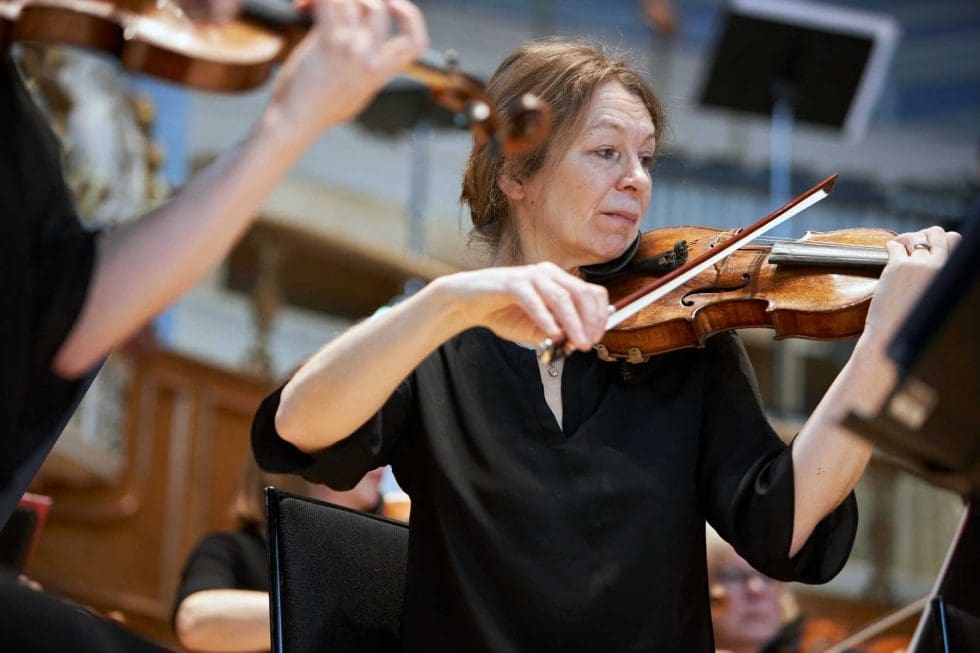
Katie Stillman: Directing the Orchestra of Opera North from the violin in tomorrow’s opening concert, Vivaldi’s The Four Seasons

NORTHERN Aldborough Festival opens tomorrow in the North Yorkshire village near Boroughbridge.

Now in its 32nd year, the festival turns its focus on classical music for ten days, from June 18 to 27, opening with the Orchestra of Opera North performing one of the world’s most-loved works, Vivaldi’s The Four Seasons, directed from the violin by Katie Stillman, at St Andrew’s Church, Aldborough, at 7.30pm.

Leading British clarinettist Emma Johnson returns to Aldborough on Friday with her star-studded trio, featuring pianist Andrew West and cellist Thomas Carroll, performing masterpieces by Beethoven, Brahms and Shostakovich at St Andrew’s Church at 7.30pm.

Clarinettist Emma Johnson: Performing works by Beethoven, Brahms and Shostakovich at St Andrew’s Church on Friday

Pianist, academic and artistic director Lucy Parham performs her remarkable piece, I, Clara, telling the extraordinary life story of Clara Schumann – musician and composer’s wife – in a blend of words and music, narrated by actress Joanna David, at St Andrew’s Church on June 24 at 7.30pm.

A stalwart of screen and stage, Joanna David is known for her TV roles in Downton Abbey and Inspector Morse and is matriarch of one of Britain’s most acclaimed acting dynasties: married to Edward Fox and mother to Emilia and Freddie.

Pianist Sarah Beth Briggs, the Newcastle-born, York-based former child prodigy, who was the youngest finalist in the history of the BBC Young Musician competition, makes her Aldborough debut at The Old Hall, North Deighton, on Saturday at 11am.

Cellist Enjuan Han: Performing in Young Artists’ Showcase on Sunday

Northern Aldborough Festival has built a reputation for supporting the UK’s rising stars with its annual New Voices Singing Competition, now entering its fourth year with semi-finals on June 22 at 4pm and 6pm, followed by the grand final on June 23 at 7pm, all at St Andrew’s Church.

A highlight of the classical calendar, the competition attracts a panel of world-renowned judges. Past judges include luminaries such as Dame Felicity Lott, Sir Thomas Allen, Edward Gardner and Dame Jane Glover. This year’s judging panel comprises conductor and former musical director of Opera North Paul Daniel CBE, soprano Carolyn Sampson OBE, accompanist Anna Tilbrook, festival director Robert Ogden and festival chair Sir Andrew Lawson-Tancred.

Audiences have the rare chance to glimpse tomorrow’s stars compete in the hunt for the UK’s best classical vocal talent, with a prize fund of £7,000 and performances at leading festivals for the winners.

Soprano Rachel Munro and pianist Jia Ning Ng: Recital at St Andrew’s Church on June 23

In addition, the 2025 Winner’s Recital will be performed by soprano Rachel Munro and pianist Jia Ning Ng at St Andrew’s Church on June 23 at 11am.

Festival director Robert Ogden says: “As a charity, the festival’s mission is to bring high-end live music to a rural location. We’re proud to bring the kind of world-leading acts normally seen on cosmopolitan stages to our village church, in a gorgeous countryside setting.

“Nothing beats the truly uplifting and transformative experience this level of artistry and music offers. We really hope those who might be new to – or even feel a bit intimidated about classical music – to come along, experience and fall in love with it.”
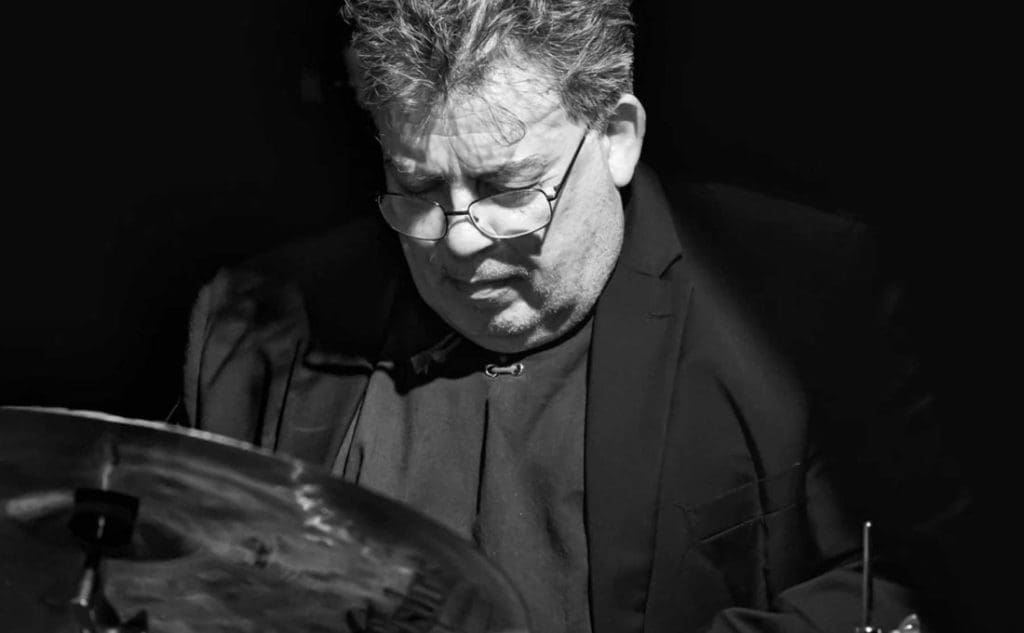
Drummer Clark Tracey: Leading his quintet at The Old Hall, North Deighton, on Saturday

Violinist Harriet Mackenzie, leader of the Kosmos Ensemble, and award-winning Mexican guitarist Morgan Szymanski team up for Serenata!, a romantically themed programme of Vivaldi, Piazzolla and Paganini, in the ballroom of HMP Askham Grange, a former private country manor house, on June 24 at 11am.

A sublime blend of voice, double bass and guitar comes in the form of Eleanor Grant and Gus McQuade, performing pieces from Benjamin Britten to Joni Mitchell in the genre-defying Jim Bolland Memorial Concert at Farnley Hall, Otley, on June 25 at 11am.

Wild Arts return to Aldborough after last year’s triumph with another sparkling production, Mozart’s The Marriage Of Figaro, at St Andrew’s Church on June 26 at 7pm.

Amol Rajan: Sharing perspectives on journalism, media trends and the changing role of news in public life at St Andrew’s Church on June 25

The Jazz Champions concert, featuring drummer and bandleader Clark Tracey’s quintet, at The Old Hall, North Deighton, on Saturday at 7.30pm, has sold out.

Mezzo-soprano Rose Ritson, cellist Enjuan Han, pianist Evie Lu and trumpet player Gabriel Serrano-Medina take part in the Young Artists’ Showcase at St Andrew’s Church on Sunday at 3pm.

An Evening With Amol Rajan, BBC Radio 4 Today programme presenter, The Today Podcast podcaster, University Challenge question master and cricket enthusiast, at St Andrew’s Church on June 25 at 6.30pm has sold out.

Eleanor Grant and Gus McQuade: Jim Bolland Memorial Concert at Farnley Hall, Otley, on June 25

Rajan, who edited the Independent at the age of 29, will share his perspectives on journalism, media trends and the changing role of news in public life.

Closing the festival on June 27 will be the sold-out Last Night Outdoor Concert, headlined in the grounds of Aldborough Manor by tribute band Definitely Oasis, supported by singer-songwriter Pearl Natasha & Band.

Audiences are invited to bring a picnic and dance the night away from 6pm, climaxing with a spectacular orchestrated firework display.

Aldborough’s late-night venue, The SHED, returns for concert-goers who want to continue festivities after the evening concerts in a relaxed environment, with a variety of live entertainment and refreshments.

Tickets are on sale at https://aldboroughfestival.co.uk/. Find the full line-up at https://aldboroughfestival.co.uk/line-up/).

Definitely Oasis: Festival finale in the grounds of Aldborough Manor on June 27
Who was ‘the man who captured sunlight’? New play tells Victorian industrialist Samson Fox’s story at Harrogate Royal Hall

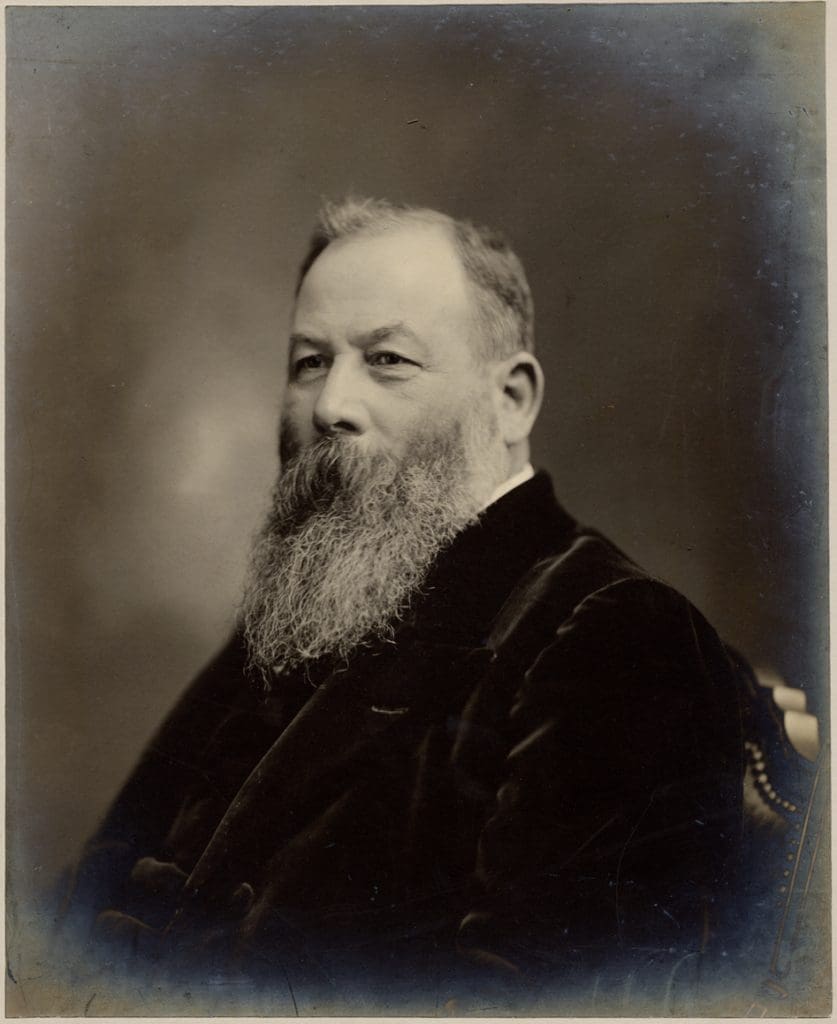
 Samson Fox: Victorian inventor, civil engineer, entrepreneur, industrialist, philanthropist and Harrogate mayor

AMID the cost of living crisis, the environmental crisis, the endless political upheavals, Britain needs a modern-day equivalent of Samson Fox.

Who, you ask. Spot the fox weather vane at Grove House when struggling along the traffic light-choked Skipton Road in Harrogate, and you will have found the former family abode of this Victorian inventor, civil engineer, entrepreneur, industrialist, philanthropist and Mayor of Harrogate with grander political ambitions – until the scandal of a damaging legal battle with author Jerome K. Jerome stopped him in his tracks.

His acting-dynasty descendants – great grandson Edward, Freddie and Emilia Fox – have been the ones to acquire fame, but now playwright and Dr Who writer Gavin Collinson will resurrect the life and deeds of a pioneer lost from the history books with today’s world premiere of The Man Who Captured Sunlight at the Royal Hall, Harrogate.

Such a play is long overdue, reckons Freddie. “Maybe I’m being a little over the top here, but there’s a sort of Elon Musk quality to him. Somebody who is a totally self-made man. Who has used his money not just for the wider community, but the world.

“No-one would really know who Samson was, and yet if you trace the history of his inventions and the legacy of what they created now, he is probably one of the most important names in industry for this country. So yes, a bit of celebration of Samson’s genius is long overdue.”

Freddie Fox: Actor and great-great grandson of Samson Fox

The Fox-Jerome court case will take centre stage in Collinson’s play, but above all it champions a forgotten English inventor who generated huge wealth and spearheaded the Industrial Revolution, while also supporting the poor and investing in the arts. Not least he explored green energy with his Water Gas plant, Europe’s first, in Harrogate’s Parliament Street.

Born into poverty in Bowling, Bradford, on July 11 1838, Samson worked in the mills from the age of nine, became an apprentice toolmaker, then set up his own toolmaking business.

He revolutionised train travel, engine construction and street lighting and, after moving to Harrogate, he was elected the town’s mayor three times. He co-founded the Royal College of Music in London and was instrumental in building Harrogate’s Royal Hall.

His greatest invention was probably the corrugated boiler flue used in steam ships. Fox found that by corrugating flues, the same amount of metal became far stronger, reducing accidents and failures, and increasing efficiency. It saved countless lives at sea.

The name of Collinson’s new play, The Man Who Captured Sunlight, refers to how Fox had “bottled the sun” with his hydrogen Water Gas that provided some of the world’s first street lighting. At the time, visitors travelled far and wide to witness this wonder.

“Samson was the early forerunner of hydrogen power, which is what everyone is turning cars into now,” says Freddie. “It’s quite remarkable how ahead of the curve he was.

Gavin Collinson: Playwright, crime novelist and Dr Who writer

“If you look at the legacy of an idea like Water Gas or the boiler flue, these are things that have benefited millions of people over the course of history.”

Writer Gavin Collinson has “only sentimental” connections with Harrogate. “I’m originally from Blackpool, in Lancashire, and I used to come over to Harrogate for the second-hand bookshops and to go to Bettys, before it became a carnival!” he says.

“But Harrogate genuinely has a special place in my heart. Each year I go up to the crime festival [the Theakston Old Peculier Crime Writing Festival], as my other job is writing thrillers, so I go there to see what the opposition are up to!”

Did he know of Samson Fox? “To be honest, I’d kind of heard of him vaguely but didn’t know of his achievements, but I was only aware of the figure, and not his footprints on Harrogate, until I watched the programme where Emilia Fox retraced her family history,” says Gavin.

“Once I was on board for the play, I started reading old newspaper articles and that was the beginning of the route I took.”

“100 per cent, Samson Fox’s story should have been told before now,” reckons playwright Gavin Collinson

Gavin agrees “100 per cent” that Samson Fox’s story should have been told before now. “But I think the reason that’s not happened is because lots of what we know about Samson are just anecdotes,” he says.

“There’s nothing wrong with that but when you look more deeply into his story, the loyalty of his brother, and how people were either ‘Team Jerome’ or ‘Team Samson’, you find there are so many stories to tell.

“He was 65 when he died and he’d succeeded in everything he’d done. He was seeking to go into politics [planning to stand for election as an Walsall] and if he’d succeeded in that, he could have brought green energy to the nation. Imagine what would have happened to his Water Gas, which was so much cleaner than coal or coke or crude oil.

“The boiler flue was not important in itself but in how many lives it saved. That story has not been told in that way until now.”

What does Gavin make of the court case that Fox brought against Jerome? “Jerome K Jerome, most famous for Three Men In A Boat, was also a newspaper editor, described as a ‘grating spokesperson for no-one but himself’,” he says.

Joe Standerline’s Samson Fox, right, having his day in court, or rather more than one day, in his very long case, in a scene from The Man Who Captured Sunlight

“Jerome took umbrage at Samson Fox’s business dealings and called him out as a fraud, even though he’d funded the Royal College of Music. It’s fascinating to look at the letters of the college director, praising his generosity, but Jerome said he’d made his money out of false means and should be denigrated, not celebrated.

“Jerome contested that Samson Fox was looking for investment in companies that he knew would fail, but I would contend that despite Samson’s reputation as a businessman, as soon as he had to get down to business, he would run away from it.

“But did Samson know they would fail, or was he raising money honourably by investment? , That was the big question of the trial that he brought against Jerome that became pivotal to his life?”

Gavin’s research unearthed a “fascinating” coincidence. “I’ve not seen it mentioned before, but Jerome K Jerome’s lawyer was Lockwood [England’s top prosecutor, Solicitor-General Sir Frank Lockwood], the lawyer who brought down Oscar Wilde,” he reveals.

“Lockwood was known for his wit, and Samson was heard to say, ‘I should have employed him’. Samson won the trial but he was haunted by it; the damages he received were perfunctory. Jerome K Jerome was ruined by it. For him, it was disastrous, whereas Fox was wealthy and could afford his lawyer.”

The poster for The Man Who Captured Sunlight at Royal Hall, Harrogate, designed by Christian Alexander Bailey

What would Gavin want today’s audiences to take from The Man Who Captured Sunlight? “On one level, and this is going to sound trite and shallow, I just hope people will enjoy it. I’ve seen historical plays that feel like wading through treacle, but with this play, there’s romance, there’s humour, suspense, jeopardy,” he says.

“We’re telling the story of ‘a guy who died years ago that no-one remembers’, but in this case everyone who’s taking part is really enjoying telling that story and if it helps to shed light on Samson Fox, the man, not the historical figure, then great.

“We’re trying to explore the man behind the achievements, seeing his resonance now, what he did for engineering and rail rolling stock that we still use today, whether it’s a train in the Scottish Highlands or a bullet train in Japan.

“His sense of family is important too, where he is ‘the star’, but he has a good lieutenant by his side in his brother William.

“Ultimately, with the fuel crisis at the moment, it makes telling his story now really interesting.”

The final word and recommendation to see Collinson’s play goes to Freddie Fox: “Having just put the script down, I can honestly say I thought it was brilliantly written. Insightful, moving, funny, poignant,” he says.

“I think it’s a really terrific portrayal of its subject and characters. Gavin has woven the poetry and theatre of the Fox family of today into the fabric of the lives of our industrialist predecessors – a beautiful touch. In short, I loved it!”

The Man Who Captured Sunlight, performed by North Of Watford, at Royal Hall, Harrogate, today (23/9/2022), 2.30pm and 7pm. Box office: harrogatetheatre.co.uk.

What Did Samson Fox Ever Do For Us?

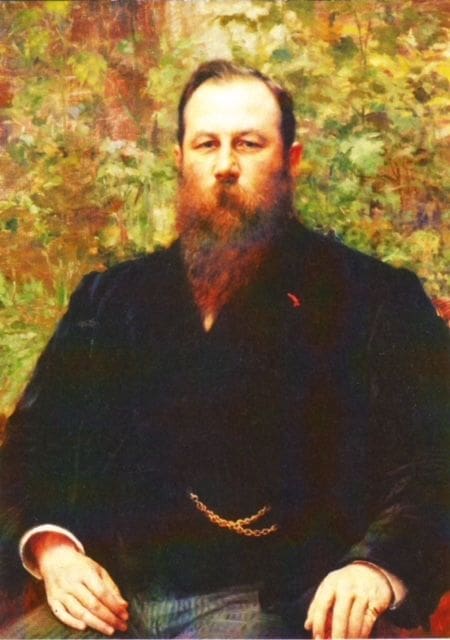
Samson Fox, portrait by Bukovac

Putting transport on the right track

Fox realised that the lighter you could make a train, whilst keeping it safe, then the more economically it would travel. He invented lightweight structures and components for rail transportation and influenced the way the train design industry (and arguably other similar industries) progressed.

From the sleepy sleeper to Edinburgh and the overcrowded train you take into London, to the fastest trains in the world that blur along the rails in China, their design is all predicated on Samson’s realisation and early inventions.

His pioneering work on railways helped to ensure that train transport remained affordable to the average woman and man wanting to travel.

Taking the pressure

No-one cares about the corrugated boiler flue as such, even though it is arguably Fox’s greatest invention. What did it do? It made engines more powerful and much safer.

Boring? Maybe, but before his invention, thousands of people had perished at sea when engines blew up and their vessels sank. His invention allowed greater pressure within an engine, making maritime transport for the public faster and safer and industrial plants more productive.

Thousands of lives were saved and engine construction was revolutionised. Check out the engine of any car fuelled by petrol and you will find pressure distribution systems – Samson invented their antecedent.

Thank him for the music

Fox did not invent the Royal College of Music, in London, but his money made it possible. Every year a diverse intake further their art and their trade there, later to entertain audiences around the world. College alumni include Alfie Boe, Rick Wakeman, and Andrew Lloyd Webber, who in abandoned his History degree at Magdalen College, Oxford, in 1965 to study at the RCM and pursue his interest in musical theatre.

Samson Fox ands his family