Mark Hadfield mulls over all points Poirot, from ageing grey cells to the moustache, in Fiery Angel’s take on Death On The Nile

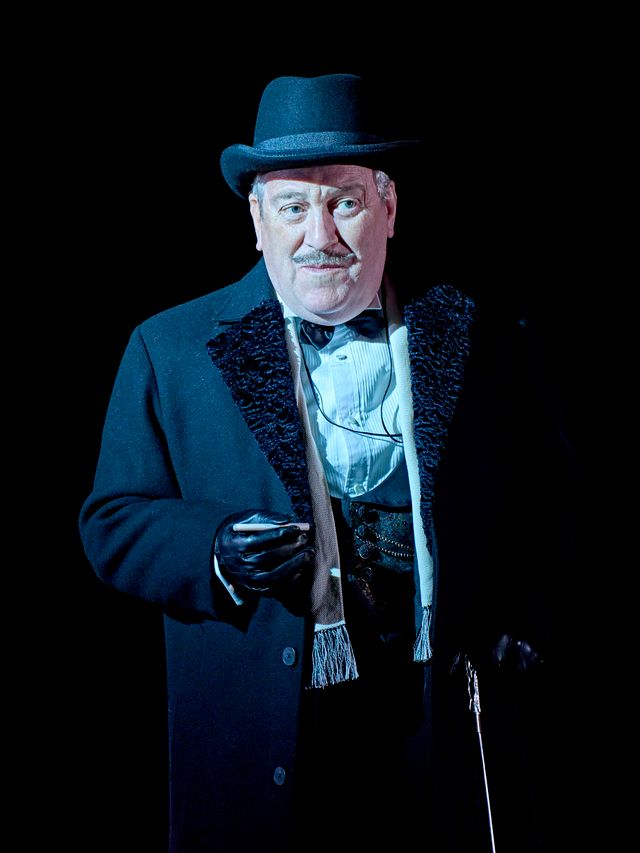
Mark Hadfield as Hercule Poirot in Death On The Nile, on tour at Grand Opera House, York, from March 3 to 7. Picture: Manuel Harlan

MARK Hadfield arrives at the Grand Opera House, York, next Tuesday to play legendary private detective Hercule Poirot in the European premiere of a new stage version of Death On The Nile, carrying the approval of none other than Sir Kenneth Branagh.

The two actors are friends. “He’s been incredibly encouraging,” says Mark of his conversations with Sir Kenneth, who has played Agatha Christie’s fastidious puzzle solver in three film outings marked by his moustache topiary.

Encouragement came from Michael Maloney too, another actor friend who took on the role of the Belgian sleuth in the tour of Murder On The Orient Express that visited York last March.

As with the UK and Ireland tour of Death On The Nile, that Fiery Angel production combined Ken Ludwig’s adaptation of a Christie novel by Ken Ludwig with direction by Lucy Bailey.

“They both encouraged me to do this because they said, ‘you will have so much enjoyment in bringing him to life’,” says Mark of Branagh and Maloney. “And  I think Death On The Nile is one of Christie’s best stories, so that also drew me in.

“Poirot’s journey within it is fascinating to play, because he goes from being on what he thinks is a relaxing holiday to having to solve a murder.”

The killing in question happens in 1937 when Poirot is holidaying on a luxury steamer on the River Nile in Egypt, where a couple’s idyllic honeymoon is cut short by a brutal murder. Once secrets buried in the sands of time resurface, can the world-famous detective untangle the web of lies to solve the case?

On tour from last October in Salford to May 23 in Plymouth, Mark is following in the orderly steps of Maloney, Branagh, Albert Finney, Peter Ustinov and David Suchet in playing Poirot, a familiar character that has elicited myriad interpretations. “The challenge is to try and incorporate people’s expectations but also to bring in a few surprises,” he says.

“I’m not expecting people to say, ‘oh my God, that was the most original Poirot I’ve ever seen’ by giving him a punk hairdo or what have you. But I hope to find that balance of pleasing people while leaving them going, ‘we haven’t seen that before’.”

After solving a murder on the Orient Express, Poirot is heading into his later years. “He may even be thinking of retiring,” suggests Mark. “He talks about old age and life having passed him by. There’s more of a hint of melancholy than people might be used to from him.”

Mark hopes next week’s audiences will find Death On The Nile to be “delicious, like opening a two-tray box of chocolates where you enjoy the first layer so much that you have to have the second layer too.

Christie’s story combines escapism with a timeless theme. “It’s gloriously evocative of travel in that time, but it’s also about how we should nurture love and try to be as kind as we can,” says Mark. “That’s something we could learn from with everything that’s going on at the moment.”

Mark has performed at the West Yorkshire Playhouse and Sheffield’s Crucible and Lyceum theatres but never in York previously. “York’s theatres have eluded me, though I have visited the city. This will be my first time on a York stage, so I’m really looking forward to it,” he says.

Most memorably on a Yorkshire stage, “I did the original West Yorkshire Playhouse production of  The 39 Steps with Fiery Angel in June 2005,” says Mark, who played myriad roles in the guise The Clown in Patrick Barlow’s adaptation, directed by Fiona Buffini.

In another first for Mark, “Death On The Nile is the first time I’ve worked on a production with Lucy [Bailey], though I’ve known her for a long time and I’ve done workshops with her on other projects.

“Very kindly Lucy was very keen for me to do it, and it does help a great deal that the director has seen you have the capability for the part, especially one as illustrious as Poirot.”

Mark continues: “I was desperate to do it, and knowing that Lucy was keen, I didn’t need much convincing, though I had an elderly mother to think about – when ruminating  over whether I could do the tour.

“That’s why I met up with Kenneth [Branagh] and Michael [Maloney], the previous Poirots. We met up at a Tottenham match, as Kenneth is a devoted Spurs fan – I’m a Manchester United  fan – and he said ‘you have to do it’. That helped with the decision because it was nice to have that support.
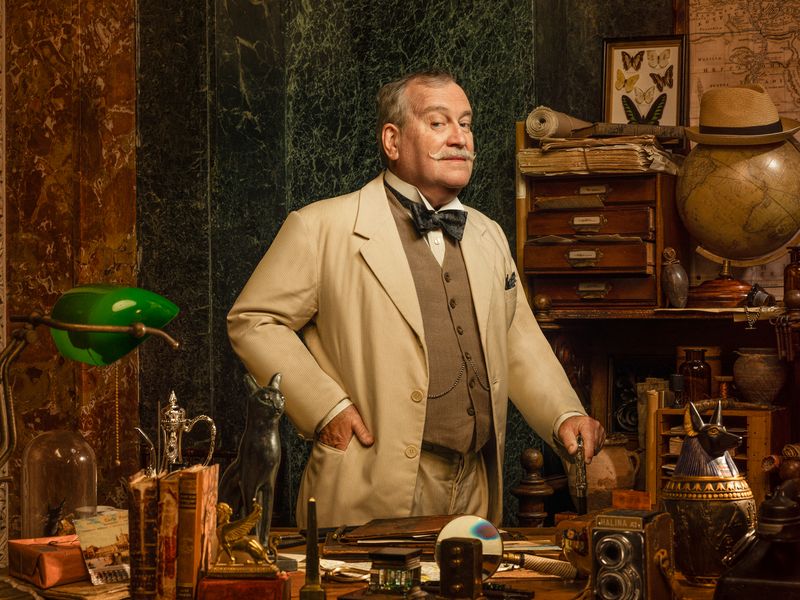
Mark Hadfield – with grey moustache – at the publicity photographic shoot for Fiery Angel’s tour of Death On The Nile. Picture: Jay Brooks

“When we met up again, Kenneth shared his research for the role, where he said the thing that struck him most about Poirot was his kindness – when there are so many facets you could pick out: his meticulous attitude, his aloofness. So that was something that stayed in my mind.”

As for Michael Maloney, “he said he loved creating characters and that Poirot had been a joy,” says Mark. “I’ve been finding that too, and I keep finding more, little things where I think, ‘I’ll try that’ as he’s a multi-faceted character and an absolute pleasure to play.”

Mark’s research had included reading film historian Mark Aldridge’s 2020 book Agatha Christie’s Poirot: The Greatest Detective In The World, covering the character’s evolution across novels, stage, radio and screen from 1920 to 2020, the centenary of his debut.

This informs his playing of a role that combines familiarity with flexibility. “I know all the performances that have been done on screen, apart from John Malkovich [in BBC One’s The ABC Murders in 2018],” he says.

“I’ve not ignored the likes of Peter Ustnov and Albert Finney, as well as David Suchet. Peter and Albert were so memorable, partly because they each had a very different look, like Albert going for Poirot’s vanity, whereas Peter’s Poirot was very charming and avuncular. With David Suchet, it was the precise, physical aspect.”

Mark’s research also took in reading Christie’s first detective novel, Poirot’s debut in The Mysterious Affair At Styles. “As it’s his first appearance, you get a bit of background, how he came over from Belgium in the First World War, in which he served and was injured, arriving here as a refugee, like Kenneth showed in Murder On The Orient Express.

“I’ve gone for the physicality of Poirot being in his sixties, with a slight limp, using the cane as a necessity, rather than as a fashion accessory. By Death In The Nile, he’s been through a lot, where he’s got to the point where, if he could, he would retire.

“The script backs this up, where he’s reflecting on his life and growing old, where the lovers on board seem incredibly young, whereas he’s an older man who’s seen too much and grown tired.

Mark continues: “It’s a great leap for the audience to see this man who, in the first half, is looking forward to the trip with the colonel [Colonel Johnnie Race], going up the Nile for rest and recuperation, but then the murder occurs, and he has to revert to being the Poirot everyone expected him to, with him finding this murder particularly distasteful.”

Mike Britton’s set design opens at the British Museum before the luxurious paddle steamer takes centre stage. “It’s a two-tier set with the lover dying on the upper deck,” says Mark. “What we want to achieve is a very claustrophobic feeling, where Mark creates such spaces as a cabin and a saloon by using sliders.

“Theatrically, you have to keep cranking up the tension until the denouement, where you know that everyone on board is a suspect and the intrigue builds as to who’s done it, as everyone has a back story in relation to the character who’s murdered. Everyone has a motive for committing the crime.

“The theatrical setting heightens that tension and suspense, as do the sound effects of Mic Pool, who I worked with previously at the West Yorkshire Playhouse.”

Britton’s set looks “absolutely gorgeous and sumptuous”, says Mark. “He’s done the fabulous costume designs too. He’s done a lot of research to capture the socialite world aboard the steamer in 1937.  Everybody looks immaculate.”

Mark’s Poirot will, of course, have a moustache. “It’s quite a challenge as moustaches are mentioned a lot with Poirot, though I know there were films made in the 1930s where Poirot didn’t have a moustache, which caused confusion [Irish actor Austin Trevor’s Poirot in 1931’s Alibi, Black Coffee and Lord Edgware Dies],” he says.

“I haven’t gone for the severity of Kenneth or David’s moustache. I’m greying quite rapidly, and when we did the photos for the press releases, you can see mine is quite grey, but that doesn’t have a dynamic look on stage, where it has to be darker – and I did read that Poirot dyed his hair and moustache.

“I’m letting my moustache grow – so, yes, it’s genuinely attached! – and it’s become a smart, reverent gesture towards moustache twiddling . My wife complains ‘Will you stop playing with your moustache’, but I just can’t stop! It will grow even more, so it does have its own character.”
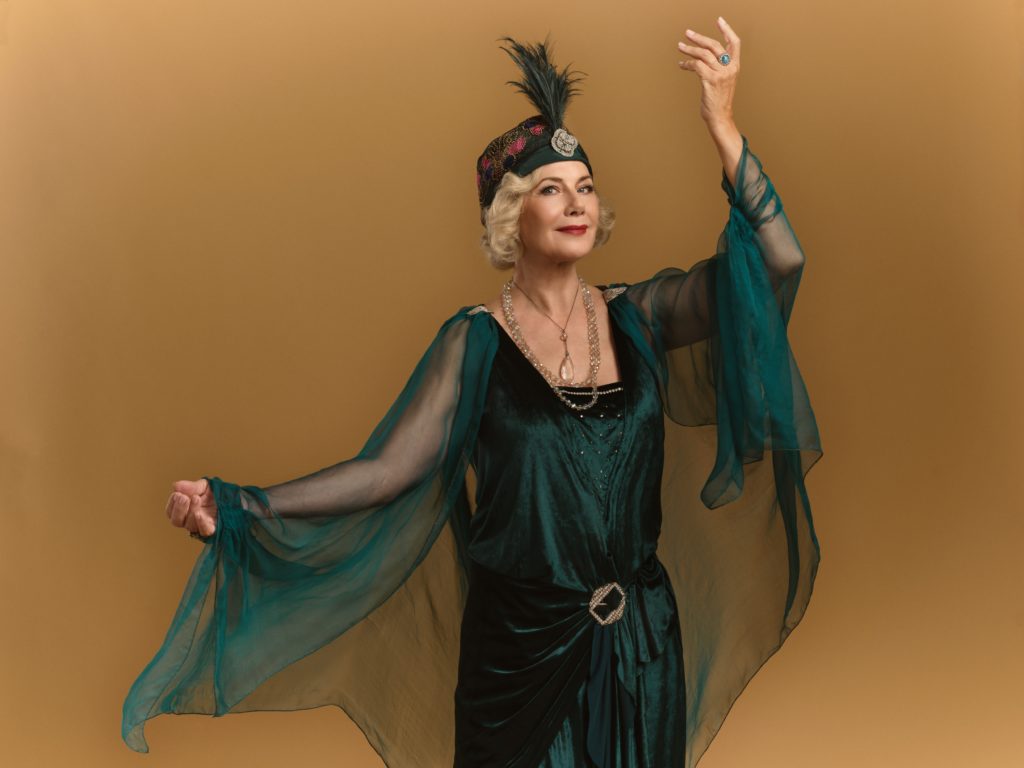
Glynis Barber’s romantic novelist Salome Otterbourne in Fiery Angel’s Death On The Nile. Picture: Jay Brooks

AMONG those joining Mark Hadfield’s Poirot on the steamer on the Nile will be flamboyant romance novelist Salome Otterbourne, played by Glynis Barber. “In the play, she’s very different to how she is in the book and in the various films – and she’s quite a character, which makes her fun to play,” she says.

“She is larger than life and she brings a lot of energy to the stage. She’s the loudest, bubbliest and most theatrical character, that’s for sure.”

A further draw for Glynis was the team behind Death On The Nile. “Lucy [Bailey] is a fabulous director and Fiery Angel is an amazing company. Plus this one hasn’t been done on stage before in the UK, so that makes it exciting,” she says.

A version of the play was staged in Washington, but now Ken Ludwig has rewritten it for its European premiere. “And the response has been phenomenal,” says Glynis. “I’ve had so many messages from people I know – and people I don’t know-  going, ‘I definitely want to see that’. I’ve even got one friend who is flying in from Spain to Edinburgh to see it.”

Death On The Nile is her first theatre work since The Best Man in 2018 in London’s West End. “After the pandemic, I wasn’t sure if I wanted to return to it, because, after being isolated for all that time, I’d gotten cold feet,” says Glynis.

“But the fact that it’s a scary prospect is a good reason to do it, and I thought, ‘if I am going to go back to theatre, this is a really good play to do so with.”

Glynis understands the lure of a Christie story on stage. “The plots keep you guessing and they’re a very good way to escape the world for a couple of hours,” she says. “Who doesn’t want a bit of that, especially these days?”

Highlighting the central theme, Glynis says: “It’s about love, which is deeply pertinent for every age, and in this story it’s a very profound theme. Unless we all become AI bots, love is universal and that is something that will never change.”
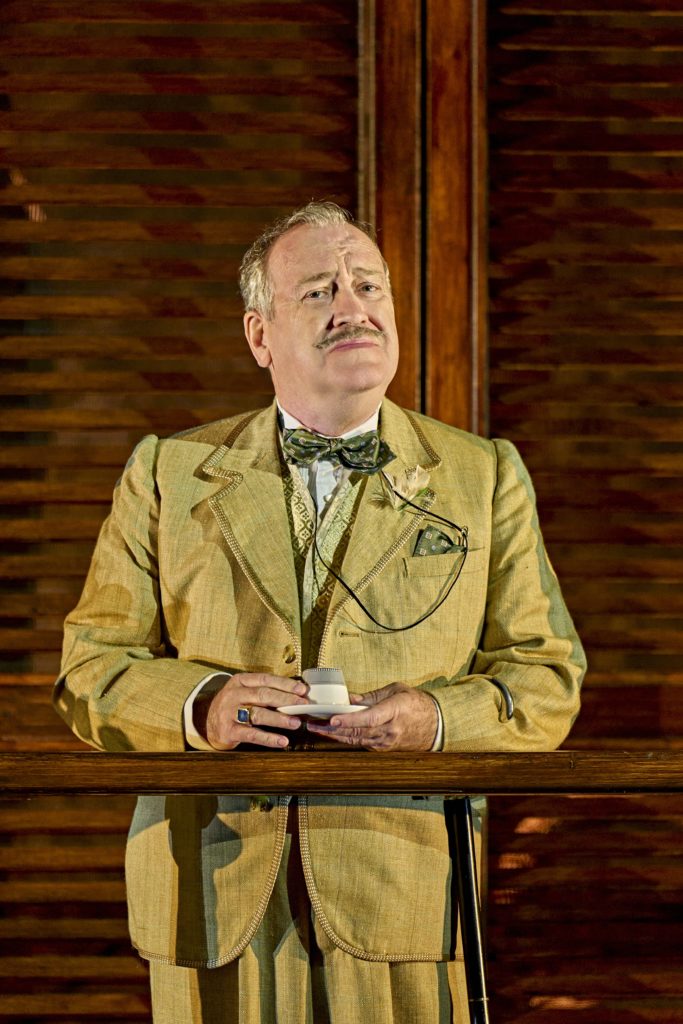
Fiery Angel presents Death On The Nile, Grand Opera House, York, March 3 to 7, 7.30pm plus  Wednesday and Saturday matinees. Box office: atgtickets.com/york.
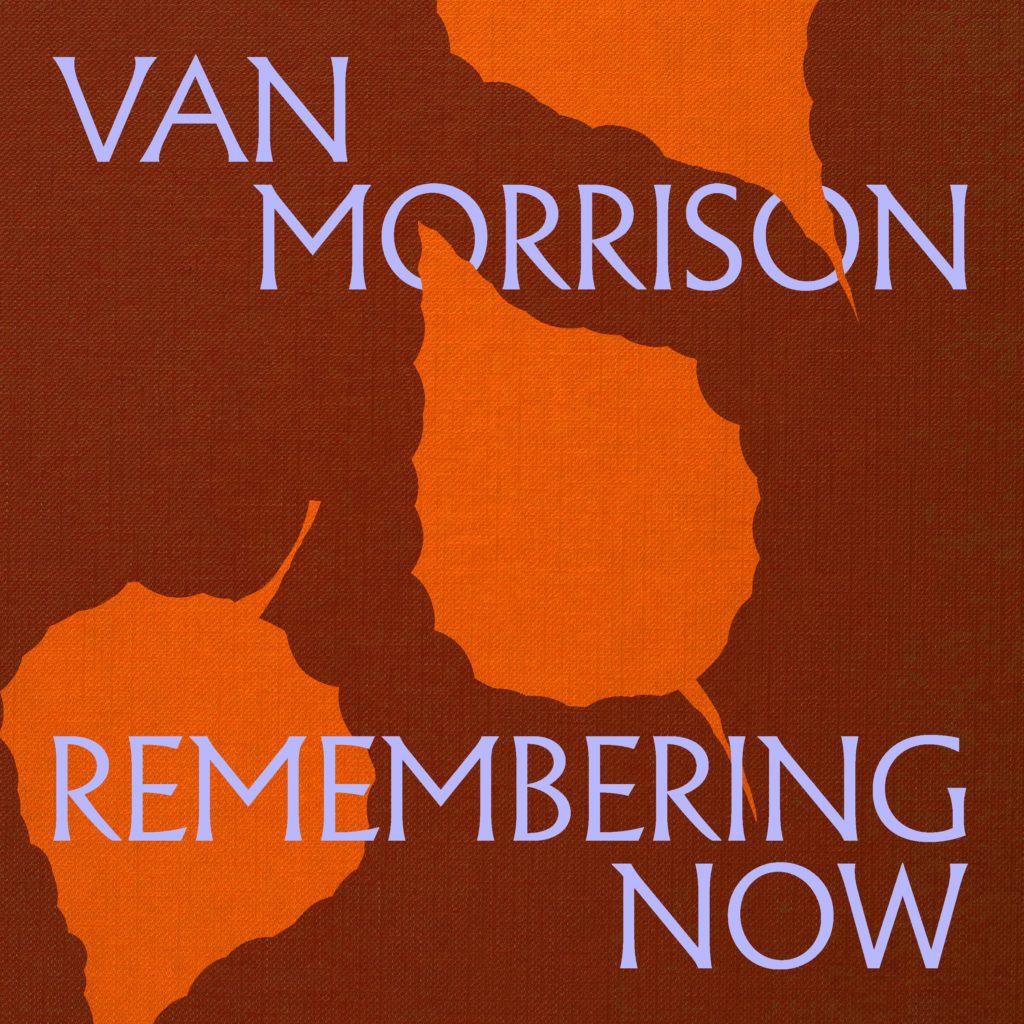
Album of the week: Van Morrison, Remembering Now, (Exile Productions) ****

The cover artwork for Van Morrison’s Remembering Now, his 47th studio album, if you include New Arrangements And Duets, his September 2024 archive collection of unreleased material, big band arrangements from 2014 and duets recorded between 2018 and 2019 with Willie Nelson, Kurt Elling, Curtis Stigers and Joss Stone

REMEMERING Now is veteran Belfast mystic musician Van Morrison’s first collection of original compositions since 2022’s What’s It Gonna Take?

Whereas that contrarian album addressed themes of crisis and uncertainty, Covid and governmental mind control, this time love, youthful recollections and Belfast are at the core: “the landscape, the earth, the whole thing – not just the city” – in a “full connection to the land and people”.

The full track listing is: Down To Joy (first single); If It Wasn’t For Ray; Haven’t Lost My Sense Of Wonder; Love, Lover And Beloved; Cutting Corners (second single); Back To Writing Love Songs; The Only Love I Ever Need Is Yours; Once In A Lifetime Feelings; Stomping Ground; Memories And Visions; When The Rains Came; Colourblind; Remembering Now and Stretching Out.

Morrisons voice, guitar and saxophone are accompanied by key band members Richard Dunn, on Hammond organ, Stuart McIlroy, piano, Dave Keary, guitar, Pete Hurley, bass, Colin Griffin, drums and percussion, and Alan ‘Sticky’ Wicket, percussion.

Released on June 13, Remembering Now also features an array of accomplished collaborators. The strings were arranged and directed by Fiachra Trench, whose association with Morrison stretches back to 1989’s Avalon Sunset, while working with Paul McCartney and Elvis Costello too.

Those strings were played by the Fews Ensemble, led by Joanne Quigley. Other contributions come from Michael Beckwith, founder of the Agape International Spiritual Centre, lyricist Don Black and Dartmoor folk artist Seth Lakeman.

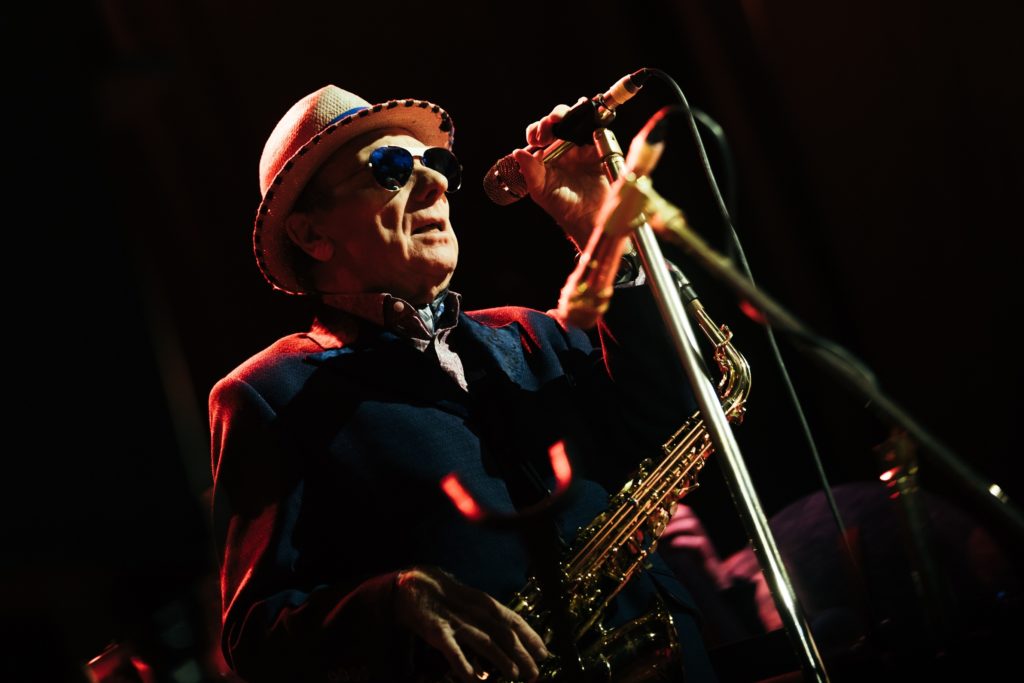
Equal parts blue-eyed soul shouter and wild-eyed poet-sorcerer, Morrison remains a restless seeker at 79 (he will turn 80 on August 31), noted for his incantatory vocals and alchemical fusion of R&B, jazz, blues, and Celtic folk in his spiritually uplifting songs.

Look out for Morrison sharing the bill with fellow 79-year-old headliner Neil Young at this year’s British Summer Time concert in London’s Hyde Park on July 11. His summer plans will culminate with 80th birthday celebration concerts at Waterfront Hall, Belfast, on August 30 (sold out), August 31 (sold out) and September 14.

Is there more music coming? “Always…There’s always more music,” promises Van Morrison. Picture: Lewis McClay

Here Van Morrison gives a rare interview to Dylan Jones. Long-time Morrison devotee CharlesHutchPress is delighted to share it with you.

Jones:  It really does feel like it’s up there with the very best of things that you’ve done. It feels like a very special record. It’s all new material. It feels like a classic Van Morrison record, but it also sounds very contemporary. Can you explain your thought processes behind the creation of Remembering Now?

Morrison: “Well, there really isn’t a thought process. It’s more like, for want of a better word, a psychic process or the-other-side-of-the-brain process. The thought process comes in when putting it together later on. In the beginning, it’s just instinct, intuition, sometimes randomness. It’s more like being a receiver – you’re receiving info, ideas, and concepts.

Jones: For the past couple of years you’ve been making records that perhaps celebrate the past – maybe genre records – but because this is all new material (apart from Down To Joy), that’s what makes it special, I think. So why did you want to do an album of new material now?

Morrison: “Well, it was going on in parallel. The recording process isn’t completely exclusive. The songs were running parallel to other projects, and a lot of them were recorded during the same time period.

“The last few projects I put out, it wasn’t a matter of the past – it was my nostalgia. People have their own nostalgia, and so do I. It was going back to the beginning, what gave me the impulse to do this.”

Jones: What was the inspiration behind thinking you could actually do it?

Morrison: “I was getting quite a lot of negative feedback during this period, so myself and the musicians just wanted to do something that was going to be fun.

“We weren’t trying to make any statement. We were just going to have fun and go back to the beginning – this is why we got into this in the first place. But the other songs were being written and recorded during the same period.”

Jones: There are 14 great songs on the album, very varied. What’s your favourite?

Morrison: “I don’t really have a favourite. I guess Stretching Out would probably be my favourite at this point.”

Jones: Down To Joy was first heard in Kenneth Branagh’s film Belfast [released in the UK in January 2022]. Was it always your intention to put it on an album?

Morrison: “Oh yeah, of course. But it’s more complicated than that. There’s a backlog of material, and it’s finding a way to get the material out. Distribution can only deal with so much at a time. It’d be difficult to get out two records a year. One is manageable.

“There are new arrangements and projects that have just been sitting there gathering dust that were supposed to come out a long time ago – it’s just priorities and timing. Recently we were involved in skiffle and rock’n’roll and wanted to put that out at the time [Moving On Skiffle, March 2023, and Accentuate The Positive, November 2023, his 44th and 45th studio albums]. So it’s complicated.”

Jones: Talking about that particular song – how did it work? Did you get to watch the film before writing it?

Morrison: “Yeah. I watched the first draft of the film. During lockdown I did an interview with Nile Rodgers and Paul Williams. I was explaining to Nile that Kenneth came from North Belfast. I drove over there and remembered visiting in the sixties. I had friends there. We played music together.

“I had this vision of walking down the road in North Belfast, and that’s how the song started; ‘coming  down to joy’. I had an image of these young guys coming down the street, having fun, laughing. That’s how it started.”

Jones: What’s the process of making a record? Is it always the same when you’re recording original material? Is it always finished when you get into the studio?

Morrison: “No, it’s not always finished. It’s a work in progress until you get the right take or the right arrangement. The song stays the same, but arrangements can change. Usually, I do a demo with myself – mainly on guitar, some on piano.

“Then I go in the studio, start with the drummer, play him the song. We run the song with guitar and drums to find the tempo, beat and approach. Then I bring in the bass player, run it with bass and drums, get the bass part together. Then I bring in keyboard, figure out what he’s going to play, then guitar. Once everyone’s learned the song, we’re ready to do a take.”

Jones: Where do you like to record these days?

Morrison: “Doesn’t matter. The engineer [Ben McAuley] is really good – he can record anywhere. Most of the rhythm section was in Cardiff, so we recorded there. Two keyboards, bass, drums were there. I brought in a guitar player from Limerick [Dave Keary] and myself – so basically, it was based in Cardiff. Sometimes we recorded in Bath, either at Real World or at a hotel there.”

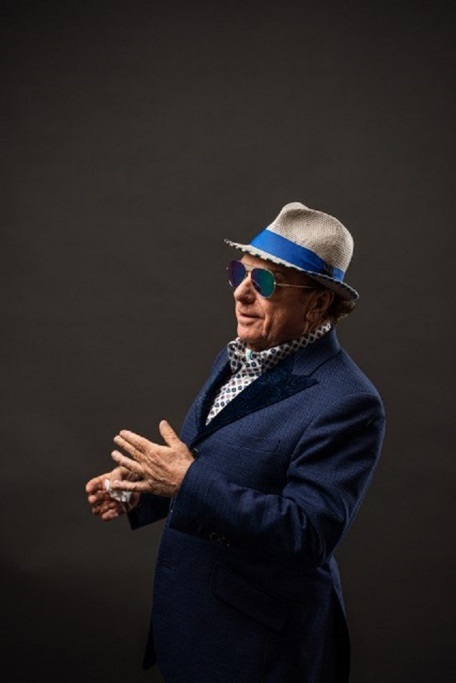
“Part of me has never really left the street corner. I’m still that guy hanging out there,” says Van Morrison. Picture: Bradley Quinn

Jones: Do you like recording in America?

Morrison: “It depends. I liked Studio D in Sausalito. I did a lot of stuff at the Record Plant. But it’s not really about the place – it’s about mixing up the musicians.”

Jones: Why did you want to work with Don Black again?

Morrison: “Don Black was a bit of a wild card. I wasn’t looking for a co-writer. I used to listen to his radio show on songwriting. I met him at the BMI Awards – we were both up for Icon Awards.

“Later I got a CD with his song Days Like These on it. I thought, ‘I could have written this’. So I asked him to send me lyrics if he had anything that might suit me. He sent Every Time I See A River. I put music to it, recorded it – it  worked.

“So he keeps sending me lyrics, and most of the time it works. It wasn’t really a choice. It just happened. The universe kind of set it up.”

Jones: Similarly, why collaborate with Michael Beckwith, founder of the Agape Centre?

Morrison: “We’d talked for years about writing a song together. Every time we met, we’d say we would but never got around to it. So I ended up taking words from one of his books and putting music to them. I sent it to him – he liked it. So it worked.”

Jones: So, when you do those collaborations, you’re not actually working together in person?

Morrison: “No. They just send me lyrics, and I do the rest. Don [Black] doesn’t write music. I was going through my library and found Science Of Mind by Ernest Holmes. I used to be into it years ago and wanted to get back into it.

“I looked for local centres – found an interview with Michael Beckwith instead – it resonated. Later, at a party in Malibu, someone mentioned Agape. I asked Roma Downey about it – she knew Michael and set up a meeting. I met him and visited Agape. It just went from there.”

Jones: There’s obviously such a strong sense of – if  you’ll forgive the word – spirituality in this record. There often seems to be in your work. How have your personal beliefs changed over the years?

Morrison: “Well, it’s not a belief. It’s an energy. It’s a frequency. That’s how I see it – a frequency.”

Jones: And is that frequency a creative frequency?

Morrison: “Yeah, it is.”

Jones: And do you feel that you are channelling that?

Morrison: “Absolutely.”

Jones: Do you have to wait for that, or can you summon it?

Morrison: “Most of the time, yeah. Sometimes you wait, but most of the time, you have to summon it. Other people meditate or use other methods. I have to actively summon it.”

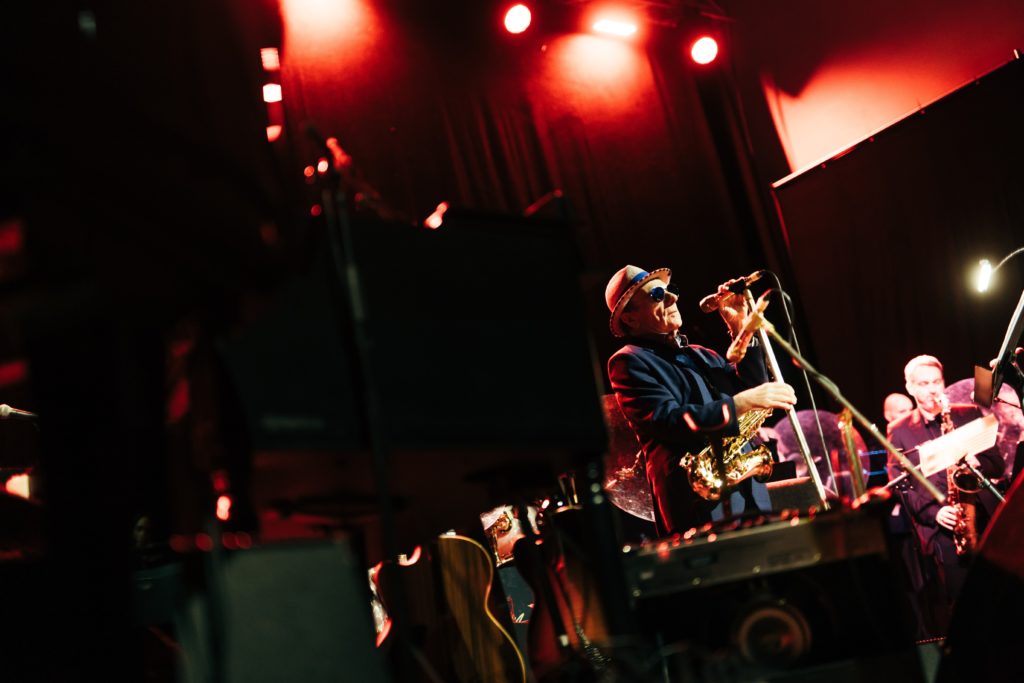
“It’s a jazz approach — not trying to be popular for a set time. Not being manipulated by the system,” says Van Morrison

Jones: As a creative person, having done this for a long time, does that make the process shorter?

Morrison: “It depends on the individual. I had to work my way through this. You have to deal with the energy. Back in the ’70s, I didn’t know how to deal with it — it was burning me out. People around me were burning out on drugs. One of them almost died.

“So I was given this book by Carl Jung, Man And His Symbols. I started to discover what it was about — projection. When you’re famous, people constantly project on you. This happens to everyone, but with famous people it’s amplified. It can destroy you if you don’t understand what’s happening. Or you can work your way through it.

“So I had to learn to deal with the energy and the negativity. The media constantly projects negativity – they think that sells. So they create what I call a ‘third party’. There’s you, and there’s the audience – that’s a two-way street. But the media creates a third thing that people start relating to instead of you. That took a long time to work through and come out the other end, learning to handle it.”

Jones: Where you are different – maybe like Bob Dylan – is  that most artists have an “imperial period,” seven to nine years of great music and creativity, then they fall off. But you’re still making records as good as 50 or 60 years ago. You must be aware of that.

Morrison: “Yeah. Basically, I’m coming from jazz. Not pop, not rock, not what’s commercial. That’s where I started, and that’s still where I am. I feel the same as I did when I was listening to Louis Armstrong, Lead Belly, Jelly Roll Morton. And the blues. And then the skiffle scene – Ken Colyer, Chris Barber, Lonnie Donegan.

“So it’s a jazz approach — not trying to be popular for a set time. Not being manipulated by the system. If your system is empty to start with, you can avoid getting sucked in.”

Jones: You have this ability to keep moving forward musically yet always make records that are quintessentially Van Morrison. How good an editor are you?

Morrison: “I’m very bad.”

Jones: Of your songs?

Morrison: “Oh, very good. Very good. See, that’s when the thought process comes in.”

Jones: You must have a vast amount of material you’ve recorded but haven’t released.

Morrison: “That’s right. Yeah. It’s just massive.”

Jones: Out of interest, Bob Dylan has a parallel career of releasing unreleased material and many think it’s better than what came out at the time. Would you consider doing that?

Morrison: “Yeah, I would – I just don’t have a system together to do it yet. Everyone talks about it – ‘Are you gonna put your money where your mouth is?’. But nobody’s come up with a plan.

“It’s just too huge. There’s so much good stuff. Distribution can only realistically handle one record a year. I don’t have a team. I’d need a team of people to figure it out. And we don’t have that yet.”

Jones: With Remembering Now, there’s a big emphasis on string arrangements. You’ve used strings throughout your career, but they seem particularly prominent here. Was that a conscious decision? They work beautifully on the record.

Morrison: “It was just that I wanted to work with the arranger [Fiachra Trench] again. I hadn’t worked with him in a while, so I got in touch, sent him some of the songs, and we went from there. I wanted to reconnect. He’s very good. We’ve worked together a lot, so I don’t have to explain much.”

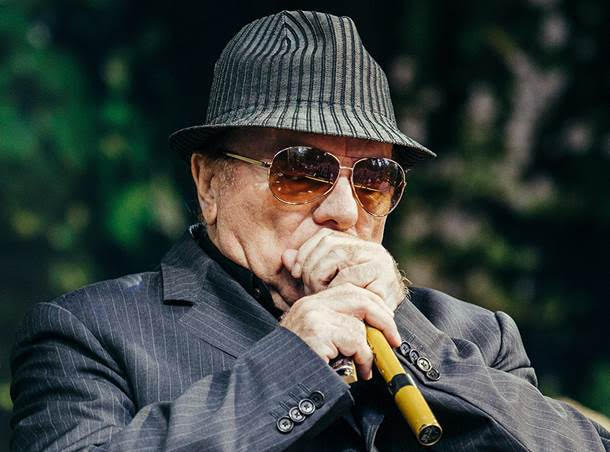
“It’s about staying connected to that original energy, that original impulse that got you into it in the first place,” says Van Morrison

Jones: Almost from your first records, you’ve referenced your childhood, your adolescence and the important role of place in your life. That’s true of this album too. How has your relationship with Belfast changed?

Morrison: “Everybody’s has changed – even those who stayed and didn’t go anywhere. The sense of place has changed. I made a documentary in the 1980s – I think it was called A Sense Of Place. It featured poets like Michael Longley, Gerald Dawe, Seamus Deane, Derek Mahon. It was about that theme: place.

“My old English teacher, Davy Hammond, was a folk singer, broadcaster and documentarian. He may have coined the phrase ‘sense of place’. The documentary subject matter ties into Remembering Now.

“It’s about the landscape, the earth, the whole thing – not just the city. That’s what Kenneth Branagh was getting at with his film Belfast. It’s a full connection to the land and people.”

Jones: The album does seem to have a strong theme around Belfast. Was that intentional?

Morrison: “It’s just the way the songs came about. Part of me has never really left the street corner. I’m still that guy hanging out there. I still see some of those guys around. Part of me is still there.”

Jones: Well, it sounds like it. Many artists who’ve had careers as long as yours don’t have that kind of rootedness.

Morrison: “Yeah, well, you see, it’s about staying connected to that original energy, that original impulse that got you into it in the first place. And if you can do that, then you’re always drawing from the same well. It’s the same creative source.”

Jones: So, for you, it’s not nostalgia – it’s a living connection.

Morrison: “Exactly. It’s not about trying to recreate the past. It’s about being in the present with that energy still flowing. So you can still create new things that are just as vital.”

Jones: How do you maintain that sense of integrity over such a long period?

Morrison: “I just try to stay true to the music. That’s the bottom line. I don’t care about trends or charts. I don’t care about what people think is cool. I care about the music – what feels right to me.”

Jones: And that’s what’s sustained you?

Morrison: “Yeah, that’s what keeps it alive for me. That’s why I’m still doing it.”

Jones: Are you still as passionate about making music as you ever were?

Morrison: “More so, maybe, because I know what I’m doing now. Back then, I didn’t always know – I  was figuring it out. Now I know what works, what doesn’t. I have the freedom to just do it.”

Jones: Do you still get nervous before releasing something new?

Morrison: “Not nervous, but curious. I wonder how it will land – what people will hear in it? But I don’t worry. That’s not my job. My job is to make the music.”

Jones: Is there more music coming?

Morrison: “Always…There’s always more music.”

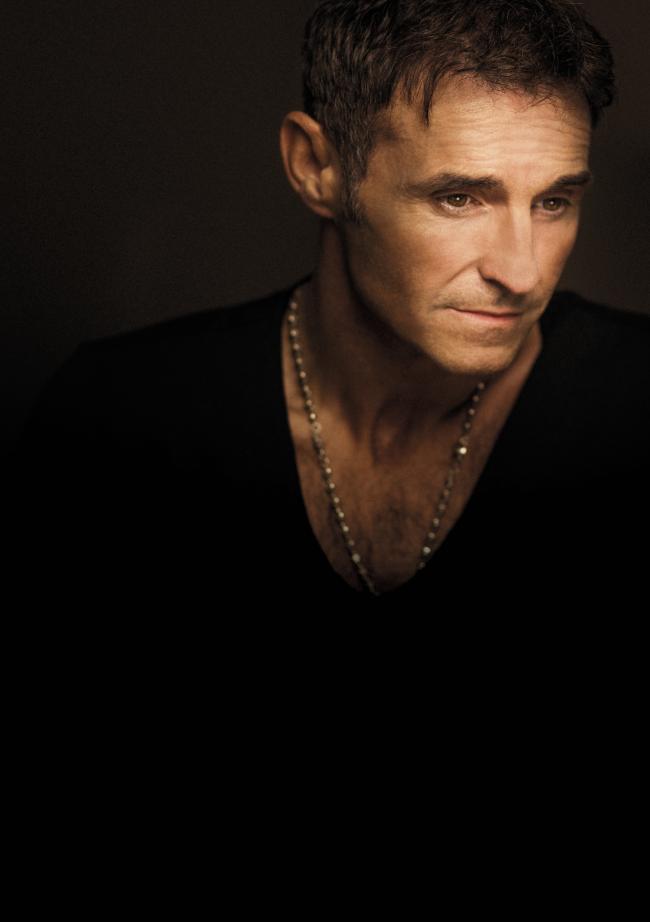
Marti Pellow talks architecture? Learn more in Two Big Egos In A Small Car episode 78

TWO Big Egos In A Small Car arts podcasters Graham Chalmers and Charles Hutchinson compare notes on their separate interviewing experiences with Marti Pellow, smarty fellow of pop, ahead of his York Barbican greatest hits show on May 3.

Prompted by his Wet Wet Wet exit, Chalmers & Hutch then discuss famous bands’ substitute singers, from Genesis to AC/DC, Black Sabbath to Buzzcocks.

Plus why Kenneth Branagh’s second Agatha Christie revamp, Death On The Nile, bristles with much more than Poirot’s monumental moustache; Harry Sword’s deep dive of a book on drone music, Monolithic Undertow – In search Of Sonic Oblivion… and a Sting in the tail end.

To listen, head to: https://www.buzzsprout.com/1187561/10087660

Why Yard Act’s debut The Overload is the best Leeds album in years…

TWO Big Egos In A Small Car arts podcasters Graham Chalmers and Charles Hutchinson enthuse over the rise of Yard Act from Leeds novelties to number two in the album charts in Episode 76.

Under discussion too: is Kenneth Branagh’s Oscar-nominated childhood memoir Belfast a masterpiece or a fudge? Plus Graham’s interview hiccup with 10CC’s Graham Gouldman and Charles’s verdict on Ross Noble’s chaotic Humournoid show in York.

To listen, head to: https://www.buzzsprout.com/1187561/10004493