

REVIEW: Martin Dreyer’s verdict on York Early Music Christmas Festival, Helen Charlston & Sholto Kynoch, National Centre for Early Music, December 6

Mezzo-soprano Helen Charlston

COULD this be a lieder recital? In an early music Christmas festival? Although it contained no mention of Christmas, nor even a fortepiano for authenticity, mezzo-soprano Helen Charlston and her piano-partner Sholto Kynoch delivered a lunchtime recital so memorable that none of the fortunate 70 in the audience would have had the slightest qualms about hearing it in the festival.

It was billed as A Lyrical Interlude, a translation of Heinrich Heine’s Lyrisches Intermezzo of 1827, from which all its poetry was drawn. It culminated in Schumann’s Dichterliebe, after seven related songs, including two each from the Mendelssohn siblings, Fanny and Felix.

It is not necessarily an easy option to include a chestnut like Felix’s On Wings Of Song. But here Charlston’s cleverly suppressed ecstasy, complemented by Kynoch’s gently rippling keyboard, delivered something special. Reiselied (‘Song Of Travel’) was vivid enough to evoke Schubert’s ‘Erlking’.

Fanny Hensel’s two songs, about a lonely pine and a swan giving its last, revealed Charlston’s ability to nail a mood at once. In juxtaposing settings of ‘Die Lotosblume’, she found an appealing line in Schumann’s but surprisingly greater depth of emotion in Loewe’s.

Few Anglophones can boast her command of the German language. This is not merely a question of good pronunciation, although hers is excellent; it is the ability to convey literary nuance. It proved a huge asset in her account of Dichterliebe, a cycle much more often associated with male voices. Both performers went well beyond the poetry’s “mask of irony” referred to by Kynoch in his first-class spoken preface to the work.

Her early naivety and the chattering excitement of ‘Die Rose, Die Lilie’ (even so, finding room for rubato) gradually dissipated as the shine of the romance began to tarnish. Charlston found greater chest tone for ‘Im Rhein’, leading to the start of nostalgic bitterness, although the hammered postlude was out of scale for the venue and left little in reserve for later in the cycle.

‘Ich Grolle Nicht’ (I Bear No Grudge) was positively dripping with sarcasm, slightly muted by her choice of the optional lower notes at the end: her mezzo would comfortably have reached the more telling higher ones. But what really made the song was the brief sotto voce at its centre, as she recalled a dream.

After a deeply elegiac ‘Hör’ich das Liedchen Klingen’, the next song, ‘Ein Jüngling Liebt ein Mädchen’ brought playful relief. She stayed rivetingly in character through the tearful dream, evoking tears in her listeners.

There was yet another new mood for a jaunty start to ‘Aus Aalten Märchen’ (From Old Fairy Tales) but a smoothly regretful transition as these in turn melted away like foam. There was real anger in the final ‘bad old songs’, as both performers wrung every last drop of self-pitying pain from the poet’s ‘Schmerz’.

The postlude was finely drawn, even if its rallentando was a touch over-pointed. But this had been

a genuine duet, the performers drawing from one another. This programme, plus Héloïse Werner’s song- cycle Knight’s Dream, can be heard at Leeds Song on April 15 next year. You dare not miss it.

Review by Martin Dreyer
REVIEW: Martin Dreyer’s verdict on Leeds Song, Roderick Williams & Andrew West, Howard Assembly Room, Leeds, April 6

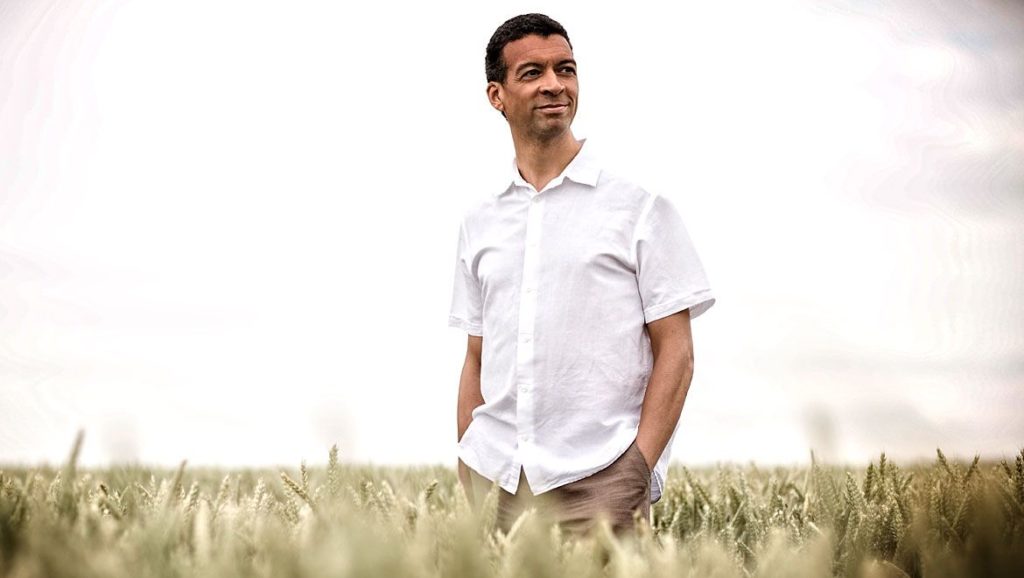
Baritone Roderick Williams

BRITAIN’S  favourite baritone, the ubiquitous Roderick Williams, brought a typically eclectic programme to the Leeds Song festival under the banner “A touch of the exotic”, with Andrew West as his deft collaborator at the piano.

It involved ten composers from Schubert to Sally Beamish, four of them female. It was right to begin with Schubert: he has always been the yardstick against whom song composers measure themselves. His setting of Goethe’s Kennst du das Land? distils the Romantic poets’ infatuation with Eastern climes. Sure enough, Williams’s quickened pulse at ‘Dahin!’ (it’s there!) captured that excitement.

Even more exotic, as more Debussyan, was Denis Browne’s last song, Walter de la Mare’s Arabia (1914), with its delicate piano and opiate aura, a timely reminder of a great talent snuffed out by war.

Arthur Bliss’s pithy Siege and Rebecca Clarke’s elegy A Dream were but preludes to Amy Woodforde-Finden’s much-loved Kashmiri song, where our duo conjured nostalgia without undue sentimentality.

Duparc’s only two settings of Baudelaire, arguably his best songs, were finely drawn. The shimmering impressionism of L’invitation au Voyage was balanced by his last mélodie, the sonnet La Vie Antérieure, which boiled up into a sensuous climax reflecting the flashing foam. The gradual return of the painful secret in the poetry was complemented by West’s beautifully poised postlude.

Sally Beamish’s Four Songs from Hafez were a commission from Leeds Lieder in 2007; it was good to hear them again. They centre on three birds and a fish as translated from 14th century Persian by Jill Peacock.

Much of the composer’s illustrative talent is found in the piano, birdsong of course but also watery undercurrents of excitement in ‘Fish’ where Williams accentuated Hafez’s “wine of creation”. ‘Hoopoe’, a love letter, had some delicate touches here.

Hafez’s wine also featured in Wolf’s Erschaffen und Beleben (Creation and Animation), as answer to a clodhopper’s problems. Williams was well attuned to Goethe’s sense of humour both here and in Wolf’s First Coptic Song.

The Jamaican-born composer Eleanor Alberga’s star has been rising rapidly in recent years. Her early years as a pianist and involvement with dance are both assimilated into The Soul’s Expression (2017), four settings of 19th century female poets. Described as a piano sonata with linking songs, it is through-composed (running without a break).

The songs are wonderfully evocative of nature, with piano interludes that take the place of strings in the original version. After an ecstatic glimpse of heaven in a cornfield, there are two calmer sections involving a gentle breeze at sunset and a shower of rose petals, before the title song, to an Elizabeth Barrett Browning sonnet, delves into more spiritual territory, with the baritone briefly using falsetto against whispering keyboard. It was a touching experience.

More light-hearted, although no less powerful, were Harry Burleigh’s Five songs of Laurence Hope –the pseudonym of Adela Florence Nicolson – which are much influenced by negro spirituals. They include ‘Kashmiri Song’, but using all three of its verses (unlike Woodforde-Finden’s version) and tellingly repeat its ‘Where are you now?’ at the close. There was a glorious climax to ‘Worth while’ and especially strong emotion in the final song, ‘Till I Wake’. Williams and West are a superb duo.

Review by Martin Dreyer