Voices of the Plays: A Celebration of York Mystery Plays in Poetry and Prose evening to be held at Merchant Taylors’ Hall

Rose Drew and Alan Gillott, of Stairwell Books, publishers of “the best in Yorkshire writing. Based in York, tales from all over”. Picture: Emily Drew

SCORES  of writers, some as young as eight, will share their stories and poems aloud at Merchant Taylors’ Hall, York, on June 25, as part of this year’s York Mystery Plays Festival and Fringe.

After asking for submissions from writers earlier this year, festival poet laureate Rose Drew will head up Voices of the Plays: A Celebration of York Mystery Plays in Poetry and Prose, an evening of themed story and poetry sharing.

“We wanted to inspire our York writers so we set up a poetry and short fiction competition, themed around the Mystery Plays, with a focus on The Flood and War,” explains Rose, who will be supported by deputy laureate Alan Gillott and York Festival Trust  chair Roger Lee.

York Mystery Plays: Back on the waggons this summer

“Stories and poems are written to be heard and we loved the idea of our city’s writers sharing their work aloud, in front of a York audience, before we made our final decision on whose work will be published.”

The resulting York anthology will be published by Stairwell Books around the end of August, when the York Festival Trust plans to release a streaming version or DVDs of the Mystery Plays performed this summer.

“I have to admit it will really be an excuse to have a great creative night out!’ says Rose, who runs regular poetry open-mics and is the co-founder of independent publisher Stairwell Books.

Festival poet laureate Rose Drew and deputy laureate Alan Gillott standing by the St Mary’s Abbey ruins in York Museum Gardens. Picture: Emily Drew

“Children’s entries were judged separately for primary and secondary students. Everyone who entered will receive a Certificate of Participation,” she adds.

“I’ll be flying in from the United States that day and making straight for the Merchant Taylors’ Hall, but if anything can keep jet lag at bay for me, it’s live fresh writing talent!”

Children’s readings start promptly at 7pm; doors open at 6.30pm. To book to attend the Festival Live Readings, go to: https://www.yorkmysteryplays.co.uk/tickets-merch/.
REVIEW: Martin Dreyer’s verdict on York Chamber Music Festival: Day 3, Merchant Taylors’ Hall, York, September 18

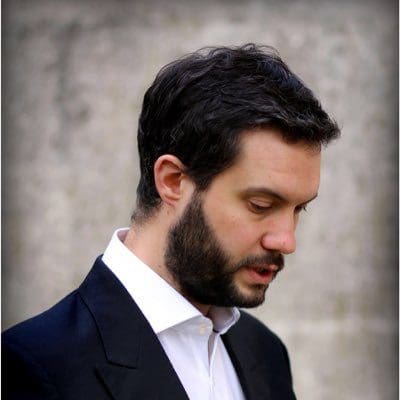
Jonathan Stone: “Violin found a beautifully lyrical legato for the outer sections”

THE final day of this tightly compressed festival took place in a venue rarely associated with music-making but which worked out well.

Chamber music is not designed for large halls and the intimacy of a smaller arena lends itself to better understanding of the music’s components. The menu for this mid-afternoon event offered the resident strings in Richard Strauss’s sextet from his opera Capriccio and Tchaikovsky’s Souvenir de Florence, for the same forces.

Strauss wrote virtually no chamber music beyond the age of 30, so this sextet (1942) is a rarity for him. It forms the prologue to the opera, supposedly the latest piece from the pen of the composer who vies with the poet for a young countess’s attention.

It opens and closes serenely, the gentleness broken only by a passionate outpouring marked by tremolos. The ensemble was led by Jonathan Stone, whose violin found a beautifully lyrical legato for the outer sections. There was plenty of heartthrob in the middle.

Tristan Gurney took the leader’s chair for the Tchaikovsky, which was sketched in Moscow on return from the composer’s last holiday in Florence. He finished it in 1892, two years later. He confessed to difficulty in writing for this combination and it is not an easy work to bring off. But you wouldn’t have known it here.

There was a magical ebb and flow to the opening rondo, with intriguing dialogue permeating its pizzicato moments. The coda was pure excitement. Gurney’s violin lit up the opening of the Andante, with Tim Lowe’s cello responding with equal ardour, as they became at first a duo and then a trio, joined by Scott Dickinson’s viola, over a featherbed of pizzicato from the others. In between there was some rich chording.

The song-like third movement was given an amusing trio, led by the first viola. Although Tchaikovsky left no clues, the finale sounded as if based on folk-dances, its two stomping themes eventually coalescing into a fugue that was played with immense emphasis here. The ensemble threw all caution to the winds and poured its soul into a breath-taking coda.

There is no doubt that the intensity of a few days working together, over several events, lends itself to an intimate understanding between the players. When talents such as these submerge themselves, the whole becomes much greater than the sum of the parts. It is – and was – exhilarating.

Review by Martin Dreyer