Who will be playing at York Early Music Festival from July 3 to 11? Find out here


I Fagiolini, with director Robert Hollingworth, centre, with sparkler: Performing opening concert of 2026 York Early Music Festival

THE 50th anniversary York Early Music Festival will run from July 3 to 11 with the theme of Beyond Borders.

More than 30 concerts will take place in York’s medieval churches, historic buildings and York Minster over nine days.

The festival was created in 1977 by a small group of Early Music enthusiasts and is long established as the premier British Early Music festival, attracting artists and visitors from far and wide.
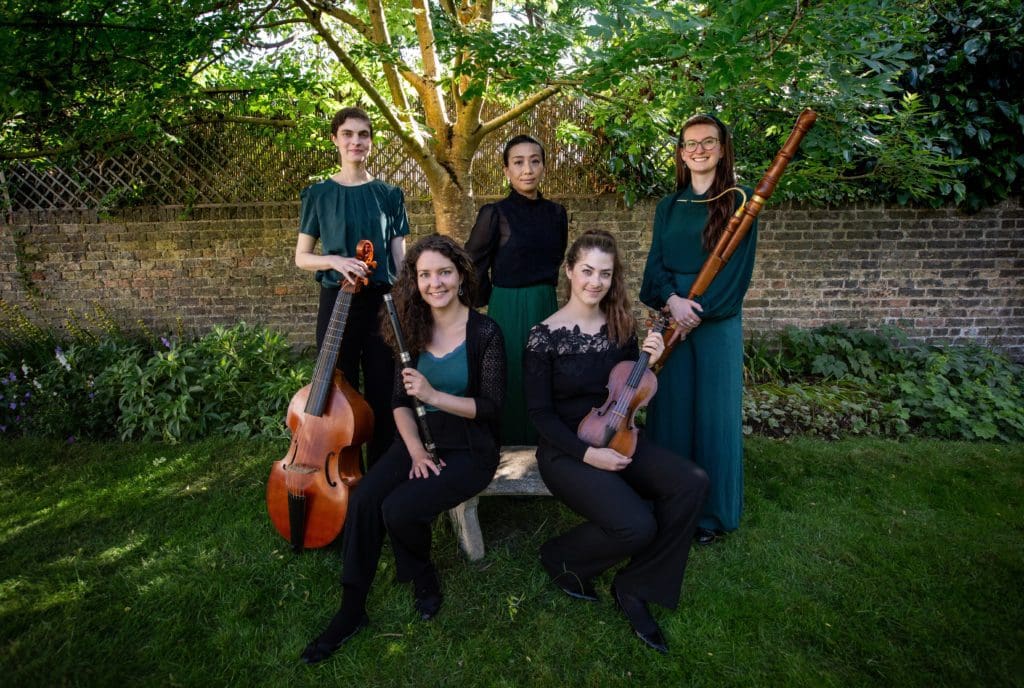
Anacronia: Making York Early Music Festival on July 4

The festival will open with Monteverdi’s Vespers of 1610, presented by I Fagiolini with the English Cornett & Sackbut Ensemble, under Robert Hollingworth’s direction, on July 3 at 7pm at the sold-out Sir Jack Lyons Concert Hall, University of York. This concert will be broadcast on BBC Radio 3 on July 8.

Last in York for the 2025 York Early Music Christmas Festival, Solomon’s Knot will provide a spectacular summer festival finale at The Quire, York Minster, on July 10 at 7.30pm, when Jonathan Sells will direct singers and musicians performing Friedrich Nicolaus Bruhns’ St Mark Passion by heart.  

The festival will mark the 400th anniversary of the death of the great English composer and lutenist John Dowland by dedicating a whole day to his works on A Day Of Dowland on July 6.

Organist Ben Horden: To Lubeck and Bach concert at Sir Jack Lyons Concert Hall on July 7

Katherine Butler, associate professor at Northumbria University, will open the day with her sold-out 10.30am talk at Bedern Hall entitled Dowland’s Dolour: Music, Melancholy and Self-Fashioning in Elizabethan England.

Lutenist Thomas Dunford will present a selection of Dowland’s 90-plus compositions in The Rarest Musician at the sold-out St Olave’s Church, Marygate, at 1pm, and the Rose Consort of Viols, featuring lutenist Jamie Akers, will perform Dowland’s Teares Of Sorrowe And Gladnesse in the Undercroft, Merchant Adventurers’ Hall (again sold out,) at 6pm. Music by Orlande de Lassus and Alfonso Ferrabosco will complement works both sorrowful and joyful by Dowland.

Dowland’s day will end with Tears Into Light: A Contemporary Reimagining of John Dowland’s Lachrimae, performed by Imago Mundi, directed by Sofie Vanden Eynde, at the National Centre for Early Music, St Margaret’s Church, Walmgate, at 8.30pm.

Top: Lutenist Thomas Dunford. Bottom: Imago Mundi director and lutenist Sofie Vanden Eynde. Both taking part in A Day of Dowland on July 6

Drawing on the insights of scholar-philosophers and the concept of inspired melancholy, Tears Into Light explores how melancholy has been understood through history and how it offers a lens for viewing the present. Dowland’s Lachrimae will be interwoven with American traditional music in a reminder that light can always emerge from darkness.

The opening of the 50th festival will be heralded by the York Fanfare, a specially commissioned piece by Wakefield-born Sam Meredith for the 2026 ensemble-in-residence, the historical wind band [hanse] Pfeyfferey, comprising Lilli Patzold, cornetto, Alexandra Mikheeva, slide trumpet and trombone, and Laura Dumpelmann, shawm.

York Fanfare will herald the festival opening, ahead of July 3’s first concert, on the grass outside the Sir Jack Lyons Concert Hall, and then be performed around the city during the opening weekend, including outside the West Door of York Minster before The Sixteen’s 7.30pm concert there on July 4.

The Sixteen: Presenting Siglo de Oro, Music from the Spanish Renaissance, at York Minster on July 4. Picture: Johnny Millar

Directed as ever by Harry Christophers, The Sixteen will present Siglo de Oro, Music from the Spanish Renaissance, featuring works by Sebastian de Vivanc and Cristobal de Morales, Sir James MacMillan’s Nothing In Vain and the world premiere of NCEM Composers Award alumna Kerensa Briggs’s Lead, Kindly Light. BBC Radio 3 will air this concert on July 9.

The Great Noyze, organised by the International Guild of Town Pipers, has moved from College Green, York Minster, to St Sampson’s Square on July at 4pm.

Further highlights will be Minster Minstrels, From Holborne To Handel, at the NCEM on July 5, 11am; University of York Baroque Ensemble, with Ensemble Hesperi (in-house band at University of York), in The Music Party, NCEM, July 7, 12.30pm; organist Ben Horden, To Lubeck and Bach, Sir Jack Lyons Concert Hall, July 7, 6pm, and Ghent’s B’Rock Orchestra & Vocal Consort, Da Pacem: Sacred Music by Heinrich Schutz and Contemporaries, Sir Jack Lyons Concert Hall, July 7, 7.30pm.

Mezzo-soprano Helen Charlston: Teaming up with tenor Paul Agnew and lutenist Sergio Buchel for A Gentle Air at Merchant Taylors’ Hall on July 9

Clavichord player Steven Devine’s Preludes, Fugues and Fantasies, at All Saints Church, North Street, on July 8 at 12.30pm, has sold out; Yorkshire Baroque Soloists will perform Amphion Anglicus, Chapter House, York Minster, July 8, 7.30pm, and Early Music will meet jazz and modernity in Duo Gambelin’s All’Improviso, Undercroft, Merchant Adventurers’ Hall, July 8, 9.30pm.

On July 9 at 7pm, mezzo-soprano Helen Charlston, tenor Paul Agnew and lutenist Sergio Buchel will feature French songs by Michel Lambert and Sebastien Le Camus in A Gentle Air at the Merchant Taylors’ Hall. In July 10’s Concert by Candlelight at Holy Trinity Church, Goodramgate, soprano Hannah Ely, alto Rebekah Jones and tenor Paul Bentley-Angell will perform songs from the courts of 12th-century France in Love From Afar.

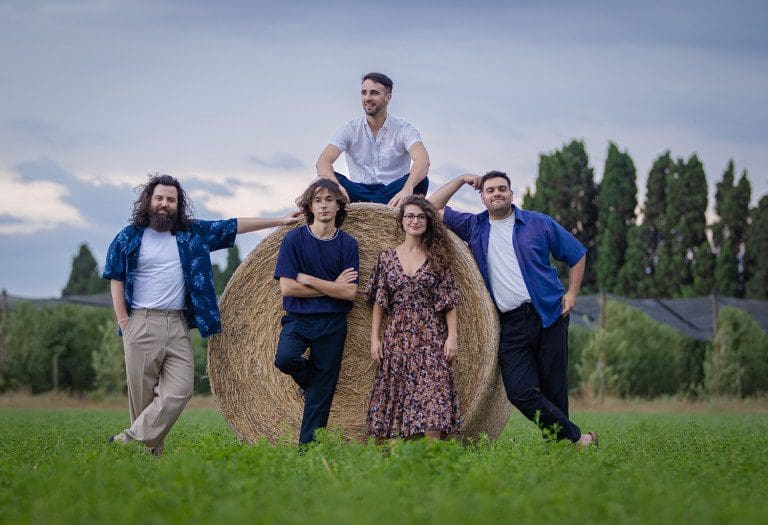
Contre le temps: Le Baiser de la Rose programme at NCEM on July 5

At the heart of the festival is the NCEM’s year-round commitment to supporting emerging talent, this year represented by two young European ensembles, NCEM Platform Artists Anacronía, from Spain, in their festival debut at the NCEM on July 4 at 1.30pm, and the Franco/American medievalists Contre le temps, whose Le Baiser de la Rose programme at the NCEM on July 5 at 8.30pm will be recorded for BBC Radio 3’s Early Music Show for broadcast on a date yet to be confirmed.

Held every two years, the prestigious York Early Music International Young Artists Competition will feature 40 musicians in nine ensembles competing for a series of prizes in a day of thrilling concerts at the NCEM on July 11 from 10am to 5pm.

Duo Gambelin: Early Music meets jazz and modernity in All’Improviso concert at Undercroft, Merchant Adventurers’ Hall, on July 8

This year’s finalists are: I Mastricelli; Il Parrasio; La Mandorle; Lagrime; Nari Baroque Ensemble; Ossian’s Dream; Quarterino; Tra Noi and The Lyons Mouth (formed at the University of York).  

The full programme can be found at ncem.co.uk/whats-on/yemf. Box office: 01904 658338; email at boxoffice@ncem.co.uk; ncem.co.uk or in person from the NCEM.

Festival director Dr Delma Tomlin says: “We’re very excited to be staging our 50th festival, which is brimming with musical delights. The very first festival took place in 1977 and has gone from strength to strength, inspiring the restoration of St Margaret’s Church and the creation of the National Centre for Early Music in 2000.”

York Early Music Festival director Delma Tomlin

“Our 50th edition features world-class ensembles and emerging artists; celebrates the genius of John Dowland; hosts the prestigious York Early Music International Young Artists Competitionand has commissioned the York Fanfare to open the proceedings, making sure the festival gets off to a flying start.

“Last but not least, our media partners, BBC Radio 3 will be back, broadcasting the hugely popular Early Music Show live from the NCEM, presented by Hannah French on July 5 at 5pm with a line-up of guest artists from the festival. We hope you can join us in York for this very special celebration.”

The full programme can be found at ncem.co.uk/whats-on/yemf. Box office: 01904 658338; email at boxoffice@ncem.co.uk; ncem.co.uk or in person from the NCEM.

Solomon’s Knot: Festival finale at York Minster on July 10

Festive exhibition of the week: An Inspired Christmas at Treasurer’s House, until Dec 21

A bauble decoration in An Inspired Christmas at Treasurer’s House, York. Picture: National Trust, Anthony Chappel-Ross

THE National Trust invites festive visitors to experience An Inspired Christmas at Treasurer’s House, in Minster Yard, York, until December 21 – and look out for the kitchen’s trademark Christmas Pudding Scones returning to the cafe menu too.

Nestled beside York Minster, this early 17th-century house has undergone a winter transformation, where stories of its past residents come to life through handcrafted decoration as rooms are re-imagined with festive flair, inspired by the house’s rich history.

“Treasurer’s House has long been more than just bricks and mortar,” reads the National Trust’s Welcome to An Inspired Christmas. “It has been a home, a place of ideas and ambition. Over the centuries, its rooms have echoed with the lives of remarkable individuals who shaped society in ways both bold and quiet.

“This Christmas, we celebrate eight extraordinary former residents whose stories continue to inspire. From writers to thinkers, pioneers and reformers, each has left a legacy that reaches far beyond these walls.

“As you explore the house today, we invite you to walk in their footsteps, discover their impact, and reflect on how the past can illuminate the present.”

A Christmas stocking decoration in honour of Frank Green at An Inspired Christmas at Treasurer’s House

Each room is styled to reflect the personalities and tales of those who once called Treasurer’s House home, from last occupant Frank Green, the visionary industrialist who gifted the property to the National Trust, to the Young family, Jane Squire, Ann Eliza Morritt, Elizabeth Montague, Sarah Scott, John Goodricke and Royal visitor Queen Alexandra, wife to King Edward VII.

Until 1648, the house was home to the Young family, who are responsible for much of how Treasurer’s House looks today. Thomas Young was Archbishop of York, whose role was to establish the insecure Protestant church in the north for Queen Elizabeth I’s government.

Christmas in the Youngs’ time would have looked very different to how the season is celebrated now, but they shared many similarities, such as games, greenery, jokes and cake.

From 1717 to 1725, Treasurer’s House was owned by Jane Squire at a time when it was unusual for women to own property. During her ownership, she leased the house to Matthew and Elizabeth Robinson, parents of future literary figures Elizabeth Montague and Sarah Scott.

Garlands galore on the stairwell for An Inspired Christmas at Treasurer’s House. Picture: National Trust, Anthony Chappel-Ross

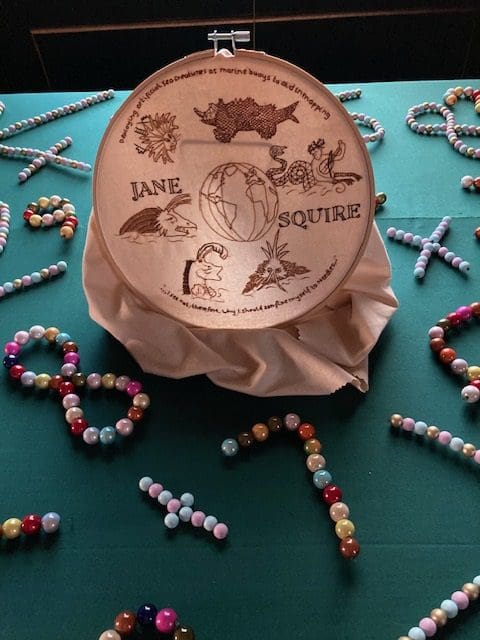
Squire was a pioneering mathematician and the only woman who is known to have submitted a formal proposal to measure longitude at sea accurately (crucial to the success of early 18th century British naval power). Her proposal was “not very practical” but showed the active mind of a woman whose story was one of resilience, curiosity and determination to succeed.

Ann Eliza Morritt’s family owned part of the house from 1725 to 1813. While her parents and brother lived a few streets away, the five Morritt sisters resided here together. Ann Eliza was a talented embroidery artist, copying the artwork of great painters,  and her work is still on display at Rokeby Park, near Barnard Castle.

Born at Treasurer’s House, Elizabeth Montague became known as the “Queen of Bluestockings”. She hosted lively gatherings where writers, thinkers and politicians exchanged ideas in an era when women’s voices were often silenced.

A successful businesswoman as well as a patron of the arts, she used her wealth to support literature and social reform. From her York beginnings to the salons of London, her life’s journey stands as a testament to the power of intellect, determination and the courage to defy convention.

The 18ft Christmas tree for An Inspired Christmas at Treasurer’s House. Picture: National Trust, Anthony Chappel-Ross

Elizabeth’s sister, Sarah Scott, who lived at Treasurer’s House for a time, was a novelist, translator and member of the Bluestocking circle of intellectual women, using her writing to imagine a fairer, more compassionate society.

Her most celebrated work, A Description Of Millennium Hall (1762), told the story of a community where women lived independently, pooling their talents and wealth to support education, healthcare and charitable work.

Scott’s ideas were far ahead of her time. She believed that women could shape society, not only within the home, but also through learning, creativity and collective action. From her years in York, she carried forward a legacy that still informs debates over community, gender and social justice.

From 1781, John Goodricke took up residence at Treasurer’s House, where he would change the course of astronomy forever. Deaf from childhood, in tandem with his friend Edward Piggot, he measured the variation of light from stars that would enable 20th century astronomers to determine distances to distant galaxies.

A decorative tribute to mathematician Jane Squire at An Inspired Christmas

He was awarded the Copley Medal, the oldest scientific prized in the world, also bestowed on Benjamin Franklin, Charles Darwin and Albert Einstein.

The stars in the room dedicated to him for this exhibition represent the star Algol, discovered by Goodricke at Treasurer’s House.

Queen Alexandra, King Edward VII’s wife, stayed at Treasurer’s House in 1900 when she was still Princess of Wales, on a visit to the Royal Agricultural Show, held in York. Alexandra, from Denmark, was hard of hearing, so she was accompanied by her daughter Victoria, known to be dignified and charming, affectionate and jolly, with a love of skating too, much to her mother-in-law Queen Victoria’s disapproval.

On her visit, she found Treasurer’s House uncomfortable, so there are comforting reminders in Queen Alexandra’s Room of a traditional Danish Christmas, such as the works of Hans Christian Andersen, who would read stories to Alexandra and her siblings in Copenhagen, Snow Queen among them.

Visitors can explore at their own pace, soaking in the ambience of period rooms adorned with bespoke festive décor, much of it created lovingly by National Trust volunteers, along with other rooms decorated by two community groups, MySight York knitting group and York Central Women’s Institute, whose founding meeting was held at Treasurer’s House.

Got it taped: An unusual Christmas tree decoration at Treasurer’s House

“Christmas at Treasurer’s House is always a special time, but this year we’ve gone even further to bring the stories of the house to life through the decorations,” says visitor experience officer Edward Walker.

“Each room tells a different tale thanks to the creativity of the volunteers, local community groups and artists. If you’re looking to get into the festive spirit, it’s the place for you; if you want to uncover pockets of history or something new alongside candles and trees, it’s also for you.”

Edward continues: “My personal favourite space is the Queen’s Room, where we’re representing Hans Christian Andersen. We’re celebrating a royal visit to Treasurer’s House, plus the author who used to be invited to the Danish palace to read to the young princesses.”

Back by popular demand are the Christmas Pudding Scones, among many seasonal treats. This scone was invented in the Treasurer’s House kitchen, following a competition for visitors to suggest new flavour ideas.

Freshly baked: Christmas Pudding Scones at Treasurer’s House. Picture: National Trust

The Scone Blogger voted it her top scone, and she should know as she travelled the country to sample from every National Trust café. For five weeks only, the team will be baking freshly each day; just follow your nose!

For younger visitors, a spotter trail features handcrafted stained-glass stars, created by artist Megan Barnett from York company Woodside Stained Glass.

On Tuesdays, you can watch the conservation team showcase their work caring for the Treasurer’s House collection. From 2pm on Wednesdays, lights will be switched on, music turned off and shutters opened for visitors who prefer a lighter and quieter Christmas.

The Minster Minstrels, young York musicians from the National Centre for Early Music, Walmgate, will perform in the Great Hall on Sunday, December 7, adding a joyful sound throughout the house in 30-minute sets at 12.30pm and 2pm. Each will offer different songs from a changing group of musicians.

An Inspired Christmas at Treasurer’s House, York, runs until December 21, open Saturday to Wednesday, 11am to 4pm, last entry 3.30pm. No booking is required, with free entry for National Trust members and under-fives. For further details visit https://www.nationaltrust.org.uk/treasurershouse.

Tree decoration at An Inspired Christmas at Treasurer’s House, York

Who’s playing at 2022 York Early Music Christmas Festival and on NCEM’s festive online box set? Full programme here

Solomon’s Knot: Premiering Johann Kuhnau’s Christmas Cantatas on December 16. Picture: Dan Joy

YORK Early Music Christmas Festival 2022’s combination of music, minstrels, merriment, mulled wine and mince pies can be savoured from December 8 to 17.

The live festival will be complemented by a festive online box set, comprising highlights of seven concerts available to watch on demand from 12 noon on December 19 to January 31 2023.

Run by the National Centre for Early Music (NCEM), at St Margaret’s Church, Walmgate, the 2022 festival features both Early and folk music performed by an array of artists from Great Britain, Europe and York itself.

“The NCEM welcomes old friends and new faces for this musical celebration of Christmas,” says director Dr Delma Tomlin. “As well as concerts from some of the world’s foremost exponents of Early Music, this year’s Christmas programme brings you festive cheer from The Furrow Collective, Green Matthews and The York Waits, thanks to a special Events and Festivals Grant from Make It York.

“This is the perfect choice for an atmospheric Yuletide evening away from the crowds as the York Early Music Christmas Festival transports you to a magical Christmas past, with mice pies and mulled wine available at most concerts.”

La Palatine: Opening York Early Music Christmas Festival 2022 with Fiesta Galante concert

Returning after their sparkling debut in York last year, French baroque ensemble La Palatine open the festival on December 8 at 7pm at the NCEM with Fiesta Galante, a festive and colourful spread of different musical genres marking the accession of the Bourbons to the Spanish throne in 1700.

These rising stars of Creative Europe’s EEEmerging+ programme – to support the development of young professional ensembles – will be performing acrobatic sonatas, dancing cantatas and guitar pieces, capturing how the new Italianate spirit spread through Spain. Led by soprano Marie Théoleyre, the highlight will be Nebra’s sacred cantatas.

“The relationship with Europe (through EEEmerging) has been fabulous, allowing us to share these wonderful musicians’ skills,” says Delma. “Post-Brexit, the bridges will still be there; they still want to collaborate, and so do I.

“Last December, La Palatine made the audience cry…in a very positive way with the beauty of their music, especially the last song. Marie Théoleyre is such an engaging singer. People were still not getting out to many concerts, and there was such a sense of joy in being there.

“La Palatine will be here for a few days, and as part of their residency, for Restoration, a UK network of Early Music promoters, they will be presenting a private concert to be shared online, giving the promoters the chance to talk to the artists with a view to further engagements.”

Ensemble Augelletti: Invitation to Pick A Card! Picture: Luke Avery

Expect to hear fantasias as they have never been played before when improvising violinist Nina Kumin gives an illustrated concert as part of this University of York PhD student’s doctorate in Telemann’s Fantasy: The Genius Behind The Music (NCEM, December 9, 12.30pm, free admission).  

Looking at how fantasias capture the style and the spirit of the Baroque, this Peter Seymour pupil will open with Telemann’s fantasias for solo violin, then will address two questions: how did baroque musicians create fantasias, and from where did they gain inspiration?

Kumin, by the way, has taken over as the director of the Minster Minstrels, the NCEM’s Early Music ensemble for school-age musicians.

In Pick A Card! (NCEM, December 9, 7pm), London’s Ensemble Augelletti explore playing card designs from the 14th century to the present day, connecting each card to a different piece of music to tell seasonal stories of people, places and animals in winter.

Olwen Foulkes, recorders, Ellen Bundy, violin, Carina Drury, cello, Toby Carr, lutes, and Benedict Willliams, keyboards, play music by Handel, Corelli, Rossi, Purcell and Ucellini to conjure up cosy evenings of playing cards around a fire, an ancient pastime for family celebrations and gatherings.

Clowning around in Ensemble Molière’s Good Soup performance on December 12

Audiences can enjoy a brace of intimate yet extrovert celebrations of JS Bach’s music in solo violin lunchtime concerts over the festival’s two weekends. Festival favourite Bojan Čičić returns to the NCEM to interpret Bach’s Sonatas (December 10, 1pm) and Partitas (December 17, 1pm), ahead of the release of his latest recording with Delphian.

York’s Yorkshire Bach Choir and the Yorkshire Baroque Soloists return to the Sir Jack Lyons Concert Hall, University of York (December 10, 7pm to 10pm), with soprano Bethany Seymour and Hannah Morrison, tenor James Gilchrist and bass Johnny Herford as the soloists for Handel’s Brockes Passion.

After languishing in the margins of musical history, Handel’s only Passion setting – first performed in Hamburg in 1719 – receives its debut performance in the North of England, with its vivid mixture of chorales, choruses and emotive recitatives, under conductor Peter Seymour.

Baroque ensemble Spiritato and York vocal group The Marian Consort join forces at the NCEM (December 11, 5pm) to present Inspiring Bach, an exciting, moving and profound performance featuring music and composers admired by Johann Sebastian Bach: Pachelbel, JC Bach, Knupfer and Buxtehude.

“These large-scale, uplifting works, composed after the trauma of the Thirty Years War, have a remarkable resonance today,” says Delma. “Featuring composers you might surmise were inspired by Bach or inspired the man himself, this is music form the very soul of the 17th century, crowned with soaring melodies and the glorious sound of trumpets and drums.

Ensemble Molière: NCEM’s New Generation Baroque Ensemble

“We’re delighted Spiritato are returning to York; they’re an absolutely smashing young ensemble, working incredibly hard to present unfamiliar repertoire and making a real go of it.”

To celebrate French playwright Molière’s 400th anniversary, Ensemble Molière, the first NCEM/BBC Radio 3/Royal College of Music New Generation Baroque Ensemble, re-create a time of environmental catastrophe, war and pestilence set around the table of the Sun King, Louis XIV, in Good Soup at the NCEM (December 12, 7.30pm).

“Very different from a normal baroque programme”, the evening of music, absurdist theatre, slapstick and puppetry features works by Jean-Baptiste Lully, Couperin, Marais, Dumont, Charpentier and Jean Chardevoine, complemented by clowns and performers James Oldham and Lizzy Shakespeare. Klara Kofen is the dramaturg and puppeteer; Rachel Wise, the movement director and fellow puppeteer.

The NCEM and partners will be seeking a new New Generation ensemble from next September. In the meantime, Ensemble Molière will record their debut album at the NCEM next spring, on top of their work for BBC Radio 3.

The Orlando Consort’s Matthew Venner (countertenor), Mark Dobell (tenor), Angus Smith (tenor) and Donald Greig (baritone) mark their final year of performing and recording together with Adieu, presenting a selection of pieces they have particularly enjoyed singing over the past 35 years, at the NCEM (December 15, 6.30pm, moved from 7.30pm).

The Orlando Consort: Saying goodbye with Adieu, an evening of music and conversation on December 15

The mellifluous sequence of music from across Europe ranges from the hypnotic beauty of 1,000-year-old polyphony, through the Medieval age, and onwards to the early Renaissance.

In addition, Consort members will be sharing reflections on their musical journey in a handful of behind-the-scenes touring anecdotes. That journey included a commission from Gabriel Jackson to mark the opening of the NCEM in 2000.

The main festival concludes with Solomon’s Knot’s focus on Johann Kuhnau’s Christmas Cantatas, directed by Jonathan Sells, now at the NCEM, rather than the Lyons (December 16, 6.30pm).

“Three hundred years after his death, it must be high time to bring Johann Kuhnau – the 16th cantor of the Thomasschule in Leipzig – out of the eclipsing shadow of his well-known successor, JS Bach,” says Delma.

The Furrow Collective: Opening their winter tour at the NCEM on December 2

“Thanks to the pioneering work of scholar and countertenor David Erler, his sparkling works are ever more widely available. Solomon’s Knot return to the festival to give three of them their UK premiere in York, to be followed by a second performance at Wigmore Hall, in London, the next day.

“Featuring full choir and orchestra – 25 performers in all – these cantatas will ‘raise the roof’ of our 2022 Christmas celebrations, with festive trumpets, horns, and drums providing the perfect soundtrack for Christmas and New Year.”

In further festive concerts at the NCEM, English/Scottish band The Furrow Collective present We Know By The Moon, a spine-tingling evening of storytelling and harmony, bringing light into the wintry gloom (December 2, 7.30pm), while modern-day balladeers Green Matthews evoke the spirit of Christmas past, bringing600 years of music to life in a riot of sound and colour (December 17, 7.30pm).

In the NCEM’s last Christmas concert, the stalwart York Waits celebrate the 45th anniversary of their re-creation of York’s historic city band with The Waits’ Wassail in Music for Advent and Christmas, exploring festive music from the 14th to the 17th century (December 20, 7.30pm).

For full programme details, go to ncem.co.uk. Tickets are on sale on 01904 658338, at ncem.co.uk or in person from the NCEM.

El Gran Teatro Del Mundo: Part of the NCEM’s online box set

FOR the festive online box set, the NCEM concerts by La Palatine, Bojan Čičić, Spiritato & The Marian Consort, The Orlando Consort and Solomon’s Knot will be filmed and recorded by Ben Pugh and Tim Archer, formerly of the BBC’s Manchester studios, to enjoy from the comfort of home.

The set will be completed by El Gran Teatro Del Mundo’s concert, The Art Of Conversation, filmed on November 20. A festival pass costs £45 for the seven concerts; individual concerts, £10, at ncem.co.uk, and the concerts may be watched any number of times.

NCEM director Dr Delma Tomlin says: “York Early Music Festival is one of the highlights of the city’s Christmas calendar and the online programme offers the chance for everyone to enjoy these glorious concerts wherever they are in the world, giving access to people unable to go out or attend.

“As always, we’re welcoming old friends and new to the festival, which features an extraordinary wealth of music associated with Advent, Christmas and Epiphany. Our programme is the perfect accompaniment to Yuletide festivities and can be streamed well beyond Twelfth Night, so  if you can’t join us in York this year, you can celebrate with us at home from December 19 to January 31.”

York Early Music Christmas Festival director Dr Delma Tomlin: “Welcoming old friends and new”