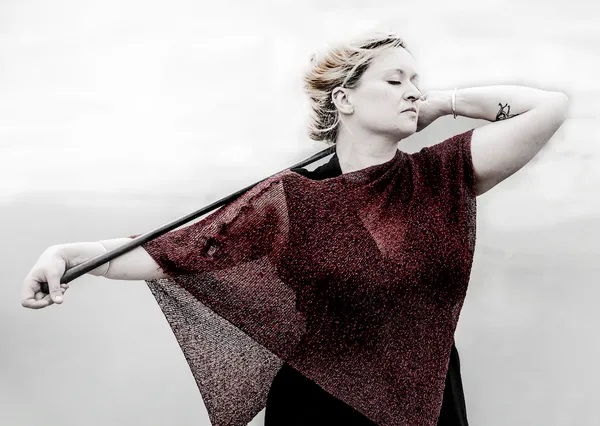
Eliza Carthy: “Energetic, forthright presence, taking charge and fully taking on the family matriarch role”
TURNING sadness into celebration is life affirming. It was with sadness that Eliza Carthy announced that her father, Martin Carthy, would not be able to perform. His sudden retirement, aged 84, threw this tour into doubt, but friends and admirers soon stepped in.
Carthy senior has had a wonderful 60-odd year career, including trailblazing folk partnerships with Steeleye Span, Dave Swarbrick, wife Norma Waterson and latterly with his daughter Eliza, who is a key part of the Robin Hood’s Bay family firm, fiddle player and songwriter of note.
On Friday night, Eliza took her father’s songs to the sold-out NCEM. Travelling is exhausting for Martin, who has late-onset Alzheimer’s, but he was well enough to attend, sitting with friends in the back row and talking to well-wishers.
Eliza is an energetic, forthright presence, taking charge and fully taking on the family matriarch role. Alongside her was the attentive Nick Hart, with his sympathetic guitar playing and rich traditional voice. To see how closely he watched the others was a masterclass in accompaniment.
Also on stage was Jon Wilks, who, like the others, was gracious in sharing how much of a debt he owed Martin. (He is in good company; at a celebration last year, Bob Dylan was among those saying thank you).
The two guitarists joined up masterfully for Scarborough Fair. Later they were joined by Eliza’s son, Finn Curran-Carthy, who is also a talented guitar player (“Urgh, I’m surrounded by all these guitars,” Eliza joked).
The two-hour show took a couple of songs to get going but then never let up. There were numerous highlights, made more so by the Eliza’s introductions. When First I Came To Caledonia was lovely and Bold Doherty was doughty.
Hart’s solo Famous Flower Of Serving Men was a joy: long – some 32 verses – but apparently not the longest song in Carthy’s repertoire.
The special guest for the evening was York’s own Olivia Chaney, enjoying plenty of attention for her song Dark Eyed Sailor in Emerald Fennell’s film adaptation of Wuthering Heights. Chaney was more emotional than the others appeared, but her Queen Of Hearts was imperious.
Above all, it was the songs that shone, shining a light on the care with which Carthy senior chose and arranged the material. As Hart said, “Martin’s versions are the best versions”.
Eliza was a natural bandleader and the set list ranged freely over Martin’s long career (with particular emphasis on his 1965 debut, which influenced so many). He has continued to write new verses to one tune on that self-titled record, A-Begging We Will Go. The most recent verse was completed only a month ago, taking aim at billionaires.
In Eliza’s hands (and Finn’s if he chooses), the Carthy folk dynasty will endure, hopefully staying Robin Hood’s Bay most beloved export.
Review by Paul Rhodes