REVIEW: Martin Dreyer’s verdict on North York Moors Chamber Music Festival, Dialogue and The Dividing Line, St Hilda’s, Danby and St Hedda’s, Egton Bridge, August 11 and 13

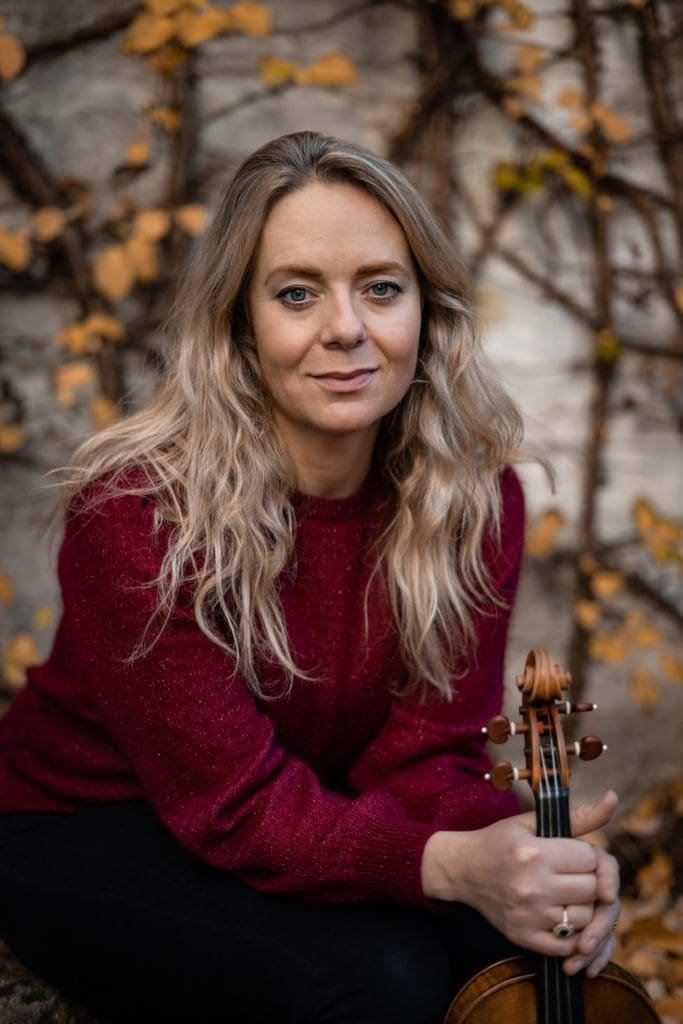
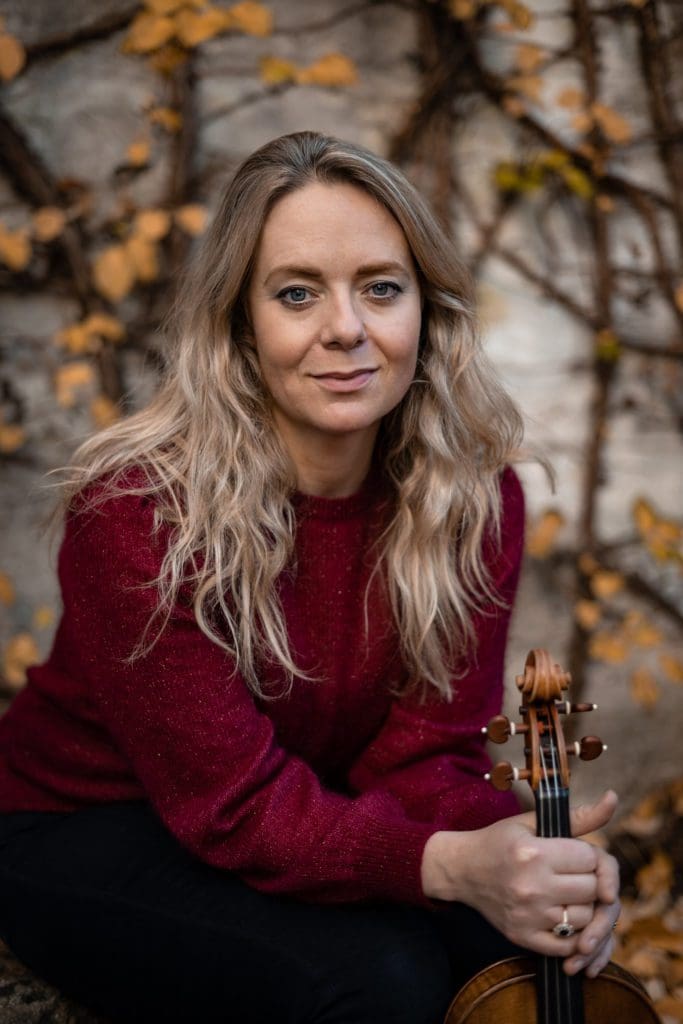
Violinist Charlotte Scott

THE titles – the festival’s own – give a rough indication of where we are in this year’s theme of Creation.

Dialogue is self-explanatory; the Dividing Line is that between earth and sky. Each of these recitals in churches on the northern edge of the North York Moors featured a world premiere, in a context of related works, old and new.

The afternoon in Danby involved only three violinists: Alena Baeva, Benjamin Baker and Charlotte Scott. Two pieces each by Bach and Berio framed two dances by Saariaho and the world premiere of Creation by Isabella Gellis, the only work in the programme involving all three players.

She describes it as a reimagining of an aria about a butterfly, sung by the Child in her 2024 opera The Devil’s Den, which was staged by Opera North last November. The role requires some daunting vocal pyrotechnics.

In the earlier part of its eight minutes, a glissando and close harmony set up a sense of lament. These recurred later, but the highest voice emerged gently at first and then with full-throated lyricism before lower, slower voices suggested the butterfly temporarily at rest.

It was not long before a series of high-note signposts, against tremolo accompaniment, grew ever more intense, keenly reflecting the original aria. Finally this dissipated into hovering harmony, in a pianissimo that stopped abruptly. Even without the visual reference, the piece stands alone most effectively.

Charlotte Scott despatched an immaculate if slightly deliberate account of Bach’s Second Partita for solo violin at the start, which was more than matched by Alena Baeva’s concluding no-holds-barred version of his taxing Chaconne, in which the three voices within the score emerged clearly.

Benjamin Baker teamed up with each of them in turn in five of Berio’s Duetti, bringing out the more lyrical sides of the composer’s human portraits. All three players warmed up for the Gellis with a suitably balletic approach to Saariaho’s two Danses des Flocons.

There were no less than a baker’s dozen of players on hand two afternoons later in Egton Bridge. The first half of the programme culminated in the world premiere of Charlotte Bray’s That Which You Wove Of Lightest Thread, I Wear To Honour Stone, for horn and string quartet.

Its title is taken from Paul Celan’s poem Totenhemd (‘death shirt’). What made this unusual was its close affiliation with a woven installation by the artist Caroline Burraway, which was on display in the nave. It consisted of a number of largely dessicated leaves woven together with human hair. It was deliberately designed to fall apart over time.

Bray’s music had a similar feel. Most of the action was in the solo horn, now in brief fanfares or calls to action, now less affirmative, more faltering. Its lines were brief rather than lyrical. Underneath the

string quartet wavered uncertainly, as if quaking at the horn’s decisiveness and fearful of its dominance. It was as if the horn was a tyrant, the strings his cowering people. This was musical impressionism in modern guise.

It had been preceded without a break by Thea Musgrave’s evocative Dawn, for oboe solo (Nicholas Daniel), followed by Kurtag’s Ligatura (from The Answered Unanswered Question), in the version for two violins, two cellos and celeste, and Ives’s The Unanswered Question, with Ben Goldscheider’s horn standing in for the trumpet and the wind quartet ‘chorus’ playing from behind the audience, attempting to answer the question of the title. The three works made an effective sequence and a useful prologue to the Bray.

Schubert’s String Quintet after the interval got off to a less than persuasive start, where slightly stronger accents might been more effective. The second movement hovered as it should and there was a welcome injection of light-heartedness in the Scherzo.

The finale came together with some force, the instruments now seeming more settled with each other. Much of the ensemble’s energy seemed to radiate not so much from the first violin, Alena Baeva, but from the centrally positioned viola, Sascha Bota, whose glances in all directions acted as a focus for his colleagues. It was a solidly competent rather a memorable account.

Oboe player Nicholas Daniel

Highlights from the Second Week, North York Moors Chamber Music Festival, August 17 to 22, at Welburn Manor Marquee unless otherwise stated

IN retrospect, the first half of ‘From the Silence’ (August 17) was relatively unexciting. The sudden rhythmic interjections in Thomas Adès’s piano work Traced Overhead, played by Joseph Havlat, and the largely slow-paced and thoroughly thought-laden And Other Things by Isabella Gellis, for clarinet, cello and piano, threatened to outstay their welcomes.

Dream, by Huw Watkins, for clarinet, violin and piano, was much more incident-packed, belying its title. From a quiet start, it exploded into fire. The piano calmed things down, but the other instruments lost patience with this and erupted again. Stimulating.  Adès’s Four Berceuses were surely ironically titled: definitely not recommended for lulling a child to sleep.

After the interval, reverting to Mozart and Beethoven, we might have expected classical normality. We were wrong. In Mozart’s Oboe Quartet in F, the typical approach is for oboe to dominate and the supporting strings to fill in where needed. This was quite different. All four players were totally engaged, the strings not to be outdone by the soloist and making their presence felt at every opportunity, weaving in and out of the texture with deft inflexions all round.

The slow movement was utterly soulful, rivetingly so up to and including its final cadence. In the finale, with all four going hell for leather, ensemble remained taut. This was the most exciting account of the work one could ever expect to hear, sensational in its daring and impact, certainly not what one might anticipate in a work that can easily sound bland. This was anything but. The deft oboist was Nicholas Daniel, with violinist Benjamin Baker, viola player Simone van der Giessen and cellist Tim Posner in close attendance.

By the time we reached Beethoven’s ‘Ghost’ Trio, Op 70 No 1, rain lashing the canvas made life difficult for players and audience alike. It had its compensations, however. The first movement was exceptionally fiery – a matter of self-defence – yet with some exceptionally subtle phrasing in its development section.

The Largo took on an extra layer of creepiness in this weather. The finale took time to outweigh the demons conjured in the Largo, but eventually – with the rain now letting up – moved into sunnier, pastoral climes. It was a brave and ultimately satisfying account.

* * * * *

THE next afternoon in a packed St Mary’s, Lastingham (August 18), ‘The Architect’s Hand’ offered Mozart’s Clarinet Quintet, partnered by the world premiere of an oboe quartet by Huw Watkins, whose String Trio made such a profound effect in this venue last year.

The Mozart was marked by clarinettist Matthew Hunt’s clear attempt to blend as smoothly as possible with the strings, made possible only by his extraordinary breath control. His duetting with first violinist Charlotte Scott in the slow movement, for example, was ideally balanced, all strings being muted here.

The strings made a shapely impact in the first of the Scherzo’s trios (where clarinet is silent). But it was in the six variations of the finale that Hunt really came into his own. Skipping between octaves in the first variation, bubbling in chalumeau register in the second, he was particularly effervescent in the fourth. In the more chromatic final two variations, the ensemble delivered some teasing pauses and tempo-changes.

Oboist-in-residence Nicholas Daniel returned to the front line in Watkins’s exciting new work. He was partnered by violinist Benjamin Baker, viola player Simone van der Giessen and cellist Jamie Walton, very much an ‘A’ Team. Into some fierce opening string chords, the oboe crept gingerly before building furiously as its tessitura rose, against highly syncopated strings. This movement faded dreamily at its close.

In a largely slow movement, Baker’s violin was much the most agitated participant, its decorative roulades contrasting with the largely calm, pastoral mood of the oboe and lower strings. The oboe’s legato line was a delight. Virtuoso runs in the oboe dominated the finale, where all four players were kept busy.

It was if the oboe were challenging the others to follow him. This they did after the opening triplet motif made a reappearance, whereupon all four took flight, the oboe rising ever higher towards an extremelyeffective, hushed ending.

* * * * *

‘NIGHTFALL’ (August 20) opened with the pianist Katya Apekisheva playing another three of Schumann’s Fantasiestucke Op 12, which have been featured throughout the festival. Aptly, her phrasing was particularly lovely in Des Abends (‘In the evening’).

It was the prelude to the UK premiere of Tom Coult’s Two Nocturnes And A Maze, for horn, violin and piano, which was written for performance in a hillside church in the Swiss Alps.

As one might expect, there were echoes of Alpine horn in Nocturne I, to which piano responded chordally and violin in jerky fashion. Nocturne II was much closer to Bartok’s night-music, with a repeated-note motif batted between horn and violin, as the horn became gradually higher and more sustained. It finished sparsely, with single notes from each player.

In between, Maze, with horn now muted at first, the texture was lighter and airier, with pizzicato violin and staccato piano. The relationship between the three parts was vague but the combinations were engaging.

Daniel Lebhardt followed the opening movement of Beethoven’s ‘Moonlight’ Sonata, with the slow movement of Schubert’s Piano Sonata in B flat, D.960. He was splendidly grand in its bold central section.

Apekisheva returned, with violinist Benjamin Baker and cellist Jamie Walton, the festival director, for an affecting account of Schubert’s single-movement Trio D.897 (nicknamed – not by Schubert – ‘Notturno’). Its opening is curiously marked pianissimo and appassionato. We certainly sensed the passion here.

* * * * *

THE closing afternoon concert (August 22), ‘…In The End’, juxtaposed Mozart’s First Piano Quartet, K.478 with Schumann’s Piano Quintet, a lusciously attractive combination. In the Mozart, Lebhardt was the pianist, supporting Alessandro Ruisi (violin), Emma Wernig (viola) and Bartholomew LaFollette (cello). It took the repeat of the exposition for it to be clearly defined, after which the ensemble mined the rich seam of drama in the development section.

The slow movement was as tender as could be imagined. In the rondo finale, Lebhardt turned the various returns to the theme into fascinating mini-cadenzas,  but the four players were a little tentative in their interactions.

A more familiar combination of players turned out for the Schumann. Baker’s fellow-violinist was Oliver Heath, alongside Simone van der Giessen (viola) and Jamie Walton (cello), underpinned by Apekisheva’s piano. Oddly enough, this is the first work in the repertoire for this particular combination of instruments.

The second theme in the first movement, shared between cello and viola, was delightfully lyrical, straight from the heart of the Romantic era. The slow movement, more or less a funeral march, ebbed and flowed tellingly, before an ending delivered without vibrato.

 In the whirlwind Scherzo, the passage-work from the strings was especially crisp, leading into a finale that reminded us just how expert Apekisheva can be in a supporting role: she sustained an immaculate balance with the strings rather than turning it into a mini-piano concerto, particularly in the concluding fugato. The thunderous applause was appropriate, as much for the work itself as for the ending of another highly successful festival.

Reviews by Martin Dreyer
REVIEW: Martin Dreyer’s verdict on North York Moors Chamber Music Festival, In The Beginning…, Welburn Manor Marquee, August 8

Pianist Katya Apekisheva: “Delivered an account of Berg’s single-movement Piano Sonata, Op 1 that you are unlikely to hear bettered”

THE best-kept secret in the world of chamber music is up and running once again. This 18th year’s theme celebrates the wonders of Creation and is titled accordingly. Fittingly, this includes six premieres over the festival fortnight, at all of which the composers concerned will be present.

The sheer statistics are worth a glance. Over the course of 13 concerts, there will be 58 pieces from 32 different composers covering 300 years to the present. Most featured are Thomas Adès and Schumann with six pieces each, followed by Beethoven and Mozart with four apiece.

There are 28 performers involved, all of them outstanding in their field, including many who return year after year and have become audience favourites.

For those new to the festival, it should be mentioned that although the programmes are published in advance, the names of the actual performers are only revealed just before each event – which adds an anticipatory frisson.

This year’s Young Artists Ensemble is the Davidoff Trio, who had the honour of opening proceedings, which encompassed Opus 1 pieces by Beethoven, Schumann, Berg and Mendelssohn. The outstanding feature of the trio’s treatment of Beethoven’s Op 1, No 1 in E flat was the intelligent pianism of Yona Sophia Jutzi. She maintained an ideal balance with her partners along with smooth momentum.

The ‘Mannheim skyrocket’ of the opening theme had a crisp staccato in all three voices. By contrast, the unusual Rondo slow movement was notable for the pianist’s rubato and the cellist’s interjections.

Much was made of the contrast between the pianissimo opening of the Scherzo and the more robust moments later. There was sparkling wit in the finale, taken at particularly brisk pace, with the strings handling its Mozart-style chromaticism with panache.

Roman Kosyakov highlighted the vitality in Schumann’s Op 1, his Abegg Variations for piano, his first foray into musical acrostics, since the letters of the name (with B representing the note B flat) are the theme that he develops. Kosyakov was clearly aware that their style was largely derived from Chopin and he milked it cleverly, particularly in the highly decorated fourth variation.

Katya Apekisheva, a long-time favourite here, delivered an account of Berg’s single-movement Piano Sonata, Op 1 that you are unlikely to hear bettered. She was totally attuned to the idiom of extremely late Romantic harmony composed when Berg was still a pupil of Schoenberg. Her touch and attention to detail were impeccable, notably as she built towards its big climax.

Mendelssohn’s First Piano Quartet, Op 1 in C minor, brought a third pianist to the podium, Daniel Lebhardt, in company with violinist Charlotte Scott, viola player Elliott Perks and cellist and festival director Jamie Walton. It proved a superb combination. Its opus number belies the work’s extraordinary maturity, which was apparent in the relentlessly detailed piano role in the first movement. Lebhardt handled it impeccably.

There was a truly Romantic soulfulness in the Adagio, largely coloured by the lower two strings. The excitement in the scherzo gave it a sense of acceleration and a power cut during the trio was weathered faultlessly. Battery lights were brought on before the finale which, despite its moderato marking, was taken at a fair clip, growing in intensity into a thrilling coda.

Review by Martin Dreyer

North York Moors Chamber Music Festival continues until August 22. For the full programme, visit:  northyorkmoorsfestival.com.

More Things To Do in York and beyond. Hutch’s List No. 32, from The York Press

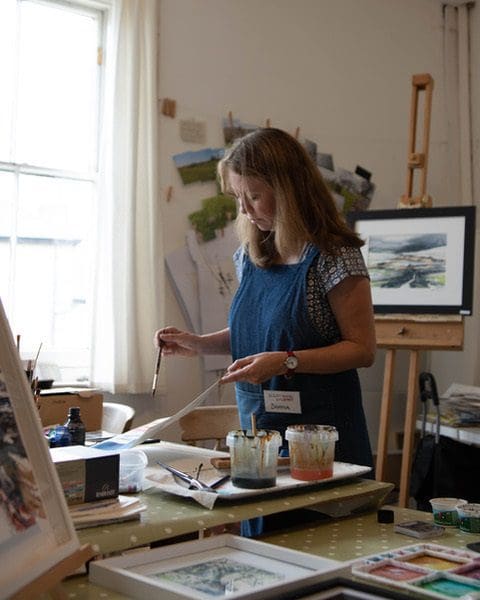
Donna Maria Taylor in her South Bank Studios studio

GEORGIAN celebrations, a brace of art fairs, Shakespeare sonnets on the tennis court and The Magpies’ folk festival should outshine Wednesday’s solar eclipse, reckons Charles Hutchinson.

Artists in situ: South Bank Studios’ Summer Artists Open Doors, Southlands Methodist Church, Bishopthorpe Road, York, today, 10am to 4pm

MEET the South Bank artists and makers who work in a broad range of disciplines, from textile art, painting, drawing and photography, to mixed media, letterpress and linocut printmaking.

Visit their studios to see their creative processes in a day of art to buy, art demonstrations and activities, including the loft studios, not usually on view to the public. The cafe will be open for refreshments. Entry is free; all welcome.  

Masquerade Ball at the 2026 York Georgian Festival tonight

York festival of the week: York Georgian Festival, until August 10

HIGHLIGHTING the sights and sounds of 18th century life, York Mansion House and beyond plays host to the fourth York Georgian Festival in a festival programme that ranges from free displays of dancing and military drills in St Helen’s Square to the York Georgian Masquerade Ball at the Grand Assembly Rooms tonight. Talk, tours, performances and workshops feature too. For full listings and booking details, go to: yorkgeorgianfestival.co.uk.

Carlton Main Colliery Band: Brass At The Proms at Selby Abbey

Rousing concert of the week: Brass At The Proms, Carlton Main Colliery Band, Selby Abbey, tonight, 7pm

JOIN Carlton Main Frickley Colliery Band on its return to the former coalfield town of Selby for a Last Night of the Proms brass concert featuring a vibrant mix of rousing favourites. Seating in the Main Nave will be allocated, with seat and row numbers; Rear Nave seating will be filled on a first-come, first-served basis. Box office: selbytownhall.co.uk.

Futureproof’s logo for a night of poetry, drag, monologues and comedy

Art and science bonding exercise of the week: Futureproof presents Opposites Attract Scratch Night, York Theatre Royal Studio, tonight, 7.30pm

EIGHT acts perform a mixture of poetry, drag, monologues and comedy. Expect biochemistry, molecular biology, sewing, chalk stream-inspired dance and more tonight.

The theme, Opposites Attract, derives from the idea that many things will give people joy, purpose, belonging and entertainment — such as maths and science — that seem to be mutually exclusive to theatre. Futureproof invites creatives to consider these ostensible contrasts, alongside the concept that theatre is meant to reflect our world and/or be a tool to create new ones. Box office: 01904 623568 or yorktheatreroyal.co.uk.

Comedy event of the week: Kevin Bridges: Warm Up, Grand Opera House, York, today and tomorrow, 8pm

CLYDEBANK comedian Kevin Bridges performs two warm-up shows in York ahead of his UK stand-up tour Here If You Need Me. Tonight’s gig has sold out but tickets are still available for tomorrow, as well as for his Leeds First Direct Bank Arena tour show on November 19. Box office: York, atgtickets.com/york; Leeds, axs.com/uk/events/1240964/kevin-bridges-tickets?skin=leeds.

On the stretch: Jamie McKeller’s Lionel, left, and Stuart Lindsay’s Charles limbering up for the doubles in York Shakespeare Project’s Summer Sonnets: What the Deuce? Picture: John Saunders

New balls please: York Shakespeare Project presents 2026 Summer Sonnets: What The Deuce?, Holy Trinity Churchyard, Goodramgate, York, until August 15, except August 11, 6pm & 7.30pm, plus 4.30pm Saturday shows

SUMMER at the Goodramgate Lawn Tennis Club finds four doubles teams competing for the chance to play in a Wimbledon amateur tournament, whereupon partnerships and rivalries lead to sabotage and break point. Who has the advantage? Who is at fault? Will the score be love?

Expect further tennis puns aplenty as Rosy Rowley directs Stuart Green’s script that asks a new collection of ten characters to play out this new sporting and unsporting situation where each finds a way to share a Shakespeare sonnet. Taking part will be James Robert Ball, Oscar Langford, Helen Clarke, Sarah McKeagney, Stuart Lindsay, Alexa Williams, Jamie McKeller, Alan Sharp, Christine Bramwell and Effie Warboys. Box office: tickets.41monkgate.co.uk.

The poster fort York River Art Market 2026. Illustration by Elliot Harrison (@York360)

Open-air art event of the month: York River Art Market, Dame Judi Dench Walk, York, today and tomorrow, then August 15 & 16, 10am to 5.30pm

YORK River Art Market returns for its 11th year, bringing more than 30 artists from multiple disciplines to the Ouse riverside each day, this year presenting art and design market stalls on both sides of the pathway.

Described as York’s answer to the Left Bank in Paris, the event is being run for the first time this summer by Caroline Turner, a professional potter and ceramics teacher at Clay Space York. Admission is free.

York River Art Market 2026 organiser Caroline Turner with artist Lincoln Lightfoot on the Dame Judi Dench Walk pathway

Tribute gig of the week: SWT presents Pulp’d vs Blur 2, Milton Rooms, Malton, today, 8pm

PULP’D and Blur2 team up for a double-header of Britpop royalty tonight. Born and raised in Sheffield, passionate Pulp fans Pulp’d came together to re-create the hits, passion and Jarvis Cocker moves.

Blur2 bring the very best of Blur to every show: the energy, the fun, the sound, the looks and the musicianship of Damon Albarn, Graham Coxon, Alex James and co. Box office: 01653 696240 or themiltonrooms.com.

Scissor Sisters: Heading to the Scarborough coast tonight

Coastal gigs of the week: Scarborough Open Air Theatre presents Scissor Sisters, today; Holly Johnson, ABC and Heaven 17, August 14,  gates 6pm

AFTER their 2025 UK arena reunion tour and that summer’s Saturday night Glastonbury set, Scissor Sisters bring their trademark blend of glam, grit and glorious to Scarborough Open Air Theatre this weekend. Jake Shears, Babydaddy, Del Marquis and co will be rolling out such favourites as Take Your Mama, Laura, I Don’t Feel Like Dancin, Let’s Have A Kiki, Only The Horses and Filthy/Gorgeous.

Holly Johnson: Frankie says Relax in Scarborough

Flamboyant, unapologetically bold Frankie Goes To Hollywood lead vocalist and lyricist Holly Johnson tops the 1980s’ triple bill next Friday, when he performs the chart-topping trio of  Relax, Two Tribes and The Power Of Love, further Frankie smashes Welcome To The Pleasure Dome and Rage Hard and solo hits Love Train, Americanos and Atomic City. Sheffield bands ABC and Heaven 17 support. Box office: scarboroughopenairtheatre.com.

The Magpies: Hosting their folk festival at Sutton Park

Folk festival of the month: The Magpies Festival, Sutton Park, near York, August 14 and 15

RUN by the folk trio of Bella Gaffney, Holly Brandon and Ellie Gowers, The Magpies Festival presents next Friday’s Main Stage bill of Daraa Tribes (6pm), The Magpies (8pm) and headliners Manran (10pm) and Brass Castle Stage bill of True Foxes (5pm), Elizabeth Davidson-Blythe & Daniel Quayle (7pm), SupaLung (9pm) and New York Brass Band (11pm).

Next Saturday’s line-up on the Main Stage comprises Steady Habits (12 noon), Alex Hart (2pm), Blair Dunlop (4pm), Katherine Priddy (6pm), Gnoss (8pm) and headliners Cut Capers (10pm). The Brass Castle Stage plays host to Songs In The Round, with Katherine Priddy, Blair Dunlop and Chloe Foy (1pm), Tarren (3pm), Ophelia’s Beard (5pm), Around About Dusk (7pm) and Suntou Susso & The Gambian Superstars (9pm). Box office: themagpiesfestival.co.uk/tickets.

Composer Thomas Adès: Presenting new composition at Creation-themed North York Moors Chamber Music Festival. Picture: Marco Borggreve

In Focus: North York Moors Chamber Music Festival, August 8 to 22

THE North York Moors Chamber Music Festival celebrates its 18th consecutive year with the premieres of six works by contemporary British composers.

Aptly named Creation, the 2026 festival will run from August 8 to 22, featuring new compositions by Thomas Adès, Huw Watkins (both of whom will perform at the festival), Charlotte Bray, Tom Coult, Isabella Gellis and Helen Grime.

“Our 2026 festival celebrates the wonder of beginnings and features six newly commissioned premieres that evoke the six days of the universe’s creation, woven through the festival theme, by six of our country’s very finest composers,” says festival director and cellist Jamie Walton.

Charlotte Bray: Premiering That Which You Wove Of Lightest Thread, I Wear To Honour Stone at North York Moors Chamber Music Festival. Picture: David Beecroft

“As part of this narrative, the Sabbath (Sunday) remains a day of rest – and each concert includes works that were themselves groundbreaking or innovative in their time, reflecting music’s timeless power to create, to renew, and to tell a universal story through sound.”

Jamie continues: “Thomas Adès is widely regarded as one of the world’s greatest living composers, so it’s a real coup to have him both write for us and come to premiere the piece, Flower Variations [in the Landspeak concert on August 14 at 7pm at Welburn Manor].

“We’re really proud of the fact that, alongside these six outstanding composers, we have such a stellar line-up of international artists.

Helen Grime: Premiering Time Be Brief. Picture: Benjamin Ealovega

“We’re also continuing to champion visual artists from the moors in the brochure, pairing their work with concert titles. We’ve done this for the past two years and it’s a wonderful way to cross-pollinate and collaborate with more artists.”

Charlotte Bray’s piece for horn and string quartet, That Which You Wove Of Lightest Thread, I Wear To Honour Stone,  will be accompanied by a collaborative artwork by Caroline Burraway, exhibited on stage at St Hedda’s, Egton Bridge during The Dividing Line performance on August 13 at 2pm.

Isabella Gellis’s Creation will be premiered in August 11’s Dialogue concert at St Hilda’s, Danby, at 2pm; Helen Grime’s Time Be Brief, at Metamorphoses concert, Welburn Abbey, August 15, 7pm; Huw Watkins’s Oboe Quartet, The Architect’s Hand concert, St Mary’s, Lastingham, August  18, 2pm, and Tom Coult’s Two Nocturnes and A Maze, in its UK premiere, Nightfall concert, Welburn Abbey, August 20, 7pm.

Huw Watkins: Premiering his Oboe Quartet in festival appearance. Picture: Benjamin Ealovega

The festival will take place in four historic moorland churches – St Hilda’s, Danby, St Hedda’s, Egton Bridge, St Michael’s, Coxwold, and St Mary’s, Lastingham – along with the majority of concerts being staged in the grounds of Welburn Manor, near Kirkbymoorside, where the acoustically-treated venue has been enlarged this year to reflect the festival’s increasing popularity.  

The festival was named a Best of British Fund Winner 2026 by Airbnb, representing Yorkshire as part of the North York Moors Beacon for the Arts.

Jamie says: “Our festival celebrates the art of collaboration in an awe-inspiring setting, taking our audience on a musical quest each year through interwoven themes within a central storyline.

Isabella Gellis: Premiering Creation in August 11’s Dialogue concert at St Hilda’s, Danby. Picture: Ella Pavlides

“Over 18 years, we have built a reputation for breaking down barriers to make exceptional music accessible to all, fostering community and cultural connection through friendship and trust. Uncompromising even amid pandemic challenges, our festival was one of the few to present full, live performances in 2020 and 2021.

“August, when the heather is in full bloom, brings the North York Moors to life. Artists are immersed in the National Park, rehearsing and living in a deeply holistic environment, while audiences are welcome to enjoy picnics on the grounds of Welburn Manor, attend concerts, and explore the region’s historic churches and priories.”

The event continues to attract international artists, 28 this year, many of them committing to the entire fortnight by taking up residencies in a festival of 13 concerts featuring 58 chamber works from 32 composers spanning 300 years to the present day. 

Tom Coult: Premiering Two Nocturnes and A Maze on August 20. Picture: Matthew Johnson

This year, these include Alena Baeva, Benjamin Baker, Oliver Cave, Oliver Heath, Alessandro Ruisi and Charlotte Scott (violin); Sascha Bota, Meghan Cassidy,  Emma Wernig and Simone van der Giessen (viola); Rebecca Gilliver, Tim Posner and Jamie Walton (cello) and Will Duerden (double bass).

Taking part too are: Thomas Adès, Katya Apekisheva, Joseph Havlat, Roman Kosyakov, Daniel Lebhardt and Huw Watkins (piano); Ben Goldscheider (French horn); Nicholas Daniel (oboe); Matthew Hunt (clarinet); Jonathan Davies (bassoon) and James Gilchrist (tenor). Completing the line-up will be the festival’s award-winning Young Artists ensemble, The Davidoff Trio.

Tickets for individual concerts are £18; a season ticket for all 13 costs £190. As ever, under-30s gain free entry to any of the concerts. To book, email [email protected], call 07722 038990 or visit www.northyorkmoorsfestival.com. The full programme can be downloaded via https://www.northyorkmoorsfestival.com/.

Our 2026 festival celebrates the wonder of beginnings and features six newly commissioned premieres that evoke the six days of the universe’s creation,” says North York Moors Chamber Music Festival director Jamie Walton. Picture: Matthew Johnson

REVIEW: Martin Dreyer’s verdict on North York Moors Chamber Music Festival, ‘Tread Softly’, W B Yeats, He Wishes For The Cloths O Heaven), Marquee, Welburn Manor, August 19

Tenor James Gilchrist

THIS was an all-English evening and the first this year to include a singer. James Gilchrist lent his eloquent tenor to songs by the first great song-writer John Dowland and by Rubbra and Leighton, alongside instrumental works by Bliss and Britten.

It was a smart idea to include the two Dowland songs upon which Britten based his Lachrymae variations. Both were given in ‘consort’ versions, with a string quartet mimicking the sound of viols. It was certainly satisfactory, although we hardly felt the dance rhythms on which they were built.

What madethem a success, however, was Gilchrist’s intensity, allied to excellent diction. A sole example was his spine-tingling sforzando twice on ‘hell’ in the final verse of ‘Flow my tears’. ‘If my complaints’ was the very essence of melancholy, Dowland’s forte.

Britten wrote his Lachrymae, subtitled ‘Reflections on a song of John Dowland’, in 1950 for viola and piano. But this was his Op 48a, that tiny ‘a’ indicating the version he wrote 26 years later for viola and small string orchestra. It was a treat to hear it in this format, which turns the work into a virtual concerto. Simone Gramaglia was the thoughtful soloist, partnered by a star-studded octet.

Essentially this is a theme and variations in reverse, with Dowland’s ‘Flow my tears’ emerging radiantly at its close after a tortuous journey. Gramaglia led from the front, invigorating his posse with his rhythmic verve and insights.

When bold low strings (built on Will Duerden’s double bass) grew urgent, he soared high above, then asserting his authority in the cadenza. His tremolo led into a rushing passage before the calm dénouement.

In a sense we had also been in the Elizabethan era with Rubbra’s Two Sonnets by William Alabaster (1567-1640). These involved the viola of Simone van der Giessen, along with Gilchrist and the piano of Anna Tilbrook.

They were intense and prayerful, with tenor and viola blending especially well. In ‘Upon the Crucifix’ the pleading was mellowed by more positive thoughts, whereas the quite deliberate tempo of ‘On the Reed of Our Lord’s Passion’, with insistently dissonant viola and piano, underlined the agitation involved in Christian belief. Gilchrist’s delivery was a model of dramatic perplexity.

Gilchrist and Tilbrook also presented two movements from Kenneth Leighton’s cantata Earth, Sweet Earth. ‘Prelude’ sets a passage from Ruskin’s autobiography as a dreamscape, finishing high on a pianissimo falsetto. Gilchrist took it in his stride.

The icy terrain of ‘Contemplation’ by Hopkins grew ever more intense, and demanded particular accuracy from Tilbrook. She delivered in spades.

This left Bliss’s Clarinet Quintet, with Matthew Hunt in the leading role. Benjamin Baker led the strings, with the support of Emma Parker, Simone van der Giessen and Rebecca Gilliver. There was a lovely flow to the dialogue at the start, contrasting strongly with the taut, staccato excitement of the Allegro molto which melted into a contemplative mood.

The Adagietto had an elegiac aroma, progressing into a sighing romanticism. The finale was a real caper, leavened by syncopation right from the start. But there was still room for Hunt’s trademark cantabile before an exciting coda. The strings had kept close order with the clarinet, making their presence felt whenever possible. Teamwork was the order the evening.

Review by Martin Dreyer

REVIEW: Martin Dreyer’s verdict on North York Moors Chamber Music Festival, Of Music In The Silver Air (Algernon Charles Swinburne, August), Marquee, Welburn Manor, August 12

The Waldstein Trio

TWO French piano quintets dominated this programme, with solo piano bonbons introducing each.

César Franck wrote four piano trios as a teenager and then took nearly 40 years to produce his grand Piano Quintet in F minor, premiered in 1880. Another 40 years later, Gabriel Fauré wrote his Second Piano Quintet in C minor, unveiling it in 1921. They carry certain similarities but if anything the Franck sounds the more modern.

For the Franck we had the Waldstein Trio joined by Benjamin Baker as first violin and Megan Cassidy as viola. The Waldsteins were much more focused than at their earlier outing here, not striving to make an effect, and blended well with their colleagues.

It may help to remember that although Franck was born in Belgium and became French, his parents were both of German origin. This helps to explain why the principle of leitmotif, popularised by Wagner, became so important to him: one major theme recurs in various guises in all three movements of this work. It takes a while to emerge – which accounts for the urgency this ensemble brought to the opening, while searching for its raison d’être.

The start of the slow movement similarly gropes in the darkness, but it reached a nice apex here before subsiding with a sigh of relief. The tremolos in the finale lent a sense of menace, this edginess here peaking in the two heavy pizzicato passages and eventually rushing towards a highly emotional climax, where major and minor keys jostled for superiority.

The Fauré is altogether less pretentious and the now changed ensemble reflected this. The key to its success was the delicate restraint but brilliant underpinning provided by the pianist Joseph Havlat; he was never percussive. The violins of Charlotte Scott and Emma Parker were joined by the viola of Gary Pomeroy and the cello of Jamie Walton.

There was a comfortable ebb and flow right from the start before an energetic conversation between piano and strings. In the light and airy scherzo, taken at a terrific pace, the strings were like flitting fireflies.

In contrast, the richer harmonies of the slow movement spoke of a new intimacy, over the piano’s rippling flow: its main theme, heard on low strings, delivered deep emotion before vanishing into space. The viola’s opening theme was tossed around in various guises throughout a luscious finale.

Daniel Lebhardt had opened the evening with two more tasteful episodes from Janacek’s On An Overgrown Path, always sustaining their simplicity. Similarly, he applied deft brush strokes to a Debussy prelude, a thoughtful painter at his easel.

Charlotte Scott

North York Moors Chamber Music Festival, Time Present and Time Past (T S Eliot, Four Quartets), St Mary’s Church, Lastingham, August 14

THE opening line of Burnt Norton, the first of T S Eliot’s Four Quartets, was amply reflected in this stirring two-pronged matinee. A very recent string trio by Huw Watkins was followed by the last of Mozart’s six string quartets dedicated to Haydn.

There is a special aura about Lastingham church. This certainly owes much to its Saxon foundation, but equally its radiant stonework lends lightness and intimacy to an arena where none of the audience is far from the players.

In Huw Watkins’s Second String Trio, these were the violinist Oliver Heath, the violist Gary Pomeroy and the cellist Jamie Walton. The intensity of their cohesion in what is by any standards a very demanding work was a privilege to experience.

The work is divided into seven short sections. It bounced straight into an electric rampage, with a marginally calmer centre. This dissolved into the total contrast of a luscious, lyrical slow movement. Like a video dissolving into new frames, it led into something darker, with upper-voice pizzicato that encouraged the cello to break free.

But one senses that Watkins does not like to stay serious for long. A flippant, frolicsome frenzy followed, suggesting Bacchic dance or even a rite of spring. A residue of anger seeped into the subsequent Adagio, although it gradually sweetened, providing a springboard into an angular free-for-all, with all threesquabbling over a four-note motif.

However,  the extraordinary finale, with supercharged cross-accents and catchy syncopation, saw the players finally coalesce in sensational style. Both the piece and its delivery were a tour de force. I would gladly hear it again any time.

After that, it hardly seemed possible that Mozart’s K.465 in C, nicknamed the ‘Dissonance’, could match the excitement of the Watkins. The violins now were Charlotte Scott and Emma Parker, with Pomeroy’s viola remaining on stage and Tim Posner taking the cello chair.

One of the special features of this festival is watching professionals go all out on a favourite piece: the thrills risk spills. But there were no spills here. After an opening as teasingly perplexing as Mozart clearly intended, there was terrific energy in the release of pent-up tension that followed and with it great transparency, so taut was the ensemble. The lovely Andante began a little forcefully but the pregnant silences in its second half were cleverly stretched.

There was even more of a surprise in the trio, which turned into a mini-drama in Sturm und Drang style, a hangover from the 1770s. The finale was brilliantly pointed. The devil was in the detail: the two-note staccato upbeat to the main theme, for example, taken in a subtle variety of ways, or the chromatic harmony, thrown out nonchalantly.

Mozart said that these six quartets were “the fruit of long and laborious effort”. This one was made to sound effortless, not least because Posner’s cello sustained the lightest of touches and allowed the spotlight to fall elsewhere: the quartet often seemed to be floating on air, a magical effect. Perhaps the secret was in the surrounding stonework.

Daniel Lebhardt

North York Moors Chamber Music Festival, Of A Dark Path Growing Longer (Angela Leighton, Cyclamen at the winter solstice), Marquee, Welburn Manor, August 16

THIS was an eclectic mix of solo piano numbers interspersed with music for horn, with a Leighton piano quartet at its centre. Many of the pieces referred to night and darkness, appropriately geared to the winter solstice of the title poem.

Such is the wealth of talent on hand at this festival that there were no less than four pianists on parade here.

There were 11 pieces throughout the evening. Joseph Havlat opened the innings with the last two of Schumann’s Night Pieces for piano Op 23, the first with intriguing inner voices, the second a moving chorale. In two more of Janáček’s cycle On An Overgrown Path (dotted through the festival), he was attentive to incidental detail, especially in the sploshy “Unutterable anguish”.

Daniel Lebhardt contributed Janáček’s lullaby Good Night! towards the end, having earlier accompanied Ben Goldscheider’s horn in Mark Simpson’s Nachtstück, which delivered a pretty forceful reaction to the time of day that inspired it.

Over the rambling bass line in a very active piano role at the start, the horn flew ever higher, before something gentler followed. The horn’s response to increasingly martial piano was a muted passage almost by way of protest. A processional passage in straight time blew into a climax, before an apologetic pianissimo that seemed to include quarter-tones. It was an odd but involving mixture.

The pianist Katya Apekisheva made two welcome appearances: first, on her own in Brahms’s B flat minor Intermezzo, Op 117 No 2, where her delicate arpeggios enhanced the work’s autumnal aura, and then partnering Goldscheider in Schumann’s Adagio & Allegro in A flat, Op 70. They blended superbly. After faultless scene-setting, Schumann’s flights of fancy were mouth-watering, the duo building on one another’s phrases rather than competing.

Goldscheider was back at once in Huw Watkins’s Lament, which he had commissioned in 2021 to celebrate the centenary of Dennis Brain’s birth. The composer himself was his partner at the piano. In mainly tonal, if mildly modal, harmony a slow cantilena built to an anguished climax, at which point both players grew more temperamental. It finally subsided into a resigned pianissimo, in true elegiac fashion, as if wondering what might have been had Brain lived longer.

The central work in this programme was Leighton’s Contrasts and Variants, Op 63 (1972), a piano quartet in one movement, which was given in the presence of his daughter (the poet quoted above).

Alongside Watkins as pianist we had violinist Benjamin Baker, violist Gary Pomeroy and cellist Tim Posner. Essentially an extended theme and variations, it rambles through a variety of moods, although always with an underlying romanticism.

There was some elegant syncopated pizzicato at its heart, and the players were able chameleons through its rapidly-changing colours. But even at the end, after the strings had been muted, we were left with a sense of yearning.

Goldscheider ended the evening in dazzling style with Messiaen’s solo horn evocation of the cosmos, Appel Interstellaire. It calls for a veritable thesaurus of brass techniques. Goldscheider not only despatched them all with panache, he also gave them compelling logic, a bravura performance.

Tenor James Gilchrist

North York Moors Chamber Music Festival, ‘Tread Softly’, W B Yeats, He Wishes For The Cloths O Heaven), Marquee, Welburn Manor, August 19

THIS was an all-English evening and the first this year to include a singer. James Gilchrist lent his eloquent tenor to songs by the first great song-writer John Dowland and by Rubbra and Leighton, alongside instrumental works by Bliss and Britten.

It was a smart idea to include the two Dowland songs upon which Britten based his Lachrymae variations. Both were given in ‘consort’ versions, with a string quartet mimicking the sound of viols. It was certainly satisfactory, although we hardly felt the dance rhythms on which they were built.

What madethem a success, however, was Gilchrist’s intensity, allied to excellent diction. A sole example was his spine-tingling sforzando twice on ‘hell’ in the final verse of ‘Flow my tears’. ‘If my complaints’ was the very essence of melancholy, Dowland’s forte.

Britten wrote his Lachrymae, subtitled ‘Reflections on a song of John Dowland’, in 1950 for viola and piano. But this was his Op 48a, that tiny ‘a’ indicating the version he wrote 26 years later for viola and small string orchestra. It was a treat to hear it in this format, which turns the work into a virtual concerto. Simone Gramaglia was the thoughtful soloist, partnered by a star-studded octet.

Essentially this is a theme and variations in reverse, with Dowland’s ‘Flow my tears’ emerging radiantly at its close after a tortuous journey. Gramaglia led from the front, invigorating his posse with his rhythmic verve and insights.

When bold low strings (built on Will Duerden’s double bass) grew urgent, he soared high above, then asserting his authority in the cadenza. His tremolo led into a rushing passage before the calm dénouement.

In a sense we had also been in the Elizabethan era with Rubbra’s Two Sonnets by William Alabaster (1567-1640). These involved the viola of Simone van der Giessen, along with Gilchrist and the piano of Anna Tilbrook.

They were intense and prayerful, with tenor and viola blending especially well. In ‘Upon the Crucifix’ the pleading was mellowed by more positive thoughts, whereas the quite deliberate tempo of ‘On the Reed of Our Lord’s Passion’, with insistently dissonant viola and piano, underlined the agitation involved in Christian belief. Gilchrist’s delivery was a model of dramatic perplexity.

Gilchrist and Tilbrook also presented two movements from Kenneth Leighton’s cantata Earth, Sweet Earth. ‘Prelude’ sets a passage from Ruskin’s autobiography as a dreamscape, finishing high on a pianissimo falsetto. Gilchrist took it in his stride.

The icy terrain of ‘Contemplation’ by Hopkins grew ever more intense, and demanded particular accuracy from Tilbrook. She delivered in spades.

This left Bliss’s Clarinet Quintet, with Matthew Hunt in the leading role. Benjamin Baker led the strings, with the support of Emma Parker, Simone van der Giessen and Rebecca Gilliver. There was a lovely flow to the dialogue at the start, contrasting strongly with the taut, staccato excitement of the Allegro molto which melted into a contemplative mood.

The Adagietto had an elegiac aroma, progressing into a sighing romanticism. The finale was a real caper, leavened by syncopation right from the start. But there was still room for Hunt’s trademark cantabile before an exciting coda. The strings had kept close order with the clarinet, making their presence felt whenever possible. Teamwork was the order the evening.

Reviews by Martin Dreyer

Martin Dreyer’s verdict on North York Moors Chamber Music Festival, ‘A Most Rare Vision’ (William Shakespeare, A Midsummer Night’s Dream), Marquee, Welburn Manor, August 10

Waldstein Trio’s Christos Fountos, Greta Papa and Miguel Ángel Villeda Cerón

UNDER its 2025 theme of Sonnet, North York Moors Chamber Music Festival takes quotations from poetry for each of its 14 events, with four of them – those that take place in churches – extracted from T S Eliot’s Four Quartets.

They also act as identifiers of each event, since the ensembles, all assembled from the pool of highly talented musicians holidaying on the moors, are otherwise anonymous.

One group, however, can be identified at once, since the honour of opening the festivities fell to the Waldstein Trio, winners of the Young Artists Focus award this year. Although the trio has already won a number of awards in its three years’ existence, its choice of Beethoven’s last piano trio, Op 97 in G (‘Archduke’) – a work that offers no hiding places – revealed some shortcomings.

All three are talented performers, but they are at different stages in the evolution of their musical personalities. The Mexican cellist Miguel Ángel Villeda Cerón is a fully rounded player, delivering nicely rounded tone that inspires confidence in his judgement. His colleagues are not yet quite at that level.

Pianist Daniel Lebhardt. Picture: Matthew Johnson

The Greek-Albanian violinist Greta Papa is another good player, but here she swapped her musicality for an almost permanent smile. Nothing wrong with a smile but here it seemed to mask nerves: at any rate, she lacked the conviction to balance her string colleague.

The Cypriot pianist Christos Fountos never really settled. Too many of his accents were hammered: accents need to steal up on the listener, not thump them between the eyeballs. His passage-work was also suspect, too many rapid runs not clearly articulated. He may well be a better soloist than collaborator.

There was little grandeur in Beethoven’s opening theme, but the scherzo was crisp with some neat touches of rubato. The andante promised to cast a spell several times, but it was interrupted by over-eager piano. The finale was much more even-tempered, with a pleasing accelerando into its coda.

Musicianship of a different order was on display after the interval. Benjamin Baker’s fluent violin allowed Schumann to speak to us directly through his Three Romances Op 94, never forcing the tone. The first emerged as a sinuous lament, the second evoked a beautifully songful line, and the third was sprightly. Daniel Lebhardt’s piano provided sympathetic support.

Violinist Charlotte Scott: “Luscious tone and rapt attention to detail”

Lebhardt also offered the first two extracts from Book 1 of Janacek’s On An Overgrown Path, ten evocations of childhood memories, which are being interwoven into festival programmes. They were gently intimate, with the odd surprise.

Brahms’s First Violin Sonata, Op 78 in G, brought the return of another festival favourite, Charlotte Scott, with Joseph Havlat as her pianist. They were exceptionally well-matched.

Havlat came to the fore whenever needed but never intruded on Scott’s luscious tone and rapt attention to detail. They clearly experienced the first movement’s surges of emotion together. Scott’s double-stopping accompaniment in the Adagio was as remarkable as her luscious melodic line. The duo’s exchanges in the closing rondo flowed smoothly and purposefully. This was playing of the highest calibre.

Review by Martin Dreyer

The festival continues with daily concerts until August 23. For full festival details and tickets, head to: www.northyorkmoorsfestival.com

More Things To Do in York and beyond in a flurry of festivals and sonnet declarations. Hutch’s List No. 35, from The York Press

Sonnets in Bloom script writer Natalie Roe, left, and director Josie Connor on a churchyard bench at Holy Trinity, Goodramgate, where York Shakespeare Project’s performances will be staged

SHAKESPEARE in poetic full bloom, arguably the best ever British farce and moorland classical music lead off Charles Hutchinson’s case for not going on holiday in August.

Poetic return of the week: York Shakespeare Project presents Sonnets In Bloom, Holy Trinity churchyard, Goodramgate, York, August 15 to 23, 6pm and 7.30pm, plus 4.30pm, August 16 and 23

REVEREND Planter is very excited that his church is hosting the regional leg of Summer in Bloom. You are warmly invited to enjoy a complimentary drink and to see the goings-on. Participants will be arriving with their prized entries, some more competitive than others, but where is the special guest? And who will win the People’s Vote?

Welcome back Sonnets In Bloom as YSP’s 50-minute summer show returns to Holy Trinity’s churchyard with a new director, Josie Connor, new scenario script writer, Natalie Roe, and nine new sonneteers among the dozen presenting a new collection of characters, each finding a way to share one of Shakespeare’s celebrated sonnets. Box office: 01904 623568 or yorktheatreroyal.co.uk. Age recommendation: 14 plus.

Lucy Hook Designs’ poster for York River Art Market’s tenth anniversary

Art event of the month: York River Art Market, Dame Judi Dench Walk, by Lendal Bridge, York, today and tomorrow, August 16 and 17, 10am to 5.30pm

YORK River Art Market returns for its tenth anniversary season by the Ouse riverside railings, where 30 artists and designers will be setting up stalls each day.

Organised by York artist and tutor Charlotte Dawson, the market offers the chance to buy directly from the makers of ceramics, jewellery, paintings, prints, photographs, clothing, candles, soaps, cards and more besides. Admission is free.

Mad Alice: History talk and Georgian gin tasting at Impossible York at 4pm tomorrow

York festival of the week: York Georgian Festival 2025, until August 11

ORGANISED by York Mansion House, in tandem with York businesses, the York Georgian Festival is a whirl of  dashing dandy fashions, extravagant feasting and romantic country dancing in a celebration of a golden social scene hidden within the brickwork of York’s abundant 18th century architecture.

Among the highlights will be a Promenade through the city; Georgian ice-cream cooking demonstrations; Regency Rejigged dance performances; Georgian Execution Tour with Bloody Tours of York; Mad Alice and York Gin’s history talk and Georgian gin tasting at Impossible York bar; York Georgian Ball at Grand Assembly Rooms; Portraits in Jane Austen; A Byron Letter and A Georgian Kerfuffle at York Mansion House and An Intimate History: The Life and Loves of Anne Lister at Holy Trinity, Goodramgate. For the full programme and tickets, go to: mansionhouseyork.com/york-georgian-festival.

Seven Wonders: Paying tribute to Fleetwood Mac at the Joseph Rowntree Theatre

Tribute show of the week: Seven Wonders, The Spirit Of Fleetwood Mac, Joseph Rowntree Theatre, York, tonight, 7.30pm

SEVEN Wonders, a seven-piece, 100 per cent live band, cover all eras of Fleetwood Mac, from the Peter Green blues years, through Rumours, to Tango In The Night. Be prepared to dance the night away to Go Your Own Way, Don’t Stop, The Chain, Rhiannon, Dreams, Little Lies, Oh Well, Edge Of Seventeen and many more. Box office: 01904 501935 or josephrowntreetheatre.co.uk.

Alex Phelps, left, Christopher Godwin, Olivia Woolhouse, Valerie Antwi, Susan Twist, Charlie Ryan and Andy Cryer in rehearsal for Michael Frayn’s Noises Off at the SJT, Scarborough. Picture: Tony Bartholomew

Play of the week: Noises Off, Stephen Joseph Theatre, Scarborough, today until September 6, 7.30pm plus 1.30pm Thursday and 2.30pm  Saturday matinees

SJT artistic director Paul Robinson directs the first ever in-the-round production of Michael Frayn’s legendary 1982 farce with its play-within-a- play structure. “Good luck!” said the playwright on hearing the Scarborough theatre was taking on what has always been considered an impossible task. 

Noises Off follows the on and off-stage antics of a touring theatre company stumbling its way through the fictional farce Nothing On. Across three acts, Frayn charts the shambolic final rehearsals, a disastrous matinee, seen entirely from backstage and the brilliantly catastrophic final performance. Box office: 01723 370541 or sjt.uk.com.

Jamie Walton: North York Moors Chamber Music Festival director and cellist. Picture: Matthew Johnson

Moorland festival of the week: North York Moors Chamber Music Festival, August 10 to 23

IN its 17th year, cellist Jamie Walton’s festival presents 14 concerts designed to mirror the 14-line structure of a sonnet, guiding audiences through a pagan year with its unfolding seasons, solstices and equinoxes. 

The four elements – Fire, Air, Water and Earth – will be explored through the lens of TS Eliot’s Four Quartets and staged in four historic moorland churches: St Hilda’s, Danby; St Hedda’s, Egton Bridge; St Michael’s, Coxwold, and St Mary’s, Lastingham. Ten concerts will be held in an acoustically treated venue in the grounds of Welburn Manor, near Kirkbymoorside. For the full programme, go to northyorkmoorsfestival.com. Box office: 07722 038990 or email [email protected].

Mark Radcliffe and Arlo: Dog tales at The Crescent

Shaggy dog stories of the week: Mark Radcliffe (& Arlo): In Conversation, The Crescent, August 11, 7.30pm

MARK Radcliffe, radio broadcaster, musician and writer, is one half of BBC Radio 1′s semi-legendary Mark and Lard and one half of BBC 6Music’s Radcliffe & Maconie. Now he introduces his new double-act partner, his beloved pampered Cavapoo, Arlo, as featured in the book Et Tu, Cavapoo?, published by Corsair on August 14.

In March 2024, Radcliffe and Arlo set off from Cheshire in their VW Beetle convertible for a three-month sojourn in Rome. Join them in conversation for an account of their time amid the sights (and sniffs) of the Italian capital in a show for lovers of travel and history, food and drink, art and architecture, and those seeking an insight into the eccentricities of the canine mind. This event combines a book signing, an interview with a special guest host and a chance to put questions to Mark (and Arlo). Box office: thecrescentyork.com.

Smashing Pumpkins: Heading to Scarborough on Aghori Tour

Coastal gig of the week: Smashing Pumpkins and White Lies, TK Maxx Presents Scarborough Open Air Theatre, August 13, gates 6pm

AMERICAN alternative rockers The Smashing Pumpkins play Scarborough on their Aghori Tour. Billy Corgan, James Iha and Jimmy Chamberlin’s multi-platinum-selling band will be supported on the Yorkshire coast by London post-punk revival band White Lies.

Since emerging from Chicago, Illinois, in 1988 with their iconoclastic sound, Smashing Pumpkins have sold more than 30 million albums. Box office: ticketmaster.co.uk.

Scarborough band Brightside: Making NCEM debut on August 14

From coast to York: Piano Goes Brightside, National Centre for Early Music, York, August 14, 7.30pm

SCARBOROUGH band Brightside are undergoing a name change to The Waisons but not before playing this Piano Goes Brightside gig in York. In the line-up are Josh Lappao, lead guitar and vocals, Vince Lappao, drums and keyboards,  Mason Marshall, guitar and vocals, and Olly Kershaw, bass guitar.

Formed to compete in a Battle of the Bands school competition, where they were placed runners-up, their two years of gigging has taken in school events, a Nativity entertainment, Christmas parties and a wedding. “We mostly do covers, but plan on making originals soon,” they say. As for the piano, progressive Scarborough pianist Jamie Kershaw will play 45 minutes of Schubert, Debussy, Ludovicio Einaudi, jazz and more. Box office: 01904 658338 or ncem.co.uk.

What’s On in Ryedale, York and beyond. Hutch’s List No.34, from Gazette & Herald

Lucy Hook Designs’ poster for York River Art Market’s tenth anniversary

AUGUST’S arrival heralds the return of riverside art, Georgian festival frolics and moorland classical music in Charles Hutchinson’s guide to a cornucopia of culture.

Art event of the month: York River Art Market, Dame Judi Dench Walk, by Lendal Bridge, York, August 9 and 10, August 16 and 17, 10am to 5.30pm

YORK River Art Market returns for its tenth anniversary season by the Ouse riverside railings, where 30 artists and designers will be setting up stalls each day.

Organised by York artist and tutor Charlotte Dawson, the market offers the chance to buy directly from the makers of ceramics, jewellery, paintings, prints, photographs, clothing, candles, soaps, cards and more besides. Admission is free.

Scott Bennett: Presenting Blood Sugar Baby at Pocklington Arts Centre

Storyteller of the week: Scott Bennett, Blood Sugar Baby, Pocklington Arts Centre, tonight, 8pm

ONE family, one condition, one hell of a hairy baby: Scott Bennett, from The News Quiz and the Parenting Hell podcast, relates how his daughter fell ill with a rare genetic condition, congenital hyperinsulinism (CHI).

Never heard of it?  Neither have new parents Scott and Jemma as they fight to achieve  the right diagnosis for their daughter and are plunged into months of bewildering treatment, sleepless nights, celebrity encounters and bizarre side effects, but a happy ending ensues. Box office: Pocklington, 01759 301547 or pocklingtonartscentre.co.uk.

Ryosuke Kiyasu: Drumming prowess on The Arts Barge

Beat that: No Instrument and Arts Barge present Ryosuke Kiyasu, The Arts Barge, Foss Basin Moorings, York, tonight, 7.30pm

PIONEERING snare-drum soloist Ryosuke Kiyasu has redefined percussion since 2003, releasing more than 200 albums, both solo and with his band, drawing 23 million views for his 2018 Berlin live set and featuring on BBC News.

He drums for noise-grind duo Sete Star Sept, the Kiyasu Orchestra and Keiji Haino’s Fushitsusha and co-founded Canada’s cult hardcore unit The Endless Blockade. Box office: artsbarge.com/events.

Iago Banet: Finger-style Spanish guitar playing at The Basement

Guitarist of the week: Iago Banet, The Basement, City Screen Picturehouse, York, tonight, 7.30pm

VIRTUOSO finger-style Spanish guitarist Iago Banet, who moved to London from Galicia in 2014, combines gypsy jazz, blues, country, Dixieland, swing, pop, folk and Americana in his acoustic repertoire, as heard on his third album, 2023’s Tres.

He has performed on BBC Radio 3’s In Tune and Cerys Matthews’ The Blues Show on BBC Radio 2, appeared at Brecon Jazz, Hellys International Guitar Festival and Aberjazz and played with Josh Smith, Mark Flanagan, Jack Broadbent and Clive Carroll. Box office: ticketsource.co.uk.

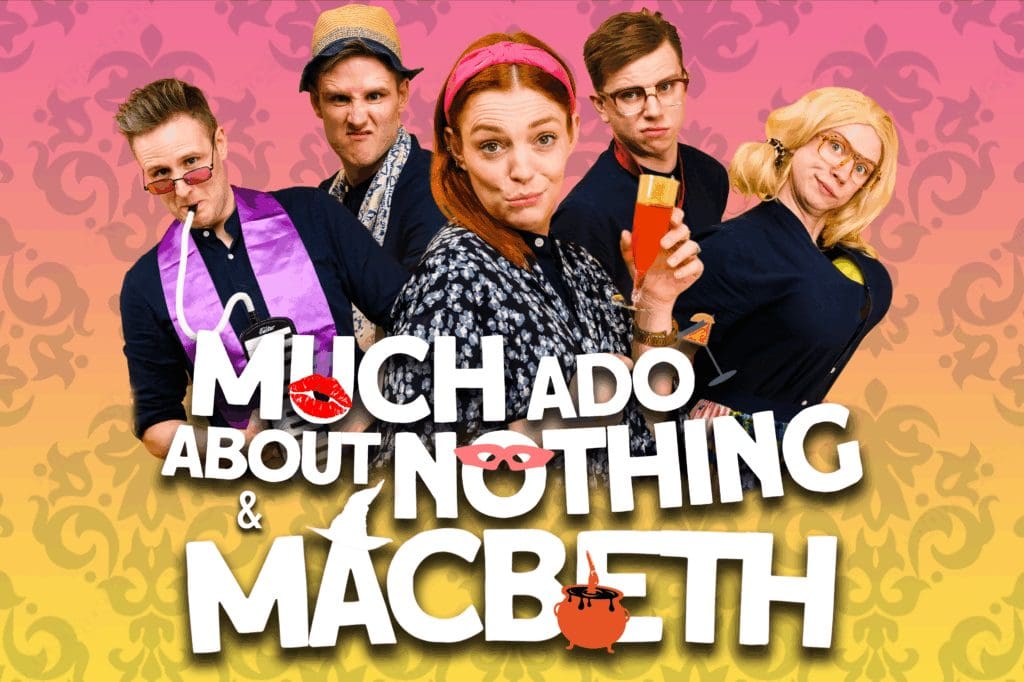
Four actors, two plays, forty minutes each: 440 Theatre in Much Ado About Nothing and Macbeth at Joseph Rowntree Theatre

Shaking up Shakespeare: 440 Theatre in Much Ado About Nothing and Macbeth, Joseph Rowntree Theatre, York, tomorrow, 7.30pm

FOUR actors perform 40-minute versions of Much Ado About Nothing and Macbeth, transforming the Scottish play  from tragedy into comedy in this raucous, breakneck double bill. “Experience the hilarity of not only one of the Bard’s best comedies but also a side-splitting (literally!) Macbeth,” say director Dom Gee-Burch and producer-composer Laura Sillett. Box office: 01904 501935 or josephrowntreetheatre.co.uk.

Terry Deary presents Revolting at York Mansion House tomorrow at 5.30pm at York Georgian Festival

York festival of the week: York Georgian Festival 2025, August 7 to 11

ORGANISED by York Mansion House, in tandem with York businesses, the York Georgian Festival will be a whirl of  dashing dandy fashions, extravagant feasting and romantic country dancing in a celebration of a golden social scene hidden within the brickwork of York’s abundant 18th century architecture.

Among the highlights will be Terry Deary Presents Revolting; the Life and Loves of Anne Lister; a Georgian dance lesson at the Guildhall; Men’s Hats; Mad Alice’s history talk and gin tasting; the York Georgian Ball; Sounds of Regency by Candlelight; The World of Georgian Fashion; Portraits in Jane Austen and a revival of York actor-playwright Joseph Peterson’s comic romp The Raree Show or The Fox Trap’t. For the full programme and tickets, go to: mansionhouseyork.com/york-georgian-festival.

Alex Phelps, left, Christopher Godwin, Olivia Woolhouse, Valerie Antwi, Susan Twist, Charlie Ryan and Andy Cryer in rehearsal for Michael Frayn’s Noises Off at the SJT, Scarborough. Picture: Tony Bartholomew

Play of the week: Noises Off, Stephen Joseph Theatre, Scarborough, August 9 to September 6, 7.30pm plus 1.30pm Thursday and 2.30pm  Saturday matinees

SJT artistic director Paul Robinson directs the first ever in-the-round production of Michael Frayn’s legendary 1982 farce with its play-within-a- play structure. “Good luck!” said the playwright on hearing the Scarborough theatre was taking on what has always been considered an impossible task. 

Noises Off follows the on and off-stage antics of a touring theatre company stumbling its way through the fictional farce Nothing On. Across three acts, Frayn charts the shambolic final rehearsals, a disastrous matinee seen entirely from backstage and the brilliantly catastrophic final performance. Box office: 01723 370541 or sjt.uk.com.

Jamie Walton: North York Moors Chamber Music Festival director and cellist. Picture: Matthew Johnson

Ryedale festival of the week: North York Moors Chamber Music Festival, August 10 to 23

IN its 17th year, cellist Jamie Walton’s festival presents 14 concerts designed to mirror the 14-line structure of a sonnet, guiding audiences through a pagan year with its unfolding seasons, solstices and equinoxes. 

The four elements – Fire, Air, Water and Earth – will be explored through the lens of TS Eliot’s Four Quartets and staged in four historic moorland churches: St Hilda’s, Danby; St Hedda’s, Egton Bridge; St Michael’s, Coxwold, and St Mary’s, Lastingham. Ten concerts will be held in an acoustically treated venue in the grounds of Welburn Manor, near Kirkbymoorside. For the full programme, go to northyorkmoorsfestival.com. Box office: 07722 038990 or email [email protected].

The Smashing Pumpkins: Heading to Scarborough on Aghori Tour next Wednesday

Coastal gig of the week: Smashing Pumpkins and White Lies, TK Maxx Presents Scarborough Open Air Theatre, August 13, gates 6pm

AMERICAN alternative rockers The Smashing Pumpkins play Scarborough on their Aghori Tour. Billy Corgan, James Iha and Jimmy Chamberlin’s multi-platinum-selling band will be supported on the Yorkshire coast by London post-punk revival band White Lies.

Since emerging from Chicago, Illinois, in 1988 with their iconoclastic sound, Smashing Pumpkins have sold more than 30 million albums worldwide and collected two Grammy Awards, seven MTV VMAs and an American Music Award. Box office: ticketmaster.co.uk.

North York Moors Chamber Music Festival returns from August 10 to 23 with Sonnet theme at churches and Welburn Manor

Dusk through the tent: North York Moors Chamber Music Festival. Picture: Matthew Johnson

IN its 17th year, the North York Moors Chamber Music Festival returns next month with a programme designed to mirror the 14-line structure of a sonnet.

Fourteen concerts will take place from August 10 to August 23, guiding audiences through a pagan year with its unfolding seasons, solstices and equinoxes. 

The four elements – Fire, Air, Water and Earth – will be explored through the lens of TS Eliot’s Four Quartets and staged in four historic moorland churches: St Hilda’s, Danby; St Hedda’s, Egton Bridge; St Michael’s, Coxwold, and St Mary’s, Lastingham.

Sonnet: The theme for the 2025 North York Moors Chamber Music Festival

The remaining ten concerts will be held in an acoustically treated venue in the grounds of Welburn Manor, near Kirkbymoorside.

Festival curator and internationally renowned cellist Jamie Walton says: “This year’s festival, Sonnet, celebrates the art of collaboration in awe-inspiring settings, taking audiences on a musical quest through interwoven themes within a central storyline.

“Each concert is titled after a celebrated poem alongside music that reflects the time of year, guiding us through the 12 months, with the Summer Solstice as our opening and closing landmark.

Cellist Jamie Walton: Curator of the North York Moors Chamber Music Festival

“The festival promises to be another exhilarating and thought-provoking experience, and we hope you will join us as we explore the pagan cycle of the year.”

Combining moorland churches with the Welburn Manor acoustically designed venue – an innovation introduced in 2020 to allow the festival to continue despite the pandemic – has proven to be a popular formula for the festival, attracting international artists, many of whom commit to the entire fortnight by taking up residencies. 

This year, these will include violinists Alena Baeva, Benjamin Baker, Emma Parker, Oliver Heath, Charlotte Scott and Victoria Sayles; viola players  Simone Gramaglia, Simone van der Giessen and Gary Pomeroy; cellists Rebecca Gilliver, Tim Posner and Jamie Walton; double bass player Will Duerden; pianists Katya Apekisheva, Joseph Havlat, Daniel Lebhardt, Anna Tibrook and Huw Watkins and harpsichordist David Gerrard.

Tenor James Gilchrist performing at the 2024 North York Moors Chamber Music Festival. Picture: Matthew Johnson

Taking part too will be tenor James Gilchrist; clarinettists Julian Bliss and Matthew Hunt; French horn player Ben Goldscheider; flautist Silvija Ščerbavičiūtė and harpist Celine Souat. Completing the line-up will be The Waldstein Trio.

Jamie Walton says: “Many of our artists return every year, embracing residencies and immersing themselves in the festival as a creative retreat. This camaraderie allows the freedom to rehearse in a relaxed setting, forming ensembles that bring fresh interpretations to the repertoire, inspired by the landscape, the people and the atmosphere.”

Tickets for individual concerts are £18; a season ticket for all 14 costs £190. As ever, under-30s gain free entry to any of the concerts. To book, email [email protected], call 07722 038990 or visit northyorkmoorsfestival.com.

For the full festival programme, head to northyorkmoorsfestival.com.

Violinist Alena Baeva playing at the 2024 North York Moors Chamber Music Festival. Picture: Matthew Johnson

REVIEW: Martin Dreyer’s verdict on Katya Apekisheva & Charles Owen, Sir Jack Lyons Concert Hall, University of York, January 10

Pianist Katya Apekisheva

TWO-PIANO recitals are rare enough in themselves, but this one was doubly welcome, not least because one of this pair is a frequent visitor to this neck of the woods.

Katya Apekisheva makes regular solo and chamber appearances at the North York Moors Chamber Music Festival – well worth checking out if you don’t know it – where Charles Owen has also looked in occasionally.

They revealed tireless enthusiasm in this full programme for the British Music Society of York, aligning Mozart and Brahms with three pieces from the last 80-odd years, none of them unduly challenging to the listener but requiring serious virtuosity from the duo.

Mozart wrote his only sonata for two keyboards, K.448 in D, in 1781 to play with a student. Some student! Its demands held no fear for our duo, who launched into it with brio, crisp and bright at the top, if a little light in the bass.

Its slow movement was given a lovely line, with a seductive rallentando back into the main melody on its return. The closing rondo bubbled over with wit.

This enthusiasm continued into Jonathan Dove’s memorial piece Between Friends for Graeme Mitchison, a polymathic scientist who was also a first-class pianist. It was commissioned in 2019 by this duo, whose recording will appear on the Hyperion label on March.

A gently moving intro boils up into the second of four “conversations”, staccato, nervy and energetic, doubtless reflective of Mitchison’s restless mind. The duo dealt with its rapid cross-rhythms spectacularly well.

The elegiac third conversation grew ever more intense, generating the sense of a funeral march. Jack-in-the-box snippets opened and closed the final chat, enclosing brief whirlwind passages and a multitude of offbeat accents, all over a thrumming underlay. It was undeniably exciting, brilliantly played, making one wish to have known Mitchison himself.

Nothing after the interval quite matched this for exuberance. It was good to hear Brahms’s own two-piano version of his Variations on a theme by Haydn, so often heard in its orchestral guise, although they are not exact copies of one another.

The duo managed to maintain their clarity despite challenging tempos, which allowed the composer’s facility for complex counterpoint to shine, notably in the fourth variation. The finale’s ground bass built into immensely satisfying grandeur as the ‘St Antoni’ chorale theme returned.

Depending on your view of minimalism, John Adams’s portrait of a truck stop on the Nevada/California border, Hallelujah Junction, is either wonderfully teasing or irritatingly repetitive – or somewhere in between.

While I could admire the duo’s unflagging concentration through its dense thickets of vicious accents, I found its relentless ‘surprises’ ultimately unsurprising. But the duo brought the jazz-inspired rhythms of its finale to renewed life.

Lutosławski’s Paganini Variations, built on the same theme as Brahms and Rachmaninov had done before him, proved as capricious as the original and just as busy. Like so much of the rest of the evening, there was plenty to dazzle but precious little to dream upon.

Review by Martin Dreyer
Secret Link