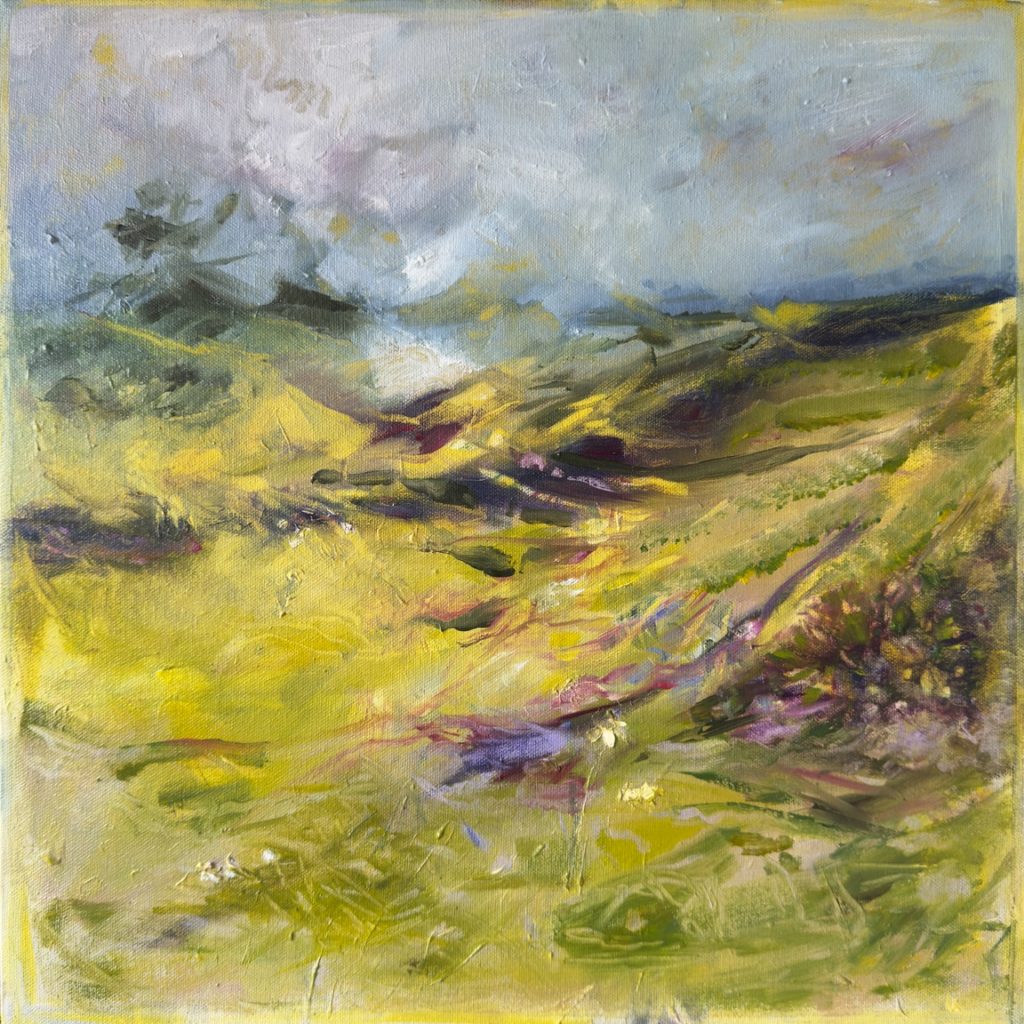
Moorland, by Lesley Williams
SATURDAY will be the chance to meet Yorkshire artists Lesley Williams, Sarah Williams and Peter Heaton and ceramicist Adele Howitt from 11.30am to 2.30pm at their Other Viewpoints exhibition at Pyramid Gallery, Stonegate, York.
York artist Lesley Williams gained a BA Hons in textile design at Nottingham Trent University and an MA in Fine Art from Leeds Metropolitan University.
She taught art and design for many years before concentrating on her own work, which has been collected both here and abroad.
She makes semi-abstract oil paintings based on the rural landscape and gardens and developed over time. From relatively figurative starting points, multiple layers are created, allowing for the subtle sensations and memories of the time and place to be included.
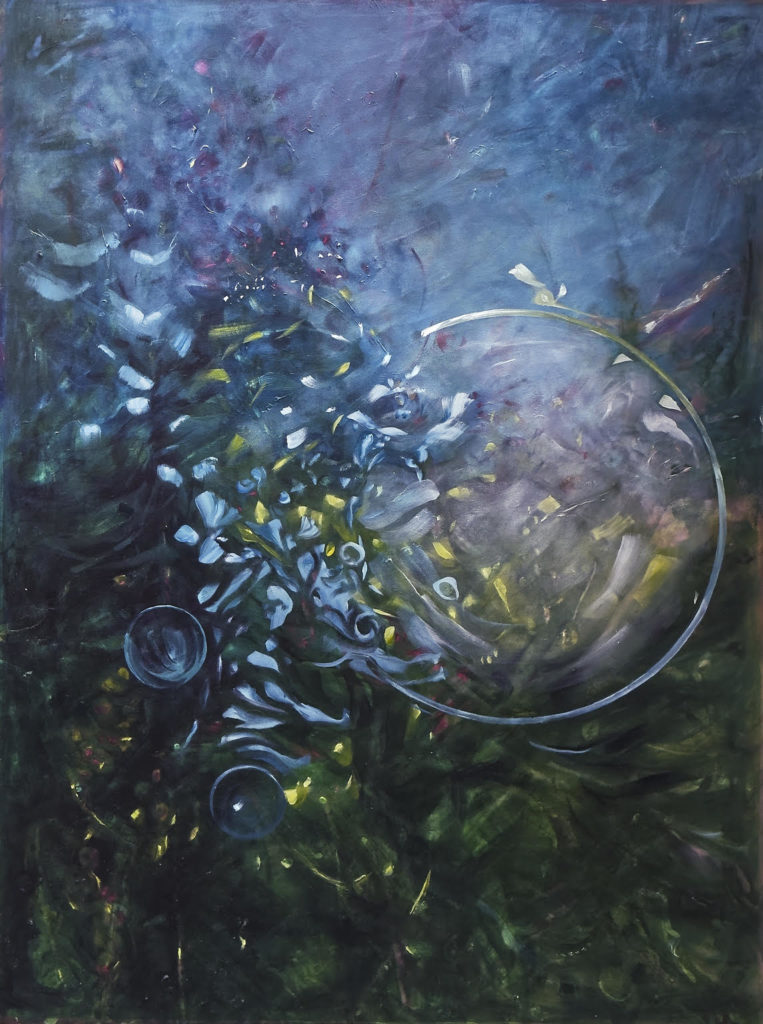
“Circular motifs create a sense of depth” in Lesley Williams’ artworks
The qualities of colour light and energy seen and felt on site are depicted using translucent layers that encourage the viewer to look beyond the surface. Circular motifs are often contained within the composition, in order to create a sense of depth and as a reference to the ever-continuing nature of time and the seasons.
Sarah Williams, from York, graduated with distinction from Norwich Art School in 1984 with a first class degree in Fine Art and achieved the prestigious Stowell’s Trophy Award at the Royal Academy.
This success granted her an unconditional place on the Masters degree in painting at the Royal Academy, paving the way for exhibitions spanning England and Switzerland, where Sarah shared a studio with Kurt Rup.
Sarah’s fine art work is rooted in personal narratives, employing a diverse array of materials including encaustic enamels and spray paint. While her repertoire encompasses various media, her primary focus revolves around the meticulous use of oils on stretched canvases.
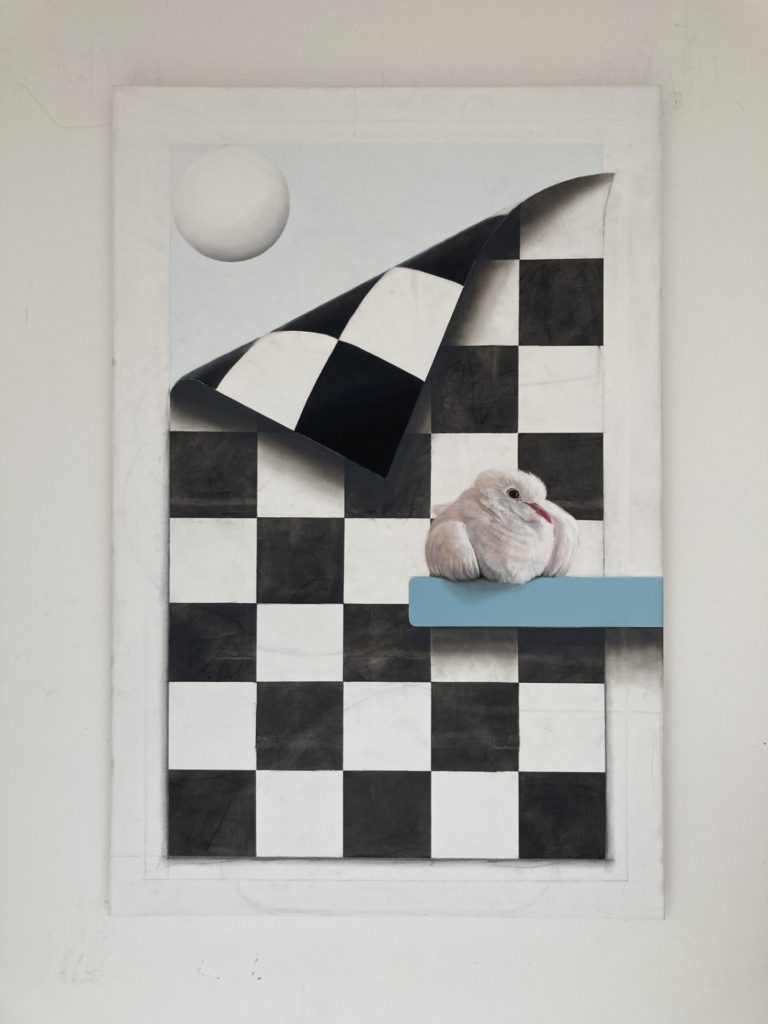
What We Could Have, by Sarah Williams
Conceptually, Sarah employs colours, textural marks and shapes to construct a visual realm that blends seamlessly abstract and figurative elements. The aim is to elicit a nuanced emotional response, allowing viewers to interpret and connect individually with the expressive tapestry.
Peter, who will be exhibiting fine art prints, studied for a Fine Art degree at Nottingham Trent University and later gained an M.A. in Fine Art from Leeds Metropolitan University.
Living in North Yorkshire, he has exhibited widely since 1987, and his work has featured in publications and on television and is in private collections in Europe and the USA.
“The majority of my work is concerned with landscape, in one form or other,” he says. “I am always observing, collecting information and images. I make work constantly, if not photographs, musical sketches or scraps of writing. Interpreting, re-imagining places and situations.
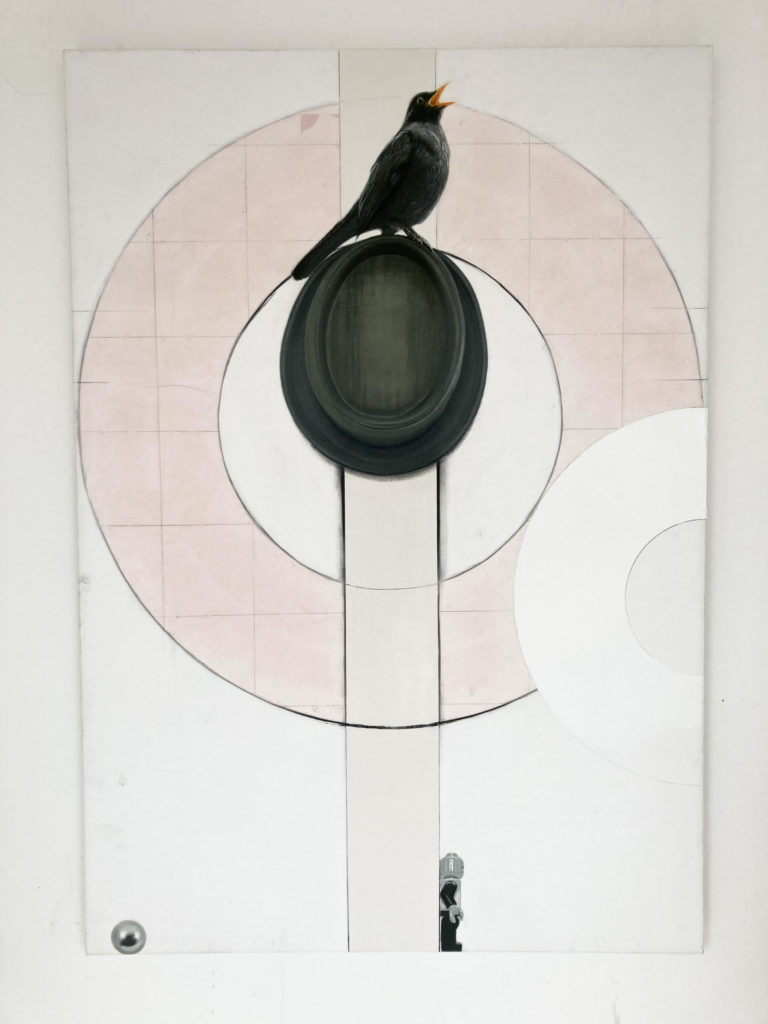
Sarah Williams’ “primary focus revolves around the meticulous use of oils on stretched canvases”
“Often, when beginning work on a new project, I discover that actually the beginnings of it were seeded years before in images made, collected and forgotten.
“However, it is only in my studio that I discover how the work is going to reveal itself and take form. This process is always difficult, where time is lost, and ideas fail and are reborn continuously, until a thread can be followed out, and the path through the work becomes clearer.”
Peter continues: “A piece becomes complete when I feel it fits with the image that I have of it completed…the problem being that this also changes … but the work remains, as a marker along a section of a route now passed.
“I feel that it is important to never close off a piece of work, to leave space for the viewer to bring their own thoughts and interpretations to the pieces, to complete the work on their own terms, using their own reference points and imagination.
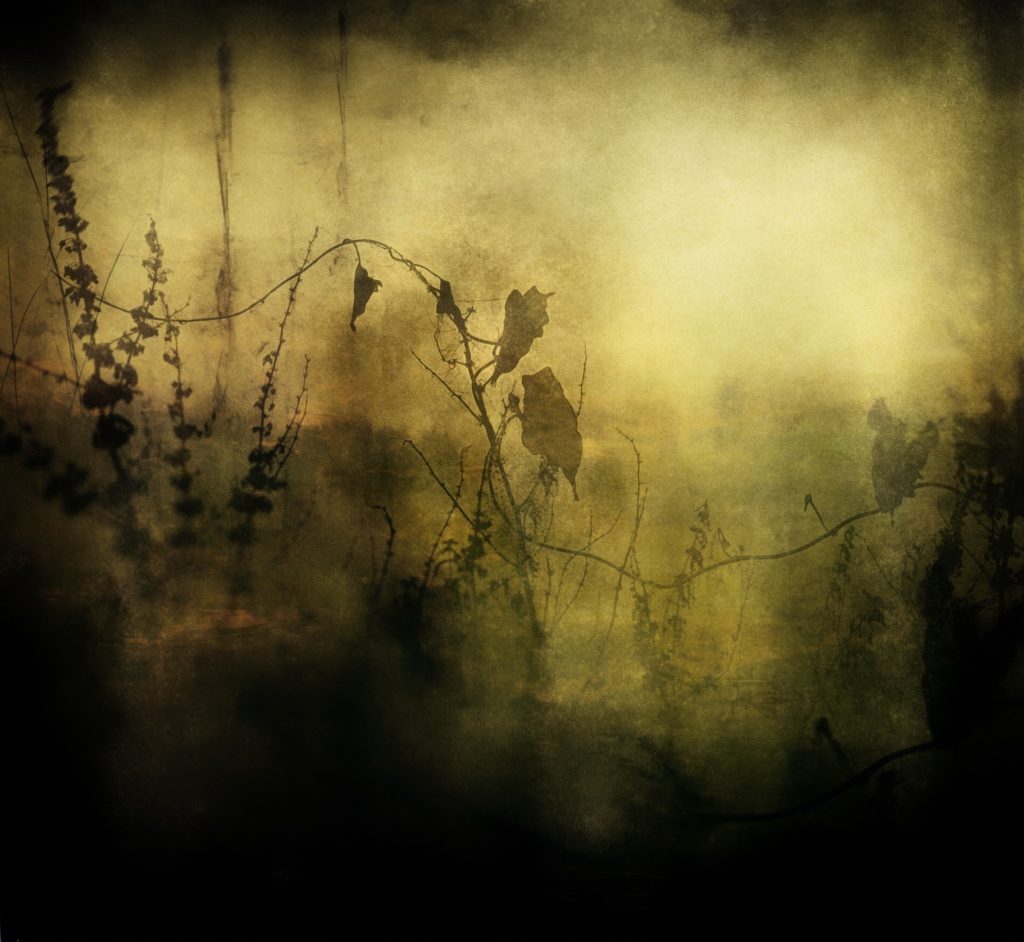
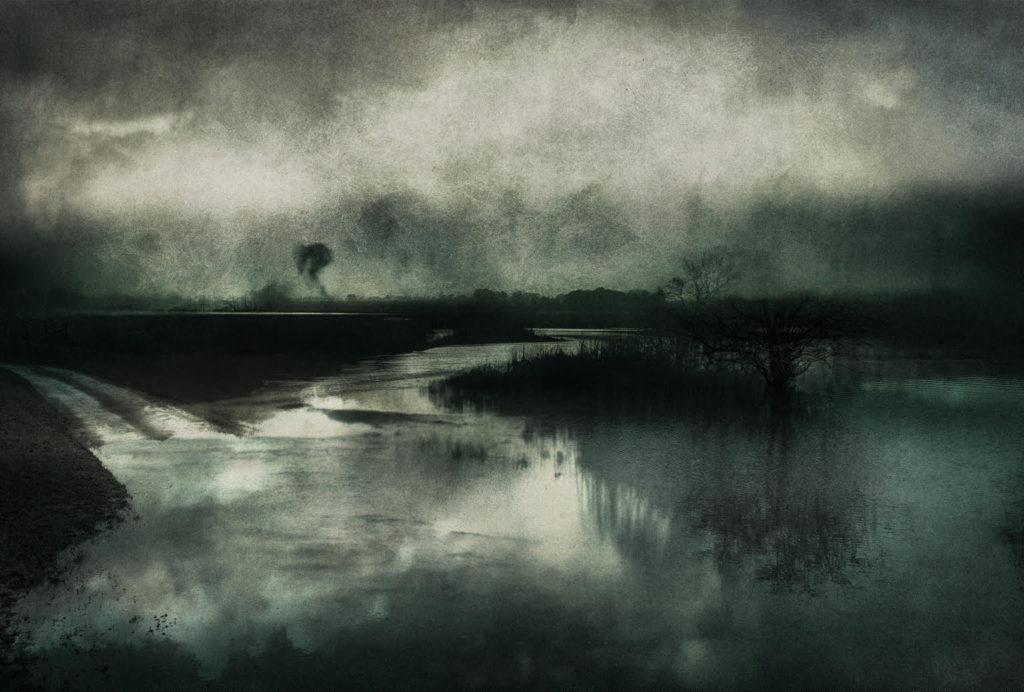
“I feel that it is important to never close off a piece of work, to leave space for the viewer to bring their own thoughts and interpretations,” says Peter Heaton
“Over the last few years, my work has evolved from being purely photographic, to now being a hybrid of various media which are combined in creating the final completed images.”
Adele Howitt, from Hornsea, is a designer and maker of ceramics with a portfolio of architectural ceramics and public realm art, placed within outside and inside spaces, and is a Crafts Council member and Homo Faber selected member.
An important element to this portfolio is the range of studio ceramics that explores the wider realm of landscape. Notions of the living landscape, abstraction, pollen grains and natural pattern mark her ceramic art.
Slab work is twisted and turned to add detailed relief, utilising the traditional pottery techniques discovered while investigating the South Yorkshire Potteries. The clay is a sculptural medium, opposing the tradition of using it as a technical medium or as an exploration of the vessel.
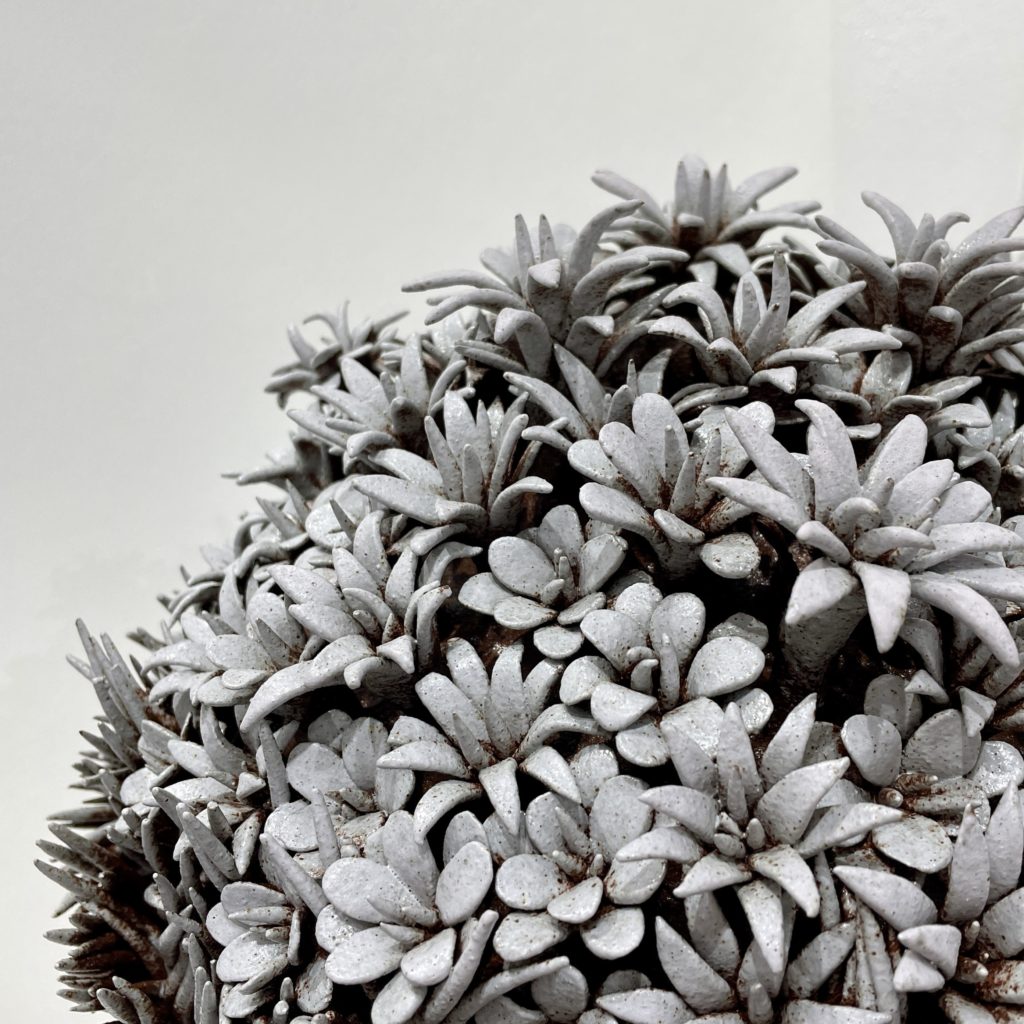
Frosted Celandine, by Adele Howitt
Adele’s techniques include drawing, hand building, coil/slab building, hand-thrown elements, extruded clay, printing and glazing.
A restricted palette of matt glazes – engobes – is applied to red, black or white clay. Wild plants growing in post-industrial historic landscapes are studied alongside research into their genus, revealing the structure of their pollen grains.
“This is paired with sketches of wild meadows that capture and distil the movement of nature,” says Adele. “This search is developed into three-dimensional form that utilises the most sustainable and precious material of clay.
“The ceramic manifestations include methods of construction include slab work, throwing, hand-building, sprig and press moulds, combined to create and enlarge the research into intricate sculptures.”
Other Viewpoints runs at Pyramid Gallery, Stonegate, York, until May 9. Opening hours: 10am to 5pm, Monday to Saturday; closed on Sundays.
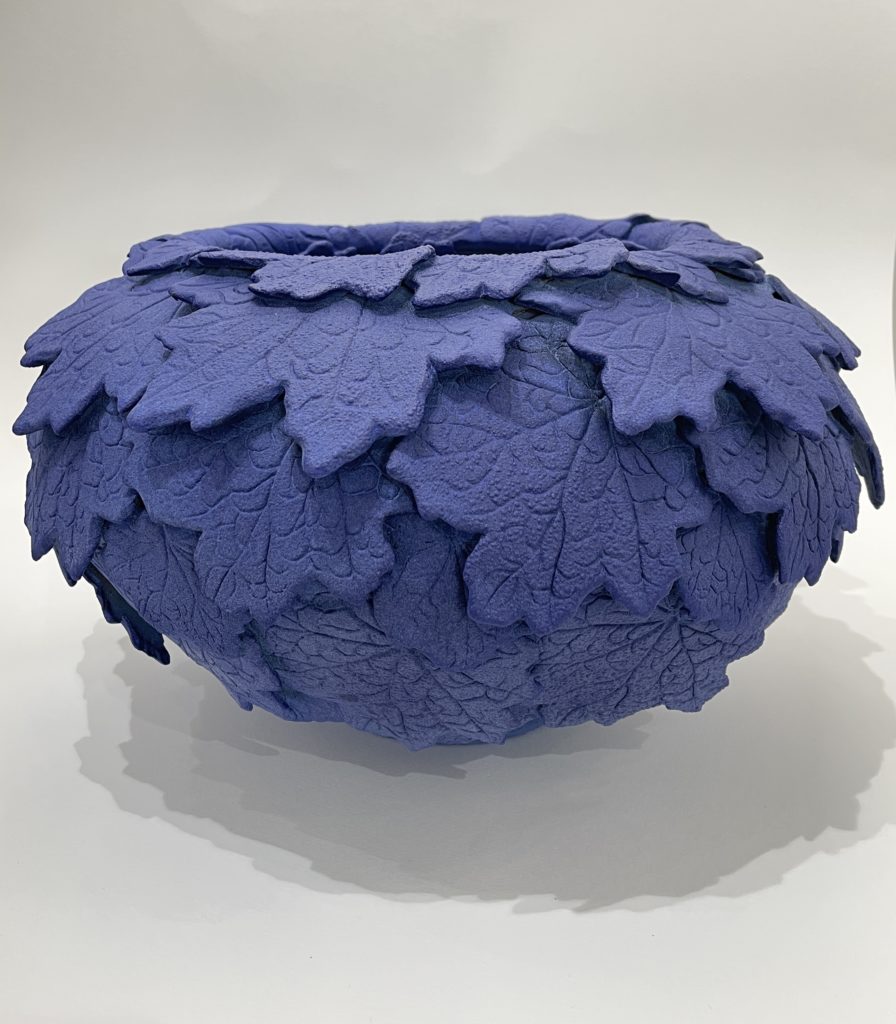
Heuchera, by Adele Howitt