Daniel Burke on art of playing The Actor in The Woman In Black at Grand Opera House

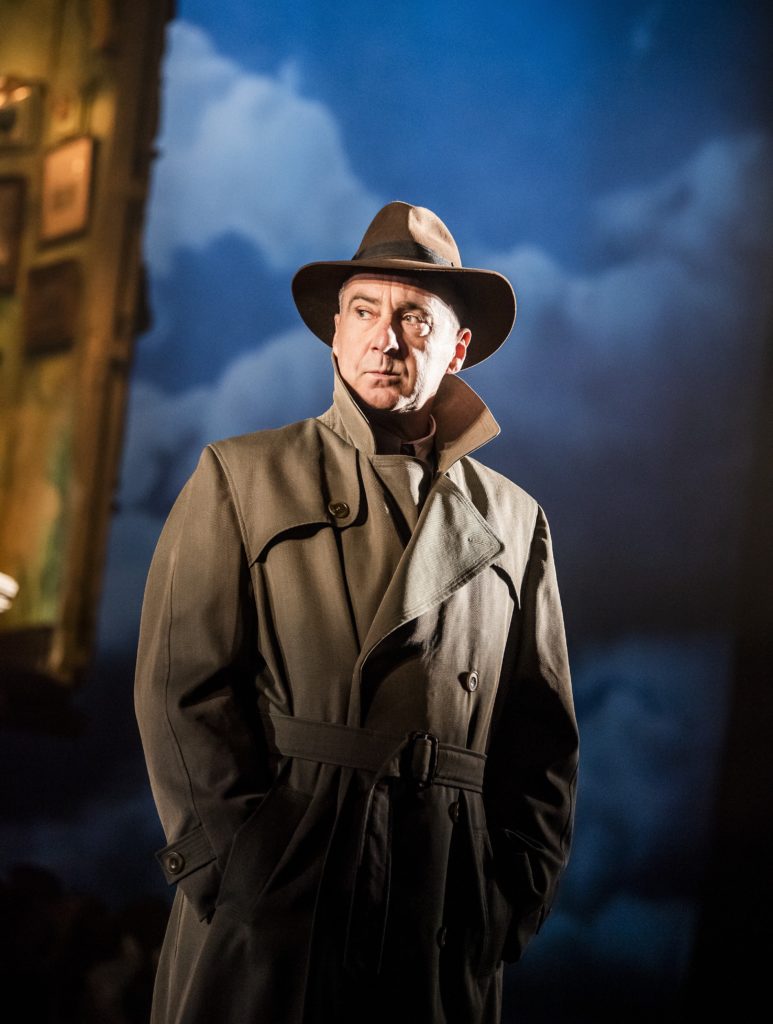
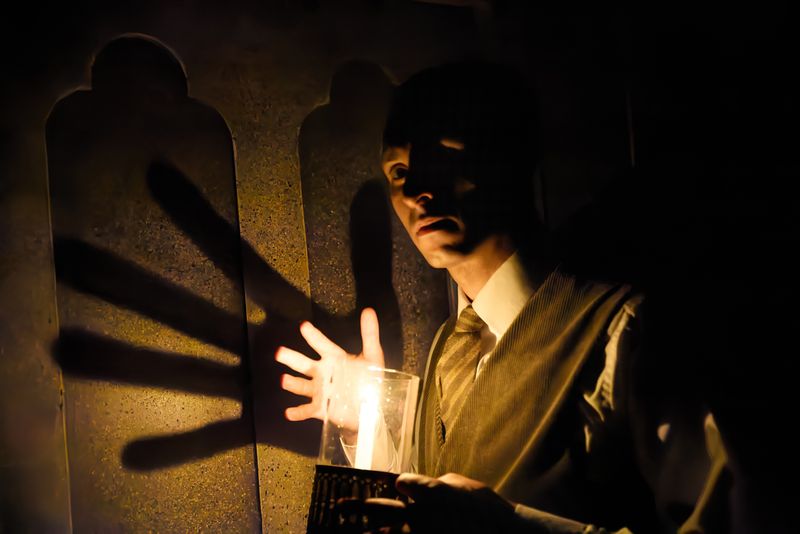
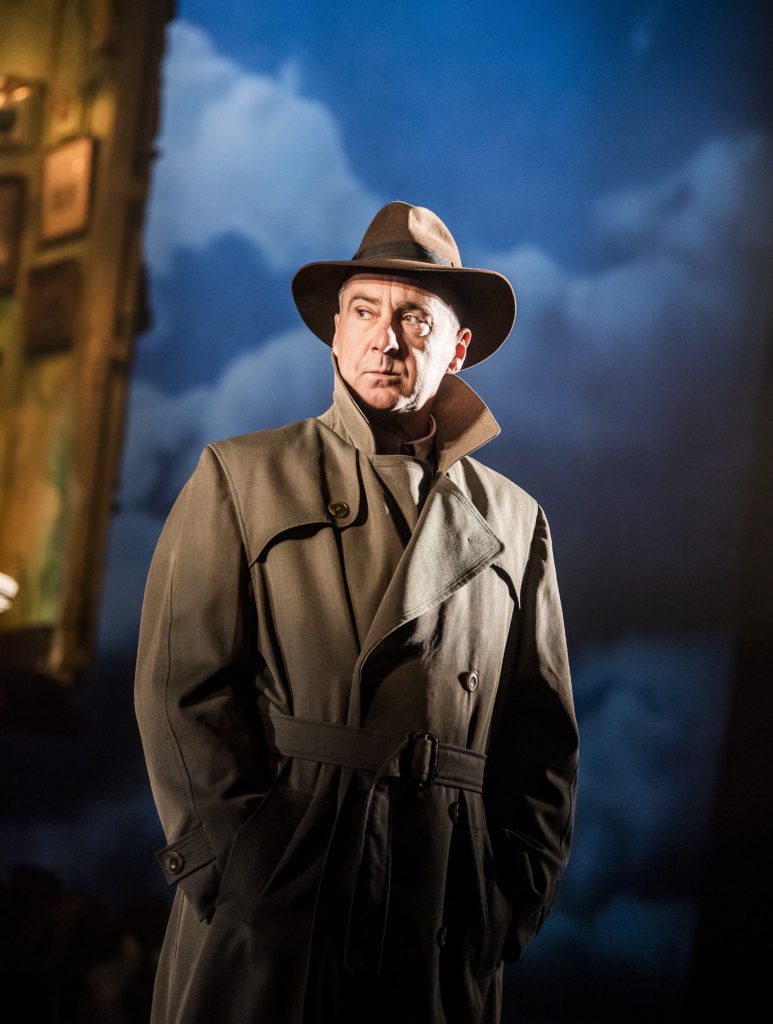
Shadow play: Daniel Burke as The Actor in The Woman In Black. Picture: Mark Douet

FIRST staged in a pub setting in 1987 by the Stephen Joseph Theatre in Scarborough, Stephen Mallatratt’s adaptation of Susan Hill’s ghost story The Woman In Black returns tonight to the Grand Opera House, York, two years to the month since its last visit.

Elderly lawyer Arthur Kipps (played by John Mackay) is obsessed with a curse he believes was cast over his family by the spectre of a “Woman in Black” 50 years ago. Whereupon he engages a sceptical young actor (Daniel Burke’s The Actor) to help him tell his terrifying story and exorcise the fear that grips his soul, but as they delve into his past, the boundaries between fiction and reality begin to blur. 

“It will be my first time performing in York,” says Daniel. “Though I did come up here in 2019 to rehearse with Shakespeare’s Rose Theatre in a big tent in a shopping-centre car park [more precisely the specially constructed rehearsal village at the York Designer Outlet, where eight productions were knocked into shape].

“I went down to Blenheim Palace for the summer to play Paris in Romeo And Juliet and multi-rolled a few smaller roles in Richard III.”
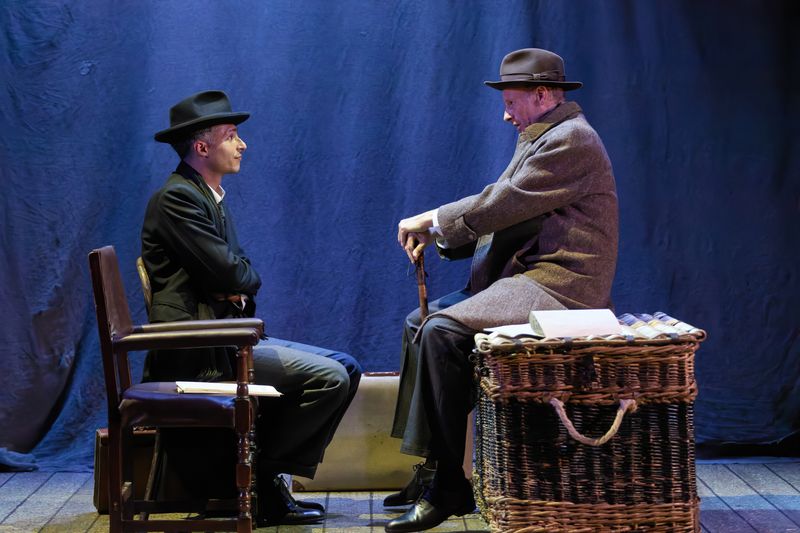
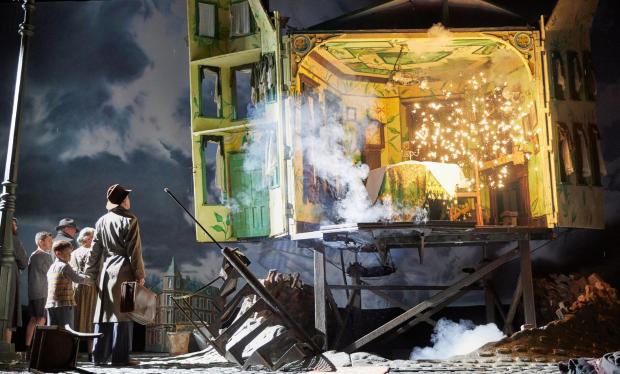
Daniel Burke’s The Actor with John Mackay’s Arthur Kipps in The Woman In Black. Picture: Mark Douet

Daniel first auditioned for The Woman In Black a couple of years ago. “It didn’t go my way but Robin [director Robin Herford] kept me in mind,” he says. “I’d first auditioned with a self-tape, but this time I auditioned in person with Robin last June, when I was doing a production of  The Girl On The Train (which came to Sheffield Lyceum Theatre and later Leeds Grand Theatre).

“The contract was rubber-stamped in mid-June, but I had to miss the first week of rehearsals when I was finishing the tour, so it was only three weeks for me, four for John, with the assistant director [Antony Eden] filling in for me in the first week.

“He’s worked with Robin for many years and is as familiar with the play as Robin is – he’s played both parts and he’s directing a tour that’s happening in the USA this year.”

Three weeks may look a short lead-in to a two-hander, but Daniel says: “By the time we got to the end of my third week with John, we’d reached the point where we felt we really needed an audience.”
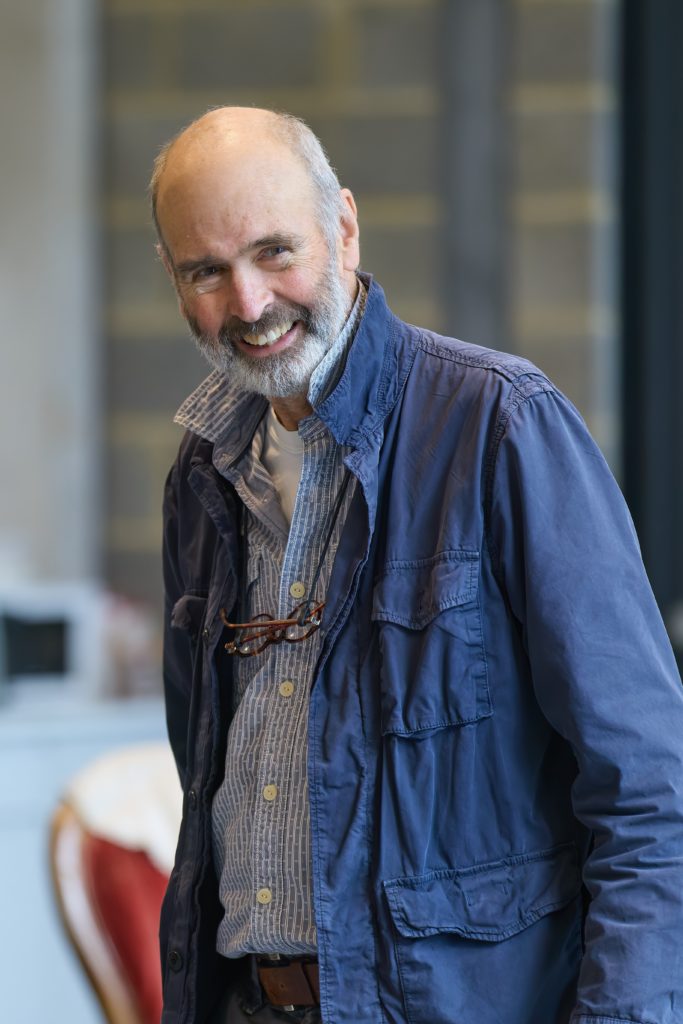
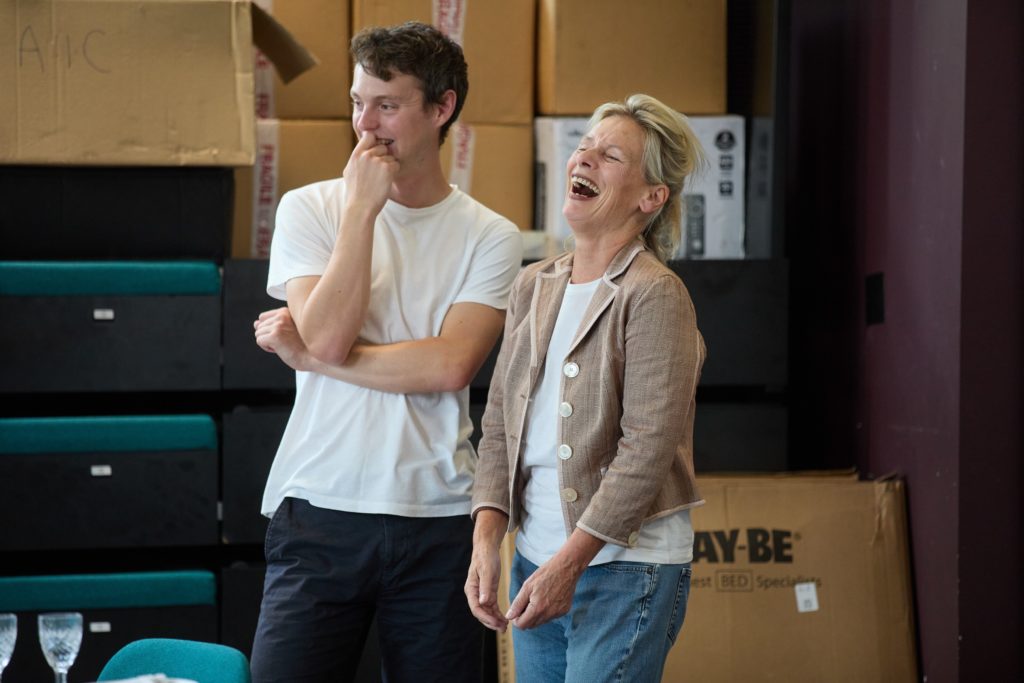
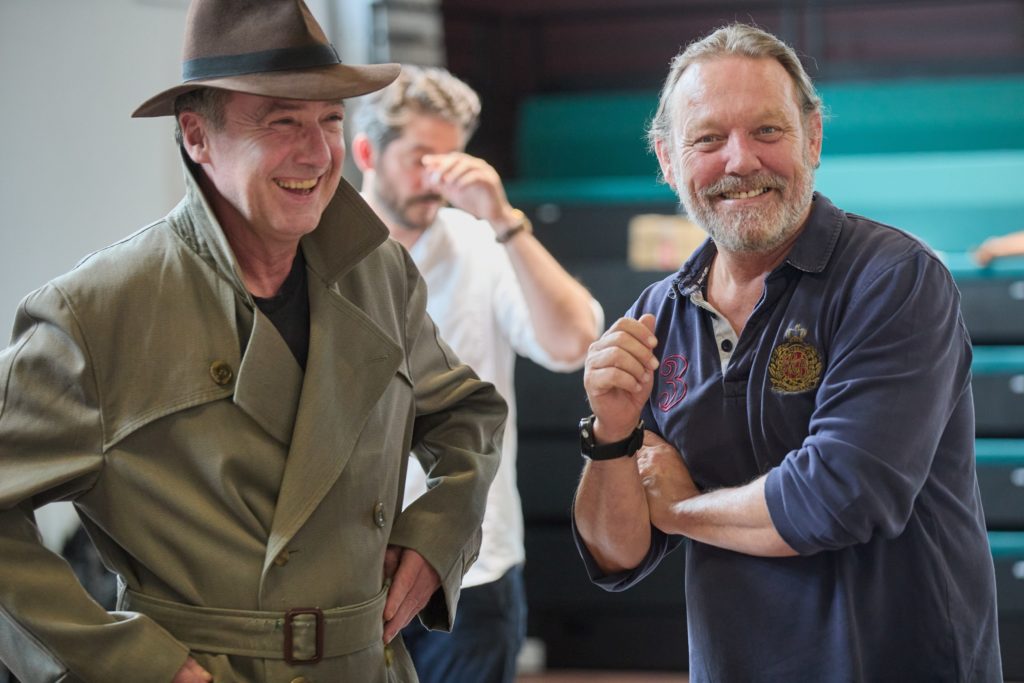
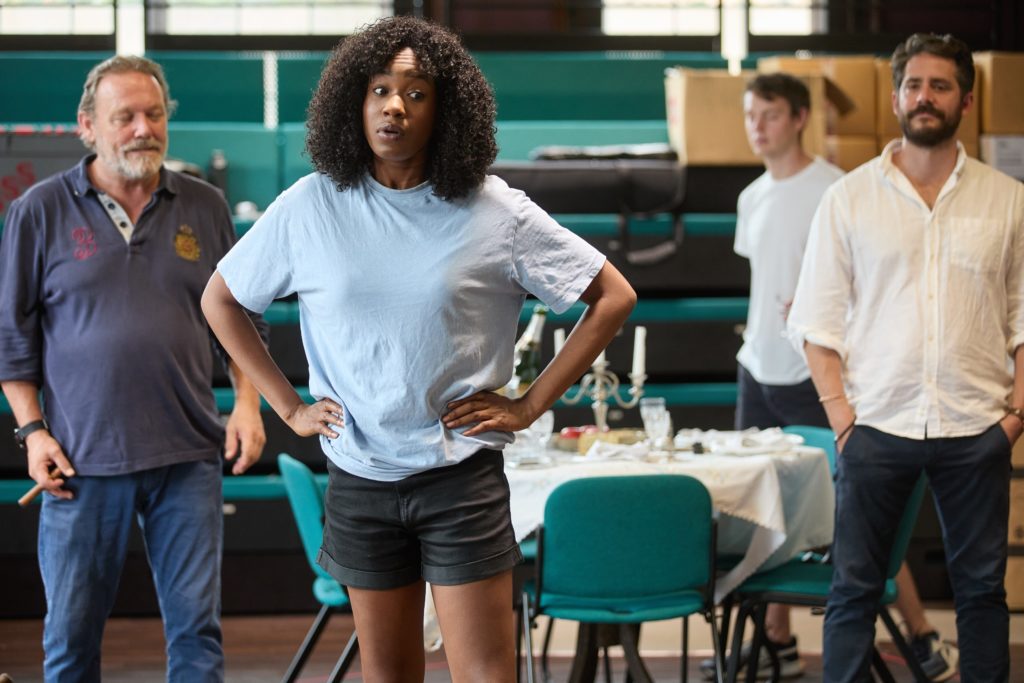
Director Robin Herford in rehearsal for The Woman In Black. Picture: Mark Douet

The tour opened at the Storyhouse, in Chester, in late-September last year for an itinerary that resumed after a Christmas break at Darlington Hippodrome last week.

“I hadn’t ever seen the play, and John hadn’t either, so I think Robin was pleased to work with two actors who were completely fresh to it,” says Daniel. “He knows it so well from directing it and from playing both characters numerous times that he found it refreshing to have actors new to the story as we asked new questions that Robin wouldn’t have heard before.

“Our production has developed really well; John is a lovely man to work with and he’s a very funny man too. It’s such an intense piece, where it’s beneficial if you can find some light to bring into the room.

“We found our rhythm organically on tour, and that’s especially important to my character, as he’s trying to convince Kipps to go with his idea, but once it gets rolling, you can really go along for the ride.”
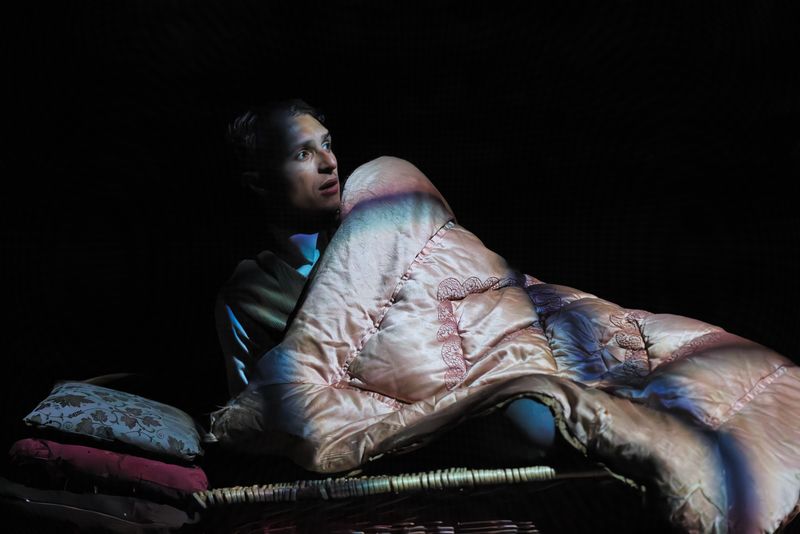
Fright night: The Actor (Daniel Burke) in The Woman In Black. Picture: Mark Douet

Daniel has thrived on the experience of putting a production together with such an experienced director. “Robin was very open to our suggestions. He had his ideas of what direction he wanted to go, but then sometimes you could have an idea for a scene or you might ask about the logic of why a character was doing something, when every so often you would need clarification, and we would try new ideas, and if they worked, he would incorporate them.”

In creating his version of The Actor, “Robin led me down the line of him being quite a successful young actor, who had played the young romantic leads that were available to him,” says Daniel.

“Robin steered me to go that way, and that was my instinct as well because The Actor has a lot of positive energy, thinks on his feet and sees Arthur as someone he can help but also maybe as one of the trickiest characters he’s had to deal with, but he sees that as a challenge rather than as a problem.”

The Woman In Black is proving as enjoyable to perform as Daniel could have wished. “It’s a good challenge and it’s very enjoyable, and when it’s a two-hander you can’t pop to your dressing room for a breather, so the audience is really getting its money’s worth. I’ve done other rewarding roles, but this is the one where you’re involved all the time,” he says.
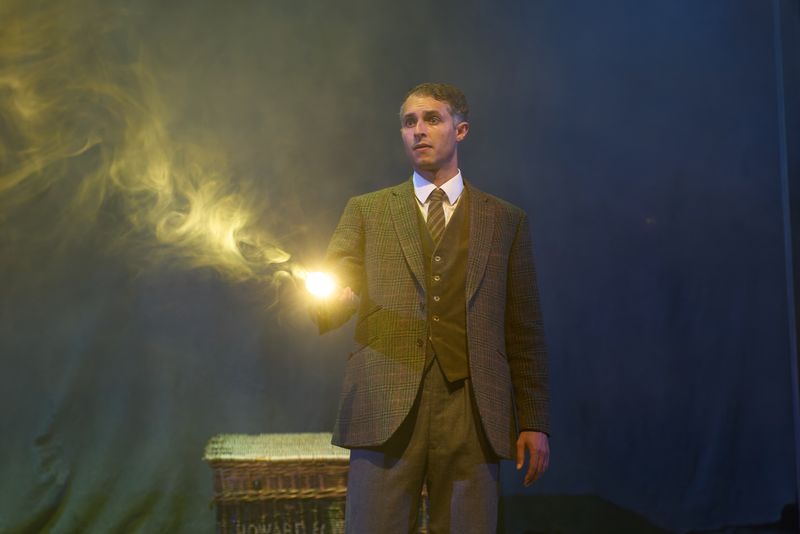
Daniel Burke (The Actor) in an enlightening moment in The Woman In Black. Picture: Mark Douet

“There’s also a big old human element to it, as it’s a sad story, not only for Arthur but also for the ghost, the Woman in Black, Jennet Humfrye, and you hope that the audience will walk away afterwards feeling sympathetic for Jennet as well as for Arthur.

“There was this attitude towards women who were pregnant out of wedlock and found themselves abandoned by family, and on top of that losing a child, and then that spirals into madness. I think that makes  a ghost story better than if it’s just a horrible, evil spirit.

“It adds a layer of complexity to the story that become a lot more effective and satisfying, both for the audience and the actors playing it.”

PW Productions present The Woman In Black, Grand Opera House, York, tonight to Saturday, 7.30pm plus 2.30pm Thursday and Saturday matinees. Box office: atgtickets.com/york.

Daniel Burke

Daniel Burke: back story

DANIEL’S theatre credits include UK Tour of The Girl On The Train, Troilus And Cressida for
Royal Shakespeare Company, and Imperium Part I and Part II, for RSC and at Gielgud Theatre, West End, London.

Also appeared in Bang Bang at Exeter Northcutt Theatre and on UK tour; Romeo And Juliet and Richard III, for Shakespeare’s Rose Theatre, Blenheim Palace; Hamlet, Richard II and Romeo And Juliet for Guildford Shakespeare Company; The Comedy Of Errors, at Mercury Theatre, Colchester; Love All, Jermyn Street Theatre; A Midsummer Night’s Dream and The Great Gatsby, Storyhouse’s Grosvenor Park Open Air Theatre; The Circle, Theatre Royal Bath and UK Tour.

Television credits include The Witcher for Netflix and Lord Of The Rings Rings Of Power for Amazon Prime.
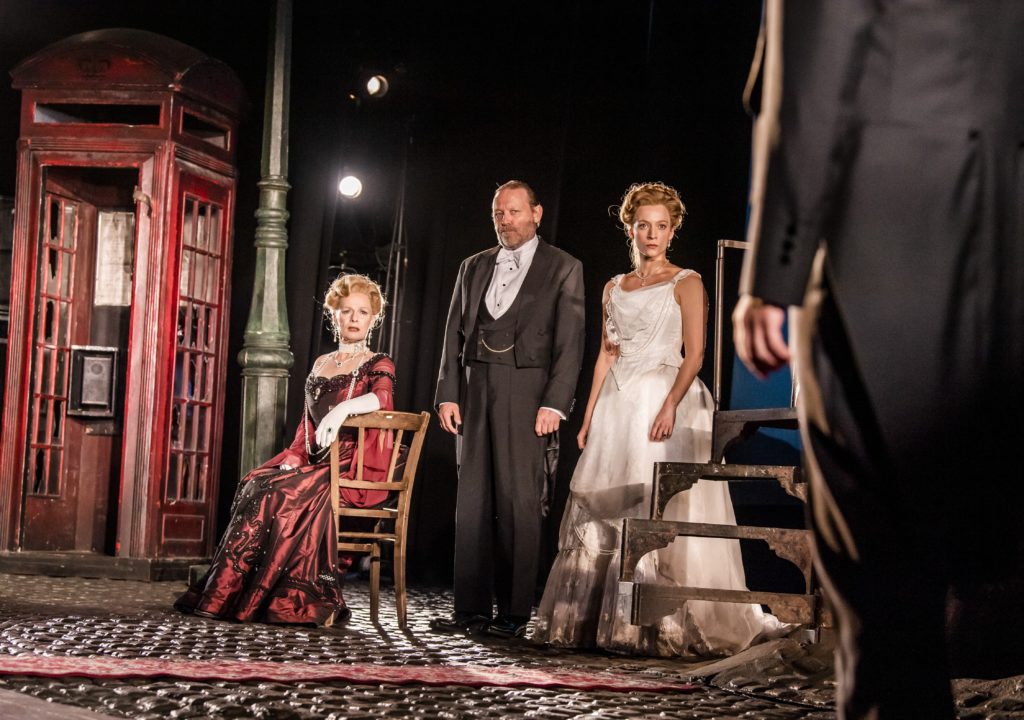
REVIEW: An Inspector Calls, PW Productions/National Theatre, Grand Opera House, York, until Saturday. SOLD OUT *****

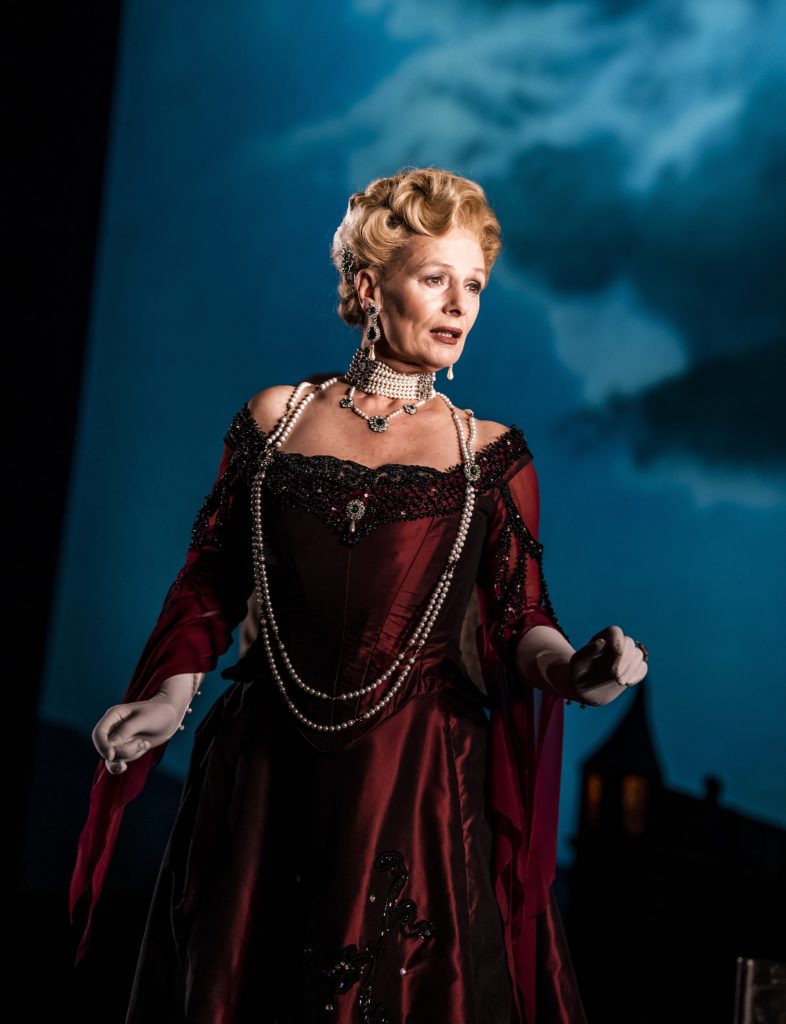
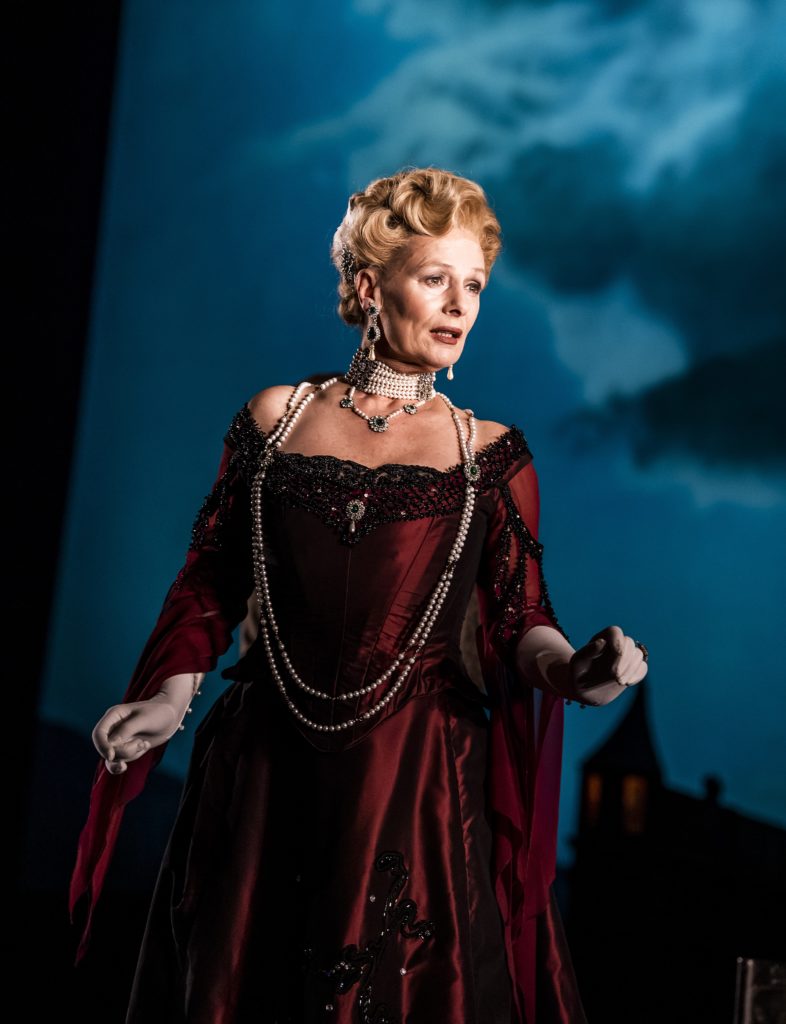
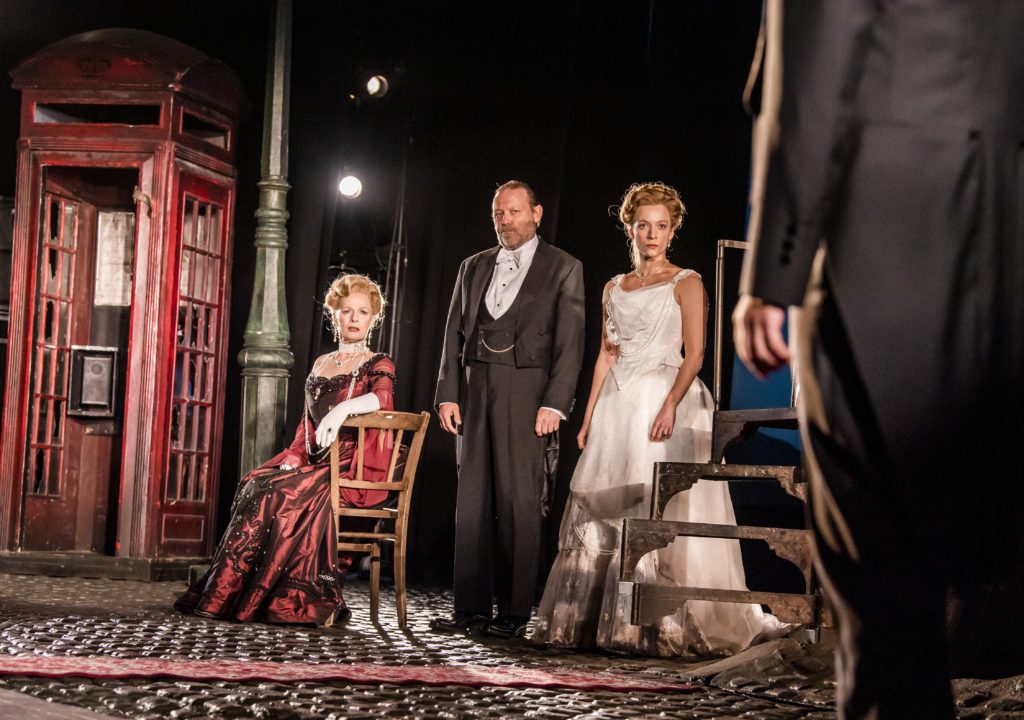
Seat of power on shaky ground: Christine Kavanagh’s Sybil Birling, Jeffrey Harmer’s Arthur Birling and Chloe Orrock’s Sheila Birling in An Inspector Calls. Picture: Tristram Kenton

IT began at York Theatre Royal in 1989, last played there in 2018 and sold out this week’s run at the Grand Opera House well before the opening night.

Welcome back Stephen Daldry’s award-encrusted reinvention of Bradford socialist playwright JB Priestley’s time play, a set text on the school curriculum. Hence teenagers aplenty at Wednesday’s matinee, initially tucking into noisy packet contents, but gradually being drawn into Inspector Goole’s forensic, if unconventional inquisition of the wealthy Birling family on the 1912 night that daughter Sheila has become engaged to Gerald Croft.

More noise came from an audience member striding across the creaking dress-circle floorboards to complain of not being able to see inside the Birlings’ Edwardian home. But that is the point. Theirs is an enclosed, blinkered, self-serving world, one that the arrival of Liam Brennan’s Scotsman Goole will open to exposure and cause a stink, like the peeling back of a sardine can.

After sirens and rain and an orchestral swell at the start, as children seek to find a way through the stage curtain to remind us this is the world of theatre at play, the house is revealed, perched, like an oversized doll’s house, on a bombed London street, in Daldry’s nod to Priestley’s play being written in 1945.

Liam Brennan’s Inspector Goole: The voice of conscience in An Inspector Calls. Picture: Tristram Kenton

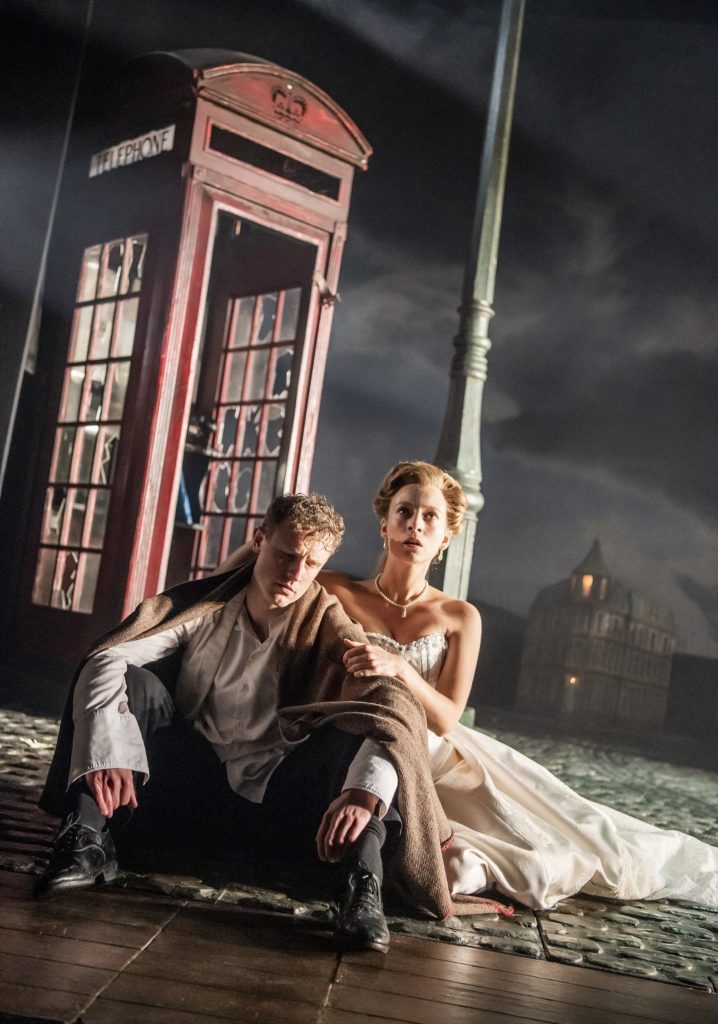
Nearby stands a red telephone box, stripped of its door,  in Ian MacNeil’s still breathtaking design, no matter how many times you may have seen Daldry’s production over the past 30-plus years.

Smug conversation emerges through the windows, dominated by knighthood-seeking, cigar-smoking businessman Arthur Birling (Jeffrey Harmer) and Sheila’s fiancé Gerald (Simon Cotton), an Arthur in the making. Wastrel son Eric (George Rowlands, understudied by Maceo Cortezz on Wednesday), forever disappointing his father, says little.

Outside, urchin children are playing on the shattered street, later joined by “supernumeraries”, haunting figures to match fellow outsider Edna (Frances Campbell), the family servant ignored by all but Sheila (Chloe Orrock), the only one to express regret at what subsequently unfolds. Edna will dutifully, silently, attend to her duties, providing cups of tea and food for Goole too.

Investigating the death of a young woman in poverty, he is the ultimate outsider, exposing something rotten in the state of the Birlings/England. Goole by name, ghoul by nature, the Marley to bilious Arthur Birling’s Ebenezer Scrooge, he is also Priestley’s still prescient prophet on stage (JB foreseeing the need for change in GB that will sweep Labour to power in 1945). The voice of moral conscience, the harbinger in the moonlight, demanding a turning of the tide.

Christine Kavanagh’s self-righteous Sybil Birling. Picture: Tristram Kenton

Like on a doll’s house, the whole of the front of the house suddenly opens, mini-front door et al. In turn, Goole will remove hat, coat and pinstriped suit jacket, even rolling up his sleeves, the more he exposes the arrogant, entitled behaviour of the Birlings and Croft, especially when the monstrous matriarch, Christine Kavanagh’s do-gooding, but does-no-gooding Sybil Birling, makes her grand entry.

Goole delivers one of theatre’s most resonant final speeches: “And I tell you that the time will soon come when, if men will not learn that lesson, then they will be taught it in fire and blood and anguish. Good night.”

It becomes all the more resonant in our strike-ridden, blame-game, divided, dyspeptic disunited kingdom, as Priestley calls for the need to care for each other, for compassion and collective responsibility, but definitely not applied with the insincerity of George Osborne’s “We’re all in this together” mantra of the austerity years.

In her interview, Christine Kavanagh talked of Daldry’s demeanour in the rehearsal room, his sense of humour, mischief and playfulness undimmed after so many years of directing this remarkable piece of theatre. That spirit pours through his cast in this latest tour, and you can be sure the inspector will keep on calling. We need to listen to him, that warning of fire and blood and anguish.

Review by Charles Hutchinson 

Monster role, monster tour as Christine Kavanagh takes the long road in JB Priestley’s time play An Inspector Calls

“She’s a tyrant, she’s a monster, but I play her as a mother who believes she was right,” says Christine Kavanagh of Mrs Birling, her role in An Inspector Calls. Picture: Tristram Kenton

AN Inspector Calls keeps on calling, returning to York next week on the 30th anniversary tour to mark Stephen Daldry’s radical take on J B Priestley’s thriller opening at the National Theatre.

“We’ve been touring so long already, it feels like the longest tour in history,” says Christine Kavanagh, who is in her 30th week of playing Mrs Birling in Priestley’s 1945 time play after starting rehearsals last August.

On the road from September 9 2022 to April 28 2023, Christine applies the philosophy of “It’s a marathon, not a sprint” to handling such a demanding itinerary.

“We all support each other in the ensemble. People think it’s all about the play, but each week it’s also about ‘where do you get the best poached eggs?’. Only on Fridays are there no matinees, so that day’s known as ‘Hot Friday’. Otherwise, it’s full on, from the Tuesday tech onwards.”

Last playing York in September 2018 at a sold-out Theatre Royal, PW Productions’ tour collaboration with the National Theatre switches to the Grand Opera House this time for a February 7 to 11 run that is fully booked already.

“Can you believe it, post-Covid, we’ve sold out every theatre we’ve been to on this tour,” says Christine, who defines the sustained appeal of Daldry’s award-garlanded account of Priestley’s story of the prosperous Birling family’s peaceful dinner party in 1912 being shattered by the inspector’s unexpected call and subsequent investigations into the death of a young woman.

“Stephen basically broke the play out of the box of being seen as a fusty old political melodrama, even though Priestley viewed it as an experimental piece, playing with time, that he first performed in Russia.

“Stephen brough it alive as a play for a contemporary audience, with bombs going off around an Edwardian house that emerges from a crater, in 1945 [the year it was written], but still with that sense that we’re all about to sink, from Priestley setting the play on the night the Titanic went down.”

Applying the format of a thriller, Priestley was using his play as a warning, suggests Christine, to highlight the dangers of casual capitalism’s cruelty, complacency, and hypocrisy. 

“Priestley was in the trenches in the First World War and had suffered badly, and he was worried what was coming down the pipe. He was a fierce advocate of Socialism and the redistribution of power,” she says.

Seat of power: Christine Kavanagh’s Mrs Birling in An Inspector Calls

“In this play, a young woman who was exploited dies in poverty, and in asking who’s responsible, Priestley’s saying we are all responsible. That theme has never gone away, and in our present society, it’s a simple message of how we must care for each other.”

Daldry premiered his startling reinvigoration of An Inspector Calls at York Theatre Royal in the autumn of 1989, three years before its National Theatre debut. He remains at the helm for the latest tour, directing a cast of Kavanagh’s Mrs Birling;  Liam Brennan, reprising his role of Inspector Goole for a fifth tour; Jeffrey Harmer as Mr Birling; Simon Cotton as Gerald Croft; Chloe Orrock as Sheila Birling; George Rowlands as Eric Birling and Frances Campbell as Edna. 

“Coming back into the rehearsal room, it was like Stephen was 22 again, loving being with us in our scruffs, with his sense of humour and mischief and his playfulness. He still loves all that,” says Christine.

“Not many productions can stand the test of time, and you could get cynical after a while, but then you see the effect this play has on schoolchildren, how hooked they are.”

What does she make of Mrs Birling, with all her shouting and foot stamping? “She represents power; she’s a tyrant, she’s a monster, but I play her as a mother who believes she was right. She’s rather intransigent and thinks, ‘I was just doing my duty’,” she says.

“I’m a mother too and I’m known for my sense of humour, whereas Mrs Birling has had a sense of humour bypass. I don’t know if I empathise with her, but it might be fun being filthy rich…but only for a while, though they always say ‘ the devil has the best lines’.”

As for the costumes, Christine’s heaviest dress wears six kilos off the waist. “That’s just the weight of all that silk. It’s like wearing a rucksack!” she says. “Each costume is handmade for each tour. The designs are fabulous.”

Christine, who studied at Bretton Halll College of Education in West Yorkshire, draws on all her experience of stage travels at 65. “Living out of a suitcase goes with the territory of going on tour, but you have to find ways to cope psychologically by bringing your creature comforts with you and not staying in Mrs Goggins’ digs 30 minutes from the theatre. I like my frothy coffee maker!” she says. “You have to look after yourself really well. Take your multi-vitamins and go to bed as early as you can.”

The long tour has afforded Christine a different opportunity too. “There’s not a city we don’t play, so going around the country lets you reflect on whether levelling up is happening or not,” she says. “I think every politician should do that.”

PW Productions and the National Theatre present An Inspector Calls at Grand Opera House, York, from February 7 to 11, 7.30pm plus Wednesday, Thursday and Saturday matinees at 2.30pm. SOLD OUT. Box office for returns only: atgtickets.com/York.

Copyright of The Press, York

Stephen Daldry’s thrilling version of JB Priestley’s An Inspector Calls returns to York roots for Grand Opera House run

A scene from Stephen Daldry’s production from J B Priestley’s An Inspector Calls, heading to the Grand Opera House, York, on tour. Picture: Tristram Kenton

STEPHEN Daldry’s radical take on Yorkshireman J B Priestley’s thriller An Inspector Calls will return next month to York, the city where he first staged his award-garlanded production.

His premiere came at the Theatre Royal in the autumn of 1989, three years before its triumphant London opening at the National Theatre. Nineteen major awards and five million theatregoers worldwide later, Inspector Goole will be arriving unexpectedly at the prosperous Birling family home once more, this time on tour at the Grand Opera House from February 7 to 11.

Written at the end of the Second World War and set before the First, Priestley’s time play opens with the Birlings’ peaceful dinner party being shattered by the inspector’s call and subsequent investigations into the death of a young woman.

Goole’s startling revelations will shake the very foundations of their lives and challenge us all to examine our consciences as Daldry highlights the enduring relevance of Priestley’s dramatisation of the dangers of casual capitalism’s cruelty, complacency and hypocrisy. 

Liam Brennan will reprise his role as Inspector Goole from past tours, joined by Christine Kavanagh as Mrs Birling, Jeffrey Harmer as Mr Birling, Simon Cotton as Gerald Croft, Evlyne Oyedokun as Sheila Birling, George Rowlands as Eric Birling and Frances Campbell as Edna. 

Here, 2022-2023 tour cast member George Rowlands addresses questions not asked by Inspector Goole but by an investigative journalist.

Did you study An Inspector Calls at school?

“I did read it at school, although I can’t really remember much of it. But I did always like it. I always think at school when you sit down and analyse every single word, it can make you go a bit crazy, and I always thought it ruined books and plays.”

Is your appreciation of the play different as an adult?

“Now that I’m an adult, or more importantly now that I’m an actor, I definitely have more of an appreciation for it. This production of An Inspector Calls is now 30 years old and yet still as popular as ever.”

What makes the play so timeless and this production so engaging?

“At the end of the day, at its centre it’s a play about somebody in distress, and that doesn’t get old, does it? I think at different points in time, when we’ve put it on over the last 30 years, it’s been relevant. And this time around I think it’s more relevant than ever because of what’s going on in terms of the strike action and housing crisis.”

A shattering moment in An Inspector Calls

Provide three facts about your character, Eric Birling…

“Eric is well educated because he’s been sent to public school. He enjoys a drink, probably a little bit too much. The third fact is that Eric really wants to be respected by his dad. Unfortunately, the combination of those three facts results in some pretty catastrophic things.”

What made you want to be an actor?

“I think it beat doing any other boring job. I did find out quite early on in Year 6, for the-end-of-school plays we did The Wizard Of Oz, and I completely rewrote the script because I thought it was rubbish and obviously made my parts the best.

“I like storytelling and I like the creative and artistic aspect of it. With this production, it has enabled that part of acting, and it’s been a really good creative process.”

What’s the best part of going on tour with a show?

“Being able to play in these amazing theatres – I’m really excited to do that – and bringing the story to people.”

What are the essentials for your dressing room?

“ I’m sharing a room with Simon [Cotton], who’s playing Gerald. I don’t know… I think a bottle of water goes a long way. A bottle of water and some Vaseline is not a terrible idea – for the lips, obviously. I get chapped lips.”

What’s the most challenging part of being a performer?

“With other jobs, you can put a direct amount of work in, you can work more, you can do this, this and this, and your results will be better because of it. Like, if you’re studying for an exam, the more you revise, the better the result.

“But with acting it doesn’t work like that because being good is so subjective. There’s no grade. I think that’s quite hard. Putting lots of work in and not knowing really how it will go.”

If you could swap roles for a performance, would you?

“If I could pick any character, I’d probably pick Edna. I would love to play that role. If you haven’t seen this production, there’s a special thing that Edna is part of – a little bit of magic. She’s amazing.

“My second choice would be Mrs Birling. I really like Mrs Birling; she’s got such sass and doesn’t have the insecurities that Eric is stuck with.”

The National Theatre and PW Productions present An Inspector Calls at Grand Opera House, York, from February 7 to 11, 7.30pm plus 2.30pm, Wednesday, Thursday and Saturday matinees. Box office: atgtickets.com/York.

George Rowlands’ Eric Birling and Christine Kavanagh’s Mrs Birling in rehearsal in 2022 for An Inspector Calls

An Inspector Calls will call again in February 2023, this time at Grand Opera House, York

Goole by name, ghoul by nature: Liam Brennan’s stern Inspector Goole in An Inspector Calls. Picture: Tristram Kenton, 2019

STEPHEN Daldry’s award-garlanded reimagining of J B Priestley’s haunting family drama An Inspector Calls will return to its York roots next year.

Premiered at York Theatre Royal in 1989, this time it will play the Grand Opera House for the first time from February 7 to 11 2023 on its 30th Anniversary UK and Ireland Tour: so called because the London premiere was staged in 1992 at the National Theatre.

PW Productions are mounting the 2022-23 tour that will see Liam Brennnan playing Inspector Goole, just as he did on the last visit to York when performing to sold-out audiences at the Theatre Royal in September 2018.

Writer-director Daldry’s ground-breaking production has accumulated 19 major awards, including four Tony Awards and three Olivier Awards, and played to more than five million theatregoers worldwide, en route to becoming the National Theatre’s most internationally lauded show.

Written at the end of the Second World War and set before the First, Bradford playwright Priestley’s thriller opens with the mysterious Inspector Goole calling unexpectedly on the prosperous Birling family home. Whereupon their peaceful family dinner party is shattered by his investigations into the suicide of a young, discarded, pregnant factory girl.

A scene of devastation: Brian MacNeil’s over-sized doll’s house design for An Inspector Calls, on tour at York Theatre Royal in 2018

Inside, the year is 1912; outside it is 1945 as urchins play in the rain-swept, thundering wartime streets in the year when Priestley wrote his play. A pillar-box telephone and steam radio denote the latter era, as does the Bogart raincoat of Brennan’s sternly Scottish Inspector Goole.

Under Goole’s forensic, assiduous, tongue-loosening style of questioning, the impact mirrors a wartime bombing raid as the ground buckles beneath them.

Priestley’s socialist uprising of a play dramatises the dangers of casual capitalism’s cruelty, complacency and hypocrisy. Over its 105 unbroken minutes, Daldry’s German expressionist interpretation builds a political layer, one whose resonance renews with each era.

In 1989, his wish was to send Margaret Thatcher’s Tory philosophies to the grave, to damn the pursuit of individual gain; in 2009, when playing Leeds Grand Theatre, parliamentary expense claims and duck ponds were in the headlines.

In 2018, Inspector Goole’s final speech, with its wish for collective responsibility and someone, anyone, willing to say sorry, rubbed against an age of austerity, intolerance, division and worsening working conditions.

Roll on 2022-23, a 12th year of Tory rule, as inflation rises and strikers rise up in an over-hot world but one where people can’t afford to heat themselves through the winter while oil and gas shareholders can afford to burn fivers by the barrowload.

Liam Brennan, left, and Jeffrey Harmer are all smiles as they rehearse for the latest tour of An Inspector Calls, heading for the Grand Opera House, next February

Dorset-born British theatre and film director Daldry will be at the directorial helm once more. Over the years, he has received Academy Award nominations for his films The Reader, The Hours, Billy Elliot and Extremely Loud And Incredibly Close, while his West End theatre work includes David Hare’s Skylight at the Wyndham’s Theatre and Peter Morgan’s The Audience at the Apollo Theatre.

His multi award-winning production of Billy Elliot The Musical ran for 11 years at the Victoria Palace, London, before embarking on a national tour. Latterly, he has directed several episodes of the Netflix hit series The Crown, taking on the producer’s role too.

Joining him in the production team will be Oscar-winning composer Stephen Warbeck (Shakespeare In Love), lighting designer Rick Fisher and designer Ian MacNeil, whose audacious original set is still extraordinary, still breath-taking: an over-sized doll’s house set on stilts to raise its smug, partying Edwardian occupants for moral examination by Priestley, the inspector and the audience alike.

Alongside Brennan’s Inspector Goole will be Christine Kavanagh as haughty, social-climbing Sybil Birling; Jeffrey Harmer as bumptious former Lord Mayor Arthur Birling; Evlyne Oyedokun as daughter Sheila Birling; Simon Cotton as her arch fiancé, Gerald Croft; George Rowlands as Sheila’s unhappy, inadequate, lush brother, Eric Birling, and Frances Campbell as parlour maid Edna, complemented by understudies Philip Stewart, Beth Tuckey, Maceo Cortezz and Rue Blenkinsop.

Tickets for An Inspector Calls at Grand Opera House, York, cost £13 upwards on 0844 871 7615 or atgtickets.com/York.

Evlyne Oyedoken in rehearsal with Jeffery Harmer, left, and Simon Cotton for the 2022-23 tour of An Inspector Calls

Here, George Rowlands (who will play Eric Birling) and Evlyne Oyedokun (Sheila Birling) escape Inspector Goole’s forensic scrutiny to answer questions of a different kind ahead of the 2023 tour of An Inspector Calls.

An Inspector Calls is on the school curriculum, sure to attract GCSE pupils and their parents alike to next year’s tour. Did you study it at school? If so, did you enjoy it? Does your appreciation of the play differ as an adult?

George: “I did read it at school, although I can’t really remember much of it. But I did always like it. I always think at school, when you sit down and analyse every single word, it can make you go a bit crazy, and I always thought it ruined books and plays. But now that I’m an adult, or more importantly now that I’m an actor, I definitely have more of an appreciation for it.”

Evlyne: “I actually didn’t study it  at school; I studied To Kill A Mockingbird. I’d heard about An Inspector Calls but I didn’t really know what it was, or really anything about it. It wasn’t until I got this audition that I actually read the play for the first time, and I still didn’t quite understand it. It took me a while to realise how many layers this play actually has.”

“It took me a while to realise how many layers this play actually has,” says Evlyne Oyedokun

What makes J B Priestley’s play so timeless and Stephen Daldry’s production so engaging?

Evlyne: “Well, the fact that is has three timelines helps. It’s set across three timelines – you’ve got 1912, which is where the play is set; then you’ve got the future, which is the Blitz, 1945, and then you’ve also got the current now, 2022.

“It’s amazing. You’re flicking through the past, present and the now constantly, and it’s so reflective on humanity, so it makes it so relevant, and people can really see themselves.”

George: At the end of the day, at its centre it’s a play about somebody in distress, and that doesn’t get old, does it? I think at different points in time, when we’ve put it on over the last 30 years, it’s been relevant. And this time around I think it’s more relevant than ever because of what’s going on in terms of the strike action and housing crisis.”

Give three characteristics of the character you will be playing?

George: “Eric is well educated because he’s been sent to public school. He enjoys a drink, probably a little bit too much. He really wants to be respected by his dad. Unfortunately, the combination results in some pretty catastrophic things.”

Evlyne: “Well, Sheila’s absolutely besotted with Gerald. She is very self-absorbed and in her own world, as she’s been brought up that way. She absolutely adores clothes.”

“Being an actor beats doing any other boring job,” says George Rowlands

What made you want to be an actor?

Evlyne: “Oh gosh! With me, I actually didn’t ever want to be an actor, it happened by accident. From a young age I was struggling with people and I never really spoke – I was pretty much mute to people I didn’t really know.

“My mum advised me to go and see a youth company at the weekends, so I did that, and I didn’t realise how natural it was to act as it is to live in the real world. I was a lot freer.

“That’s how I realised it’s the only thing I can do. Drama school taught me how to speak and acting taught me how to be more of a human than I ever was.”

George: “I think it beats doing any other boring job. I did find out quite early on in Year 6: for the end-of-school plays we did The Wizard Of Oz and I completely rewrote the script because I thought it was rubbish, and obviously made my parts the best.

“I like storytelling and I like the creative and artistic aspect of it. With this production, it has enabled that part of acting, and it’s been a really good creative process.”

Evlyne Oyedokun’s Sheila Birling and Simon Cotton’s Gerald Croft in the rehearsal room for An Inspector Calls. Picture: Mark Douet

When on tour, are there any essentials to have in your dressing room or top tips for making yourself feel at home in each city?

Evlyne: “I’m really bad at this stuff! A lot of people tend to make their dressing rooms cosy with nice blankets and things. I just bring everything that I have in my bag and that’s pretty much it.

“Some people put up fairy lights and flowers, but for me I’m very simple. With autism, as long as I’ve got really comfy clothes, a phone charger and headphones to cancel out sound, I’m all good.”

George: “I’m sharing a room with Simon [Cotton] who’s playing Gerald. I don’t know…I think a bottle of water goes a long way. A bottle of water and some Vaseline is not a terrible idea – for the lips, obviously! I get chapped lips.”

What is the most challenging part of being a performer?

Evlyne: “For me, it’s not being able to see your work or the story you’re creating because you’re so involved and living in the moment of it. You don’t really see the end result. I feel that the end result is mainly the response from the audience; if they got the story then we’ve done our job.”

George: “With other jobs, you can put a direct amount of work in, you can work more, you can do this and this, and your results will be better because of it. Like if you’re studying for an exam, the more you revise, the better the result.

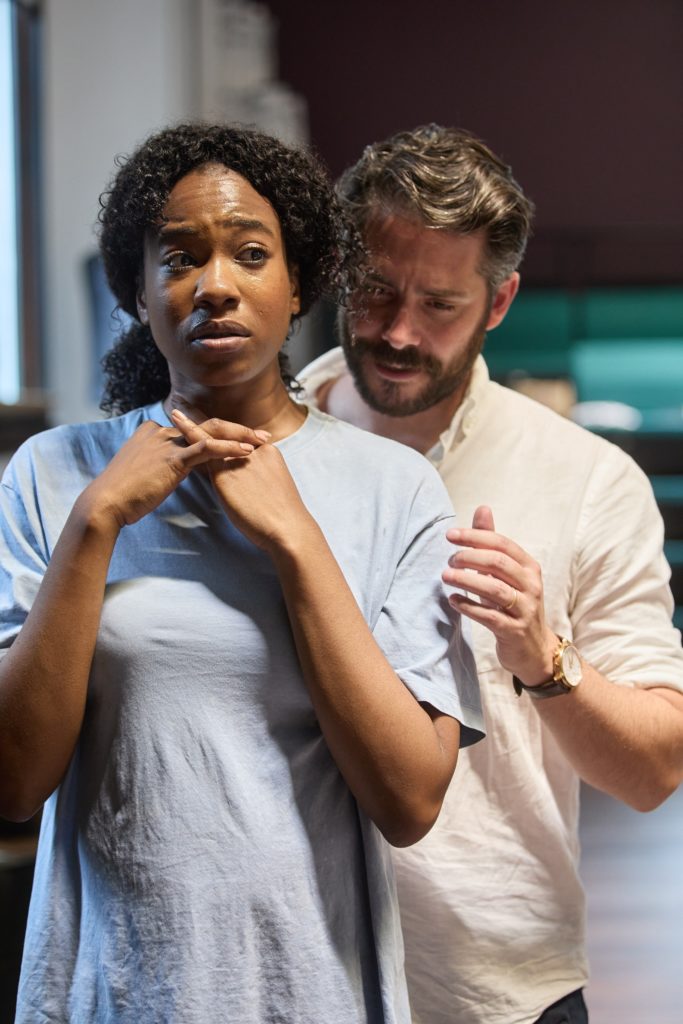
George Rowlands’ Eric Birling and Christine Kavanagh’s Mrs Birling in rehearsal. Picture: Mark Douet

“But with acting it doesn’t work like that because being good is so subjective – there’s no grade. I think that’s quite hard. Putting lots of work in and not knowing really how it will go.”

Evlyne: “One of the sayings at RADA was, ‘plan it, know it and forget it’. It’s the hardest thing to do, but it’s the most rewarding thing to do.”

If you could swap roles for a performance, would you?

Evlyne: “If I had to be someone out of all the characters, it would definitely be the inspector, because I’m obsessed with crime documentaries and serial killers, everything to do with murder, unsolved murder, unsolved mysteries, death row, all of that! I’ve pretty much seen everything and I re-watch it to go to sleep.”

George: “If I could pick any character, I’d probably pick Edna [the parlour maid]. I would love to play her. If you haven’t seen this production, there’s a special thing that Edna is part of – a little bit of magic. She’s amazing.

“My second choice would be Mrs Birling. I really like Mrs Birling; she’s got such sass and doesn’t have the insecurities that Eric is stuck with.”