REVIEW: Steve Crowther’s verdict on York Musical Society, Christmas Concert, St Lawrence Parish Church, York, 13/12/2025

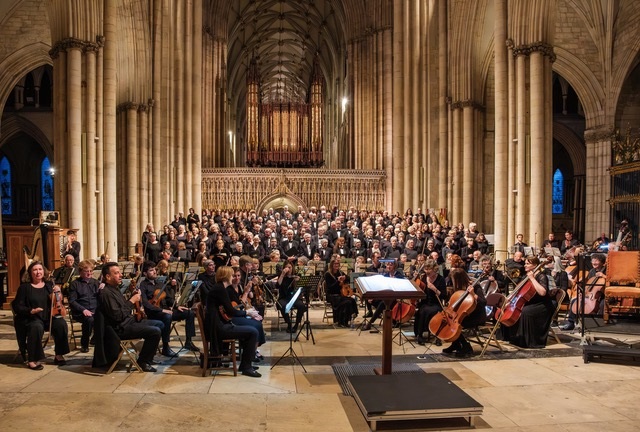
York Musical Society in concert at St Lawrence Parish Church, York

WHAT was immediately striking at the start of the concert was the vertigo-inducing podium from which musical director David Pipe conducted the choir.

Indeed, if he had swapped his baton for a paintbrush, he could have given Michelangelo a run for his money and painted a few contemporary murals whilst he was up there.

York Musical Society’s concert opened with five excerpts from Handel’s Messiah. And The Glory Of The Lord was tight; the imitative lines were clearly articulated and the soprano high notes well executed. Like the male voices, I struggled with the over-articulation of the consonants in the quick, fugal chorus, And He Shall Purify.

Ellie Miles-Kingston was a delight; the recitative (There Were Shepherds) and the aria (Rejoice Greatly) – duetting with the excellent organist, Shaun Turnbull – were beautifully delivered. The set closed with a lovely performance of His Yoke Is Easy.

David Willcocks’ arrangement of the English traditional Sussex Carol sounded both joyful and effortless. This is no easy thing as the writing is deceptively difficult, especially for the sopranos. This was followed by an utterly splendid performance of O Come, All Ye Faithful by us, the People’s Choir.

Interlude on The Coventry Carol by the splendidly named William Southcombe Lloyd Webber inhabits an entirely different sound-world to that of the Willcocks or indeed the later Rutter: austere, internal and actually technically quite challenging.

David Pipe’s performance was nothing short of poetic: emotional restraint, long unbroken lines, the carol tune always audible – tricky when played using the pedals. A real concert highlight.

Richard Shephard’s Christmas Cantata (after Corelli) was extremely effective and, on the whole, enjoyable. The writing for the sopranos was attractive, but I thought the tessitura sat high for too long with a tendency to drift sharp-wards. I really enjoyed the solo contribution from tenor Leo Fulwell. On the whole, I found the Cantata stylistically ambiguous but that’s probably just me and not the fine performance.

We, the People’s Choir, returned with yet another flawless performance, this time in the uplifting It Came Upon The Midnight Clear.

William Mathias was a truly outstanding composer. As this exuberant performance of his Sir Christèmas clearly shows, what seems like surface good, festive fun – fast tempos, bright brass-like organ writing, motor rhythms – is also a really well-crafted piece of music. The choir captured the energy and drive, and I heard a joy that was forged rather than decorative. Impressive.

What’s not to like about David Willcocks’ Silent Night? Given this rendition, clearly very little indeed. The YMS Choir delivered justice to the composer/arranger’s setting, enhancing the carol’s natural beauty.

Indeed, what’s not to like about John Rutter’s Shepherd’s Pipe Carol too? Again, given this rendition, clearly very little indeed. I just loved the persistent ‘dum-da-dum’ ostinato, which gave the music groove as opposed to flow. Add the syncopation into the mix and we are closer to pop, even jazz, rather than the traditional Christmas carol.

David Pipe’s performance of Leroy Anderson’s Sleigh Ride, arranged by Thomas Trotter, was a festive joy. We heard trotting hooves, bell-like figurations, crisp winter air, a season of goodwill and Butlin’s. I’ll get my coat.

After a standing, standout blast of Hark! The Herald Angels Sing – us again – the choir wished us a merry Christmas and directed us to free glasses of mulled wine. I felt we had earned them.

Review by Steve Crowther
REVIEW: Martin Dreyer’s verdict on Hallé Choir & Orchestra/Sir Mark Elder: Verdi Requiem, York Minster, October 29

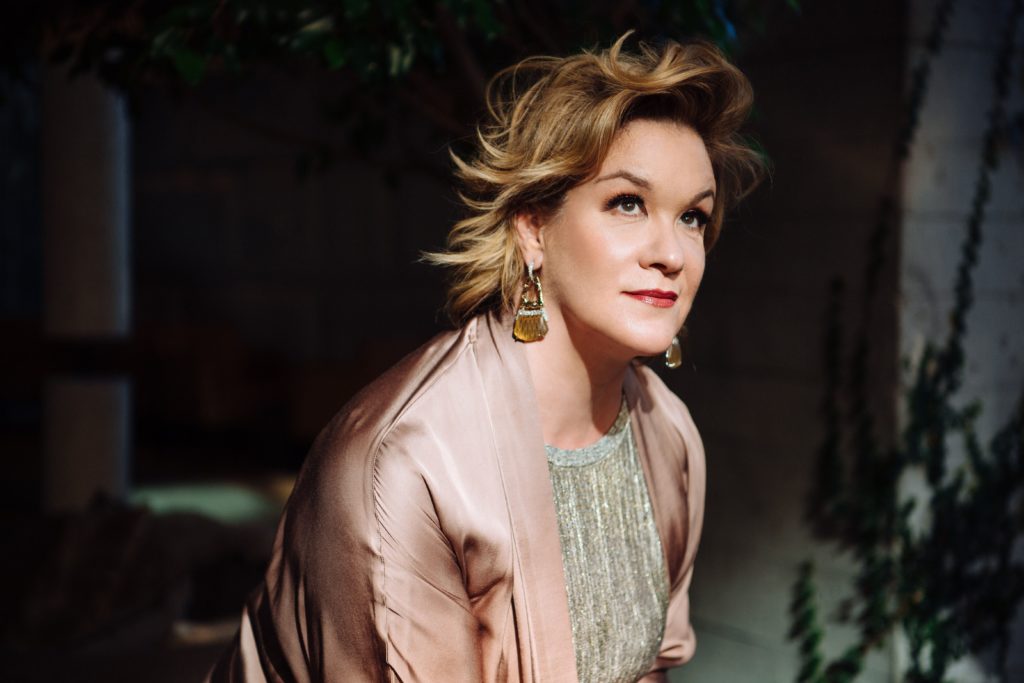
Mezzo-soprano Alice Coote. “Superb solo interventions“. Picture: JiyangChen

IT is some time since York Minster’s nave was filled for a professional concert, but a full house for Ryedale Festival’s promotion of Verdi’s Requiem, doubtless encouraged by the first-class array of performers, was amply rewarded.

Although Verdi’s Catholic faith left him early and his Requiem for Alessandro Manzoni is unashamedly operatic, it is also an act of reverence, as we were reminded by the hushed aura of its opening.

But the forthright entry of the choral basses at ‘Te decet’ left no doubt that this was to be an evening that left none of the terrors of death unexplored, as Verdi intended. The soloists confirmed this with a forceful Kyrie that was the polar opposite of the usual grovel.

This was to be the essence of Sir Mark Elder’s approach. Accordingly, the Dies Irae opened with a fearsome attack from both choir and orchestra. Soon afterwards, the trumpets were thrilling at ‘Tuba mirum’, with the four on stage in a controlled crescendo and the four off-stage fanfare trumpets joining in from the side aisles. Indeed, the Hallé’s brass covered themselves with glory throughout, returning majestically in the Sanctus.

‘Liber scriptus’ marked the first of mezzo-soprano Alice Coote’s superb solo interventions, a full-throated blast that raised the drama to a new level and culminated in a spine-tingling high A flat –extending the determination she had brought to Orfeo in Huddersfield last week.

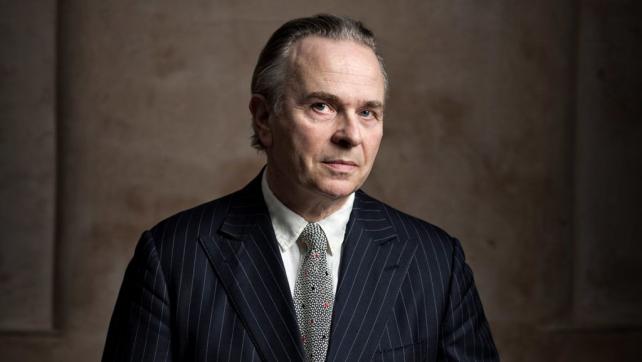
Sir Mark Elder, conductor of the Hallé Orchestra. Picture: Hannah Knox

There were no weaknesses among the soloists. The soprano Natalya Romaniw was the only one to employ any operatic swoops, mostly early on and tastefully, to theatrical effect. She also had ample capacity to soar above the chorus at full pelt and still be heard. Her final high B flat was a couple of shades louder than the absurd triple piano Verdi demands but beautifully sustained nonetheless.

In the tenor solo after what was a succulent soprano-alto duet at ‘Recordare’, Thomas Atkins announced himself with noble resonance and shaped its ending stylishly. He sounds ready for a worldwide career as a Verdi tenor. James Platt’s bass was portentous at the ‘Confutatis’ and added gravitas to the solo ensembles.

While individually distinctive, the soloists also maintained a pleasing balance and blend, which is far from a given in this work. The Hallé Choir was impressive at both ends of the dynamic spectrum. ‘Hosanna in excelsis’ in the Sanctus built to a huge climax, but even more imposing was the extremely quiet opening to the closing Responsory, a magical effect heard far too rarely from large choirs. The orchestral strings exhibited similar restraint.

It crystallised the loving care with which Elder had shaped this five-star Requiem. It had been given in memory of Richard Shephard, a valuable friend of both York Minster and the Ryedale Festival until his death last year.

Footnote: I listened to much of this performance through gritted teeth because of two roaming photographers, one of whom prowled around my bay in the side aisle (where the sound incidentally is best of all) like a capricious cat-burglar, blocking my view and distracting many others with his antics.

Who authorised this? Were the performers asked for their permission? It was totally beyond the pale. The solution – if photographs really are essential – is to take them during rehearsals or hire a professional with telephoto lenses.

Review by Martin Dreyer