Who will be playing at York Early Music Festival from July 3 to 11? Find out here


I Fagiolini, with director Robert Hollingworth, centre, with sparkler: Performing opening concert of 2026 York Early Music Festival

THE 50th anniversary York Early Music Festival will run from July 3 to 11 with the theme of Beyond Borders.

More than 30 concerts will take place in York’s medieval churches, historic buildings and York Minster over nine days.

The festival was created in 1977 by a small group of Early Music enthusiasts and is long established as the premier British Early Music festival, attracting artists and visitors from far and wide.
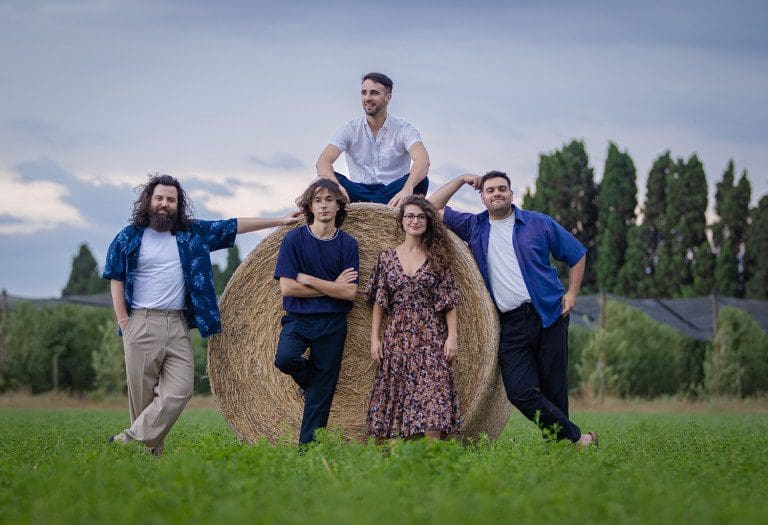
Anacronia: Making York Early Music Festival on July 4

The festival will open with Monteverdi’s Vespers of 1610, presented by I Fagiolini with the English Cornett & Sackbut Ensemble, under Robert Hollingworth’s direction, on July 3 at 7pm at the sold-out Sir Jack Lyons Concert Hall, University of York. This concert will be broadcast on BBC Radio 3 on July 8.

Last in York for the 2025 York Early Music Christmas Festival, Solomon’s Knot will provide a spectacular summer festival finale at The Quire, York Minster, on July 10 at 7.30pm, when Jonathan Sells will direct singers and musicians performing Friedrich Nicolaus Bruhns’ St Mark Passion by heart.  

The festival will mark the 400th anniversary of the death of the great English composer and lutenist John Dowland by dedicating a whole day to his works on A Day Of Dowland on July 6.

Organist Ben Horden: To Lubeck and Bach concert at Sir Jack Lyons Concert Hall on July 7

Katherine Butler, associate professor at Northumbria University, will open the day with her sold-out 10.30am talk at Bedern Hall entitled Dowland’s Dolour: Music, Melancholy and Self-Fashioning in Elizabethan England.

Lutenist Thomas Dunford will present a selection of Dowland’s 90-plus compositions in The Rarest Musician at the sold-out St Olave’s Church, Marygate, at 1pm, and the Rose Consort of Viols, featuring lutenist Jamie Akers, will perform Dowland’s Teares Of Sorrowe And Gladnesse in the Undercroft, Merchant Adventurers’ Hall (again sold out,) at 6pm. Music by Orlande de Lassus and Alfonso Ferrabosco will complement works both sorrowful and joyful by Dowland.

Dowland’s day will end with Tears Into Light: A Contemporary Reimagining of John Dowland’s Lachrimae, performed by Imago Mundi, directed by Sofie Vanden Eynde, at the National Centre for Early Music, St Margaret’s Church, Walmgate, at 8.30pm.

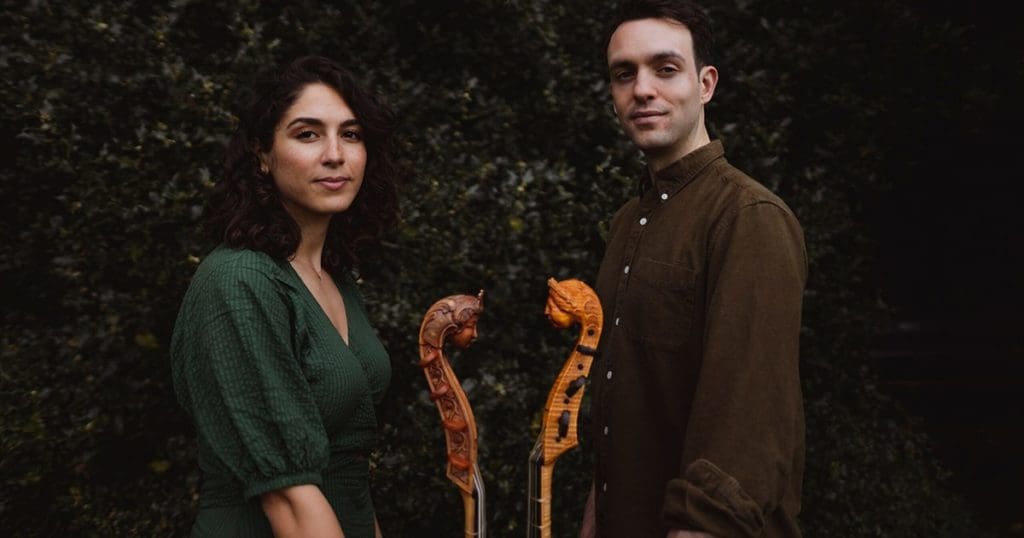
Top: Lutenist Thomas Dunford. Bottom: Imago Mundi director and lutenist Sofie Vanden Eynde. Both taking part in A Day of Dowland on July 6

Drawing on the insights of scholar-philosophers and the concept of inspired melancholy, Tears Into Light explores how melancholy has been understood through history and how it offers a lens for viewing the present. Dowland’s Lachrimae will be interwoven with American traditional music in a reminder that light can always emerge from darkness.

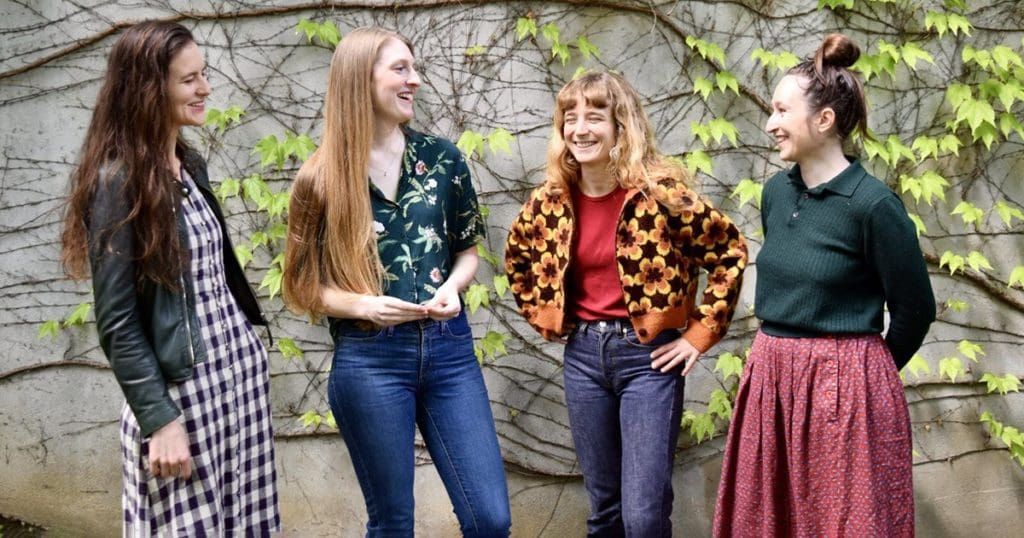
The opening of the 50th festival will be heralded by the York Fanfare, a specially commissioned piece by Wakefield-born Sam Meredith for the 2026 ensemble-in-residence, the historical wind band [hanse] Pfeyfferey, comprising Lilli Patzold, cornetto, Alexandra Mikheeva, slide trumpet and trombone, and Laura Dumpelmann, shawm.

York Fanfare will herald the festival opening, ahead of July 3’s first concert, on the grass outside the Sir Jack Lyons Concert Hall, and then be performed around the city during the opening weekend, including outside the West Door of York Minster before The Sixteen’s 7.30pm concert there on July 4.

The Sixteen: Presenting Siglo de Oro, Music from the Spanish Renaissance, at York Minster on July 4. Picture: Johnny Millar

Directed as ever by Harry Christophers, The Sixteen will present Siglo de Oro, Music from the Spanish Renaissance, featuring works by Sebastian de Vivanc and Cristobal de Morales, Sir James MacMillan’s Nothing In Vain and the world premiere of NCEM Composers Award alumna Kerensa Briggs’s Lead, Kindly Light. BBC Radio 3 will air this concert on July 9.

The Great Noyze, organised by the International Guild of Town Pipers, has moved from College Green, York Minster, to St Sampson’s Square on July at 4pm.

Further highlights will be Minster Minstrels, From Holborne To Handel, at the NCEM on July 5, 11am; University of York Baroque Ensemble, with Ensemble Hesperi (in-house band at University of York), in The Music Party, NCEM, July 7, 12.30pm; organist Ben Horden, To Lubeck and Bach, Sir Jack Lyons Concert Hall, July 7, 6pm, and Ghent’s B’Rock Orchestra & Vocal Consort, Da Pacem: Sacred Music by Heinrich Schutz and Contemporaries, Sir Jack Lyons Concert Hall, July 7, 7.30pm.

Mezzo-soprano Helen Charlston: Teaming up with tenor Paul Agnew and lutenist Sergio Buchel for A Gentle Air at Merchant Taylors’ Hall on July 9

Clavichord player Steven Devine’s Preludes, Fugues and Fantasies, at All Saints Church, North Street, on July 8 at 12.30pm, has sold out; Yorkshire Baroque Soloists will perform Amphion Anglicus, Chapter House, York Minster, July 8, 7.30pm, and Early Music will meet jazz and modernity in Duo Gambelin’s All’Improviso, Undercroft, Merchant Adventurers’ Hall, July 8, 9.30pm.

On July 9 at 7pm, mezzo-soprano Helen Charlston, tenor Paul Agnew and lutenist Sergio Buchel will feature French songs by Michel Lambert and Sebastien Le Camus in A Gentle Air at the Merchant Taylors’ Hall. In July 10’s Concert by Candlelight at Holy Trinity Church, Goodramgate, soprano Hannah Ely, alto Rebekah Jones and tenor Paul Bentley-Angell will perform songs from the courts of 12th-century France in Love From Afar.

Contre le temps: Le Baiser de la Rose programme at NCEM on July 5

At the heart of the festival is the NCEM’s year-round commitment to supporting emerging talent, this year represented by two young European ensembles, NCEM Platform Artists Anacronía, from Spain, in their festival debut at the NCEM on July 4 at 1.30pm, and the Franco/American medievalists Contre le temps, whose Le Baiser de la Rose programme at the NCEM on July 5 at 8.30pm will be recorded for BBC Radio 3’s Early Music Show for broadcast on a date yet to be confirmed.

Held every two years, the prestigious York Early Music International Young Artists Competition will feature 40 musicians in nine ensembles competing for a series of prizes in a day of thrilling concerts at the NCEM on July 11 from 10am to 5pm.

Duo Gambelin: Early Music meets jazz and modernity in All’Improviso concert at Undercroft, Merchant Adventurers’ Hall, on July 8

This year’s finalists are: I Mastricelli; Il Parrasio; La Mandorle; Lagrime; Nari Baroque Ensemble; Ossian’s Dream; Quarterino; Tra Noi and The Lyons Mouth (formed at the University of York).  

The full programme can be found at ncem.co.uk/whats-on/yemf. Box office: 01904 658338; email at boxoffice@ncem.co.uk; ncem.co.uk or in person from the NCEM.

Festival director Dr Delma Tomlin says: “We’re very excited to be staging our 50th festival, which is brimming with musical delights. The very first festival took place in 1977 and has gone from strength to strength, inspiring the restoration of St Margaret’s Church and the creation of the National Centre for Early Music in 2000.”

York Early Music Festival director Delma Tomlin

“Our 50th edition features world-class ensembles and emerging artists; celebrates the genius of John Dowland; hosts the prestigious York Early Music International Young Artists Competitionand has commissioned the York Fanfare to open the proceedings, making sure the festival gets off to a flying start.

“Last but not least, our media partners, BBC Radio 3 will be back, broadcasting the hugely popular Early Music Show live from the NCEM, presented by Hannah French on July 5 at 5pm with a line-up of guest artists from the festival. We hope you can join us in York for this very special celebration.”

The full programme can be found at ncem.co.uk/whats-on/yemf. Box office: 01904 658338; email at boxoffice@ncem.co.uk; ncem.co.uk or in person from the NCEM.

Solomon’s Knot: Festival finale at York Minster on July 10
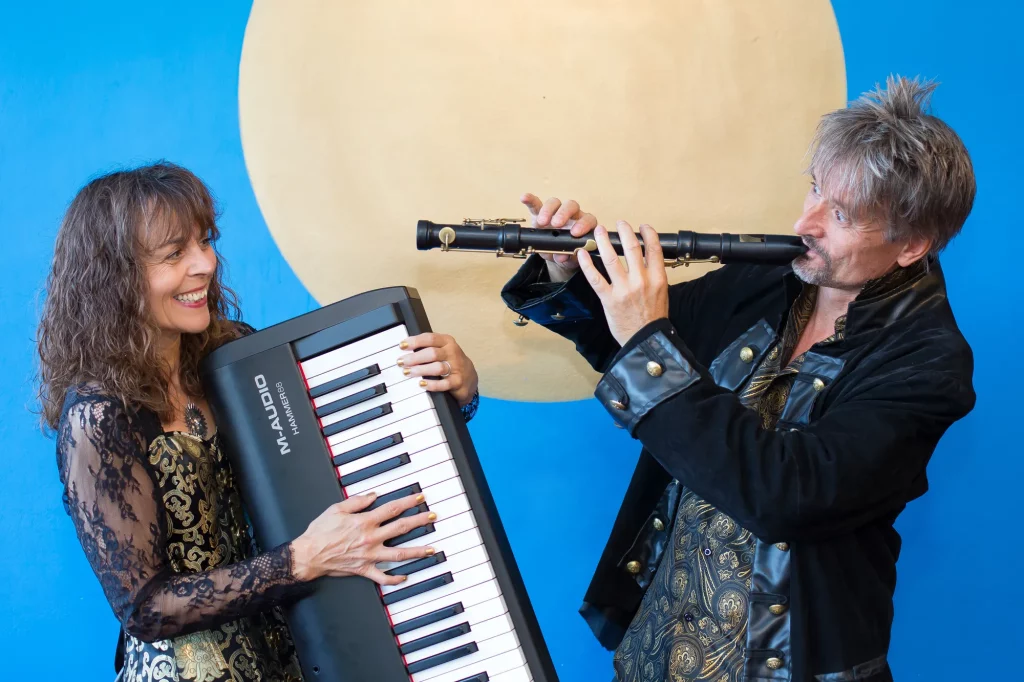
Recorder plus electronica equals Baroque Alchemy as ancient fuses with modern at National Centre for Early Music tomorrow

Baroque Alchemy: Turning the traditional Early Music recital on its head for the 21st century

ANCIENT meets modern in Baroque Alchemy’s fusion of recorder virtuoso Piers Adams and keyboardist Lyndy Mayle at the National Centre for Early Music, York, tomorrow.

Ever since the rise of synth-led bands and New Age music in the 1980s, Piers has nurtured a vision to combine the simple beauty of the recorder – and the drama of baroque music – with the expansive sound-world of the electronic era.    

Now, after a 25-year international career as frontman of the acoustic baroque super-group Red Priest, his new project with Lyndy Mayle turns the traditional Early Music recital on its head for the 21st century.   

“By replacing the familiar ‘continuo’ sound of the harpsichord with the universe of possibilities offered by modern-day synthesiser technology, we are able to expand upon the musical dreams of composers of the past,” says Piers, whose first Baroque Alchemy concert took place at the Lewes Baroquefest, in his home town, in July 2022.

“The scientific wizardry of the synth is balanced by the natural expressive power of the recorder, thereby creating a perfect blend of ancient and modern.”  

Baroque Alchemy seek to introduce a new audience to music of the past, as well as taking traditional classical music lovers on a journey of discovery, undertaken by two musicians who travel with a keyboard, a quiver of recorders, a Macbook and a state-of-the-art Bose PA.

“I’ve played in York quite a few times, mostly with Red Priest,” says Piers. “The last time at the NCEM was a concert to nobody under Covid rules in 2021 – part of a series that Robert Hollingworth [from the  University of York] put on – so that was a strange experience!

“I played with Red Priest at the university at the beginning of 2023 and once at the NCEM with The Dodo Street Band, the brainchild of violinist Adam Summerhayes,  where we performed Celtic Gypsy Klezmermusic on violin, recorder, accordion, double bass and bodhran, which was fun.”

Piers and Lyndy got together in 2020/2021 after her long career as a piano teacher. “Back in the day, we were at different music colleges in London, when she was a harpsichord wizard at the Royal College of Music, and she later worked as a music therapist and taught piano. This project is her return to the concert platform,” says Piers.

“We’ve played 25-30 concerts since we started up and down the country, and in Spain and Germany, and it’s taken off well as it’s quite left field.”

Describing Baroque Alchemy’s music, Piers says: “It’s something very different from Early Music, the main difference being that we use a classic keyboard run through a Macbook.” Piano, guitar, harp, strings and voices all play their part through the wonder of electronics, in tandem with Piers’s recorders.

“For me, as a recorder player, to play with such a wide range is wonderful,” he says. “I have a small mixing desk, so I can tweak things, playing with this amazing technology to see how old music would sound with new electronic elements, so we have the contrast of the ‘artificial’ [the electronic] with the beauty of the recorder.”

Piers continues: “We’re still at the beginning of this journey into the sound-world. It’s been a fascinating journey where, the more we dig around the broad palette of sound we find what works for us. We cross lots of different styles, not just ‘old’ music, but contemporary music and world music too.

“There are a number of positives in playing this way. It gives you massive flexibility, particularly as a duo, working with this big sound palette, where we love opposites, the combination of different elements, the combination of male and female too, hence we chose the name Baroque Alchemy.

“We put together the penetrating recorder with the broader range of electronics; the ancient and the modern; the simple and the complex. Add the fact that we’re a couple as well, and the whole thing becomes a melting pot.”

Why should  someone attend tomorrow’s concert, Piers? “The first thing to say is that I know people will enjoy it. The response we’ve had has been universally positive: whether they like Early Music, folk music, world music or electronic music; there’s something for everyone – but it’s also quite different!”

Baroque Alchemy, National Centre for Early Music, Walmgate, York, tomorrow (14/3/2026), 7.30pm. Box office: 01904 658338 or ncem.co.uk

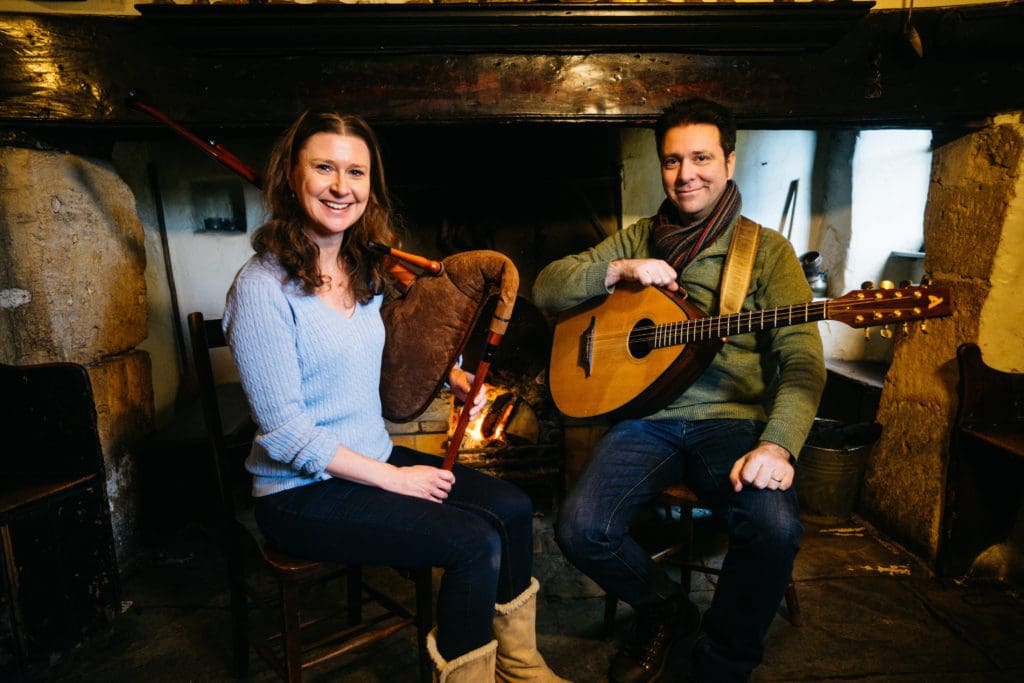
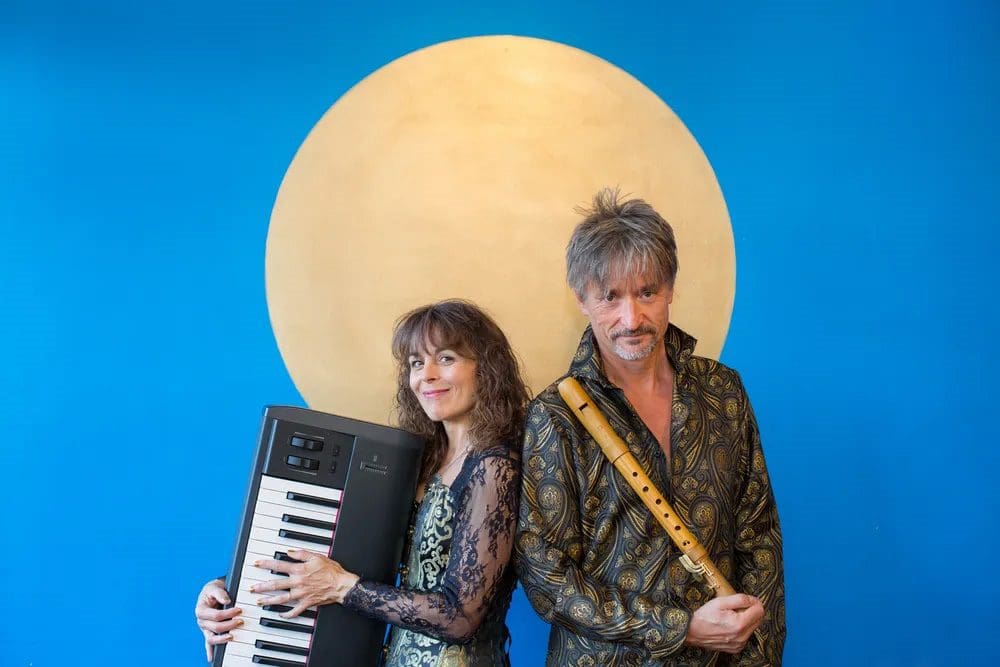
Baroque Alchemy duo Lyndy Mayle and Piers Adams

Baroque Alchemy: back story

BAROQUE Alchemy gave their debut concert at the Lewes Baroquefest in July 2022 and have since played festivals, music clubs and theatres throughout the UK.

In 2023, the duo travelled to Germany to perform the closing concert at the Blockflöten Festtage, the world’s premier recorder festival.

They launched their groundbreaking album Breaking Free at their London debut at the World Heart Beat Concert Hall in March 2024.

Piers Adams has recorded numerous CDs and given thousands of concerts and broadcasts across the world with Red Priest. His lifelong interest in alternative philosophies informed his recording Bach Side Of The Moon (charting at number five in the international New Age charts) and now Baroque Alchemy.

Lyndy Mayle was a multi-prize winning harpsichord student at the Royal College of Music before becoming a music director at the National Theatre, and subsequently working as a music therapist and piano teacher. Baroque Assembly marks her return to the concert stage.

Piers and Lyndy perform music from the baroque period, although they venture into medieval, world, contemporary and jazz music too.

Their repertoire includes Bach’s  Goldberg Suite; Albinoni’s The Other Adagio; Forqueray’s La Sylva and La Boisson; Telemann’s  Andante and Danse Rustique; Handel’s Aria Amorosa; Vivaldi’s The Goldfinch; Pandolfi’s La Biancuccia; Montalbano’s La Jelosa; Biber’s Sonata Representiva; Piazzolla’s Cafe 1930; Albeniz’s Asturias; Debussy’s Syrinx and Ian Clark’s Hypnosis.

REVIEW: Martin Dreyer’s verdict on Mass in B Minor, The 24 & Manchester Baroque

Robert Hollingworth

The 24 & Manchester Baroque, J S Bach’s Mass in B minor, Sir Jack Lyons Concert Hall, University of York, March 28

TOWARDS the end of his life, Bach arranged his Mass in B minor in four sections, one of which, the Sanctus, was premiered on Christmas Day, 1724. So we are entitled to consider that we are now celebrating its 300th anniversary.

We may conveniently ignore the fact that two smaller passages – the Crucifixus (1714) and the Qui Tollis (1723) – were borrowed from earlier works and other parts were added in the 1730s.

Nevertheless, it brings some Lutheran imagination and sparkle to the very centre of the Roman Catholicism of the Dresden court, for which it may well have been intended. There was plenty of sparkle, too, in this account masterminded by Robert Hollingworth, which brought together University of York’s crack chamber choir, The 24 – here expanded to 35 – with the period chamber orchestra Manchester Baroque. It was deservedly a sell-out.

No performance with Hollingworth in charge would be complete without a quirk or two: it is tied into his DNA and can be part of his charm. Two obvious ones occurred in the Credo, where in place of multiple voices in a reverential pianissimo for the ‘Crucifixus’, he gave us the four soloists trying to sound like madrigalists, doubtless in the hope of making a bigger splash when full chorus plunged in at ‘Et resurrexit’.

A little later, he deprived the basses of their famous ‘Et iterum’ passage and assigned it to his soloist, with a consequent loss of excitement.

With one exception, Hollingworth had all the arias and duets sung from deep stage right, well over to the side, rather than centred in front of the choir. Immediacy was lessened. Distractingly, soloists had to emerge from behind the choir whenever required.

These aberrations aside, there was a great deal to admire. Before the interval, the choir sang without scores, which meant their attention to Hollingworth in the Kyrie and Gloria was total.

Even afterwards, when scores appeared intermittently, many singers barely consulted them, an impressive feat of memory that kept the choruses crisp. The choir remained seated for a prayerful ‘Qui tollis peccata’, a nice touch, the next best thing to kneeling.

It would be churlish to offer any criticism of Hannah Davey, the soprano soloist who stepped in at the eleventh hour. She was particularly effective in duet, notably with tenor Matthew Long in ‘Domine Deus’, alongside graceful obbligato flutes.

He blended well with the oboes and bassoon in ‘Et in spiritum sanctum’, making his voice part of the instrumental texture, and kept his tone nicely straight in the ‘Benedictus’.

Martha McLorinan’s mezzo tone admirably suited the ‘Qui sedes’ and she showed a lovely restraint in the moving ‘Agnus Dei’ with full violins in support. Frederick Long was the reliable bass in ‘Quoniam tu solus’.

Hollingworth’s tempos tended towards the brisk, which his choir seemed to relish. So too did the tireless orchestra, whose woodwinds positively danced their way through ‘Et resurrexit’. It typified the joyous aura of the evening.

Review by Martin Dreyer

Spotlight turns on young international talent at York Early Music Christmas Festival. Who else will be performing? UPDATED 4/12/2024

Australian soprano Emilia Bertolini. Picture: David Caird

INTERNATIONAL young musicians will take centre stage in the York Early Music  Christmas Festival from December 6 to 15.

The National Centre for Early Music (NCEM) continues to support exceptional young talent in the field of Early music by welcoming three ensembles from Europe under the NCEM Platform Artists spotlight.

Taking part will be Australian soprano Emilia Bertolini, winner of the 2024 Corneille Competition New Voices in Normandy, promoted by Le Poème Harmonique; Contre le Temps, a medieval vocal ensemble from France, supported by the EFFEA’s artist-in-residence Discovery programme, in partnership with AMUZ, and Intesa, a duo of Lucine Musaelian and Nathan Giorgetti, who met at the Royal Academy of Music.

Musaelian and Giorgetti will be staying on in York afterwards to work on Baroque Around The Books, a musical tour of York libraries in a short residency with Explore York. They formed the duo only last year and are already making their presence felt on the concert platform.

Contre le Temps: Medieval vocal ensemble from France

The NCEM has a hard-earned reputation for its support of emerging talent across Europe, running both the biennial International York Young Artists Competition and until recently they were a key partner within the Creative Europe EEEmerging programme.

Ensembles showcased by the NCEM over the past few years include Protean Quartet, Sollazzo Ensemble, winners of two Diapason d’Or de l’année awards, and BBC New Generation Artists Consone Quartet.

NCEM Delma Tomlin MBE says: “The York Early Music Christmas Festival is a firm favourite on the city’s calendar. This year I’m thrilled to welcome three ensembles to York who will no doubt be a fabulous addition to this year’s spectacular programme. 

“The NCEM is dedicated to promoting the extraordinary array of talent from Europe’s vibrant Early Music scene and we are grateful to be able to continue to celebrate their music in York.  We hope that this will be a regular feature in our festive programme in the years to come.”

York Early Music Christmas Festival director Delma Tomlin

The concerts from the NCEM Platform Artists will be led off by Love And Melancholy, featuring  Emilia Bertolini, soprano,  Sergio Bucheli, theorbo, and Lucy Chabard,  harpsichord, in a musical journey into the complex world of human emotions at the NCEM on December 7.

Inspired by the haunting melodies of Henry Purcell and the French court tunes of the 17th century, this evocative 12 noon programme explores love in all its forms, from joyful ecstasy to poignant melancholy.

Contre le Temps, featuring singers Karin Weston, Cécile Walch, Julia Marty and Amy Farnell, present Ubi Sunt Mulieres at the NCEM on December 14 at 12 noon.

Women have inspired thinkers, poets and creators for thousands of years with tenderness and charm, beauty and dedication, fragility and sensuality, prompting this talented young vocal quartet to turn their gaze on to the Middle Ages, focusing on works by Guillaume Du Fay and Hildegard von Bingen, one of the most acclaimed women in music history.

Intesa’s Lucine Musaelian and Nathan Giorgetti

In the third concert, at Bedern Hall, Bedern, on December 15 at 11am, Intesa’s viol and voice duo of Lucine Musaelian and Nathan Giorgetti reflect on the theme of seeking light amid dark and wintry weather with music by Dowland, Hume and Caccini, alongside a selection of Armenian folk songs, in a programme entitled A Merry Conceit.

Spiritato, featuring University of York alumnus Nicolas Mendoza on harpsichord and organ, open the festival with Northern Light, their 6.30pm programme of Baroque works by Kirchoff, Thieme, Pachelbel and Bach on December 6 at the NCEM.

 “This extraordinary jewel of baroque music comes from the Royal Court of Sweden, and the wealth of that court, with all the musicians and composers that flocked up there, and now these neglected pieces have been rediscovered and what glorious pieces they are,” says Delma.

Siglo de Oro will be joined by Spinacino Consort for Hey For Christmas! on December 7 at the NCEM for a 6.30pm celebration of carols, raucous ballads, beautiful folk sonhs and lively dances, as if “we arrived at your relatives’ London house in the mid-17th century for 12 days of revelry”.

Stile Antico: Performing This Joyful Birth: A musical journey through the Christian story at the National Centre for Early Music on December 12

The choral workshop led by Robert Hollingorth, founder/director of I Fagiolini, at Bedern Hall on December 8 from 10.15am to 4pm has sold out. Hollingworth will explore a soprano canon by Guerrero, darker-hued Gombert and music by Vivanco, Aleotti and Palestrina.

Solomon’s Knot, who perform everything learned off by heart, will perform Motets by Johann Sebastian and Johann Christoph Bach at the NCEM on December 8 at 6pm.

A new project brings together two Scottish musicians embedded in their own traditions: former BBC New Generation Artist Sean Shibe, who carries the torch for classical music on his guitar, and Aidan O’Rourke, the Lau fiddler deep rooted in Scottish folk culture. Together they present Luban at the NCEM on December 9.

Join them at 7.30pm to find out where they might meet midst Dowland, Johnson, O’Rourke and Cage as they share the language they find in the backstreets, byways and marginalia of ancient Scottish lute and fiddle manuscripts.

Green Matthews: Gaudete! concert at National Centre for Early Music

Green Matthews make a Christmas return to the NCEM with an expanded line-up for Gaudete!, featuring new arrangements of Chris Green and Sophie Matthews’s festive fare, embellished with Emily Baines on early woodwind and Richard Heacock on violin on December 11 at 7.30pm.

Their lush, rich and heart-warming music evokes the spirit of Christmas over 600 years from the Middle Ages to the 20th century in a riot of sound and colour.

Stile Antico take a journey through the Christian story to the manger in a glorious sequence of music from medieval and Renaissance Europe in This Joyful Birth at a sold-out NCEM on December 12.

The 7.30pm programme follows each scene of the Christmas story, beginning in Advent and moving through to the Nativity, the visits of the Shepherds and the Wise Men, and finally to the Feast of Candlemas. Highlights include Victoria’s O Magnum Mysterium, motets by Byrd, Lassus and Sheppard, medieval carols and dances from Spain and Germany.

Ensemble Augelletti: “How beautifully shines the morning star”

Ensemble Augelletti, BBC Radio 3’s New Generation Baroque Ensemble, return to York to present their new Christmas programme, The Morning Star, at the NCEM on December 13 at 7pm, with Olwen Foulkes on recorders, Ellen Bundy on violin, Toby Carr on lute and Benedict Williams on harpsichord.

On December 23 1784, a letter by York astronomer Edward Pigott, recounting his discovery of a new variable star, made York the centre of the astronomical world, prompting Ensemble Augelletti to celebrate extraordinary stories of 17th and 18th astronomers with music named after stars, angels and 17th-centyry sonatas. Works by Corelli, Schmelzer and Uccellini will feature alongside settings of How Beautifully Shines The Morning Star.

Festival regulars Yorkshire Bach Choir & Yorkshire Baroque focus on Bach’s Magnificat in D and two cantatas, Unser Mund Sei Voll Lachens and Gloria In Excelsis Deo, conducted by Peter Seymour at the Sir Jack Lyons Concert Hall, University of York, on December 14 at 7.30pm.

“With its exuberant choruses, colourful orchestration and beautiful solo writing, Bach’s Magnificat captures perfectly the divine joy of a pregnant Mary,” says Peter.

Spiritato: Opening York Early Music Christmas Festival on December 6 with their Northern Light programme

Jimmy Aldridge & Sid Goldsmith collaborate with Lady Maisery to close the festival with Awake Arise – A Christmas Show For Our Times at the NCEM on December 15. The 7.30pm programme “celebrates the riches of our varied winter traditions and reflects on the hope and resilience music and song that can bring joy to us all in the darkest season”.

“York Early Music Christmas Festival is the perfect choice for an atmospheric Yuletide evening away from the crowds, with this year’s festival featuring both Early and folk music performed by an array of talented artists,” says Delma.

“Most performances take place in the intimate surroundings of the National Centre for Early Music’s home, St Margaret’s Church, off Walmgate.  Mince pies and mulled wine available at most concerts.”

York Early Music 210214 runs from December 6 to 15 at National Centre of Music (St Margaret’s Church, Walmgate), Bedern Hall and Sir Jack Lyons Concert Hall, University of York. Box office: 01904 658338 or ncem.co.uk. Full programme is available at ncem.co.uk.

REVIEW: Martin Dreyer’s verdict on The 24, Sir Jack Lyons Concert Hall, University of York, November 27

Robert Hollingworth

THE 24 has grown. When first taken over by Robert Hollingworth, it was largely a choir of graduate students. It has since been amalgamated with the university’s chamber choir and grown to its present 33 members, a size that arguably takes it beyond the usual ‘chamber’ dimensions.

It appeared here with strong support from Ampleforth College Chamber Choir and Huntington School Secret Choir. The menu, served to a full house, was a nourishing pot-pourri ranging from the Renaissance to the present day, all a cappella.

Johann Christoph Bach belonged to the generation before JSB and is widely considered to be the great man’s most talented forebear. The double choir motet Lieber Herr Gott, dating from 1672, has a continuo part but was given here unaccompanied.

Its opening phrase says “wecken uns auf” (wake us up), an apt injunction given that the start was something of a scramble. But it settled into a comfortable stride after its central tempo-change.

In contrast, Alonso Lobo’s penitent motet Versa In Luctum (Turned To Mourning) was much more shapely. For Alma Redemptoris Mater, by his Spanish compatriot and almost exact contemporary Victoria, the school choirs joined the fray, bringing the total to more than 70 voices. Yet the blend was excellent and Hollingworth had the singers in the palm of his hand.

In two madrigals by Thomas Tomkins, we heard the 11 members of the UK’s only MA course in solo-voice ensemble singing, a vivid sextet in Oft Did I Marle (marvel) and a gorgeously mournful quintet in Too Much I Once Lamented.

Either side of the interval, The 24 was back at full strength. It revelled in the lush harmonies of three of Schumann’s double-choir songs, Op 141. The last two had elements of prayer, both ending with ‘Amen’ cadences, but the last – a setting of Goethe’s Talismane – was much the most effective, delivered crisply but with a tender final plea.

 There was exciting propulsion in Gibbons’s O Clap Your Hands and transparency in Tavener’s Hymn To The Mother Of God. Less telling were motets by Kenneth Leighton and Joanna Marsh, although the latter – a setting of Julian of Norwich’s All Shall Be Well – had a welcome sense of triumphal love at its close.

In this exalted company it came as a surprise to hear the calmly confident account of Stanford’s Justorum Animae (The Souls Of The Righteous) delivered by the Ampleforth choir under Roger Muttitt, with ‘non tanget illos’ – the torment of death ‘shall not touch them’ – given special emphasis and the peaceful ending beautifully floated.

With the combined forces reassembled, Elgar’s orchestral Go, Song Of Mine was never going to emerge with much clarity, although its ending was forceful enough. Will(iam) Campbell’s take on Vaughan Williams’s much-loved hymn-tune to Come Down, O Love Divine, however, was lovingly handled, starting out in left field and gradually moving towards more traditional harmonies, as the tune gained shape: a variation in reverse. It made an amusing end to a thoroughly invigorating evening.

Review by Martin Dreyer

REVIEW: Steve Crowther’s verdict on University of York Choir and Symphony Orchestra, The 24, York Minster, June 8

The University of York Choir and Symphony Orchestra in concert at York Minster. Picture: Steve Crowther

AS the Match Of The Day football pundits might say, this was a game of two halves.

Despite the obvious musical intelligence and quality on offer, I struggled with the performance of Mozart’s Mass in C minor. It is a large-scale work scored for two soprano soloists, a tenor and a bass, double chorus and large orchestra.

Coupled with the nature of Mozart’s musical dialogue, this meant that I simply could not hear all of the detail, thanks to this very generous Minster acoustic.

There was, however, much to admire: Elspeth Piggott’s soprano solo in the Christie was impressive, although I lost some of the lower register. The fine, crisp string playing in the Gloria. Soprano Rebecca Lea, a last-minute substitute for Helen Neeves, sang the Laudamus Te with real assurance, although again I lost some of the lower register.

More rewarding was when the two singers combined forces in the Domine Deus – tender exchanges and reassuring support. The following Qui Tollis was also satisfying, with Mozart using a double chorus underpinned by a pulsating dotted rhythm ostinato.

The highlight was always going to be Et Incarnatus Est, simply because of the intimacy of the scoring: soprano solo, solo flute, oboe and bassoon. That and the quality of Ms Piggott’s performance of this operatic aria.

Elspeth Piggott and Rebecca Lea were joined by tenor James Beddoe and bass Patrick Osborne for a very fine Benedictus before the recap of the fugal Hosanna, signing off the performance with aplomb.

And so, to the second half. As vocal musical experiences in the Minster go, it doesn’t come much better than the excellent The 24, directed by Robert Hollingworth, singing Bruckner’s Locus Iste and Christus Factus Est motets.

These are not the most technically demanding of works but, nevertheless, we were royally treated with performances of clarity, balance, detail and very real musical insight. The Minster acoustic loved it and, as a consequence, so did we.

This was followed by an inspired piece of programming with Elgar’s rarely heard Elegy op. 58. Well, I’ve never heard it anyway. The performance revealed a delightful jewel of a work intimately scored for string orchestra.

To be sure, there were echoes of Nimrod. Evidently his friend August Jaeger had died one month earlier, but it worked just fine in and of its own terms. Quite poignant, actually.

The concert closed with a full-bodied performance of Bruckner’s Te Deum in C, superbly marshalled by conductor John Stringer. Due to the cleaner, predominantly homophonic nature of Bruckner’s setting, the experience was much more rewarding than the Mozart.

The textures were less busy. Having said that, the sound world had a monumental quality: full-on tonal building blocks of sound augmented by the organ blasts of affirmation; a “cathedral of sound”. This is, after all, a deeply religious work.

There were moments of tranquillity, glimpses from within: the wonderful quartet of soloists – Elspeth Piggott, James Beddoe and Patrick Osborne, who were now joined by mezzo-soprano Helena Cooke. It was such a welcome relief to actually hear all the detail; a tender tenor solo with telling solo violin commentary (Michael Capecci).

However, the work ended as it had begun, in triumphant affirmation and splendour. I thought the sheer volume of sound might blow the Minster roof off; it certainly brought the house down.

Review by Steve Crowther

University of York Choir and Symphony Orchestra to perform Mozart and Bruckner works at York Minster on June 8

The poster for University of York Choir and Symphony Orchestra’s concert on June 8

THE University of York Choir, The 24, and the University of York Symphony Orchestra will perform at York Minster on Saturday, June 8.

Under the direction of Robert Hollingworth and John Stringer, the 7.30pm programme will feature Mozart’s Mass in C minor and a selection of Bruckner’s works, celebrating the 200th anniversary of his birth, including the Te Deum, a composition he described as “the pride of his life”. Box office: 01904 322439 or yorkconcerts.ticketsolve.com.

REVIEW: Steve Crowther’s verdict on University of York Choir, The 24 and The City Musick, 18/3/2023

Conductor Robert Hollingworth

University of York Choir, The 24 and The City Musick, Central Hall, University of York, March 18

WELL, this looked interesting, but then any concert with a strapline “Reining in the Donkey” and curated and conducted by Robert Hollingworth would be.

Last Saturday’s concert was a highly imaginative programme focusing on Orazio Benevoli’s mass, Missa Si Deus Pro Nobis, dovetailed with music by Andrea Gabrieli, Vincenzo Ugolino, Palestrina and Frescobaldi.

The mass was written for eight choirs supported by 15 continuo instrumentalists. These would be placed in stalls above and around the congregation, thus setting up a dramatic, sumptuous surround-sound extravaganza.

In York Minster this would have been a real musical event, but in the Central Hall, with an acoustic as dry as sandpaper, it wasn’t. And nor could it have been. Right from the choral opening of Vincenzo Ugolino’s Quae Est Ista, the university choir sounded cruelly exposed and vulnerable.

With all the forces at play, however, the singers grew in confidence through the Kyrie and Gloria of the Benevoli Mass. The choral exchanges of the lovey suspended sequences in the Credo worked well.

The introduction of the amazing contrabass shawm, played by Nicholas Perry, was quite an experience. I thought it sounded like a musical equivalent of the butler Lurch from The Addams Family but it is probably best described by Paul McCreesh as “the finest fartophone in all music”.

Not all the choral detail was in place; the rhythmic passages in the Credo, for example, were not as crisp or accurate as they should have been, but the extensive tutti sections at the end of each of the movements were confident and satisfying. Indeed, the Agnus Dei conclusion was luxurious, quite delightful.

The instrumental movements performed by The City Musick players were, obviously, imperious. Catherine Pierron’s chamber organ performance of Frescobaldi’s Toccata No.3, weaving webs of magical tapestry, was breathtaking.

There was also a wonderful, confident Agnus Dei by Palestrina (arr. Francesco Soriano) sung by The 24, a choir clearly at the top of their game, with crystal-clear part singing throughout. Very impressive.

Anyway, back to the donkey. The technique is a musical joke where busy antiphonal exchanges (runaway, out-of-control donkeys) combined with long plainchant melodies (hapless, possibly fat, cardinals pulling on the reins). Excellent.

I get the impression that Orazio Benevoli’s Missa Si Deus Pro Nobis is not only a hidden gem, but now a discovered masterpiece. I would love to hear Robert Hollingworth curate and direct another performance. But not here, not at the Central Hall. Please.

Review by Steve Crowther

University of York Choir to perform joyful ‘Colossal Baroque’ Roman music at Central Hall with The 24 and The City Musick

Robert Hollingworth: University of York Choir musical director

THE University of York Choir join forces with The 24 and The City Musick for an evening of the “Colossal Baroque” music of 17th century Rome at Central Hall, University of York, on March 18.

Under the direction of Robert Hollingworth, the 7.30pm programme combines Orazio Benevoli’s Missa Di Deus Pro Nobis for four choirs with what the choir’s musical director describes as “other monstrous works” by Benevoli’s Venetian teacher, Vincenzo Ugolini, among others.

Almost forgotten today, Benevoli (1605-1672) was one of the most important Roman Baroque composers of his day. “He wrote glorious, large scale, multi-choir music that included a technique called ‘reining in the donkey’, in which the lower parts move hastily underneath a static soprano line, supposedly like a priest sitting on and trying to hold back a frenetic donkey,” says Hollingworth. “Think King Of Kings in the Hallelujah Chorus,” he suggests.

The 24 is a University of York music department ensemble, conducted by Hollingworth, founder/director of I Fagiolini. The City Musick comprises cornett, sackbut, dulcian, strings, organs and theorbos.

Tickets for this “wonderfully joyful and uplifting event” are on sale at: https://yorkconcerts.co.uk/whats-on/2022-23/university-choir-the-city-musick/

REVIEW: Martin Dreyer’s verdict on University of York Choir & Baroque Ensemble’s Christmas concert

Robert Hollingworth: Conductor of the University of York’s largest choir

University of York Choir & Baroque Ensemble, Central Hall, University of York, November 30

CHRISTMAS music of the Baroque and the 20th century were contrasted here in the five sections of Charpentier’s Messe de Minuit and four carol-anthems by Howells.

Interwoven with these were five extracts from A Child’s Christmas In Wales by Dylan Thomas. It was an ingenious idea, although none of these strands had much in common beyond the seasonal message.

Robert Hollingworth, who is now conductor of this choir, the university’s largest, read the passages from Thomas’s nostalgic view of a childhood Christmas, blanket-wrapped in an armchair and adopting an impressive Welsh lilt (that softened a bit towards the end). It was cosy, fireside stuff, with larger-than-life characters springing from the pages.

Charpentier’s late-17th century mass is almost balletic in its attempt to appeal to popular taste. The Baroque Ensemble, with guests leading three of its string sections, responded stylishly, with keen rhythm and taut ensemble.

The choir did not catch quite the same sense of urgency, perhaps feeling that Hollingworth’s baton was directed more at the players. That said, the tempo changes in the middle of the Credo were well managed. Alexander Kyle took over conducting for the final two sections, including a surprisingly jaunty Agnus Dei.

Variety came with several passages from a semi-chorus that additionally supplied soloists, who were at their most appealing when sopranos intertwined with recorders. A choir this size ranged on three flanks is always going to have difficulties with blend, especially in the very dry acoustic of Central Hall.

So, it was a pity that the least-known – and most recent – of the Howells pieces, Long, Long Ago, came first, before the choir had found its feet.

Here Is The Little Door, conducted by Kyle, was the best-shaped of the Howells. In contrast, A Spotless Rose was a little too fast for there to be no feel of the bar-line and the crunchy harmonies at the end, symptomatic of icy winter, were fudged. Bo Holten’s First Snow made an effective finisher.

Hollingworth is deservedly recognised as a first-class choir trainer. He will need just a little longer to stamp his mark on this choir. Watch this space.

Review by Martin Dreyer