Beverley & East Riding Early Music Festival 2026 announces Mysteries & Miracles programme. Who will be playing in May?

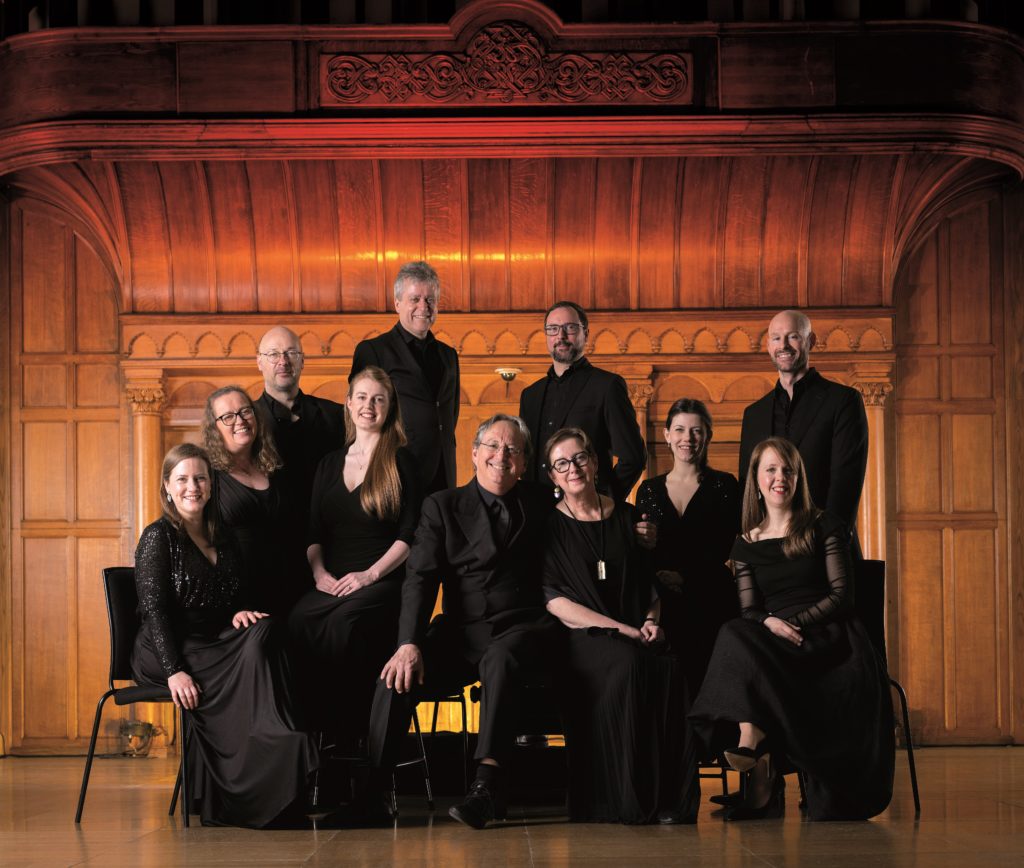
The Tallis Scholars: Performing Mysteries and Miracles at Beverley Minster on May 23. Picture: Hugo Glendinning

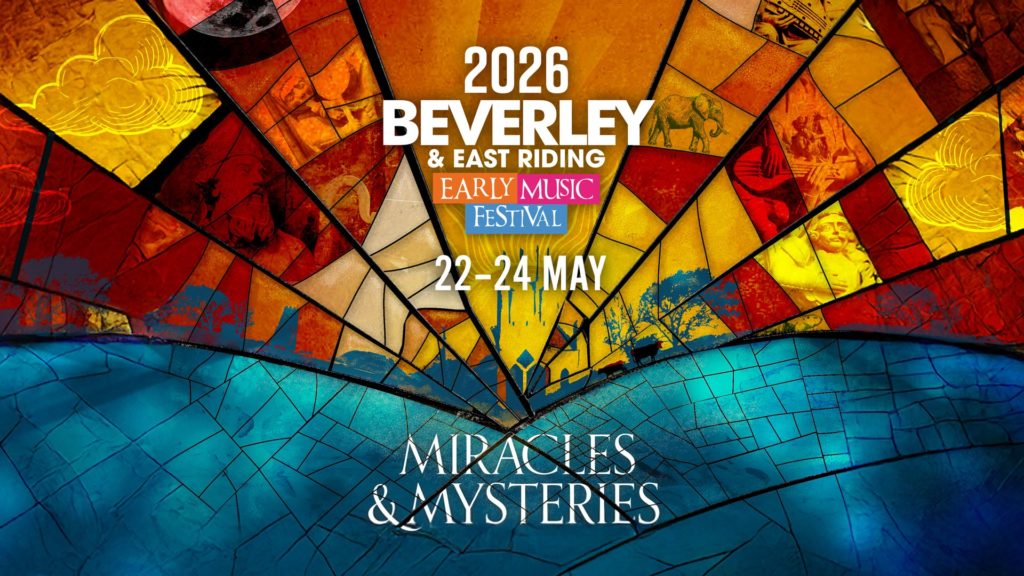
TICKETS are on sale for Beverley & East Riding Early Music Festival 2026, running from May 22 to 24 with the theme of Miracles & Mysteries.

Celebrating music and new partnerships in its 38th year, this annual festival is a ‘jewel in the crown’ of Beverley’s musical calendar, attracting visitors and residents to enjoy concerts and talks by experts and participate in workshops.

Each year, the festival attracts international musicians of the highest quality and is well known for seeking out and nurturing emerging talent, as well as drawing on this historic East Riding market town’s medieval musical tradition.

This year’s theme of Miracles & Mysteries intertwines the story of St John of Beverley, one of the most powerful miracle-workers in England in medieval times, with music by the world-renowned Tallis Scholars and a host of musicians from across the UK and Europe.

There are more ways than ever to participate in the music this year with young people invited to join in the fun both before and during the festival. In a new partnership with East Riding Libraries, the festival will be on the road with Baroque Around The Books, staging free concerts at Pocklington Library, on May  11, 11am, Market Weighton Library, May 11, 2pm, Goole Library, May 12, 11am, and Beverley Library, May 12, 4pm.

The scheme began in 2023 in York, where it has been a big success and has featured a variety of outstanding ensembles. This year, the Beverley festival is delighted to welcome Dowland’s Foundry lutenist Sam Brown and tenor Daniel Thomson, who will perform a free concert mixing music by Dowland and Morley with words by William Shakespeare. More details can be found at www.ncem.co.uk/baroque-around-the-books.

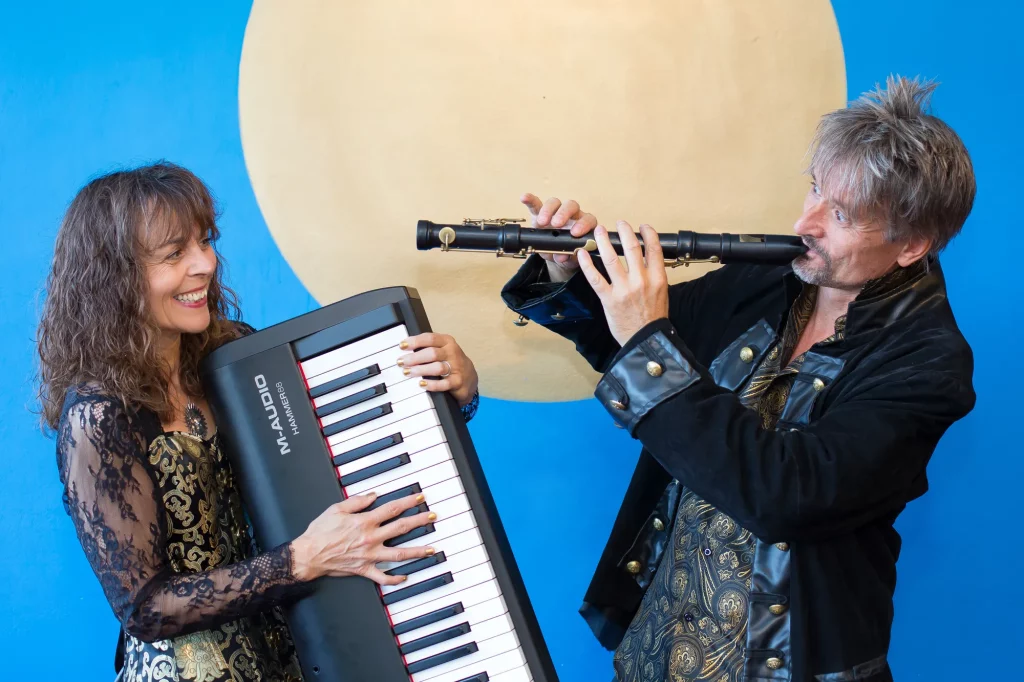
After a series of bespoke workshops in East Riding Schools, recorder wizards Palisander Recorder Ensemble will stage a pre-festival concert for all the family, Recorder Revolution!, at Beverley Memorial Hall on March 17 at 6.30pm. Cue magical music-making with an array of recorders ranging from six inches to six feet tall; more details at palisanderrecorders.com.

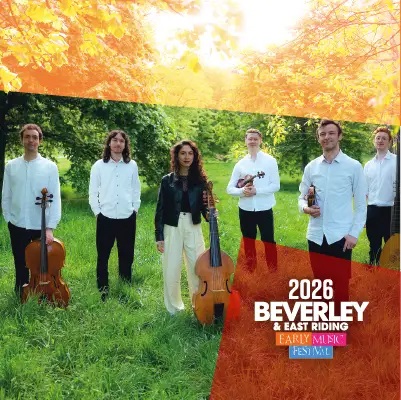
Rune: Lost In Contemplation concert on May 24

The three-day festival will open on May 22 with Près de Votre Oreille, directed by gamba specialist Robin Pharo, presenting Lighten Mine Eies as part of a European tour in this northern premiere by the French instrumental ensemble at St Mary’s Church at 7.30pm.

The evening will feature music by William Lawes, who enjoyed a brief but dazzling career as a singer and lutenist to Charles I.

Près de Votre Oreille’s European tour is backed by the Centre National de la Musique (CNM) with the support of Institut Français du Royaume-Uni. The ensemble’s main sponsor is the Société Générale Foundation, with further support from the Orange Foundation.

The Tallis Scholars, directed by Peter Phillips, will perform Mysteries and Miracles, a programme that highlights the festival theme through music inspired by the stories of the life of Christ, at Beverley Minster on May 23.

Suited to the Minster’s glorious acoustics, the 7.30pm concert will begin with a depiction of Christ’s birth as envisaged by two of the Renaissance’s most renowned composers, Gabrieli and Victoria.

The Telling will present Purcell: The Musical, featuring Niall Ashdown as Purcell, soprano Héloise Bernard and violinist Joanna Lawrence, in a return to the East Riding Theatre, Beverley, on May 24 at 7.30pm after performing Into the Melting Pot there previously.

This drama, based on the life of 17th-century London composer Henry Purcell, features assorted instrumental and vocal compositions by Purcell, from bawdy theatre ballads and joyful celebrations of love to slow airs and numbers from his semi-operas.

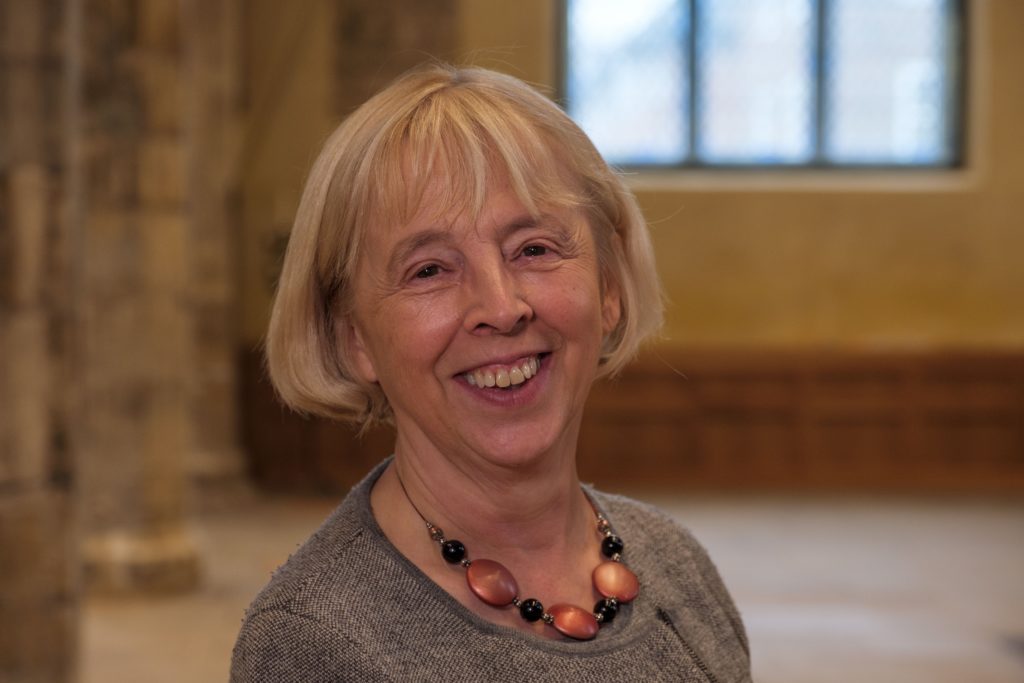
Beverley & East Riding Early Music Festival director Delma Tomlin

The festival’s focus on emerging young talent will complement three NCEM Platform Artists, Pseudonym, Intesa and Rune, with the newly appointed New Generation Baroque Ensemble, Bellot Ensemble, who are supported by BBC Radio 3, the Royal College of Music and the National Centre for Early Music, York.

On May 23, at St Mary’s Church, Pseudonym’s Liane Sadler, flutes, Maya Webne-Behrman, violin, Stephen Moran, gamba, and Gabriel Smallwood, harpsichord, will perform Discret et Distrait at 1pm.

After performing in York in 2024 and at an Antwerp showcase last summer, this endearing young ensemble will return to the UK to play 18th-century French music in a sophisticated intermingling of Italian virtuosity and Polish folk rhythms, featuring works by Couperin, Rameau and Telemann.

This concert is made possible thanks to EFFEA’s artist-in-residence Discovery programme, in partnership with AMUZ, Antwerp and Early Music Sweden.

On May 23, at St Mary’s Church, Intesa’s Nathan Giorgetti and Lucine Musaelian (viols and voice) will celebrate their union between Armenian and Italian traditions in Voices Of San Lazzaro at 4pm.

Intesa will explore the connections between sacred and secular love, both in their pain and redemption, highlighting the Armenian story of faith and the women’s story of misunderstanding.

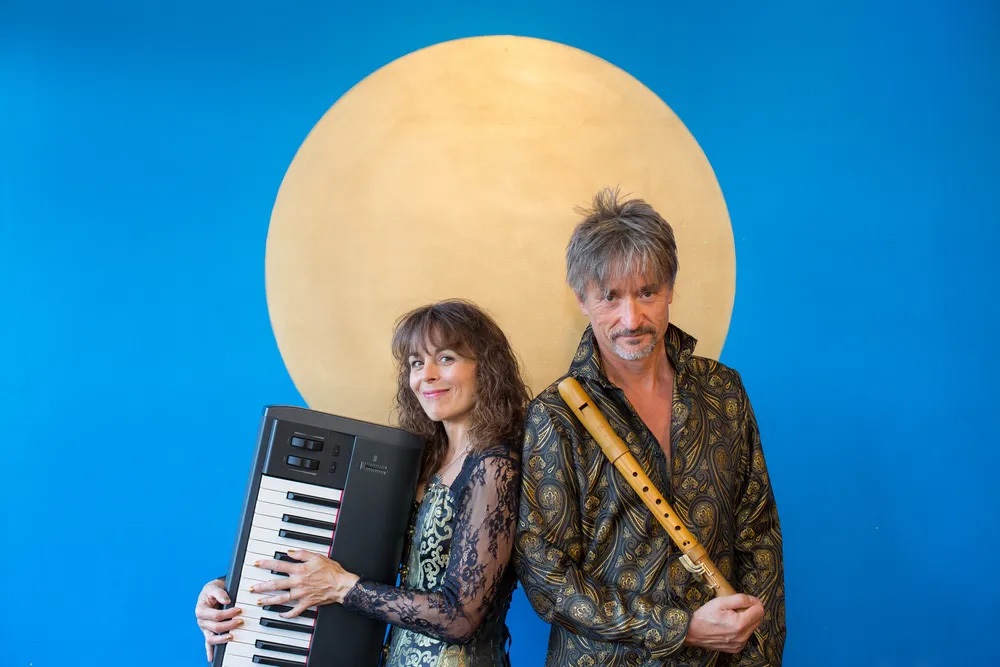
On May 24, in The Quire at Beverley Minster, Rune will perform Lost In Contemplation with a line-up of Angela Hicks soprano, Daniel Thomson tenor, May Robertson voice and vielle, Jean Kelly harp, and Daniel Scott, recorder and positive organ.

Bellot Ensemble: From The Sound Of Battle To The Silence Of Peace

At 3pm, four remarkable medieval miracle stories will be paired with music from across Europe. From the contemplative vision of Ero the monk and Saint Elizabeth’s Miracle of the Roses, to English songs honouring the Virgin Mary and the extraordinary life of Joseph of Schönau, these tales reveal the medieval imagination at its most profound, accompanying stories that explore faith, transformation and the intersection of the miraculous with human experience.

On May 24, at Toll Gavel United Church, Bellot Ensemble will undertake a vivid journey from the clamour of conflict to the quiet miracle of peace in From The Sound Of Battle To The Silence Of Peace.

Edmund Taylor and Maxim Del Mary, violins, Nathan Giorgetti and Lucine Musaelian, viola da gambas, Daniel Murphy, theorbo, baroque guitar and lute, and Matthew Brown, keyboards, will perform music by Lawes, Schmelzer, Biber and Falconieri in a 5pm concert to be recorded for broadcast by BBC Radio 3.

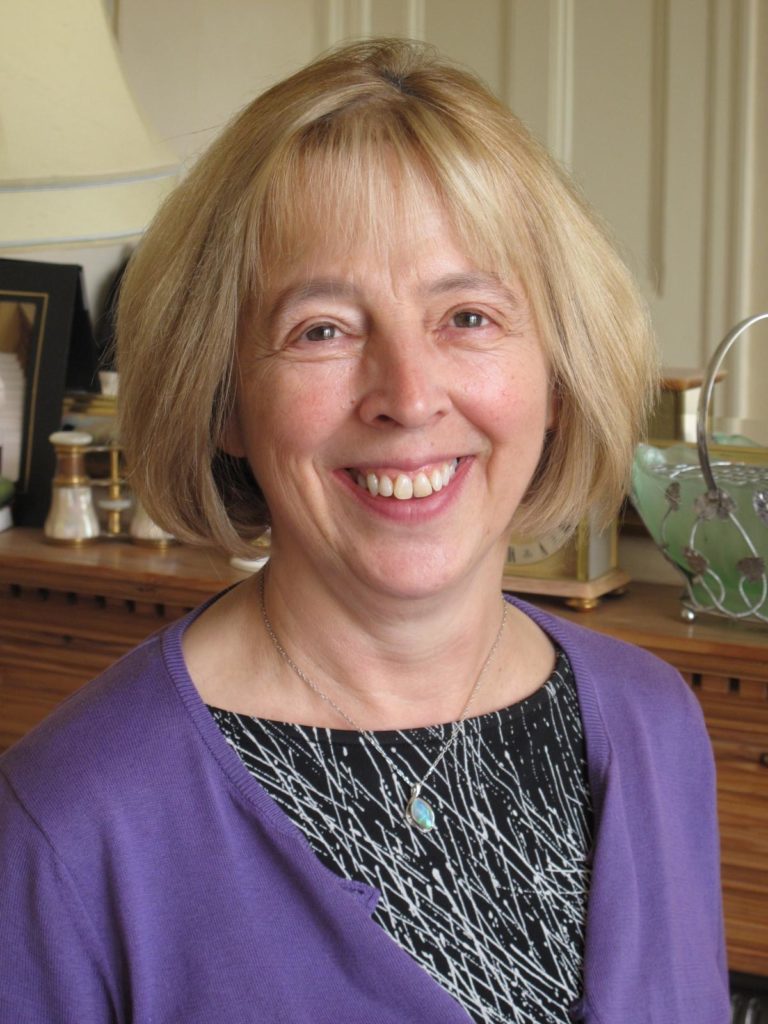
Festival director Delma Tomlin says: “We’re very excited to be returning to Beverley for what promises to be a spectacular weekend of music in one of the UK’s most beautiful settings, celebrating the extraordinary wealth of the medieval musical traditions of the town.

“This year’s theme is Miracles & Mysteries, presenting a line-up of international concerts of the highest quality, including our opening concert by Près de Votre Oreille, made possible by our partnership with France.

“The festival also provides a showcase for young talent with Bellot Ensemble, the current New Generation Baroque Ensemble, and NCEM Platform Artists, Pseudonym, Intesa and Rune. Finally, thanks to a new partnership with East Riding Libraries, we’ll be ‘on the road’ for the very first time in Beverley, with Baroque Around The Books, when music lovers can enjoy free concerts by Dowland’s Foundry in several of the region’s libraries.”

Find the full programme at https://www.ncem.co.uk/whats-on/bemf/. Tickets are on sale on 01904 658338, at ncem.co.uk, via email to boxoffice@ncem.co.uk or in person from Beverley Tourist Information Centre, Customer Service Centre, Champney Road, Beverley, HU17 8HE.

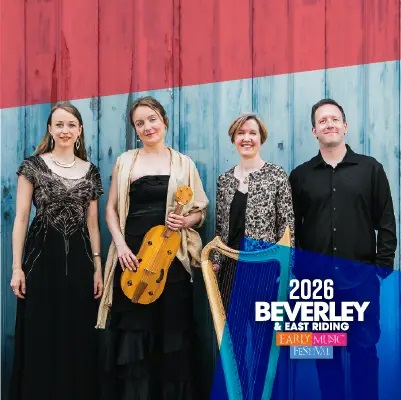
The artwork for Beverley & East Riding Early Music Festival 2026

Pick Me Up Theatre to perform Stephen Sondheim shows at the double at Theatre@41, Monkgate in March and April

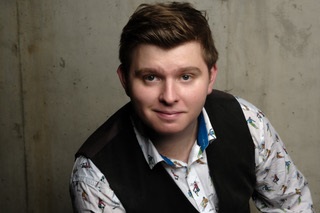
Sam Hird: Singing Sondheim with Pick Me Up Theatre

ROYAL College of Music student Sam Hird returns home to York to join his father Mark Hird in the Pick Me Up Theatre company for Sondheim We Remember at Theatre@41, Monkgate, York, from March 27 to 30.

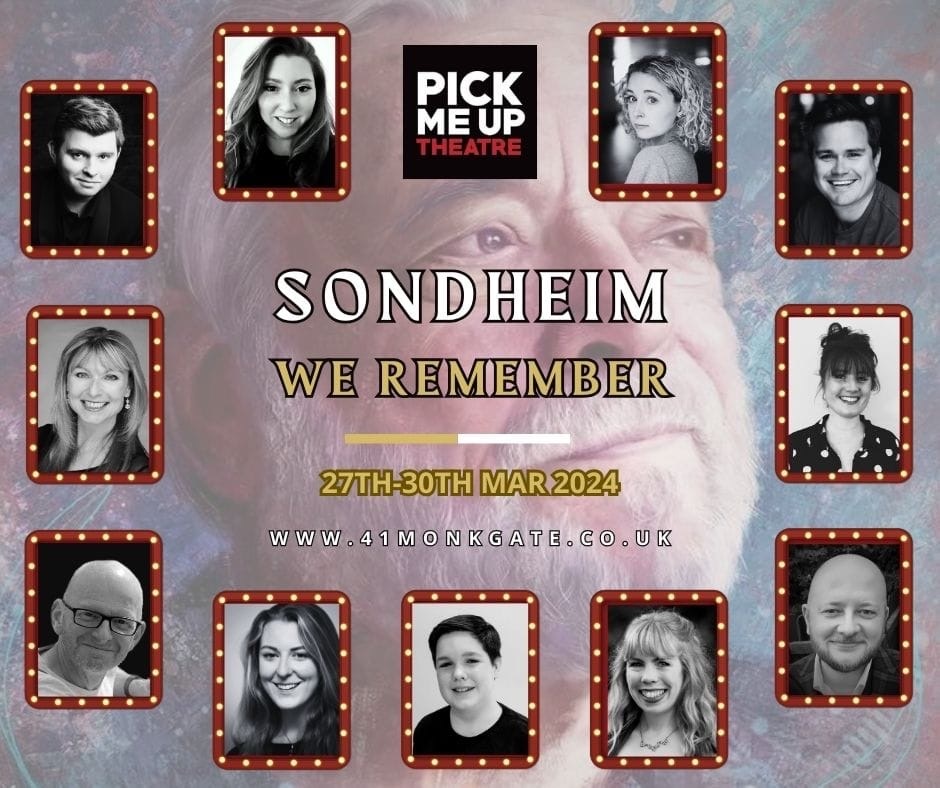
Taking part too in this celebration of New York composer and lyricist Stephen Sondheim will be director Helen ‘Bells’ Spencer, Susannah Baines, Emma Louise Dickinson, Alexandra Mather, Florence Poskitt, Andrew Roberts, Catherine Foster, Nick Sephton and Matthew Warry.

Planned originally for 2020 before Covid intervened – and Sondheim’s death on November 26 2021 at the age of 91 – Pick Me Up’s show features music from his Broadway shows, film scores and TV specials. Tickets for the 7.30pm evening shows and 2.30pm Saturday matinee are on sale at tickets.41monkgate.co.uk.

Pick Me Up Theatre’s company of singers for Sondheim We Remember

Pick Me Up will make a swift return to Theatre@41 with a second Sondheim show, his 1984 musical collaboration with playwright and director James Lapine, Sunday In The Park With George, from April 5 to 13.

Inspired by Georges Seurat’s pointillist painting Sunday Afternoon On The Island Of La Grande Jatte, the musical follows Seurat (played by Adam Price) in the months leading up to the completion of that famous work.

Seurat alienates the French bourgeoisie, spurns his fellow artists and neglects his lover Dot (Natalie Walker), not realising that his actions will reverberate over the next 100 years.

Performances will start at 7.30pm on April 5, 6 and 9 to 13, plus 2.30pm on April 6, 7 and 13. Box office: tickets.41monkgate.co.uk.

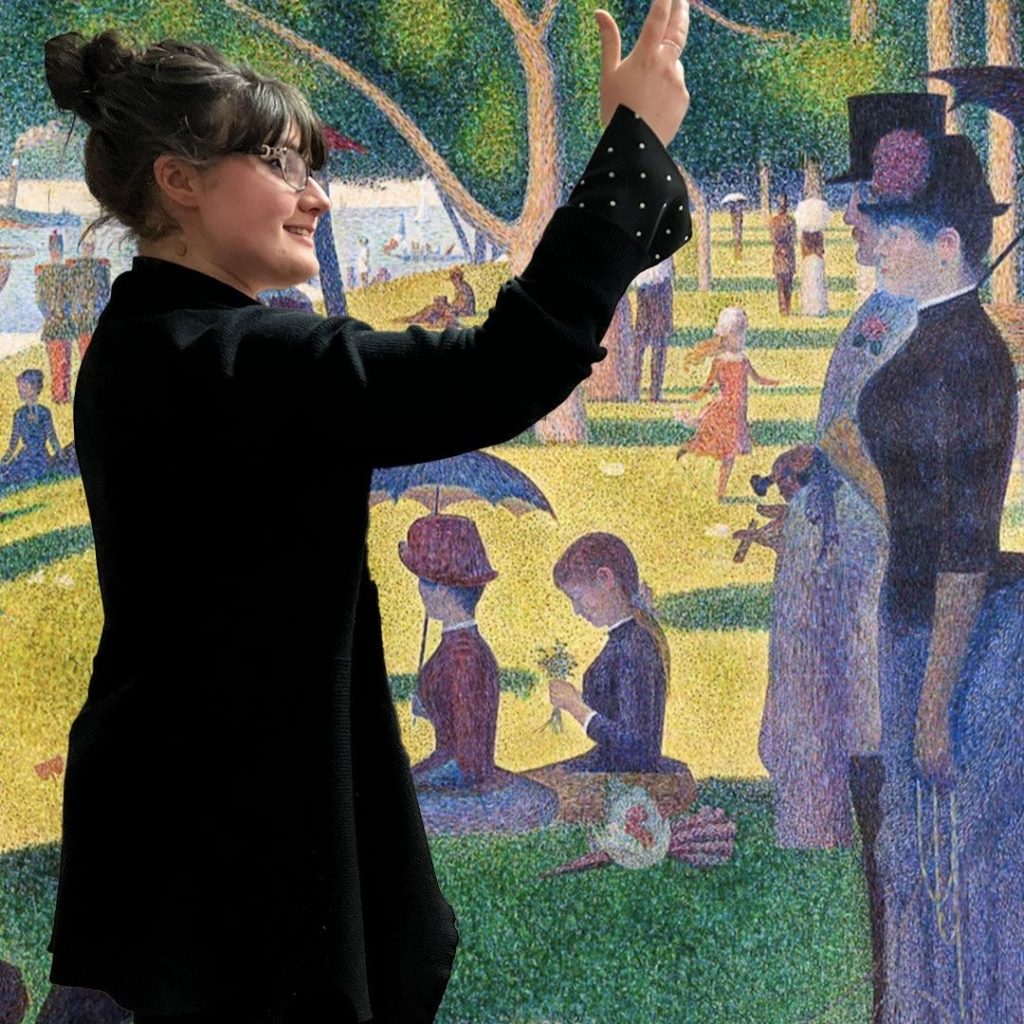
Picture pose: Pick Me Up Theatre’s Emma-Louise Dickinson, as Celeste, adds to the scene in Georges Seurat’s painting Sunday Afternoon On The Island Of La Grande Jatte, the inspiration for Stephen Sondheim and James Lapine’s musical Sunday In The Park With George

Baritone Sam Hird heads home with guitarist Tom Bennett for A Winter Night’s Recital by candlelight at All Saints’ Church

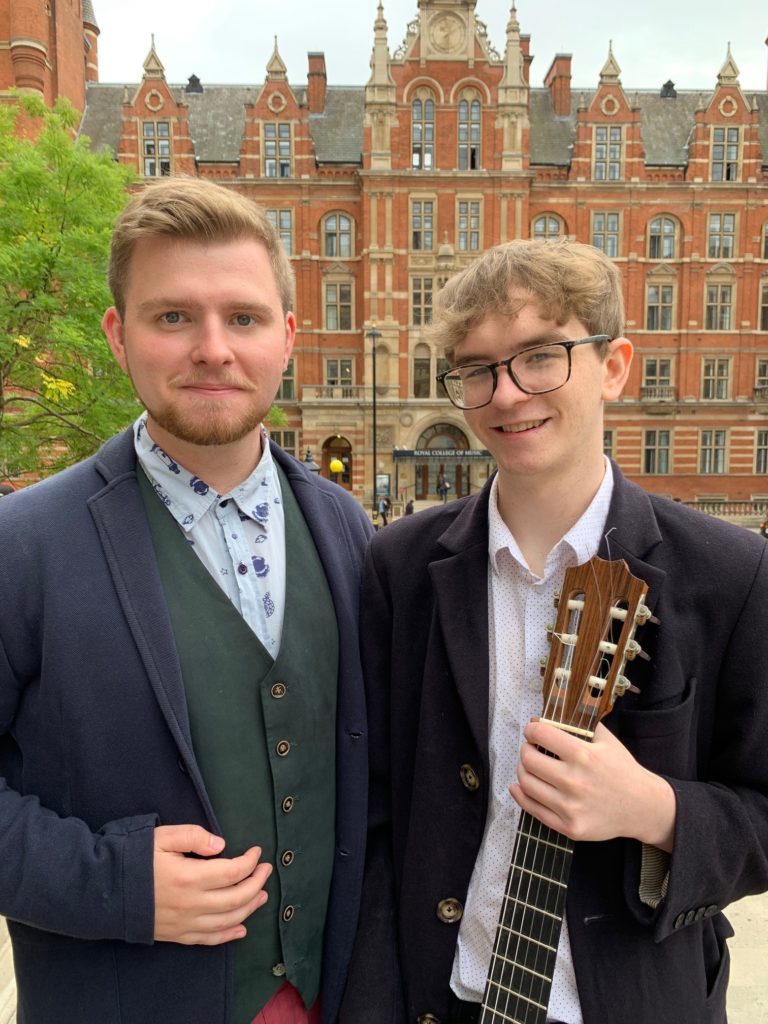
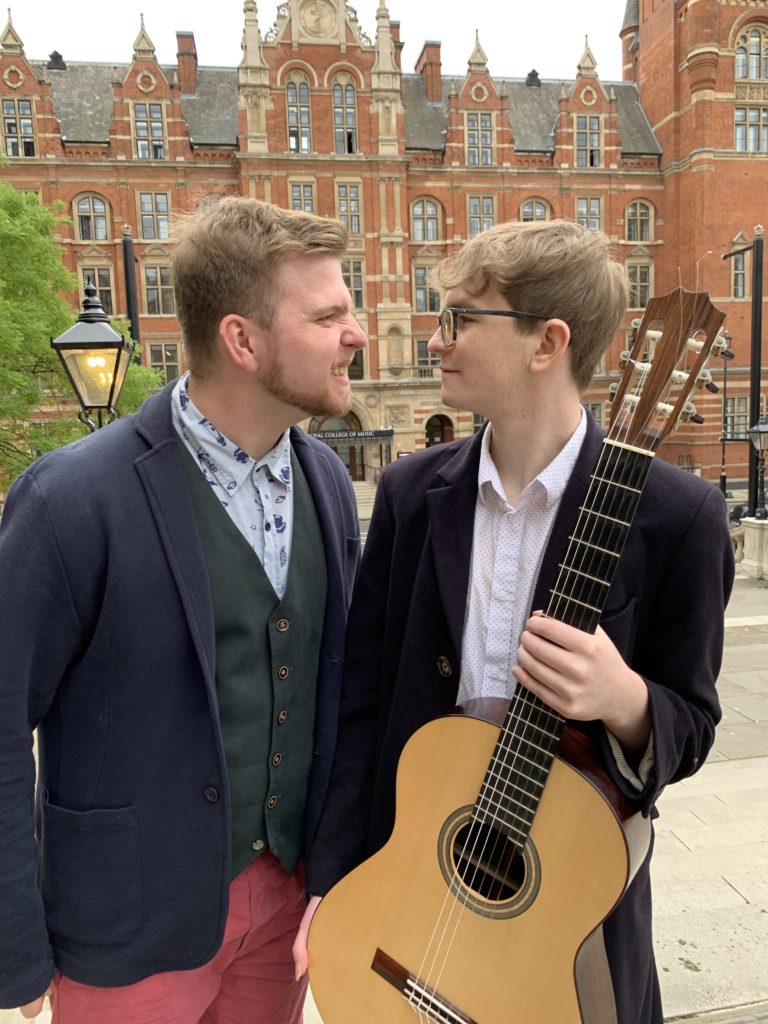
Baritone Sam Hird and guitarist Tom Bennett outside the Royal College of Music

JOIN York baritone Sam Hird and his fellow Royal College of Music graduate, guitarist Tom Bennett, for classical music by candlelight at All Saints’ Church, North Street, York, tomorrow night (9/12/2022).

A Winter Night’s Recital will feature songs from around the world including Schubert, Faure and Britten, complemented by festive favourites such as Adeste Fideles, O Holy Night and A Cradle In Bethlehem to stir the Christmas spirit at this cosy evening of December entertainment.

The 15th century All Saints’ Church will be the “perfect backdrop” to this 7pm to 9pm concert.  A glass of mulled wine and a mince pie is included in the ticket price of £10 plus booking fee, available from samhirdmusic.co.uk or on the door.

Heading north for Christmas: Tom Bennett and Sam Hird

Here, CharlesHutchPress welcomes Sam Hird back home to York ahead of his first professional solo recital

Why did you choose All Saints for this concert, Sam? What makes it a “perfect setting”? 

“I fell in love with this church a few years ago after being taken to a traditional service there. The acoustics were gorgeous, the church was beautiful – especially the mediaeval stained glass windows – and above all the atmosphere was incredible. As with so many places in York, you can really feel the history when you’re inside the building.”

Have you sung there before?

“I rehearsed there around the same time as that service. A particularly memorable moment was getting to sing Make Our Garden Grow from Bernstein’s Candide. Surrounded by a host of marvellous singers, I remember getting shivers from the sound ringing round the whole church after we’d finished the final ‘grow!’ of the piece.” 

Congratulations on graduating this year with a First, Sam. How have you found the experience of studying at the Royal College of Music? 

“It has always been an exhilarating experience from day one. Getting to learn from incredible industry professionals and singers that I’ve always looked up to, like the brilliant Sally Burgess, was invaluable. The astonishing feeling of walking through the same corridors that Benjamin Britten would have walked through has never worn off.” 

How has the training had an impact on your singing?


“It’s had a huge impact. Most of my experience in York before moving to the Royal College in London was in acting through song in musicals such Sweeney Todd, Assassins, My Fair Lady and playing Jean Valjean in Les Miserables.

“The vocal training at the RCM, through so many top-notch practitioners, including my singing teacher, the baritone Peter Savidge, has built up my classical voice and given me a whole new toolkit for singing at a different level.”

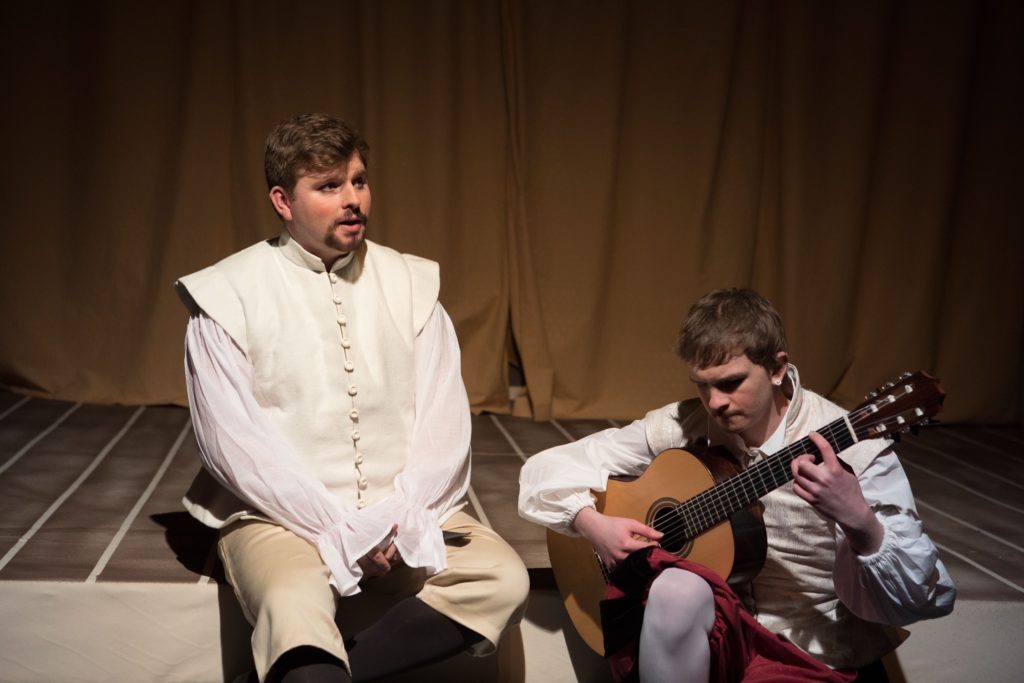
Sam Hird and Tom Bennett performing an Elizabethan ballad in Pick Me Up Theatre’s April production of Shakespeare In Love, directed by Sam’s father, Mark Hird, at Theatre@41, Monkgate, York


When did you first perform with Tom?

“We used to play through Benjamin Britten folk songs in my room in halls in our first year, as and when we wanted some respite from pizza and the students’ union bar!

“But we first performed in front of an audience for my third-year recital, where we did some French folk songs and an aria from Don Giovanni.

“We also performed in York together in April when Tom’s guitar playing was an important part of Pick Me Up Theatre’s production of Shakespeare In Love at Theatre@41, Monkgate, and we performed a beautiful Elizabethan ballad together. We’ll reprise it in our winter concert in a sequence of Shakespeare songs.”

What do you enjoy about performing to guitar accompaniment?

“It’s a completely different experience to singing with a piano; somehow it instantly feels more intimate. I find the sound-worlds of the voice and guitar blend really beautifully, and I like that there’s more scope to be a little more daring in terms of the quieter moments.” 

When choosing a programme, what factors do you take into consideration to achieve balance?

“When Tom and I set out with programming, one of the key factors is available music, as most of what is written for voice and guitar is for tenors – lucky things! But we like to have sections in different languages with ebbs and flows in each part.

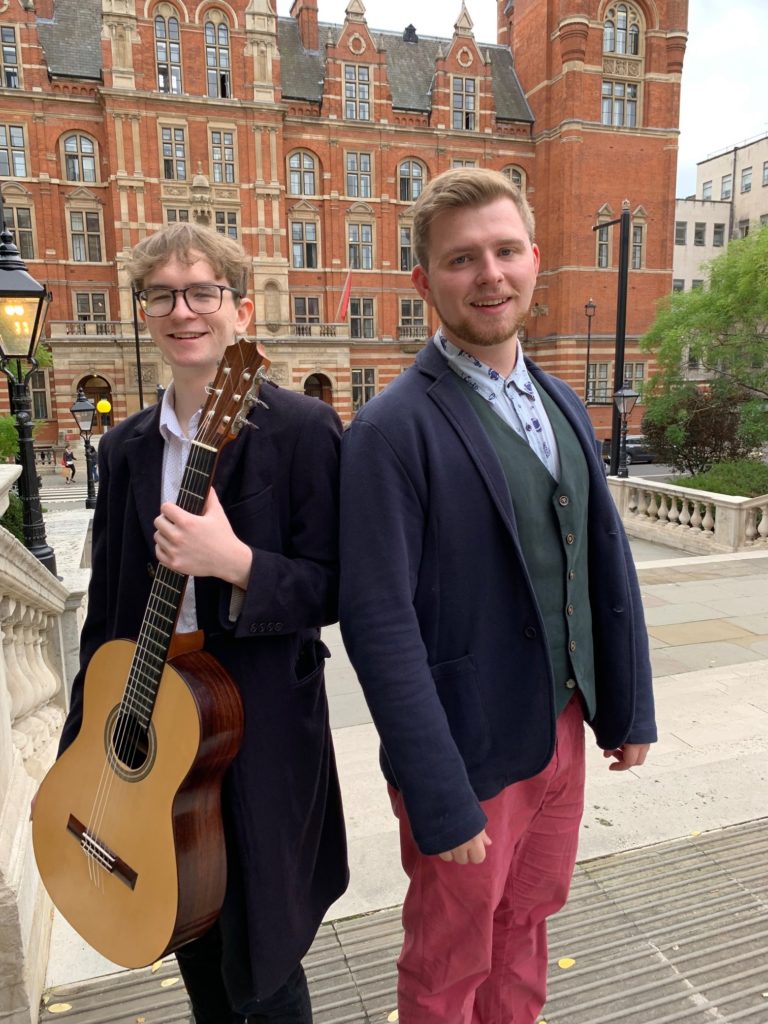
Sam Hird and Tom Bennett in a light moment outside the Royal College of Music

“We really enjoy putting in the first few pieces from a song cycle (like Schubert’s Die Schöne Müllerin) as that gives us a clear, defined journey to try and take the audience on with us.”  

How has the winter season infiltrated tomorrow night’s programming?

“We’ll be covering a lot of ground in terms of styles and sound worlds but the candlelit winter setting with mulled wine definitely made us want to find some ‘cosy-sounding’ songs to suit the season – and a few classic Christmas tunes tucked themselves in early on in the planning stages.” 

On leaving college, how do you go about building your career?

“Thankfully, I have another two years of Masters to try and get the definitive answer to that excellent question! I’ll be putting myself forward for quite a few competitions and keeping an eye out for auditions for appropriate solo opportunities.

“But the dream would be to join a Young Artist’s Programme, where I would hope to cover some main roles and perform smaller parts in operas. That would be an incredible learning experience and hopefully an important stepping stone for my musical career.” 

Catherine Mackintosh to receive York Early Music Festival Lifetime Achievement Award

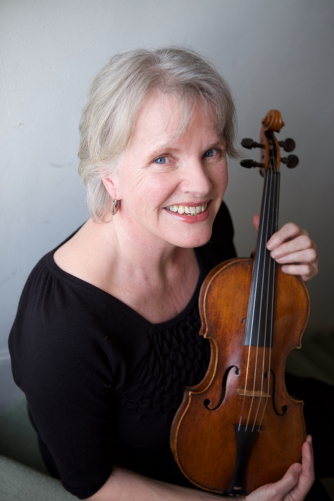
Catherine Mackintosh: Lifetime Achievement Award

AFTER a two-year wait, violinist Catherine Mackintosh will be presented with the York Early Music Festival’s Lifetime Achievement Award on July 10.

The belated ceremony will take place during the 2022 York Early Music Festival, to be held from July 8 to 16.

Known to the profession as Cat, Mackintosh is a pioneering force in the British early music scene. After picking up a treble viol while studying at the Royal College of Music, London, she never looked back.

Consort-playing gave her the foundations of understanding the aesthetics and language of baroque music, soon to be translated to the violin. She led various orchestras, notably Christopher Hogwood’s Academy of Ancient Music, and later co-founded and led the Orchestra of the Age of Enlightenment for two decades.

As a founder of the Purcell Quartet, Cat recorded and performed all the major works of the baroque trio-sonata repertoire – and much more – the world over. She was also Britain’s pioneer and champion of the viola d’amore.

Cat’s influence as a teacher and educator has been far-reaching, with many generations of violinists, violists and other instrumentalists passing through her hands at the Royal College of Music and the Royal Conservatoire The Hague, as well as on numerous courses worldwide. 

Cat will be interviewed from the National Centre for Early Music, in Walmgate, by Hannah French on BBC Radio 3’s Early Music Show on July 10, broadcast live from the festival. Post-show, she will be presented with the award, in front of an audience, by Romanian-born Israeli violinist Kati Debretzeni, who studied Baroque violin with Cat at the Royal College of Music.

The York Early Music Lifetime Achievement Award honours major figures for making a significant difference to the world of early music. Previous winners were: Kuijken String Quartet in 2006; Dame Emma Kirkby, 2008; James Bowman, 2010; Jordi Savall, 2012; Andrew Parrott, 2014; Anthony Rooley, 2016, and Trevor Pinnock, 2018.

Commenting on the award, Cat says: “I ask myself…is it really an achievement to have enjoyed 50 years doing what I love with people I love and admire? Only in the sense of having survived this long! 

“Anyway, I am tremendously touched and honoured to receive this award and to join the list of the previous recipients – all friends and colleagues from whom I’ve learnt much and with whom I have happily travelled this musical road.”

NCEM director and festival artistic director Delma Tomlin enthuses: “I’m delighted that Catherine will finally be receiving this award after a rather long wait!  She has a long association with the NCEM and the festival.

“Her wonderful career, not just as a performer, but also as a mentor and teacher, has had an extraordinary impact on the world of early music. We can’t wait to welcome her to York and celebrate this amazing achievement with her this July.”

The full festival programme and ticket details can be found at ncem.co.uk/what’s-on/yemf/.

Ensemble Molière are first New Generation Baroque Ensemble with NCEM, Royal College of Music and BBC Radio 3 support

Ensemble Molière: First New Generation Baroque Ensemble

ENSEMBLE Molière will be the first New Generation Baroque Ensemble from October, backed by the National Centre for Early Music, York, BBC Radio 3 and the Royal College of Music.

The new scheme will showcase and nurture exceptional British-based ensembles in the early years of their professional careers in the baroque sphere, supporting them to new heights of professionalism and artistry over two years, using the range of expertise, performance and recording opportunities available through each partner organisation.

A new group will join the programme in 2023 to begin a new two-year programme, helping to encourage UK Baroque ensembles of the future, supporting artists at a crucial stage in their careers. 

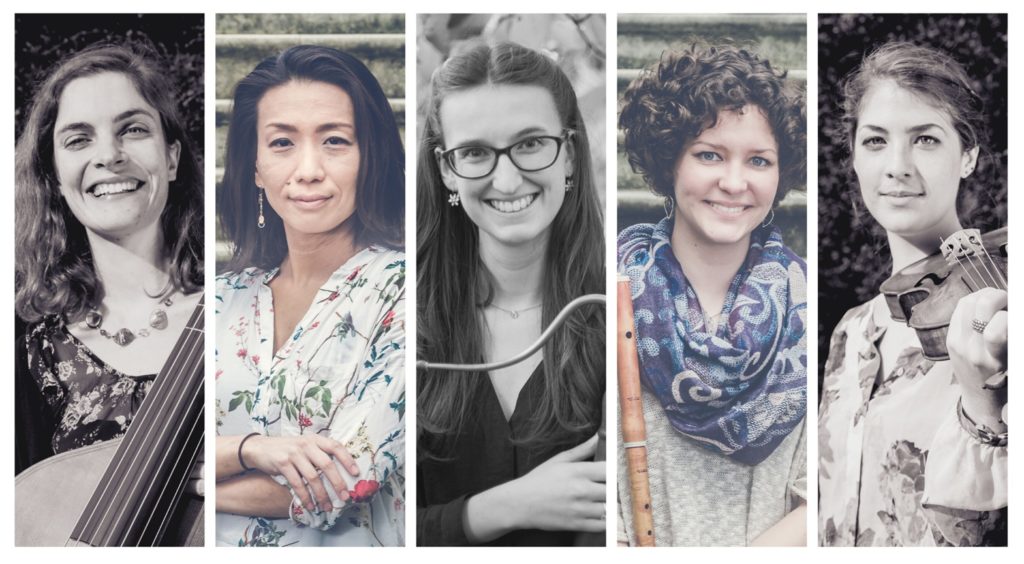
Comprising five musicians playing on historic instruments, Ensemble Molière combine flute, violin, bassoon, viola da gamba/cello and harpsichord in creative programmes from the 17th and 18th century repertoire, performed at many of the leading Baroque and Early Music festivals.

Chosen through a non-competitive process to become the first New Generation Baroque Ensemble, ensemble musicians Flavia Harte, Alice Earll, Catriona McDermid, Kate Conway and Satoko Doi-Luck can build on their early success through residencies at the NCEM and Royal College of Music (RCM) and a regular presence on BBC Radio 3, enabling them to further develop their professional skills, reputation, profile and artistry.

BBC Radio 3’s Early Music Show will feature Ensemble Molière on Sunday, September 19 at 2pm in the first of a series of regular updates, performances and features about the group.

Ensemble Molière say: “We are thrilled and honoured to be appointed the first ever BBC New Generation Baroque Ensemble and to become part of the New Generation family. We are looking forward to collaborating with the wonderful team from three organisations – BBC, RCM and NCEM – as well as to the opportunities and experiences we will enjoy on the scheme, including live performances and broadcasts.

“It will be a fantastic springboard for Ensemble Molière and will help us reach the next step as a group. We are very grateful to the New Generation Baroque Ensemble team for their support.”

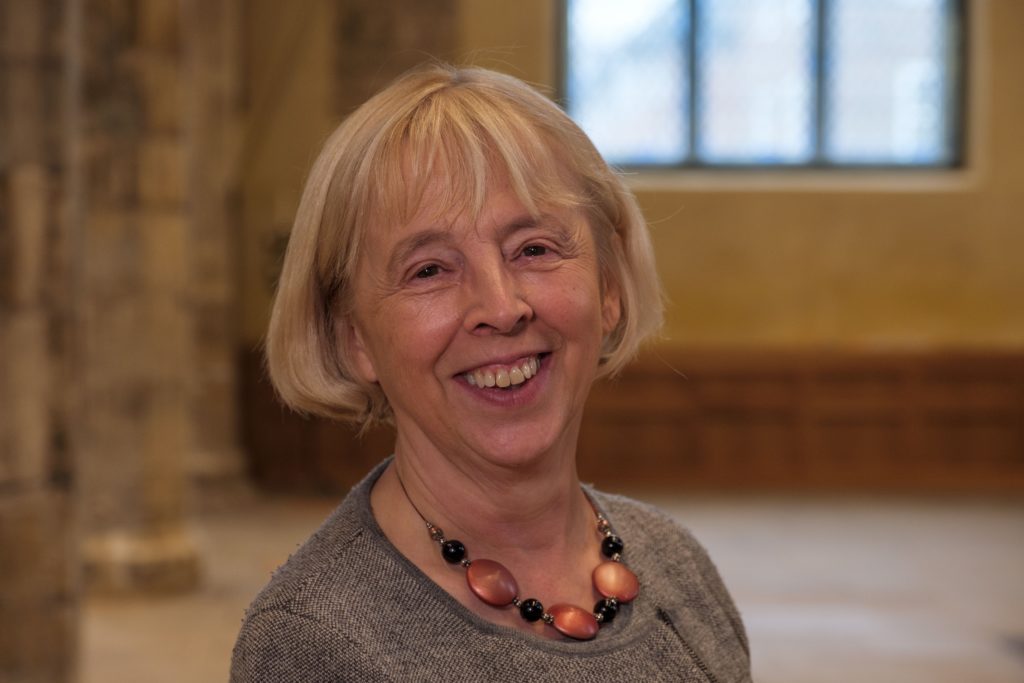
“Ensemble Molière have an amazing future ahead of them,” says NCEM director Delma Tomlin

NCEM director Delma Tomlin says: “We are thrilled to be part of this UK-based venture that takes place over the next two years and we look forward to welcoming Ensemble Molière, who will be performing in our festivals in Beverley and York.  

“It’s wonderful to be working with the Royal College of Music and BBC Radio 3 once again and this is a fabulous opportunity for Ensemble Molière, who have an amazing future ahead of them.”

BBC Radio 3 controller Alan Davey says: “For some time, we have been keen to see if we can offer help and support to UK-based period-instrument ensembles in the early stages of their careers to allow them to develop and thrive with the same kind of spirit of innovation and adventure we see in the best ensembles across the world.  

“With this new scheme – as with our hugely successful New Generation Artists and New Generation Thinkers programmes – we want to support the best new talent and by working in partnership with the chosen Baroque ensembles and with the NCEM and RCM, we hope to build an even richer world of  ambitious, innovative  and thrillingly excellent music-making for the future.

“We are delighted to welcome Ensemble Molière and look forward to working with them over the coming years to bring their extraordinary music to wider audiences.”

Professor Ashley Solomon, head of historical performance at the Royal College of Music, says: “I am absolutely delighted that together with our colleagues at the NCEM and BBC Radio 3 we have appointed Ensemble Moliere as the first ensemble in the New Generation Baroque Ensemble scheme that we are now launching.

“Nurturing and inspiring the new generation of historical performers is part of our ethos at the Royal College of Music and I look forward to working with and mentoring the players in this exceptional ensemble. We hope that this unique opportunity will help support and enable them to thrive.”

Ensemble Molière’s musicians are:  Flavia Hirte, flute; Alice Earll, violin; Catriona McDermid, bassoon; Kate Conway, viola da gamba/cello, and Satoko Doi-Luck, harpsichord.


NCEM to take part in New Generation Baroque Ensemble nurturing scheme

“This partnership with BBC Radio 3 and the RCM is a wonderful opportunity and a chance to really make a difference,” says NCEM director Delma Tomlin

THE National Centre for Early Music, York, is collaborating with BBC Radio 3 and the Royal College of Music in a project to inspire British classical talent during the Covid-19 pandemic.

The BBC Radio 3 New Generation Baroque Ensemble Scheme will support the “ongoing professionalisation” of a selected early music ensemble over a two-year period, with one ensemble being chosen each year.

The focus will be on providing opportunities for live performance, broadcasting sessions on BBC Radio 3, mentoring, coaching and provision of rehearsal facilities in the early years of a baroque group’s professional career.

It is envisioned the ensemble will be a primarily instrumental group of three to six musicians, who perform repertory from 1600 to 1800 using historically informed playing techniques, instruments and stylistic conventions.

The ensemble must be based in Britain throughout the programme and should be available for studio recordings, coaching sessions, open rehearsals and performances in York, Beverley and London, as well as being interested in developing management and professional career skills.   

It is envisaged the first group will join the programme from October 2021.  The NCEM will act as the central administration and point of contact for the duration of the project, and ensembles will be expected to enter into a formal contract with the NCEM.

Please note that selection will be made by the NCEM, BBC and RCM on the basis of talent spotting, appraisal and recommendation. The scheme is not a competition and there is no application process. For information on all NCEM opportunities, email ngbe@ncem.co.uk.

This nurturing and support project aims to counter the trend for ensemble playing –practised widely by young British early music instrumentalists during their formative years – losing momentum after post-graduate studies.

While the main scheme has been postponed in response to the Coronavirus crisis, the team behind it wanted to still support young players at this turbulent time by offering access to experts in the field as part of a special development day.

The New Generation Baroque Ensemble developmental workshop will be held at the Royal College of Music, London, on Sunday, November 15.

The autumn event, organised in strict compliance with guidelines on social distancing, will give ensembles an opportunity to present selected repertoire to representatives from the NCEM, BBC Radio 3 and RCM, receiving feedback on the session and generally on career development.

Expressions of interest in taking part should be submitted by Friday, October 9, with full details at ncem.co.uk.

NCEM director Delma Tomlin says: “The NCEM has been thoroughly supportive of the professional development of early music ensembles since its inception – working nationally, and internationally through the Creative Europe EEEmerging programme and the biennial Young Artists Competition.

“This partnership with BBC Radio 3 and the RCM is the culmination of many years’ work to promote UK-based instrumental ensembles.  It is a wonderful opportunity and a chance to really make a difference.”   

Alan Davey, controller of BBC Radio 3 and classical music, says: “Throughout the pandemic, one of our main concerns as broadcasters has been to support performers and composers in these difficult times, through leading on the return to live music, new commissions and replays of archive performances.

“The New Generation Baroque Ensemble Scheme’s November workshop is further testament to our support for upcoming and established artists on the scene at a time of much uncertainty in the world.”

Ashley Solomon, the RCM’s head of historical performance, says: “I am delighted that the RCM will be involved in this new initiative in collaboration with our colleagues at the BBC and NCEM.

“Nurturing and inspiring the new generation of historical performers is part of our ethos at RCM and I look forward to working with and mentoring the successful ensemble. It is a wonderful and unique opportunity for these New Generation Baroque Ensembles as they embark on their professional careers.”

The BBC Radio 3 New Generation Baroque Ensemble Scheme joins the stable of talent projects run by the BBC, such as BBC Introducing Classical/Jazz/World, New Generation Artists and New Generation Thinkers.