All aboard for the Royal Shakespeare Company’s Hamlet, set on a sinking ship in 1912. Picture: Marc Brenner
SOMETHING is still rotten in the state of Denmark, but now on board a sinking – not stinking – ship in 1912, rather than at Kronborg Castle, Elsinore.
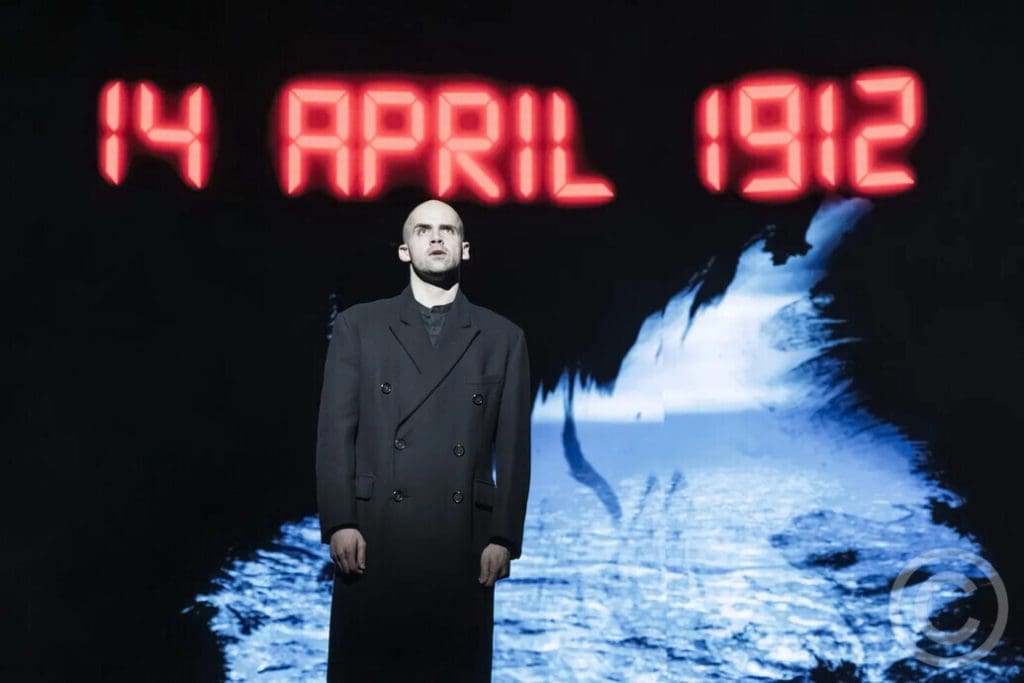
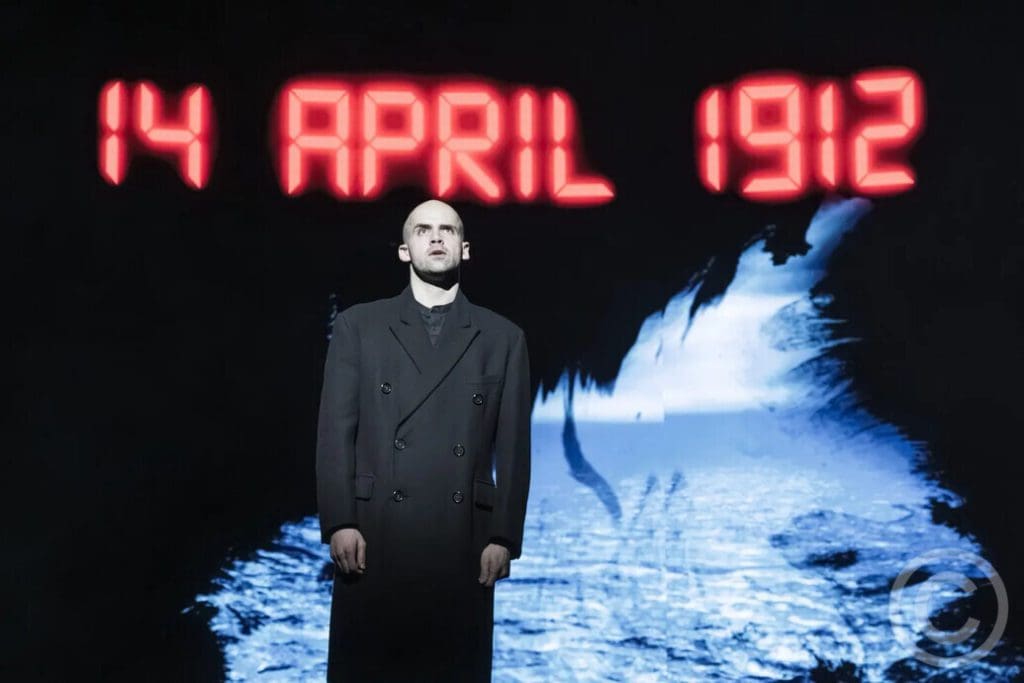
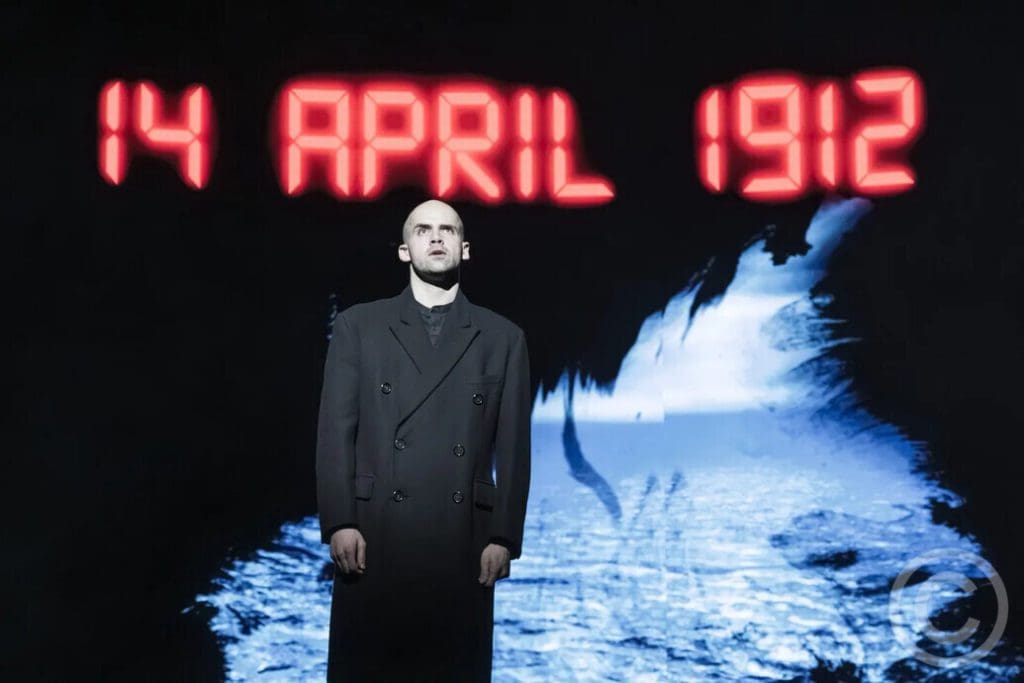
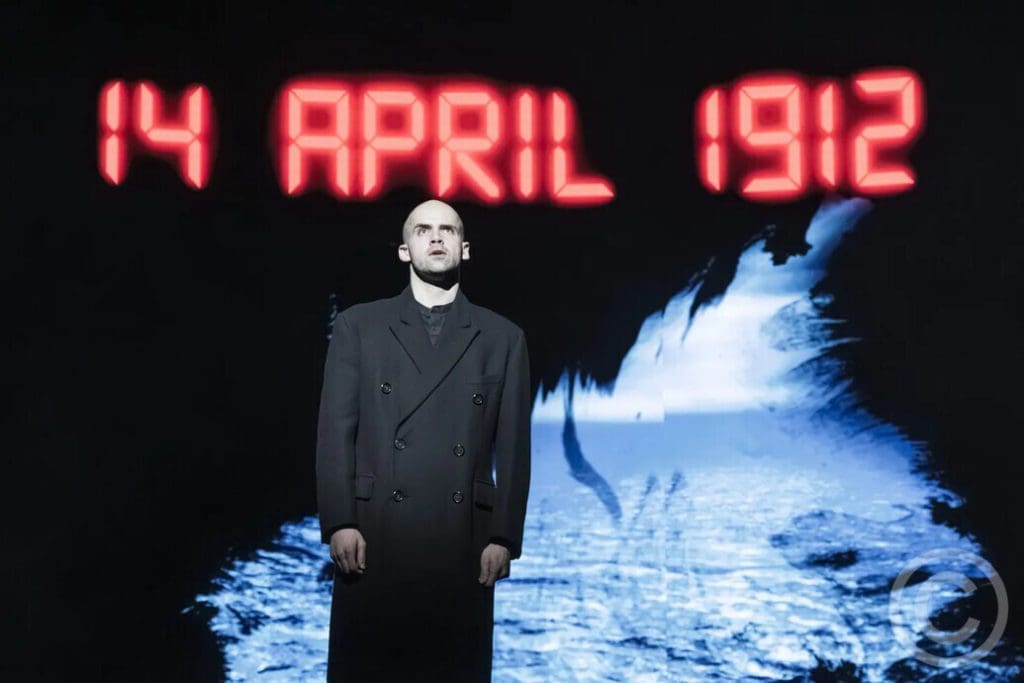
Steered on tour by revival director Sophie Drake (what a good surname for nautical adventures), Rupert Goold’s Royal Shakespeare Company production takes to the seas on April 14 as the clocks to each side of the stage click round to midnight and beyond, marking the 114th anniversary of the demise of the RMS Titanic.
As chance would have it, the York Theatre Royal run opened that night, adding to the poignancy of the occasion. Hamlet is played out in Es Devlin’s design on an expansive deck that restores a spectacular rake to the Theatre Royal stage for the first time since the 2016 renovation, recalling the days when nervous touring companies and repertory shows alike used anti-rake furniture to defy the steep incline.
Complemented by Adam Cork’s sound design of the sea’s swirling motions and hum of the engine, the ship’s bow crests the waves in Akhila Krishnan’s video projections of the ever-rising, whirling, freezing waters, into which the coffin of King Hamlet is tossed, wrapped in the flag of Denmark.
“Hamlet is a play about the inevitability of death: the death of fathers, the death of kings, the mortality facing each and every one of us, but it is also a play about how to live, what makes a good life and a just one too, however brief our allotted time,” says Goold, in a concise summary of Shakespeare’s greatest play.
As happened on the Titanic, Hamlet’s tragedy will “come to pass in a little over two and a half hours”, taking place in real time, lending urgency to Goold and Shakespeare’s quest to answer the question of “what it means to be human and decisive when time is running out”.
In doing so, Goold achieves his desired balance of catastrophic thriller and poetic meditation, a wish made flesh in Ralph Davis’s Hamlet, who is as physical in the sound of speech as he is in movement.
Shaven head meets skull as Ralph Davis’s Hamlet recalls his childhood encounters with late jester Yorick in the RSC’s Hamlet. Picture: Marc Brenner
On occasion, you need to suspend disbelief and go with the flow instead, bathing in the innovation and imagination of an audacious production that is shipshape and Bristol fashion in its delivery. Georgia-May Myers’ Ophelia still dies by drowning; Davis’s Hamlet kills Richard Cant’s delightfully camp, theatrical Polonius with a pistol (referred to as a “rapier”) but fights Benjamin Westerby’s hot-headed Laertes with a sword.
Hamlet will be sent off to England as usual, only to return minutes later, but that is fine. The claustrophobia of a ship from which he cannot escape is a physical manifestation of his mental descent into Elsinore being a prison. Such constraints compound his “madness”.
Davis’s tall, lithe, shaven-headed Hamlet, often bare footed and in rolled-up trousers, is a chameleon in appearance, matching his mood, whether in dark coat, baggy white shirt, red jumper and shorts, ship’s captain’s cap or bowler hat and tails.
His voice keeps shifting gear and accent too, poised and reflective in his set-piece soliloquies; quick to anger with mother Gertrude (Poppy Miller) and murderous Claudius (Raymond Coulthard); haunted in his encounter with the Ghost of his father (Ian Hughes); sometimes playful yet earnest too with best friend Horatio (Colin Ryan) and the Player King (Ian Hughes); ever-changing in tone with Ophelia.
He can be mocking too, mimicking the American accents of dandy, cloth-headed old school friends Rosencrantz (Jamie Sayers) and Guildenstern (Julia Kass). Further impersonations bring out the theatrical in Hamlet (who commissions the incriminating play The Mousetrap), whether in mannerism or voice. At one point, Davis seems to assume a Belgian accent to say “murder” in the manner of David Suchet’s Poirot.
The auditorium may have felt as hot as the ship’s engine room, but setting a play full of water imagery on an icy ship is a voyage of re-discovery that brings out that sinking feeling, the depths of despair in Hamlet to full fathom five. If ‘to sea or not to sea’ is the question, the answer is See It Now.
Royal Shakespeare Company in Hamlet, York Theatre Royal, 7pm tonight; 2pm and 7pm tomorrow. Box office: 01904 623568 or yorktheatreroyal.co.uk.
Depths of despair: Ralph Davis’s Hamlet, adrift at sea in an undertaker’s coat in the RSC’s Hamlet. Picture: Marc Brenner
Ralph Davis’s Hamlet in the Royal Shakespeare Company’s Hamlet, set on a sinking ship, on tour at York Theatre Royal. Picture: Marc Brenner
HAMLET on a sinking ship, family politics on a calamitous wedding day and artists’ studios opening on two weekends are the headline acts on Charles Hutchinson’s latest bill of arts delights.
Titanic anniversary event of the week: Royal Shakespeare Company in Hamlet, York Theatre Royal, until Saturday,7pm plus 1.30pm, April 16 and 2pm, April 18
LET director Rupert Goold introduce the Royal Shakespeare Company’s Hamlet, starring Ralph Davis, as the tour sets sail for York on the 114th anniversary of the Titanic’s descent to the depths. “Our production is set aboard a ship but one that is soon to founder, going down with all hands,” he says.
“Its inspiration comes from the most famous sinking in history, and just as that icy tragedy came to pass in a little over two and a half hours, our play takes place in real time and for about as long, as much catastrophic thriller as poetic meditation. This production asks what it means to be human and decisive when time is running out.” Box office: 01904 623568 or yorktheatreroyal.co.uk.
Wedded bliss amid wedding-day blisters: Darren Barrott’s Marek and Joy Warner’s Sylvia in York Actors Collective’s Till The Stars Come Down
Family politics of the week: York Actors Collective in Till The Stars Come Down, Theatre@41, Monkgate, York, 7.30pm, tonight to Friday; 2pm and 6pm, Saturday
PREMIERED at the National Theatre in 2024 and now receiving its York premiere, Beth Steel’s contemporary British family drama is set on the wedding day of Sylvia and Marek in a South Yorkshire mining town.
Directed by Angie Millard, Till The Stars Come Down explores the tumultuous dynamics of a working-class family in a changing world of economic decline and political shifts as long-held secrets, passions, and tensions surrounding class, immigration, and social change spill over into chaos and tragedy. Box office: tickets.41monkgate.co.uk.
Aggers & Tuffers: The chatter of cricket and the clatter of wickets at York Barbican
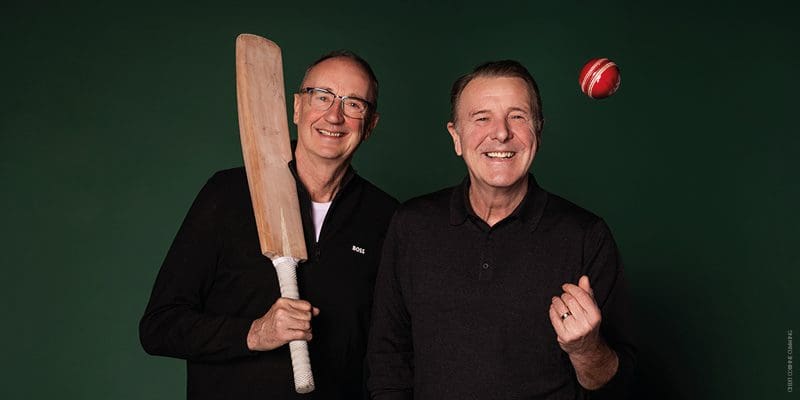
Not just cricket: Jonathan Agnew and Phil Tufnell in An Audience With Aggers & Tuffers, York Barbican, tomorrow, 7.30pm
TEST Match Special commentator-and-pundit duo Jonathan Agnew and Phil Tufnell take to the road for more cricket chat from beyond the boundary. Former Leicestershire and England fast bowler and three-decade BBC cricket correspondent Aggers teams up anew with record-breaking former England spin bowler and crowd favourite Tuffers, who gives his spin on his maverick playing days and second wind as a media personality on I’m A Celebrity, Get Me Out Of Here, Strictly Come Dancing and A Question Of Sport. Box office update: limited availability at yorkbarbican.co.uk.
Patricia Veale School of Dance: Showcasing young talent in Show Dance
Dance show of the week: Patricia Veale School of Dance in Show Dance, Joseph Rowntree Theatre, York, Friday, 7.30pm, and Saturday, 2.30pm and 7.30pm
IN an exciting celebration of dance, the Patricia Veale School of Dance showcases its talented dancers in their very first Show Dance, drawing inspiration from classic musicals on film and Broadway, complete with top hats, flair and razzle-dazzle. Expect a vibrant mix of ballet, jazz, contemporary, tap and much more besides. Box office: 01904 501935 or josephrowntreetheatre.co.uk.
Rainey’s Revue: Evoking A Night In Harlem in….Helmsley
Jazz gig of the week: Rainey’s Revue: A Night In Harlem, Helmsley Arts Centre, Friday, 7.30pm
LED by Richard Exall on tenor saxophone and clarinet and musical director Dom Barnett on piano, Rainey’s Revue presents meticulous arrangements of Ma Rainey’s songs while capturing the essence of the 1920s, 1930s and 1940s.
Sam Kelly, on drums, and Marianne Windham, on double bass, set the rhythmic foundation for the enchanting voices of Chrissie Myles and Emily Windham, whose vocals evoke the jazz clubs of yesteryear. Box office: 01439 771700 or helmsleyarts.co.uk.
Comedy gig of the week: Hilarity Bites Comedy Club presents David Eagle, Anth Young and Nicola Mantalios, Milton Rooms, Malton, Friday, 8pm
HILARITY Bites headliner David Eagle has performed on BBC Radio 2’s topical comedy series The Now Show, supports Boothby Graffoe on tour frequently and is one third of three-time BBC Radio 2 Folk Award-winning band The Young’uns. Being blind, his comedy often explores how his disability means the most ordinary, commonplace events are turned into surreal and convoluted dramas.
Fellow north eastern act Anth Young finished runner-up in the Great Yorkshire Fringe New Comedian of the Year competition in 2017 in York. Completing the bill, Greek-Geordie bisexual comedian Nicola Mantalios won the 2025 Funny Women Stage Awards, hosts weekend shows at Newcastle Stand and runs her own gigs, such as Queers and Beers, in Newcastle. Box office: 01653 696240 or themiltonrooms.com.
The Rollin Stoned: Covering the hits and deeper cuts from The Rolling Stones’ 1960s’ catalogue at Milton Rooms, Malton
Tribute gig of the week: The Rollin Stoned, Milton Rooms, Malton, Saturday, 8pm
THE rock’n’roll circus rolls into Malton for a tribute to The Rolling Stones that focuses on the Brian Jones years from 1964 to 1969. Now in its 27th year, in The Rollin Stoned show the costumes are shamelessly camp, gaudy and fabulous, the instruments vintage, the wit irreverent, the trademark tongue never far from the cheek, but never to the detriment of the music.
As Keith Richards’ late mother, Doris, once remarked of the line-up featuring Mick Jaguar, Byron Jones, Keith Retched, Bill Wymandy, Charlie Waits and pianist Nicky Popkins: “Phenomenal…I can’t wait to tell Keith and Mick that you could easily stand in for them.” Box office: 01653 696240 or themiltonrooms.com.
Prachi Bhatnagar: Making York Open Studios debut at her Ouse Lea studio in York
Art event of the month: York Open Studios, York and beyond, April 18 & 19 and April 25 & 26, 10am to 5pm
ARTISTS and makers involved in York Open Studios are putting the final touches to their workplaces and studios within York and a ten-mile radius of the city, in readiness to welcome visitors across two weekends.
This annual event offers the chance to gain a sneak peek into where the artists work, their methods and inspirations, whether a regular participant or the 27 newcomers, spanning traditional and contemporary painting and print, illustration, drawing, ceramics, mixed media, glass, sculpture, jewellery, textiles and photography. For more information, visit yorkopenstudios.co.uk; access the interactive map at yorkopenstudios.co.uk/map.
Depths of despair: Ralph Davis’s Hamlet in the Royal Shakespeare Company’s Hamlet, docking at York Theatre Royal from April 14 to 18. Picture: Marc Brenner
THE Royal Shakespeare Company’s visit to York Theatre Royal with Rupert Goold’s production of Hamlet, set on a sinking ship, will coincide with the 114th anniversary of RMS Titanic’s demise on the night of April 14-15 in 1912.
Around 1,500 people perished at sea that night from the estimated 2,240 on board. Death stalks Shakespeare’s tragedy too, Polonius, Ophelia, Rosencrantz, Guildenstern, Queen Gertrude, Laertes, King Claudius and Hamlet himself joining his already dead father, King Hamlet.
“Hamlet is a play about the inevitability of death: the death of fathers, the death of kings, the mortality facing each and every one of us, but it is also a play about how to live, what makes a good life and a just one too, however brief our allotted time,” says Goold.
“Our production is set aboard a ship but one that is soon to founder, going down with all hands,” says Goold. “Its inspiration comes from the most famous sinking in history, and just as that icy tragedy came to pass in a little over two and a half hours, our play takes place in real time and for about as long, as much catastrophic thriller as poetic meditation. It’s a production that asks what it means to be human and decisive when time is running out.”
Among those joining Ralph Davis’s Hamlet in Goold and revival director Sophie Drake’s touring cast in Shakespeare’s epic family drama of deceit and murder is Royal Shakespeare Company regular Ian Hughes in the roles of King Hamlet’s Ghost and the Player King.
From April 14 to 18, he will be returning to York Theatre Royal, 38 years since he made his professional debut in the 1988 pantomime Peter Pan, in the days when Frank Barrie played the dame. “Frank had made his debut there too in 1959 in Henry IV, Part 2, the play that marked my debut for the RSC in the 1990s – and I’ve learned that Frank had played Hamlet at the Theatre Royal in [March] 1974,” says Ian.
Ian Hughes, front, in the Royal Shakespeare Company’s Hamlet. Picture: Marc Brenner
“In another Yorkshire connection, Harrogate Theatre artistic director Andrew Manley saw me in Peter Pan and said afterwards, ‘do you fancy joining my Harrogate rep company?’. “I was a Kit Kat Girl in Cabaret; we also did Mrs Warren’s Profession, the regional premiere of Caryl Churchill’s Serious Money, Alan Bennett’s Forty Years On and the panto.
“Because I didn’t go to drama school, those Harrogate shows with Andrew were effectively my drama school after starting with the Theatre Royal panto, when I played John Darling, the boy with the top hat and the round glasses – and we got to ‘fly’!
“The Theatre Royal was beautiful, and it was so lovely to play there, when Frank made me so welcome. He was marvellous, dry-humoured company with his wonderful anecdotes of who he had worked with as an actor from an earlier time, when he had performed with [Laurence] Olivier.”
Ian was born in the South Wales Valleys, growing up in Merthyr Tydfil and joining the National Youth Theatre of Wales at 16 to work under director Alan Vaughan Williams, who nurtured the talents of Rob Brydon, Michael Sheen and Ruth Jones too. “Alan took no prisoners, treating us like professionals,” he recalls. “It was invaluable for me. I loved it.”
Only seven years later, Ian would be understudying Kenneth Branagh’s Hamlet in Adrian Noble’s production at the RSC. “I was 23, so I have a long connection with the play. I had to learn every line of the Second Quarto version, which runs to more than four hours [making Hamlet the role with the most lines in Shakespeare’s 37 plays] – and I never went on once!
“Kenneth kept saying ‘people are flying in to see me, I have to go on’, so I never had the chance, despite learning all those lines.”
That sinking feeling: The Royal Shakespeare Company staging Hamlet on a ship in 1912. Picture: Marc Brenner
Instead, Ian had to content himself with playing Polonius’s servant Reynaldo and Fortinbras. “Part of the reason that I joined the RSC was because I’d just won the inaugural Ian Charleson Award for my [title] role in Johann Wolfgang von Goethe’s Torquato Tasso at the Lyric Hammersmith,” he says.
“I didn’t know anything about the award. I got asked to go to the National Theatre and found I was up against Simon Russell Beale in the RSC’s Edward II, thinking ‘I’m just this young actor from South Wales’. I won £5,000 and was presented with the award by Sir Alec Guinness. What a wonderful start to a career.”
Ian has gone on to play multiple parts for the RSC, most recently appearing in The Merry Wives Of Windsor two summers ago. Now he returns as the Ghost and Player King. “These parts appealed to me as a character actor,” he says. “I thought, ‘I fancy a go at these’, because of the interest in Hamlet, and the short tour appealed too.”
Analysing the impact of setting Hamlet on a ship,” Ian says. “In a nutshell, it brings out the claustrophobia. That exacerbates Hamlet’s feeling of frustration that he can’t escape. The sinking of the ship is effectively the metaphor of Denmark being a prison for Hamlet, and I think that works very well. Shakespeare’s plays are open to reinterpretation, and this reinterpretation is very powerful, with all its technical accomplishments too.
“Because Hamlet has so many water and sea references, you could be drowning in the play.”
Royal Shakespeare Company in Hamlet, York Theatre Royal, April 14 to 18, 7pm plus 1.30pm, Thursday, and 2pm, Saturday. Box office: 01904 623568 or yorktheatreroyal.co.uk.
Djibril Ramsey’s Barnardo , Ralph Davis’s Hamlet and Colin Ryan’s Horatio in the Royal Shakespeare Company’s Hamlet. Picture: Marc Brenner
THE Royal Shakespeare Company will present multi award-winning Rupert Goold’s touring production of Hamlet at York Theatre Royal from April 14 to 18.
“Hamlet is a play about the inevitability of death: the death of fathers, the death of kings, the mortality facing each and everyone of us, but it is also a play about how to live, what makes a good life and a just one too, however brief our allotted time,” says Goold.
The York run will coincide with the 114th anniversary of the sinking of the RMS Titanic on the night of April 14-15 in 1912.
“Our production is set aboard a ship but one that is soon to founder, going down with all hands,” says Goold. “Its inspiration comes from the most famous sinking in history, and just as that icy tragedy came to pass in a little over two and a half hours, our play takes place in real time and for about as long, as much catastrophic thriller as poetic meditation. It’s a production that asks what it means to be human and decisive when time is running out.”
Georgia-Mae Myers’ Ophelia. Picture: Marc Brenner, Royal Shakespeare Company
Shakespeare’s epic family drama of deceit and murder will feature classical actor Ralph Davis in the title role of Hamlet. He was nominated for the 2023 Ian Charleson Award for his performance as Benedick in Much Ado About Nothing, appeared as Edmund in King Lear, both at Shakespeare’s Globe, and played Iago in Othello at the Sam Wanamaker Playhouse, for which he came second in the 2025 Ian Charleson Awards.
As well as theatre credits at the Almeida, Chichester Festival Theatre, Ustinov Studio and elsewhere, Davis’s RSC credits include Tamburlaine, Timon Of Athens, Richard III and King John.
Davis co-wrote, created and starred in Film Club for the BBC in 2025. His other screen credits include House Of The Dragon for HBO, Big Boys for Channel 4 and SAS: Rogue Heroes, Life After Life and Steve McQueen’s Small Axe for the BBC.
Ship shape: Rupert Goold’s cast in the Royal Shakespeare Company’s Hamlet. Picture: Marc Brenner
Alongside Davis’s Hamlet in the RSC cast will be Rob Alexander-Adams (Voltemand); Richard Cant (Polonius); Kat Collings (Ensemble); Raymond Coulthard (Claudius); Maximus Evans (Marcellus); Ian Hughes (Ghost/Player King); CJ Johnson (Player Queen); Julia Kass (Guildenstern); Poppy Miller (Gertrude); Georgia-Mae Myers (Ophelia); Mark Oosterveen (Cornelius/Priest); Djibril Ramsey (Barnardo); Colin Ryan (Horatio); Jonathan Savage (Ensemble); Jamie Sayers (Rosencrantz); Leo Shak (Francisco) and Benjamin Westerby (Laertes).
Goold directed Dear England for the National Theatre and Romeo And Juliet and The Merchant Of Venice (RSC). This year he will take up the role of artistic director of The Old Vic after 13 years at the Almeida Theatre.
He has received Olivier, Critics’ Circle and Evening Standard awards for best director twice and won a Peabody Award in 2011 for Macbeth. In 2017 he received a CBE in the New Year’s Honours for services to drama.
Joining Goold on the creative team are revival director Sophie Drake; set designer Es Devlin; costume designer Evie Gurney; lighting designer Jack Knowles; composer and sound designer Adam Cork; movement director Hannes Langolf; video designer Akhila Krishnan; fight director Kev McCurdy; dramaturg Rebecca Latham and casting director Matthew Dewsbury.
Poppy Miller’s Gertrude and Raymond Coulthard’s Claudius in the Royal Shakespeare Company’s Hamlet. Marc Brenner
Sophie says: “I’m so looking forward to taking this exciting show on the road. We’ve assembled a wonderful cast, led by Ralph Davis, who promises to make a great Hamlet. It’s probably Shakespeare’s most famous play, but I’m sure no-one will have seen a Hamlet like this before. I can’t wait for audiences to see it.”
The Hamlet tour is supported by the National Lottery through Arts Council England, whose funding makes it possible for the RSC to expand its tour to work in partnership with more places across England.
Royal Shakespeare Company in Hamlet, York Theatre Royal, April 14 to 18, 7pm plus 1.30pm, April 16 and 2pm, April 18. Post-show discussion, April 17. Box office: 01904 623568 or yorktheatreroyal.co.uk.
Hamlet is touring to Truro, Bradford, Norwich, Nottingham, Blackpool, Newcastle, York and Canterbury, from February to April 2026.
Here Ralph Davis discusses his role as Hamlet and why Shakespeare is “the best”.
What can audiences expect from this particular production of Hamlet, Ralph?
“They can expect something epic and cinematic. We’re doing it on a scale that will be very exciting to watch but also relatable. The play deals with a deeply human experience – Hamlet has to deal with the fallout of his father being murdered, and everything that spirals from that. So yes, I hope audiences will be both riveted and moved.”
Where is Rupert Goold’s production set?
“It’s set on a sinking ship, which is reminiscent of a particular disaster that happened in 1912. It will be a real spectacle. We’ve got these amazing projections of the sea and storms, and a huge, raked stage.
“Hamlet is a play that feels big, and putting it right in the middle of the sea on a ship takes the audience to a very exciting place.
“That said, we’re not literally setting it on the Titanic: I don’t see all these characters as sinking and drowning. The play deals with the theme of justice, and the point of it when we’re all dying anyway.
“So the setting Rupert has chosen feels appropriately dangerous, with death and disaster all around whilst Hamlet is trying to work out what he should do when he’s told that his uncle has killed his father.”
Ralph Davis’s Hamlet clashing with Raymond Coulthard’s Claudius in the RSC’s Hamlet. Picture: Mark Brenner
How did you feel when you were picked to play Hamlet, probably the most famous stage role of all?
“I found out when I was sitting alone in my flat in Camberwell. It had been a few days since the audition, and I thought I’d given a fairly good account of myself, and I had a good feeling about things.
“Anyway I found I’d got the role, and, to use Hamlet’s words, I was ‘struck so to the soul’. I couldn’t believe it. I was so giddy and excited.
“Partly because I’ve already done quite a lot of Shakespeare, people have always asked me if Hamlet was a role I wanted to play. And I’d always said ‘no, it wasn’t something I was interested in’. But I know I was just saying that in case it never happened!
“I found out that I’d got the part quite a long time before rehearsals began, so I had a while to be excited about it. Of course I then read the play again, and thought, ‘God. What am I going to do with this?’”
How are you approaching it?
“I’m trying to approach it like any other role. It is different, of course, because it’s so iconic, and there are so many different preconceived ideas about what the part is and what the play is.
Skull’s out: Ralph Davis’s Hamlet contemplates once knowing Yorick well in Hamlet. Picture: Marc Brenner
“I’m stripping all of that away, getting rid of all of that noise, and reading it like it is a new play. And trusting my instinct of what I think the role is.
“So I’ve been very resistant to knowing how anyone else has done it in the past. I’m just working from the words on the page – what’s happening in this scene? What’s this relationship about? Why is he saying these words at this point? I’m treating it like it’s a new play.”
What was your route into acting?
“My mum dropped me off at Playbox, a theatre company for young people, in Warwick when I was literally 18 months old. I don’t think you’re capable of acting at 18 months, but I was there for some sort of storytelling session.
“That place became a second home to me. It was a tremendously professional and exciting environment for a young person to be in, and I just did play after play after play there.
“And then I was at the RSC as a child actor. At the age of ten, I was in King John alongside actors like Richard McCabe and Tamsin Greig. Then, still as a boy, I was in Richard III, directed by Michael Boyd and with Jonathan Slinger in the lead.
“I’m treating it like it’s a new play,” says Ralph Davis of playing Hamlet. Picture: Marc Brenner
“I also did lots of plays at Warwick School. I actually played Hamlet at school. That was set on a ship as well, although it was set pre-World War Two, so a bit later than the show we are touring. I think I was probably terrible because I was trying to do my A-levels at the same time!
“I went straight to RADA from school, and since then I’ve done a lot of Shakespeare, including a season at the RSC, and I’ve played Edmund in King Lear, Benedick in Much Ado and Iago in Othello at the Globe.”
Does Shakespeare particularly interest you?
“Yes. I’m just very old fashioned, or I’m just influenced by the people I would watch growing up. Those actors that I saw on stage would do a lot of Shakespeare until they were in their 40s, and then they’d make the leap to TV. And that’s what I wanted to do. And that’s sort of what I’ve done.
“I think my life was changed and shaped by the Shakespeare I saw at the RSC growing up, particularly Michael Boyd’s productions of the History plays. I think watching Jonathan Slinger in those plays probably did change my life.
“I thought, ‘that is something worth doing’. I find Shakespeare easier to do than modern texts sometimes because Shakespeare’s writing is the best there is.”
Ralph Davis’s Hamlet and Poppy Miller’s Gertrude in the RSC’s Hamlet. Picture: Marc Brenner
What were the highlights from the roles you have played?
“I enjoyed playing Benedick in Much Ado. I was 26, which is a young age to be playing that part, but I was leading a company at the Globe. It was shortly after Covid, during which I thought my dream of playing lead roles was perhaps over.
“Both Benedick and Iago were a real test of my abilities. And now, in rehearsals for Hamlet, I feel – and I know this might sound pretentious – that this part is going to change me. It’s such a challenge. Shakespeare really stretched the actor who played the role originally, because I think the play meant so much personally to Shakespeare.
“I also had a great time when I was in A Streetcar Named Desire at the Almeida, alongside the likes of Paul Mescal and Patsy Ferran. I had quite a small role, but it was such a fun company.
“What’s so nice about Hamlet is that I haven’t been on stage for about a year, and it’s lovely to be back in a company putting on a play.”
As well as acting, you write…
“Yes, I spent all of last year writing. I feel very fulfilled by making something and putting it in front of an audience. At RADA it was understandably all about acting, but I knew I also wanted to create things.
“I think Shakespeare’s stories are the best stories,” says Ralph Davis. Picture: Marc Brenner
“I co-wrote the BBC show Film Club. There’s a lot of work in getting something on TV, pitching it is a really tough process. But then you end up making it with all these talented people pulling in the same direction. I really like that feeling.
“In the future I’d like to direct as well. All of that said, I certainly feel fulfilled now working on Hamlet.”
How would you persuade audiences to see this production if they think Shakespeare is not for them?
“What I’m seeing in the rehearsal room is people speaking Shakespeare’s words, which really are words that we use nowadays, but just put in a more poetic and perfect order. People speaking the language like you and I are speaking now. And when actors harness those words and make them real, then I think there’s nothing more thrilling.
“And there’s no reason for anyone to be scared about the play, or feeling that they won’t be able to follow the story.
“I think people sometimes feel alienated because they hear words like ‘thee’ and ‘thou’ and certain words that are a little strange to the ear, but they make perfect sense when an actor delivers them right. And I think Shakespeare’s stories are the best stories. They are stirring and have fantastic characters.
“I’m really pleased that we’re taking this show on tour and reaching lots of different parts of the country, and perhaps people who’ve never seen Shakespeare before. I hope they find the experience as exciting as I did when I saw my first Shakespeare. Just don’t be scared of it – Shakespeare’s the best.”
David Sturzaker’s Gareth Southgate giving a team talk in James Graham’s Dear England.Picture: Mark Brenner
YOU know the score. England lost in two finals. Oh dear, England, again. But that isn’t the point. The point is the one that brought Gareth Southgate his knighthood. For services to rather more than kicking a ball. Services to redefining what it means to be English.
A definition that appears to be being mired again, not by Southgate’s Teutonic replacement, Thomas Tuchel, who makes a late appearance in James Graham’s defiantly uplifting play, but by the flag. That flag. The one that has David Sturzaker’s Gareth Southgate, with customary attention to tidiness, neatly folding out the St George’s red cross to ask his players what it symbolises. The flag that, rumour has it, is soon to be removed from the programme cover for the remainder of the tour’s run.
Amid the surge in divisive nationalism, how that scene’s significance has grown since Graham made it as much a centrepiece of his – and Southgate’s – discourse as the Dear England letter written to England fans in the barren, bereft days of Covid that prompted Graham’s state-of-the-nation drama.
Sir Gareth was at York Barbican the night before Dear England kicked off its Leeds run, administering his Lessons In Leadership – more motivational team talk than lecture, apparently – that he further substantiates in his new book, Dear England. Calmer and karma in unison, putting the rainbow in the Wembley arch.
Your reviewer took his seat in the dug-out (Box C, Dress Circle) with a non-football fan – “Who’s Harry Kane?”, she enquired – but such is the spirit, the decency, the principles, the vision that turned out to be braver than Southgate’s risk-averse in-play tactics, that you end up cheering all over again.
You know the story, but not this story, not told this way, with Graham’s trademark humour, pathos, and cultural and political savviness that gives cameos not only to ex-England bosses Sam Allardyce (as brief as his reign), Graham Taylor, Sven-Goran Eriksson and Fabio Capello, but also to the hapless Tory Prime Ministerial trio of May (no neck), Johnson (brassneck) and Truss (what the heck).
We learn of Gareth’s radical methods, applied in tandem with Australian team psychologist Pippa Grange (Samantha Womack, with ace Aussie accent to boot), England’s first Head of People and Team Development. The suits upstairs might have scratched their woollen heads, but Gareth was onto something.
Like how to deal with fear. FOMP. Fear of Missing Penalties. The brain has 15 per cent less clarity when we are fearful. So, take longer to prepare to take a penalty, like the Germans. Or how about sitting all together at meals rather than at club-divided tables, unlike in the Ferdinand and Gerrard days? Yes, that would help too.
We learn of the character beyond and beneath the football sticker front, whether Oscar Gough’s noble steed Harry Kane (only too aware of the public mocking his voice); Liam Prince-Donnelly’s Dele Alli, burdened by a surname he wishes to jettison, the prankster smile gone by the time he is dropped; Ashley Byam’s ever-questioning Raheem Sterling; or Jayden Hanley’s Marcus Rashford, with his caring causes and pride in Manchester, his sorrow at his father’s absence too.
Then there’s Connor Hawker’s oh-so-South Yorkshire Harry Maguire, Jack Maddison’s mad-as-that-surname goalie, mad-as-a-penalty-box-of-frogs Jordan Pickford and Tom Lane’s erudite Eric Dier.
And then come those one, two, three missed penalties against Italy, Rashford, Jadon Sancho (Luke Azille) and Bukayo Saka (Jass Beki), the Arsenal boy wonder, in the UEFA Euro 2020 final.
Immediately followed by the antisocial-media racist abuse they received, one, two, three seconds afterwards, and on and on. And then Bukayo Saka’s eloquent response, expressing a message of love, a message I had never heard before, so thank you, Dear England, for making it resonate so powerfully in 2025.
James Graham has that balance of the serious and the humorous in buckets; you really shouldn’t take the game of football so seriously, but you should be serious about changing it for the better. Not so much the beautiful game as the bountiful.
For all its ills, you still want to love the game, as Gareth says in another of his team-talk takes on Shakespearean soliloquies. That’s the Henry V in him, but he’s the manager next door too, as expressed in Sturzaker’s admirable performance, especially when addressing the grey-shirted elephant in the room: Southgate’s grave semi-final penalty miss against Germany in 1996.
The best all-round performance award goes to utility player Ian Kirkby, equally humorously adroit as Eriksson, head honcho Greg Clarke, gainsaying Matt Le Tissier, new boss Tuchel and, above all, crisp-munching presenter Gary Lineker, cheeky one liners and all.
Rupert Goold’s direction flows rather more cohesively than any number of meat-and-potatoes England performances, while Es Devlin’s set, with its white centre circle, outer circle and circle above goes against the shape of football pitches, dressing rooms and theatre stages alike but brings a sense of togetherness, like a team huddle before kick-off – and togetherness is Southgate’s key mantra.
You will love and despair anew at the old footage that plays out high above the upper circle, as we re-live those years of hurt and hope again.
One minor quibble, but only because we are in Leeds: local lad Kalvin Phillips, so instrumental to Euro 2020’s new England, is not among the myriad players. Alas, he knows only too well how missing out feels under Pep Guardiola’s cold shoulder at Manchester City.
National Theatre in Dear England, Leeds Grand Theatre, tonight, kick-off 7.30pm; tomorrow, kick-off 2pm and 7.30pm. P.S. No excuses for not attending: Leeds United don’t play Nottingham Forest away until Sunday afternoon.