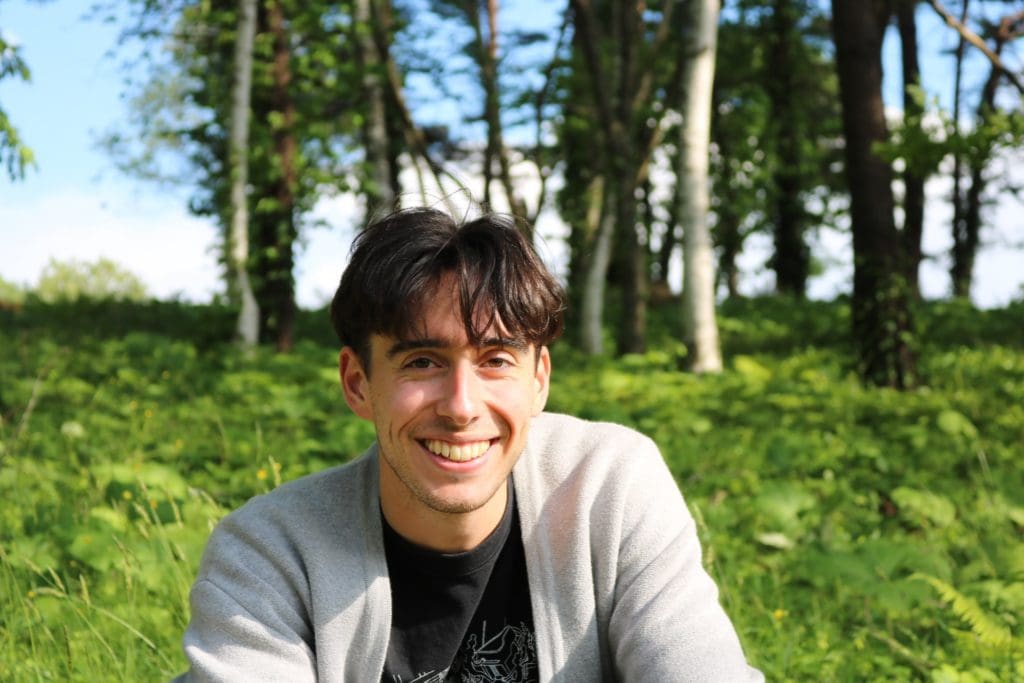
Wakefield composer Sam Meredith
YORK Early Music Festival is to mark its 50th year with a spectacular new commission, the majestic York Fanfare, Flourish At 50, to be played several times during the opening weekend.
To create the fanfare, the festival joined forces with West Yorkshireman Sam Meredith and the all-female German ensemble [hanse] Pfeyffery – it translate as [town] pipes – to create this heraldic piece of music.
Born in Leeds and raised in Wakefield, composer and multi-instrumentalist Meredith was a finalist in the 2023 NCEM Young Composers Award.
He was chosen from a strong line up of applicants, all alumni from the composers award, to be Commission Composer for the 2026 festival.
“We put out a call to all 100 of our award alumni, inviting bids from these composers,” says festival director Delma Tomlin. “[hanse] Pfeyffery then had conversations with selected composers and settled on Sam.”
Sam says: “In this piece, I wanted to emulate the rousing and awe-inducing nature of a traditional fanfare, while also creating a sense of playfulness, joy and celebration, more in the spirit of folk and dance music.
“The often syncopated landscape that emerged, first during the compositional process and then through working with [hanse] Pfeyfferey, is hopefully an exciting and an energetic tribute to the National Centre for Early Music.”
Last year, Sam completed his MA in Opera-Making and Writing at the Guildhall School of Music and Drama after earlier studying for a BA in composition there. His work has been performed at the Barbican, London, and the annual Bauhaus Festival, London, under the tutelage of John Harle, who has commissioned him to write pieces for big band, large ensemble and most recently a duet for saxophone and piano.
Sam has sung and toured with the Idrisi Ensemble and was proud to appear in the choir for Alan Bennett’s 2025 film The Choral, filmed in Saltaire, West Yorkshire, directed by Nicholas Hytner.
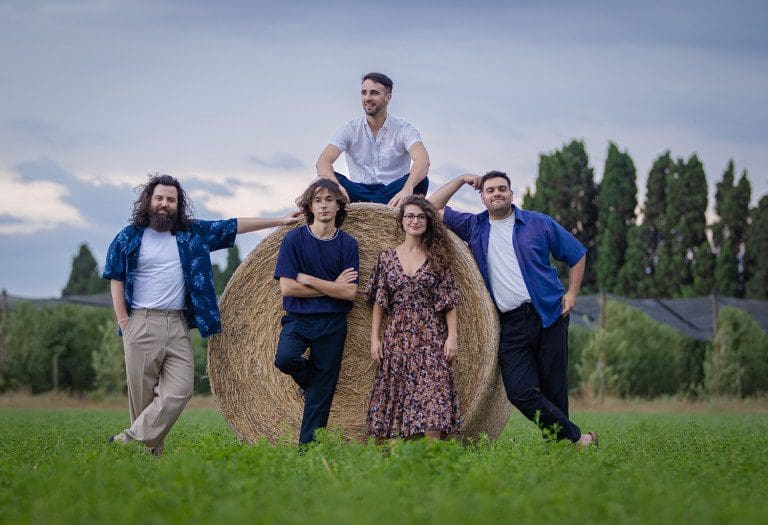
The Yorkshire Fanfare will be performed by 2026 festival artists in residence, [hanse] Pfeyffery, a Renaissance wind band that specialises in improvised and rediscovered music from around 1500.

[hanse] Pfeyfferey: 2026 York Early Music Festival artists in residence
The ensemble of Hannah Geisel, shawm, Lilli Pätzold, cornett, and Alexandra Mikheeva, slide trumpet and trombone, were finalists in the 2024 York International Young Artists Competition when they won the Cambridge Early Music Prize.
The York Fanfare will open this year’s festival on Friday (3/7/2026), played on the grass outside the Sir Jack Lyons Concert Hall, University of York, at 6.20pm before the opening concert by I Fagiolini, and then will be performed outside the West Door of York Minster before The Sixteen’s concert on Saturday at 6.45pm, 7pm and 7.15pm.
The last chance to catch [hanse] Pfeyffery playing the fanfare will come on BBC Radio 3’s The Early Music Show, broadcast live from the NCEM, St Margaret’s Church, Walmgate, on Sunday at 5pm.
Sam has just returned from ten months of working in Japan. “I was teaching at an international school, everyone from Year 7 to A-levels,” he says. “My old music teacher had gone there to work and posted the job on Facebook. It was fascinating to be out there as it gave me the chance to look at the work of Toru Takemitsu, whose music is very modern sounding. Incredible music!”
Writing for early music specialists [hanse] Pfeyffery was a different kind of challenge. “It’s very exciting to be writing for instrumentalists and musicians who have that ethos of being excited by improvisation, which was later lost in classical music,” says Sam. “They have that very open way, often rooted in academic practice and theory, and they’re great at taking that off the page and putting into practice.”
To be selected, Sam had to submit earlier works, provide a pitch for what he would like to write, then conduct a short interview on Zoom with [hanse] Pfeyffery last November. “I ended up writing reams and reams of sketches as I wanted to cover all bases, because you think, what is a fanfare these days? Is it something rooted in history? It’s definitely to mark an occasion.
“The previous piece I’d written was an opera, which I’d been immersed in for a while, so I was trying to change my creative process, to write a short piece to be performed outside that had to be dynamic and would need to attract people’s attention. That really shaped what I kept and left out in those sketches.”
Sam previously wrote two-minute pieces for the Bauhaus Festival in London. “That was for saxophone, drums and guitar – loud music! – so the brief was similar in condensing what I wanted to say in short time that would make its point and not go on too long, in the tradition of pieces written for the beginning and end of festivals, albeit with a very different sound on cornett, shawm and slide trumpet.
“That was one of the joys of composing this piece: working out what each instrument could do, its individual voice within the trio, uncovering each of those voices. The piece is made to be entertaining for [hanse] Pfeyffery to perform, while encouraging people to come into the concerts – and hopefully not put them off!”
For the full festival programme and tickets, visit ncem.co.uk/whats-on/yemf.