
Death Of Gesualdo: Bringing together The Gesualdo Six, Tableaux Vivants and a puppet for new drama of jealousy, murder and sublime madrigal music at NCEM
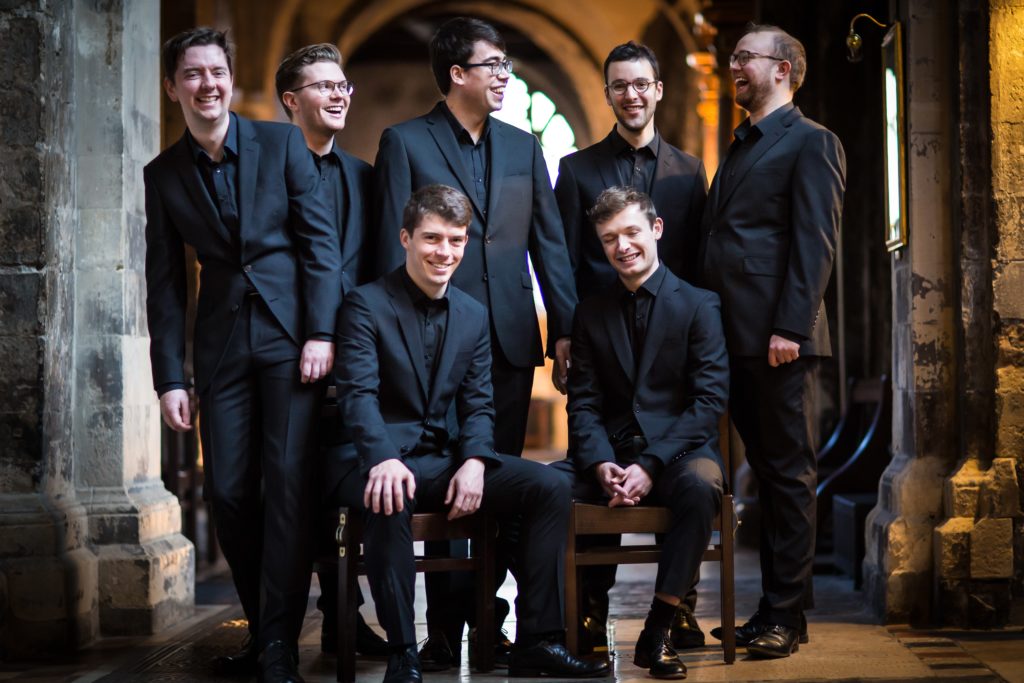
THE Gesualdo Six are reuniting with director Bill Barclay for the world premiere of Death Of Gesualdo, a daring new successor to their international hit Secret Byrd.
Premiered at St Martin-in-the-Fields, London, tomorrow and on Saturday, the haunting theatrical concerto, exploring the tormented life and music of Renaissance composer Carlo Gesualdo, will then head north to the National Centre of Early Music, Walmgate, York, for 6.30pm performances on Sunday and Monday.
Commissioned by St Martin’s as part of its 300th anniversary and produced by Concert Theatre Works, this collaboration with the NCEM and Music Before 1800 in New York City utilises the sextet of Gesualdo singers, six Tableaux Vivants actors and a puppet in “living tableaux to illuminate the forces that shaped the violent life, psyche and visionary work of innovative madrigalist Carlo Gesualdo (1566–1613), Prince of Venosa.
He may be infamous for murdering his unfaithful wife and her lover in an explosive fit of jealousy, but among composers he is revered for anticipating chromaticism – the musical technique of using notes outside the main diatonic scale to add colour, tension, and expression – by 200 years.
Choreographed by Will Tuckett, the dancers enact tableaux vivant – vivid images, like paintings brought to life –filled with iconography to superimpose Gesualdo’s psyche on to his most chilling music. The result will be “the boldest look yet at how the life and music of this enigmatic prodigy must function together for the true Gesualdo to emerge from the shadows”.
Director Bill Barclay says: “Gesualdo’s tortured mind led him into a life of violence and suffering, concluding in astonishing tales of witchcraft and malfeasance and appalling tales of sorcery and flagellation. However shockingly macabre his biography is, the Prince of Venosa’s malignant narcissism can be traced to key incidents from his upbringing in the zero-sum game of Catholic politics.”
Opening on the composer’s deathbed, Death Of Gesualdo promises to be a visceral “Stations of the Cross” for the composer’s tortured conscience as much as a bold study of his inseparable life, psyche and music.
Bill says: “I want people to hear the brilliance of Gesualdo’s music, but also to feel the immense human suffering that shaped it. This staging seeks to reveal the guilt and retribution woven through his extraordinary music, brought to life by The Gesualdo Six – some of the finest polyphonic singers in the world.”
The creative team brings together Barclay, Gesualdo Six director Owain Park, Olivier Award-winning choreographer Will Tuckett, best known for his work with The Royal Ballet and his visionary cross-disciplinary approach; former Handspring Puppet Company director Janni Younge and American costume designer Arthur Oliver.
“We so enjoyed doing Secret Byrd with Bill, and when we see Bill, we like to throw around a few ideas, and this is what’s emerged next – as we’re really well positioned to sing Gesualdo’s music,” says Owain.
He suggests Death Of Gesualdo has three layers: musical, dramatic and another layer that “provokes discussion and thoughts without necessarily coming up with the answer to the questions asked”.
“Bill is more interested in providing more questions than answers,” he says, highlighting the need for a balance between what is said and left unsaid. “When we debut the project in London and York, we will know more about that, but for now I can say it’s something we’ve never done before.
“It will be interesting to see how we present music differently, where it will heighten things in a way that you wouldn’t in concert. It becomes more sensory, like smell and touch, as we create pictures to be discovered. I think there’s going to be space for more development – which is interesting – and maybe audiences will need to come again.
“There’s more chance for spontaneity, and that’s exciting, like in sport, where you never know what the result will be, if the formula is right, whereas in music you do, but you can take different routes to the same result, but Death Of Gesualdo is more of a change from that, with the chance to be different each time.”
Secret Byrd visited more than 25 cities, with plans afoot to revisit it in the UK, Ireland and USA. “Last time, the NCEM was at the end of the first tour, so how lovely this time that Delma [NCEM director Delma Tomlin] and the NCEM are at the forefront of this new project, as we’ve built up such a wonderful relationship with them,” says Owain.
For creator-director Barclay, when St Martin’s wanted a “splashy” production to mark its 300th anniversary and suggested Gesualdo, his instinct was to resist at first. “I wasn’t drawn to the murder of his wife and her lover, the central event of his life,” he recalls, “I cherish the music, like anyone else, but I wasn’t just going to do a concert because I knew I had to reckon with the man.”
He enjoys counterpointing singers with other artists, and once he found a video of Tableaux Vivants, he saw the possibilities in Death Of Gesualdo. “I found their work whimsical and beautiful and was struck by how this artform could re-create horrible things in beautiful ways,” he says.
“They can create quite grotesque images but because they’re created right in front of you, there’s a sense they can be done both playfully and beautifully. It struck me as a way I could thread the story of the murder into the performance without all the violence, taking Gesualdo’s music as a framing device, not for the murder, but to explore what’s going through his mind and then opening up the topical subject of odious men.
“It made me think about cancel culture today…and what lessons have we learnt from the social media accelerant that can force someone to be treated as guilty until proven innocent?”
Citing composer Richard Wagner and jazz musician Miles Davis as further examples of “odious” creative talents, Bill says: “What I’m trying to get at is, can you separate the art from the man?
“With Death Of Gesualdo, I’m suggesting that if you consider his life over the music he created, a different picture emerges of this tortured soul, who was probably bisexual. I’m not trying to inspire pity in my audience as to whether he was forced to commit an honour killing or not, but with a sensitive artist such as Gesualdo, he was tortured by various ailments, from bulimic narcissism to bipolarity.”
Bill is thrilled to be teaming up with Owain Park and The Gesualdo Six again. “Owain is a genius, he’s a treasure, and his star burns very brightly. He’s young and he’s just at the beginning of what we expect to be a wonderful career,” he says.
“Working with these wonderful singers at this point benefits everybody, most of all the audience, and we now have two pieces that we can tour around the world as the arts become more interdisciplinary. It’s fun!
“I’m delighted that they [The Gesualdo Six] have trusted me to work with them, rehearsing for longer than they normally would for concerts – and putting on make-up for the performances!”
The Gesualdo Six and Tableaux Vivants, Death Of Gesualdo, National Centre for Early Music, St Margaret’s Church, Walmgate, York, January 18 and 19, 6.30pm to 7.40pm. Box office: 01904 658338 or ncem.co.uk.