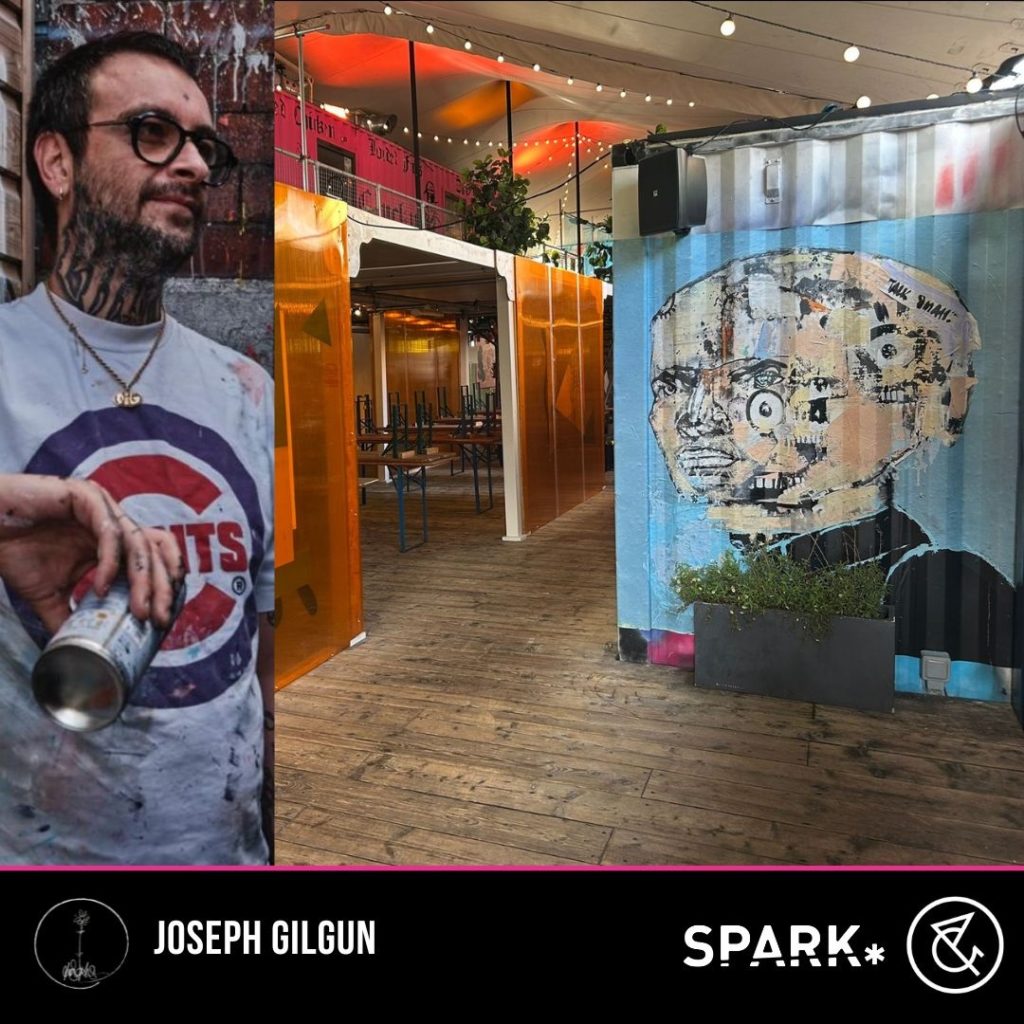
Artist, writer and actor Joseph Gilgun with his Talk Small installation at SPARK: York
IN a world first for York, Brassic co-writer and star Joseph Gilgun’s inaugural public artwork will be unveiled at SPARK: York, in Piccadilly tomorrow (21/11/2025).
“York is set to host a landmark cultural moment as internationally acclaimed actor, writer and artist Joseph Gilgun has chosen our city for his first-ever public art installation,” says Craig Humble, curator of Walmgate gallery Art Of Protest, SPARK’s cohort in presenting Gulgin’s large-scale, free-to-view work, Talk Small.
Created in tandem with Art Of Protest Gallery, the installation can be viewed at SPARK and will be complemented by a new exhibition of Gilgun’s framed artwork at Humble’s gallery from tomorrow: one of three independent UK galleries to be opening an exhibition of his art on Friday.
“This world-first installation marks a significant step in Gilgun’s rapidly evolving fine art career,” says Craig. “Over the past year, he has made a striking debut in three independent UK galleries, each exhibition met with critical and public acclaim.”
Tom McKenzie, one of SPARK’s founders, says: “Joe’s affinity for the north of the UK is deeply rooted in his personal history and creative identity. His recent work, focusing on his own struggles with mental health and raising awareness of the issue, is sadly very pertinent for so many people right now.
“It’s our purpose as a creative space in York to champion this kind of powerful and expressive work, and to help raise awareness for a vital issue. We’re completely honoured to host this striking and important piece of public art.”
Much of Gilgun’s creative output, whether on canvas, screen or in immersive public form, is inseparable from his lived experience with bipolar disorder, anxiety, BPD (Borderline Personality Disorder) and periods of depression.
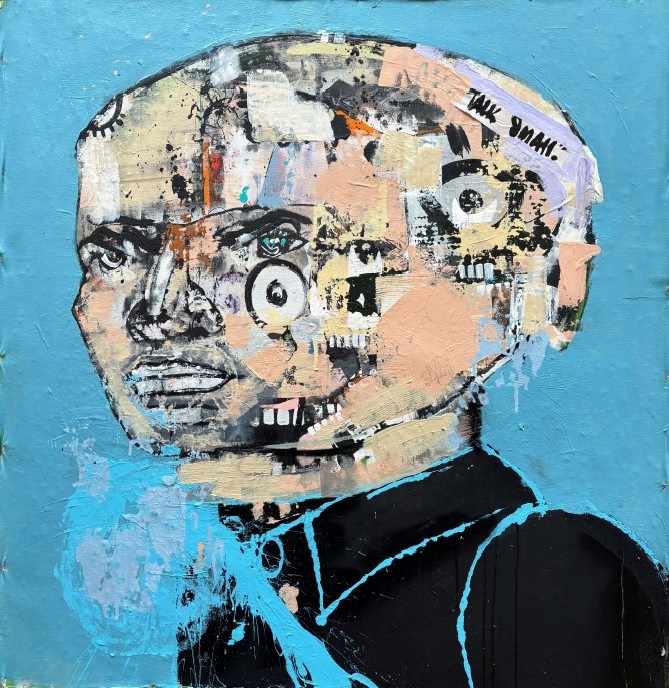
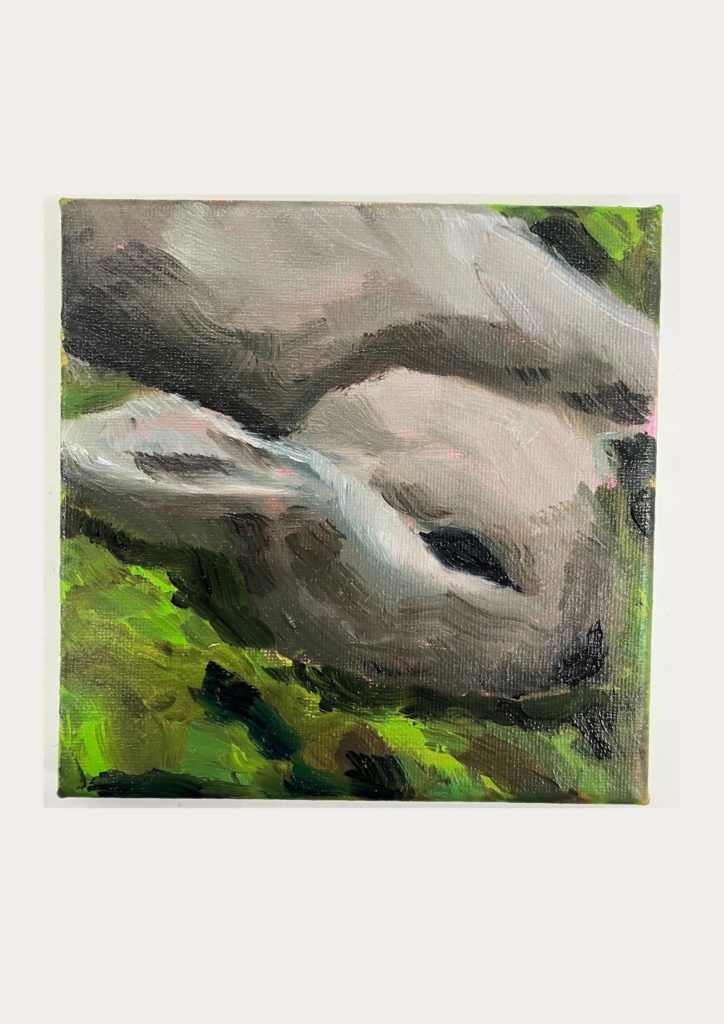
Joseph Gilgun’s original painting of Talk Small
Gilgun is recognised as one of the most honest, unfiltered and compassionate public voices on mental health, prompting Craig to say: “ Joe has often described art as a form of catharsis that attempts to process the realities, fears and frustrations that accompany managing mental health conditions.
“This is Joe’s first public installation, where he hopes to channel the turbulence, humour, shame, resilience and fierce defiance that have shaped his life and work. It stands as both an emotionally charged visual statement and a bold piece of outsider art; authentic, vulnerable and unmistakably his.”
The Art Of Protest Gallery, located only minutes from SPARK: York, holds a permanent collection of Gilgun’s work, including original paintings and signed limited-edition pieces.
Run by Humble for eight years, his gallery will host an exhibition from tomorrow offering visitors the rare opportunity to experience the breadth of Gilgun’s artistic practice in one city.
Gilgun has become known widely not only for his writing and acting – he played Woody in This Is England too – but also for his frank and fearless openness about mental health. In discussing the creation of Brassic, the hit series that he co-wrote and stars in, he has spoken of how closely the show mirrors his own experiences.
“Initially, the show was never going to be about mental health,” he said. “They knew I had bipolar and they’d seen me suffer with it. It’s difficult to hide when it gets bad. So the producer said, ‘why not give Vinnie bipolar?’.
“But initially I didn’t want to play him; I wanted someone else to do it. I was agoraphobic at the time, I was struggling to get out of the house and do simple tasks. I was frightened of everyone, constantly nervous and in fear. So I was writing it with someone else in mind because I just didn’t think I could.
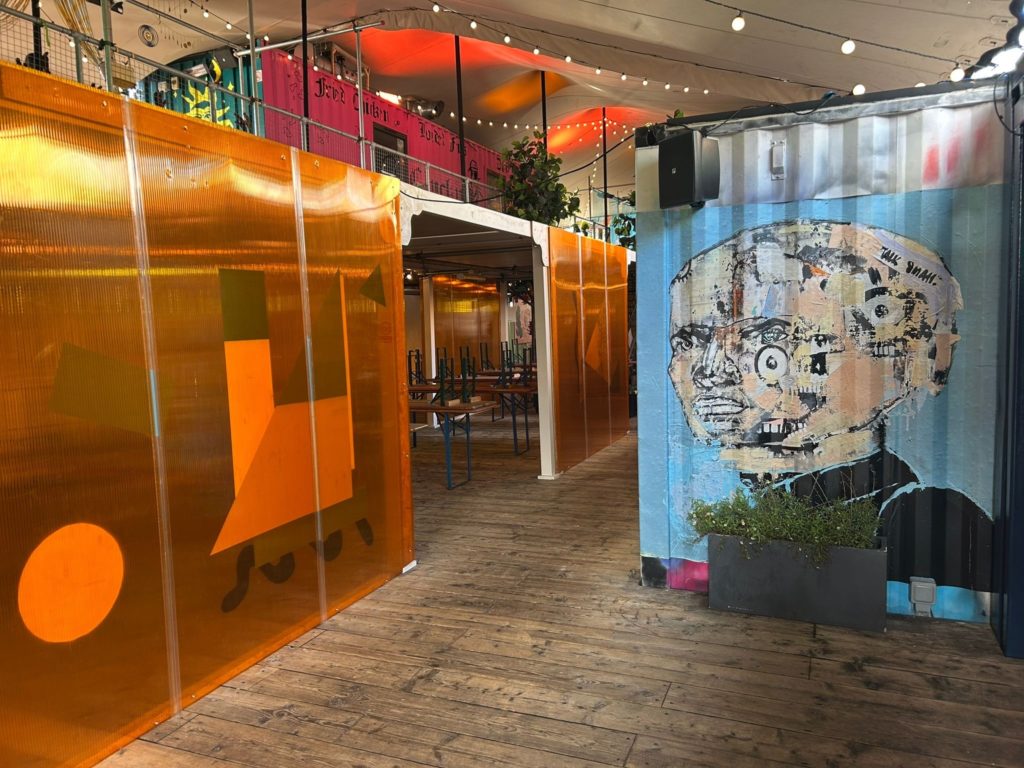
Joseph Gilgun’s Talk Small installation in situ at SPARK:York
“Then it got to a stage where the production team was like, ‘You’re going to have to play him, because it’s you. It’s just you.’ We ended up writing about everything – the medicine I took, about my dad being an alcoholic – I drew from everything. Everything I am, all my worst fears, the shame I feel for this mental illness.”
Gilgun decided to “put it all on the TV and see what happens”. “It was terrifying,” he said. “Right up to the wire, even up to the month before filming, I doubted my ability. I rang everyone individually and said, ‘Honestly you must tell me, are we 100 per cent sure that I’m the right choice for this?’
“Honestly, dude, for me it was so real. I’m going to ***k this up and let everybody down. And fortunately I didn’t. It was quite life-changing. It’s been a massive deal.”
Gilgun’s visual art carries the same raw, humane and unfiltered honesty: part confession, part confrontation, part compassion. “His installation in York continues this trajectory, offering a powerful reflection of his inner world and an invitation for others to feel seen within it,” says Craig.
“Mr Gilgun himself is not available for interview or questions on this occasion,” he adds.
Did you know?
THE Art Of Protest Gallery Christmas party is in the diary for December 6. “At this event we will officially open the top two floors to become the largest independent contemporary gallery in the city,” says Craig Humble, founder and owner.