REVIEW: Riding Lights Theatre Company in Christmas Inn Trouble, on tour, then Friargate Theatre, York, Dec 20 to 24 ****

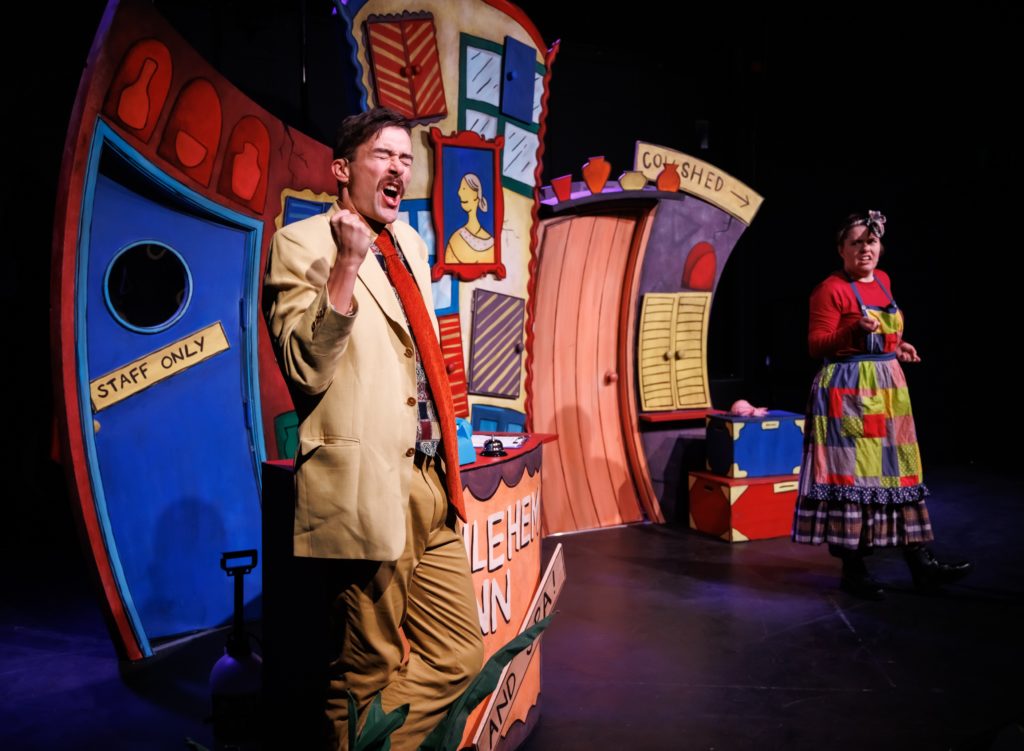
Jared More and the more-and-more-roles-playing Katie Coen in Riding Lights Theatre Company’s alternative Nativity play, Christmas Inn Trouble. All pictures: Tom Jackson, Jackson Portraiture

CHRISTMAS Inn Trouble is Riding Lights’ second festive show since the York faith theatre practitioners’ 2024 re-launch and the first since artistic director Paul Birch and executive director Oliver Brown teamed up as co-chief executive officers.

As is customary, Riding Lights are heading off around the country, this time taking in Barrow-in-Furness, Mold, Bulwell, Lliswerry, Cheltenham, Chiswick, Hadleigh, Colchester, South Benfleet, St Albans and closer to home, Easingwold, before a five-day finale back home at their Friargate Theatre headquarters.

First up was a brace of performances at St Peter’s Church, Norton, playing to 600 children from Norton Community Primary School, perched two child per chair, in the afternoon before a public show at 5pm, when plenty of children were present again, introduced with delightedly expressive enthusiasm by Reverend Jenny Buckler, who moved to God’s Own Country from Somerset in 2021.

Last winter, Birch wrote A Christmas Cracker, his first play since taking the Riding Lights reins, rooted in the transformative power of storytelling, delivered with Birch’s trademark comedy plus puppetry aplenty.
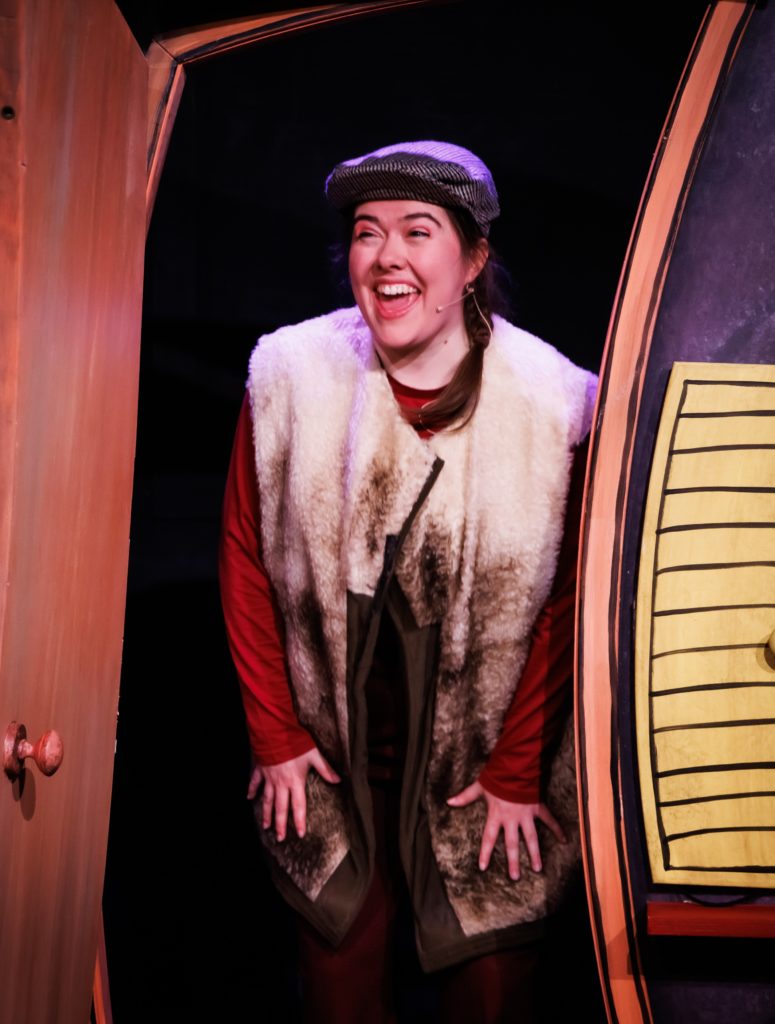
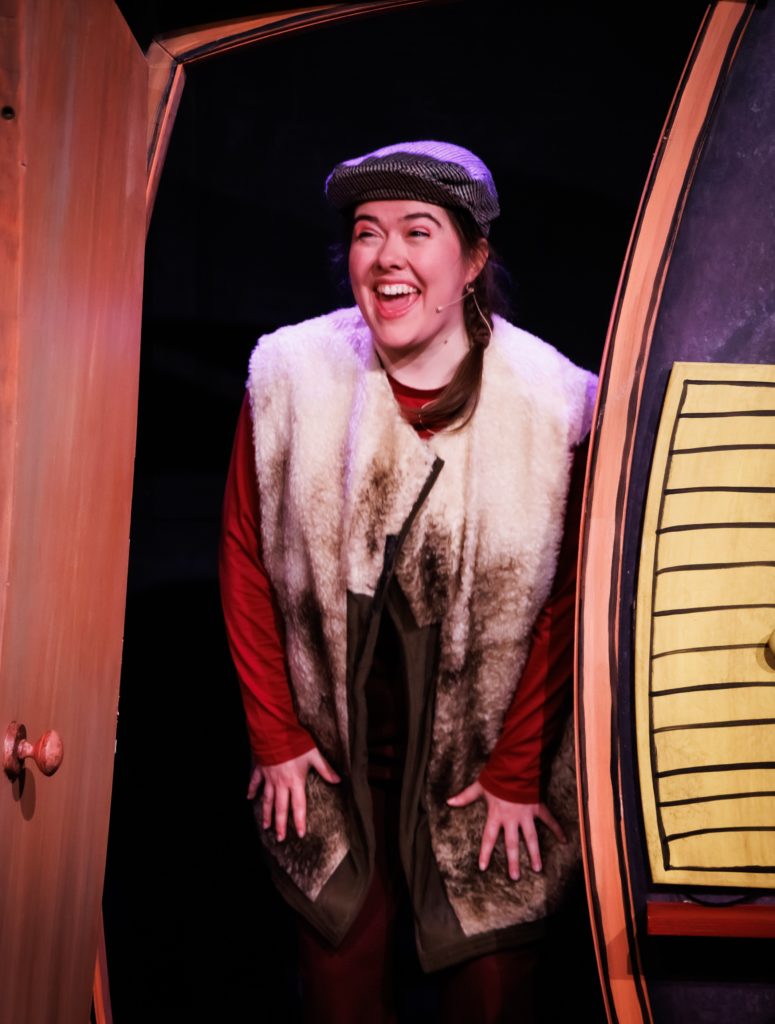
Katie Coen’s shepherd in Christmas Inn Trouble

Description and detailed plot progression played a stronger hand than visual, magical wonder under Erin Burbridge’s direction. This time, Birch is in the director’s chair, at the helm for Rachell Price’s fast-moving, fun, physical, fizzing two-hander for all the family that is a definite upgrade on A Christmas Cracker in its comedic impact while being as strong as ever on delivering “a magical new twist on the Nativity that turns the traditional tale on its head”.

After soothing the white-noise technical gremlins that stopped the start in its tracks – handled  with admirable aplomb by cast members Katie Coen and University of York-educated Jared More – the hour-long show quickly finds its rhythm as bother aplenty afflicts The Bethlehem Inn and Spa.

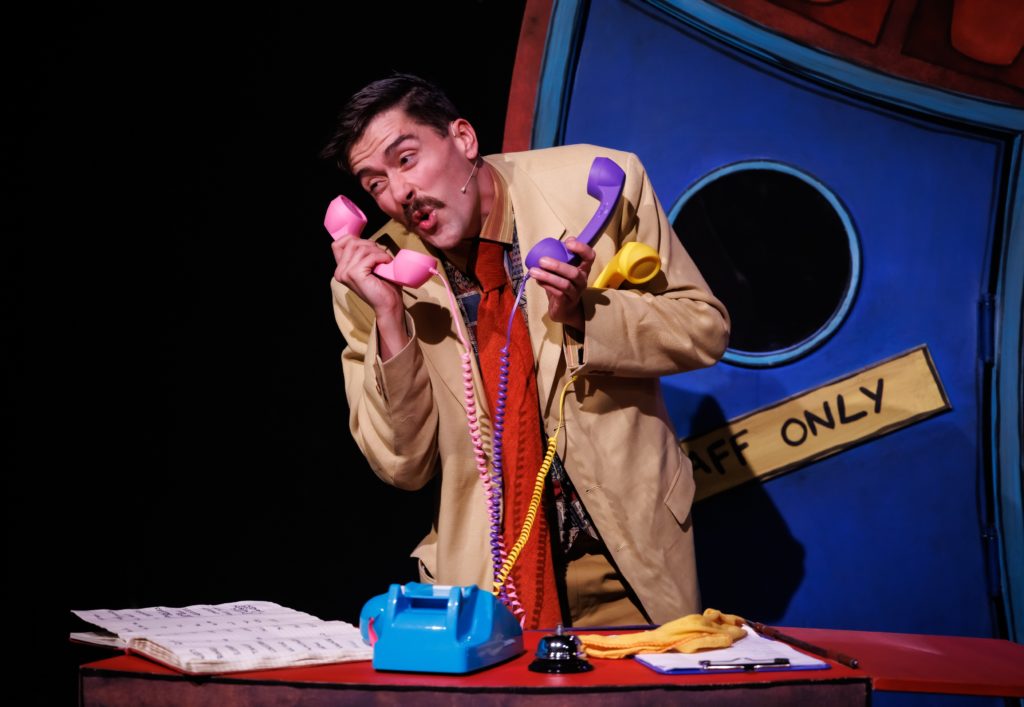
The taps are leaking, the rats, squeaking, the rooms, fit to burst as the Bible story meets Fawlty Towers in the sparring of More’s hotel manager and the multi-role playing Coen’s dogsbody, doing all the graft. If she is more Polly than Sybil, More definitely has the flavour of Basil, from moustache, gait and height to oversized tie, temperament and oleaginous air.

His performance, however,  is not mere Fawlty pastiche. Instead, he makes his manager a befuddled, exasperated character of his own as he awaits the arrival of a special guest.
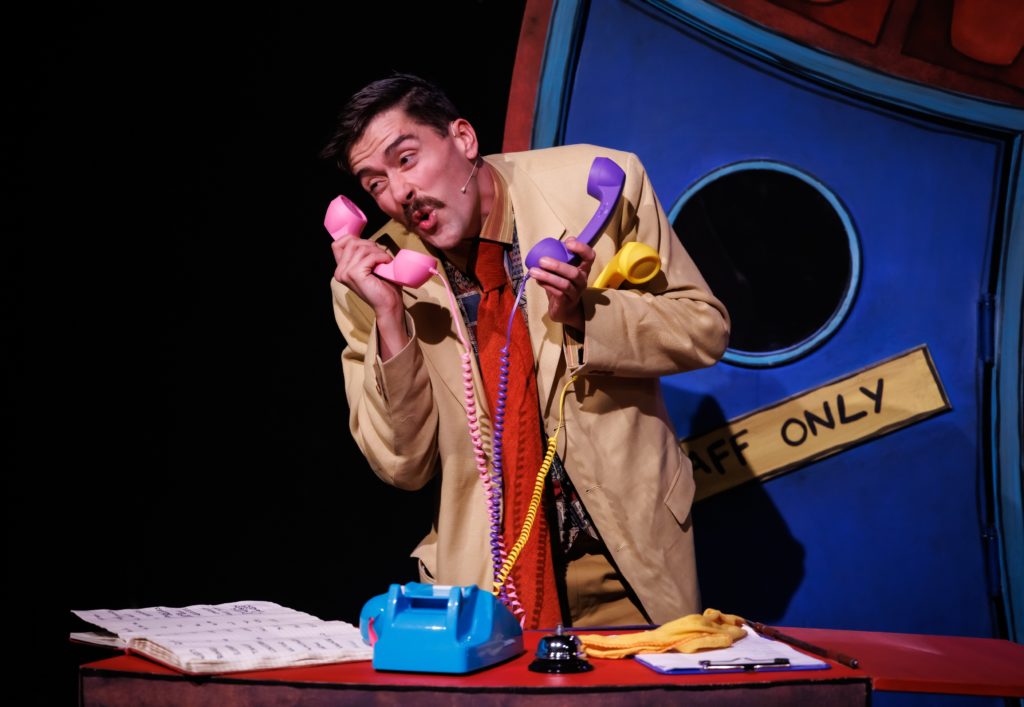
Over-stretched: Jared More’s manager tries to handle multiple phone calls when the inn is already fully booked for Christmas

Given the date, we know who that “guest” might turn out to be, even if the manager is none the wiser, as all the clues build up in Coen’s portfolio of characters, turning herself into a grouchy, rascally Roman guard, Joseph (good with a hammer and wood), Mary (only too happy to take over the cow shed), a shepherd and a “Professor”, Price’s variation on the (un)Wise Men.

All are played with comic zest, all the better for Coen’s interaction with More that clicks instantly. They make for a highly humorous double act, but More reveals another side when, spoiler alert, cradling the baby.

Writer Price is alive to the power of puppetry and pooping noises being guaranteed to bring the young house down, and how they laugh at a cheeky donkey popping out of the myriad cupboards doors to bite More on the backside or grab and eat his bookings diary. The more the donkey does so, the louder the laughs grow. Likewise, the squelching boots of Coen’s shepherd are irresistibly comical, the more she walks.  

Caitlin Mawhinney’s set is colourful and playful. The Spa sign is a loose-fitting add-on for a new facility, sure to fall off; the manager’s desk revolves around the stage at pace; the phone is sky blue, old-fashioned, but with a modern ring tone for the children to recognise. In the tradition of farce, two doors are in constant use; the cupboard ones even more so.
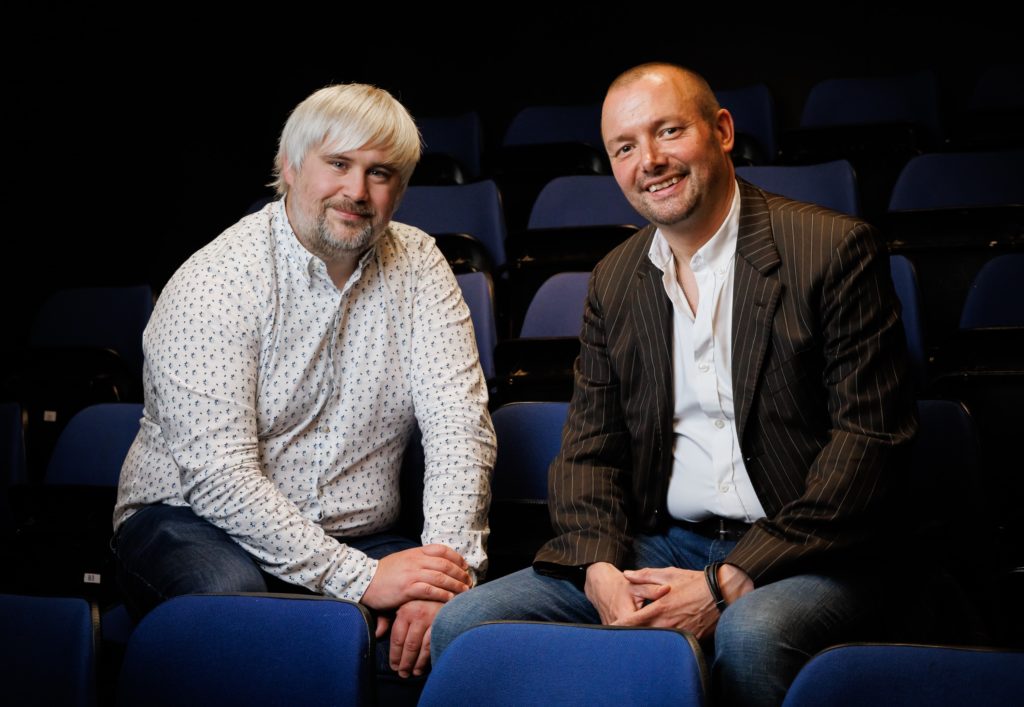
Riding Lights Theatre Company’s co-chief executive officers Oliver Brown and Paul Birch, director of Christmas Inn Trouble

“Our aim is to make theatre make a difference by creating unforgettable, entertaining theatre in response to current issues and the hopes and fears of the world we share,” says Brown. Christmas Inn Trouble does exactly that, not in a preachy, heavy-handed way, but with lightness and a sense of wonder at the abiding message of the magical Christmas story.

Mawhinney’s set and costume design are a joy, complementing the tone of Price’s storytelling with a palette of matching pleasures, while Patrick Burbridge’s songs are as much fun for the performers as they are for the audience.

Christmas Inn Trouble lives up to its vow to “bring you the Nativity like you’ve never seen it before!”, setting up families so joyfully for Christmas Day.

Riding Lights Theatre Company in Christmas Inn Trouble, The Galtres Centre, Easingwold, December 13,  2pm; Friargate Theatre, Lower Friargate, York, December 20, 1.30pm and 4pm, December 21 to 24, 11am, 1.30pm and 4pm. Box office: Easingwold, https://www.ticketsource.co.uk/booking/select/mbbjvlpojddg; York, 01904 655317 or ridinglights.org/christmasinntrouble.
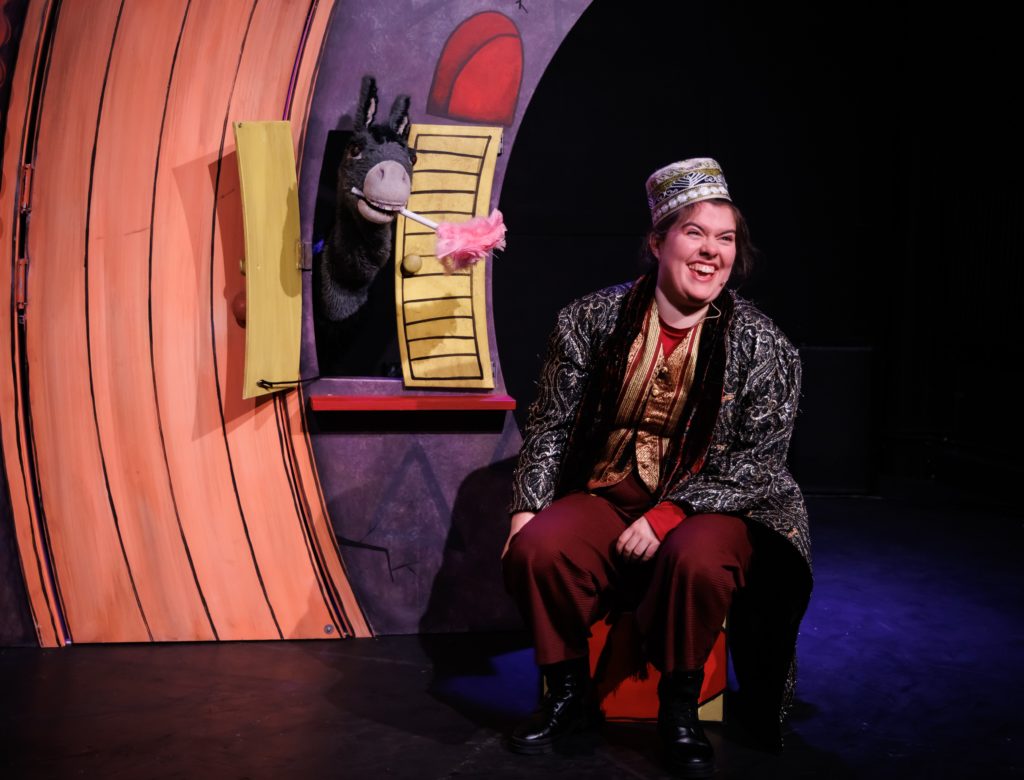
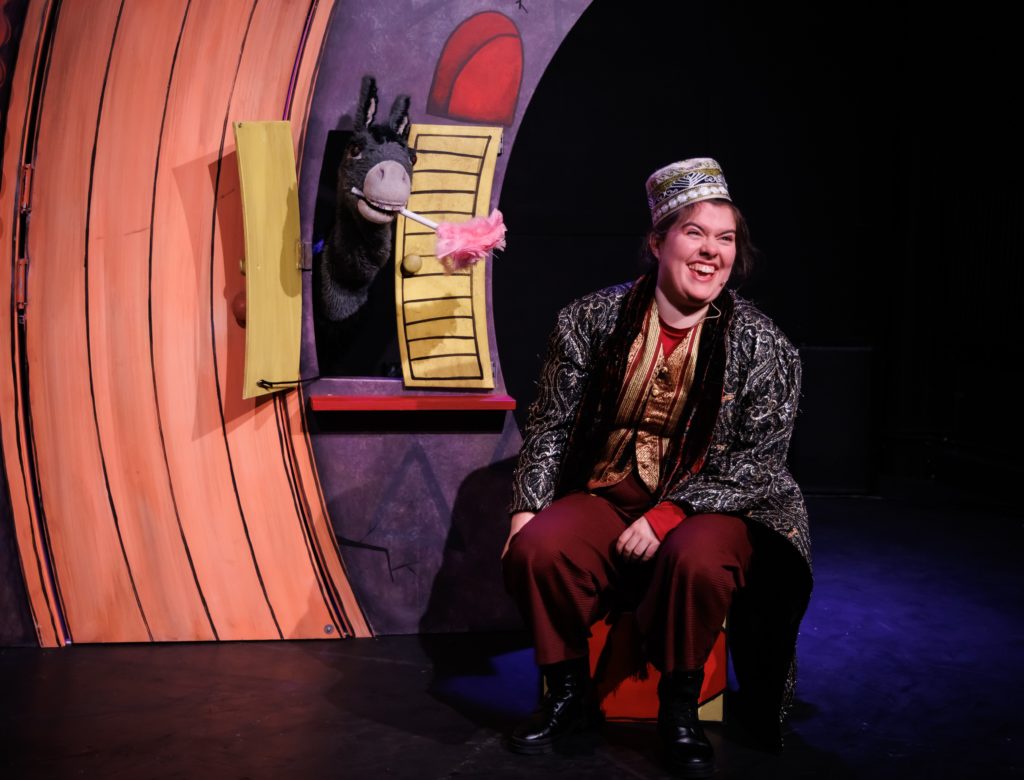
Behind you: The scene-stealing donkey brings a smile to Katie Coen’s Professor, one of the (un)Wise Men by another name in Christmas Inn Trouble
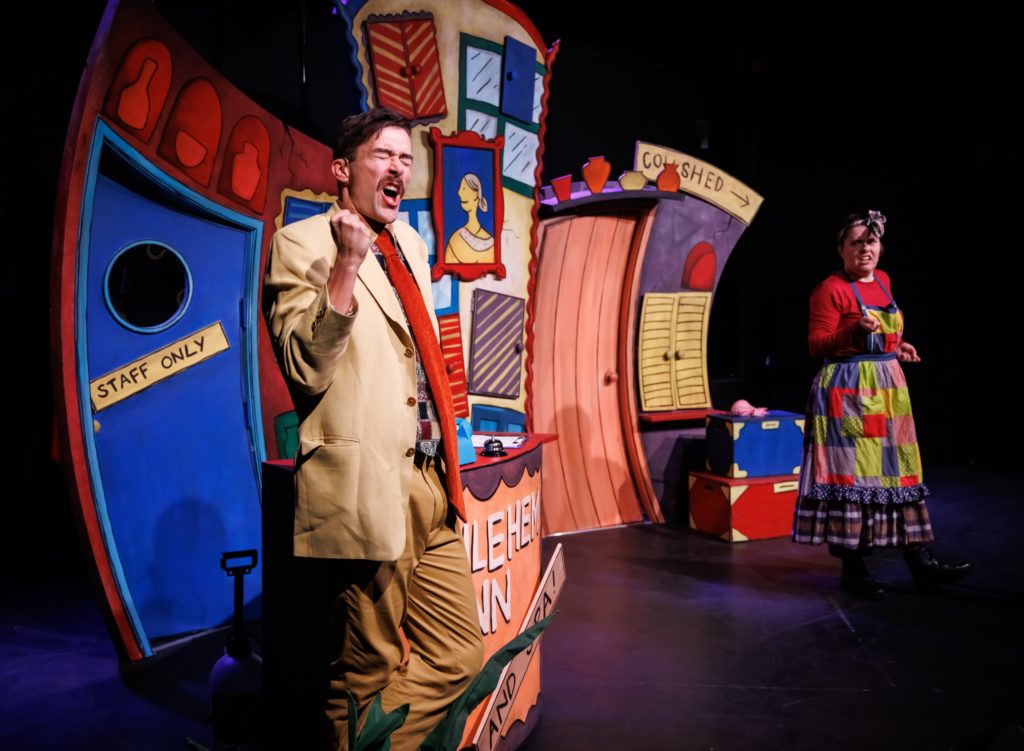
Riding Lights set off on festive tour of Christmas Inn Trouble. Friargate Theatre shows follow from December 20 to 24

Jared More and Katie Coen in Riding Lights Theatre Company’s Christmas Inn Trouble. Picture: Tom Jackson, Jackson Portraiture

RIDING Lights Theatre Company launches its 2025 festive show, Christmas Inn Trouble, at St Peter’s Church, Malton, today at 5pm.

Billed as “a magical new twist on the Nativity”, the York Christian theatre practitioners’ follow-up to last winter’s A Christmas Cracker is written by Rachel Price and directed by artistic director Paul Birch.

 Set to bring Yuletide joy to families in Yorkshire and beyond, Christmas Inn Trouble promises to “turn the traditional tale on its head”.

Bother aplenty is afflicting The Bethlehem Inn and Spa, where taps are leaking, the rats are squeaking and the rooms are fit to burst. So many guests have arrived that parking your camel is impossible and, if things were not bad enough already, a rascally Roman soldier has come to make sure everything is above board.

Management problems for Jared More in Christmas Inn Trouble. Picture: Tom Jackson, Jackson Portraiture

“Join Riding Lights as we bring a Christmas comedy filled with silly shepherds, some very (un)wise men and a young family who have no idea what they have let themselves in for,” says says Oliver Brown, Riding Lights’ executive director and co-chief executive officer.

“Christmas Inn Trouble is a fast and friendly festive farce and the perfect way to start your holiday cheer! It’s a funny slapstick comedy perfect for telling the story of the Nativity to primary-school aged children and their families.”

Riding Lights is one of Great Britain’s most productive and long-established independent theatre companies. Founded in York in 1977, the company continues to take innovative, accessible theatre into all kinds of communities far and wide.

Katie Coen’s shepherd in Rachel Price’s play Christmas Inn Trouble. Picture: Tom Jackson, Jackson Portraiture

“Our aim is to make theatre make a difference by creating unforgettable, entertaining theatre in response to current issues and the hopes and fears of the world we share,” says Oliver.

Christmas Inn Trouble will be performed by a cast of Jared More and Katie Coen, with set and costume design by Caitlin Mawhinney and compositions and sound design by Patrick Burbridge.

The tour will take in Barrow-in-Furness, Cumbria; Mold, North Wales; Bulwell, Nottinghamshire; Lliswerry, South Wales; Cheltenham, Gloucestershire; Chiswick, West London; Hadleigh, Colchester and South Benfleet, all Essex; St Albans, Hertfordshire, and, closer to home, The Galtres Centre, Easingwold, concluding the travelling itinerary on December 13 at 2pm.

Behind you! Donkey brings a smile to Katie Coen’s (Un)wise Man in Christmas Inn Trouble. Picture: Tom Jackson, Jackson Portraiture

On the home front, Christmas Inn Trouble will play Riding Lights’ headquarters, Friargate Theatre, Lower Friargate, York, on December 20, 1.30pm and 4pm, then December 21 to 24, 11am, 1.30pm and 4pm.

“We are so excited to bring this fantastically fun and joyful show to the Friargate Theatre this festive season,” says Oliver. “It’s jam packed with puppets, magic, song and story, bringing you the Nativity like you’ve never seen it before!”

Riding Lights prides itself on offering “affordable and accessible arts experiences to everyone”,  so tickets for Christmas Inn Trouble are priced accordingly at £12.50 each or £40 for four people.

To book tickets for the York dates, visit ridinglights.org/christmasinntrouble or call the box office on 01904 655317. Easingwold tickets are on sale at https://www.ticketsource.co.uk/booking/select/mbbjvlpojddg.

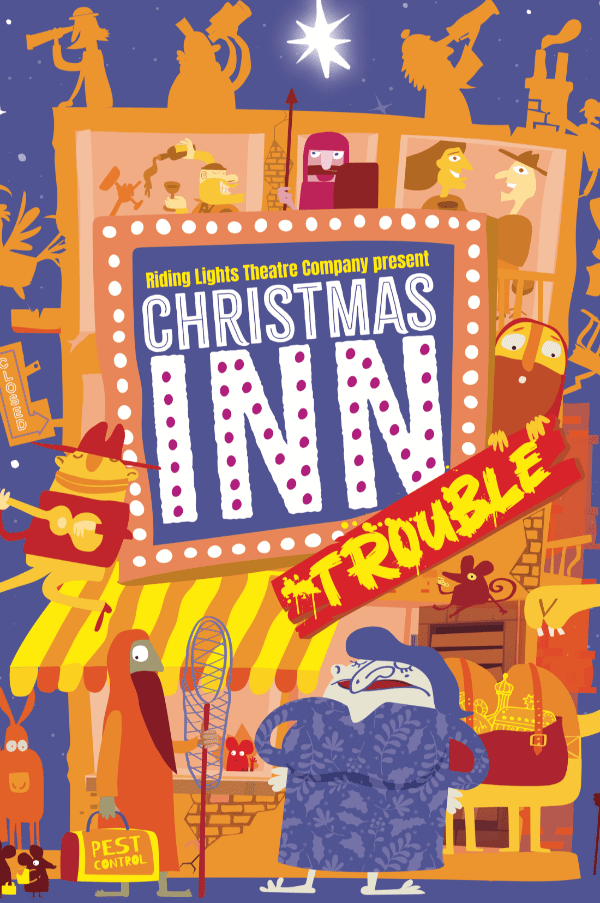
Riding Lights Theatre Company’s poster for the festive tour of Christmas Inn Trouble

REVIEW: Martin Dreyer’s verdict on Ryedale Festival, Dame Imogen Cooper, St Peter’s Church, Norton, July 26

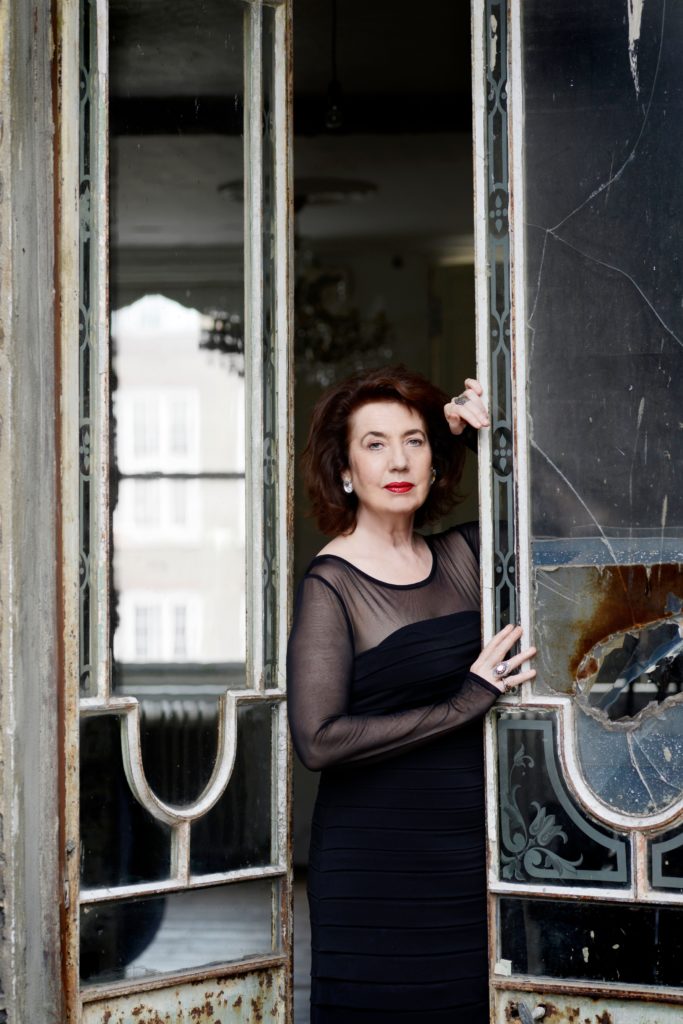
Dame Imogen Cooper: “Held her audience in rapt admiration”. Picture: Sussie Ahlburg

BEETHOVEN’S last three piano sonatas represent the most free-wheeling in the classical repertory and there is no performer better suited to them than Dame Imogen Cooper. On the penultimate evening of the festival she held her audience in rapt admiration.

There is a special intimacy to these three works. Their early movements lure us into their web before finales that explore the very depths of emotion. Cooper caught at once the rhapsodic feel of Op 109 in E major, with its tempo changes but – as so often in this programme – managing all the while to maintain its overarching melodic contour, no easy feat.

There was immediate drama, too, in the Prestissimo that follows: she took this as her scherzo, although for Beethoven it was no joke. Only Beethoven would think of ending with a slow theme and variations, but Cooper brought to it a wonderful serenity, and when the theme returned in all its simplicity at the close, it was hard to hold back the tears.

The songful opening of Op 110 in A flat is marked con amabilità (sanft), an oddly bilingual statement. She took its ‘gentle amiability’ to mean something personal and allowed it to breathe, almost to excess, in her pauses and rests. But there was compensation in the way she attacked the second movement, balancing its percussion with its melody. Her measured arioso was followed by an equally smooth fugue

Beethoven’s final word on the piano sonata, Op 111 in C minor, is a kaleidoscope of contrasts, not least between minor and major. Cooper was alive to every nuance. The angry three-note motif emerged trombone-like in her left hand at the start, contrasted by the ethereal effect of the delicate high traceries in the closing Arietta and variations.

In between, she had plenty in reserve for when the going got active, including remarkable clarity in the fugue. National treasure is an overused title but Imogen Cooper undoubtedly qualifies.

Ryedale Festival, Royal Liverpool Philharmonic Orchestra/Chloe Rooke, Hovingham Hall, July 27

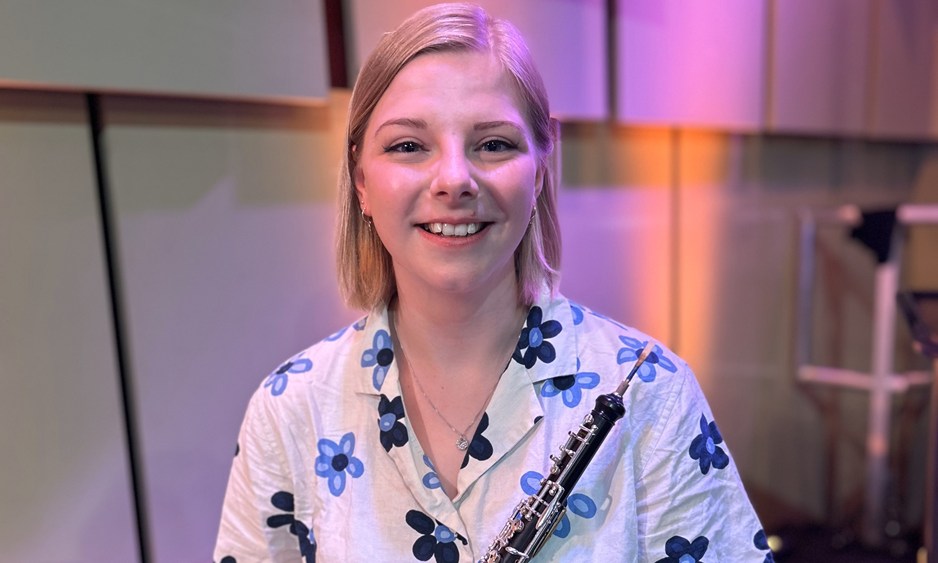
Oboe player Helena Mackie: “Breath control to spare”

HAVE we reached a watershed where we can acknowledge the female of the species as at least as potent as the other half of humankind? At the very moment when the Lionesses were bringing home the bacon in Basel, two equally gritty young ladies were carrying all before them right here in Ryedale.

Chloe Rooke conducted a chamber orchestra of members of the Royal Liverpool Philharmonic Orchestra with immense verve and boundless conviction. Her partner as soloist in Mozart’s Oboe Concerto was the RLPO’s principal, Helena Mackie, who showed similar confidence and enthusiasm. Both are still in their twenties.

Rooke positively bounced onto the platform for Mendelssohn’s Fourth Symphony (Italian) and it showed in her brisk conducting. What mattered, however, was that the orchestra responded to her with precision that spoke volumes for her direction.

There was a suspicion of deceleration when the dynamic level subsided but equally a renewal of tempo with every crescendo. But her acceleration towards the end was absolutely right.

The slow movement has sometimes been called the “Pilgrims’ March”; certainly there is a plodding character to its first theme. But the suaveness of the second theme suggested some happy walkers, topped off by the serenity of the closing pizzicato. The minuet was notable for the superb ensemble of horns and bassoons in its trio.

It is doubtful whether even Italians could dance the whirling saltarello at Rooke’s lightning pace. But the gutsy strings gave it their all and hung on gamely, a sure sign of their respect for her commands.

Mozart’s only surviving oboe concerto does not get the currency it deserves, perhaps because it may have been originally intended for the flute and is more often heard in that guise. But if Helena Mackie continues to promote it, that may well change. Her very opening phrase dazzled by its sheer length: she had breath control to burn. The first cadenza brought a pin-drop moment, so captivated was the arena.

There was a lovely cantabile to her line in the slow movement, which remained untrammelled when she engaged in dialogue with the orchestra. The closing rondo really danced, thanks to her twinkling fingers. With the orchestra keeping in close attendance, this was a thoroughly delightful adventure for which we had our two young ladies to thank.

The second half was French. After a calm, rather stately account of Fauré’s Pavane, without the optional chorus, it was left to Poulenc’s Sinfonietta, a full symphony in all but name, to round off the festival.

Poulenc’s endless capacity for fun, for pulling off tricks and pulling our legs, makes him a modern-day Haydn. Rooke captured the first movement’s jack-in-the-box quality right away. Poulenc’s colourful orchestration lent a Falstaffian quality to the scherzo, where the timpanist had a field day.

There was a nice lilt to the slow movement, alhough the woodwinds were allowed to upstage the strings. They, however, had their revenge in the finale, delivering pronounced rhythms among the circus thrills and spills. Its two themes were cleverly contrasted in the coda. Rooke may be an “Emerging Artist” in Holland but on this showing she has already emerged.

Reviews by Martin Dreyer