Why 300 years of Japanese woodblock prints are Making Waves at York Art Gallery

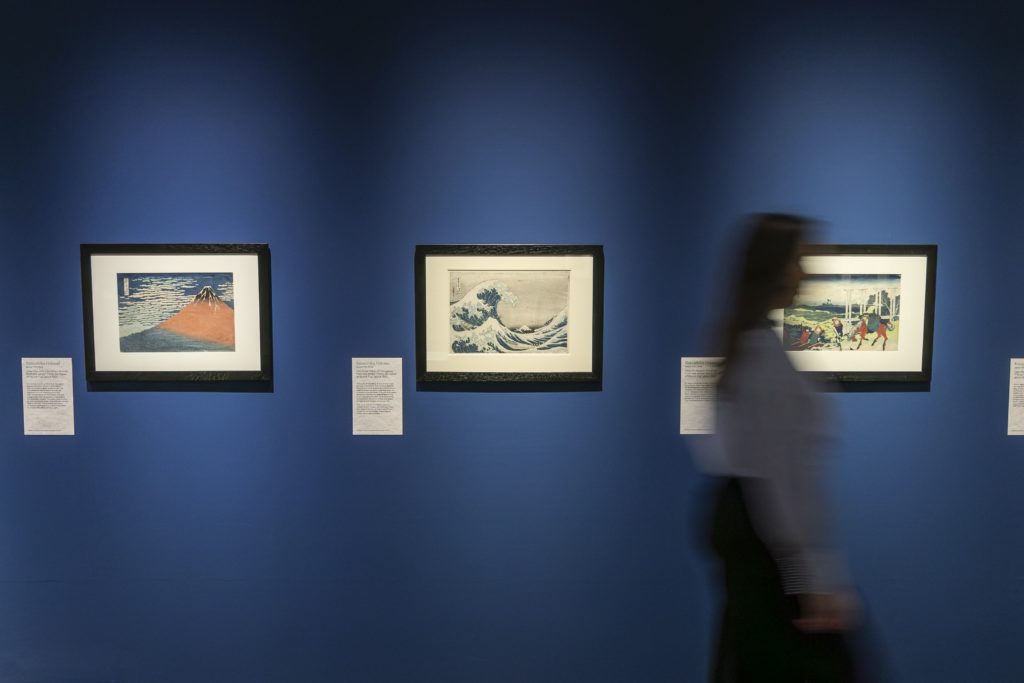
Waves in motion: Making Waves at York Art Gallery. Picture: Lee McLean

MAKING Waves: The Art of Japanese Woodblock Print has taken a year of preparation at York Art Gallery.

On show until August 30, the display of Japanese art and culture brings together more than 100 striking and iconic works from renowned artists such as Katsushika Hokusai, Utagawa Hiroshige and Kitagawa Utamaro, amongst many others, complemented by armoury from the Royal Armoury In Leeds and kimonos from Durham Oriental Museum at Durham University.

To provide an insight into the history and development of Japanese woodblock printing, the exhibition brings together exhibits from York Art Gallery’s extensive collection of Japanese prints, some never exhibited previously, together with prints loaned from Maidstone Museum, Ashmolean Museum and the British Museum and early printed books from the British Library.

Covering more than 300 years of printing history, from the 17th to 21st centuries, Making Waves places particular emphasis on the heyday of Japanese woodblock printing in the 18th and 19th centuries.

At its epicentre is the chance to see Katsushika Hokusai’s The Great Wave off Kanagawa, one of the most recognisable and celebrated artworks in the world. This original print has been lent to York Art Gallery by Maidstone Museum, and like encountering Leonardo da Vinci’s 16th century portrait of the Mona Lisa at the Musée u de Louvre, the work is smaller than you might expect but just as impactful.

Spread across three rooms, Making Waves invites visitors on a journey that begins with a guide to the origins and techniques of early printmaking, before looking at major themes, including the “floating world” of urban entertainments, the beauty of Japanese landscapes, legendary heroes and adventurers from fantastical tales and historical epics, actors and Samurai warriors (representing martial prowess, courage, loyalty and honour). Festivals and seasonal celebrations feature too.

Finally, the exhibition explores how print artists responded to major changes in Japanese society, from Japan’s development into a modern industrial nation in the late 19th century through to the present day.
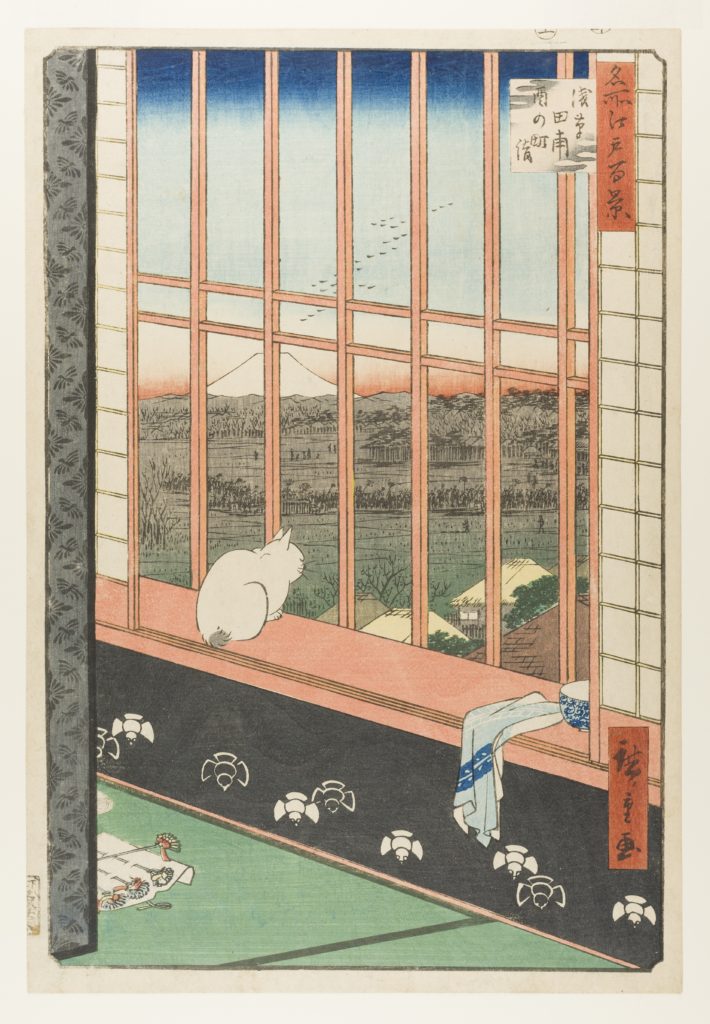
Utagawa Hiroshige’s Asakusa Rice-fields and Torinomachi Festival, from the series One Hundred Famous Views of Edo, part 4 Winter, 1857, York Art Gallery collection. Picture courtesy of York Museums Trust

Contemporary Japanese woodblock prints feature too in the third room, including several works by Royal Academy of Arts president Rebecca Salter, created in collaboration with Sato Woodblock Workshop, Kyoto, plus Japanese woodblock prints depicting the North York Moors by Scottish artist Laura Boswell, such as Rhubarb Sky.

Look out too for works by London-based artist Nana Shiomi, whose 2001 print, Hokusai’s Wave – Happy Carp is displayed alongside the very woodblocks Shiomi used to produce it, enabling visitors to gain an understanding of the technical process of printing.

Entertainment and festivals, folklore and seasons and travel and adventure all play a major role in these vibrant images, whose dynamic designs remain popular centuries later.

 Making Waves marks the debut of Eleanor Jackson as curator of fine art at York Art Gallery. “I started here in January last year and was given this exhibition to curate straight away. To hit the ground running and to turn it round in a year has been challenging but it’s worked out well,” she says.

“Arranging the loans is by far the most time-consuming part of organising the exhibition, so that was the first task I did, researching potential loans and contacting leading institutions.”

Eleanor continues: “Ever since Japan was opened to Western trade in the 1850s, Japanese art has become increasingly popular in the West and Europe, causing a sensation when first exhibited in Paris, introducing audiences to the woodblock print, and now there are so many fantastic collections in the UK.”

One key curatorial decision was to address the need to add contrast to “the prints being mostly 2D and small”. “It was important to bring in bigger items, such as the armour and kimonos, to provide dramatic sightlines, and to give a fuller flavour of Japanese culture in that period,” says Eleanor. “We also asked our exhibition designers, Journal, from Leeds, to provide a sense of scale.”
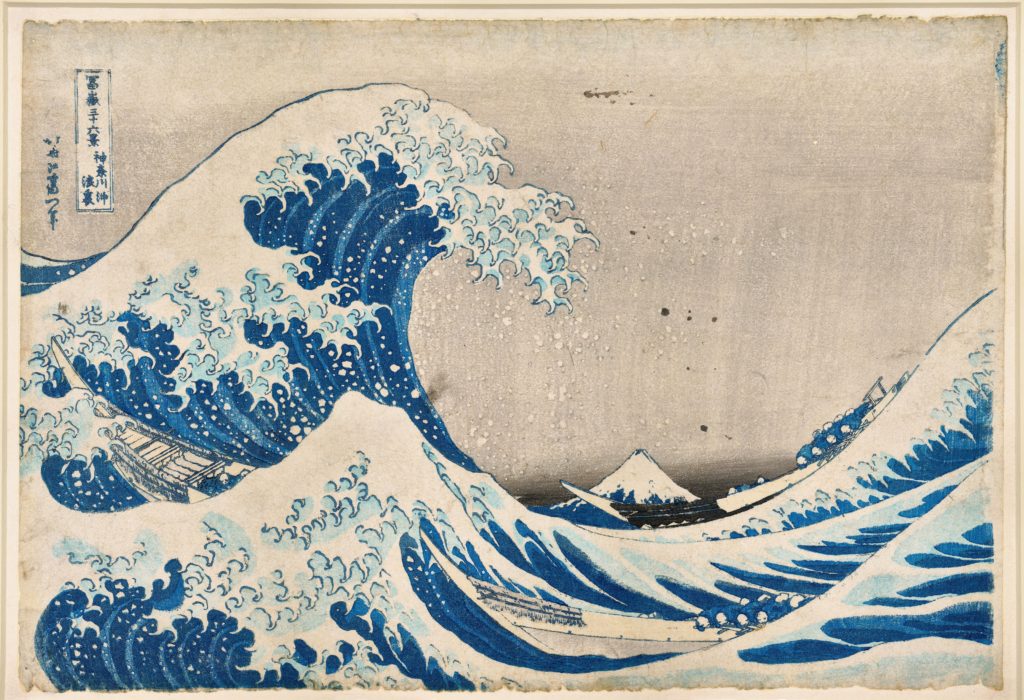
The Great Wave off Kanagawa, by Katsushika Hokusai, circa 1829-32. Image courtesy of Maidstone Museum, on loan at York Art Gallery

In addition, the exhibition focus on woodblock print techniques is intended to be of interest to artists, while visitors can “have a go” at woodblock printing”. “It’s important to understand the art of woodblock and the huge amount of work and skill that goes into each one. Even though they are prints, they are unique because they all have imperfections,” says Eleanor.

Summing up the significance of Making Waves, she enthuses: “To bring these works together in this way has been a privilege, and we are so excited to unveil the exhibition.

“The support of national and regional museums, as well as contemporary artists, has been instrumental in allowing us to tell the story of this gorgeous art form. We are grateful to them for lending their precious works to York Art Gallery for this exhibition.”

Making Waves will extend into York Museum Gardens, where a new Japanese- style garden is being installed, ready for the spring and summer months. A Japanese dry garden, or “karesansui”, created in the space behind the gallery, takes inspiration from traditional Japanese gardens with a contemporary interpretation linked to the history of the site.

Often called a “zen”’ garden, the Japanese dry garden is constructed simply using wood, stone and bamboo to create a space for calm contemplation and meditation, inviting people to take time out from their day.

Steve Williams, garden manager at York Museums Trust, says: “Four blossom trees will be a key feature in the garden as we head into spring 2026:  three cherry trees and an apricot tree. Blossom trees hold a cultural significance in Japan, symbolising beauty, impermanence and renewal, which reflect the transient nature of life.

“All the materials included in the Japanese-style garden have been sourced with the intention of longer-term use, and they will be repurposed elsewhere in Museum Gardens following the exhibition.”
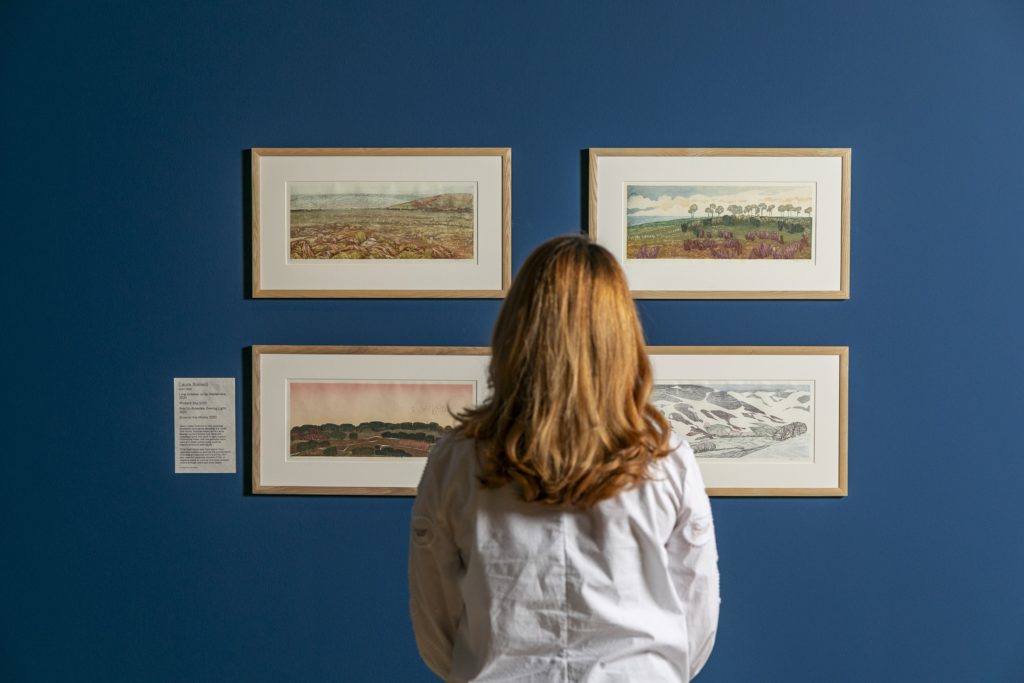
Japanese woodblock prints depicting the North York Moors by Scottish-based artist Laura Boswell from Making waves at York Art Gallery. Picture: Lee McLean

Making Waves is accompanied by interactive programme of activities and events, including specialist talks from artists, makers and curators throughout the exhibition run. Interactive guided workshops for over-16s will enable participants to “get to grips” with printing techniques, bookbinding and Ikebana flower arranging throughout the summer months and to create bespoke art to take home.

Siona Mackelworth, head of audience and programme at York Museums Trust, says: “The associated programme and events are designed for all ages to make connections to Japanese art and get involved with the gallery.

“We’re delighted to play host to more internationally important art, building on the success of our Claude Monet and William Morris exhibitions last year, and to share the stories and processes behind Japanese printing by showcasing technically complex and visually impactful artworks.”

Making Waves: The Art of Japanese Woodblock Print, York Arts Gallery, on show until August 30. Entry is included in general admission to York Art Gallery. Tickets: yorkartgallery.co.uk.

Did you know?

THE Japanese art aesthetic of Making Waves extends into York Art Gallery’s two shops, where prints, souvenirs and kimono jackets are on sale. For the creative,  Kintsugi kits and sketchbooks are stocked, as well as themed gifts such as fun socks, chopsticks and lucky welcome soaps.

Many products  display art from the gallery collection or are sourced directly from Japan. In addition, a new print inspired by Japan and York Art Gallery has been created by York artist Lincoln Lightfoot. 

The balcony ceramics shop offers tea bowls and other handcrafted ceramics inspired by Japanese Pottery.  
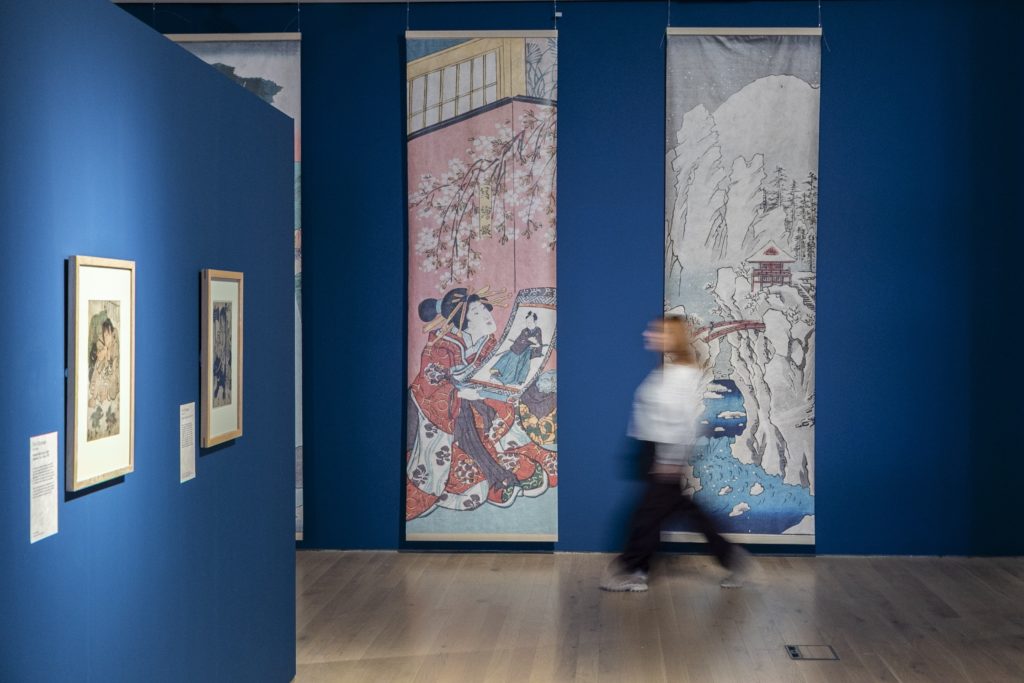
Exhibition designers Journal bringing “a sense of scale” to Making Waves at York Art Gallery. Picture: Lee McLean

Did you know too?

PRUSSIAN Blue, the world’s first synthetic pigment, was available widely in Japan from 1

Utagawa Kunisada (1786-1864): back story

THE most prolific, popular and commercially successful print artist of his time, Kunisada designed at least 20,00 prints during his 50-year career, where he was assisted by dozens of students employed in his studio.

While Kunisada tried his hand at a wide range of genres, theatre prints made up around 60 per cent of his output. Usually published to coincide with particular performances, theatre prints became outdated quickly. Kunisada’s rapid production and commercial acumen, however, enabled him to keep up with public demand for up-to-the-minute prints.

Kunisada excelled at conveying drama, expressions and gorgeous costumes of the theatre. His prints are typically beautifully detailed, busy in composition and intense in emotion.
No York Open Studios this weekend, but all that art still needs a new home, so look here…DAY 21

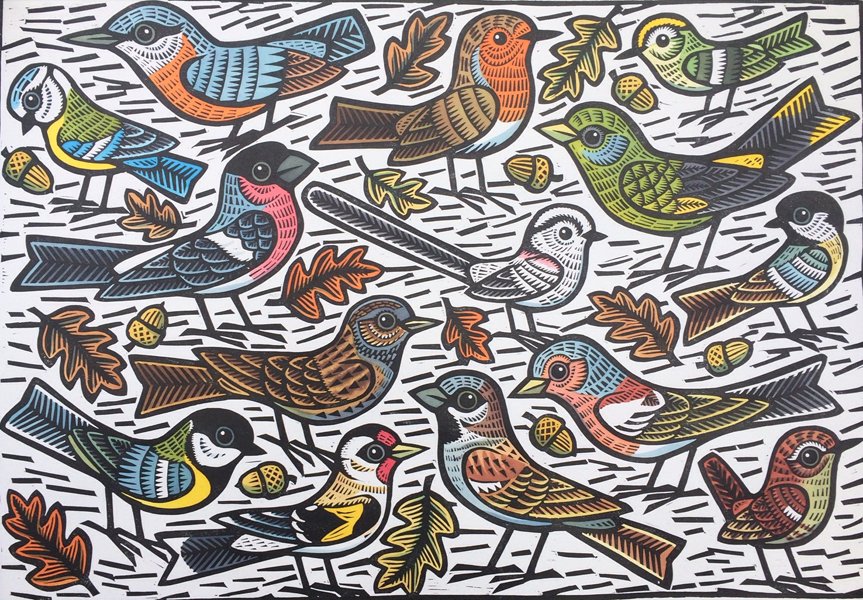
Autumn Birds, by Gerard Hobson

TODAY should have been spent visiting other people’s homes, not staying home. Next weekend too.

This is not a cabin-fevered call for a foolhardy Trumpian dropping of the guard on Covid-19, but a forlorn wish that York Open Studios 2020 could have been just that: York Open Studios. Instead, this weekend and next weekend will be York Shut Studios.

Nevertheless, in the absence of the opportunity to meet 144 artists at 100 locations, banished by the  Coronavirus lockdown, CharlesHutchPress is determinedly championing the creativity of York’s artists and makers, who would have been showcasing their ceramics, collage, digital, illustration, jewellery, mixed media, painting, print, photography, sculpture and textiles skills.

Each day, in brochure order, five artists who now miss out on the exposure of Open Studios are being given a pen portrait on these pages, because so much art and craft will have been created for the event and still needs a new home. Home and studio addresses will not be included at this time.

Meanwhile, York Open Studios artists are finding their own way to respond to the shutdown by filling their windows with their work instead. Look for #openwindowsyork2020 to locate them. “If you see one in your area while taking your daily exercise, take a picture and let us know,” they say.

Furthermore, look out for plenty of the 144 artists still showcasing their work over the York Open Studios period online. Holtby studio painter Kate Pettitt, for example, is penning a daily blog at facebook.com/katepettittartist/. “Visit the YOS website and take your own virtual tour at yorkopenstudios.co.uk,” she advises.

Good advice! The website says: “We’re doing a Virtual Open Studio, with artists posting based on a daily theme for the ten days spanning our two weekends. They’ll be showing you their studios and workshops, favourite processes, answering your questions, and of course lots of pictures of their new work!

“Search for #YorkOpenStudios anywhere on social media or follow your favourite artists to see more.”

First, however, here are five more artists and makers for you to discover…

Harriet McKenzie: Artist and foster carer

Harriet McKenzie, ceramics

HARRIET’S 2020 mission is to “examine drawing in the interface between the two- dimensional picture plane and the three-dimensional object”.

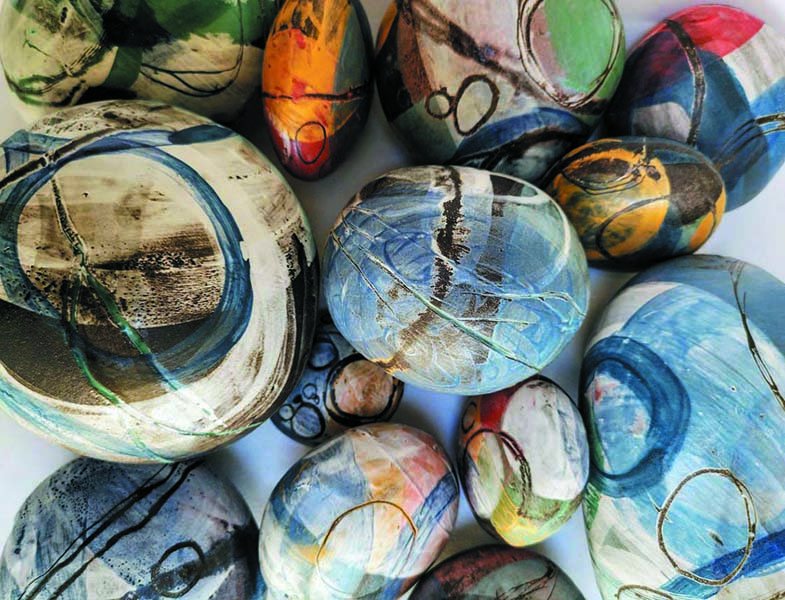
To do so, she creates ceramic Circles: enclosed forms, in black clay with engobe and sgraffito painting.

Her Circles reflect how relationships, interplay and suggestion are the bedrock of her art practice in her home studio. Harriet, or Hatti as she is known, is both an artist and a foster carer, a role that fundamentally informs her work as “a multifaceted influence revealed over time,” she says.

Harriet graduated with First Class honours from her Bradford School of Art fine art degree in 2007, first participating in York Open Studios in 2008 and she has since done so in 2009, 2011 and 2015 to 2018, when she was a bursary award winner.

Rounded up: A selection of Harriet McKenzie’s Circles

Her formal art education had a gap of 20 years as, first, she took time out to travel and live in America, before making a home and raising her daughter in York.

“I found it impossible to do both art and earn a living as a single parent,” she says candidly. “With my art, I got so focused and involved with each project, my poor daughter suffered, but with age comes a better balance.

“Now, I only do work to show in galleries or Open Studios once a year, as this can fit round my sometimes challenging life as a foster carer.” Seek out Harriet’s work at hattimckenzie.com. 

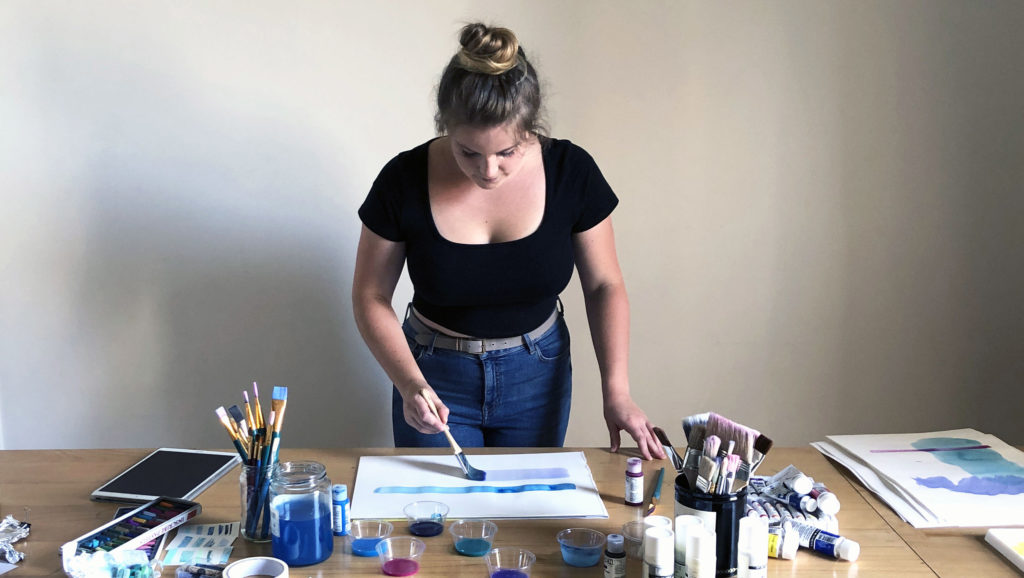
Harriette Rymer at work

Harriette Rymer, painting

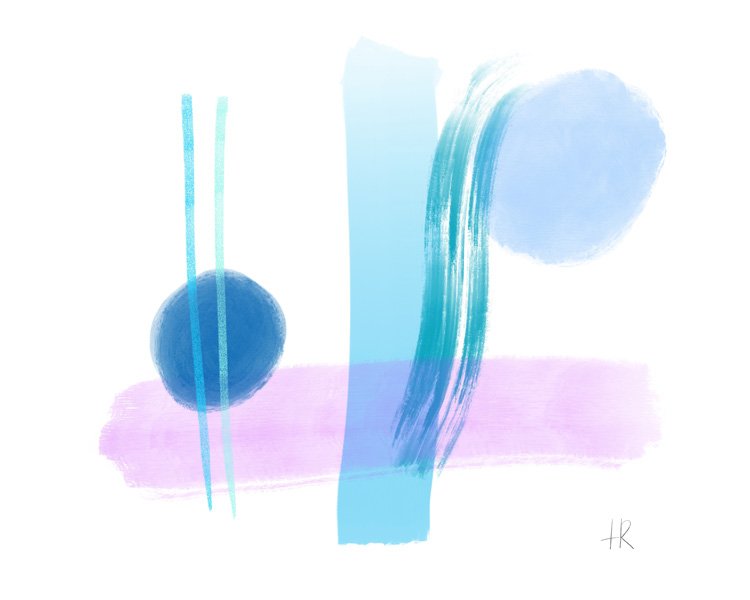
HARRIETTE creates abstract paintings, vibrant and playful in character, often featuring a geometric context, that she presents as original wall art panels, digital artworks and installations.

“By employing a range of mediums, I explore conflicting and harmonious relationships within colour and texture,” she says.

Harriette first studied art and design at Leeds College of Art in 2013, later taking a science degree in Newcastle. After graduating, Harriette returned to her artistic passion and now combines her love for precision with design in her paintings, screen-prints and cards (where she uses block-printing and stamping techniques).

Energy, by Harriet Rymer

Her fascination with colour manifests itself throughout her vivid work, curated under such collections as Confetti Collection, Hues, Colour Overlays, Milieu, Pattern Postcards and Expanse.

“I want the viewer to make personal connections with each composition, just as I have, whether it’s a reminder of a place they know well or a visualisation of a memory, thought or feeling,” says Harriette, who uses acrylic, gouache, watercolours and pastels.

This year she has exhibited in the York Printmakers show at Pairings wine bar, Castlegate, York, and in A First Glimpse at the Inspired By…Gallery, Danby, and she would have done so too at this month’s cancelled British Craft Trade Fair, Great Yorkshire Showground, Harrogate.

Take a look at harrietterymer.com.

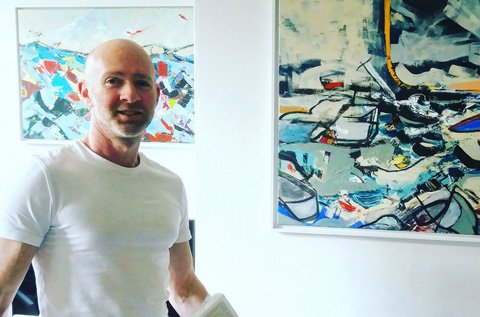
“I’m an instinctive painter,” says Steve Williams

Steve Williams, painting

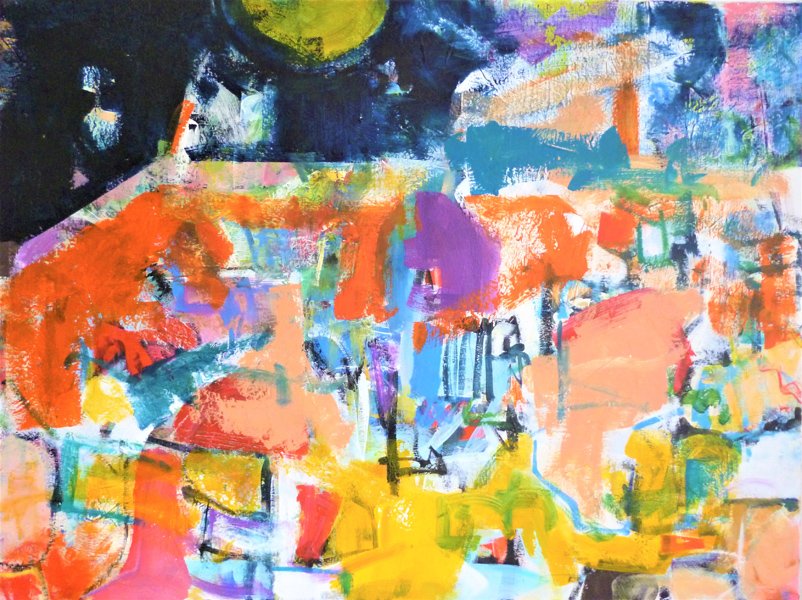
STEVE’S strikingly vibrant and original paintings in acrylics are inspired mainly by North Yorkshire’s landscapes and coastline.

“I’m an instinctive painter,” he says. “My pictures take form through the process of painting, not through adherence to a fully formulated plan. Exploring my emotive response to my subject matter, I allow my paintings to develop as a result of my mood or subconscious mindset. They stem from an original idea, image or situation and then come together of their own accord.”

Whitby At Night, by Steve Williams

Using acrylics, palette knives and brushes, Steve seeks to infuse his pictures with fluidity, energy, colour and texture. “My aim is to achieve a balance, a cohesion, harmony and completeness, in all of my pictures,” he says.

“I work spontaneously to convey my emotional energy into a painting. I believe this is the only way to ensure authenticity.”

Steve exhibits regularly with contemporary galleries throughout Yorkshire, in London and further afield. Commissions are welcomed via stevewilliamsart.moonfruit.com.

“My inspiration comes from nature’s wonders,” says Sam Jones

Sam Jones, jewellery

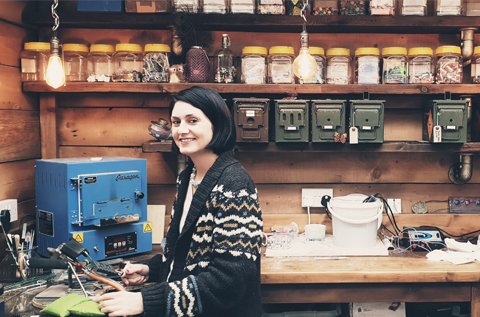
SAM is self-taught in the art of lampworking, otherwise known as glass-bead making.

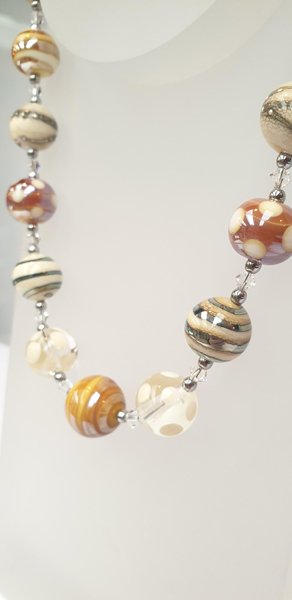
She works with various materials, such as glass rods, clear resin and metals, making her own glass beads and combining these with silver, copper and semi-precious stones in her jewellery since 2006.

She graduated with a degree in jewellery from Sheffield Hallam University in 2000 and works within the creative industries as a scenic painter. “I’m drawn to colour, pattern and texture,” she says. “I enjoy experimenting with processes and like working with various materials as I find each has its own qualities.

Handmade glass-beads necklace, by Sam Jones

“My inspiration comes from nature’s wonders, from the nebulas within our galaxies, to the weird and wonderful inhabitants of our oceans.”

Should the non-scientific among you be wondering, a nebula is a giant interstellar cloud of dust, hydrogen, helium and other ionised gases.

Some nebulae (the Latin plural) come from the gas and dust thrown out by the explosion of a dying star, such as a supernova. Other nebulae are “star nurseries”: regions where new stars are beginning to form. Science home-schooling lesson of the day, at your service.

Discover more at samjonesjewellery.com.

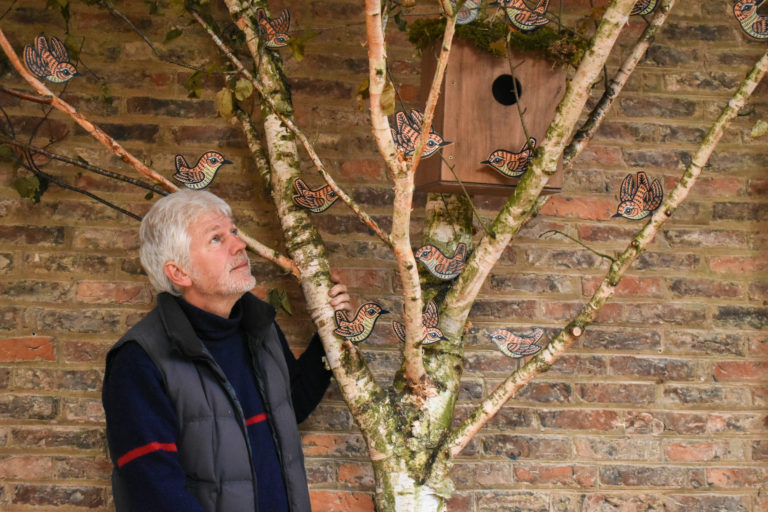
Gerard Hobson with his wren installation beneath the Clock Tower at Beningbrough Hall, near York. Picture: Sue Jordan

Gerard Hobson, printmaking

GERARD has had a love of birds, animals and art since childhood, a wildlife bent that saw him qualify as a zoologist from Bangor University and work for Wiltshire Wildlife Trust as a botanist and illustrator.

On relocating to the north, he worked for Yorkshire Wildlife while continuing to develop his own work on a freelance basis, turning his hand to woodcarving and studying print-making in York.

Gerard now works from his garden studio in Clifton, producing limited-edition hand-coloured linocut prints of birds and animals, much of his work being inspired while out walking his dog on the Clifton Ings.

His repertoire has expanded to take in cushions and lampshades, mugs and chopping boards, produced in tandem with Georgia Wilkinson Designs, and cut-outs of birds, animals, fish and mushrooms.

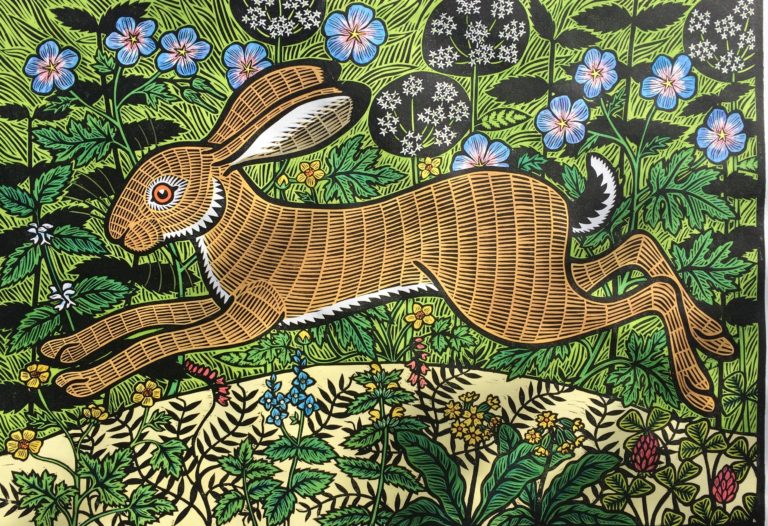
Leaping Hare, by Gerard Hobson

Gerard branched out still further earlier this year for his Winter Wildlife In Print show at the National Trust property of Beningbrough Hall, Beningbrough, near York, where he combined multiple prints in the Hayloft gallery with 14 sculptural scenes/installations in the outbuildings, gardens, grounds and parkland, inspired by creatures that make Beningbrough their winter home.

“I hope my art may stir people to become more interested in the wildlife around them, to feed the birds and join their local wildlife trust,” he says. “To share this with their children and their children’s children, and hopefully generations of young people will become more interested in the birds and woodlands around them. Maybe some will go on to be environmental campaigners – who knows!”

More info at gerardhobson.com.

TOMORROW: Lesley Birch; Frances G Brock; Maria Keki; Beccy Ridsdel and Dawn Ridsdel.