REVIEW: Martin Dreyer’s verdict on North York Moors Chamber Music Festival, Dialogue and The Dividing Line, St Hilda’s, Danby and St Hedda’s, Egton Bridge, August 11 and 13

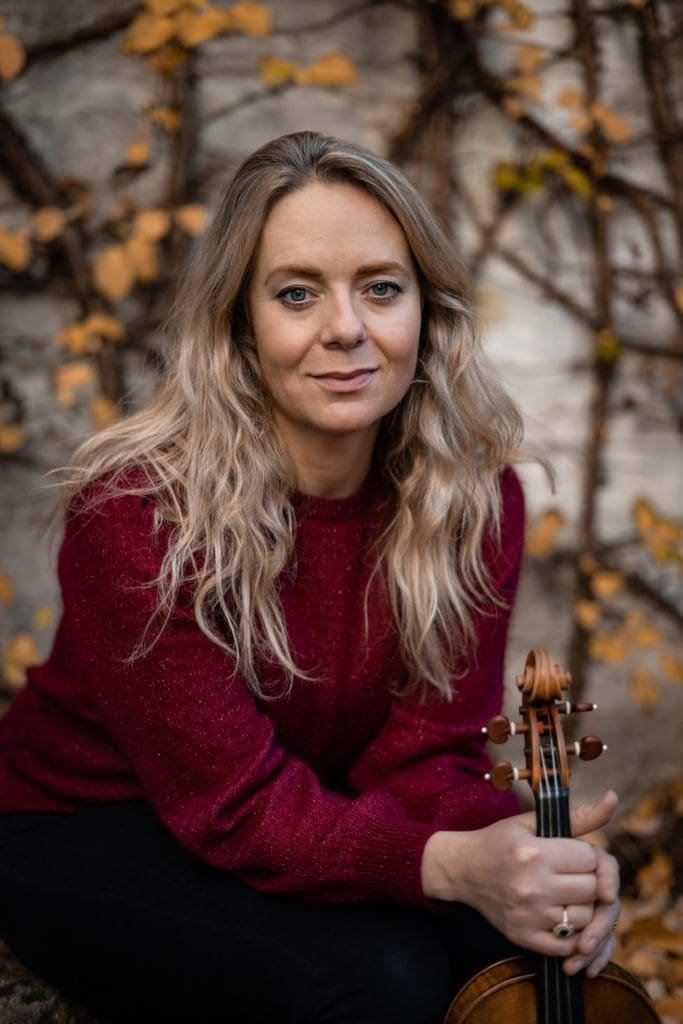
Violinist Charlotte Scott

THE titles – the festival’s own – give a rough indication of where we are in this year’s theme of Creation.

Dialogue is self-explanatory; the Dividing Line is that between earth and sky. Each of these recitals in churches on the northern edge of the North York Moors featured a world premiere, in a context of related works, old and new.

The afternoon in Danby involved only three violinists: Alena Baeva, Benjamin Baker and Charlotte Scott. Two pieces each by Bach and Berio framed two dances by Saariaho and the world premiere of Creation by Isabella Gellis, the only work in the programme involving all three players.

She describes it as a reimagining of an aria about a butterfly, sung by the Child in her 2024 opera The Devil’s Den, which was staged by Opera North last November. The role requires some daunting vocal pyrotechnics.

In the earlier part of its eight minutes, a glissando and close harmony set up a sense of lament. These recurred later, but the highest voice emerged gently at first and then with full-throated lyricism before lower, slower voices suggested the butterfly temporarily at rest.

It was not long before a series of high-note signposts, against tremolo accompaniment, grew ever more intense, keenly reflecting the original aria. Finally this dissipated into hovering harmony, in a pianissimo that stopped abruptly. Even without the visual reference, the piece stands alone most effectively.

Charlotte Scott despatched an immaculate if slightly deliberate account of Bach’s Second Partita for solo violin at the start, which was more than matched by Alena Baeva’s concluding no-holds-barred version of his taxing Chaconne, in which the three voices within the score emerged clearly.

Benjamin Baker teamed up with each of them in turn in five of Berio’s Duetti, bringing out the more lyrical sides of the composer’s human portraits. All three players warmed up for the Gellis with a suitably balletic approach to Saariaho’s two Danses des Flocons.

There were no less than a baker’s dozen of players on hand two afternoons later in Egton Bridge. The first half of the programme culminated in the world premiere of Charlotte Bray’s That Which You Wove Of Lightest Thread, I Wear To Honour Stone, for horn and string quartet.

Its title is taken from Paul Celan’s poem Totenhemd (‘death shirt’). What made this unusual was its close affiliation with a woven installation by the artist Caroline Burraway, which was on display in the nave. It consisted of a number of largely dessicated leaves woven together with human hair. It was deliberately designed to fall apart over time.

Bray’s music had a similar feel. Most of the action was in the solo horn, now in brief fanfares or calls to action, now less affirmative, more faltering. Its lines were brief rather than lyrical. Underneath the

string quartet wavered uncertainly, as if quaking at the horn’s decisiveness and fearful of its dominance. It was as if the horn was a tyrant, the strings his cowering people. This was musical impressionism in modern guise.

It had been preceded without a break by Thea Musgrave’s evocative Dawn, for oboe solo (Nicholas Daniel), followed by Kurtag’s Ligatura (from The Answered Unanswered Question), in the version for two violins, two cellos and celeste, and Ives’s The Unanswered Question, with Ben Goldscheider’s horn standing in for the trumpet and the wind quartet ‘chorus’ playing from behind the audience, attempting to answer the question of the title. The three works made an effective sequence and a useful prologue to the Bray.

Schubert’s String Quintet after the interval got off to a less than persuasive start, where slightly stronger accents might been more effective. The second movement hovered as it should and there was a welcome injection of light-heartedness in the Scherzo.

The finale came together with some force, the instruments now seeming more settled with each other. Much of the ensemble’s energy seemed to radiate not so much from the first violin, Alena Baeva, but from the centrally positioned viola, Sascha Bota, whose glances in all directions acted as a focus for his colleagues. It was a solidly competent rather a memorable account.

Oboe player Nicholas Daniel

Highlights from the Second Week, North York Moors Chamber Music Festival, August 17 to 22, at Welburn Manor Marquee unless otherwise stated

IN retrospect, the first half of ‘From the Silence’ (August 17) was relatively unexciting. The sudden rhythmic interjections in Thomas Adès’s piano work Traced Overhead, played by Joseph Havlat, and the largely slow-paced and thoroughly thought-laden And Other Things by Isabella Gellis, for clarinet, cello and piano, threatened to outstay their welcomes.

Dream, by Huw Watkins, for clarinet, violin and piano, was much more incident-packed, belying its title. From a quiet start, it exploded into fire. The piano calmed things down, but the other instruments lost patience with this and erupted again. Stimulating.  Adès’s Four Berceuses were surely ironically titled: definitely not recommended for lulling a child to sleep.

After the interval, reverting to Mozart and Beethoven, we might have expected classical normality. We were wrong. In Mozart’s Oboe Quartet in F, the typical approach is for oboe to dominate and the supporting strings to fill in where needed. This was quite different. All four players were totally engaged, the strings not to be outdone by the soloist and making their presence felt at every opportunity, weaving in and out of the texture with deft inflexions all round.

The slow movement was utterly soulful, rivetingly so up to and including its final cadence. In the finale, with all four going hell for leather, ensemble remained taut. This was the most exciting account of the work one could ever expect to hear, sensational in its daring and impact, certainly not what one might anticipate in a work that can easily sound bland. This was anything but. The deft oboist was Nicholas Daniel, with violinist Benjamin Baker, viola player Simone van der Giessen and cellist Tim Posner in close attendance.

By the time we reached Beethoven’s ‘Ghost’ Trio, Op 70 No 1, rain lashing the canvas made life difficult for players and audience alike. It had its compensations, however. The first movement was exceptionally fiery – a matter of self-defence – yet with some exceptionally subtle phrasing in its development section.

The Largo took on an extra layer of creepiness in this weather. The finale took time to outweigh the demons conjured in the Largo, but eventually – with the rain now letting up – moved into sunnier, pastoral climes. It was a brave and ultimately satisfying account.

* * * * *

THE next afternoon in a packed St Mary’s, Lastingham (August 18), ‘The Architect’s Hand’ offered Mozart’s Clarinet Quintet, partnered by the world premiere of an oboe quartet by Huw Watkins, whose String Trio made such a profound effect in this venue last year.

The Mozart was marked by clarinettist Matthew Hunt’s clear attempt to blend as smoothly as possible with the strings, made possible only by his extraordinary breath control. His duetting with first violinist Charlotte Scott in the slow movement, for example, was ideally balanced, all strings being muted here.

The strings made a shapely impact in the first of the Scherzo’s trios (where clarinet is silent). But it was in the six variations of the finale that Hunt really came into his own. Skipping between octaves in the first variation, bubbling in chalumeau register in the second, he was particularly effervescent in the fourth. In the more chromatic final two variations, the ensemble delivered some teasing pauses and tempo-changes.

Oboist-in-residence Nicholas Daniel returned to the front line in Watkins’s exciting new work. He was partnered by violinist Benjamin Baker, viola player Simone van der Giessen and cellist Jamie Walton, very much an ‘A’ Team. Into some fierce opening string chords, the oboe crept gingerly before building furiously as its tessitura rose, against highly syncopated strings. This movement faded dreamily at its close.

In a largely slow movement, Baker’s violin was much the most agitated participant, its decorative roulades contrasting with the largely calm, pastoral mood of the oboe and lower strings. The oboe’s legato line was a delight. Virtuoso runs in the oboe dominated the finale, where all four players were kept busy.

It was if the oboe were challenging the others to follow him. This they did after the opening triplet motif made a reappearance, whereupon all four took flight, the oboe rising ever higher towards an extremelyeffective, hushed ending.

* * * * *

‘NIGHTFALL’ (August 20) opened with the pianist Katya Apekisheva playing another three of Schumann’s Fantasiestucke Op 12, which have been featured throughout the festival. Aptly, her phrasing was particularly lovely in Des Abends (‘In the evening’).

It was the prelude to the UK premiere of Tom Coult’s Two Nocturnes And A Maze, for horn, violin and piano, which was written for performance in a hillside church in the Swiss Alps.

As one might expect, there were echoes of Alpine horn in Nocturne I, to which piano responded chordally and violin in jerky fashion. Nocturne II was much closer to Bartok’s night-music, with a repeated-note motif batted between horn and violin, as the horn became gradually higher and more sustained. It finished sparsely, with single notes from each player.

In between, Maze, with horn now muted at first, the texture was lighter and airier, with pizzicato violin and staccato piano. The relationship between the three parts was vague but the combinations were engaging.

Daniel Lebhardt followed the opening movement of Beethoven’s ‘Moonlight’ Sonata, with the slow movement of Schubert’s Piano Sonata in B flat, D.960. He was splendidly grand in its bold central section.

Apekisheva returned, with violinist Benjamin Baker and cellist Jamie Walton, the festival director, for an affecting account of Schubert’s single-movement Trio D.897 (nicknamed – not by Schubert – ‘Notturno’). Its opening is curiously marked pianissimo and appassionato. We certainly sensed the passion here.

* * * * *

THE closing afternoon concert (August 22), ‘…In The End’, juxtaposed Mozart’s First Piano Quartet, K.478 with Schumann’s Piano Quintet, a lusciously attractive combination. In the Mozart, Lebhardt was the pianist, supporting Alessandro Ruisi (violin), Emma Wernig (viola) and Bartholomew LaFollette (cello). It took the repeat of the exposition for it to be clearly defined, after which the ensemble mined the rich seam of drama in the development section.

The slow movement was as tender as could be imagined. In the rondo finale, Lebhardt turned the various returns to the theme into fascinating mini-cadenzas,  but the four players were a little tentative in their interactions.

A more familiar combination of players turned out for the Schumann. Baker’s fellow-violinist was Oliver Heath, alongside Simone van der Giessen (viola) and Jamie Walton (cello), underpinned by Apekisheva’s piano. Oddly enough, this is the first work in the repertoire for this particular combination of instruments.

The second theme in the first movement, shared between cello and viola, was delightfully lyrical, straight from the heart of the Romantic era. The slow movement, more or less a funeral march, ebbed and flowed tellingly, before an ending delivered without vibrato.

 In the whirlwind Scherzo, the passage-work from the strings was especially crisp, leading into a finale that reminded us just how expert Apekisheva can be in a supporting role: she sustained an immaculate balance with the strings rather than turning it into a mini-piano concerto, particularly in the concluding fugato. The thunderous applause was appropriate, as much for the work itself as for the ending of another highly successful festival.

Reviews by Martin Dreyer

REVIEW: Martin Dreyer’s verdict on North York Moors Chamber Music Festival, Of Music In The Silver Air (Algernon Charles Swinburne, August), Marquee, Welburn Manor, August 12

The Waldstein Trio

TWO French piano quintets dominated this programme, with solo piano bonbons introducing each.

César Franck wrote four piano trios as a teenager and then took nearly 40 years to produce his grand Piano Quintet in F minor, premiered in 1880. Another 40 years later, Gabriel Fauré wrote his Second Piano Quintet in C minor, unveiling it in 1921. They carry certain similarities but if anything the Franck sounds the more modern.

For the Franck we had the Waldstein Trio joined by Benjamin Baker as first violin and Megan Cassidy as viola. The Waldsteins were much more focused than at their earlier outing here, not striving to make an effect, and blended well with their colleagues.

It may help to remember that although Franck was born in Belgium and became French, his parents were both of German origin. This helps to explain why the principle of leitmotif, popularised by Wagner, became so important to him: one major theme recurs in various guises in all three movements of this work. It takes a while to emerge – which accounts for the urgency this ensemble brought to the opening, while searching for its raison d’être.

The start of the slow movement similarly gropes in the darkness, but it reached a nice apex here before subsiding with a sigh of relief. The tremolos in the finale lent a sense of menace, this edginess here peaking in the two heavy pizzicato passages and eventually rushing towards a highly emotional climax, where major and minor keys jostled for superiority.

The Fauré is altogether less pretentious and the now changed ensemble reflected this. The key to its success was the delicate restraint but brilliant underpinning provided by the pianist Joseph Havlat; he was never percussive. The violins of Charlotte Scott and Emma Parker were joined by the viola of Gary Pomeroy and the cello of Jamie Walton.

There was a comfortable ebb and flow right from the start before an energetic conversation between piano and strings. In the light and airy scherzo, taken at a terrific pace, the strings were like flitting fireflies.

In contrast, the richer harmonies of the slow movement spoke of a new intimacy, over the piano’s rippling flow: its main theme, heard on low strings, delivered deep emotion before vanishing into space. The viola’s opening theme was tossed around in various guises throughout a luscious finale.

Daniel Lebhardt had opened the evening with two more tasteful episodes from Janacek’s On An Overgrown Path, always sustaining their simplicity. Similarly, he applied deft brush strokes to a Debussy prelude, a thoughtful painter at his easel.

Charlotte Scott

North York Moors Chamber Music Festival, Time Present and Time Past (T S Eliot, Four Quartets), St Mary’s Church, Lastingham, August 14

THE opening line of Burnt Norton, the first of T S Eliot’s Four Quartets, was amply reflected in this stirring two-pronged matinee. A very recent string trio by Huw Watkins was followed by the last of Mozart’s six string quartets dedicated to Haydn.

There is a special aura about Lastingham church. This certainly owes much to its Saxon foundation, but equally its radiant stonework lends lightness and intimacy to an arena where none of the audience is far from the players.

In Huw Watkins’s Second String Trio, these were the violinist Oliver Heath, the violist Gary Pomeroy and the cellist Jamie Walton. The intensity of their cohesion in what is by any standards a very demanding work was a privilege to experience.

The work is divided into seven short sections. It bounced straight into an electric rampage, with a marginally calmer centre. This dissolved into the total contrast of a luscious, lyrical slow movement. Like a video dissolving into new frames, it led into something darker, with upper-voice pizzicato that encouraged the cello to break free.

But one senses that Watkins does not like to stay serious for long. A flippant, frolicsome frenzy followed, suggesting Bacchic dance or even a rite of spring. A residue of anger seeped into the subsequent Adagio, although it gradually sweetened, providing a springboard into an angular free-for-all, with all threesquabbling over a four-note motif.

However,  the extraordinary finale, with supercharged cross-accents and catchy syncopation, saw the players finally coalesce in sensational style. Both the piece and its delivery were a tour de force. I would gladly hear it again any time.

After that, it hardly seemed possible that Mozart’s K.465 in C, nicknamed the ‘Dissonance’, could match the excitement of the Watkins. The violins now were Charlotte Scott and Emma Parker, with Pomeroy’s viola remaining on stage and Tim Posner taking the cello chair.

One of the special features of this festival is watching professionals go all out on a favourite piece: the thrills risk spills. But there were no spills here. After an opening as teasingly perplexing as Mozart clearly intended, there was terrific energy in the release of pent-up tension that followed and with it great transparency, so taut was the ensemble. The lovely Andante began a little forcefully but the pregnant silences in its second half were cleverly stretched.

There was even more of a surprise in the trio, which turned into a mini-drama in Sturm und Drang style, a hangover from the 1770s. The finale was brilliantly pointed. The devil was in the detail: the two-note staccato upbeat to the main theme, for example, taken in a subtle variety of ways, or the chromatic harmony, thrown out nonchalantly.

Mozart said that these six quartets were “the fruit of long and laborious effort”. This one was made to sound effortless, not least because Posner’s cello sustained the lightest of touches and allowed the spotlight to fall elsewhere: the quartet often seemed to be floating on air, a magical effect. Perhaps the secret was in the surrounding stonework.

Daniel Lebhardt

North York Moors Chamber Music Festival, Of A Dark Path Growing Longer (Angela Leighton, Cyclamen at the winter solstice), Marquee, Welburn Manor, August 16

THIS was an eclectic mix of solo piano numbers interspersed with music for horn, with a Leighton piano quartet at its centre. Many of the pieces referred to night and darkness, appropriately geared to the winter solstice of the title poem.

Such is the wealth of talent on hand at this festival that there were no less than four pianists on parade here.

There were 11 pieces throughout the evening. Joseph Havlat opened the innings with the last two of Schumann’s Night Pieces for piano Op 23, the first with intriguing inner voices, the second a moving chorale. In two more of Janáček’s cycle On An Overgrown Path (dotted through the festival), he was attentive to incidental detail, especially in the sploshy “Unutterable anguish”.

Daniel Lebhardt contributed Janáček’s lullaby Good Night! towards the end, having earlier accompanied Ben Goldscheider’s horn in Mark Simpson’s Nachtstück, which delivered a pretty forceful reaction to the time of day that inspired it.

Over the rambling bass line in a very active piano role at the start, the horn flew ever higher, before something gentler followed. The horn’s response to increasingly martial piano was a muted passage almost by way of protest. A processional passage in straight time blew into a climax, before an apologetic pianissimo that seemed to include quarter-tones. It was an odd but involving mixture.

The pianist Katya Apekisheva made two welcome appearances: first, on her own in Brahms’s B flat minor Intermezzo, Op 117 No 2, where her delicate arpeggios enhanced the work’s autumnal aura, and then partnering Goldscheider in Schumann’s Adagio & Allegro in A flat, Op 70. They blended superbly. After faultless scene-setting, Schumann’s flights of fancy were mouth-watering, the duo building on one another’s phrases rather than competing.

Goldscheider was back at once in Huw Watkins’s Lament, which he had commissioned in 2021 to celebrate the centenary of Dennis Brain’s birth. The composer himself was his partner at the piano. In mainly tonal, if mildly modal, harmony a slow cantilena built to an anguished climax, at which point both players grew more temperamental. It finally subsided into a resigned pianissimo, in true elegiac fashion, as if wondering what might have been had Brain lived longer.

The central work in this programme was Leighton’s Contrasts and Variants, Op 63 (1972), a piano quartet in one movement, which was given in the presence of his daughter (the poet quoted above).

Alongside Watkins as pianist we had violinist Benjamin Baker, violist Gary Pomeroy and cellist Tim Posner. Essentially an extended theme and variations, it rambles through a variety of moods, although always with an underlying romanticism.

There was some elegant syncopated pizzicato at its heart, and the players were able chameleons through its rapidly-changing colours. But even at the end, after the strings had been muted, we were left with a sense of yearning.

Goldscheider ended the evening in dazzling style with Messiaen’s solo horn evocation of the cosmos, Appel Interstellaire. It calls for a veritable thesaurus of brass techniques. Goldscheider not only despatched them all with panache, he also gave them compelling logic, a bravura performance.

Tenor James Gilchrist

North York Moors Chamber Music Festival, ‘Tread Softly’, W B Yeats, He Wishes For The Cloths O Heaven), Marquee, Welburn Manor, August 19

THIS was an all-English evening and the first this year to include a singer. James Gilchrist lent his eloquent tenor to songs by the first great song-writer John Dowland and by Rubbra and Leighton, alongside instrumental works by Bliss and Britten.

It was a smart idea to include the two Dowland songs upon which Britten based his Lachrymae variations. Both were given in ‘consort’ versions, with a string quartet mimicking the sound of viols. It was certainly satisfactory, although we hardly felt the dance rhythms on which they were built.

What madethem a success, however, was Gilchrist’s intensity, allied to excellent diction. A sole example was his spine-tingling sforzando twice on ‘hell’ in the final verse of ‘Flow my tears’. ‘If my complaints’ was the very essence of melancholy, Dowland’s forte.

Britten wrote his Lachrymae, subtitled ‘Reflections on a song of John Dowland’, in 1950 for viola and piano. But this was his Op 48a, that tiny ‘a’ indicating the version he wrote 26 years later for viola and small string orchestra. It was a treat to hear it in this format, which turns the work into a virtual concerto. Simone Gramaglia was the thoughtful soloist, partnered by a star-studded octet.

Essentially this is a theme and variations in reverse, with Dowland’s ‘Flow my tears’ emerging radiantly at its close after a tortuous journey. Gramaglia led from the front, invigorating his posse with his rhythmic verve and insights.

When bold low strings (built on Will Duerden’s double bass) grew urgent, he soared high above, then asserting his authority in the cadenza. His tremolo led into a rushing passage before the calm dénouement.

In a sense we had also been in the Elizabethan era with Rubbra’s Two Sonnets by William Alabaster (1567-1640). These involved the viola of Simone van der Giessen, along with Gilchrist and the piano of Anna Tilbrook.

They were intense and prayerful, with tenor and viola blending especially well. In ‘Upon the Crucifix’ the pleading was mellowed by more positive thoughts, whereas the quite deliberate tempo of ‘On the Reed of Our Lord’s Passion’, with insistently dissonant viola and piano, underlined the agitation involved in Christian belief. Gilchrist’s delivery was a model of dramatic perplexity.

Gilchrist and Tilbrook also presented two movements from Kenneth Leighton’s cantata Earth, Sweet Earth. ‘Prelude’ sets a passage from Ruskin’s autobiography as a dreamscape, finishing high on a pianissimo falsetto. Gilchrist took it in his stride.

The icy terrain of ‘Contemplation’ by Hopkins grew ever more intense, and demanded particular accuracy from Tilbrook. She delivered in spades.

This left Bliss’s Clarinet Quintet, with Matthew Hunt in the leading role. Benjamin Baker led the strings, with the support of Emma Parker, Simone van der Giessen and Rebecca Gilliver. There was a lovely flow to the dialogue at the start, contrasting strongly with the taut, staccato excitement of the Allegro molto which melted into a contemplative mood.

The Adagietto had an elegiac aroma, progressing into a sighing romanticism. The finale was a real caper, leavened by syncopation right from the start. But there was still room for Hunt’s trademark cantabile before an exciting coda. The strings had kept close order with the clarinet, making their presence felt whenever possible. Teamwork was the order the evening.

Reviews by Martin Dreyer

REVIEW: Steve Crowther’s verdict on Mishka Rushdie Momen and Friends at Ryedale Festival

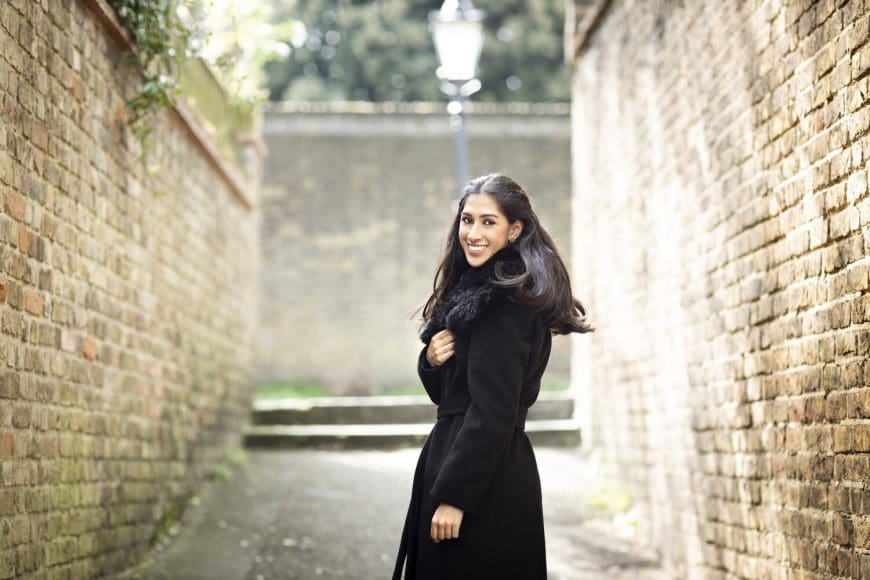
Mishka Rushdie Momen: “Clearly one of the most thoughtful, gifted and sensitive British pianists”

Ryedale Festival: Mishka Rushdie Momen and Friends, National Centre for Early Music, York, July 25

IT’S an odd thing about the NCEM acoustic at St Margaret’s Church: the spoken voice is difficult to hear clearly, unless of course you use a microphone, as in the preconcert introduction.

This was true of both spoken contributions from violinist Tim Crawford and Ms Momen, and yet I could hear the pizzicato playing by cellist Tim Posner resonating beautifully throughout the performance. Mind you, he is a very fine player.

Anyhow, to the concert itself. Mishka Rushdie Momen and Friends suggested an intimate gathering of people who are on close terms with each other, and this is exactly what we got. The performers were at ease with each other.

They happily shared the dialogue, listening carefully to each instrumental utterance before replying. They even (musically) flirted with each other; the second canonic study by Schumann was a veritable love duet between violin and cello.

So, let’s start with the Schumann Six Etudes in Canonic Form Op. 56. Evidently, he wrote these pieces in 1845 as an attempt to overcome his “writer’s block”. They were originally written for organ or pedal piano, but it was Schumann’s friend, Theodor Kirchner, who later arranged these for piano trio. The canonic form is one of discipline, of formal conversation; we don’t usually tend to hear it sing, but it does here.

Following the tender second study touched on earlier, any whiff of the academic template is dispelled by the lovely Schumanesque melodic sound world. The music is joyous and so was the playing.

The fourth was conveyed as the charming romantic song it is, with lovely shaping of the musical phrases and rippling decoration. The performers clearly had fun with the very rhythmic, dance-like fifth and in the sixth they delivered a heartfelt, yearning finale. Moving too.

This brings us to the opening work, Smetana’s Trio in G minor, Op. 15. The Trio was written in response to the death of the composer’s four-year-old daughter, Bedriska, of scarlet fever in 1855. The players really captured the quite violent contrasts of the opening allegro moderato. Tender cello and violin solos crescendoed into full-throttle drive. These melted into both delicate and impassioned outpourings of nostalgic memory and grief.

There were echoes of Brahms in the work, but the overall impression conveyed was distinctly Czech; particularly in the thrilling second movement with its musical windows of reflection and the nervous energy of the brilliantly performed allegro finale.

Ms Momen’s performance of the wonderfully descriptive Smetana work, Memories Of Bohemia in the form of Polkas, was a real treat. Lovely touch, phrasing, expressive rubato and executed with real panache.

Mendelssohn’s Piano Trio in D minor Op.49 is a terrific work, and the trio delivered a terrific performance. Tim Posner’s opening cello theme was delivered with purpose and nobility. Ms Momen’s agitated accompaniment, at first chordal, then transformed into flights of bristling arpeggios as the theme is repeated.

The contrapuntal reworkings of the second, song-like melody were beautifully judged, as was the opening cello’s melody, now joined by a haunting descending line in the violin. The assai animato signing-off seemed to set the instruments on fire.

There was a quite intimate call and response about the Songs Without Words second movement. For example, in the opening musical piano invitation to the violin and cello to join the dance. The piano writing in the exuberant Scherzo is a virtuosic tour de force. And yet, captured in this performance, there is also magic in the air.

I loved the way the passages were thrown to each of the performers in turn, as in some musical game. The way the music effortlessly dissolved into the ether was delightful.

Apart from Tim Posner’s rather unexpected sweeping Mendelssohnian cello melody, this finale was very much hang-on-to-your-hats time. The driver is very much the piano, the writing is seriously demanding, and Ms Momen’s technique and musicality delivered. The final climax integrates the virtuosic and the song, with a crowd-pleasing signing off.

Mishka Rushdie Momen is clearly one of the most thoughtful, gifted and sensitive British pianists and consequently well equipped to embrace both solo and chamber music performance. Mishka Rushdie Momen and Friends – here the excellent Tim Crawford (violin) and Tim Posner (cello) – gave us a concert of equality of engagement, insight and enrichment.

Review by Steve Crowther

Secret Link