Why 300 years of Japanese woodblock prints are Making Waves at York Art Gallery

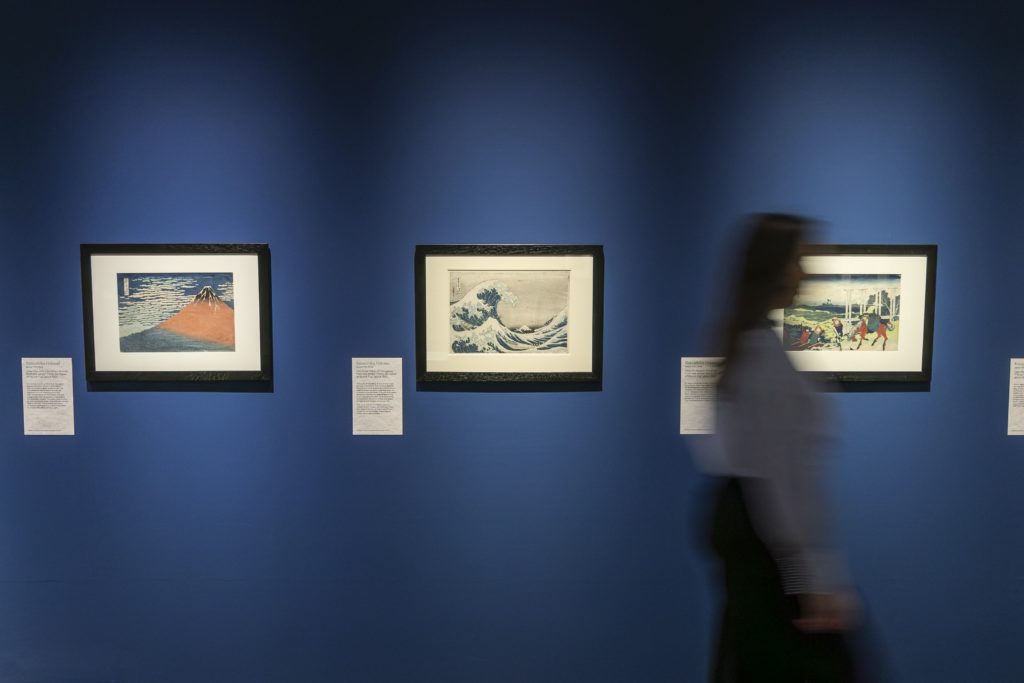
Waves in motion: Making Waves at York Art Gallery. Picture: Lee McLean

MAKING Waves: The Art of Japanese Woodblock Print has taken a year of preparation at York Art Gallery.

On show until August 30, the display of Japanese art and culture brings together more than 100 striking and iconic works from renowned artists such as Katsushika Hokusai, Utagawa Hiroshige and Kitagawa Utamaro, amongst many others, complemented by armoury from the Royal Armoury In Leeds and kimonos from Durham Oriental Museum at Durham University.

To provide an insight into the history and development of Japanese woodblock printing, the exhibition brings together exhibits from York Art Gallery’s extensive collection of Japanese prints, some never exhibited previously, together with prints loaned from Maidstone Museum, Ashmolean Museum and the British Museum and early printed books from the British Library.

Covering more than 300 years of printing history, from the 17th to 21st centuries, Making Waves places particular emphasis on the heyday of Japanese woodblock printing in the 18th and 19th centuries.

At its epicentre is the chance to see Katsushika Hokusai’s The Great Wave off Kanagawa, one of the most recognisable and celebrated artworks in the world. This original print has been lent to York Art Gallery by Maidstone Museum, and like encountering Leonardo da Vinci’s 16th century portrait of the Mona Lisa at the Musée u de Louvre, the work is smaller than you might expect but just as impactful.

Spread across three rooms, Making Waves invites visitors on a journey that begins with a guide to the origins and techniques of early printmaking, before looking at major themes, including the “floating world” of urban entertainments, the beauty of Japanese landscapes, legendary heroes and adventurers from fantastical tales and historical epics, actors and Samurai warriors (representing martial prowess, courage, loyalty and honour). Festivals and seasonal celebrations feature too.

Finally, the exhibition explores how print artists responded to major changes in Japanese society, from Japan’s development into a modern industrial nation in the late 19th century through to the present day.
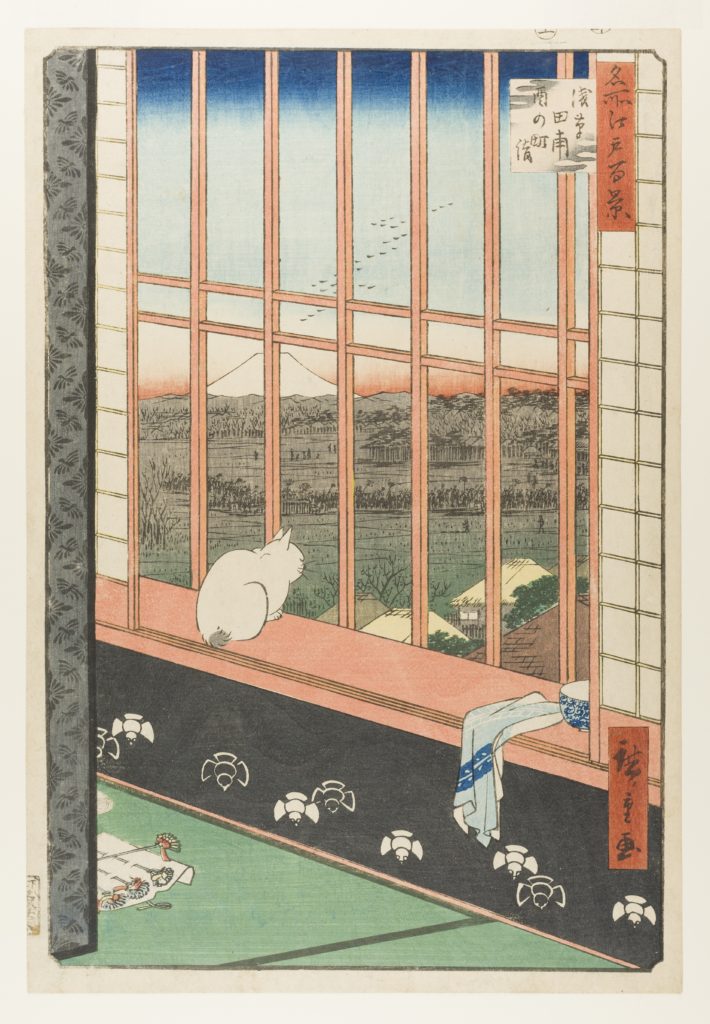
Utagawa Hiroshige’s Asakusa Rice-fields and Torinomachi Festival, from the series One Hundred Famous Views of Edo, part 4 Winter, 1857, York Art Gallery collection. Picture courtesy of York Museums Trust

Contemporary Japanese woodblock prints feature too in the third room, including several works by Royal Academy of Arts president Rebecca Salter, created in collaboration with Sato Woodblock Workshop, Kyoto, plus Japanese woodblock prints depicting the North York Moors by Scottish artist Laura Boswell, such as Rhubarb Sky.

Look out too for works by London-based artist Nana Shiomi, whose 2001 print, Hokusai’s Wave – Happy Carp is displayed alongside the very woodblocks Shiomi used to produce it, enabling visitors to gain an understanding of the technical process of printing.

Entertainment and festivals, folklore and seasons and travel and adventure all play a major role in these vibrant images, whose dynamic designs remain popular centuries later.

 Making Waves marks the debut of Eleanor Jackson as curator of fine art at York Art Gallery. “I started here in January last year and was given this exhibition to curate straight away. To hit the ground running and to turn it round in a year has been challenging but it’s worked out well,” she says.

“Arranging the loans is by far the most time-consuming part of organising the exhibition, so that was the first task I did, researching potential loans and contacting leading institutions.”

Eleanor continues: “Ever since Japan was opened to Western trade in the 1850s, Japanese art has become increasingly popular in the West and Europe, causing a sensation when first exhibited in Paris, introducing audiences to the woodblock print, and now there are so many fantastic collections in the UK.”

One key curatorial decision was to address the need to add contrast to “the prints being mostly 2D and small”. “It was important to bring in bigger items, such as the armour and kimonos, to provide dramatic sightlines, and to give a fuller flavour of Japanese culture in that period,” says Eleanor. “We also asked our exhibition designers, Journal, from Leeds, to provide a sense of scale.”
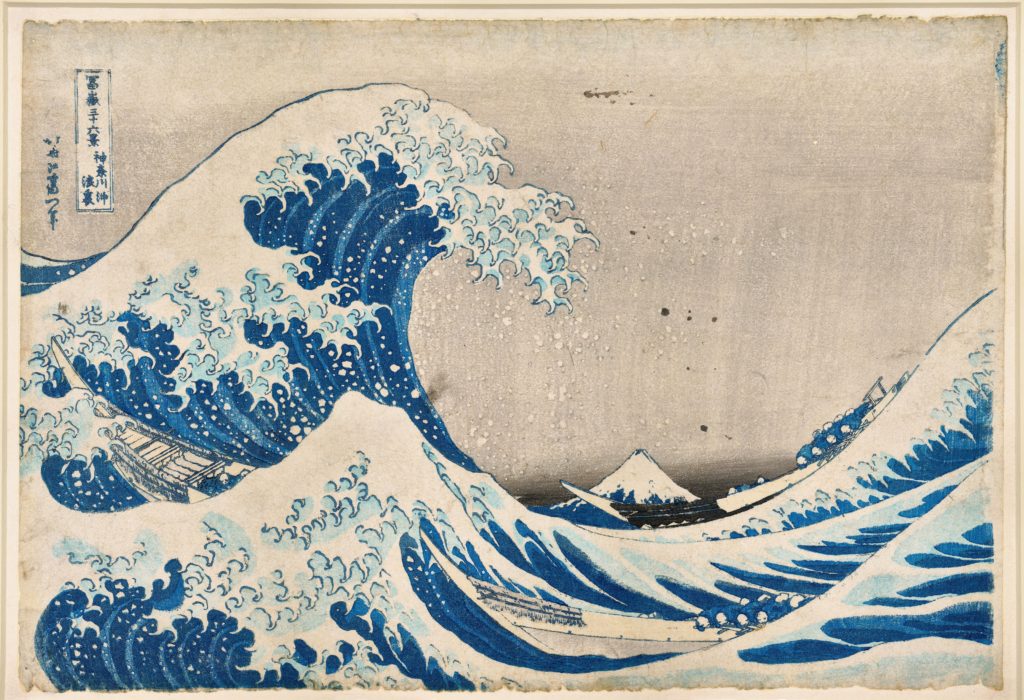
The Great Wave off Kanagawa, by Katsushika Hokusai, circa 1829-32. Image courtesy of Maidstone Museum, on loan at York Art Gallery

In addition, the exhibition focus on woodblock print techniques is intended to be of interest to artists, while visitors can “have a go” at woodblock printing”. “It’s important to understand the art of woodblock and the huge amount of work and skill that goes into each one. Even though they are prints, they are unique because they all have imperfections,” says Eleanor.

Summing up the significance of Making Waves, she enthuses: “To bring these works together in this way has been a privilege, and we are so excited to unveil the exhibition.

“The support of national and regional museums, as well as contemporary artists, has been instrumental in allowing us to tell the story of this gorgeous art form. We are grateful to them for lending their precious works to York Art Gallery for this exhibition.”

Making Waves will extend into York Museum Gardens, where a new Japanese- style garden is being installed, ready for the spring and summer months. A Japanese dry garden, or “karesansui”, created in the space behind the gallery, takes inspiration from traditional Japanese gardens with a contemporary interpretation linked to the history of the site.

Often called a “zen”’ garden, the Japanese dry garden is constructed simply using wood, stone and bamboo to create a space for calm contemplation and meditation, inviting people to take time out from their day.

Steve Williams, garden manager at York Museums Trust, says: “Four blossom trees will be a key feature in the garden as we head into spring 2026:  three cherry trees and an apricot tree. Blossom trees hold a cultural significance in Japan, symbolising beauty, impermanence and renewal, which reflect the transient nature of life.

“All the materials included in the Japanese-style garden have been sourced with the intention of longer-term use, and they will be repurposed elsewhere in Museum Gardens following the exhibition.”
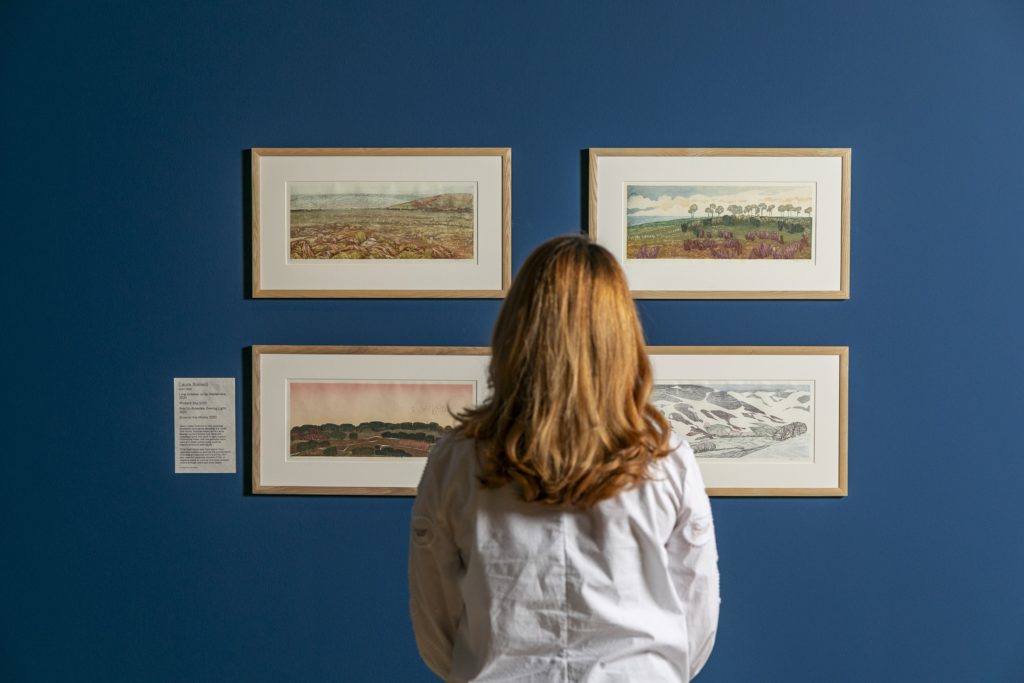
Japanese woodblock prints depicting the North York Moors by Scottish-based artist Laura Boswell from Making waves at York Art Gallery. Picture: Lee McLean

Making Waves is accompanied by interactive programme of activities and events, including specialist talks from artists, makers and curators throughout the exhibition run. Interactive guided workshops for over-16s will enable participants to “get to grips” with printing techniques, bookbinding and Ikebana flower arranging throughout the summer months and to create bespoke art to take home.

Siona Mackelworth, head of audience and programme at York Museums Trust, says: “The associated programme and events are designed for all ages to make connections to Japanese art and get involved with the gallery.

“We’re delighted to play host to more internationally important art, building on the success of our Claude Monet and William Morris exhibitions last year, and to share the stories and processes behind Japanese printing by showcasing technically complex and visually impactful artworks.”

Making Waves: The Art of Japanese Woodblock Print, York Arts Gallery, on show until August 30. Entry is included in general admission to York Art Gallery. Tickets: yorkartgallery.co.uk.

Did you know?

THE Japanese art aesthetic of Making Waves extends into York Art Gallery’s two shops, where prints, souvenirs and kimono jackets are on sale. For the creative,  Kintsugi kits and sketchbooks are stocked, as well as themed gifts such as fun socks, chopsticks and lucky welcome soaps.

Many products  display art from the gallery collection or are sourced directly from Japan. In addition, a new print inspired by Japan and York Art Gallery has been created by York artist Lincoln Lightfoot. 

The balcony ceramics shop offers tea bowls and other handcrafted ceramics inspired by Japanese Pottery.  
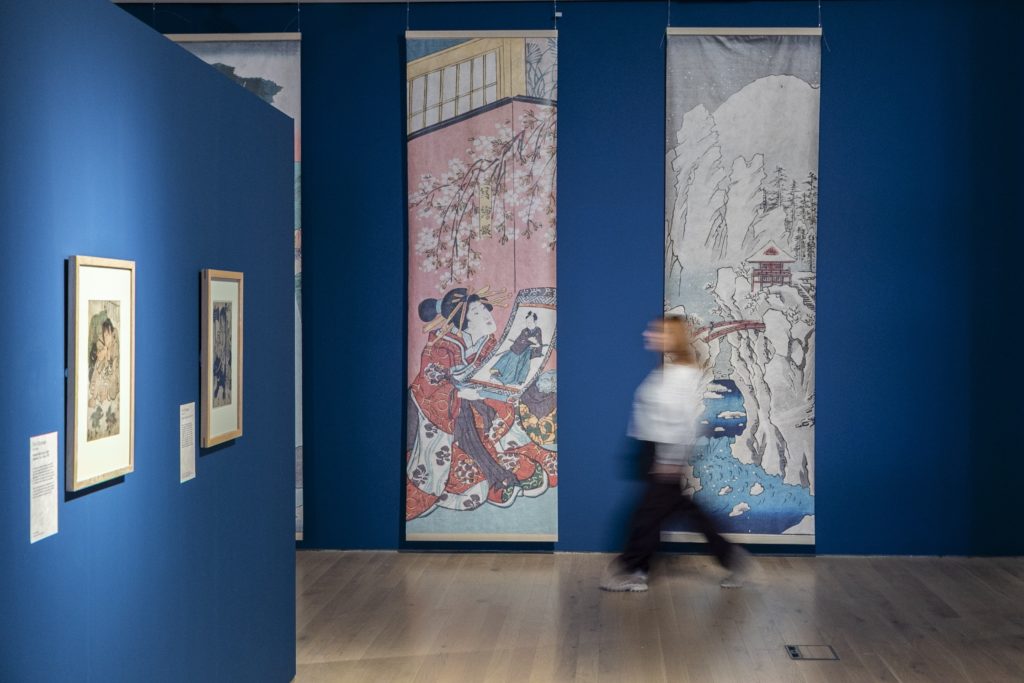
Exhibition designers Journal bringing “a sense of scale” to Making Waves at York Art Gallery. Picture: Lee McLean

Did you know too?

PRUSSIAN Blue, the world’s first synthetic pigment, was available widely in Japan from 1

Utagawa Kunisada (1786-1864): back story

THE most prolific, popular and commercially successful print artist of his time, Kunisada designed at least 20,00 prints during his 50-year career, where he was assisted by dozens of students employed in his studio.

While Kunisada tried his hand at a wide range of genres, theatre prints made up around 60 per cent of his output. Usually published to coincide with particular performances, theatre prints became outdated quickly. Kunisada’s rapid production and commercial acumen, however, enabled him to keep up with public demand for up-to-the-minute prints.

Kunisada excelled at conveying drama, expressions and gorgeous costumes of the theatre. His prints are typically beautifully detailed, busy in composition and intense in emotion.
More Things To Do in York and beyond, and not still bedded down in the home bunker. List No. 31, courtesy of The Press, York

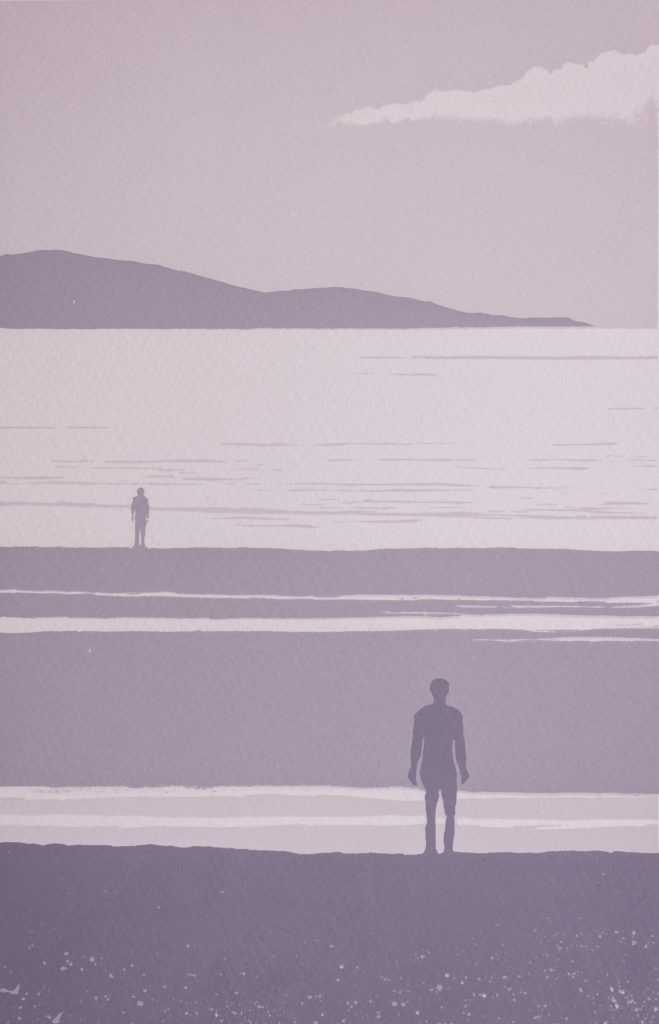
Let Ian Massie take you to Another Place in his Northern Soul show at Ryedale Folk Museum, Hutton-le-Hole from May 17

NO mention of home entertainment here, as Charles Hutchinson decides to cast fears aside – albeit while acting responsibly – as he looks forward to theatres, bars, galleries, museums and music venues opening their doors once more.

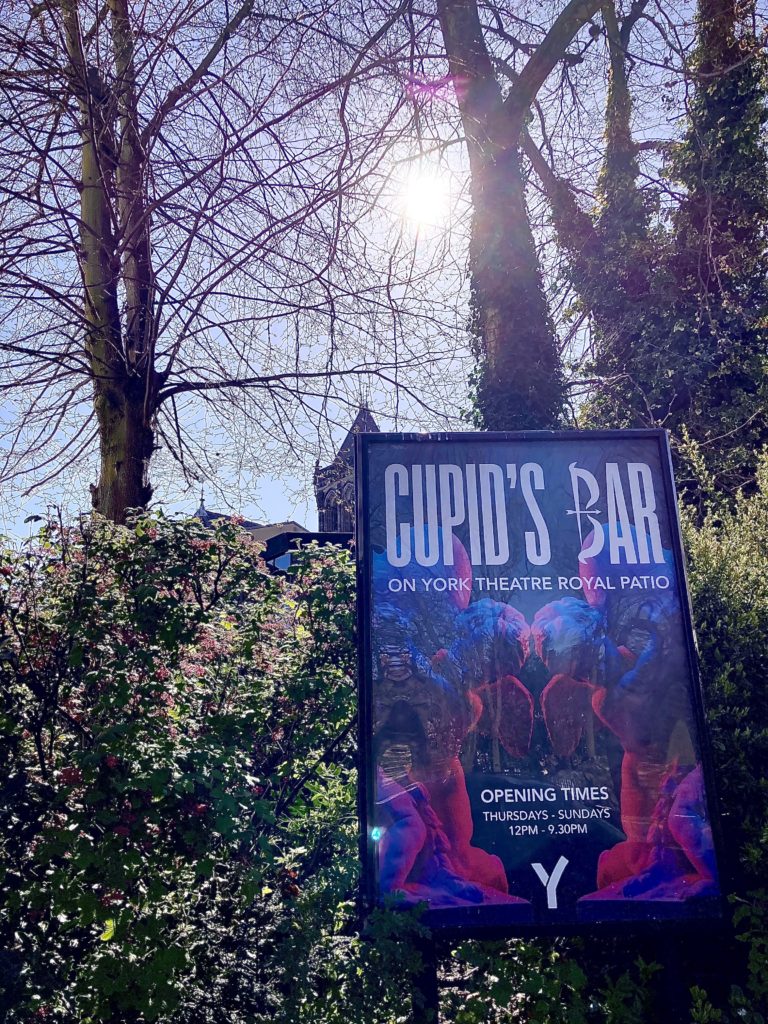
Cupid, draw back your bow and let the beer flow, straight to the York Theatre Royal patio

LOVE is in the Step 2 air, and soon on the York Theatre Royal stage too for The Love Season from May 17.

Cupid’s Bar: Follow the arrow to the York Theatre Royal patio. Picture: Livy Potter

Perfect timing to launch Cupid’s Bar for five weeks on the Theatre Royal patio, where the bar will run from midday to 9.30pm every Thursday to Sunday, providing an outdoor space in the heart of the city for residents and visitors to socialise safely.

Working with regional suppliers, Cupid’s Bar will offer a range of drink options, such as draught beer from Black Sheep Brewery, Masham, and York Gin from, er, York.

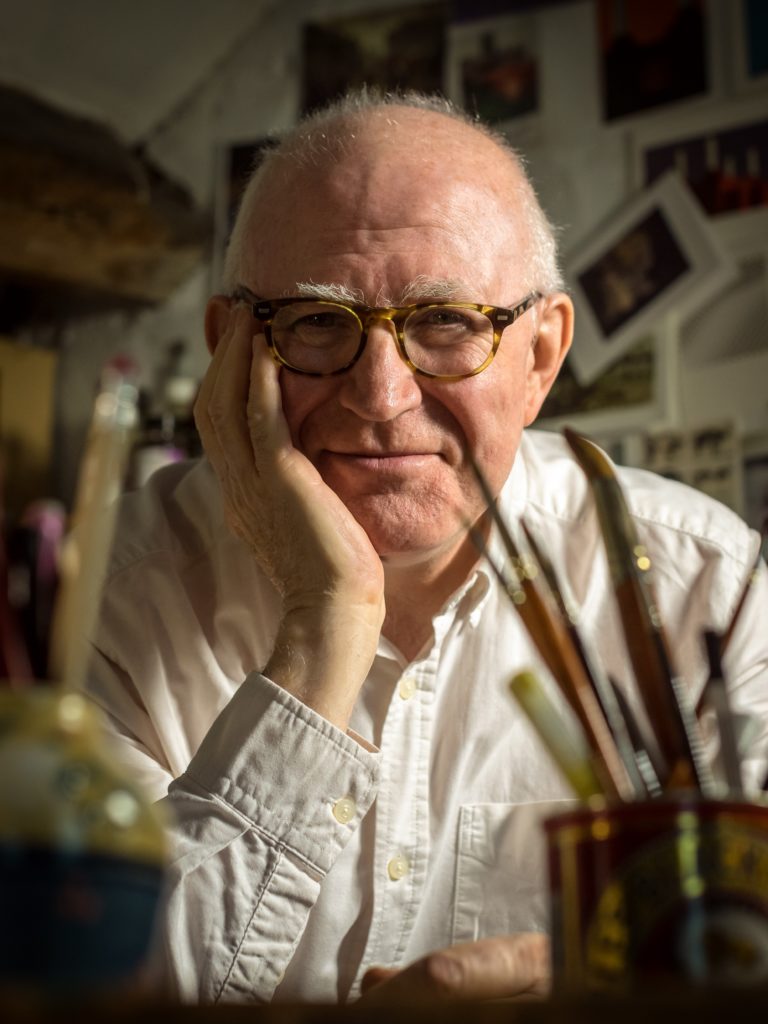
Ian Scott Massie: Finding Northern Soul in his landscape watercolours and screenprints. Picture: Steve Christian

Exhibition of the month ahead outside York: Ian Scott Massie, Northern Soul, Ryedale Folk Museum, Hutton-le-Hole, North York Moors National Park, May 17 to July 11

MASHAM artist Ian Scott Massie’s Northern Soul show of 50 watercolours and screenprints represents his personal journey of living in the north for 45 years.

“The north is the truth of England, where all things are seen clearly,” he says. “The incomparable beauty of the landscape; the harsh ugliness left by industry; the great wealth of the aristocracy; the miserable housing of the poor; the civic pride of the mill towns and a people as likely to be mobilised by political oratory as by a comedian with a ukulele.”

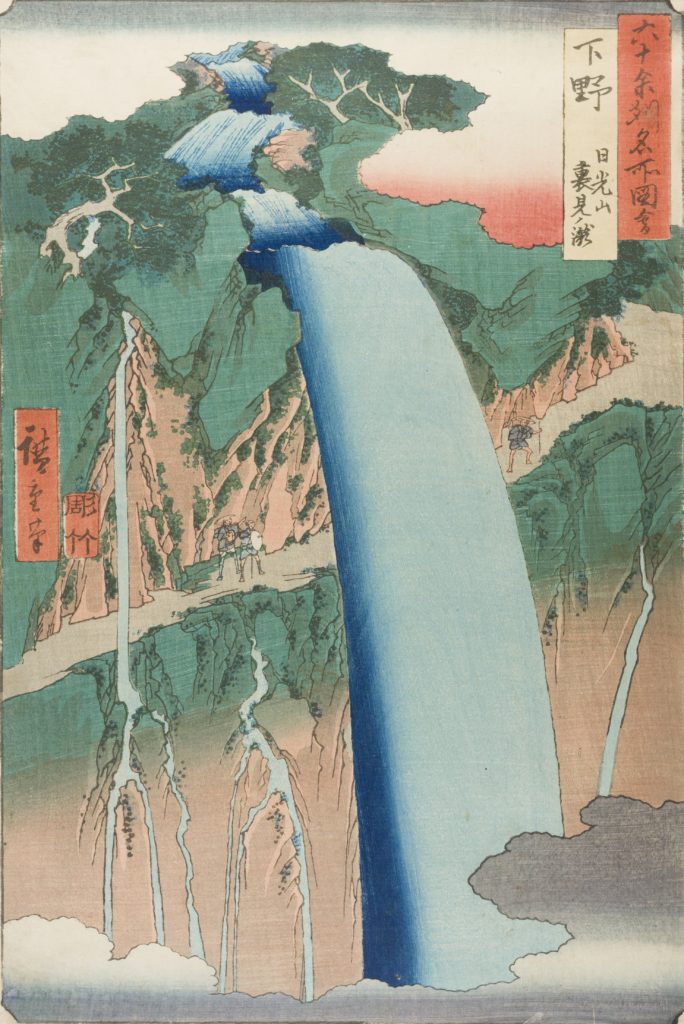
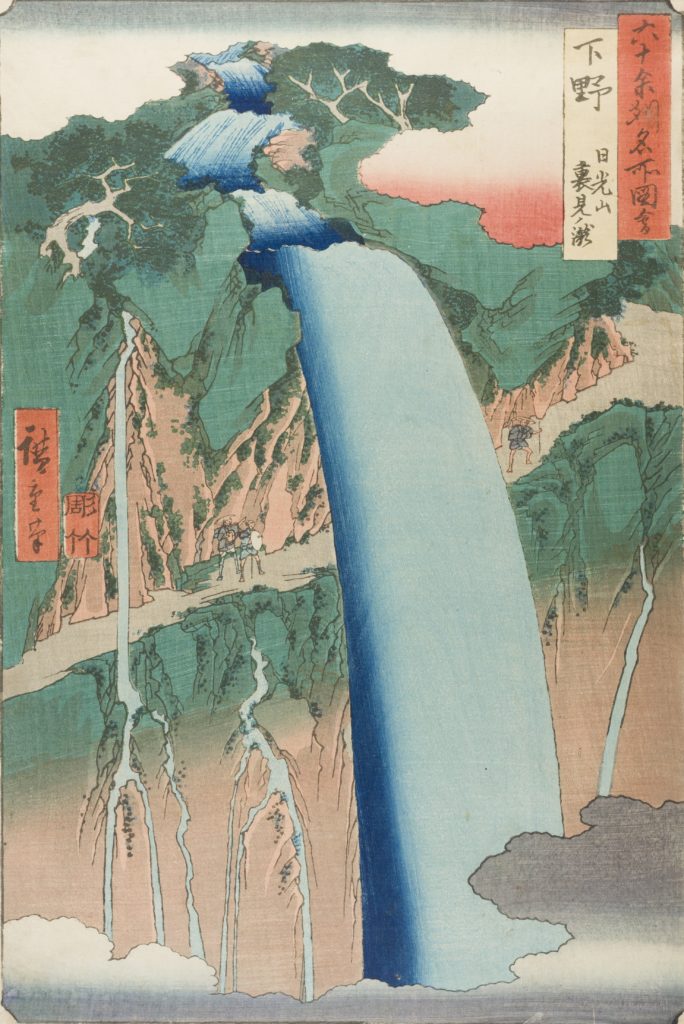
The Waterfall Of Nikko-Zan In Shimotsuke Province, by Utagawa Hiroshige, 1853, from York Art Gallery’s show of rarely seen Japanese prints, Pictures Of The Floating World. Image courtesy of York Museums Trust

Reopening exhibition of the month ahead in York: Pictures Of The Floating World: Japanese Ukiyo-e Prints, York Art Gallery, from May 28

YORK Art Gallery’s display of rarely seen Japanese Ukiyo-e prints, complemented by much-loved paintings from the gallery collection, will go on show in a new Spotlight Series.

Marking next month’s gallery reopening with Covid-secure measures, Pictures Of The Floating World will feature prints by prominent Ukiyo-e artists such as Utagawa Hiroshige, along with works by those influenced by Japanese art, York artist Albert Moore and Walter Greaves among them.

This free-to-visit exhibition will highlight the significant impact of Japanese art on the western world and the consequential rise of the artistic movements of Aestheticism and Art Nouveau.”

Van the manoeuvre: Morrison’s York Barbican gigs put back to July

On the move: Van Morrison’s York Barbican shows

NO reopening date has yet been announced for York Barbican, but Irish veteran Van Morrison’s shows are being moved from May 25 and 26 to July 20 and 21.

“Please keep hold of your tickets as they will be valid for the new date,” says the Barbican website, where seats for Van The Man are on sale without social distancing, in line with Step 4 of the Government’s pandemic Roadmap to Recovery, whereby all legal limits on social contact are potentially to be removed from June 21.

Morrison, 75, will release his 42nd album, Latest Record Project: Volume 1, a 28-track delve into his ongoing love of blues, R&B, jazz and soul, on May 7 on Exile/BMG.

Lockdown love story: The taster poster for Alan Ayckbourn’s new play at the Stephen Joseph Theatre

New play of the summer: Alan Ayckbourn’s The Girl Next Door, Stephen Joseph Theatre, Scarborough, June 4 to July 3

AFTER the 2020 world premiere of his virus play Truth Will Out lost out to the Covid pandemic restrictions, director emeritus Alan Ayckbourn returns to the Stephen Joseph Theatre to direct his 85th play, The Girl Next Door, in the summer season.

“I wrote it back in Spring 2020. I like to think of it as a lockdown love story,” says Ayckbourn, introducing his touching, tender and funny reflection on the ability of love to rise above adversity and reach across the years.

Influenced by his own experiences in two “lockdowns”, one in wartime London in childhood, the other in the on-going pandemic in Scarborough, Ayckbourn will play with time in a plot moving back and forth between 2021 and 1941. Box office: sjt.uk.com.

May and April in tandem: York Barbican date for Imelda next spring on her first tour in five years

Gig announcement of the week in York: Imelda May, York Barbican, April 6 2022

IRISH singer-songwriter Imelda May will play York Barbican next April in the only Yorkshire show of her Made To Love tour, her first in more than five years.

“I cannot wait to see you all again, to dance and sing together, to connect and feel the sparkle in a room where music makes us feel alive and elevated for a while,” says May. “Let’s go!”

Last Friday, the 46-year-old Dubliner released her sixth studio album, 11 Past The Hour. The box office opens tomorrow at 10am at yorkbarbican.co.uk.

Dance like Fred Astaire…or more likely like Tim Booth as James end the summer at Scarborough Open Air Theatre

Gig announcement of the week outside York: James, Scarborough Open Air Theatre, September 9

WHERE better for James to announce a summer show in the week they release new single Beautiful Beaches than at Scarborough Open Air Theatre?

The Manchester legends will play on the East Coast in the wake of launching their new album, All The Colours Of You, on June 4. Tickets go on sale tomorrow (23/4/2021) at 9am at scarboroughopenairtheatre.com.

This will be the third that James, led by Clifford-born Tim Booth, have played Scarborough OAT after shows in 2015 and 2018.

The writers, actors, directors and organisers in a Zoom gathering for Next Door But One’s Yorkshire Trios at The Gillygate pub, York

And what about?

GOOD news: Live theatre bursts into life in York for the first time since December 30 when York community arts collective Next Door But One presents Yorkshire Trios in The Gillygate pub’s new outdoor seating area tomorrow and on Saturday.

Themed around Moments Yet To Happen, trios of actors, directors and writers will bring to theatre-starved York a quintet of short stories of laughter, strength, dreams and everything in between: a neighbour with a secret; a delivery driver full of wanderlust; an optimistic carousel operator; a poet inviting us into her world and a Jane McDonald fan on a soapbox.

Bad news for tardy readers? The 7.30pm shows have sold out.

York Art Gallery to mark reopening in May with rarely seen Japanese prints show

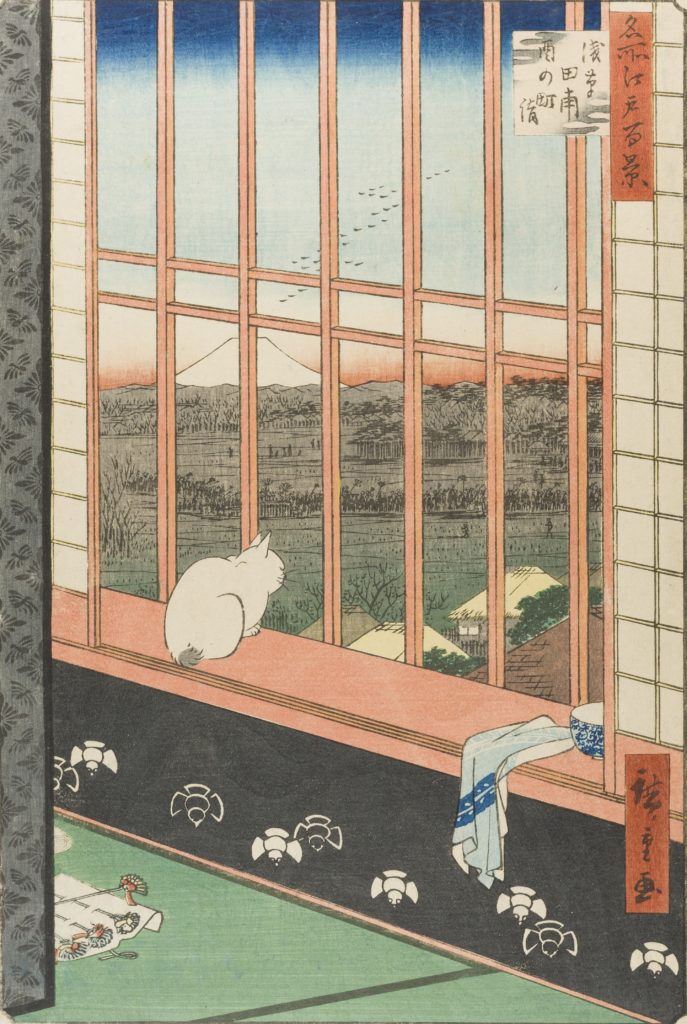
Cat On Windowsill, The Festival Of The Cock, Asakus Ricefields, by Utagawa Hiroshige, 1857. Image courtesy of York Museums Trust.

YORK Art Gallery’s display of rarely seen Japanese Ukiyo-e prints, complemented by much-loved paintings from the gallery collection, will go on show in a new Spotlight Series from May 28.

Marking next month’s reopening of the Exhibition Square gallery with Covid-secure measures and social distancing, Pictures Of The Floating World: Japanese Ukiyo-e Prints will feature prints by prominent Ukiyo-e artists such as Utagawa Hiroshige, along with works by those influenced by Japanese art, York artist Albert Moore and Walter Greaves among them.

York Art Gallery’s display will highlight the significant impact of Japanese art on the western world and the consequential rise of artistic movements such as Aestheticism and Art Nouveau.

View Of Mount Hatana In Kozuke Province, by Utagawa Hiroshige, 1853. Image courtesy of York Museums Trust

Jenny Alexander, associate collections curator at York Art Gallery, says: “We’re thrilled to introduce this new Spotlight Series at York Art Gallery. The designated space will allow us to share a variety of works from our collection, starting with a selection of beautiful Japanese Ukiyo-e prints.

“Ukiyo-e translates as “pictures of the floating world”, referring to the transitory nature of life. Visitors will see delicate prints depicting scenes celebrating everyday life, through themes such as landscape and travel, actors and courtesans and folk tales.”

Jenny continues: “Some of these works have not been displayed in more than 15 years, so we’re thrilled that many visitors will be able to enjoy them for the first time.

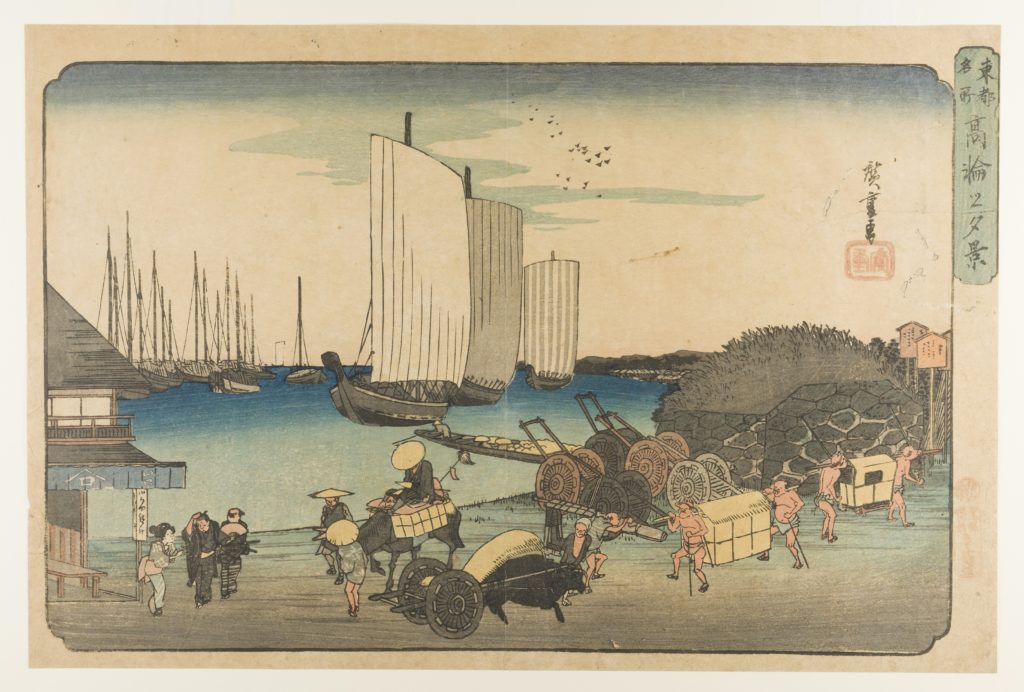
Evening View Of Takanawa, by Utagawa Hiroshige, 1832-1838. Image courtesy of York Museums Trust

“Featuring these exceptional prints alongside firm favourites from our collection will enable visitors to reconnect with the works and view them from a different perspective, which is really exciting.”

The free-to-visit display in the Upper North Gallery will be the first of the new Spotlight Series that will change periodically to show highlights from the gallery’s permanent collections.

Pictures Of The Floating World will delve into the history of the works, explaining why Japanese art became increasingly influential during the 18th and 19th centuries. Through the variety of artwork on display, visitors will see how western artists were inspired, in particular, by the use of line and colour, and simultaneously how Japanese artists were influenced by western artists’ use of shading and perspective.

The Waterfall Of Nikko-Zan In Shimotsuke Province, by Utagawa Hiroshige, 1853. Image courtesy of York Museums Trust