REVIEW: Slava’s SnowShow, Grand Opera House, York, blowin’ blizzards till Sunday*****

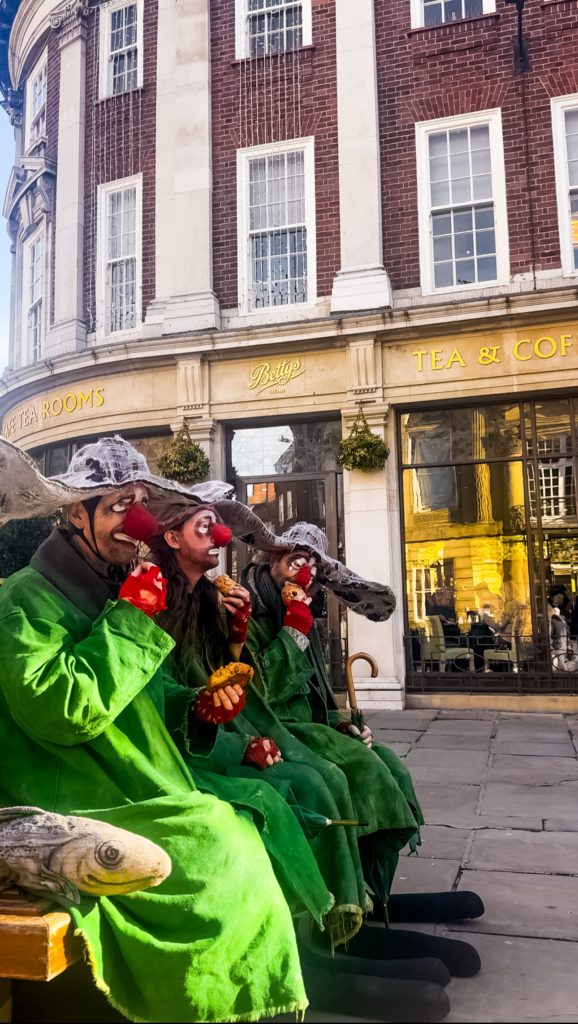
Slava’s SnowShow clowns – and their puppet fish – on their sightseeing travels in York

VETERAN clown Slava Polunin is the founder of Slava’s Fools Unlimited, president of the International Academy of Fools, Ambassador of Hans Christian Andersen in Russia and Official Envoy of the Dolphin Embassy. In other words, he is no fool, just like Shakespeare’s fools.

Since 1993, Slava’s SnowShow has won 20 awards while playing 225 cities across 80 countries, re-writing the rules for clowning. No longer are clowns the cloying blockage in the flow of a circus show, filling gaps between more exciting acts. No longer are they strangely frightening or weird.

Still sad faced, painted in the traditional Hobo style, Slava’s clowns are a fusion of Max Wall, Vladimir and Estragon in Samuel Beckett’s Waiting For Godot, the loons of silent cinema’s golden age, the surrealism of Magritte’s paintings and the inventive joy of Aardman Animations’  Wallace & Gromit. You might even find yourself thinking of The Teletubbies. Slava prefers the term “Expressive Idiotism”.

And yet, Slava’s SnowShow is an immersive, whimsical, multi-sensory show like no other, in a league of wonder of its own, charming and enchanting audiences from London to Moscow, Paris to New York, Hong Kong to Los Angeles, and now, at long last, York, where November’s skies heralded its debut visit with the season’s first snowfall on Wednesday morning.

Later, manufactured flakes dusted coats when walking up to the Cumberland street theatre in suitably freezing conditions. Once inside, the stage is bedecked in what appear to be  oversized mattresses, arranged as if at Stonehenge, with the stuffing falling out, accompanied by the disorientating pre-show soundscape of jungle wildlife and steam trains.  One “mattress” has a hole at the top, adding to the intrigue of what lies in store.

Grown, in Slava’s words, out of dreams, fairytales and magical ritual, images and gesture, play and imagination, Slava’s SnowShow attempts to “wed all the facets of life” while leaving the everyday at the door. To quote in full: this show constructs “a theatre of hopes and dreams, suffused with solitude and longing, premonitions and disillusions…a theatre on the edge between art and life, tragedy and comedy, absurdity and naivety, cruelty and tenderness”.

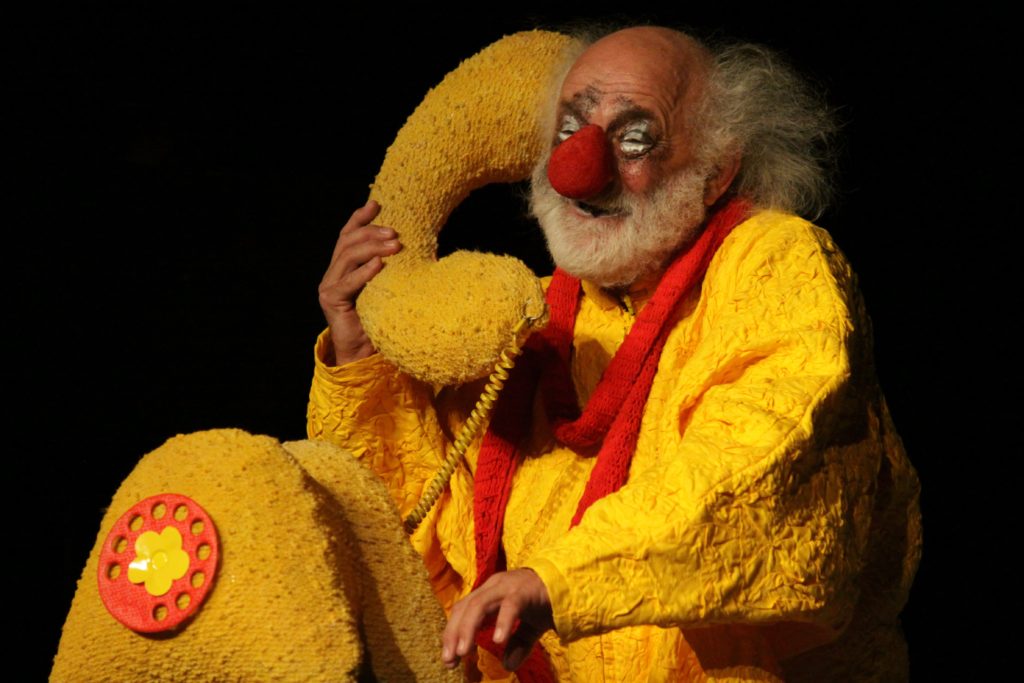
A figure with a clown’s face atop a fancy-dress chicken’s bright yellow costume (Artem Zhimo) enters carrying a rope, a rope that he will place around his neck. He looks troubled: the tears and the fears of a clown wrapped into one, but thoughts of suicide are cast aside quickly by his playfulness with that rope, although he is always on the edge highlighted in Slava’s quote above. Slava, by the way, originated this role and still plays it on occasion at 75.
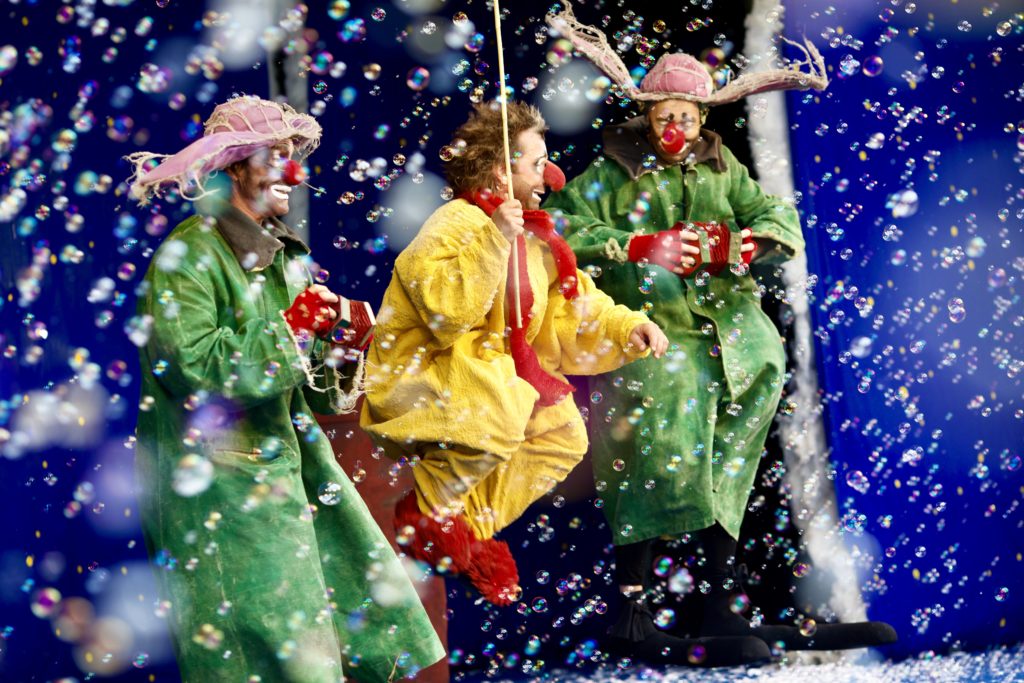
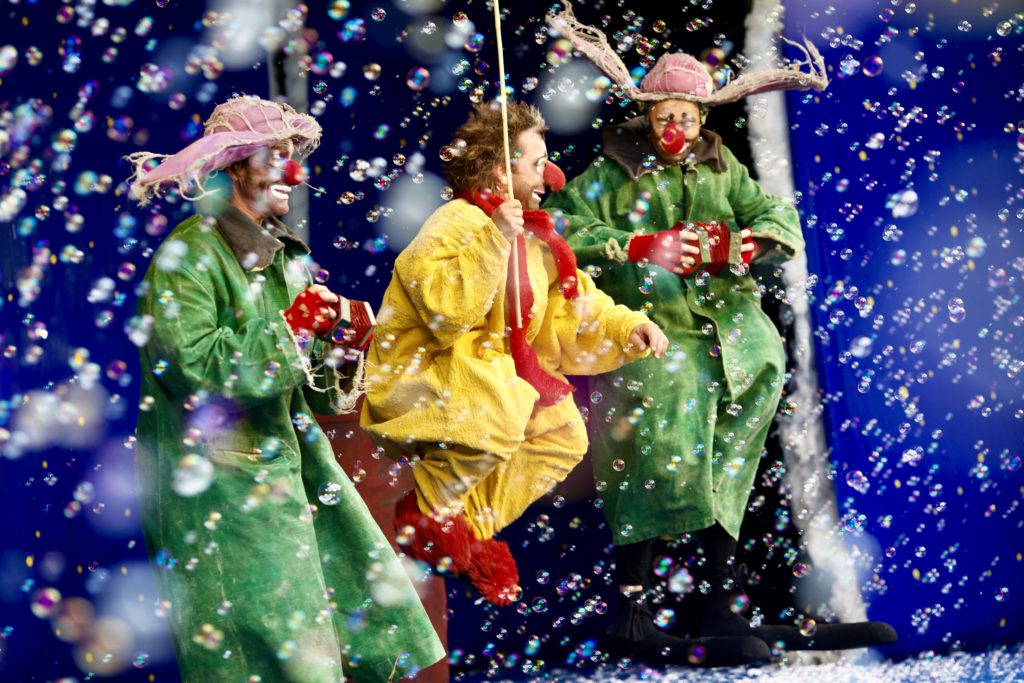
Forever blowing bubbles: Slava’s SnowShow, on tour at Grand Opera House, York

Enter Slava’s son Vanya, the first of a multitude of matching  clown figures in full-length fleece coats (protecting themselves against the weather in John Motson style). Their dark feet seem to stretch forever, likewise the flaps of their hats, with the wingspan of a plane, forcing them to duck and dive to avoid contact mid-air.

The company of “fools on the loose” is completed by Francesco Bifano, Chris Lynam, Nikolai Terentiev, Yuri Musatov, Aelita West and Bradford West. Together with Zhimo and Polunin Jnr , they move with choreographic precision, yet with room for improvisation too, and they have a wonderful sense of timing, going against comedy’s usual rules for chaos and calamity by slowing everything down for maximum comedic effect.

Zhimo duly excels in a scene where he conducts phone calls on oversized yellow and red telephones that match his attire, another where he repeatedly crashes to the floor from a slanting chair and table, and above all when wrapped in a farewell embrace with a trench-coat on a coat stand at a railway platform. Charlie Chaplin would have loved it..

In this theatre of the absurd, Slava’s Snow Show takes the form of a work of art wherein each scene paints a picture that comes alive, whether for a shark fin to protrude from a misty sea or for clowns and audience alike to become entangled in a huge spider’s web spun the stage across the Stalls in the magical climax to the first half.

Zhimo’s journey becomes ever more prominent  in Act Two, whose finale is a blizzard conducted by Zhimo’s chicken figure as if he were The Tempest’s Prospero, leaving the audience knee deep in (paper) snow and wreathed in smiles; their joy heightened by the release of giant balloons to bounce around the auditorium.

It takes four leaf blowers to clear up the mess after each SnowShow, which would make a show in itself, but as the snowfalls continue this week, make sure you find warmth and joy inside the Grand Opera House before clown-time is over. Children and the inner child in adults alike will have a (snow) ball.

Slava’s SnowShow, Grand Opera House, York, tonight and tomorrow, 7.30pm; Saturday, 2.30pm and 7.30pm; Sunday, 2pm and 6pm. Box office: atgtickets.com/york. Age guidance: eight upwards.
A blizzard of joyful folly is heading for Grand Opera House as Slava’s SnowShow makes York debut. Cue bubbles, balloons and snow

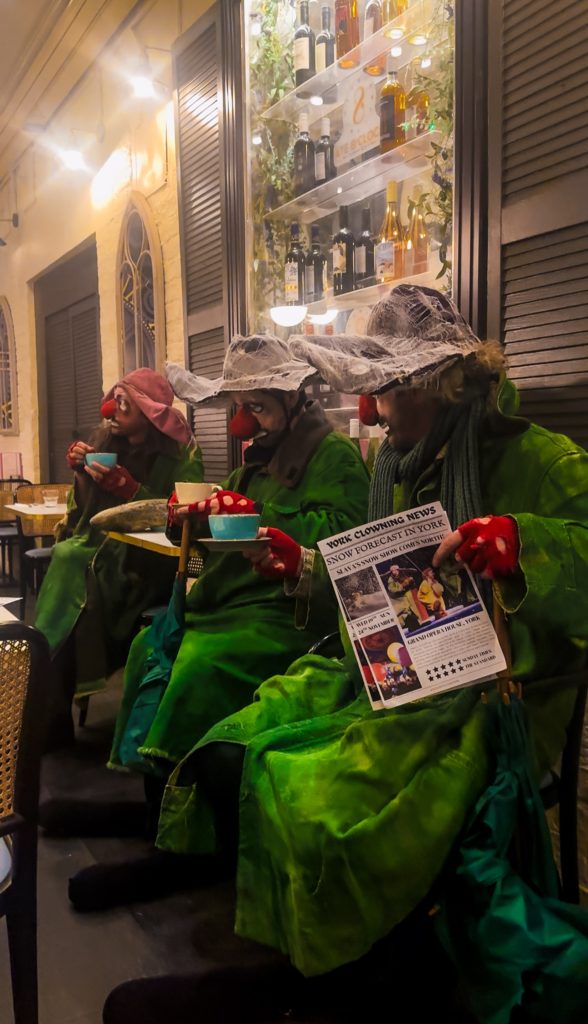
Hold the front page: Slava’s SnowShow clowns reading all about it while having a cuppa on their promotional York day trip

SLAVA’S SnowShow will bring blizzard conditions to the Grand Opera House, leaving audiences knee deep in “snow” on next week’s first visit to York in its 32-year history of clowning joy.

Founded by Slava Polunin, this immersive, whimsical, multi-sensory show promises a “cavalcade of chaos and charm that invites you to leave the everyday behind and indulge in pure, tender delight as you enter a dream-like world that will both warm your heart and your funny bone , reminding you of the joy in being wonderfully silly”.

Slava’s company returned to British shores for the first time in seven years last winter for a West End Christmas run at the Harold Pinter Theatre and is now on an autumn tour that brought Slava’s son, Vanya, to York for a day’s promotional work and sightseeing in the week when SnowShow played the Manchester Opera House.

Dressed in clown’s costume and make-up for this interview, Vanya says: “It’s my first time in York and the show’s first time too. We’re very excited to be here, having seen photos of the old streets.”

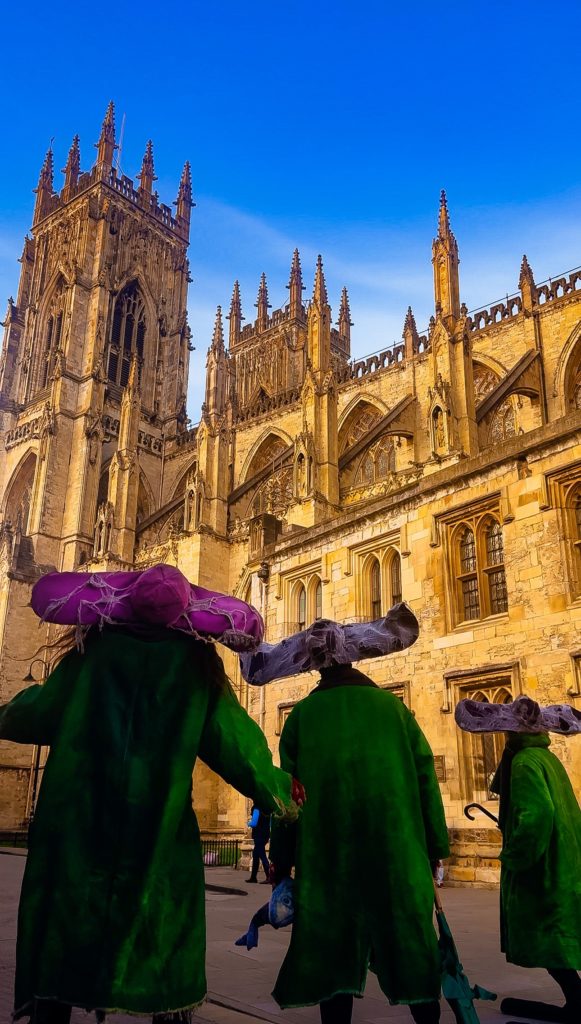
Slava’s SnowShow clowns taking in the awe-inspiring Gothic edifice of York Minster on their sightseeing trip

Vanya has been on the move in this globe-travelling show since childhood. “I was born in Russia, In Leningrad (now St Petersburg), and I’ve stayed away from Russia for the longest time,” he says. “We left when I was seven, touring with the company, going on tour with Cirque de Soleil in the United States.

“We performed Slava’s SnowShow in the UK for the first time at the Hackney Empire in 1994 and were in the UK for nine years from 1996, when we played the Edinburgh Festival.”

The company did do tours to Russia. “When I saw St Petersburg again for the first time I’d forgotten how beautiful it was,” says Vanya.

He was delighted to be travelling from such a young age. “To avoid being called up for the army, you would have to leave at 16. We toured instead and my talents were much more usefully used making people smile than knowing how to hold a rifle,” he says.

Bubbling up: Slava’s SnowShow clowns in their joyous globe-travelling show

Vanya, now 39, is a key component in a show set within an absurd and surrealistic world of “fools on the loose”, a work of art wherein each scene paints a picture: an unlikely shark swimming in a misty sea; clowns and the audience tangled up in a gigantic spider’s web; heart-breaking goodbyes with a coat rack on a railway platform, and audience members being hypnotised by giant balloons.

“Everybody asks me what’s my favourite scene, and it’s the one that involves a clown in an overcoat with the coat rack on the platform. It’s a very touching scene that shows that clowning is not just about slapstick – and there’s only a little slapstick in our show because we’re not traditional clowns,” says Vanya.

“It’s hard to explain the show but it’s very simple! It’s the story of two characters and the journey they’re going on.  It can be confusing and absurd, and in the beginning everyone is a bit confused but then they get to know the characters and it becomes sentimental by the end, when big snow effects take over the whole theatre.”

The finale is an “out-of-this-world snowstorm”. “Snow is a big part of the show,” says Vanya. “It’s decorative as a prop but because of the theme of the show as well, in my culture, snow holds different meanings: it could be making snowballs, or being trapped in a snowstorm, when it can be isolating or make you feel lonely. So that’s how we use it in the show, in both a scary and joyful way.

Slava’s SnowShow founder Slava Polunin

“Everyone can interpret snow differently, in their own way because, like us, they will have their own connections with snow. We once brought our paper snow to Honolulu [in Hawaii], where they had never seen snow, but they still had snow on their Christmas cards!”

Now the specialist in the international language of snow, Slava Polunin, Vanya’s father, was born in a small town in central Russia, where he discovered the art of pantomime in high school. As he grew into adulthood in Leningrad, he developed an eccentric version of the form that he dubbed lovingly as “Expressive Idiotism”.

From 1979 onwards, Slava became a fixture on Russian stages and television, sharing his gifts and continuing to redefine the art of clowning, exploring its boundless possibilities with his poetic and poignant approach to comic performance.

This discovery reached its zenith with Slava’s SnowShow, a show full of innocence and beauty for all ages. “In a sense, I have been working on this show forever, collecting bit by bit until it became a whole, to express myself fully,” said Slava. “Many things in the show come from childhood memories, like the image of snow, for example, and many others are pure invention in a style of clowning that I had never seen before.”

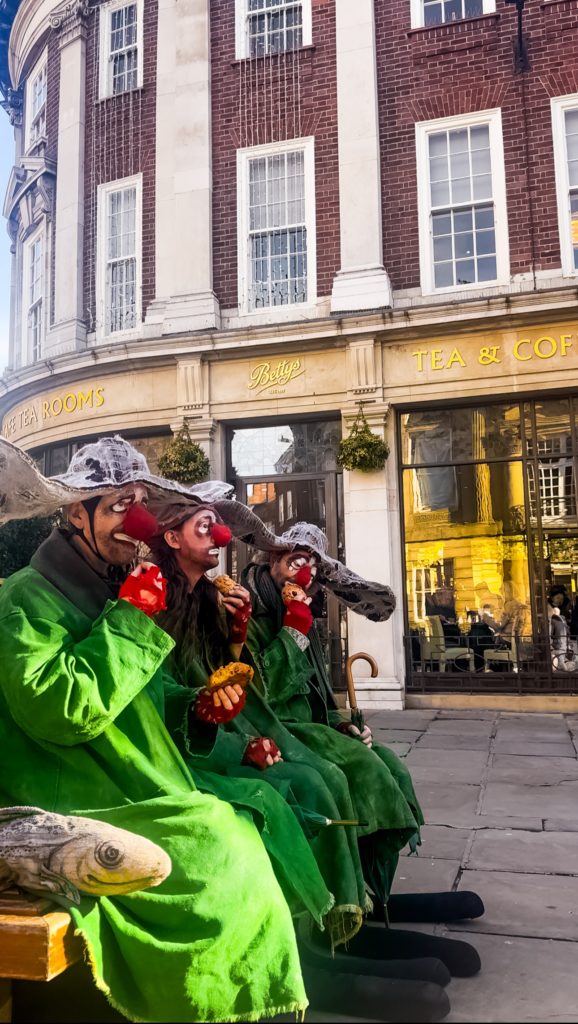
Slava’s Snow Show clowns and their fish friend taking a breather in St Helen’s Square on their York journey of discovery

Since its debut, the work has travelled all over the world, notching more than 12,000 performances in more than 225 cities across 80 countries and receiving more than 20 international awards, including an Olivier Award for Best Entertainment and a Drama Desk Award.

“I started with a tiny role at the age of seven, and now, after my dad, who’s 75, I’m the most veteran of the performers – and he still performs sometimes,” says Vanya.

“The show doesn’t change that much dramatically down the years, because we don’t do things that are current, but do things that are eternal; it could be 100 years before now and it will hopefully still exist in 100 years. It has eternal emotions, friendship, love, fear and loss, so it doesn’t matter what year it is.

“These are the basics and that’s why it’s run so long. We try to connect with the inner child, so children love it, but adults love it too, and everyone leaves feeling like a kid, transforming into their playful self. Whenever things are bad, people turn to the arts for solace.”

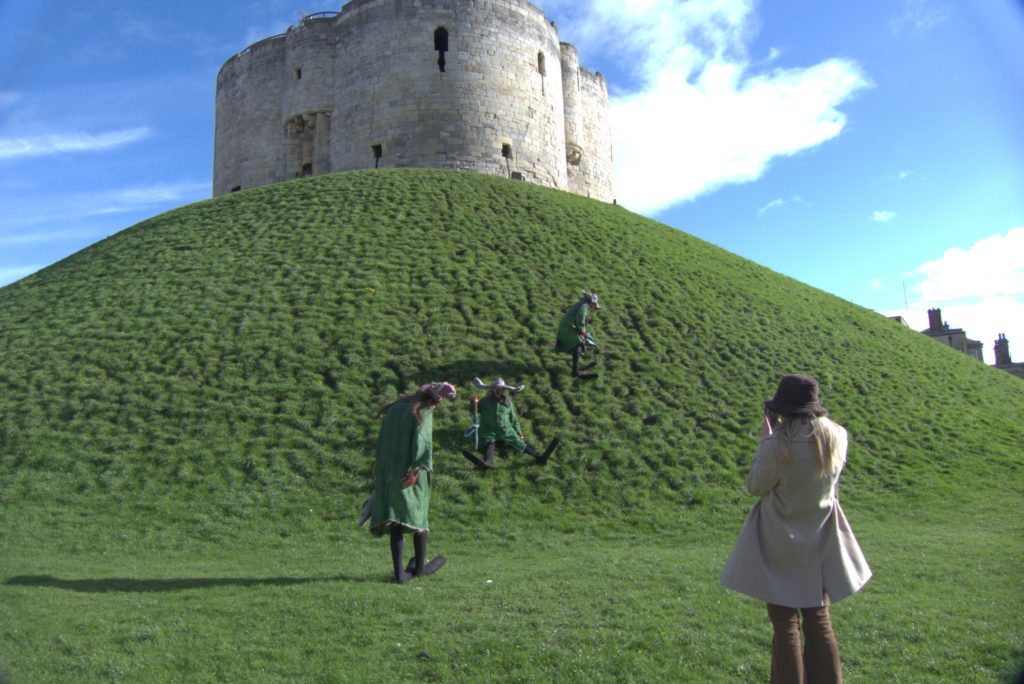
Slava’s SnowShow clowns clowning around on the Clifford’s Tower hillock

No two audiences are the same, says Vanya. “Everywhere we go, they are different, and not just from country to country, but city to city,” he explains. “In the first Act, we spend time looking for what rhythm of comedy they like. Is it slapstick or dramatic? What makes them laugh?

“For us, it’s really important to see how slow we can do the show as we are day-dreaming clowns, where we like to take it slowly without losing their attention! Clowning has evolved, and in the form that we’re doing it, it’s a new evolution.”

After bubbles and the spider’s web that is passed across the audience, Slava’s Snow Show climaxes with a paper snow blizzard and big balloons. “We used to cut out the paper snowflakes with scissors, then with paper cutters, but now we order in our snow,” says Vanya. “It’s not a snow machine, but make-believe snow as you don’t get wet from paper!”

Slava’s SnowShow, Grand Opera House, York, November 19 to 23; 7.30pm, Wednesday to Saturday; 2.30pm, Thursday and Saturday; Sunday, 2pm and 6pm. Box office: atgtickets.com/york. Age guidance: Eight upwards.

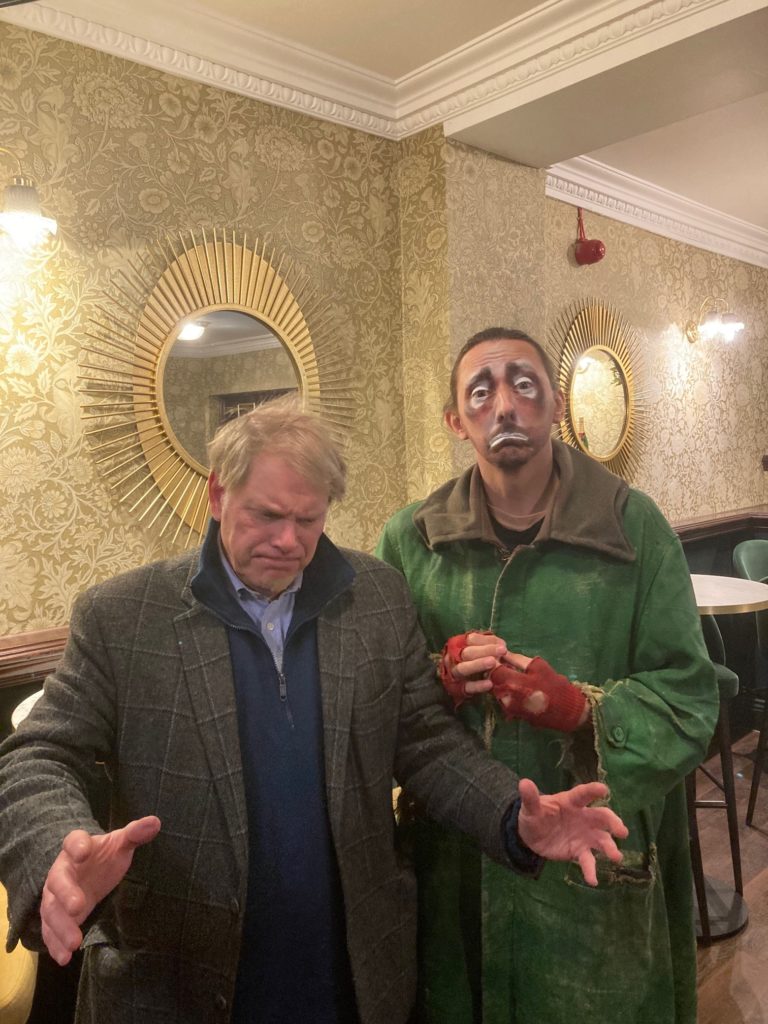
Why the sad face? The frown meets the clown as CharlesHutchPress interviews Slava’s SnowShow’s Vanya Polunin at the Grand Opera House, York