Exhibition launch of the week: Liz Foster, Deep Among The Grasses, Rise@Bluebird Bakery, Acomb, February 12 to April 10

York abstract artists Liz Foster

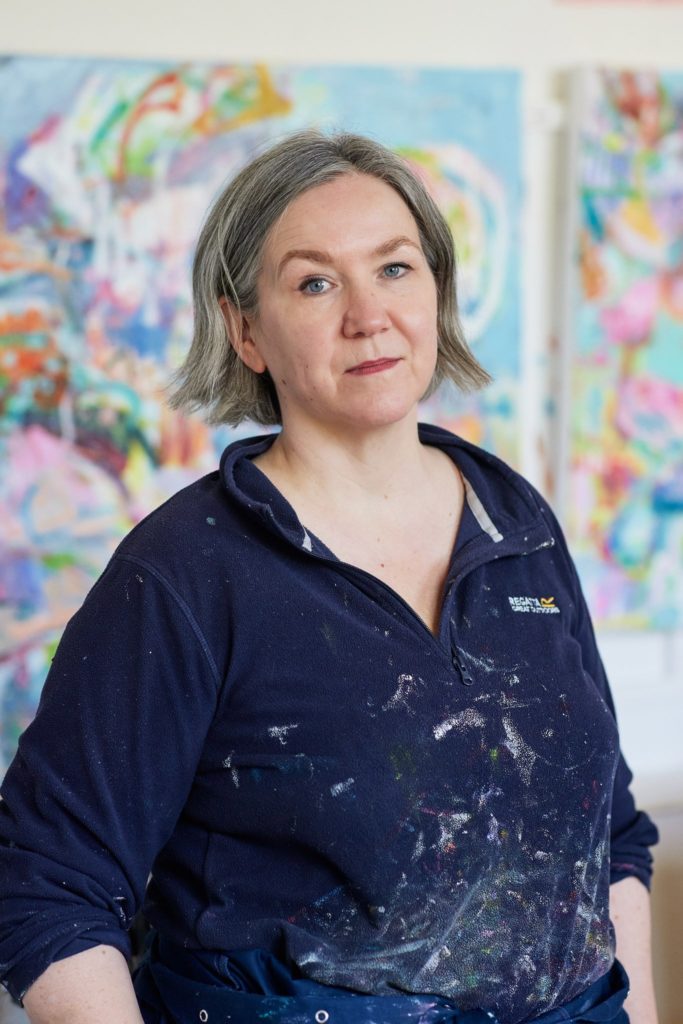
YORK artist, art tutor and mentor Liz Foster launches her Deep Among The Grasses exhibition at Rise@Bluebird Bakery, Acomb, York from 6pm to 9pm on February 12. All are welcome.

On show until April 10, the eight abstract oil paintings continue Liz’s personal exploration into memory, place and landscape in this first showing of her new series.

The exhibition invites viewers into a world of painterly abstraction full of colour and atmosphere in works that consider Liz’s relationship with the landscape of her childhood, drawing on memory and imagination to create expansive and gestural canvases, depicting into rich, expansive imagined spaces.

Her largest piece, Green Air, takes its title directly from a passage in Virginia Woolf’s 1931 novel The Waves. The fictional children play outside, absorbed in the garden, up to their necks in soil, stems and leaves. As if underwater, they imagine sinking through the green air of the leaves, just touching the ground with the tips of their toes.

Like the fictional characters, Liz’s real memories of being immersed in the space, rather than viewing it from a safe distance, are at the core of what she is exploring.

Drawing on her background and experience of growing up in the flat-lands of East Yorkshire, the works speak to broader themes of changes to the environment and childhood freedoms and isolation.

Liz studied at the Glasgow School of Art and has exhibited works spanning oil painting, watercolour, collage and print at the Royal Academy, Royal West of England Academy, London Art Fair and the Mercer Art Gallery in Harrogate.
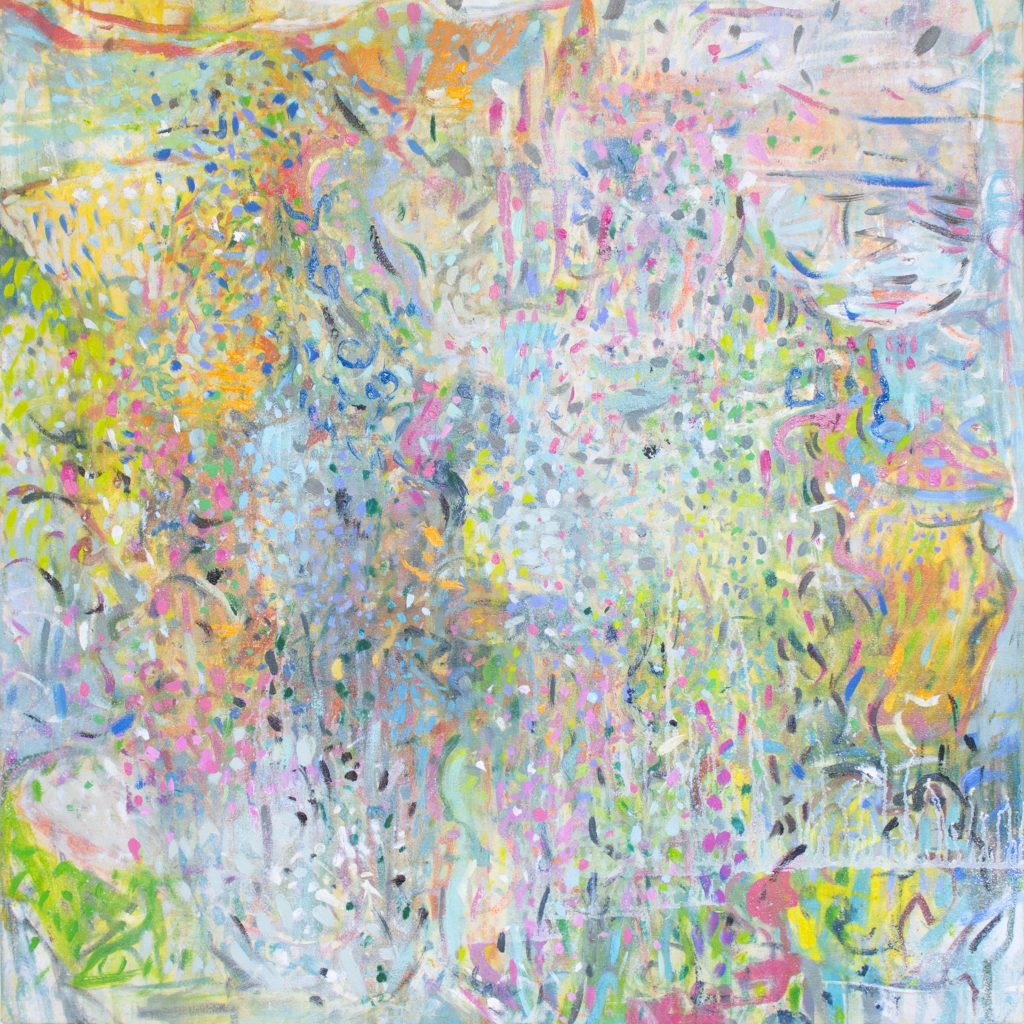
Paper Tree, oil on canvas, 100cms x 100cms, by Liz Foster

Here Liz discusses Deep Among The Grasses with CharlesHutchPress.

How did this exhibition come about? You have exhibited at Bluebird Bakery previously…

“Yes, I had a solo show back in 2023, when I was invited  by their curator, artist Jo Walton. I’d  worked with Jo a few years earlier, so I already knew her.

“In 2023, she was looking for new artists who made large-scale work that could fill the space. She asked, and I said ‘yes’. A couple of years later, I was delighted that she asked again!

In combining memory and landscape in your work, do you paint landscapes from memory or from existing material?

“My paintings aren’t direct representations of places, so I don’t use reference materials such as photos. Although I don’t work from sketches either, I do draw a lot, especially plants and trees.

“I like to observe and take notes of how things look or are put together – all of this ‘research’ feeds into my work tangentially, so my painting remains loose and intuitive.”

Your work takes in watercolour, collage and print too, so why paint these particular works in oils? 

“For works on canvas, I nearly always use oils. The buttery texture of the paint, slow drying time and saturated colour allow me to paint in an expansive, gestural and fluid way.

“I’m a process-led painter, which means that I don’t have a fixed image in mind when I begin. It’s very open ended. I add paint, wipe it off, come back the next day and it’s still malleable. I think of oil as a very generous and patient paint.” 
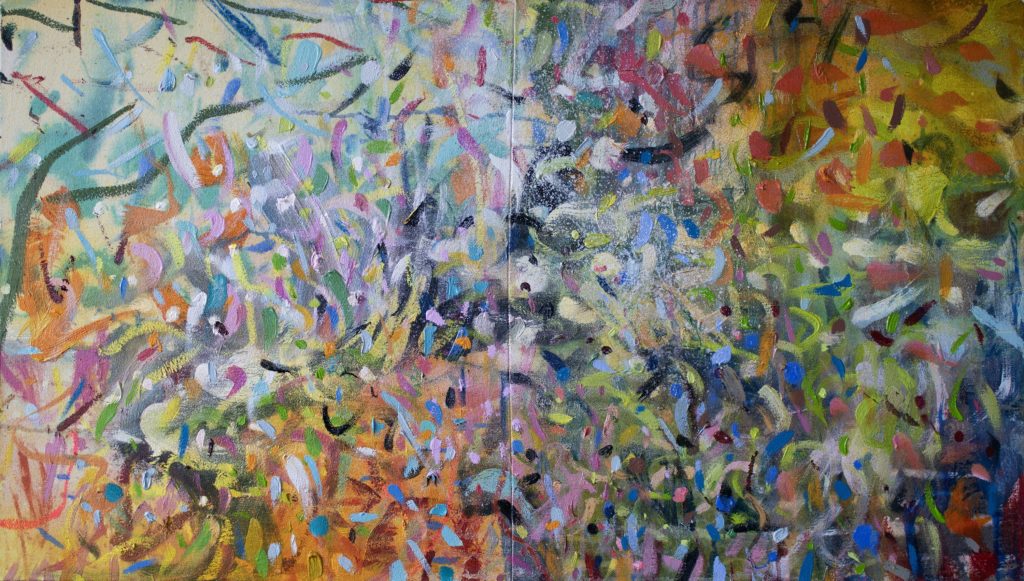
Swoop, oil on canvas, 45cm x 70cm, by Liz Foster

Does a relationship with landscape change from childhood to adulthood?

“Yes, I think so. There is certainly a sense of wonder that we lose as adults. I think also the sense of scale shifts; as children a small garden can feel like a kingdom. We move through it differently, hiding, climbing, digging.

“I remember, as a kid, I used to play in the mud and dig up worms; it was messy and physical. As an adult, I suspect I sit and look more. I love how landscapes are scarred over time with pathways and ancient markings.” 

Your body of work “speaks to broader themes of changes to the environment and childhood freedoms and isolation”. Develop that statement further….

“Growing up in the 1970s and early 1980s, I felt isolated. I lived in a hamlet of industrial farms and distant neighbours. We played outside a lot, cycled everywhere, space felt endless and we had time to get really bored.

“I think the leap from that world to today’s hyper-connected world is astonishing. I’m conscious of how different the world appears to my son, where information and knowledge is only a click away.

“There are advantages, but real damage too. I was watching coverage of the California fires last year and, as the reporter spoke, there were flecks of red embers floating around against the pitch black sky. It was both beautiful and horrifying. “Although my work is abstract, these are the kinds of things I think about while painting.” 
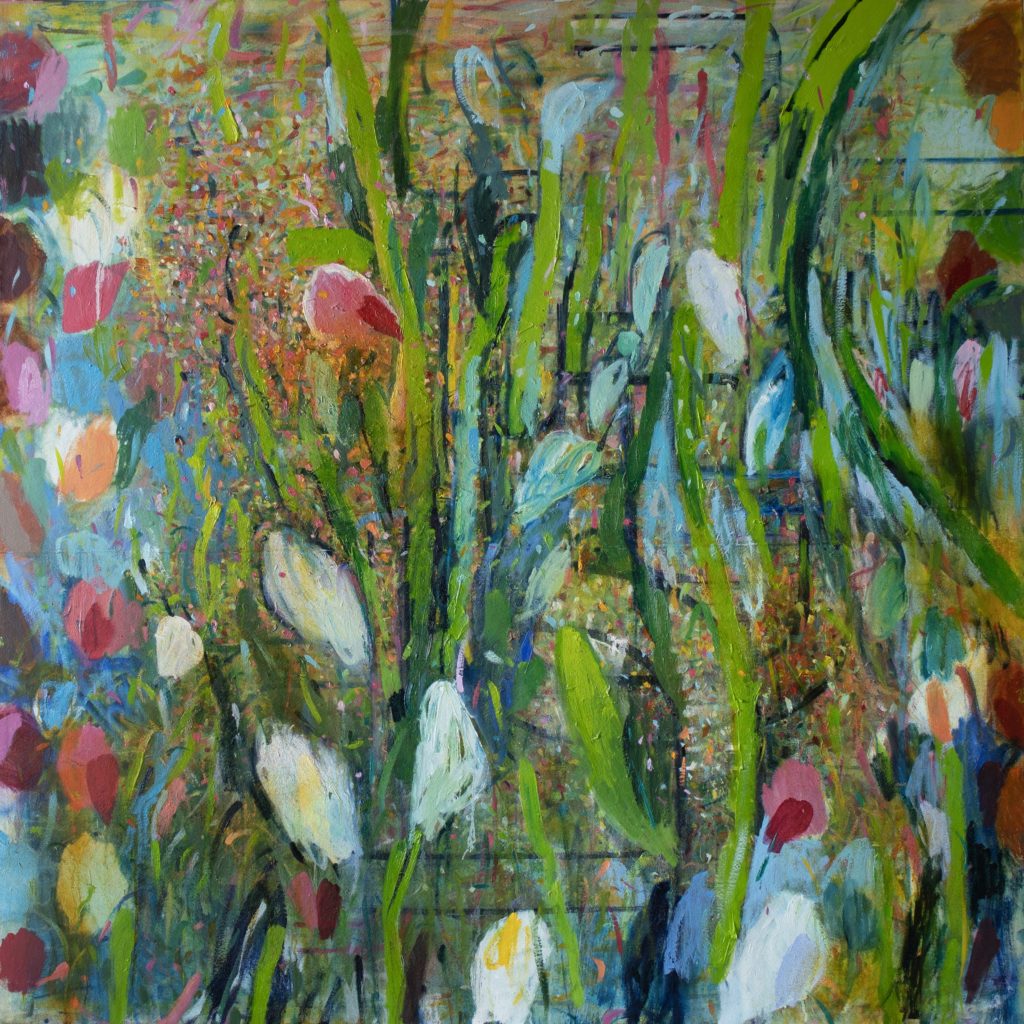
Deep Among The Grasses, 2025, oil and acrylic on canvas, 140cm by 140 cm, by Liz Foster

What made you choose York for your home?

“I don’t think I really chose York; it was never a plan to stay here this long. I did know it quite well already as my dad moved here in the late 1980s and I’d worked here, on and off, in my late teens and early twenties.

“I’ve always enjoyed moving around – and still have itchy feet – but about 20 years ago my then husband and I both started teaching jobs, and York sat at the mid-point between our workplaces, so it made sense.

“Priorities shift and families change, but my son started school (he’s now in sixth form) and he’s been really happy here, so I stayed put.”

What’s in a title, Liz?

“Titles can provide a way in, holding the door open for the viewer to enter the artist’s world. Personally, I like short titles. Ones that give you a flavour of what I’ve been thinking about, but without telling you what to think…it’s a balance.

“Sometimes a title comes while I’m working and just seems to land in my lap. On other occasions, it’s a real struggle to get the right phrase or word; it can feel harder than the actual painting process itself.

“After having decided on a few titles in this series, including Deep Among the Grasses, I went to poetry and literature – my reliable aids – to help me generate the words I needed. In The Waves, Virginia Woolf describes children playing in a garden before school: it  encompasses the magic, wildness and timeless quality that I was reaching for in my own work. Green Air are just two words from a sentence in that book; the right two words.”

For more of Liz’s reflections on creating Green Air, visit https://www.lizfosterart.com/blog/the-story-of-a-painting-green-air.
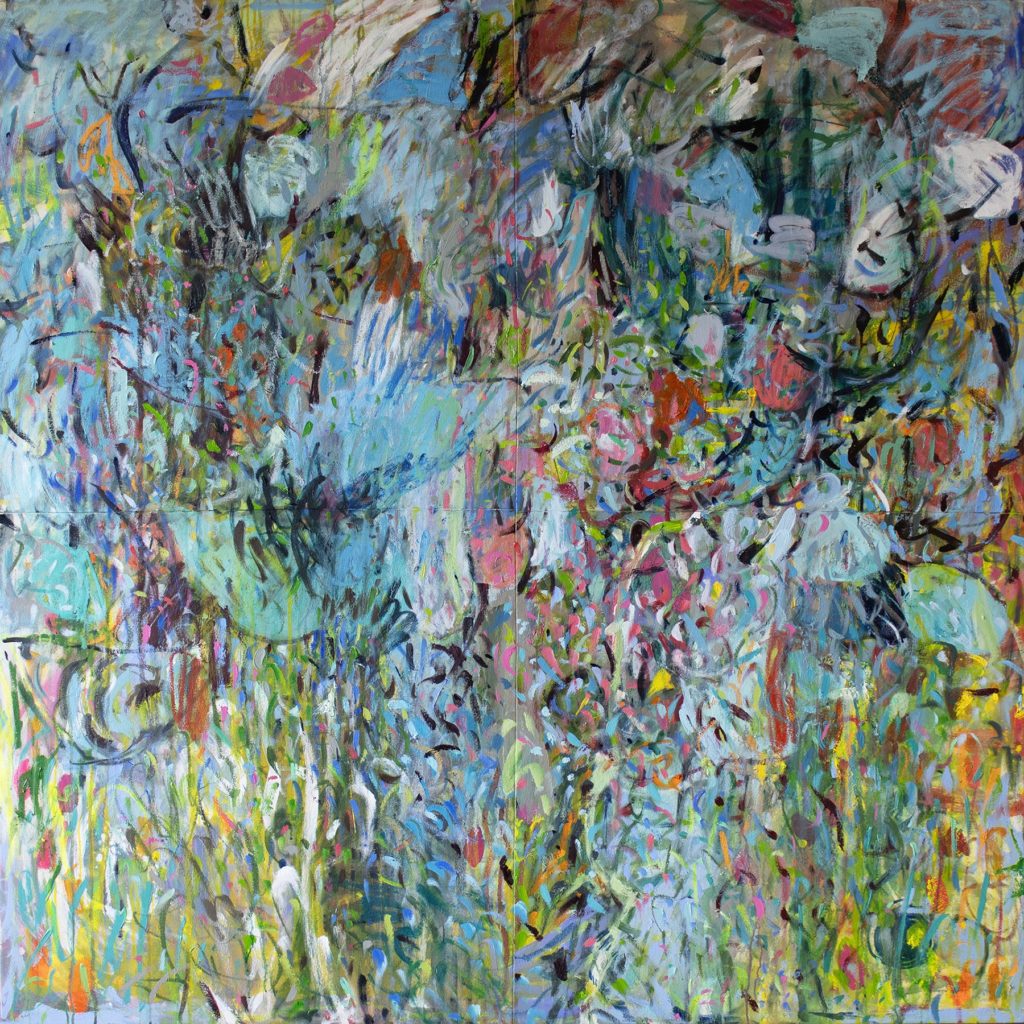
Green Air, 2025, oil and acrylic on canvas, 150cm x 150cm, by Liz Foster. “Green Air is constructed from four smaller panels, sewn together and then stretched to create one painting,” says Liz. “I’ve used a combination of acrylic and oil paint; both paints hold different qualities that add to the work”
York Theatre Royal Studio season promises queer history, a potato Faustus, a gaming romcom and Woolf’s talk on feminism

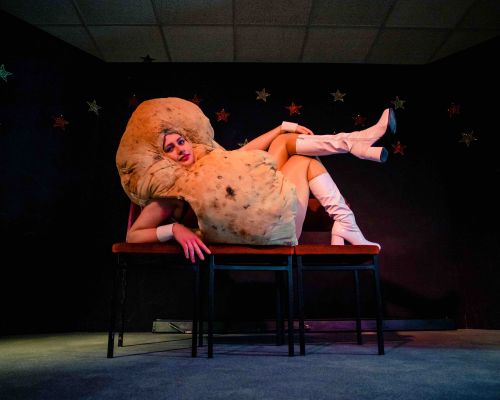
York puppeteer and performer Freddie Hayes’s Potatohead: “A starch-raving mad adaptation of Faustus with puppets”. Picture: Sophie Jouvenaar

YORK Theatre Royal’s Studio season will read the Riot Act on June 9 in a show created and performed by Alexis Gregory as part of a Pride Season tour.

Fresh from his success in Sex/Crime at London’s Soho Theatre, Gregory is directed by Rikki Beadle-Blair in his journey through six decades of queer history, told by those who helped to shape it from Gregory’s interviews with a survivor of the Stonewall Riots, a radical drag queen and an AIDS activist.

Ahead of her Edinburgh Fringe run, York puppeteer, performer and writer Freddie Hayes presents Potatohead, her humorously bizarre solo adaptation of Christopher Marlowe’s Doctor Faustus And The Seven Deadly Sins, on June 10.

Directed by Sh!t Theatre, Potatohead is saturated with potato puns from start to finish as Hayes tells the story of a humble spud who dreams of becoming a cabaret superstar.

Elements of kitsch cabaret and old-school entertainment characterise Hayes’s “one-potato show” show that blends puppetry, clowning and comedy in an unadulterated celebration of silliness. Expect sexual content and references to religion and the devil, hence the age guidance of 14+.

Hayes’s debut UK tour of her hour-long “starch-raving mad adaptation of Faustus with puppets” takes in a further North Yorkshire date in The McCarthy at the Stephen Joseph Theatre, Scarborough, on June 14 at 7.45pm (box office, 01723 370541 or at sjt.uk.com).

Happy Meal, Tabby Lamb’s joyful queer romcom directed by Blythe Stewart, will be staged by Tadcaster’s Roots and Theatre Royal Plymouth from August 30 to September 3.

What’s the story? Bette, a teenager who knows her Neil Diamond, is into gaming alone, whereas Alec likes Swedish goth rock and multiplayer gaming. In the real world, they would never meet, but online these unlikely best friends can be everything they wanted to be.

Dyad Productions return to the Theatre Royal on October 6 and 7 to present A Room Of One’s Own, a wry, amusing and incisive trip through the history of literature, feminism and gender with a “21st century take on Virginia Woolf’s celebrated pre-TED talk”.

Tickets for these 7.45pm performances are on sale on 01904 623568 or at yorktheatreroyal.co.uk.

York Theatre Royal Studio season takes in queer history, a potato Dr Faustus, an online gaming romcom and Woolf feminism

YORK Theatre Royal’s Studio season will read the Riot Act on June 9 in a show created and performed by Alexis Gregory as part of a Pride Season tour.

Fresh from his success in Sex/Crime at London’s Soho Theatre, Gregory is directed by Rikki Beadle-Blair in his journey through six decades of queer history, told by those who helped to shape it from Gregory’s interviews with a survivor of the Stonewall Riots, a radical drag queen and an AIDS activist.

Ahead of her Edinburgh Fringe run, York puppeteer, performer and writer Freddie Hayes presents Potatohead, her humorously bizarre solo adaptation of Christopher Marlowe’s Doctor Faustus And The Seven Deadly Sins, on June 10.

Directed by Sh!t Theatre, Potatohead is saturated with potato puns from start to finish as Hayes tells the story of a humble spud who dreams of becoming a cabaret superstar.

Elements of kitsch cabaret and old-school entertainment characterise a show that blends puppetry, clowning and comedy in an unadulterated celebration of silliness. Expect sexual content and references to religion and the devil, hence the age guidance of 14+.

Hayes’s debut UK theatre tour of her one-potato show has a further North Yorkshire performance on June 14 at the Stephen Joseph Theatre, Scarborough (box office, 01723 370541 or at sjt.uk.com).

Happy Meal, Tabby Lamb’s joyful queer romcom directed by Blythe Stewart, will be staged by Tadcaster’s Roots and Theatre Royal Plymouth from August 30 to September 3.

What’s the story? Bette, a teenager who knows her Neil Diamond, is into gaming alone, whereas Alec likes Swedish goth rock and multiplayer gaming. In the real world, they would never meet, but online these unlikely best friends can be everything they wanted to be.

Dyad Productions return to the Theatre Royal on October 6 and 7 to present A Room Of One’s Own, a wry, amusing and incisive trip through the history of literature, feminism and gender with a “21st century take on Virginia Woolf’s celebrated pre-TED talk”.

Tickets for these 7.45pm performances are on sale on 01904 623568 or at yorktheatreroyal.co.uk.

Going beyond the fashionable Bloomsbury Group to paint a fuller picture of 20th century world of art, literature and love

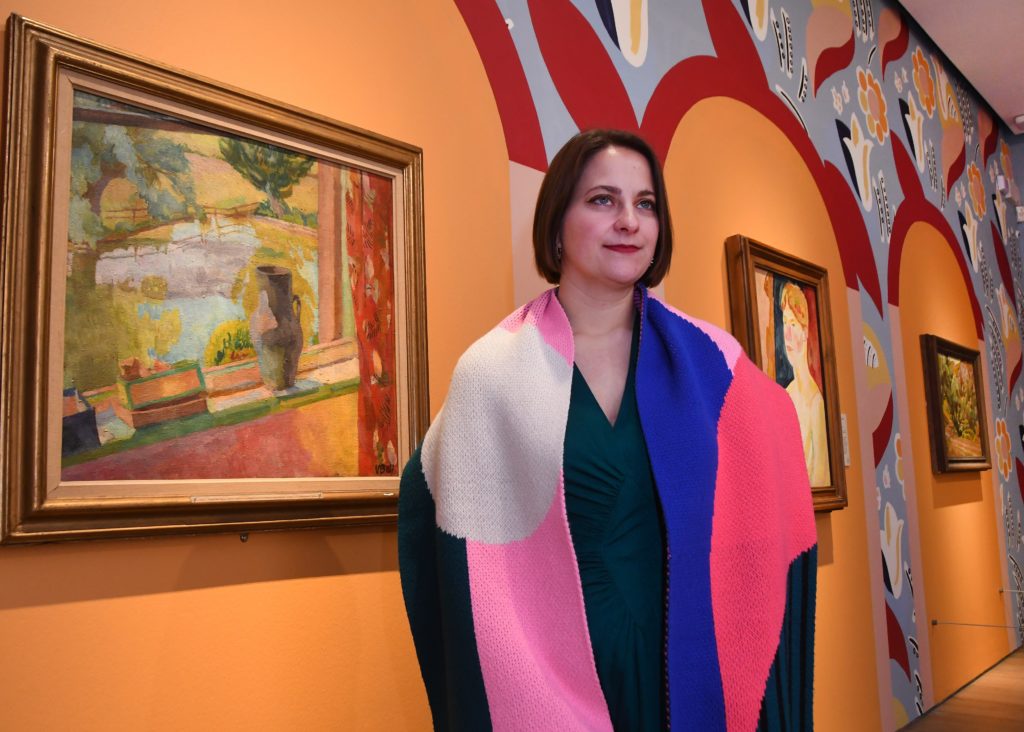
Becky Gee, curator of fine art for York Museums Trust, at the launch of the Beyond Bloomsbury exhibition at York Art Gallery. Picture: Charlotte Graham, courtesy of York Museums Trust

BEYOND Bloomsbury: Life, Love & Legacy, the spring exhibition at York Art Gallery, explores the extraordinary lives and work of the Bloomsbury Group of writers, artists and thinkers.

Active in England in the first half of the 20th century, the amorphous but amorous group met for 30 years, but with their unconventional lifestyles, bohemian airs and smart London and southern country addresses, they have since drawn opprobrium for their elitism as much as praise for the artistic acuity, audacity and intellect of writer and feminist pioneer Virginia Woolf, her sister, painter Vanessa Bell, and their contemporaries.

Acerbic New York satirist, poet, writer and critic Dorothy Parker famously drew on geometric imagery to say the prolific, passionate and hugely gifted group “lived in squares, painted in circles and loved in triangles”.

Now, Beyond Bloomsbury finds a different angle, telling the story of not only the artists, but also the group’s writers, dancers, activists and philanthropists, as York Art Gallery and exhibition partners Sheffield Museums and the National Portrait Gallery showcase 60 major loans of oil paintings, sculpture, drawings and by Bell, Dora Carrington, Roger Fry, Duncan Grant, Paul Nash, Gwen Raverat and Ray Strachey.

Alongside them are four new portraits by Sahara Longe, commissioned by York Museums Trust and Sheffield Museums to respond to the Bloomsbury Group and the exhibition themes.

Becky Gee, curator of fine art at York Museums Trust, says: “We proposed a show at York Art Gallery to the National Portrait Gallery in 2019, and when they said they were looking for a gallery to tour it to too, that’s when Sheffield Museums became involved, and we worked closely together on the research.

“The exhibition should have opened here, but then Covid intervened, so Sheffield hosted it first at the Millennium Gallery.”

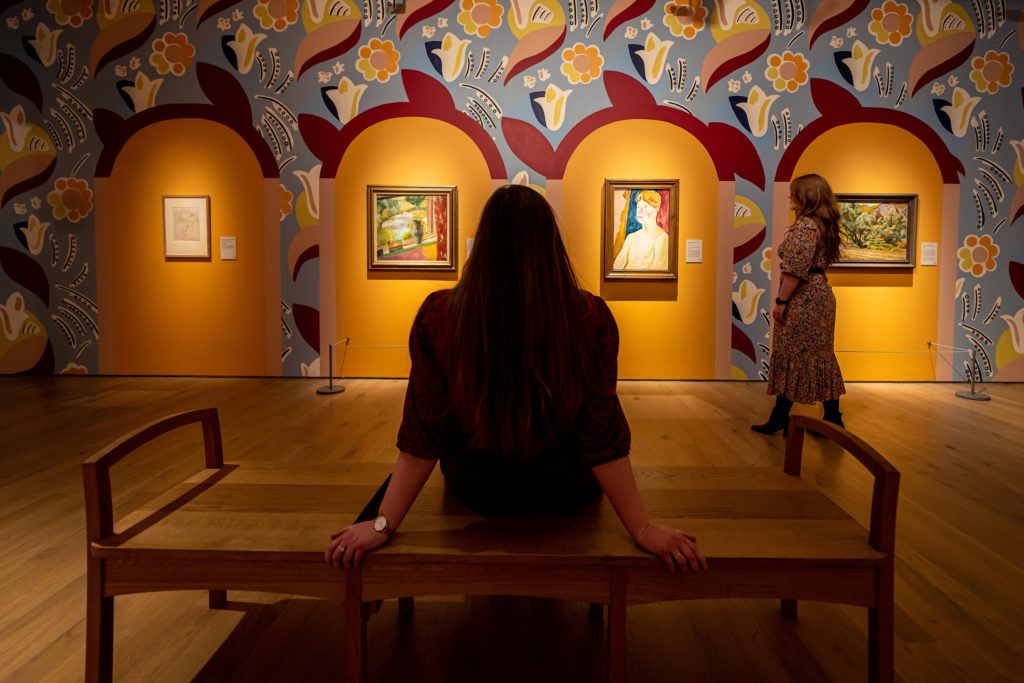
York Art Gallery staff take in the expanse of Lydia Caprani’s expansive mural wall at the Beyond Bloomsbury exhibition. Picture: Charlotte Graham, courtesy of York Museums Trust

Now, for the York run, Bloomsbury-inspired murals and fireplaces by graphic artist Lydia Caprani have been added, while Caprani has worked collaboratively with York LGBT Forum and Kyra Women’s Group to create decorative pieces to complement the Bloomsbury works.

“The reason I proposed this show is that, firstly, I knew the National Portrait Gallery had a strong holding of Bloomsbury Group artworks, offering the chance to equally profile the work of men and women: highlighting women’s art, women’s histories,” says Becky.

“Because of the nature of the portraits, we could tell the stories of writers, dancers and activists, as well the artists.”

Equally important to Becky was a desire “for a long time to examine how LGBT histories and women’s histories are present in our own York Art Gallery collection, whether through the artists identifying as LGBT or through the subject matter.

“I knew that the Bloomsbury Group were involved in a lot of gay relationships, so we worked with York LGBT Forum, and there’s now a permanent display on that theme.

“To make that work happen, it’s good to attach it to a bigger project and I knew that would be a way to work with the LGBT Forum.”

Explaining the reasoning behind the Sahara Longe commissions, Becky says: “I thought, it’s not good enough just to put the LGBT histories and women’s histories on show, but we should also look at how the Bloomsbury Group was not progressive in certain areas.

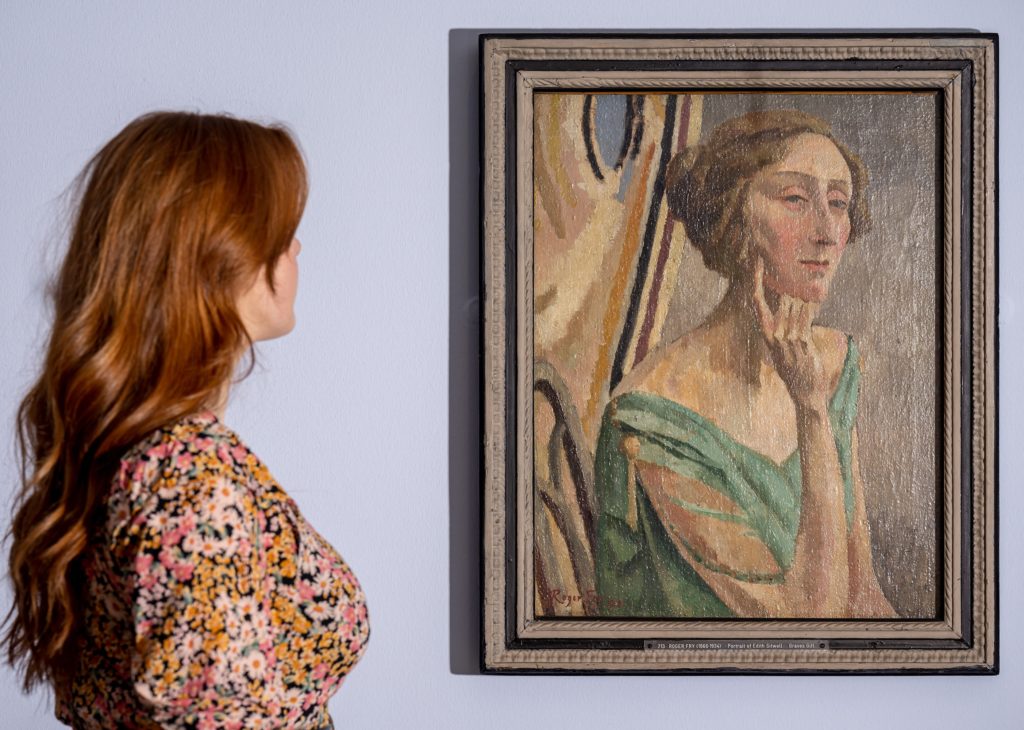
Roger Fry’s portrait of Edith Sitwell in the Beyond Bloomsbury: Life, Love & Legacy exhibition at York Art Gallery. Picture: Charlotte Graham, courtesy of York Museums Trust

“It soon became apparent that the collection we were working with was not telling the full story, so to broaden that narrative, Sahara was perfect to work with. 

“She studied painting at a very traditional Italian school, studying the techniques of master painters, and in her work she places Black figures in spaces traditionally filled by white portrait subjects, and luckily she thought it was right to do the portraits for this exhibition in a post-Impressionist style.”

Among Sahara’s portraits – along with novelist Mulk Raj Anand, Black queer Jamaican dancer and choreographer Berto Pasuka and Patrick Nelson, Jamaican boyfriend of Bloomsbury Group artist Duncan Grant – is the Jamaican writer and activist Una Marson, painted in oils on jute. 

“She was the first Black woman to broadcast on the BBC, and as far as I’m aware, there have been no portraits of her until now. She featured in Voice, a radio series produced by Goerge Orwell for the India section on the BBC Eastern Service in 1941, and she wrote poetry and plays, as well as her radio broadcasts, many of which contributed to her feminist, anti-colonial and anti-racist actions.”

Visitors move through three galleries, the first introducing the figures associated with the Bloomsbury Group, highlighting the importance of personal relationships, conversation and the privilege of time and space wherein to pursue creative practice.

Even if Vanessa Bell expressed initial disquiet at moving to Charleston Farmhouse in the Sussex countryside in 1916 with her sons Quentin and Julian: “It will be an odd life…but it seems to me it might be a good one for painting,” she wrote.

The second centres on the Omega Workshops, an enterprise established by Roger Fry in 1913 to sell furniture, fabrics and homeware designed by leading artists of the day, plus the rival Rebel Arts Centre. 

Becky Gee, curator of fine art at York Museums Trust, who worked for three years to put the Beyond Bloomsbury exhibition together . Picture: David Harrison

The third gallery focuses on activism and philanthropy, identifying causes of importance to group members and highlighting how such beliefs shaped the group’s collective mentality, such as being involved in establishing the Contemporary Art Society, in which York Art Gallery has played its part since the 1920s.

Summing up Beyond Bloomsbury, Becky says: “One of our aims is to celebrate the good but to critique the bad too, because if we didn’t do that, we’d just be telling the same story again.”

Oh, and should you be wondering what an exhibition about a bunch of posh arty southerners is doing in a Yorkshire gallery, Becky is quick to point out: “Look out for the portrait of Edward Carpenter, who lived just outside Sheffield.

“He was a Victorian gay rights activist and writer, so he’s from the generation just before the Bloomsbury Group, and he influenced EM Forster, a gay writer who did not come out in his lifetime.

“Edith Sitwell features in the exhibition, and the Sitwells had Scarborough connections, owning Woodend in the resort.”

Beyond Bloomsbury: Life, Love & Legacy runs at York Art Gallery until June 5. To book tickets, go to: yorkartgallery.org.uk.

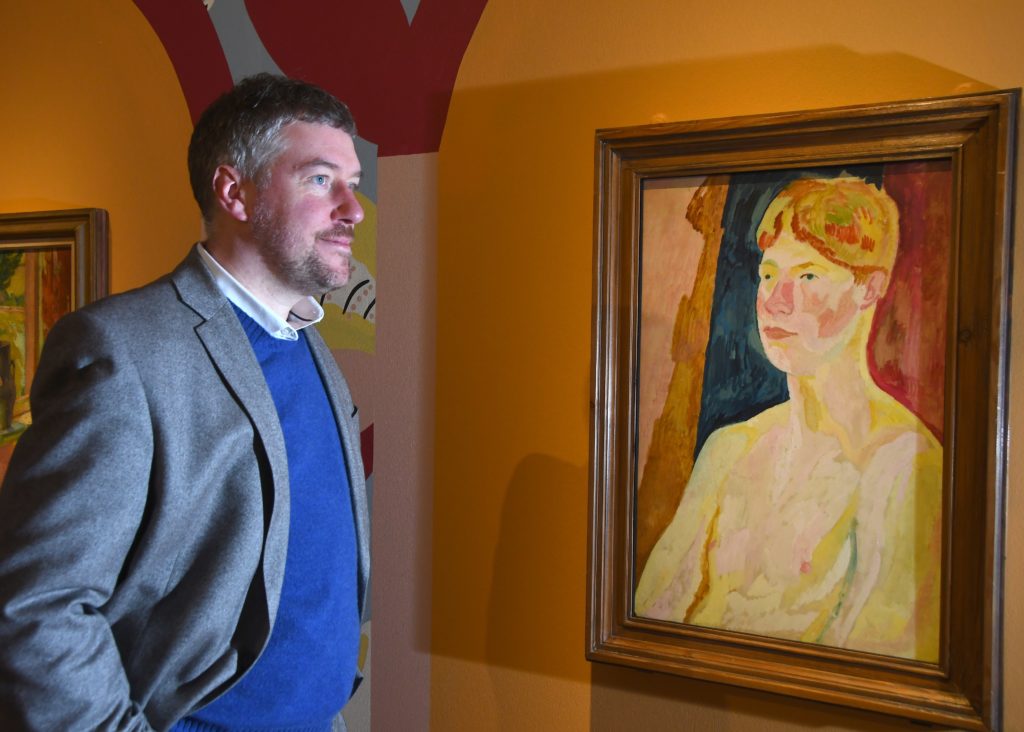
Morgan Feely, senior curator at York Museums Trust, stands by Vanessa Bell’s portrait of David “Bunny” Garnett, painted in oil and gouache on cardboard, at the Beyond Bloomsbury exhibition. Picture: David Harrison