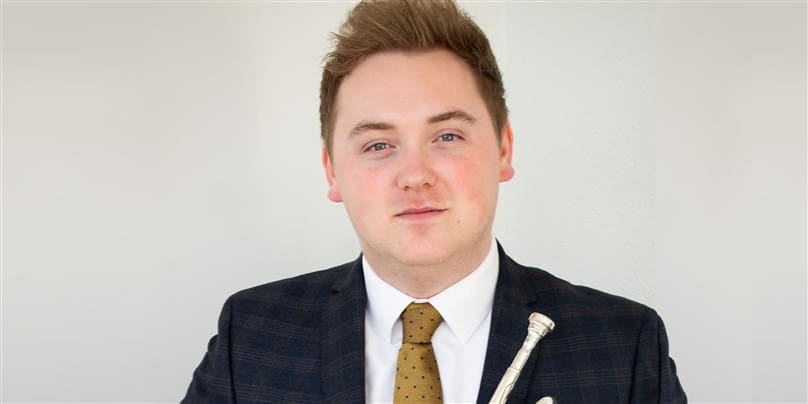
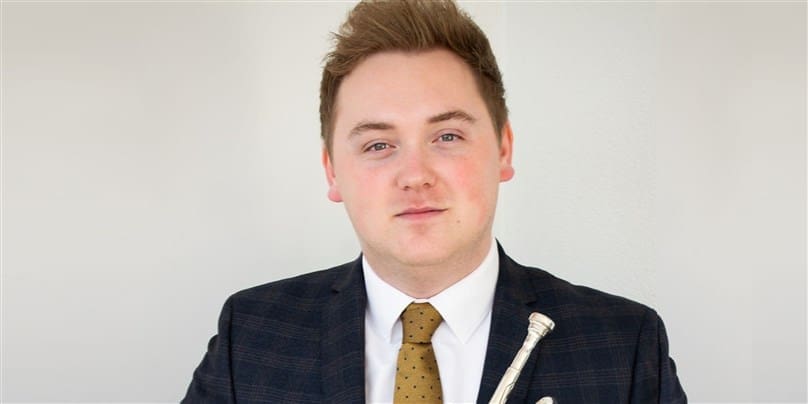
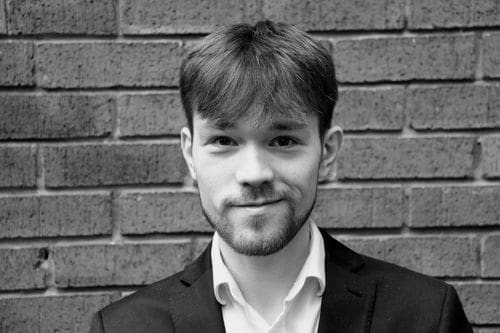
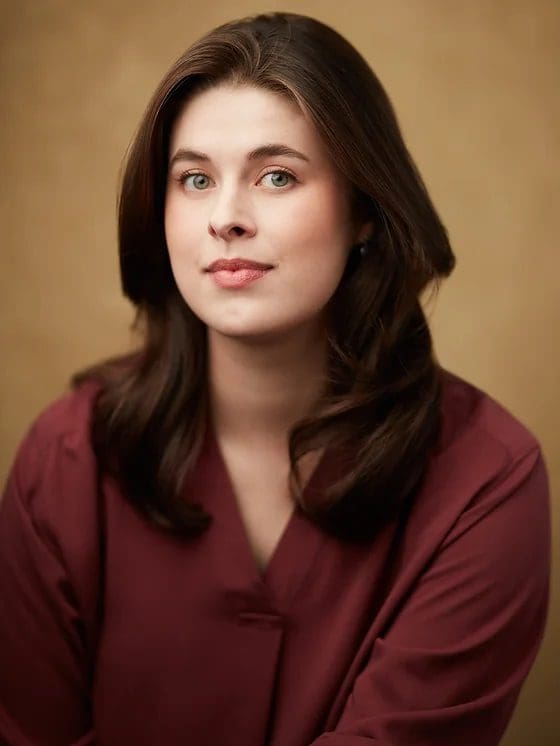
James Fountain: Soloist for Malcolm Arnold’s Trumpet Concerto
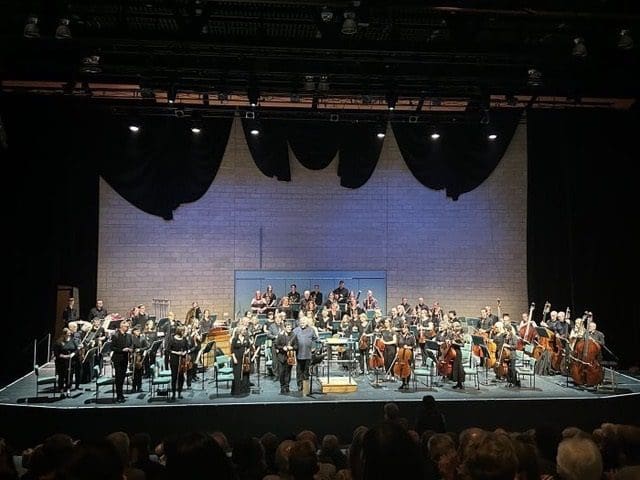
SUNDAY afternoon’s concert, the first of York Guildhall Orchestra’s new season, was dedicated to the memory of John Wallace, OBE and trumpeter extraordinaire, who died in January at the age of 76. His widow and daughter were in the audience.
The first half ended with Malcolm Arnold’s Trumpet Concerto, which Wallace had premiered in 1982, played here by James Fountain. The work is extremely compact. The opening fanfares of its Allegro energico lead into some very rapid passages which Fountain delivered with panache, while finding a comfortable legato for the second theme.
In this context, the slow movement took on a powerfully elegiac feel, the muted trumpet eerily supernatural. All that was blown away by the finale, which was exuberant and joyous, truly an evocation of the personality whose memory was being honoured.
The programme had opened with Walton’s Crown Imperial march, a homage to Elgar if ever there were. The orchestra, under its permanent conductor Simon Wright, took a mildly cautious approach, with the contrasting trio theme lacking quite the breadth its sweep implies, but it concluded keenly enough.
Much Spanish music demands a special passion and the second of Falla’s two suites from his ballet The Three-Cornered Hat is no exception. The orchestra took the first dance to find its Iberian feet.
The second dance saw a profound change, perhaps inspired by the cor anglais’s little cadenza. The down-bowed syncopations were fiery and the concluding accelerando superbly taut. Tempo and rhythm in the frenetic finale received exactly the focus they needed, and its ending was properly strident.
The first movement of Walton’s First Symphony, Op 125 in B flat minor, opens and closes with a drum roll, which was a touch self-effacing at first here. Woodwinds predominated where we might have heard more from the strings, but it finished in grand style.
The ‘malicious’ scherzo (presto con malizia) was much edgier, largely due to its fearless syncopations introducing an element of the macabre which Wright seemed to relish.
Simmering anger underpinned the melancholy Andante at first, before it became more tranquil, leaving a need for resolution in the finale. This was primarily exciting for the brilliant focus in its two fugal passages, which emerged with the utmost clarity, spearheaded by the strings. This was YGO at its most determined: the best had been kept to the last.
Amelia Bullmore in rehearsal for her lead role as Penelope in The Penelopiad at York Theatre Royal. Picture: Pamela Raith Photography
FROM The Penelopiad’s feminist twist on The Odyssey to Alan Carr testing new material, the Brontë sisters’ other story to Jamie’s blossoming, Charles Hutchinson Hutchinson watches autumn find its fifth gear.
Greek tragedy twist of the week: Margaret Atwood’s The Penelopiad, Odyssey: Her Story, York Theatre Royal, today until October 31
BOOKER Prize winner Margaret Atwood revisits Homer’s The Odyssey in an exuberantly irreverent and darkly humorous retelling where she gives voice to Odysseus’s silenced wife, Penelope – still awaiting his return 20 years after the Trojan War – and her chorus of maids in a tale of injustice, betrayal and revenge that exposes the truth behind the myth. Creative director Juliet Forster’s cast is led by Happy Valley and Riot Women star Amelia Bullmore. Box office: 01904 623568 or yorktheatreroyal.co.uk.
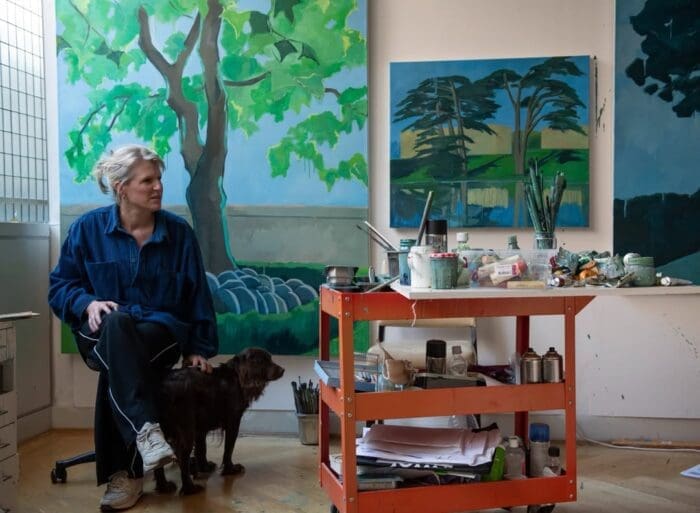
Nancy Cadogan: Exhibiting At The Bend In The River at Beningbrough Hall from today
Exhibition opening of the week: At The Bend In The River: Paintings by Nancy Cadogan, Beningbrough Hall, Beningbrough, near York, today 11am to 4pm
LONDON figurative artist Nancy Cadogan explores how a place is shaped by memory, artistry and human connection in At The Bend In The River, an exhibition spread across four rooms of Beningbrough’s Reddihough Galleries that brings together newly commissioned large-scale paintings, drawings and immersive creative spaces that respond to the National Trust estate’s Ouse riverside setting, historic house and changing landscape.
Through art, film, drawing and creative writing, Cadogan invites visitors to “pause and reflect on the journeys we take and the places and memories that sustain us”. Look out too for intimate works that reflect on women, time and storytelling. Tickets (as part of National Trust admission): nationaltrust.org.uk/beningbrough.
Alan Carr: Two gigs in one day at Pocklington Arts Centre
Comedy gigs of the week: Alan Carr, Work In Progress, Pocklington Arts Centre, tomorrow, 3pm and 7.30pm
THE Celebrity Traitors 2026 winner, comedian, television presenter and quiz host Alan Carr is heading to Pocklington for a brace of “very special work-in-progress shows” ahead of his Have I Said Too Much? tour, when he will play York Barbican on March 13 2027. Box office: Pocklington, pocklingtonartscentre.co.uk; York, yorkbarbican.co.uk.
James Fountain: Trumpet soloist for York Guildhall Orchestra’s concert at York Barbican
Classical concert of the week: York Guildhall Orchestra, York Barbican, tomorrow, 3pm
YORK Guildhall Orchestra launches its new season with a Sunday afternoon programme of works by Malcolm Arnold, William Walton and Spanish composer and pianist Manuel de Falla.
Arnold’s ebullient Trumpet Concerto, composed in 1981, will be played by soloist James Fountain after the opening orchestral fanfare of Walton’s Crown Imperial. De Falla adapted his 1919 ballet Three Cornered Hat, featuring Spanish folk and dance music, into two orchestra suites; the second will be performed tomorrow. Box office: yorkbarbican.co.uk.
Jess Murray’s Emily, left, Lara Stafford’s Charlotte and Millie Rhodes’s Anne Brontë in York Settlement Community Players’ Underdog: The Other Other Brontë
York premiere of the week: York Settlement Community Players in Underdog: The Other Other Brontë, Theatre@41, Monkgate, York, October 13 to 17, 7.30pm plus 2.30pm Saturday matinee
CHARLOTTE Brontë (played by Lara Stafford) has a confession about how one sister (Emily, Jess Murray) became an idol, and the other became known as the third sister. You know the one. No, not that one. The other, other one: Anne (Millie Rhodes).
Claire Morley directs Settlement Players in Sarah Gordon’s irreverent retelling of the life and legend of the Brontë sisters as you have never seen the Yorkshire scribbling sisters before. Premiered at the National Theatre in 2024, this not a story of well-behaved women but of the power of words, sisters and sisterhood, love and jealousy, support and competition. Box office: tickets.41monkgate.co.uk.
Henry Raby: Wrestling with the twin emotions of hope and anger at The Old Paint Shop
Poetry gig of the week: The Old Paint Shop presents Henry Raby, Hope and Anger, York Theatre Royal Studio, October 14, 8pm
YORK punk poet and Say Owt artistic director Henry Raby wrestles through the twin emotions of hope and anger with a spoken-word cocktail of poetry and comedy as he seeks to understand the righteous and the rotten. “Come and share in fist-clenched frustration and celebrate examples of the world, and the heartfelt people in it, at their shiniest and brightest,” says Henry. Box office: 01904 623568 or yorktheatreroyal.co.uk.
“Reaching 25 years in music is incredibly emotional,” says York Barbican-bound Katherine Jenkins
“Reunion with old friends” of the week: Katherine Jenkins, 25 Year Anniversary Tour, York Barbican, October 15, 7.30pm
WELSH mezzo-soprano Katherine Jenkins, 46, the biggest-selling classical artist of the 21st century, plays York Barbican as the only Yorkshire venue on her 25 Year Anniversary Tour, her first in five years. “Reaching 25 years in music is incredibly emotional, but this tour is truly a celebration of the fans who have been there from the very beginning,” she says.
“To be heading out across the UK and Ireland for 18 special shows feels less like a celebration of a career and more like a reunion with old friends, and I can’t wait to stand on stage, look out into those familiar faces and share it all over again.” Jodok Cello supports. Box office: yorkbarbican.co.uk.
York Stage’s cast for Everybody’s Talking About Jamie, starring Frankie Bounds as Jamie New
Bold and unapologetic musical of the week: York Stage in Everybody’s Talking About Jamie, Grand Opera House, York, October 16 to 24, 7.30pm, Tuesday to Saturday, plus 2.30pm Saturday matinees and 4pm Sunday
TOM MacRae and Dan Gillespie’s Sheffield musical plays the Grand Opera House for the first time in Nik Briggs’s production for York Stage that restores the grit to both complement and counter the glitz in the uplifting underdog story of Jamie New (Frankie Bounds), a 16-year-old schoolboy from a Steel City council estate with big dreams and the courage to stand out when it would be easier to stay quiet.
Equipped with the love of his mum, the support of his friends and the strength to face the world head on, Jamie fights prejudice, finds his voice and discovers the freedom of stepping into the spotlight on his own terms. Box office: atgtickets.com/york.
Tom Stade: Playing by his rules at York Barbican
Come and see for yourself why…Tom Stade Rules, YO1 Radio Live Lounge, York Barbican, October 16, 7.30pm
CANADIAN free spirit Tom Stade takes aim at the absurdities of modern times with his incisive, gloriously unfiltered wit as he grapples with rebellion, responsibility and the tension between the old and the new. From unspoken social codes to cultural divisions, identity to marriage, Stade dismantles all the rules and redefines them his way. Box office: yorkbarbican.co.uk.
YORK Barbican’s orchestra-in-residence ended its season with a mixed bag centred around Bruch’s First Violin Concerto – by far the most famous of the three he wrote – alongside two overtures from opposite ends of the Romantic era, plus Britten’s Sea Interludes and Ravel’s La Valse.
It was all very tastefully delivered but lacked the final punch that a meatier second half – with a symphony perhaps – might have produced.
Bradley Creswick made his name hereabouts as leader for 25 years of the Royal Northern Sinfonia, of which he is now Leader Emeritus. He lollops onto the stage with a mischievous smile that radiates both surprise and delight, but his casual demeanour belies a fluent technique and a seriousness of intent.
He immediately took a slower tempo than that suggested by the opening chords: his entire approach to the introduction was leisurely, liberally laced with rubato, and his mellow tone in the slow movement was ideally suited to its tear-jerking melodies.
It was not until the jaunty rhythms of the finale that he really let loose, bouncing crisply through both main melodies and accelerating with panache through the coda. Accompanying his relatively wayward tempos, especially in the first two movements, would have tested a lesser conductor than Simon Wright. However, the orchestra stayed in remarkably close attendance, even matching Creswick’s energy in the finale.
Each half of the afternoon was prefaced with an overture. The horn quartet at the start of Weber’s Der Freischütz was stylish, near faultless in fact. Not to be outdone, the violins were positively spine- tingling in the Vivace section.
Creswick humbly took a seat with them after the interval, when Verdi’s overture to La Forza del Destino offered the brass a chance to show their mettle, especially in the final prolonged crescendo – a trick Verdi had learned from Rossini.
Britten aligned four of the six sea interludes in his opera Peter Grimes into a suite, to which he appended the passacaglia that falls between the two scenes of Act 2.
In many ways, the different moods of the interludes reflect varied aspects of Grimes’ own volatile personality. Playing them as a suite relies on the chameleon qualities of an orchestra.
Two aspects here predominate. The woodwinds need to be highly flexible, running around seemingly in circles while the rest of the orchestra remains largely calm, as in ‘Dawn’. He also uses an extensive percussion section. Wright handled both these superbly.
He also brought extra emphasis to the dark underlay of ‘Moonlight’, while benefiting from the aplomb of his viola soloist in the Passacaglia, and encouraging some real shrieking from his winds in ‘Storm’.
Ravel’s ‘choreographic poem’ La Valse was at first rejected by Diaghilev as not being balletic enough, but was eventually staged. Above all, it needs to dance, particularly in its apotheosis when its constituent parts seem to disintegrate.
After conjuring a passionate mood for the central section, Wright was not afraid to launch into stridency in the final frenzied chords when the waltz seems to self-destruct.
Cone, by Alison Jagger, on show at WET Bar & Plates
FROM street photography to an introduction to ballet, sparring spiritualists to acidic German comedy about the English weather, Charles Hutchinson highlights all manner of cultural delights ahead.
Photographic show of the week: Alison Jagger, After The Crowds, WET Bar & Plates, Micklegate, York, until June 3
AS a lone traveller and self-confessed free spirit, York street photographer Alison Jagger draws inspiration from the urban landscape, whose vitality she loves to capture with her mobile phone camera.
“There is nothing better than waking up in an unfamiliar city and recording its character, colour and vibrancy through my curious lens,” says Jagger. After The Crowds is the second in RARE Collective’s programme of solo exhibition at James Wall and Ella Williams’ indie wine bar and restaurant in aid of SASH (Safe and Sound Homes), the York youth homelessness charity.
English National Ballet School students in My First Ballet: Cinderella, on tour at Grand Opera House, York
Children’s show of the week: English National Ballet & English National Ballet School, My First Ballet: Cinderella, Grand Opera House, York, today, 10.30am and 2pm; tomorrow, 1pm and 3pm
MEET the nature-loving Cinderella, who lives on the edge of an enchanted forest where she once gardened and sang with her mother. After loss and silence settle over her home, she is left with a sharp-tongued stepmother, two noisy stepsisters and a house full of chores and shadows.
However, when a letter arrives, inviting all to a garden ball, Cinderella’s journey to find her true self begins, guided by the spirit of her mother and the magic of the forest. Using a narrator to help the young audience follow the story, and a shortened, recorded version of Prokofiev’s score, this introduction to ballet is choreographed byGeorge Williamson and performed by English National Ballet School Graduate Artists Programme students. Box office: atgtickets.com/york.
Sparring spiritualists Sheila Gold (Eileen Walsh) and prickly mum Rosa (Frances Barber) in Rosa’s mobile home in York Theatre Royal’s world premiere of The Psychic. Picture: Manuel Harlan
World premiere of the month: The Psychic, York Theatre Royal, until May 23
“IS any of it real,” ask Jeremy Dyson and Andy Nyman in The Psychic, the latest spook-fest from the writer-director duo behind Ghost Stories. In their twisted new thriller, popular TV psychic Sheila Gold (Eileen Walsh) loses a high-profile court case that brands her a charlatan, costing her not only her reputation but also a fortune in legal fees.
When a wealthy couple ask Sheila to conduct a séance to attempt to make contact with their late child, she senses an opportunity to bleed them for money. What follows makes her question everything she has ever believed, leading her on a journey into the darkest corners of her life. Box office: 01904 623568 or yorktheatreroyal.co.uk.
Tenor Christopher O’Gorman
Lunchtime concert of the week: York Late Music presents Christopher Gorman (tenor) & Mark Hutchinson (piano), Unitarian Chapel, St Saviourgate, York, today, 1pm
THE first complete performance of York composer Steve Crowther’s song settings of poems by late York writer Helen Cadbury will be given by tenor Christopher O’Gorman and pianist Mark Hutchinson this afternoon. The concert also features Richard Allain’s Three Shakespeare Sonnetsplus music by Emily Hall and Ralph Vaughan Williams’ Songs Of Travel. Box office: latemusic.org or on the door.
Louise Davies in her Woolwich studio
Exhibition opening of the week: Louise Davies and Glassmakers, Journey In Colour, Pyramid Gallery, Stonegate, York, today, 11am to 2.30pm, until July 4
PAINTINGS and etchings by South East London artist and printmaker Louise Davies will be complemented by glass by Allister Malcolm, Madeleine Hughes, Margaret Burke, Charlie Burke and Amelia Burke.
Pink Moors, oil on canvas, by Louise Davies
Davies, a Fellow of the Royal Society of Painter-Printmakers, combines fluid lines and rich colour in vibrant landscape prints and oil paintings. Gallery owner Terry Brett drove to Stourbridge to pick up glass works by Malcolm and his workshop assistant, Hughes. Margaret Burke, son Charlie and his wife, hot glass specialist Amelia, run the hand-blown glass studio E&M Glass at The Old Bakery, Sarn Bridge, Malpas, Cheshire.
Bradley Creswick: Violin soloist at York Guildhall Orchestra’s concert tomorrow
Classical concert of the week: York Guildhall Orchestra Spring Concert, York Barbican, Sunday, 3pm
YORK Guildhall Orchestra continues its celebration of the works of German composer, conductor, virtuoso pianist, guitarist and critic Carl Maria von Weber, this time recognising his considerable input into the world of opera with the overture to Der Freischütz.
Tomorrow afternoon’s soloist will be Bradley Creswick, leader emeritus of the Royal Northern Sinfonia, playing the Bruch Violin Concerto No 1. The second half features Verdi’s overture to his opera The Force Of Destiny, Britten’s Sea Interludes and Passacaglia from Peter Grimes and Ravel’s orchestral showpiece La Valse. Box office: yorkbarbican.co.uk.
Martha Godber’s Jesse North in her play Jesse North Is Broken. Picture: Ian Hodgson
Solo show of the week:John Godber Company presents Martha Godber in Jesse North Is Broken, York Theatre Royal Studio, May 11 to 14, 7.45pm plus 2.30pm Thursday matinee
JESSE North, 25, from Hull, is a carer on minimum wage, keeping the elderly alive while trying to live her own messy, chaotic life. Told over one night, writer-performer Martha Godber’s play follows Jesse from care shift to the dance floor, from the late-night kebab to an early-morning call-out as she battles the system that undervalues her and the city that shapes her, all while her ADHD-fuelled thoughts and anxious mind crave order in the chaos.
“Both political and personal, the show shines a light on working-class survival in Britain today – where carers are underpaid, the care system is crumbling and young women are left to piece themselves together in a society that keeps breaking them,” says Martha, whose solo play is directed by Millie Gaston. A post-show discussion follows Wednesday’s performance. Box office: 01904 623568 or yorktheatreroyal.co.uk.
The poster for James Morrison’s 20 Years Of Undiscovered tour
Anniversary of the week: James Morrison, 20 Years Of Undiscovered, York Barbican, May 13, doors 7pm; Sheffield City Hall, May 23, doors 6.30pm
UNDISCOVERED was the number one debut album that changed everything for Rugby soul singer-songwriter and guitarist James Morrison (or James Morrison Catchpole to give him his full name). Back then, he was fitting carpets by day, playing open mics by night and driving up and down to London at any spare moment, taking meeting after meeting with multiple record companies.
On his 18-date May and June tour, 2007 British Male Solo Artist BRIT award winner Morrison is playing Undiscovered in its entirety in a set taking in big hits such as You Give Me Something and Wonderful World, fan favourites The Pieces Don’t Fit Anymore and This Boy, rarely performed gems One Last Chance and How Come and highlights from his six-album songbook, topped off by 2025’s Top Five success Fight Another Day. Cordelia supports. Tickets update: York, limited availability at yorkbarbican.co.uk; Sheffield, https://www.ticketmaster.co.uk/james-morrison-sheffield-23-05-2026/event/35006367D9B1B6C6.
Wehn and where? Henning squeezing every German joke out of the British weather at Grand Opera House, York
Comedy gig of the week: Henning Wehn, Acid Wehn, Grand Opera House, York, May 14, 7.30pm
GERMAN Comedy Ambassador Henning Wehn takes an unbiased look at climate change. “It’s a topic sure to delight audiences and no surprise,” he says. “After all, everyone loves talking about the weather. Rain or shine, all will be fine. Or maybe it won’t. Who knows?! Come along. Or else.” Box office: atgtickets.com/york.
Tim Lowe: Launching 2026 York Chamber Music Festival with NCEM recital with Stephen Gutman
Festival launch of the week: Tim Lowe (cello) & Stephen Gutman (piano), Gems Of The Romantic Cello, National Centre for Early Music, York, May 15, 7.30pm
DIRECTOR and cellist Tim Lowe previews the 2026 York Chamber Music Festival (September 11 to 13) in concert with pianist Stephen Gutman in a passionate exploration of expressive and beautiful works from the cello and piano repertoire.
Their programme will be the same as they played at St Mary le Strand, London, on Wednesday: Beethoven’s 12 Variations on See The Conquering Hero Comes from Handel’s Judas Maccabaeus; Saint-Saëns’ Cello Sonata No 1 in C Minor; Richard Strauss’s Cello Sonata in F Major and Schumann’s Adagio and Allegro. Box office: eventbrite.co.uk.
Cowboy Junkies: 40 years and counting
In Focus: Cowboy Junkies, Celebrating 40 Years And Beyond Tour, Howard Assembly Room, Leeds, tonight; doors 7pm for 7.45pm start
Cowboy Junkies: 40 years and counting
TORONTO’S Cowboy Junkies are playing British venues for the first time since 2022 on April and May’s Celebrating 40 Years and Beyond tour, promoted by Hurricane Promotions. Next stop, Howard Assembly Room, Leeds, tonight.
Coinciding with the 11-date itinerary, the Canadians have released a triple LP/ double CD/digital collection of songs from their 21st century releases, Open To Beauty.
Released on May 1 on Cooking Vinyl, this ‘Best Of’ set revisits selected tracks from the albums Open, One Soul Now, Early 21st Century Blues, At The End Of Paths Taken, Renmin Park, Demons, Sing In My Meadow, The Wilderness, All That Reckoning, Songs Of The Recollection and 2023’s Such Ferocious Beauty.
Speaking of the new compilation, Cowboy Junkies’ Michael Timmins says: “We are now 25 years into this century, the beginning of which saw us leave the world of major labels and return to making music as an independent band.
“We figured this was as good a time as any to look back, reassess and reflect on the music that we have recorded over these past two and a half decades and, hence, Open To Beauty – The Best of the 21st Century.”
Tour tickets are on sale at: https://cowboyjunkies.com/tour/. Tonight’s show has sold out: for returns only, https://www.operanorth.co.uk/whats-on/cowboy-junkies/.
Did you know?
COWBOY Junkies’ signature performance of Lou Reed’s Velvet Underground composition Sweet Jane was featured in the final episode of Netflix TV series Stranger Things.
Cowboy Junkies’ Peter Timmins, Margo Timmins, Michael Timmins and Alan Anton
Cowboy Junkies: back story
SOMETIMES revolutions begin quietly. In 1988, Canadian alt. country band Cowboy Junkies proved there was an audience waiting for something quiet, beautiful and reflective. The Trinity Session was like a whisper that cut through the noise – and it was compelling, standing out amid the flash and bombast that defined the late 1980s.
The now classic recording – made live at the Church of the Holy Trinity in Toronto in November 1987 – combined folk, blues and rock in a way that had never been heard before and went on to sell more than a million copies.
Cowboy Junkies’ ability to communicate volumes before the lyrics kick in defines an enduring career. Where most bands chase trends, the Junkies have stayed their course, maintaining a low-impact excavation of melody and evocative language delivered sotto voce in singer Margo Timmins’s feathery alto.
Forming in Toronto in 1985, Margo was joined by siblings Michael Timmins on guitar and Peter Timmins on drums, plus Michael’s life-long friend Alan Anton on bass, to begin a journey that has evolved over 29 albums.
“I’ve known Alan longer than I’ve known Pete,” says Michael. “We were friends before Pete was born.”
Unlike most long-lasting groups, Cowboy Junkies have never had a break-up or taken a sanity-saving hiatus. There’s an appreciation of each other that keeps them constantly working. “It’s that intimacy and understanding of what each one of us brings to the table,” says Michael.
The oldest, Michael is the chief architect; songwriter, and guitarist, who works with Margo on sculpting the emotional planes and vocal performances before bringing in Peter and Alan to create the soundscapes that have made Cowboy Junkies a band that defies categories.
“The expectations and responsibilities of our roles are a big part of the band’s ethos,” says Michael. “We’re still amazed that we’re doing things our way and continuing to grow the band, but the longer we are at it, the more fun it’s become. We don’t take it for granted.”
Margo adds: “We do what we do and it feels right for all of us. After 30-plus years of playing together, the band and its music are more important to us than ever. The music we make brings each of us a great sense of contentment, a knowledge of place, and a sense of doing what we were meant to do.”
SUNDAY afternoons with the Guildhall have in a short time become a much-loved feature of York’s musical landscape. A Mozart overture, a Weber concerto and a Mahler symphony offered something for everyone here.
You can tell a lot about a musical organisation’s view of itself by the calibre of soloists it invites. In Julian Bliss they had a clarinettist who was more than a match for the taxing demands of Weber’s Second Clarinet Concerto in E flat.
All but one of his solo clarinet works were composed for Heinrich Baermann, a pioneer in the field and principal with the Munich Court Orchestra: they rank amongst the instrument’s most important repertory.
Bliss launched into the opening runs with panache, but managed to include echo effects and even a distinctive tremolo in the clarinet’s chalumeau register, its lowest octave. A couple of top notes verged on the shrill, laid down skilfully head-to-toe with much lower ones.
Weber’s slow movement, a Romanza, attempts to introduce an elegiac tone, not entirely successfully, but Bliss delivered it with smooth legato, which enabled satisfying contrast with the outer movements. The closing polonaise, virtually a rondo, was delightfully crisp, superbly articulated. All the while the orchestra danced in close attendance, providing a feather-bed underlay.
Mahler’s Fifth Symphony, in C sharp minor, is widely considered a journey from bleak darkness and tragedy towards reassurance and light, although the composer himself vowed that its three parts had no programme as such. Nevertheless this account had that feeling.
The opening Funeral March was made the more stately by the low trumpet, and the frenetic storm that followed, heralded by shrieks in the winds, was enhanced by the six gritty horns.
Thereafter, Mahler leans on them heavily. The concertante solo horn role in the Scherzo was nobly handled by Janus Wadsworth. The movement grew edgier as it progressed and the acceleration into its coda was undeniably exciting.
It was good to hear the Adagietto, so often heard on its own, in proper context. Here some ethereal violin phrasing imparted an air of numinous spirituality, despite its more earthbound central passage.
The closing rondo, the most intricate movement Mahler ever wrote, was rhythmically incisive, an immense aid to clarity. Especially enjoyable was the way the overlapping fanfares came together in the brass chorale, before the triumphant finale for which Wright had kept something in reserve.
The evening had opened with Mozart’s overture to The Impresario. The strings overcame some early sluggishness to deliver fine counterpoint. It conjured anticipation for the larger works to follow.
Chris Bradley playing the cimbalon at York Guildhall Orchestra’s concert
THIS fascinating programme could hardly have been more contrasting: Zoltán Kodály’s eclectic, charming Háry János Suite, Op. 15, and Dmitri Shostakovich’s dark, brooding Tenth Symphony in E minor, Op. 93.
The Prelude opened with a convincing “orchestral sneeze” – a Hungarian superstition that sneezing before telling a story confirms its truth. This was very much a scene-setter: atmospheric orchestral textures with fine woodwind and string contributions, and a nicely judged balance overall.
The Viennese Musical Clock was delightful – toy-clock imagery created by the absence of strings in favour of playful percussion sounds (notably glockenspiel), and fine solos from Jane Wright (oboe) and others.
The lyrical Song featured fine solos from Moira Challoner (viola), Andrew Cavell (clarinet), and Wright again on oboe, plus a charming appearance by the delicate cimbalom (Chris Bradley).
The Battle And Defeat Of Napoleon was delightfully bonkers – a comedic, stylised battle with trombone calls to arms, doleful saxophone responses, military rhythms and a closing funeral procession. Fine playing again, with Simon Wright judging the balance expertly.
The highlight, however, was the Intermezzo. Here the Hungarian folk influence was most obvious, and Chris Bradley made a serious contribution – one he (and we) clearly relished. True, the cimbalom was sometimes drowned out by full orchestral textures, but that was almost inevitable given its intimate timbre.
I rather wish the Suite had ended here – it would have made a splendid sign-off. The final Entrance of the Emperor and His Court was dramatically fine – a ceremonial, deliciously pompous march – but musically, it didn’t add much. For me, anyway.
York Guildhall Orchestra in concert at York Barbican on October 12
Before we trotted off for our interval ice creams, Mr Bradley performed an attractive folksong tune which, he noted, quietly endorsed God’s Own County, Lancashire. I’ll get my coat.
Shostakovich’s Tenth Symphony was, according to his own account, composed in the months following Stalin’s death in 1953; it was premiered that December by the Leningrad Philharmonic under Yevgeny Mravinsky.
The opening Moderato is massive – both in length (it occupies about half of the symphony) and in emotional tone. The sense of torment seems undeniable; I was reminded of Bob Dylan’s song Not Dark Yet: “Sometimes my burden is more than I can bear/It’s not dark yet, but it’s gettin’ there”.
Simon Wright’s direction conveyed a real sense of organic purpose. The playing was commendably strong, with impressive contributions from clarinet, flute (Della Blood), oboe and bassoon (Isabel Dowell). The distant horn solo (Janus Wadsworth) added welcome warmth and humanity, and the chamber-like intimacy of the viola and cello solos (Moira Challoner and Sally Ladds) recalled Mahler in its emotional directness.
The relentless drive of the second-movement Allegro – “a musical portrait of Stalin” (Testimony) – came across with brutal intensity. After the murky depths of the first movement, its savage energy felt almost cathartic. Biting trumpet and trombone fanfares, quasi-martial snare drum and screaming woodwinds made this genuinely edge-of-the-seat stuff.
The third-movement Allegretto is a waltz – although not of the civilised Strauss variety. The tone is calmer, but still uneasy. It was fascinating to hear how the DSCH motif is woven into the fabric, alongside a counter-motif (E–A–E–D–A) attributed to Elmira Nazirova, a talented composition student.
The two form a kind of coded dialogue: the horn plays the rising “Elmira” theme – beautifully realised by Janus Wadsworth – discreetly answered by Andrew Cavell on clarinet. If love was indeed in the air, flute and oboe seemed to mock it. The performance projected a kind of chamber concerto for horn and woodwind.
Simon Wright: “His direction conveyed a real sense of organic purpose”
There were some issues with the closing Andante–Allegro. The rapid, heavily accented syncopated rhythms at the start of the Allegro weren’t quite as tight as they could have been, and the alternation between massive tuttis and chamber-like conversations didn’t always convince – although the dry acoustic did the players no favours.
That said, there was much to admire. Wright judged the opening superbly: out of the almost eerie stillness emerged Della Blood’s haunting flute solo, her breath control and purity of tone capturing the fragility and tentative hope of the moment. It surely represents the first real breath after the long darkness of the symphonic journey so far.
Clarinet and bassoon then picked up fragments of the flute’s melody, responding in lower, darker timbres – deepening the colour and grounding the fragile flute tone. The woodwind exchanges continued the chamber-like intimacy and were strongly convincing.
They were joined by the horn, playing the distinctive “Elmira” motif and linking the finale to the personal world of the third movement. Wadsworth again impressed, particularly in the soft, sustained horn solo in the upper register – exposed and difficult for both intonation and breath support.
As the Allegro section began, the first violins – admirably led by Fiona Love – gradually assumed the melodic lead. Their lyrical yet forceful lines cut through the rhythmic engine with long, arching phrases, demonstrating impressive bow control.
In the end, the final word belonged to the timpani – Francesca Rochester on fine form throughout – rhythmically hammering out the DSCH motif (D–E♭–C–B), Shostakovich’s personal signature. Its insistent, obsessive repetition drives the symphony to its defiant E-major conclusion.
Given the technical, physical and emotional demands of this remarkable symphony – and the unsympathetic acoustic – this performance was a real achievement.
Martin Roscoe: Stepped in as late replacement. “The orchestra was fortunate to secure him”
YORK Guildhall Orchestra observed two anniversaries at this entertaining Sunday matinee conducted by Simon Wright.
Shostakovich died a century after Ravel was born, in 1975 (he had visited York three years earlier). So 2025 conveniently marks both the sesquicentenary of the former’s birth and 50 years since the latter’s death. Before we heard from them, there were bonbons from Kabalevsky and Khachaturian. It was good family fare, with a sizeable audience to match.
The centrepiece was Shostakovich’s Second Piano Concerto, Op 102 in F, which dates from 1957. The composer was beginning his operetta Moscow, Cheryomushki at the same time and the concerto is in similarly light-hearted vein. That was certainly the line taken by Martin Roscoe, the doughty soloist; he had stepped in as replacement: the orchestra was fortunate to secure him.
Gone from the first movement are the grandiose gestures that other Russians, say Tchaikovsky or Rakhmaninov, might have given us. Roscoe penetrated its sense of humour immediately. He took its light, capricious textures in his stride, sustaining a sparkling staccato.
There was a lovely restraint just before the piano’s thunderous quadruple octaves, after which the orchestra briefly drowned him. But his accelerating cadenza made ample amends.
The introspective slow movement, almost a single line melody in the piano, was profoundly elegiac here and all the more effective for its simplicity. Almost as telling as the piano’s aggressive dance in the finale was the way Wright kept the pizzicato strings in such close attendance. It added brio to the excitement and seemed to inspire Roscoe through his virtuoso passages.
The overture to the first of Kabalevsky’s five operas, Colas Breugnon – he also wrote an operetta –was notable for the slickness in the orchestra’s handling of its syncopation. Listeners of an older generation will recall the Adagio from Khachaturian’s ballet Spartacus as the signature tune of that rollicking sea series, The Onedin Line.
More aptly, perhaps, it was heard here the day before the ballet’s great choreographer Yuri Gregorovich died, at the age of 98. Wright built up the sweeping theme to a juicy climax.
After the interval it was all Ravel. The reduced orchestra gave a tender account of the Pavane Pour Une Infante Défunte. His colourful orchestration in the second Daphnis et Chloé suite – where we had one player, David Hammond, unusually doubling on double bass and celesta – was fully demonstrated by the huge percussion section.
The opening heat-haze was delicately drawn and the closing Bacchanale properly rumbustious. Ravel threw the kitchen sink at it – all we lacked here was the (optional) wordless chorus.
Bolero conjured Torvill & Dean – and much more. It calls for three saxophones, but Rachel Green played all those roles single-handed. Such is the versatility of this orchestra. These afternoon sessions are proving ever more successful, judging by the growing audiences, and the players are clearly revelling in it.
Cellist Jamie Walton: “Rarely can a cello have sounded so august and avuncular at the same time.” Picture: Matthew Johnson
TWO orchestras were on display in this afternoon concert. One got lost somewhere in the forests and swamplands of Karelia, North Eastern Finland. The other one took inspiration from Shakespeare as imagined by Tchaikovsky and finally peaked with Shostakovich.
All orchestras have off-days and it is to the credit of Simon Wright and his charges that they snapped out of their early doldrums as well as they did. They opened with Sibelius’s Karelia suite and Bloch’s mini cello concerto Schelomo (Solomon), with Tchaikovsky’s fantasy overture Romeo And Juliet and Shostakovich’s Ninth Symphony after the interval.
The Sibelius certainly reflected the rugged, ragged tundra but not perhaps in the way the composer might have preferred. Entries were indecisive and the good form that the horns have been enjoying in recent times deserted them.
There was compensation in the central Ballade with a smooth cor anglais solo from Fleur Hughes and rhythms were crisper in the closing march. But the work as a whole sounded tentative.
With the advent of the Bloch, Jamie Walton’s cello immediately injected new life. His passion was not overlaid but came from deep within, emerging especially richly from his lowest string. Rarely can a cello have sounded so august and avuncular at the same time.
Solomon’s sometimes desperate rhapsodising, as Bloch interpreted his words from Ecclesiastes, was lent added depth by solos from bassoon and two trumpets. But it was Walton who penetrated to the heart of Solomon’s personality, alternating moments of rumination with explosions of anger.
There must have been something special in the interval drinks. It was a different orchestra that turned out for Romeo And Juliet. The woodwind choir set an elegiac tone in the Friar Laurence section, but when the strings delivered a brilliant streak in the middle of the vendetta music there was no looking back.
The love theme emerged sensitively from the muted violas. When the returning orchestral fury had finally died away, Romeo’s lamentation brought the fantasy to a tender close.
Shostakovich’s Ninth Symphony calls for a classical orchestra, with the addition of a piccolo. That instrument, in the deft hands of Felicity Jones, paired with trombone conjured a tingling buffoonery in the opening Allegro. There was a striking clarity, too, in the lyrical romanza that followed. When we reached the careering Scherzo, the orchestra was patently enjoying itself at last.
There remained Isabel Dowell’s plaintively touching bassoon, set off by the low brass quartet, before a return to drollery in the martial extravaganza of the finale. Wright was now confident enough in his players to goad them into a coda of brilliant acceleration.
IT was a field day for horns. All the works in this afternoon programme conducted by Simon Wright featured important French horn solos. Strauss’s First Horn Concerto was centrepiece, preceded by a Humperdinck prelude and dances by Elgar, and followed by Dvorak’s Seventh Symphony.
The horn has always been considered the Romantic instrument par excellence, evocative of fairy-tale, fantasy and fanfare alike. Humperdinck opens his opera Hansel and Gretel with a chorale for a quartet of horns, suggesting the presence of the divine over the children’s adventures. The horns here were a model of composure, although the orchestra’s subsequent capers just lacked that final ounce of playfulness.
Elgar’s three orchestrations of songs in From The Bavarian Highlands distil the essence of dance in the southern German countryside, a favourite holiday spot he enjoyed with his wife Alice. The central Lullaby found principal horn Janus Wadsworth in smooth fettle.
There was plenty of joie de vivre in the opening number, but the real joy came in The Marksmen, where Simon Wright’s delicate tempo changes were minutely observed and the final accelerando was delightfully dashing.
It was a privilege to be in the audience for the Strauss horn concerto. Its soloist, Annemarie Federle, principal horn of the London Philharmonic Orchestra, sports not merely superb technical expertise but a musicality personality that bubbles into all her playing.
It is not too strong to call her the Emma Raducanu of the horn. Both stars are 21, with bright futures and the freshness of youth on their side.
We have produced some outstanding horn players in this country over the years, but Federle is already right in the front rank. The orchestra offered every support she could have wanted, giving plenty of meaning to the ritornellos; Wright’s rapport with her was exemplary.
There was a telling moment in the opening movement. She leapt to a high note and it was not quite right. It was not out of tune, just not perfectly placed. But she made an immediate adjustment that opened out its resonance; it was the mark of a perfectionist.
Her velvety legato in the Andante encased a central section where she added heft to her tone to dramatic effect. In a seemingly nerveless finale, she managed some impeccable shades of phrasing despite the rapid tempo.
We were still not done with the horns. The slow movement of Dvorak’s Seventh features some telling moments for the instrument. Once again Wadsworth did not disappoint. He has been a faithful servant to this orchestra for many years and he deserved his moments in the spotlight.
The composer’s colourful orchestration emerged with considerable clarity in the opening Allegro, taken at a leisurely, lilting pace. But energy had been kept in reserve for the scherzo, which was crisp and taut, with idyllic contrast in its trio.
Wright’s command of this ensemble was in evidence again in the finale as he played with the tempo at phrase-endings and the orchestra responded as to the manner born. This movement has been compared to the devil’s music in Weber’s Der Freischütz and its stern drama remained strong right up until the final cadence in the major key.
The orchestra has decided to persist with Sunday matinee performances in the coming season, which begins on October 6. On this showing, any family with musical interests would be foolish to miss it.
Henry Strutt: “Fearless tenor was well suited to the role of leading Druid”
SPORTING a new logo on the backs of their music stands and joined by their long-time colleagues from Leeds Festival Chorus (also conducted by Simon Wright), York Guildhall Orchestra here launched the first of a series of Sunday afternoon concerts.
Cantatas by Parry and Mendelssohn framed Elgar’s ‘Enigma’ Variations. Parry’s setting of Milton’s Ode At A Solemn Music, known by its opening line Blest Pair Of Sirens, took him 20 years from conception to completion.
This performance echoed that tentative start, with the gentlemen of the chorus taking time to get into their stride. Buoyed by the orchestra’s enthusiasm, however, the choir gradually shed its inhibitions and invested increasing muscle in successive climaxes. Well before the end, Wright had them all relishing Parry’s discords.
The Mendelssohn was something of a rarity. Popular in the Victorian era, the secular cantata Die Erste Walpurgisnacht (‘The First Walpurgisnight’) sports a text by Goethe more suited to the age of Nietzsche than our own.
The roots of his ballad lie in heathen fertility rites, which were subsumed into Christian tradition by being centred on St Walpurga, a 9th-century Devonian nun who became an abbess in Germany. The modern rite is still observed on the eve of her canonisation, April 30.
Sarah Winn: “Firm contralto as a heathen woman”
Goethe, however, is not interested in the sacred aspects, more in rampaging Druids who terrorise Christians. Think witches on broomsticks and pagans with pitchforks and you are getting close.
Text aside, there is plenty for a choir to get its teeth into, along with three soloists. They all did just that. It was unashamedly enjoyable, much enhanced by some dashing brass.
Henry Strutt’s fearless tenor was well suited to the role of leading Druid, as was Sarah Winn’s firm contralto as a heathen woman. Too bad they had so little to do. The lion’s share of solo work went to Christopher Nairne, an 11th hour substitute, who doubled admirably as a hectoring Priest (bass) and a woebegone Christian guard (baritone). Simon Wright just about kept his enthusiastic orchestra on the leash, but it was a close shave.
It was impossible to ignore the subtlety Wright coaxed from his players in the Elgar. Between a smoothly circumspect opening inspired by his wife, Alice, and a colourful self-portrait at the close, we had many memorable moments, including Troyte’s verve and Sinclair’s bulldog, both cameos beautifully crisp.
Nimrod needed more line, especially in its early stages. But the violas excelled themselves, not only in Ysobel but also in partnership with the cellos in the recollection of Basil Nevinson, which was truly heartfelt. The orchestra’s voyage through Elgar continues to satisfy deeply.
Christopher Nairne: “Doubling admirably as 11th hour replacement“