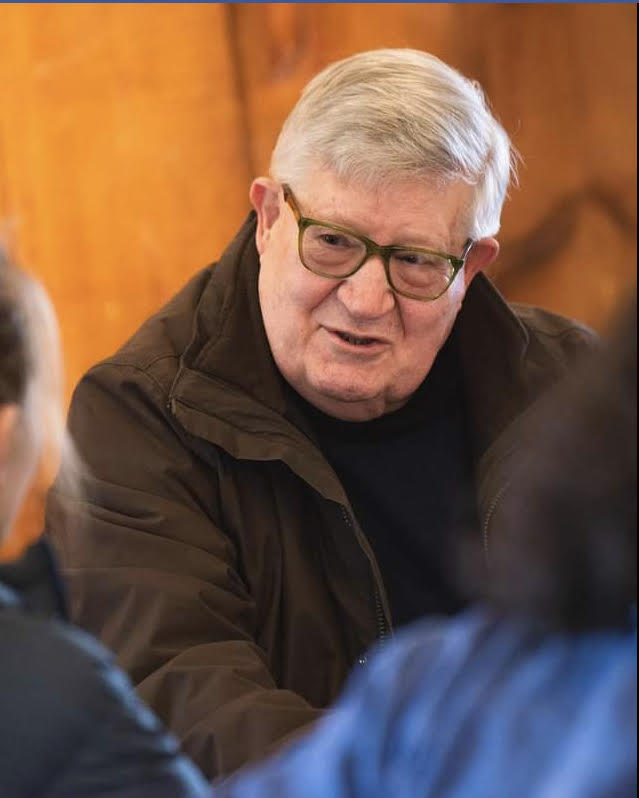
Fifty years on from first making his mark at York Theatre Royal, Richard Digby Day reflects on a life in the changing arts world

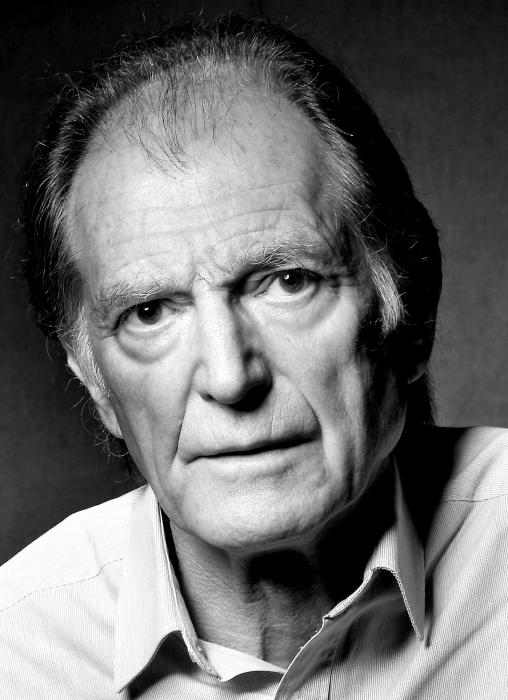
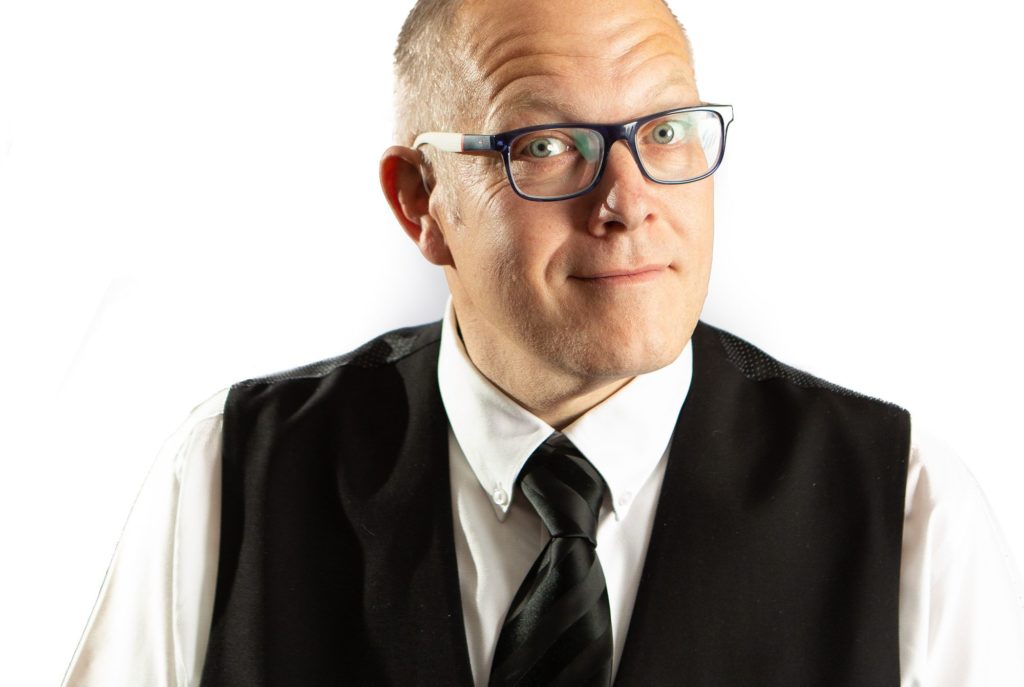
Richard Digby Day: Theatre director, professor and lecturer

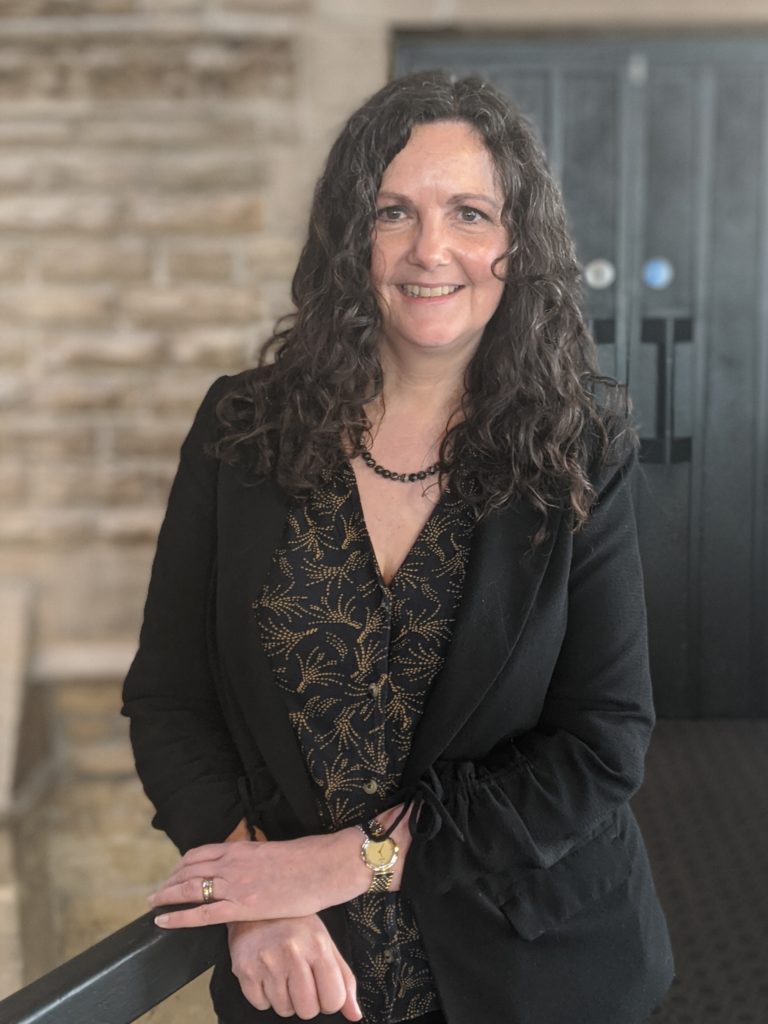
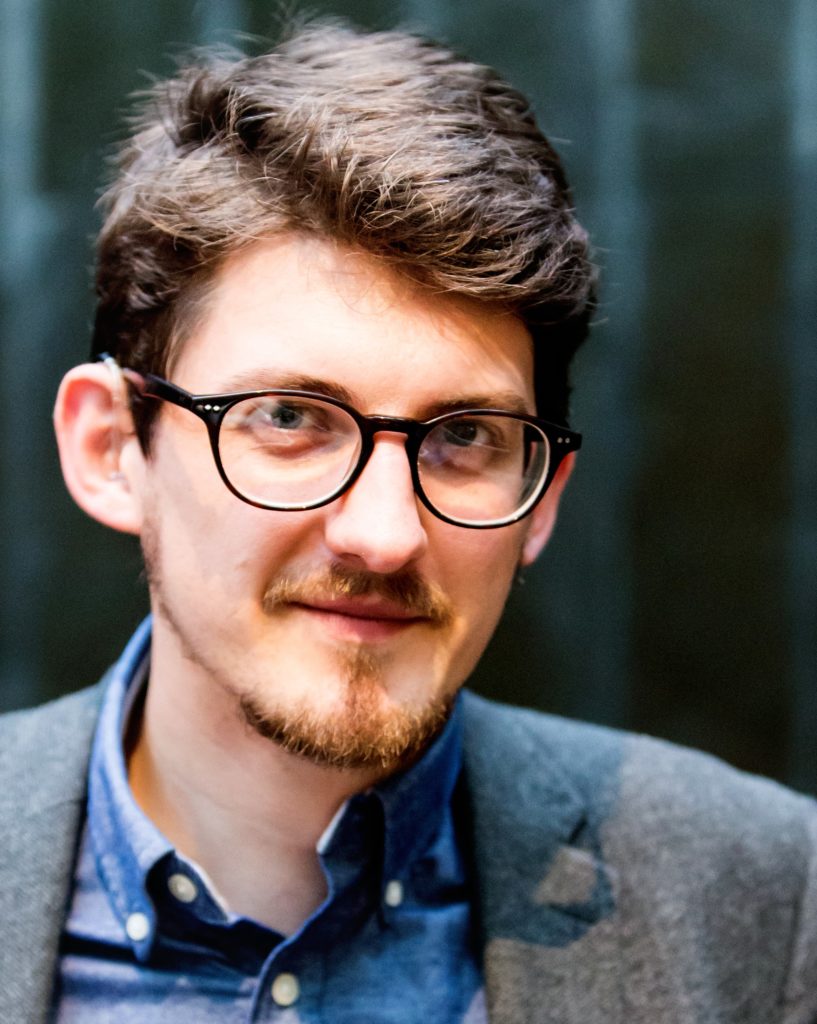
RICHARD Digby Day, artistic director of York Theatre Royal from 1971 to 1976, will talk about his life and work in the theatre world at a fundraising event there tonight at 7pm.

Now 80, this esteemed stage director, international professor and lecturer in Britain and the United States is credited with discovering actors Hugh Grant and Ralph Fiennes in a career where he served as artistic director of Bournemouth Theatre Company, New Shakespeare Company at Regents Park Open Air Theatre, Welsh National Theatre Company, Nottingham Playhouse and Northcott Theatre, Exeter.

He is well-known for his work in classical theatre, notably the plays of William Shakespeare and George Bernard Shaw. He is vice president of the Shaw Society and a Fellow of the Royal Society of Arts and has staged more productions of Shaw’s work than any other living director.

Richard is noted for his productions of Stephen Sondheim musicals too, and his work has been seen in the West End and on tour extensively throughout the UK, Canada, Denmark and Ireland. 

He has worked with many of the theatre greats, not least bringing Dame Judi Dench to the Theatre Royal stage, and he is a contemporary of Sir Ian McKellen, the two having begun their professional careers working on many of the same productions with Digby Day serving as assistant director.

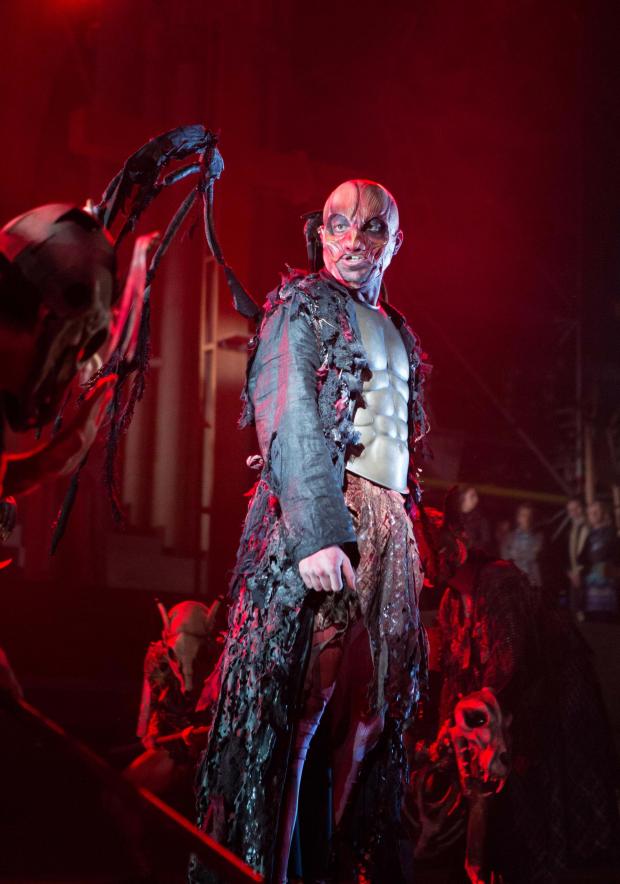
He came back to York three times to direct waggon plays from the York Mystery Plays with the York Settlement Community Players for the Merchant Adventurers’ Guild, presenting The Last Judgement  in 1998, 2002 and 2006. “The last one was the most modern, and I wouldn’t have done it twice more after the first time if it wasn’t so rewarding,” he says.

“There was a great stock of actors, like Ruth Ford, who was not just a wonderful actor but a wonderful person.”

Now Richard returns to the city for 50 Years On: Richard Digby Day In Conversation in the Theatre Royal Studio tonight when creative director Juliet Forster will host the event to raise funds to support ongoing work at the St Leonard’s Place theatre.

“I look back on my days as York Theatre Royal as a time of great excitement, a very good time,” says Richard. “What those days meant to my career and showed to other people was that I could run a theatre, because I was not just the artistic director but also director of the whole thing. I really had the final say in relation to whatever the board wanted.

“I was thinking about this, how the Sixties and Seventies were a wonderful time for the theatre in a way that has not been replicated since. I was in the right place at the right time, as I was at Exeter too. I’d just finished working for the Welsh National Theatre Company at the Casson Studio, in a very rough street in Cardiff: Ruby Street in Splott. I’d founded the company and started it but couldn’t cope with the Welsh politics, so I left.”

What happened next? “There was as an advertisement in The Stage saying York Theatre Royal was looking for a new artistic director, when Donald Bodley was leaving, having made that wonderful addition to the building [the foyer],” Richard recalls.

“I was interviewed in September 1971 and all the candidates were told to hang around…and then it was announced that I’d got the job, in front of all these disappointed-looking other people.”

Richard can reel off the productions that came thick and fast under his artistic direction: “We did The Circle, by Somerset Maugham, starring Jessie Matthews, who appeared twice in the first year. In York Minster was Murder In The Cathedral by T S Eliot, and because there was no studio at the Theatre Royal at that time, we did two plays at York Arts Centre [in Micklegate], Tiny Alice by Edward Albee and Old Times by Harold Pinter. There was an extraordinary range of performances going on,” he says.

“That’s the difference when you compare it with today’s theatre. That time was the flowering of theatre, whereas today money is short and very rarely do actors stay together for more than one play.”

More work comes to Richard’s mind. “We did some work at the University of York; two plays in the De Grey Rooms and a whole series of poetry readings at York Art Gallery,” he says.

He settled in quickly. “York Theatre Royal was well set up: long before I arrived there, it was a working regional theatre with its wardrobe and carpentry departments, and York always tended to have actors that stayed for more than one production,” he says.

“For the second season in Spring 1973, Phyllis Calvert [the English film actress], who’d been in the company before the Second World War, began a long association with me directing her in five plays. The first Shakespeare I did here was The Tempest, in association with the New Shakespeare Company at the Regents Park Open Air Theatre, in London, where I was artistic director for a long time.
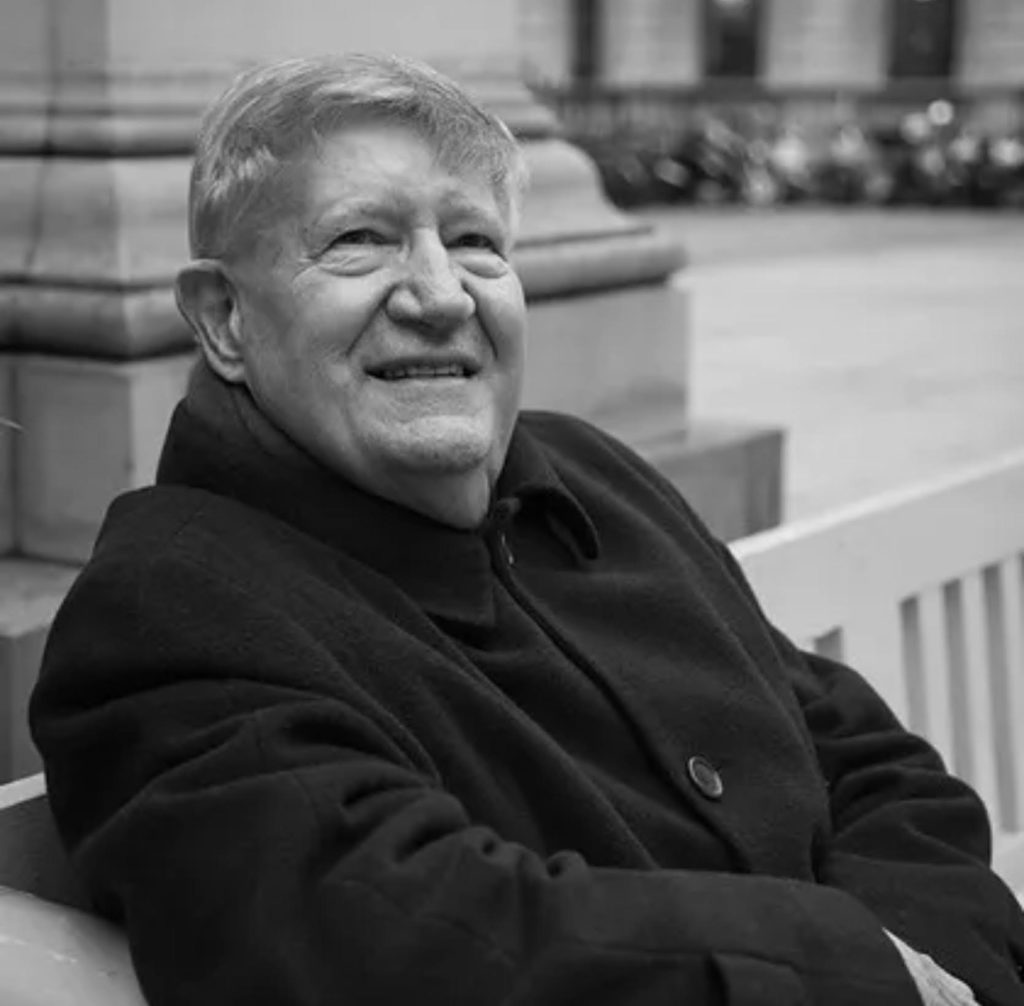
“A city without the arts will never be a complete place,” says Richard Digby Day

“We had Michael Dennison playing Prospero, and the production began in York, went on a little tour,  then played Regents Park.”

Judi Dench would return to her home city with Michael Williams to appear in a new play, Content To Whisper, adapted by television writer Alan Melville from a French work. “I can tell you this now, because Judi and I often laugh about it: we knew on the first day of rehearsals that we shouldn’t be doing it, but we did the best we could with it and it packed the theatre! I don’t know if people liked it or not, but they were just content to see Judi back home,” says Richard.

“Looking back, I was able to do a lot of interesting productions and the seasons were a lot more classically based than they are now: Strindberg, Ibsen, Chekhov, but a lot of modern plays too, like the first out-of-London production of Peter Shaffer’s Equus. The National Theatre offered us the rights for it, so we said yes, and then followed it with Hamlet, starring the Scarborough-born Frank Barrie as Hamlet.

“That was the third time I’d directed Hamlet and the nearest one I felt to getting it right. Frank’s father died in the middle of the run and he had to keep going, with all that connection with Hamlet’s father dying.”

Just as Damian Cruden would do later during his 22-year tenure as artistic director, Richard enjoyed using the theatre space in different ways. “We had all the seats taken out and did a promenade production of The Two Noble Kinsmen [Shakespeare’s play co-written with John Fletcher]: the first time it had been done for many years, for York Festival in 1973,” he says.

“In my last season, we had seven plays by Samuel Beckett to celebrate his 70th birthday and we did them on the stage with the safety curtain down and the audience seated on the stage too, and we did this in a repertory season where we closed the main-house auditorium one night a week for the Beckett plays.”

Typical of Richard enjoying the challenge of “making theatre in places that aren’t necessarily theatres” was his production of Ibsen’s Little Eyolf in the Assembly Rooms, “I had the belief that wherever there was an audience, wherever there were actors, that could be a theatre,” he says.

As he heads back to York once more, where he once lived on Tadcaster Road in a “dear little cottage and courtyard” overlooking the racecourse, Richard says: “The city has provided many memories, 50 years of history, but it’s not the place I came to in 1971. I don’t say it in an entirely negative way but any city that has its manufacturing heart taken away can never be as interesting as it was.

“I used to get up at six in the morning and walk down to the shop to buy a paper, and you would see all these workers bicycling to work. You could smell that work. I find what’s happened to Britain so sad, though of course York has so many attractions that it’s made an industry out of tourism.

“There were always tourists but it was completely a working, industrial city, where under all that history was the industry that was supporting it.”

From 1980 to 1984, Richard was at the helm of Nottingham Playhouse. “That was not a happy time,” he says. “I would have to say that Mrs Thatcher interfered in the arts. In particular, William Rees Mogg wrote a ghastly report on the arts when he was made chairman of the Arts Council: a most unsuitable person for the post.

“It was not an easy period and eventually I thought, ‘I just don’t want to go on running a theatre’, so I left and I’ve never really run a theatre since then, but I’ve done lots of other things, like being the director of the National Theatre Institute, in Waterford, in Connecticut, for eight years.”

Richard directed plays aplenty at the Lyric in Belfast. “It was at the height of the troubles, which was a very interesting experience,” he says. “Where I was staying, one night the windows were shattered by an explosion nearby, but on the whole, you learned to get on with things and not be distracted by the divisions.”

Richard has directed star names in one-person shows, from Edward Fox to Eileen Atkins, Margaret Wolfit to Geraldine McEwan. “Most recently, Eileen Atkins put me in touch with Dame Joan Plowright for a show where I interviewed her:  it was a wonderful opportunity to get to know a wonderful person, doing the shows at the National Theatre and Chichester,” he says.

Reflecting on the contrast between now and 50 years ago, Richard says: “Theatre is not funded properly, with very few exceptions. The most worrying thing is the lack of performances of classic plays, and often when they’re done now, they’re very badly spoken, even at places where there’s no excuse, like the Royal Shakespeare Company.

“By comparison with Peter Hall’s days, what the National Theatre is doing now is not what it should be. So, I am concerned. I say this as an old man, but one who tries try not to have too many set ideas, but if you look at the list of what was playing in the West End 30 years ago and what’s on there now, I’m deeply concerned.”

His passion for theatre, his conviction in its importance, remains unbowed, however. “A city without the arts will never be a complete place,” he says.

50 Years On: Richard Digby Day In Conversation, York Theatre Royal Studio, tonight at 7pm. Tickets cost £20 plus an optional additional donation to York Theatre Royal. Box office: 01904 623568 or yorktheatreroyal.co.uk.
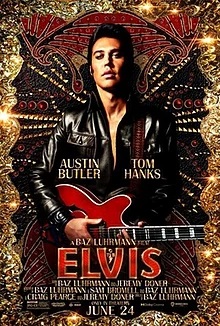
Elvis is back in the building in Baz Luhrmann’s movie. Did he take care of business? Chalmers & Hutch decide

The poster artwork for Baz Luhrmann’s Elvis

WHAT we saw in Austin Butler’s Elvis and Tom Hanks’s Colonel Parker is revealed in Episode 97 of culture vultures Graham Chalmers and Charles Hutchinson’s arts podcast, Two Big Egos In A Small Car.

Under discussion too are: Beatle Paul at 80 at Glastonbury; Graham’s charmed DJ skills on a Knaresborough dancefloor and Chemical Brothers’ thunderous rave at Castle Howard.

To listen, head to: https://www.buzzsprout.com/1187561/11013513

Meanwhile, in Episode 96…

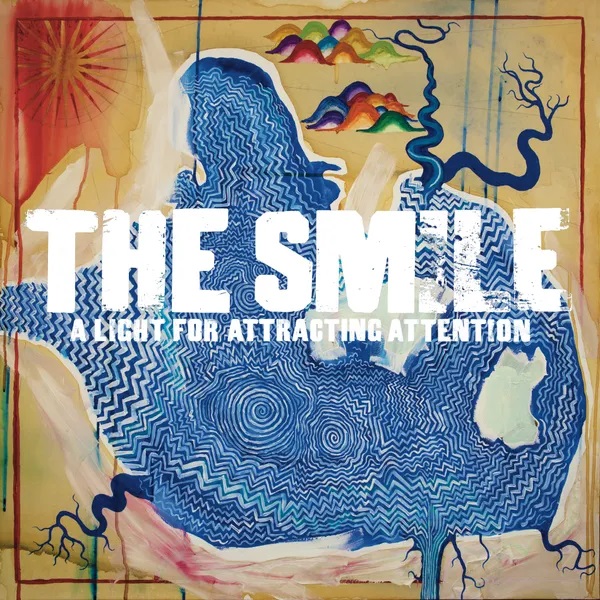
The artwork for A Light For Attracting Attention, the debut album by The Smile, alias Radiohead’s Thom Yorke and Jonny Greenwood and Sons Of Kemet drummer Tom Skinner

CHAMERS & Hutch check out Thom Yorke’s Smile. Graham makes Danish news then dissects David Hepworth’s book on the rise and fall of rock’n’roll stars, Uncommon People. Charles demystifies the York Mystery Plays, “on the waggon” for 2022.

To listen, head to: https://www.buzzsprout.com/1187561/10899683

Guilds of York to roll out York Mystery Plays wagons on city streets on June 19 and 26

2022 York Mystery Plays artistic director Tom Straszewski

HERE come the wagons, rolling through York’s streets on June 19 and 26 for the 2022 York Mystery Plays.

Once more, the driving force behind the community production will be the Guilds of York, maintaining the four-yearly wagon-play cycle they set in motion in 1998 and last implemented in 2018.

Under the artistic direction of Tom Straszewski, the Mystery Plays will be presented on decorated pageant wagons, in keeping with the medieval custom. Pushed by York residents, these will move through the streets to the accompaniment of musicians.

Straszewski’s production will involve nearly 600 people in all, who will create hours of drama, performed for free. Eight wagons will process through the city centre to stage their chosen plays at four locations, including St Sampson’s Square, St Helen’s Square and King’s Manor.

Roger Lee, chairman of York Festival Trust, says: “With arts and culture being amongst the last areas of our lives allowed to return post-Covid, we are delighted to bring York Mystery Plays back to the city this summer and support the rebirth of live performing arts.

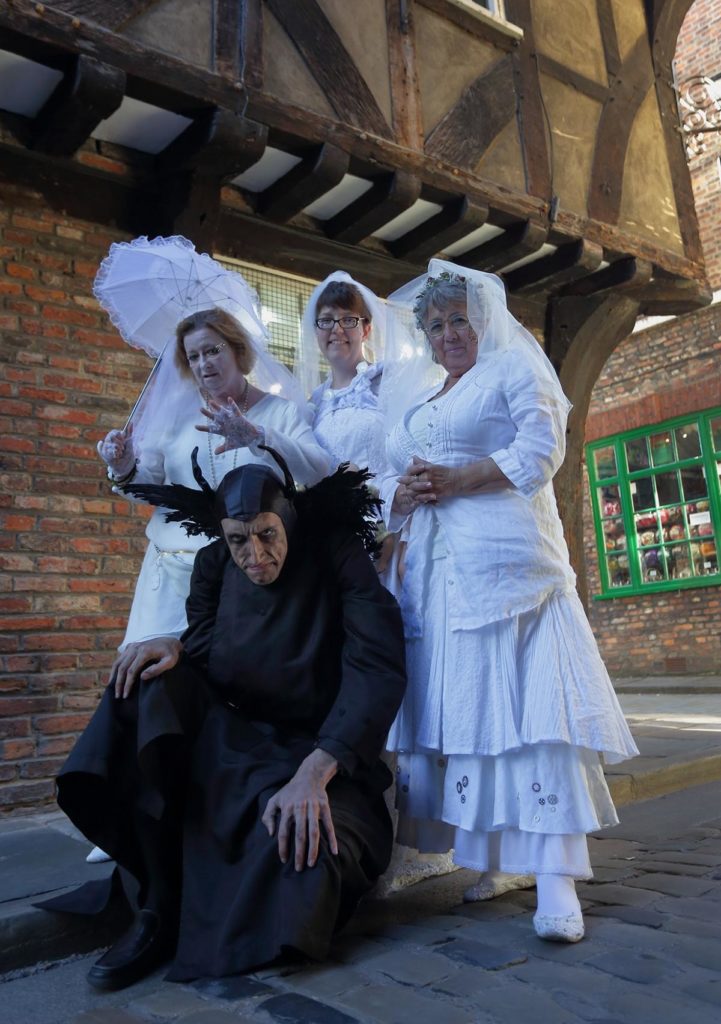
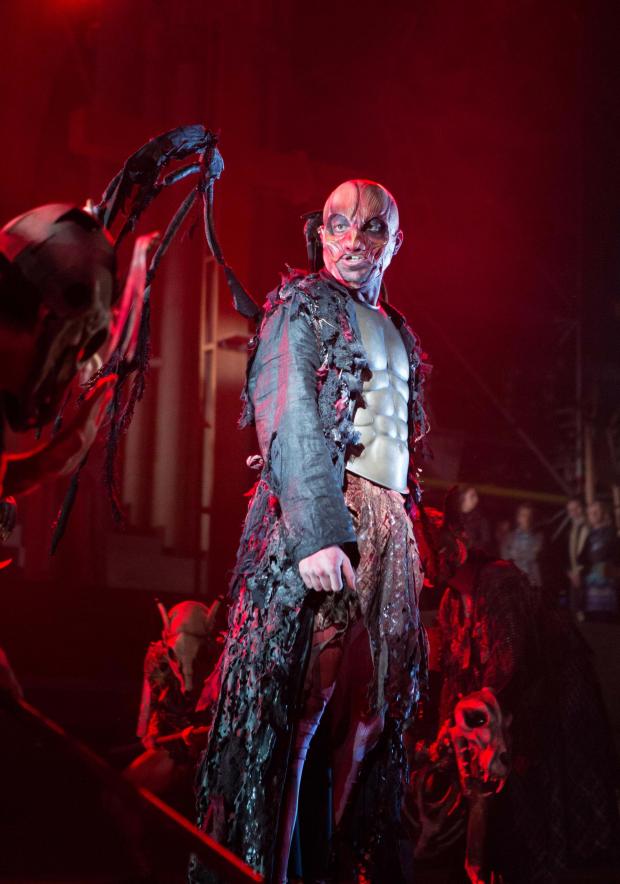
James Swanton as Lucifer with cast members of The Last Judgement when plays from the 2018 York Mystery Plays were staged in the Shambles Market. Picture: Lewis Outing

“Our past productions have met with great popular, academic and critical acclaim, and we hope to build on this success with our 2022 production. In their medieval heyday, the Mystery Plays and the Guilds were inextricably linked, and it is this heritage we are reclaiming with these regular four-yearly productions.

Artistic director Tom Straszewski will work with various partners across York to make the Mystery Plays, their story, themes and message accessible to as many people as possible. “After two years of uncertainty for the arts, this is an opportunity for York’s communities to come together to celebrate our city’s heritage through drama, spectacle and pageantry,” he says.

“This will be a huge boost for people’s well-being and a festival to attract York residents and visitors alike to the city on these two Sundays.”

In the era of pandemic lockdowns and climate change, the theme for 2022’s selection of eight plays will be sustainability and transformation. “The plays will cover the creation of the world, floods, last meals together and resurrections. We are still seeking directors, performance groups and actors to take on these plays, including the iconic Crucifixion with the Butchers’ Gild,” says Tom, who was the artistic director and pageant master for the 2018 Mystery Plays too.

“There are still opportunities to be involved and anyone interested should email director@yorkmysteryplays.co.uk.”

REVIEW: A Resurrection For York, York Mystery Plays Supporters Trust, 3/7/2021

Emily Hansen’s Pilgrim as Mary Magdalene in A Resurrection For York. Picture: John Saunders

A Resurrection For York, Residents Garden, Minster Library, Dean’s Park, York

HAPPENSTANCE may have led to this pandemic-delayed production being staged at the Residents Garden in Dean’s Park, but A Resurrection For York made a compelling case for the York Mystery Plays to take up residence there.

The gardens are self-contained, behind iron railings that facilitate curious passers-by taking a look; the acoustics are clear, without echo; the Minster bells chime on the quarter hour to both complement and compliment the atmosphere, and the setting is perfect for open-air theatre: spacious, green and on a hillock that cries out to be used for moments of high drama or an important monologue.

As Saturday morning’s audience gathered under grey clouds, Philip Parr’s cast members for this York Mystery Plays Supporters Trust, York Festival Trust and York Minster tripartite production were already in situ for the first of six performances in two days.

The premise was that they were playing pilgrims, two canvas tents pitched at the back, everyone in walking boots, with roll-up sleeping mats, blankets, rucksacks and picnics in Enid Blyton retro brown paper bags.

Intentionally, community cast and community audience became indistinguishable: we were all in this together, albeit socially distanced; pilgrims all, gathered to tell each other stories, led by Nick Jones and Sally Maybridge’s exhorting narrators.

From this canvas would emerge Parr’s Pilgrims, dotted around the grass, some staying in that guise, others taking on specific roles, both alongside and on the two static wagons rolled out for significant scenes, one to set the cross in place.

The cross always will be the most potent symbol of the York Mystery Plays, and here it was especially central to Parr and 2018 York Mystery Plays director Tom Straszewski’s hour-long story, adapted from the Mystery Plays cycle of the crucifixion and the events that followed.

The most powerful image was in fact an absence, the dying Christ being represented instead by a shroud, wrapped around the cross pulled high by the grafting soldiers, one declaring himself too tired to finish the task in one of those brief interjections of humour that the Mystery Plays – the street theatre of its time – suddenly throw up.

The shroud became the motif woven through Parr’s production, daubed in blood, later folded up across a wagon to signify Christ’s body placed in the tomb by Joseph of Arimathea (Tony Froud), and then being worn by a tall, dark-haired figure, again emerging from the crowd.

In keeping with medieval tradition, the pilgrim playing Christ was not credited, although a reference to “plus David Denbigh” in the list supplied to CharlesHutchPress may indicate it was him.

Judith Ireland’s Mary, Mother of Jesus, and Emily Hansen’s Mary Magdalene stood out in a cast strong on diction and clear delivery. Music played its part too, largely acappella, choral or folk, with minimal accompaniment, and used sparingly but sung lustily or movingly.

What comes next? 2022 is very likely to see the York Mystery Plays being staged on wagons in June, maybe at the Residents Garden. Watch this space.

Wagons wheeled in for A Resurrection For York setting of Mystery Plays at Dean’s Park

Preparations are gaining momentum for A Resurrection For York at Dean’s Park on July 3 and 4. Picture: John Saunders

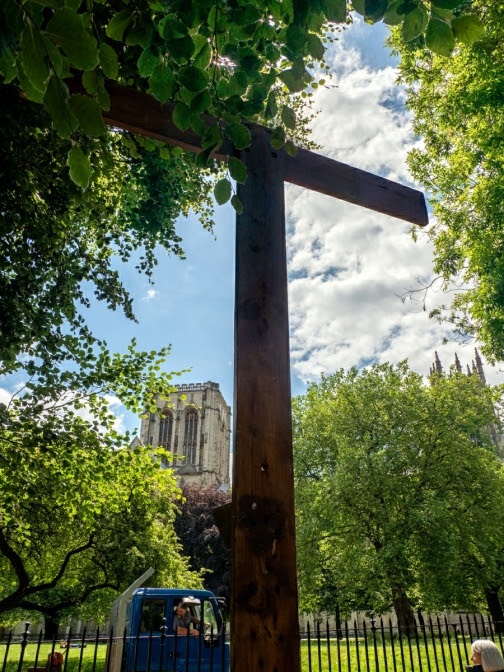
A WEEK to go for A Resurrection For York and everything is dropping into place, the cross and all, at the Residents Garden, Minster Library, Dean’s Park, York.

Initial plans for the open-air play had to be put on hold under pandemic restrictions, but partners York Mystery Plays Supporters Trust, York Festival Trust and York Minster then settled on new performance dates of July 3 and 4.

Directed by Philip Parr, artistic director of Parrabbola, the show’s format will be retained: one hour long, performed outdoors, on two static wagons, and the staging will be compliant with Covid safety requirements for audience social distancing for each day’s 11am, 2pm and 4pm performances.

Since his appointment in March, Parr has worked on the new script with Tom Straszewski, director of the York Mystery Plays’ wagon production in 2018, and auditioned a community cast, subsequently conducting rehearsals on Zoom.

Previously, Parr directed York Mystery Plays Supporters Trust’s production of A Nativity For York at the Spurriergate Centre, York, in December 2019.

Tickets are selling well – some performances have sold out already – and a civic party will attend the opening Saturday performance, followed by the Dean of York, the Right Reverend Dr Jonathan Frost, at a Sunday show.

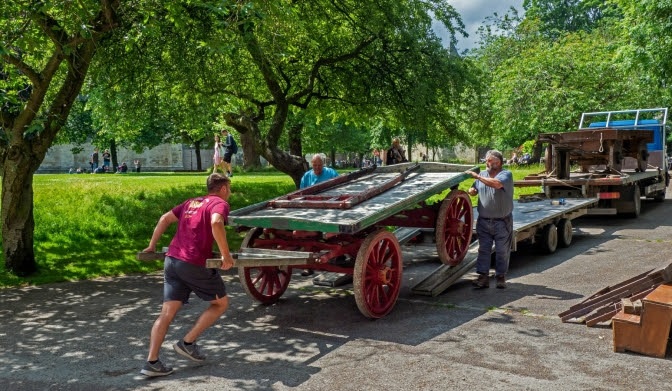
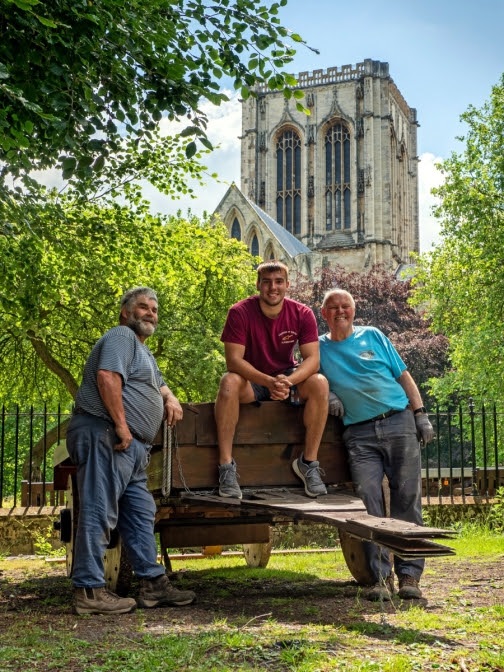
The arrival of the wagons, loaned by the Guilds of Butchers and Merchant Taylors, was an uplifting moment, as the team of Dave Clapham, Mark Morton and Adam Robinson manoeuvred the trailer and wagons through the Dean’s Park gates, despite the tight squeeze.

Dave Clapham, Mark Morton and Adam Robinson delivering the wagons, or waggons as the York Mystery Plays historians are wont to call them. Picture: John Saunders

On those wagons, the cast will be performing a script by Straszewski and Parr, created from the York Mystery Plays cycle of the crucifixion and the events that followed.

Michael Maybridge, who will play Pilgrim 2, says: “What this script brings to mind is the experience of the very earliest Christians. We might think of our play in terms of the medieval citizens of York, reminding themselves of the narrative of their faith by telling each other stories.

“Many of those Christians found themselves travelling, just like the pilgrims in our play. They carried on telling their stories, and it seems uncontroversial to say that, in doing so, they changed the world.”

Jodie Fletcher, taking the role of Mary Cleophas, says: “The Mystery Plays are a unique part of history, and for me the magic comes from the beautiful and poetic language. It has been wonderful to be creating theatre once more and I hope audiences will find the experience revitalising.”

On July 3, the 2pm performance will be livestreamed on YouTube at youtube.com/watch?v=UXChGFomf5M and on Facebook at facebook.com/events/584796139152052/.


In addition, the Saturday performances will be filmed as a “record to view later”. “Watch this space. We’ll let you know when it’s available. What’s more, it’s free,” says the latest York Mystery Plays Supporters Trust newsletter.

“Attending a Saturday performance? There may be incidental filming of audience members, so if you do not wish to feature, please let one of the front-of-house stewards know. You can tell them by their face mask and name badge,” it adds.

Wagon wheelers: Dave Clapham, Mark Morton and Adam Robinson

Please note, as seating will not be provided for audiences, make sure to bring a rug or folding chair. Gates will be open to the garden from 10.30am.

Tickets for A Resurrection For York are on sale at ticketsource.co.uk/whats-on/york/residents-garden-deans-park/a-resurrection-for-york/

Who will be in the cast for A Resurrection For York?

Pilgrim 1, Wilma Edwards; Pilgrim 2, Michael Maybridge; Pilgrim 3, Victoria Rooke; Pilgrim 4, Mary Callan; Pilgrim 5, Nick Jones (Narrator); Pilgrim 6, Sally Maybridge (Narrator, Peter); Pilgrim 7, Chris Pomfrett (John); no Pilgrim 8.

Pilgrim 9, Julie Speedie; Pilgrim 10, Judith Ireland (Mary, Mother of Christ); Pilgrim 11, Jodie Fletcher (Mary Cleophas); Pilgrim 12, Tony Froud (Joseph of Arimathea); Pilgrim 13, Sonia di Lorenzo (Nicodemus); Pilgrim 14, Emily Hansen (Mary Magdalene).

Pilgrim 15, Raqhael Harte (Thomas); Pilgrim 16, Samuel Valentine (Centurion); Pilgrim 17, Joy Warner (Soldier 1); Pilgrim 18, Harold Mozley (Soldier 2); Pilgrim 19 Janice Barnes Newton (Soldier 3), and Pilgrim 20, Colin Lea (Soldier 4). Plus David Denbigh.  

Production team credits:

Director, Philip Parr; associate director, Terry Ram; producer, Simon Tompsett. 

York Mystery Plays to be staged in Dean’s Park in A Resurrection For York in July

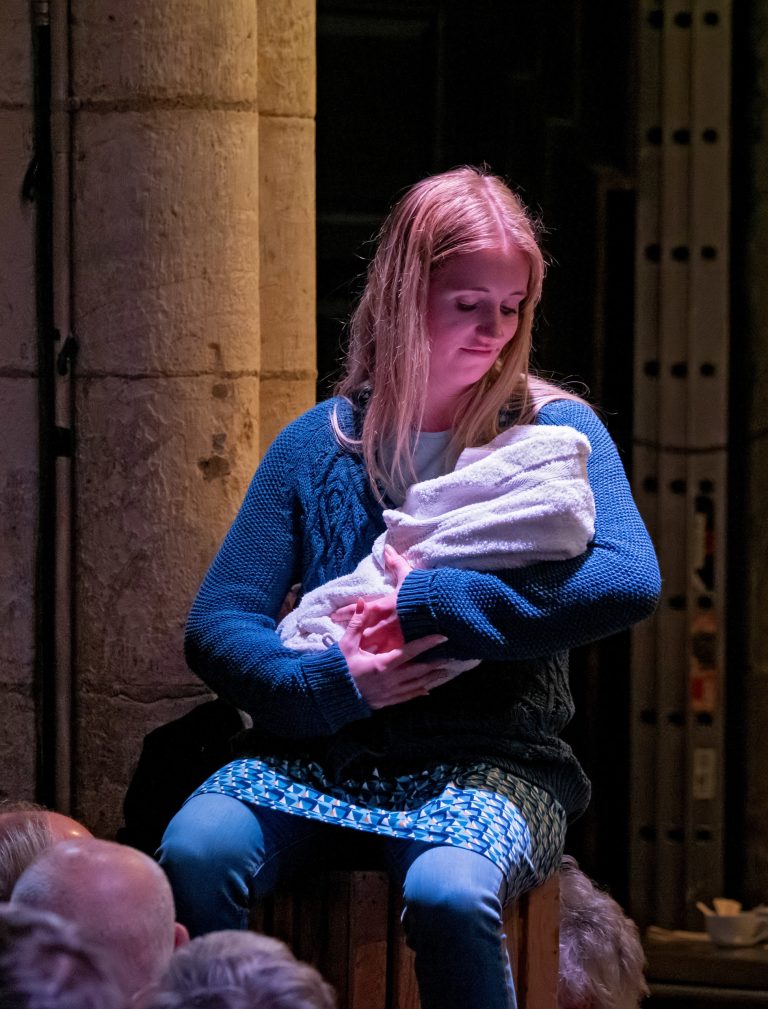
Raqhael Harte’s Mary with the infant Jesus in York Mystery Plays Supporters Trust’s production of A Nativity For York in December 2019 at the Spurriergate Centre, York. Picture: John Saunders

A RESURRECTION For York will undergo its own resurrection this summer after Covid-19 put the kibosh on the original theatre production.

Plans for the play had to be put on hold earlier this year under pandemic restrictions, but partners York Mystery Plays Supporters Trust, York Festival Trust and York Minster have settled on new performance dates of July 3 and 4.

Directed by Philip Parr, artistic director of Parrabbola, the show’s format will be retained: one hour long, staged outdoors, on two static wagons.

The location will be the Residents Gardens, at Minster Library, Dean’s Park, alongside York Minster, where the limited audience size for each day’s 11am, 2pm and 4pm performances will be governed by the prevailing social-distancing guidelines.

Linda Terry, chair of York Mystery Plays Supporters Trust, says: “With our partners, we have been working hard to bring back live theatre to the city after such a difficult time. The York Mystery Plays have survived past plagues; we wanted to play our part in a new beginning, creating an optimistic and safe event, bringing people together in a vividly imagined drama from York’s literary and cultural inheritance.”

York Festival Trust director Roger Lee is equally enthusiastic: “With arts and culture among the last areas of our lives allowed to return, York Festival Trust is delighted to be part of this project to bring York Mystery Plays back to the city this summer and to support the rebirth of live performing arts,” he says.

The Dean of York, the Right Reverend Dr Jonathan Frost, is “delighted that after the lockdown we have all experienced, events crucial to the life and story of York are beginning to happen again”.

“The theme for the York Mystery Plays this year is resurrection,” he says. “It would be hard to think of a more appropriate focus for a society, community and city coming back to life after a torrid journey. I do hope everyone will find time to enjoy the Mystery Plays.”

Since his appointment as director in March, Parr has been working on the new script with Tom Straszewski, director of the 2018 wagon production of the York Mystery Plays, and auditioning a community cast.

Previously, Parr directed York Mystery Plays Supporters Trust’s production of A Nativity For York at the Spurriergate Centre, York, in December 2019.

Tickets for A Resurrection For York are on sale at ticketsource.co.uk/whats-on/york/residents-garden-deans-park/a-resurrection-for-york/

York Theatre Royal and BBC Radio York team up for Good Friday and Easter Sunday instalments of York Radio Mystery Plays

Director Juliet Forster, top left, and the cast for The Resurrection at a rehearsal on Zoom

BBC Radio York will broadcast two more instalments of the York Radio Mystery Plays in collaboration with York Theatre Royal.

While the Theatre Royal has been closed in Lockdown 3, actors and creatives have been working behind the scenes to record The Crucifixion for Good Friday and The Resurrection for Easter Sunday.

The plays have been adapted by Theatre Royal creative director Juliet Forster and writer husband Kelvin Goodspeed from excerpts from the York Mystery Plays, dating back to the 1300s, for recording by a combination of community and professional actors. 

These latest recordings follow on from the audio versions of Adam And Eve, The Flood Part 1, The Flood Part 2 and Moses And Pharaoh, broadcast on BBC Radio York last June.

“I’m delighted to have returned to the York Radio Mystery Plays series this Easter,” says Juliet. “The York Mystery Plays are part of the DNA of this city. They belong to the people of York and have brought people together to create, perform, watch, laugh and cry since the 14th century.

“The longevity of these potent plays clearly demonstrates how vital the collective act of storytelling is and has always been to human beings, and how much we need to explore and reflect together on our experiences and understanding of the world.”

The sourcing of the scripts, recruitment of actors and provision of music has been conducted by the Theatre Royal. In keeping with the social-distancing rules, the production required the actors to rehearse remotely on Zoom, then record their lines on a smart phone from home, whereupon the recordings were sent to BBC Radio York for mixing and collating into finished crafted instalments.

Acting assistant editor Allan Watkiss says: “We’re excited to be working with York Theatre Royal once again to keep the centuries-old tradition of the Mystery Plays alive during the pandemic.”

York Radio Mystery Plays director Juliet Forster

The York Mystery Radio Plays project is part of the Theatre Royal’s Collective Acts, a programme of creative community engagement taking place while the building is closed under Coronavirus pandemic restrictions.

Joining director Juliet in the production team are Edwin Gray, composition, foley and sound design, and Madeleine Hudson, Theatre Royal Choir musical director, songs.

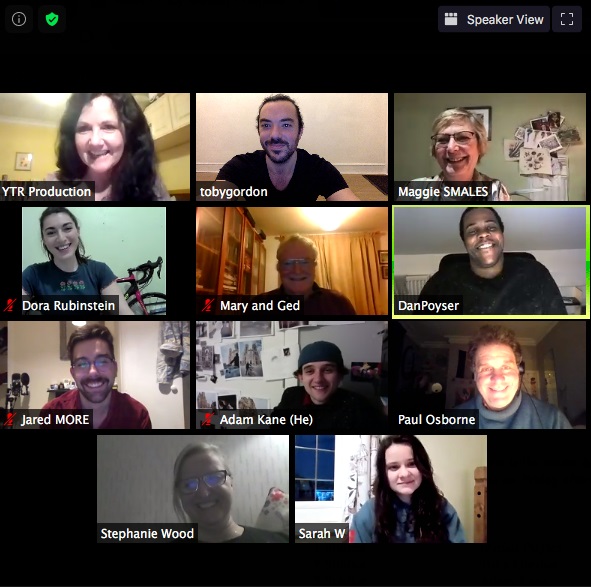
The cast for The Crucifixion is: Andrew Isherwood, as John; Daniel Poyser, 1st Soldier; Toby Gordon, 2nd Soldier; Adam Kane, 3rd Soldier; Ged Murray, 4th Soldier; Stephanie Wood, Mary, mother of Jesus; Joe Osborne, Pilate; Jared More, Jesus; Elizabeth Elsworth, Mary Cleophas; Maria Gray, 1st Thief on the cross, and Kelvin Goodspeed, 2nd Thief on the cross.

Poyser, Gordon, Kane, Murray, Wood, Osborne, More and Elsworth reprise their roles in The Resurrection, performing alongside Sarah Woodmansey as Angel, Dora Rubinstein as Mary Magdalene and Maggie Smales as Caiaphas.

“Like we did before, we’ve gone for a mix of professionals and community actors, but everyone is new for this production as we’ve moved from the Old Testament to the New Testament, and I wanted to reflect that by using new voices,” says Juliet.

BBC Radio York will air The Crucifixion on Good Friday, April 2, at 6.30am and 1.30pm; The Resurrection on Easter Sunday, April 4, 6.30am and 9.30am. They will be available too on BBC Sounds at bbc.co.uk/radioyork

Actor credits:

Elizabeth Elsworth performed in the York Mystery Plays 2012 and the Wagons Festivals in 2014 and 2018. She appeared in York Theatre Royal’s community productionsBlood + Chocolate, In Fog and Falling Snow and Everything Is Possible: The York Suffragettes, as well as several productions for York Shakespeare Project and York Settlement Community Players.

Toby Gordon as Lucifer in the 2016 York Minster Mystery Plays, when he memorably switched to playing Jesus during the last week of the run

Toby Gordon appeared in the York Mystery Plays 2012 as Workman, in the 2016 York Minster Mystery Plays as Lucifer and in Two Planks & A Passion as Edward Young. Other credits include Antigone (Barbican, London) and The Great Gatsby(Guild of Misrule).

Maria Gray trained at East 15 Drama School (BA Acting) and Flic Circus School in Turin, Italy. She works as an actor, voice-over artist and movement director. Credits include Macbeth and A Midsummer Night’s Dream (Shakespeare’s Rose Theatre); The Machine Stops (York Theatre Royal/Pilot Theatre); The Beggars Opera(York Theatre Royal) and The Girl Next Door (Teatro Regio). Shewas movement director for A Midsummer Night’sDream and Macbeth (Shakespeare’s Rose Theatre) and Elves And The Shoe Makers (York Theatre Royal).

Andrew Isherwood has been performing on York stages since the York Mystery Plays in 2012, taking on leading roles in classical and musical productions for Pick Me Up Theatre, the York Shakespeare Project and at the Joseph Rowntree Theatre. He regards playing Max Bialystock in The Producers as his career highlight so far.

Jared More trained at the Newcastle Theatre Royal, graduating from the Project A actor training programme in 2019. He is a creative associate of York company Riding Lights, where his credits include Roughshod Deliver, The Selfish Giant and The Kaleidoscope Tour, as well as writing and editing on various projects.

Ged Murray’s first role in the Mystery Plays was as Joseph in the 1992 production at York Theatre Royal. He has since been in the cast in 1996, 2000 (again as Joseph), 2012 and 2016, along with being involved in the Wagon Plays since their resurrection in 1994. He last appeared in the Plays in December 2019 as Shepherd One in the Mystery Plays Supporters Trust’s Nativity. His wider acting roles range from Shylock in York Shakespeare Project’s The Merchant Of Venice to the Dame in village pantomimes. 

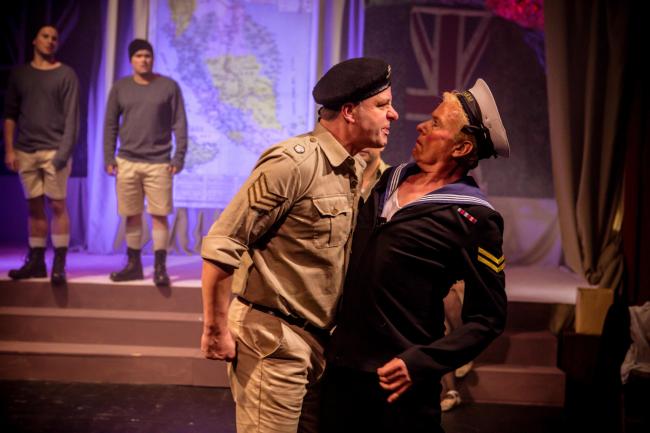
Exchange of views: Paul Joe Osborne’s Sergeant-Major Reg Drummond and Rory Mulvihill’s Acting Captain Teri Dennis in Privates On Parade in March 2019 . Picture: Matthew Kitchen

Paul Joe Osborne featured in the 2012 York Mystery Plays 2012 but that time at the other end of the Bible, starring as Noah in the Potters Cast. He has played assorted characters at York Theatre Royal Studio in The Seagull, Twelfth Night, Breathing Corpses and Waiting For Godot and Sgt Drummond in Pick Me Up Theatre’s Privates On Parade at Theatre @41 Monkgate. He has also explored TV and film opportunities too in Peaky Blinders, Coronation Street, Ghost Stories and the York comedy horror Chestersberg.

Daniel Poyser trained at Arden School of Theatre.  He has played multiple roles for the National Theatre, as well as appearing in The Play That Goes Wrong (Duchess Theatre, London); The Crucible (West Yorkshire Playhouse); The Island and The Three Musketeers (Young Vic, London); Ma Rainey’s Black Bottom and Les Blancs (Royal Exchange, Manchester); An Enemy Of The People (Sheffield Crucible); Blue/Orange(nominated for MEN Best Actor Award), The Merchant of Venice and The BFG (Bolton Octagon), and Strangers On A Train, Arms And The Man and Blue/Orange (Theatre by the Lake, Cumbria). He has myriad television and radio credits too.

Dora Rubinstein trained at Mountview Academy of Theatre Arts. Credits include A Page A Day (Northern Stage), Cinderella (Cast, Doncaster), Digital Ghost Hunt (York Theatre Royal), Peter Pan and Aladdin (The Dukes, Lancaster), The Wizard Of Oz (Leicester Square Theatre), Romeo And Juliet and Macbeth (Young Shakespeare Company) and The Ballad Of Robin Hood (Southwark Playhouse). She performs and teaches circus skills, such as contortion and acrobatics, and is developing an interactive circus/theatre show for families in partnership with Dance City, Newcastle. 

Maggie Smales is a York theatre maker with both directing and acting credits. She has directed The Stepmother; an all-female Henry V; Blue Stockings and When The Rain Stops Falling. Among her acting roles: York Mystery Plays, A Winter’s Tale, Coriolanus, Follies, Legacy, Twilight Robbery and Tom’s Midnight Garden.

Stephanie Wood trained at the Birmingham School of Speech Training and Dramatic Art and worked professionally for several years, most notably appearing in the cult TV show Knightmare as Elita the Cavern Elf.She has been involved in many of York Theatre Royal’s community shows and was last seen as Arkadina in Chekhov’s The Seagull, whose run in the Theatre Royal Studio concluded shortly before the first lockdown.

Sarah Woodmansey is training at the Royal Central School of Speech and Drama, London, on the contemporary performance practices course. She has acted in York Theatre Royal productions of In Fog And Falling Snow, Dick Whittington (And His Meerkat), The Beggar’s Opera and Everything Is Possible: The York Suffragettes.

New partnership to mount Easter open-air production of The York Passion in April

New partnership: York Festival Trust, York Minster and York Mystery Plays Supporters Trust to present The York Passion at Easter

YORK’S new theatre partnership is seeking a director for The York Passion, an outdoor staging planned for Easter Saturday and Monday.

For the first time, York Festival Trust, York Minster and York Mystery Plays Supporters Trust are working together to present an Easter production, performed on two or possibly three static pageant waggons on the hard standing in front of the Minster School, opposite York Minster.

Three performances per day will be staged on April 2 and 4; tickets will be sold for a nominal charge to ensure appropriate Covid-secure distancing arrangements are applied.

The director will be required to create a single play – no more than 70 minutes straight through – from the pageants in the original York Mystery Plays.

The director’s vision must embrace elements from the Crucifixion, the Death of Christ and the Resurrection, possibly starting with the Road to Calvary and ending with the Appearance of Christ to Mary Magdalene.

Tom Straszewski, artistic director of the 2018 York Mystery Plays’ waggon production and 2022 Lincoln Mystery Plays, has produced a working script that can be adapted to meet the director’s requirements, including cutting and modernising the original text.

Cast and crew will be drawn from open auditions from the York community: a tradition of the York Mystery Plays since mediaeval times. Auditions and rehearsals will be conducted virtually, in accordance with Government Coronavirus measures.

Tom Straszewski: Working script that can be adapted to meet the director’s requirements

Linda Terry, chair of York Mystery Plays Supporters Trust, says: “Despite the current dark times, we felt that it was right to look forward and create an opportunity for people to participate in, and enjoy, a theatrical production that fulfilled our aim of keeping York’s Medieval Mystery Play heritage alive in a format that could be enjoyed safely.

“With the country now in its third lockdown, it is unclear what public health measures will be in place during the rehearsal phase and indeed it is quite possible that we may have to cancel or postpone the production, but any such decision will be taken jointly by the partnership and the director.”

For the Easter production, The Passion Trust – a charity focused on performances of Passion plays, including community events, around Britain – has provided funding specifically for live screening a performance to be uploaded subsequently to YouTube.

Roger Lee, York Festival Trust’s chair, highlights the new partnership’s extensive experience: “All three partners have mounted productions of the York Mystery Plays over the past five to 30 years,” he says.

“With the exception of York Minster, the organisations are not exclusively Christian, but the Festival Trust has directed community groups in producing sections of the cycle on waggons every four years since 2002, but this will be the first time the Crucifixion and Resurrection pageants are staged together as a single play.”

Applicants for the director’s role should provide a CV and a proposal for their vision for the open-air production on one side of A4 by midnight on January 30 2021.

A special director information pack is available. Shortlisted candidates will be invited for discussion by Zoom. Applications and enquiries should be emailed to: linda.terry@ympst.co.uk

Happy 85th birthday to the Joseph Rowntree Theatre today…

The logo for the Joseph Rowntree Theatre’s 85th anniversary in York

TODAY is the 85th anniversary of the Joseph Rowntree Theatre in York, aptly on #LoveTheatreDay.

The theatre was opened on Monday, November 18 1935 by Mr Seebohm Rowntree, then chairman of  Rowntree & Co Limited, with the aim of “providing a hall which may be a fitting centre for those recreational and educational activities that make for a full and happy life”.

Under Lockdown 2 restrictions, the Haxby Road community theatre cannot hold an actual birthday party, but its social media channels will be full of stories, anecdotes and photographs.

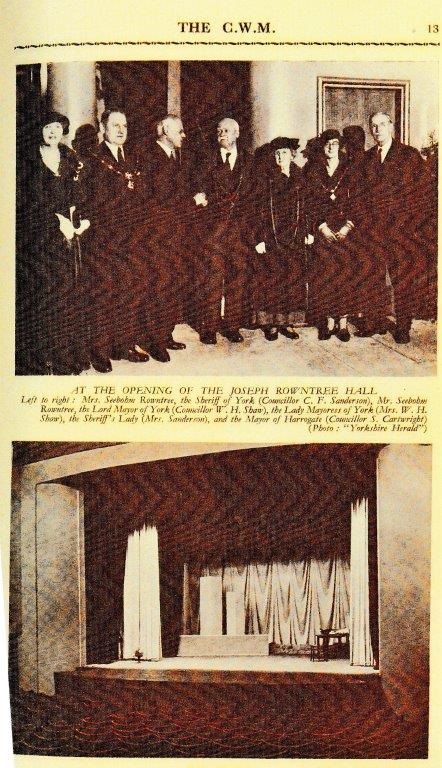
The cutting from the Yorkshire Herald, reporting on the opening of the Joseph Rowntree Theatre, or Joseph Rowntree Hall as it was first called. Founder Mr Seebohm Rowntree is second from the left in the line-up

Supporters and volunteers have come together to share their memories and their hopes for the future of the Art Deco venue.

Those wanting to join in the conversations should email any memories to publicity@jrtheatre.co.uk or contribute via Facebook, Twitter or Instagram.

In addition to the birthday celebrations, the JoRo is highlighting the support and encouragement of its three patrons: David Bradley, Ian Kelsey and Frances Simon.

“The Joseph Rowntree Theatre has been a vital part of the city for so many years,” says patron David Bradley

Bradley, known to many older York residents from his time with the Rowntree Youth Theatre and from playing Jesus in the 1976 York Mystery Plays, has become a familiar face nationwide from his vast number of stage, film and television appearances over many decades. Latterly, those credits take in the Harry Potter franchise, Game Of Thrones and Broadchurch.

Although David, 78, has been a patron of the JoRo for “some time”, the 85th anniversary is the first time that the theatre has announced his patronage formally and celebrated his backing.

In support of the theatre’s Raise The Roof fundraising campaign, David said: “The Joseph Rowntree Theatre has been a vital part of the city for so many years. I know from personal experience that it has provided opportunities for so many young people, and I will always be grateful for that. I fully support the theatre’s appeal and wish it all the best.”

Ian Kelsey: New patron of the Joseph Rowntree Theatre

The second, newly appointed patron is York-born actor Ian Kelsey, who honed his skills in many shows produced by Rowntree Youth Theatre. After a stint as an apprentice coach builder at the York railway carriage works, the acting bug drove him to follow his dreams by studying at Guildford School of Acting.

He has since been a regular on the nation’s TV screens in multiple drama series, from Blue Murder and Coronation Street to Doctors, Casualty and Emmerdale.

The third patron is actress and drama teacher Frances Simon, who moved to York with her family from London 14 years ago. She studied at the Webber Douglas Academy of Dramatic Art, in London, and played the Angel Gabriel in the 2012 York Mystery Plays in the Museum Gardens.

Frances Simon: Actress, teacher and new patron of the Joseph Rowntree Theatre

Frances has been a great supporter of the JoRo, attending many shows and teaching many youngsters who have appeared on the theatre’s stage.

A passionate advocate of the benefits of theatre to young people, she is the director of Frances Simon Speech and Drama Coaching; teaches speech and drama at St Peter’s School, York, and is a LAMDA coach at York Theatre Royal and Stagecoach Performing Arts.

While the JoRo is looking back and toasting the successes of the past 85 years today, it must look to the future too. Hence the launch of the Raise The Roof campaign to raise £90,000 to fund the shortfall in savings available to meet the costs of repairing the roofs after more than eight  decades without needing any such major repairs.

Hannah Wakelam: Joseph Rowntree Theatre’s first Young Ambassador

During the course of this campaign, new volunteer Hannah Wakelam has taken on the role of the JoRo’s first Young Ambassador.

Musical theatre performer Hannah, 20, so far has helped to raise hundreds of pounds by initiating fundraising projects, most notably organising this autumn’s online contest, Yorkshire’s Got Talent, won by York College actor-musician Ed Atkin, 17, in October. Now she is in the process of selling tickets for a grand Christmas raffle.

The JoRo trustees hope more young people will follow Hannah’s lead by coming forward to play their part, inspired by the opportunities that the theatre gives them, both on and off the stage.

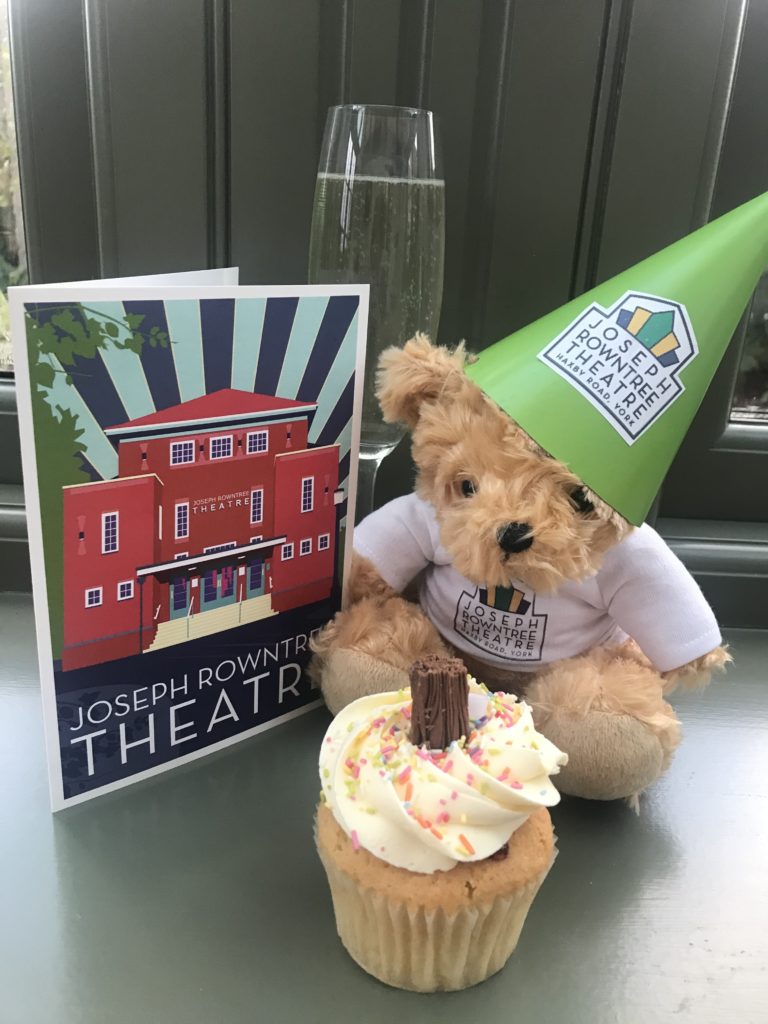
Happy birthday: The Joseph Rowntree Theatre’s 85th anniversary teddy bear and York illustrator Elliot Harrison’s new retro card in the style of vintage railway posters

Photographer Duncan Lomax makes snap decision to open Holgate Gallery at home

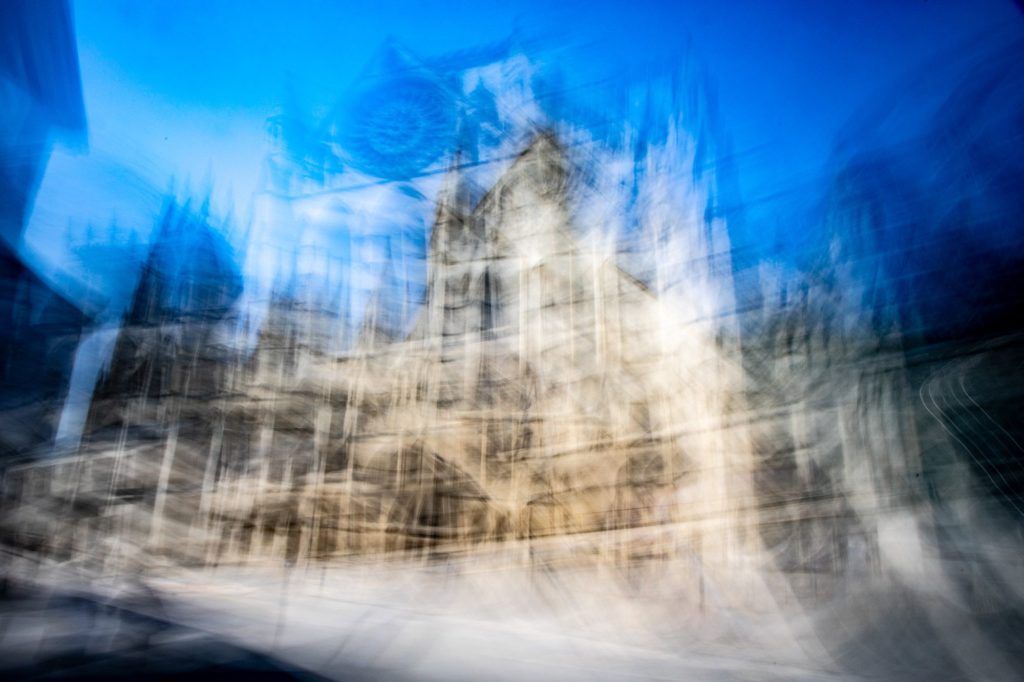
York Minster: An abstract work from Duncan Lomax’s photographic portfolio

“IT’S a strange and challenging time to be opening a business,” admits York commercial photographer Duncan Lomax after turning his front room into Holgate Gallery.

“Why now? I think people are looking for some good news,” reasons Duncan. “People are stimulated by visual art, perhaps now more than ever.They’ve been stuck at home in lockdown, observing their walls on Zoom, and they’re now more aware of their homes, so in that sense maybe it’s a good time to set up a gallery.

“People are looking for a connection with what they put on their walls or in their rooms, so why would you buy three stones with a white stripe for your mantelpiece?

“That’s why, at Holgate Gallery, it’s not just pretty pictures of York, though there’ll always be a demand for that, but I’d like to think that we can challenge people more. With the creative photography I do, it’s deliberately imperfect and more abstract than the commercial work, which has to be perfect and generally done to someone else’s brief.”

A member of staff in PPE at St Leonard’s Hospice, by Duncan Lomax

The gallery address is 53, Holgate Road, a Grade 2-listed building that previously housed Bridge Pianos before Duncan and his wife Tracy moved in, turning the frontage from white to a deeply satisfying blue.

Holgate Gallery becomes only the second contemporary photographic art-space to be set up in York since the much-missed, pioneering Impressions Gallery deserted Castlegate for Bradford’s Centenary Square in 2007.

Since July 2013, fellow commercial photographer Chris Ceaser has run Chris Ceaser Photography in early 15th century, Grade 2-listed, timber-framed premises at 89 Micklegate, focusing on his own landscape photographs of York, Yorkshire and beyond.

By comparison, Duncan will complement his commercial and abstract photographs and humorous faux Penguin Book cover prints with a regularly changing stock of work by other artists “who might not otherwise have the space to exhibit”.

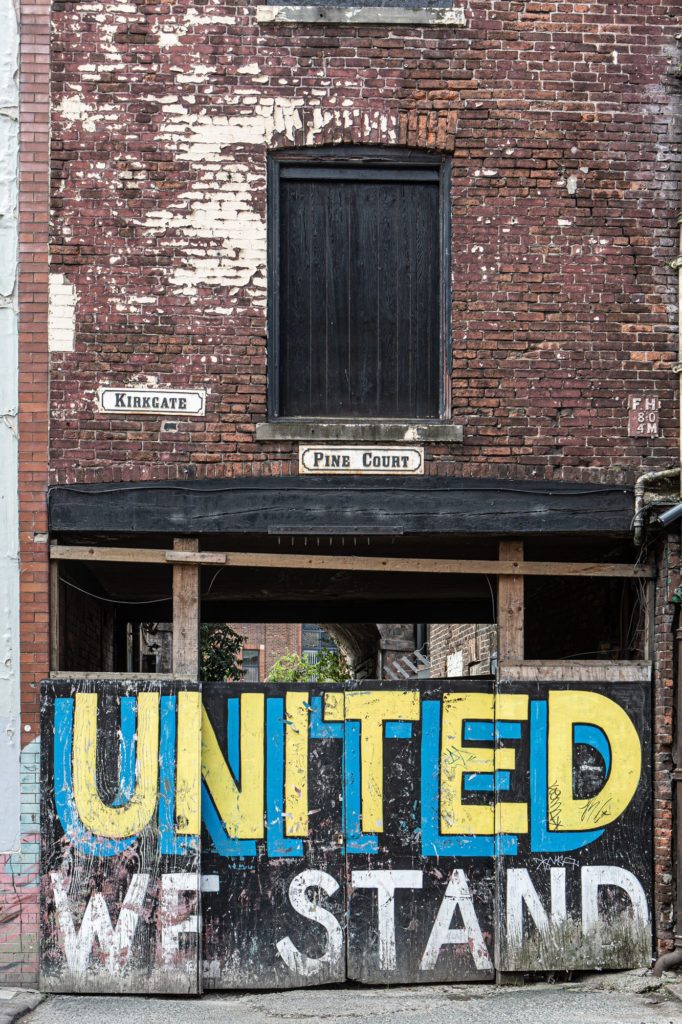
United We Stand, by Duncan Lomax

Mostly they will be local, but in the first instance, the spotlight falls on Cold War Steve, the alias of Birmingham digital-collage political satirist Christopher Spencer, with his 250,000 followers on Twitter for his classical painting pastiches and predilection for incorporating EastEnders’ Steve “Phil Mitchell” McFadden alongside the Westminster double act of Johnson and Cummings at every opportunity.

“You don’t have to look too far to see which side he’s on,” says Duncan. “It’s putting two fingers up to the Establishment, and not everyone will like it, but he’s just been awarded a Doctor of Arts honorary degree at Wolverhampton University, so he’s now Dr Cold War Steve!”

You can sense Duncan’s enthusiasm for stretching his wings beyond running Ravage Productions Photography. “Doing commercial photography, you spend three hours ‘in the field’ and then just as much time doing the editing, marketing and updating the website. I’ve always thought that feels like time wasted, though it’s not, because it’s part of the job, but I most enjoy being behind a camera.

“So, I thought, is there a way of being creative while also doing the [commercial] job? When we bought the piano shop, it needed everything doing to it, but I could see it being a gallery, shop and editing facility for me as well as a home, so rather than being on my own when I’m working, it becomes a more social experience and another string to the bow related to the commercial photography, while it keeps pushing me on the creative side.

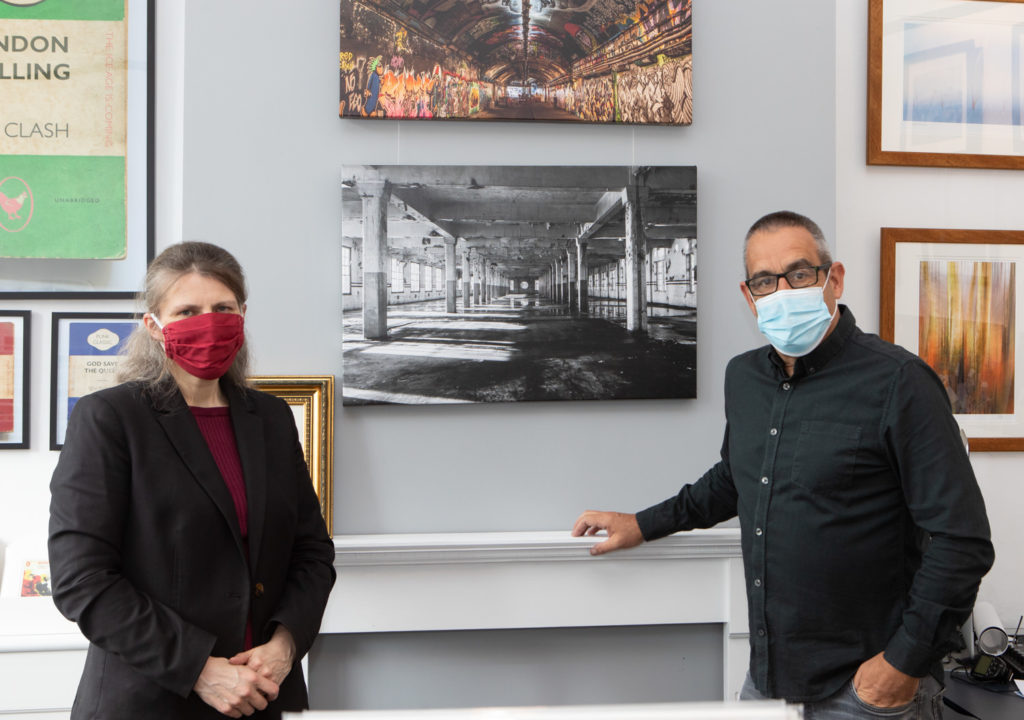
In the red corner: York Central MP Rachael Maskell, whose Labour Party office is nearby, conducts the opening ceremony at Holgate Gallery. Photographer, owner and curator Duncan Lomax keeps his social distance

“I might find there’s no interest in photography in York, but I’m pretty certain there is, and not just for my work, so this gallery is not an ego trip.”

Duncan has been the official photographer for York Minster for several years, notably for the 2016 York Mystery Plays, and has shot portraits, marketing images and PR material for all manner of businesses both in the city and at large.

He also has taught photography to degree level and his pictures have appeared many times in the local and national press, from The Press and YorkMix to the Yorkshire Post, the BBC and The Times.

Born on the Wirral and brought up in Warrington, Duncan played guitar in early Nineties’ Widnes “baggy wannabees” and two-time John Peel Session band 35 Summers, but he was just as likely to be holding a camera as a guitar.

Conference speaker Ian Donaghy: a business portrait by Duncan Lomax

“I’ve always had a camera; I’ve always been interested in photography,” says Duncan, who gives talks to camera clubs to give a different slant on taking pictures beyond landscapes and wildlife.

“I went to see Echo & The Bunnymen in 1982, when they were playing this secret gig where no-one knew where it would be when they bought a ticket. I got right to the front with my mum’s thin Instamatic camera, and there were no press photographers, but there I was, leaning on the stage, with all this dry ice everywhere, hiding the camera away because you weren’t supposed to be taking pictures. The next day I sold the photos at school, so that lit the spark for me.”

Duncan went on to work in PR, but as a writer. “I was always jealous of the photographers,” he recalls. So jealous that the camera would eventually win out because he thinks like a photographer at all times.

“You are constantly looking at the light, checking it, looking outside, and then you see this mackerel sky, and you know you have to stop and go and get the camera,” he says.

The former Terry’s chocolate factory, by Duncan Lomax

“Sometimes, with a photograph, it’s about pre-visualising…but then accidents can happen. That’s serendipity, but more normally, nine times out of ten those circumstances don’t come together.

“You almost know the shot before you take it, but whether you’re able to get it is another thing; whether you can manipulate it and be in control of the camera. Everything has to come together, not only technically but also emotionally. That’s where you get the story.”

He highlights a distinction between the amateur and the professional. “When I was giving a club talk, I remember asking, ‘Who’s shot a landscape photo of Robin Hood’s Bay?’. All the hands went up, but then I said: ‘Hands up, who’s shot a portrait one?’ and no hands stayed up…whereas I’m always thinking of where the headline can go on the picture,” says Duncan.

The photographer’s eye enables him to “show something that you can see that someone else can’t in that situation”, by using such a technique as underexposure.

Light and shade and grand ceremony at York Minster, by Duncan Lomax

“But what you don’t do in either commercial or press photography is let the camera lie,” Duncan says. “Though if you’re doing a commercial shot and you notice there’s a fag end on the floor, you do take it out of the picture.”

Among Duncan’s most memorable photographic work is his remarkable portfolio for the 2016 York Mystery Plays, especially those capturing actors in character, but neither on stage nor posed. “I did those 15 seconds after they came off stage. They weren’t meant to be ‘nice’ pictures, but pictures while they were still in the moment, which is different from portraiture,” he says.

The relationship between photographer and subject is one of trust, requiring skills of communication and connection. “What puts them at ease, I think – and I say this to everyone – is that I tell them, ‘I’m not trying to catch you out’, which is different from some press photographers, whose job is to do exactly that,” says Duncan.

“I’ll ask them, ‘what are you looking for from this photograph?’, as it’s about gaining their trust. That’s the bit I really enjoy; getting that interaction, even if I’m there to photograph a building, I’ll interact with the site manager.”

Toby Gordon as Lucifer, on stage in the 2016 York Mystery Plays at York Minster, by Duncan Lomax

Duncan’s work spans commercial, portrait, event, PR, creative, architectural and travel photography. Can he ever switch off? “If you come across me on a rare day off, I’ll still have my camera with me, so when we go on a walk, my wife hates it as we’ll take three times as long as we otherwise would!” he says.

“Like when we went to Cuba earlier this year, I just had to film the textures of the walls as they tell a story in their amazing colours: they give such a sense of place to Cuba.”

Those Cuban colours are now framed in Pantone style and for sale at Holgate Gallery, the new calling card for Nineties’ guitarist, ace photographer and now gallery owner and curator Duncan Lomax.

More good news has just come his way too: he has been selected to participate for the first time in York Open Studios next April.

Holgate Gallery’s opening times will vary but will be updated regularly at www.holgategallery.co.uk and on Facebook. Visits also can be arranged by appointment via duncan@ravageproductions.co.uk

Cuban Colours, by Duncan Lomax