YORK Barbican’s orchestra-in-residence ended its season with a mixed bag centred around Bruch’s First Violin Concerto – by far the most famous of the three he wrote – alongside two overtures from opposite ends of the Romantic era, plus Britten’s Sea Interludes and Ravel’s La Valse.
It was all very tastefully delivered but lacked the final punch that a meatier second half – with a symphony perhaps – might have produced.
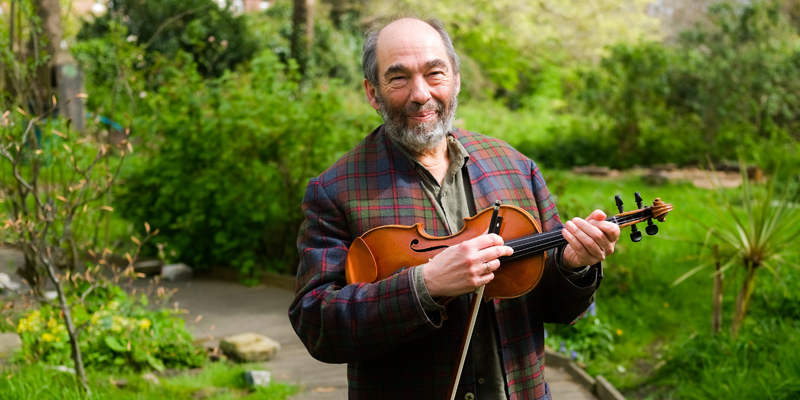
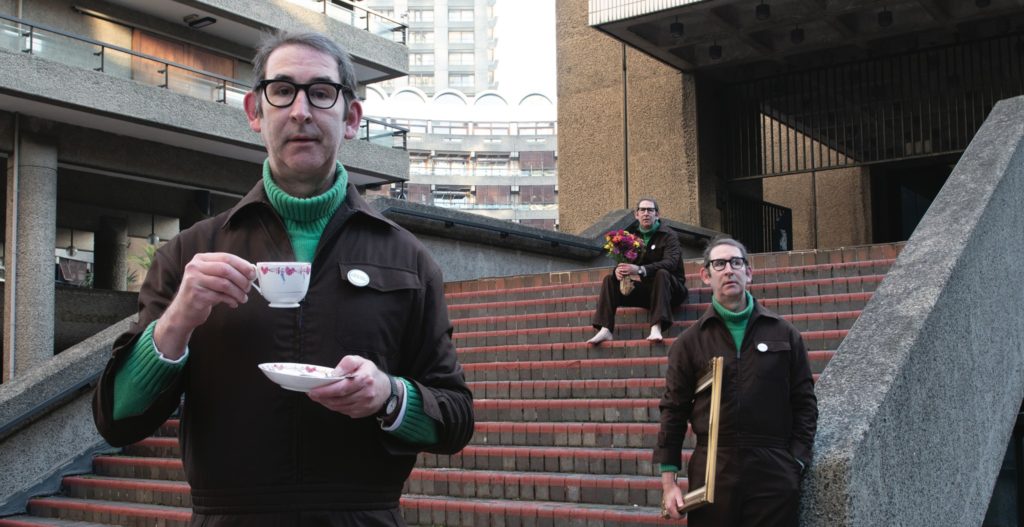
Bradley Creswick made his name hereabouts as leader for 25 years of the Royal Northern Sinfonia, of which he is now Leader Emeritus. He lollops onto the stage with a mischievous smile that radiates both surprise and delight, but his casual demeanour belies a fluent technique and a seriousness of intent.
He immediately took a slower tempo than that suggested by the opening chords: his entire approach to the introduction was leisurely, liberally laced with rubato, and his mellow tone in the slow movement was ideally suited to its tear-jerking melodies.
It was not until the jaunty rhythms of the finale that he really let loose, bouncing crisply through both main melodies and accelerating with panache through the coda. Accompanying his relatively wayward tempos, especially in the first two movements, would have tested a lesser conductor than Simon Wright. However, the orchestra stayed in remarkably close attendance, even matching Creswick’s energy in the finale.
Each half of the afternoon was prefaced with an overture. The horn quartet at the start of Weber’s Der Freischütz was stylish, near faultless in fact. Not to be outdone, the violins were positively spine- tingling in the Vivace section.
Creswick humbly took a seat with them after the interval, when Verdi’s overture to La Forza del Destino offered the brass a chance to show their mettle, especially in the final prolonged crescendo – a trick Verdi had learned from Rossini.
Britten aligned four of the six sea interludes in his opera Peter Grimes into a suite, to which he appended the passacaglia that falls between the two scenes of Act 2.
In many ways, the different moods of the interludes reflect varied aspects of Grimes’ own volatile personality. Playing them as a suite relies on the chameleon qualities of an orchestra.
Two aspects here predominate. The woodwinds need to be highly flexible, running around seemingly in circles while the rest of the orchestra remains largely calm, as in ‘Dawn’. He also uses an extensive percussion section. Wright handled both these superbly.
He also brought extra emphasis to the dark underlay of ‘Moonlight’, while benefiting from the aplomb of his viola soloist in the Passacaglia, and encouraging some real shrieking from his winds in ‘Storm’.
Ravel’s ‘choreographic poem’ La Valse was at first rejected by Diaghilev as not being balletic enough, but was eventually staged. Above all, it needs to dance, particularly in its apotheosis when its constituent parts seem to disintegrate.
After conjuring a passionate mood for the central section, Wright was not afraid to launch into stridency in the final frenzied chords when the waltz seems to self-destruct.
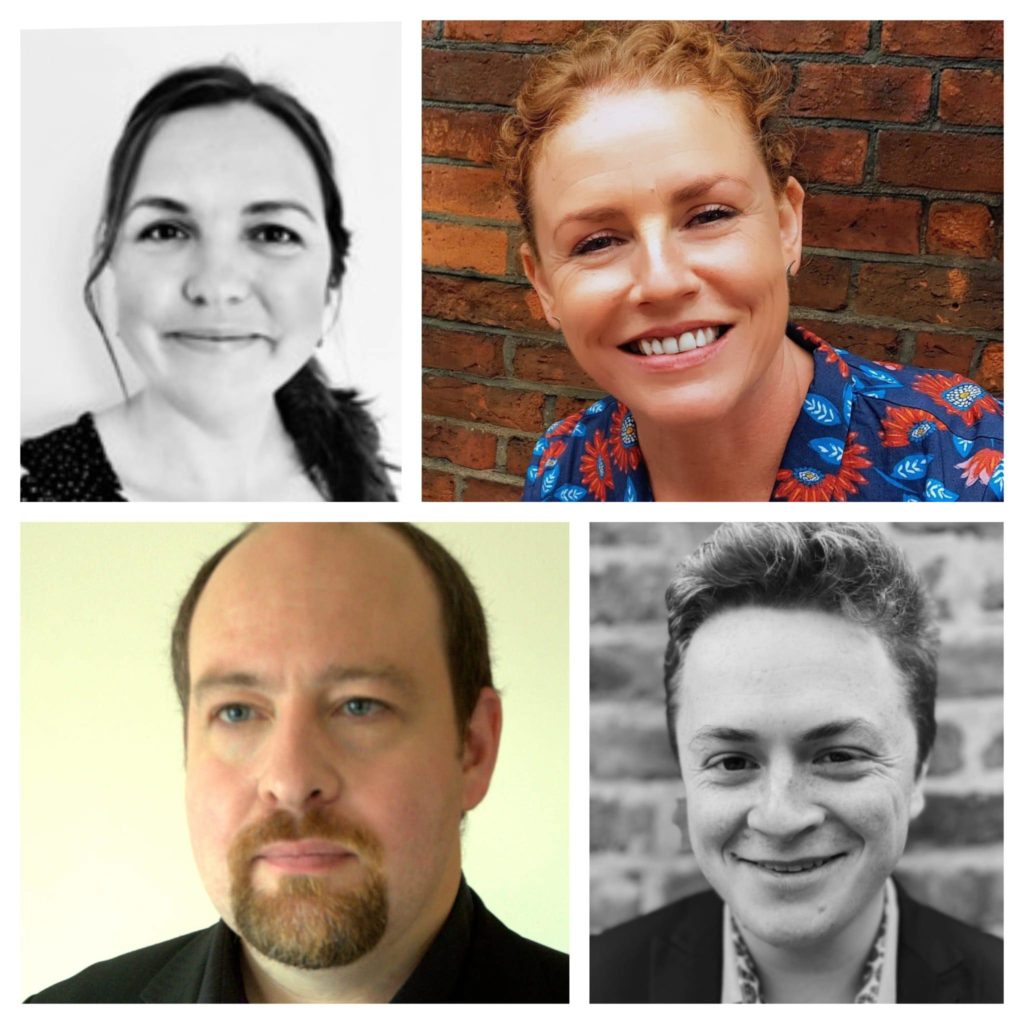
Ebor Singers soloists Alisun Russell Pawley (soprano), top left, Caroline Sartin (alto); Jason Darnell (tenor), bottom left, and Jonty Ward (bass-baritone)
WHEN an event is announced as a gala and includes an imported period band, you naturally prick up your ears. This one not only looked good on paper, it was succulent in reality.
Three works by Handel, culminating in his Dixit Dominus, were further leavened by choral pieces of Purcell and Bach. It was worth every penny of what it must have cost to promote.
Dixit Dominus, a setting of Psalm 109, is the first of three concerted Latin choral works from Handel’s time in Rome, where he was primarily honing his operatic talents at the fountainhead. It dates from April 1707, when he was barely 22.
Although thus youthful, its importance lies in its legacy: many of its pseudo-operatic techniques found their way into his later English church music.
The conductor, Paul Gameson, capitalised on its dramatic moods, which seemed to come naturally to Handel despite his Lutheran background. The title chorus was confidently paced and its succeeding aria, with fluent cello obbligato, smoothly handled by alto Caroline Sartin.
The choir was not disturbed by the tempo changes in ‘Iudicabit’ and the soprano duet with male chorus was equally effective. Only the fugal finale would have benefited from a more relaxed momentum, the sopranos, doubtless tired at the end of a strenuous evening, sounding stretched.
Welcome To All The Pleasures, one of Purcell’s three odes to St Cecilia, made a sprightly opening, with chorus members stepping into the solo roles with flair, as throughout the programme. It was aptly partnered by the tenor cantata Look Down, Harmonious Saint, whose aria was despatched by Jason Darnell with considerable brio, although he reserved touching restraint for its central musings.
The steady pace of the opening Kyrie in Bach’s Lutheran Mass in G was well adapted to its testing chromaticism. The busy strings made the Gloria especially exciting, and Jonty Ward’s crisp bass in ‘Gratias agimus’ was a highlight.
The two oboes danced sweetly through ‘Quoniam tu solus’, accompanying Darnell. Their attentiveness typified the contribution of Manchester Baroque (named twice in the programme as ‘Camerata’), who briefly took the spotlight in a stylishly articulated account of Handel’s D minor Concerto Grosso.
The interval had arrived slightly earlier than planned when a performer fainted. Concertgoers will be relieved to know that after treatment in hospital he was able to return home the next day. The incident made no impact on the success of the evening.
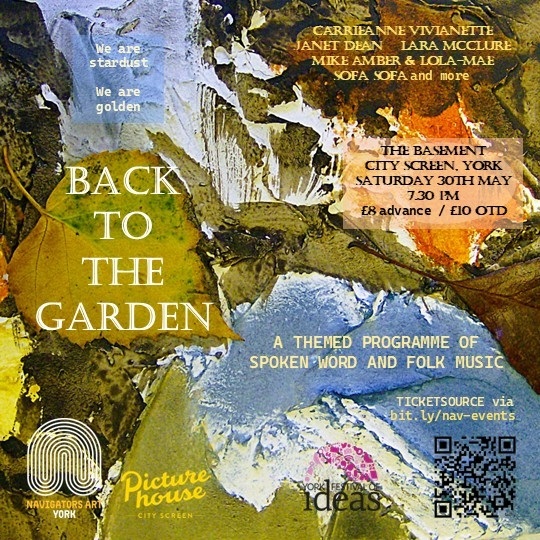
The poster for Navigators Art’s Back To The Garden event at The Basement, City Screen Picturehouse
NAVIGATORS Art has invited York performers to celebrate and explore the 2026 York Festival of Ideas theme of Place and Space with a focus on the peaceful, wild, mythical, inspirational green worlds of gardens.
Original words and music feature alongside well-loved works by familiar names in the company of storyteller Lara McClure; Mike Amber & Lola-Mae, taking on Joni Mitchell’s Woodstock; poet and novelist Janet Dean and performance poet Carrieanne Vivianette, exploring words and sounds.
Sofa Sofa: Songs rooted in nature and people, woods, weather, long walks, short thoughts, longing and love
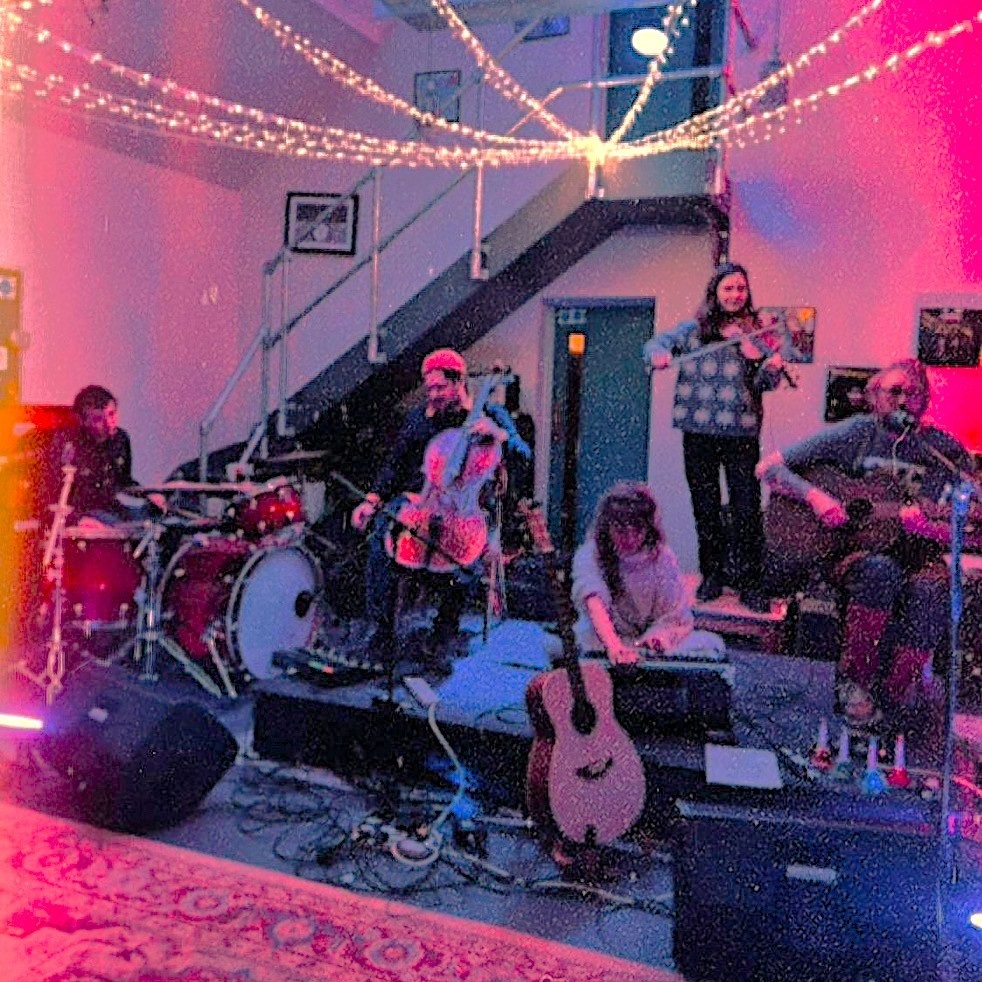
Taking part too will be alt folk band Sofa Sofa (Charley, vocals, guitar, harmonium; Rich, guitar, vocals, bells, synths; Ayse, violin; Filipe, cello, and Adam, drums/percussion), whose songs are rooted in nature and people, woods, weather, long walks, short thoughts, longing and love.
Box office: ticketsource.com/navigators-art-performance or on the door from 7pm. The venue is fully accessible.
John Robb: Discussing his new memoir, Punk Rock Ruined My Life: And Other Stories, at Pocklington Arts Centre
WILDLIFE photography and nature-inspired poetry and music turn Charles Hutchinson’s thoughts to the sunnier days ahead.
Talk of the week: John Robb, Pocklington Arts Centre, tomorrow, 8pm
JOHN Robb is a multi-faceted creature: author, musician, journalist, Louder Than War music website boss, Louder Than Words and Louder Than War Live festivals boss, Eco champion, vegan behemoth and punk rock warlord, as well as TV and radio talking head, frontman of post-punk mainstays The Membranes and ambassador for home-town Blackpool.
To mark the May 12 publication of his memoir, Punk Rock Ruined My Life: And Other Stories, he is undertaking a spoken-word and book tour, where each show comprises a one-hour talk by Robb, followed by a conversation and Q&A with a special guest. Tomorrow, he welcomes Pauline Murray, Penetration singer and author of Life’s A Gamble, her 2023 autobiography. Box office: 01759 301547 or pocklingtonartscentre.co.uk.
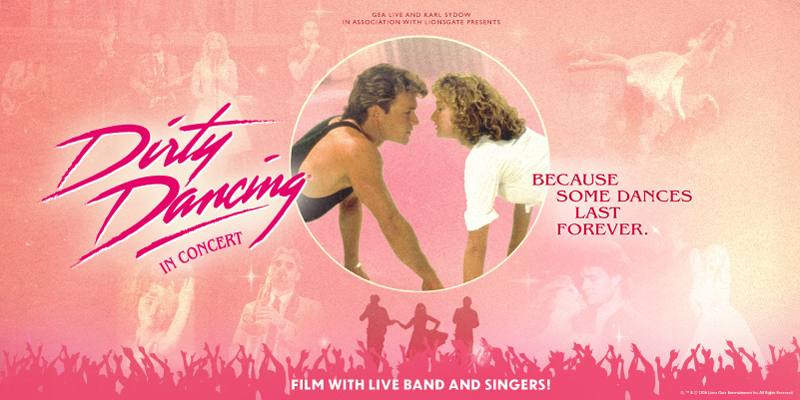
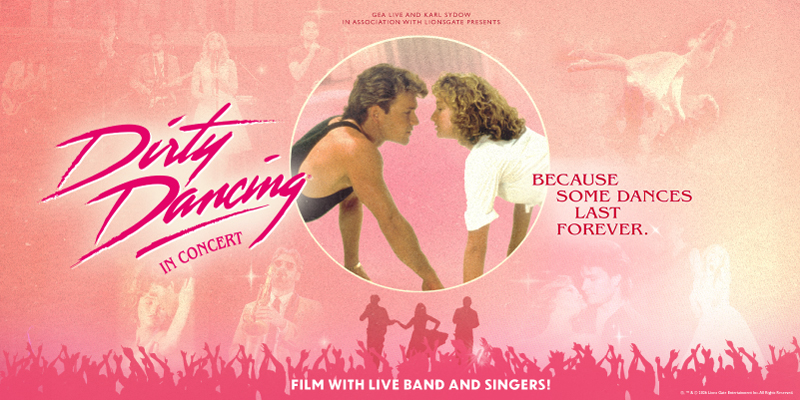
Nobody puts Baby’s poster in the corner for Dirty Dancing In Concert at York Barbican
Film event of the week: Dirty Dancing In Concert, tomorrow, 7.30pm
RELIVE the film that stole the hearts of generations with this live-to-screen concert event featuring Emile Ardolino’s 1987 American romantic drama projected in full, accompanied by a live band and singers performing every song from the soundtrack.
Feel the romance, rhythm and emotion as the love story of Baby and Johnny (Jennifer Grey and Patrick Swayze) comes to life on a full-size cinema screen. A dance-along encore party follows the final scene. Box office: yorkbarbican.co.uk
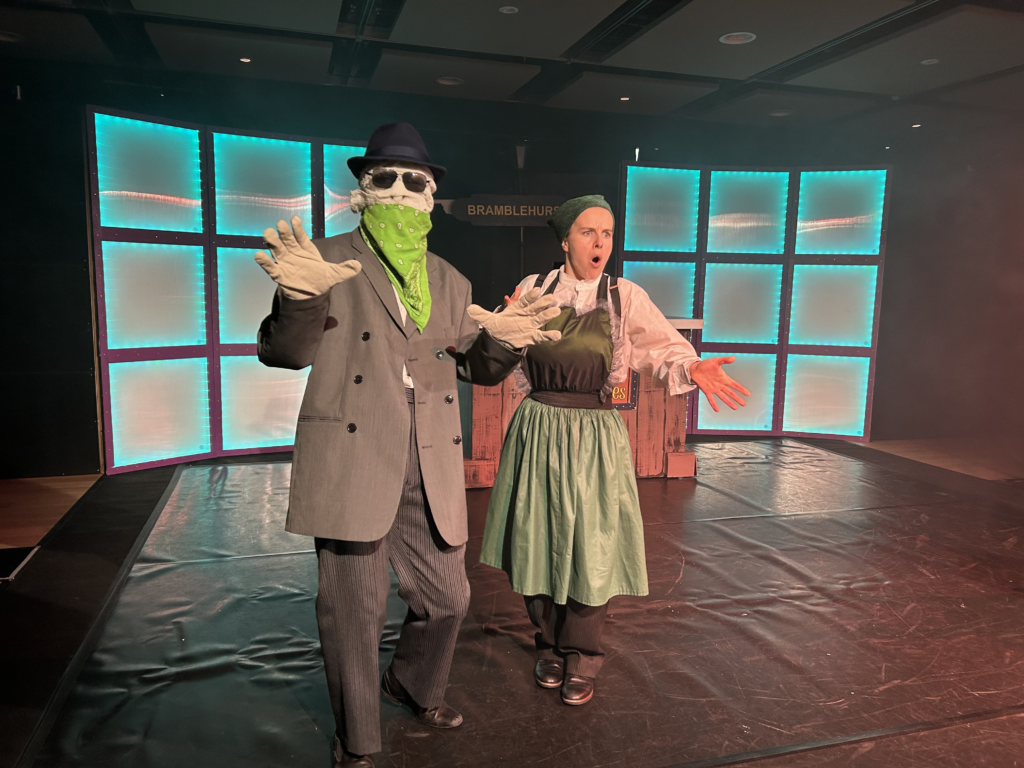
Now you see him, now you don’t: Daniel Davis and Georgina Sockett in Our Star Theatre Company’s The Invisible Man, to be spotted at Kirk Theatre, Pickering
Vanishing act of the week: Our Star Theatre Company in The Invisible Man, Kirk Theatre, Pickering, Friday, 7.30pm
THE thought of invisibility, and the advantages it could bring, has captured the imagination since HG Wells’s science-fiction novella was published in 1897. The Invisible Man has been adapted many times for film, but rarely for the stage.
Here comes Derek Webb’s original, fast-paced and riotous adaptation boasting 15 characters, split between three energetic actors, Daniel Davis, Georgina Sockett and Rhys Harris-Clarke, aided by quick and daft costume changes, prop manipulation, whacky imagination and tons of tongue-and-cheek fun in Herefordshire company Our Star’s touring production, directed by founder Ben Mowbray. Box office: 01751 474833 or kirktheatre.co.uk.
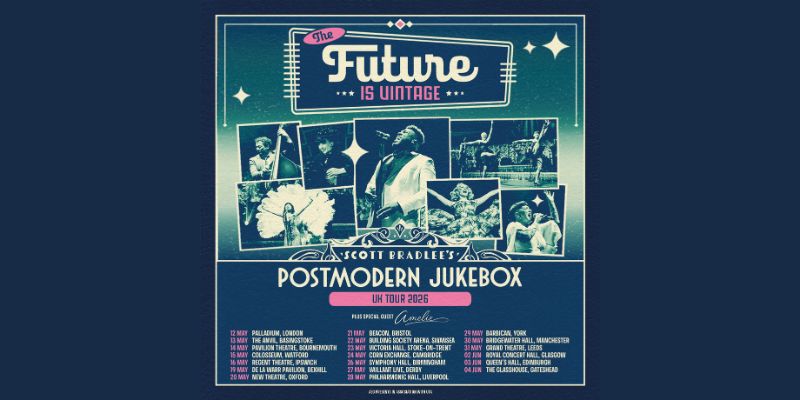
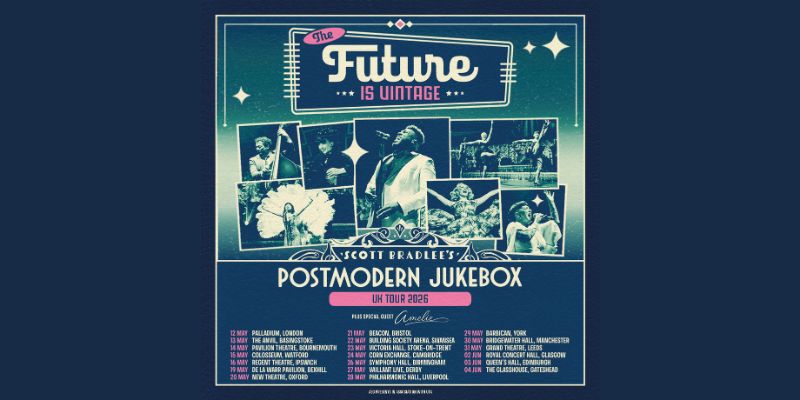
The poster for The Future Is Vintage, the latest Scott Bradlee’s Postmodern Jukebox concert at York Barbican
Retro gig of the week: Scott Bradlee’s Postmodern Jukebox, The Future Is Vintage Tour 2026, York Barbican, Friday, doors 7pm
SCOTT Bradlee’s troupe of singers, dancers and instrumentalists perform a new show in signature time-twisting style, putting a retro spin on everything from Seventies’ rock classics and Britpop hits to the latest chart toppers and movie and video game soundtracks.
“We’re humbly presenting our own unique vision of a spectacular future; one that is built upon the timeless musical genres of the past and the authentically human spirit of creativity that inspired them,” says founder and arranger Bradlee, who invites you to dress in your vintage best for the full time-travel experience. Box office: yorkbarbican.co.uk.
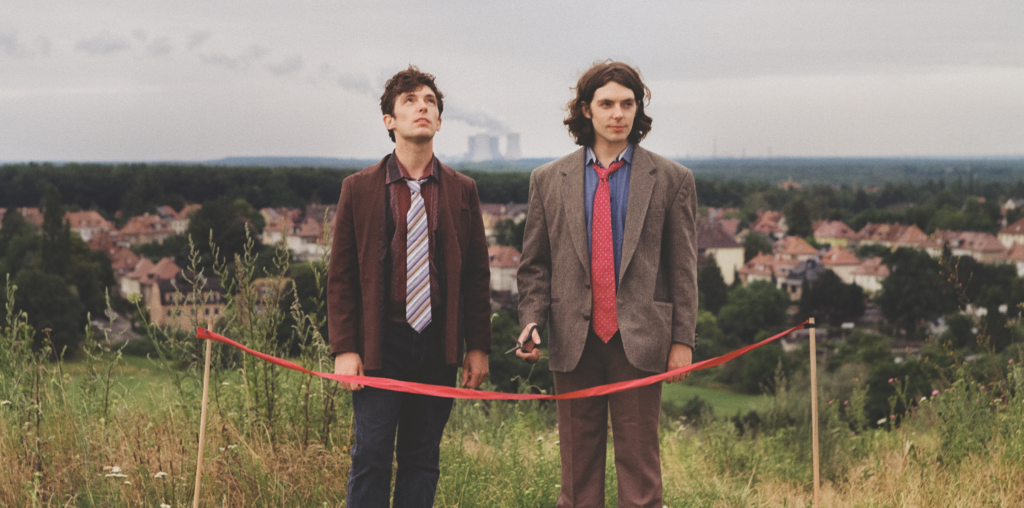
The Ocelots’ Ashley and Brandon Watson
Literature-inspired musings of the week: The Ocelots, The Arts Barge, Foss Basin Moorings, Tower Street, York, Friday,7.30pm
BLOOD harmonies are at the centre of The Ocelots’ sound with its Americana echoes of Neil Young and Sufjan Stevens. Twin brothers Ashley and Brandon Watson, from Wexford, Ireland, blend absurdity and sincerity in an array of literature-inspired musings.
Open tunings and clawhammer banjo merge country-folk contemplation with urban imagery, as heard on 2020’s Started To Wonder and 2025’s Everything, When Said Slowly albums and 2023’s Addlepated and March 2026’s Revisions EPs. Fionnuala Mary Bradbury supports. Box office: artsbarge.com.
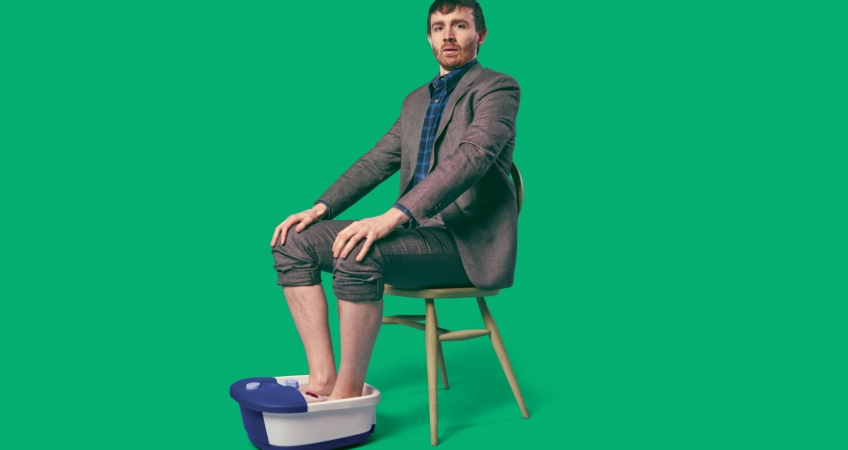
Ian Smith: Stories of stress, love and buying a magic spell off Amazon in Foot Spa Half Empty at Helmsley Arts Centre
Comedy gig of the week: Ian Smith, Foot Spa Half Empty, Helmsley Arts Centre, Friday 8pm
EDINBURGH Comedy Award nominee and Northern News podcast co-host Ian Smith heads out on tour with Foot Spa Half Empty, his new show about stress, love and buying a magic spell off Amazon, in his follow-up to 2023’s Crushing.
Smith, 37, from Goole, has appeared on Live At The Apollo, Have I Got News For You, The Stand Up Sketch Show, BBC Radio 4’sThe News Quiz, The Unbelievable Truth and Just A Minute and hosted his own Radio 4 series, Ian Smith Is Stressed. Box office: 01439 771700 or helmsleyarts.co.uk.
Mike Amber: Taking on Joni Mitchell’s Woodstock songs with Lola-Mae at Navigators Art’s Back To The Garden night of poetry and music
Nature lovers of the week: Navigators Art presents Back To The Garden, York Festival of Ideas, The Basement, City Screen Picturehouse, York, Saturday, 7.30pm, doors 7pm
NAVIGATORS Art has invited York performers to celebrate and explore the York Festival of Ideas theme of Place and Space with a focus on the peaceful, wild, mythical, inspirational green worlds of gardens.
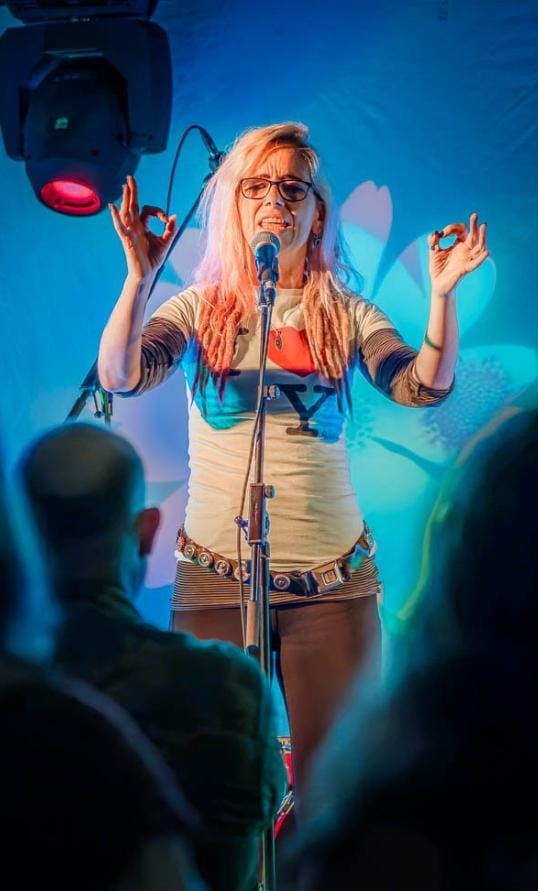
Original words and music feature alongside well-loved works by familiar names in the company of storyteller Lara McClure; Mike Amber & Lola-Mae, taking on Joni Mitchell’s Woodstock; poet and novelist Janet Dean; performance poet Carrieanne Vivianette and alt folk band Sofa Sofa, whose songs are rooted in nature and people, woods, weather, long walks, short thoughts, longing and love. Box office: ticketsource.com/navigators-art-performance or on the door.
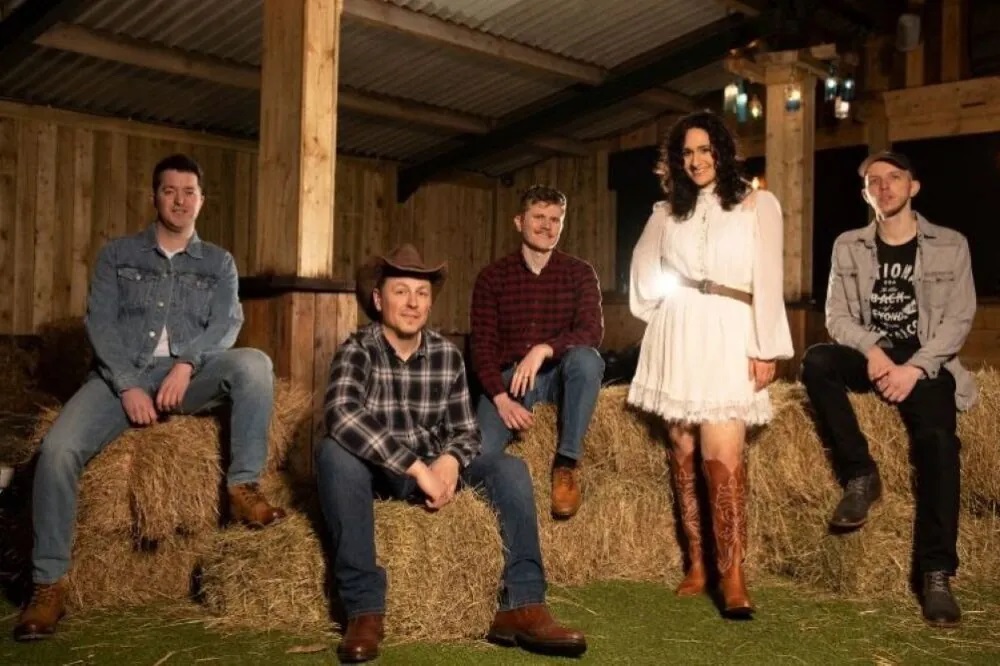
Country Bound: Performing upbeat country songs, complemented by floor fillers re-imagined in a country music style, at Milton Rooms, Malton
Country gig of the week: Country Bound, Milton Rooms, Malton, Saturday, 8pm
COUNTRY Bound put the ‘fun’ into country function band, performing upbeat modern and classic country songs, complemented by classic floor fillers re-imagined in a country music style.
Fronted by Micki Consiglio, they cover hits by Taylor Swift, Shania Twain, Zach Brown Band, Luke Combs, Carrie Underwood, Chris Stapleton, Dolly Parton, Lady A, Blake Shelton, Faith Hill, Morgan Wallen, Billy Cyrus, Luke Bryan, Darius Rucker, Kacey Musgraves, Garth Brooks, Sheryl Crow, Kelsea Ballerini, Kenny Rogers, Patsy Cline and more. Box office: 01653 696240 or themiltonrooms.com.
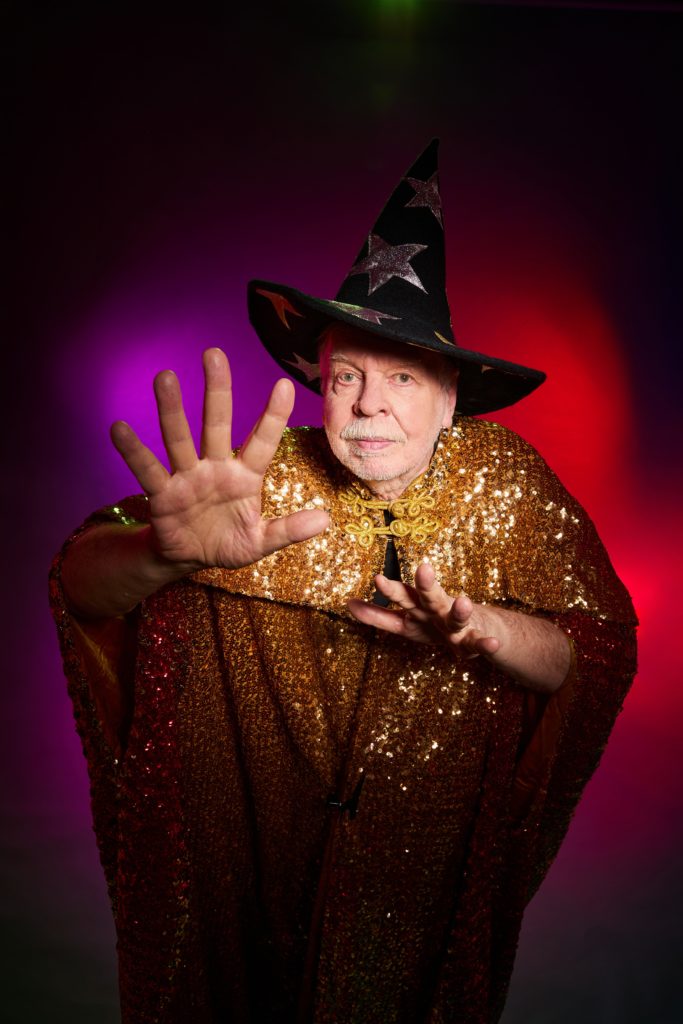
Rick Wakeman: The Wizard of Prog reunites with the English Rock Ensemble at York Barbican next March
Gig announcement of the week: Rick Wakeman, The Wizard of Prog, Ultimate Highlights Concert Tour with English Rock Ensemble, York Barbican, March 11 2027
KEYBOARD player extraordinaire Rick Wakeman, who turned 77 on May 18, will be reuniting with the English Rock Ensemble to focus on a broad sweep across his classic back catalogue, including extracts from epic concept albums Journey To The Centre Of The Earth and The Myths & Legends Of King Arthur & The Knights Of The Round Table, Yes material and surprises.
The band line-up reassembles from 2025’s Return Of The Caped Crusader Part 2 tour: Wakeman, Jesse Smith (lead vocals), Adam Wakeman (keyboard, guitars and vocals), Dave Colquhoun (guitars and vocals), Lee Pomeroy (bass and vocals), Adam Falkner (drums) and backing vocalists Sara Davey, Jo Goldsmith-Eteson and Jo Marshall. Tickets go on sale on Friday at 10am at yorkbarbican.co.uk/whats-on/rick-27.
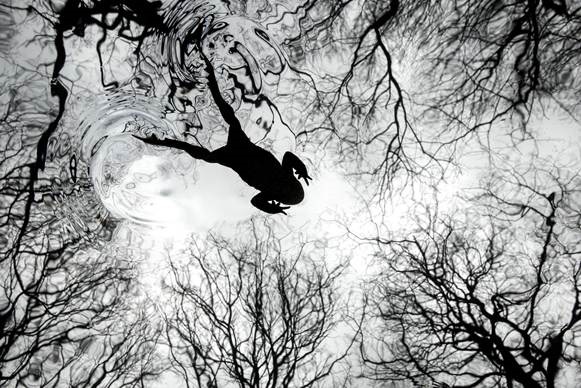
Paul Hobson’s A Toad Swims Across Its Woodland Pond: Grand Prize winner inBritish Wildlife Photography Awards 2026, on show at Nunnington Hall
In Focus: British Wildlife Photography Awards 2026, Nunnington Hall, Nunnington, near Helmsley, until July 5,open Tuesday to Sunday, 10.30am to 5pm
THE winners of the British Wildlife Photography Awards 2026 have been unveiled at the National Trust’s Nunnington Hall, where 75 photographs are on show.
Paul Hobson’s A Toad Swims Across Its Woodland Pond, photographed from a pond-floor perspective in Sheffield, has taken the top prize from more than 12,000 images submitted by professional and amateur photographers.
“I am lucky to have a pond close to my house that has relatively clear water,” says Hobson. “Toads use this pond to breed in, and I decided I wanted to try to capture an image looking up from the bottom of the pond.”
To accomplish this, he housed the camera inside a home-built glass box, complete with old tripod legs and ballast to prevent sinking, and triggered the camera using an adapted long cable release.
“I had to wait quite a long time until a toad swam across the surface,” says Hobson. “Most of them would usually swim below it and rest on the glass. He was eventually successful, however, and the outcome provides a rare view of a toad in its woodland home.
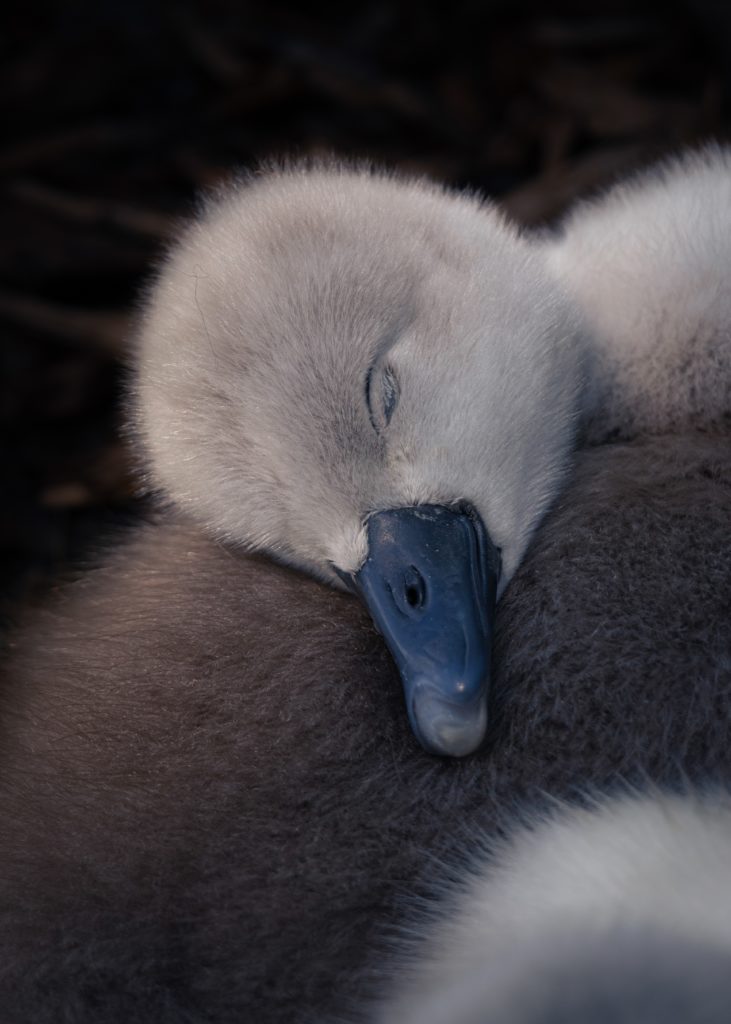
Ben Lucas’s Feathery Pillow: Winner of the Young British Wildlife Photographer of the Year Award 2026
Ben Lucas won the Young British Wildlife Photographer of the Year 2026 award with Feathery Pillow, his charming image of a mute swan cygnet taking a nap on its sibling’s back. “Nature can often be so cruel, but tender moments like this warm my heart,” he says.
The annual showcase of nature photography is a crucial reminder of what value British woodlands, wetlands and other ecosystems still hold.
“This year’s winners celebrate the wonder, diversity and character of British wildlife in truly exceptional ways,” say British Wildlife Photography Awards director Will Nicholls. “From familiar species to rarely seen moments, the portfolio showcases the skill and passion of the photographers behind the lens.
“Together, they offer a joyful celebration of Britain’s natural world, while also reminding us why these places and species are so deserving of our care and protection.”
Photographers competed in 11 categories in the adult competition: Animal Behaviour, Animal Portraits, Botanical Britain, Black & White, Coast & Marine, Habitat, Hidden Britain, Urban Wildlife and Wild Woods, plus British Seasons and Documentary Series making up the special awards.
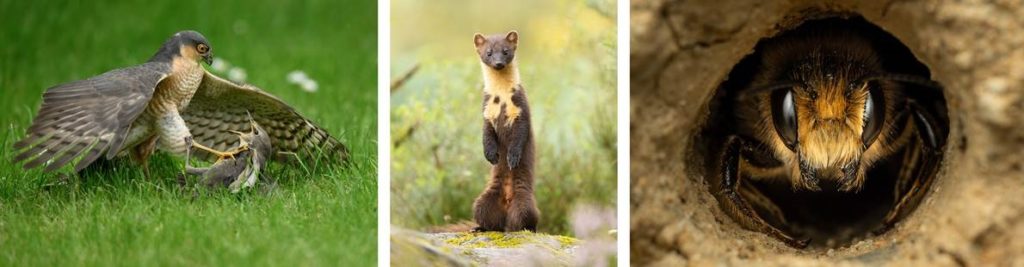
Three photographs from the British Wildlife Photography Award 2026 exhibition
Further awards were given for Wildlife in HD Video and three age groups in the youth competition: age 11 and under, 12 to 14 and 15 to 17.
All awarded images are published by Graffeg Books in a hardback coffee-table book, available online at bwpawards.org, with a foreword by actor, writer and director Mackenzie Crook.
The 2027 competition is open for entries at bwpawards.org, inviting photographers of all levels of experience to submit their photos of Britain’s nature at its best.
Nunnington Hall invites visitors take time in the organic gardens overlooking the River Rye to spot many birds and insects and maybe the occasional otter or kingfisher that calls the garden home.
Tickets: nationaltrust.org.uk/nunnington-hall.Entry is free for National Trust members and under-fives.
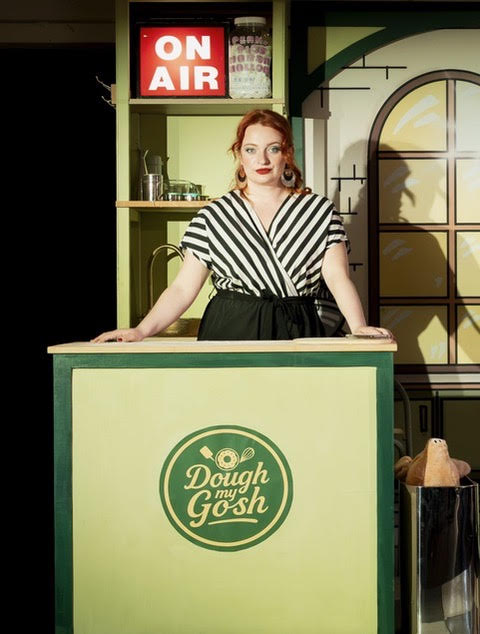
Sugar and spite and all things not so nice: Ellen Carnazza’s TV baking celebrity Petronella Parfait in Badapple Theatre Company’s Crumbs. Picture: Karl Andre
IN the week when jettisoned American TV institution The Late Show turned into the late show, as Stephen Colbert signed off, British TV’s favourite baking queen, Petronella Parfait, was cancelled too.
Mystery surrounds her disgraced exit, but ruthless, rather than rueful, Petronella is determined to bounce back, and tonight we are her audience – her “Crummies” – as she launches her online cookery channel, Dough My Gosh, as hot on gossip as tray bakes, as she looks to ride the social media influencer wave.
Will the cook crumble or rise anew like the dough for her signature Athenian Caraway Loaf? Will it be Crumbs of comfort or discomfort for the axed Bake-Up judge?
Find out in writer-director Kate Bramley’s latest comedy for Green Hammerton’s “theatre on your doorstep” rural-travelling troupe Badapple Theatre Company, newly installed as York Theatre Royal’s associate company for the next year.
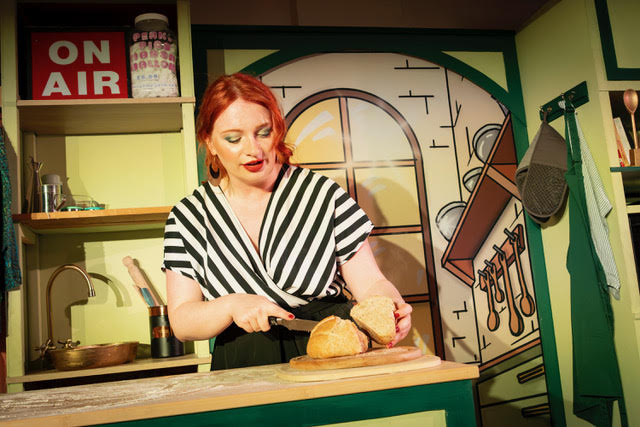
To mark that partnership’s launch, Badapple are concluding their spring tour with four days of performances in the Theatre Royal Studio, where virtuoso Harrogate actress Ellen Carnazza is cooking on gas mark five as Petronella, the bad apple or good apple of the piece.
Bramley affectionately calls Carnazza “the hardest-working woman in theatre”, because although Petronella has an ego too big to accommodate anyone else in her kitchen, chameleon Carnazza will play multiple characters, foes, friends and family alike, glowing under the lights from so much physical exertion in this one-woman show of two 45-minute halves.
If you can’t stand the heat, get out of the kitchen, as the old chestnut says, but Carnazza’s Petronella can very much stand the (self-inflicted) heat and stay in Petronella’s Perfect Kitchen to bake the bread that audiences will devour at the finale.
Will they, however, swallow everything else she says as the layers surrounding the mystery of her swift exit are peeled back with each new interruption of her live broadcast that takes the form of a series of phone calls and interviews, where Carnazza is framed by an oversized mobile phone case. Already her West Country assistant Demelza Meek has walked out, tired of being her Cornish patsy and vowing to bring her down.
One by one, we meet Petronella’s mother, Lady Payne, a still glamorous former Bond Girl; barrister Gloria Gluten, who shared her schooldays, and Mrs Crumble, the Welsh cook from her childhood whose recipes she may well have purloined for her own gain.
As she fights to prove she does not put the fake into bake, secrets are exposed and everything collapses around her on AJ Lowe’s amusingly Mischief Theatre-echoing misbehaving kitchenette set, with its malfunctioning tap, tumbling shelf of cookbooks and non-stick apron hook, topped off by the lights going out.
Now her last friend and sponsor, Penny Puttanesca, proprietor of the neighbouring Pizza Inferno chain, with her Gina/Sophia Italian allure and Mafia hauteur, has finally had enough of her freeloading.
After so much back-and-forth patter and constant changes of voice and character, with the aid of scarves, hats and glasses, Carnazza and Bramley surpass it all with the Puttanesca family’s henchman, Big Tony, who says nothing yet everything behind dark glasses with shrugs, grimaces and the folding of arms, before Carnazza plays both Petronella and Big Tony on the chase with all the madcap joy of a cartoon, all the funnier for being conducted in a small space, maximum gesture, minimal movement.
Bramley’s Petronella Parfait is an absurdist caricature, even more so for her script revelling in more puns than buns, yet for all the comic exaggeration in Carnazza’s performance, Crumbs is bang-on in its exposé of the cult of celebrity.
Petronella is sweet on the TV surface, yet sour when the heat is on; more back off than Bake-Off. She is a baker as needy as kneady; constantly plugging products, pushing her “brand” and placing endorsements. Ultimately, her cherry on top cannot hide the soggy bottom beneath.
Your reward is a feast of laughs in a comedy with bite, followed by a chunk of bread at the close, whose “secret recipe “ can be unlocked by scanning the QR code on the back of the programme.
Purely by coincidence, what should be playing on the main stage next door but another story of a TV celebrity fighting for her career (after being exposed as a charlatan in losing a court case with £500,000 costs): namely psychic medium Sheila Gold in Jeremy Dyson & Andy Nyman’s twisted thriller The Psychic, now in the last week of its world premiere.
Badapple Theatre Company in Crumbs, York Theatre Royal Studio, baking at 2pm and 7.45pm today. Box office: 01904 623568 or yorktheatreroyal.co.uk.
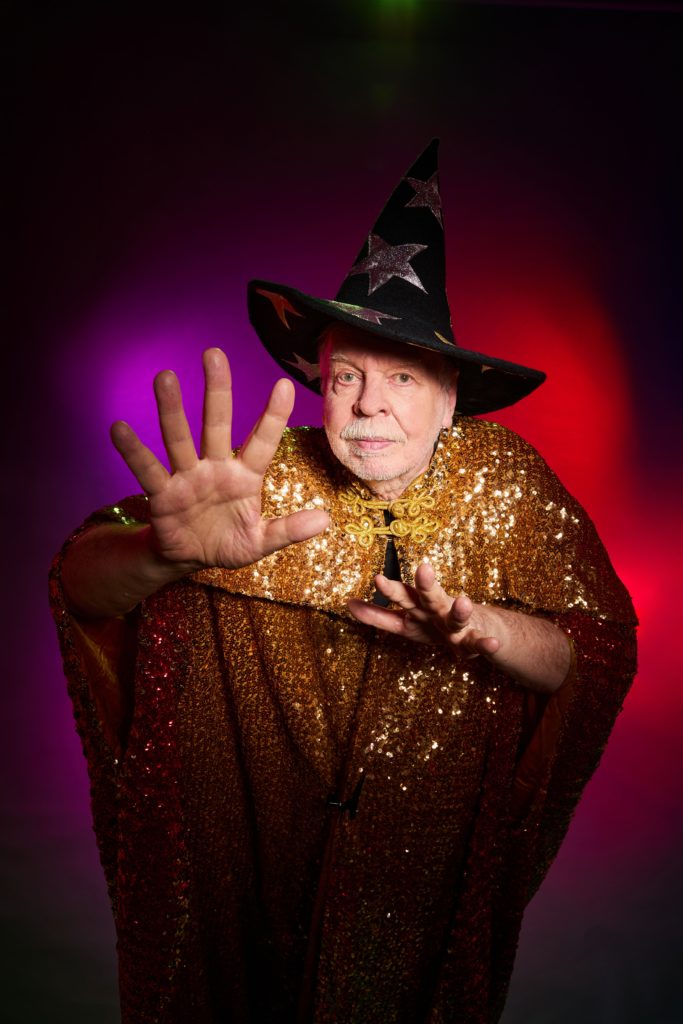
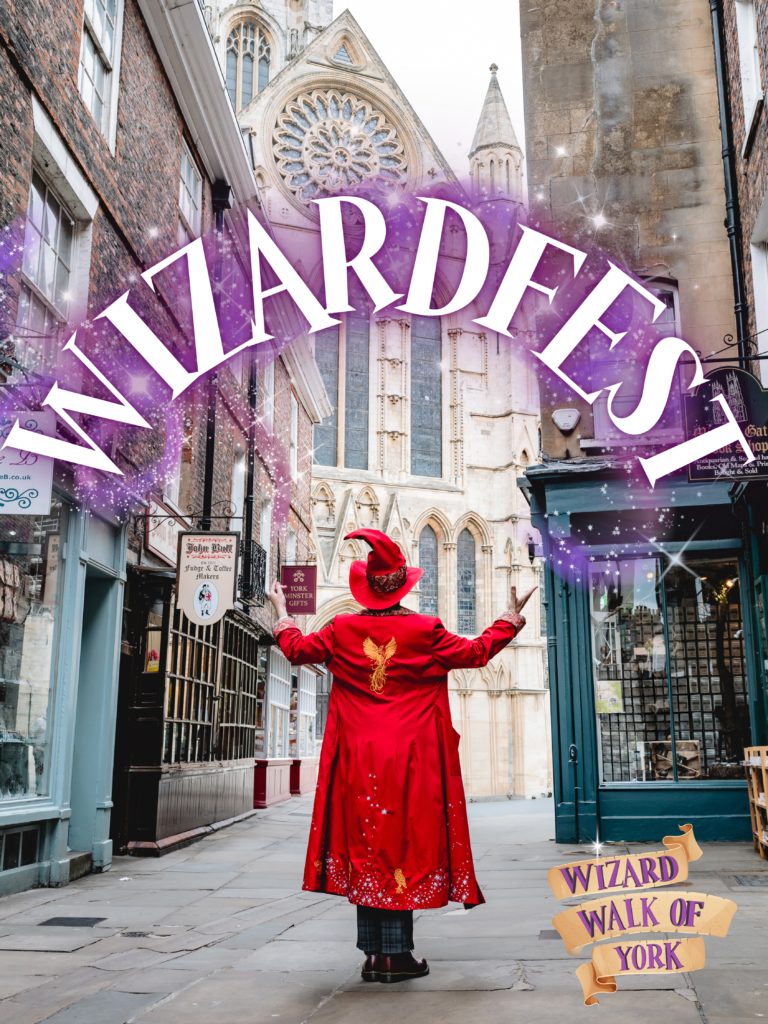
The Wizard of York (Dan Wood): Presenting the second WizardFest in York city centre. Picture: The Story Of You
FROM WizardFest to the Wizard of Prog, Roman festivities to musical & poetic nature lovers, Charles Hutchinson picks his hot spots for the Bank Holiday weekend and beyond.
Magical event of the week: WizardFest, York, today until Monday
WIZARDFEST, York’s official Festival of Wizardry, waves its magic wand over the Spring Bank Holiday weekend as The Wizard of York conjures up spellbinding events, tours, trails, workshops, shows and fantastical food and drink.
Wizardry fans can book for the Wizard Walk of York, Brick Magic LEGO workshop, Wizard Family Rave, Giant Bubble Show or Wicked at City Screen Picturehouse. Expect owl appearances, dragons and the new Wizard Activity Zone on Parliament Street with wand making, face painting and more. Dress to impress for the free fancy dress parade from St Helen’s Square on Monday at 3p.m A digital map and full list of events with booking links can be found at wizardwalkofyork.com/wizardfest.
The Roman Camp in York Museum Gardens, part of the Eboracum Roman Festival in York. Picture: Gareth Buddo
Festival highlight of the week: Living History, Crafts and Combat, Eboracum Roman Festival, York, today and tomorrow
THIS weekend showcases the best of Eboracum with live performances, creative storytelling and historical demonstrations alongside fun family activities, insightful talks and opportunities to dive into archaeology in York.
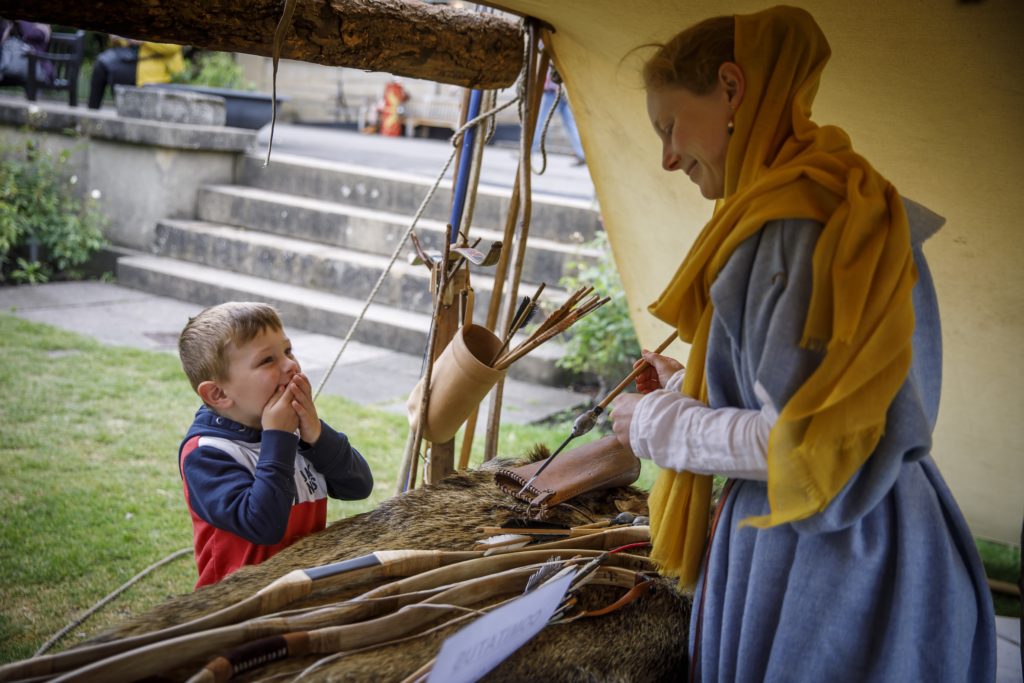
At the Living History Camp in York Museum Gardens, discover how the Romans lived by talking to the legions in their camp and watch demonstrations of weaving, carpentry, pottery and blacksmithing. Check out military demonstrations and formations with Ermine Street Guard or join York Museum Trust’s Garden Team for a guided tour of the Edible Garden today. Look out too for artillery demonstrations and the Kids Barbaric Battle. For full festival details, visit: yorkshiremuseum.org.uk/eboracum-roman-festival-2026.
Live baking on stage: Ellen Carnazza’s TV cook in crisis Petronella Parfait in Badapple Theatre Company’s Crumbs. Picture: Karl Andre
Bake-off of the week: Badapple Theatre Company in Crumbs, York Theatre Royal Studio, today, 2pm and 7.45pm
DISGRACED TV baking celebrity Petronella Parfait is out of a job and out of her depth, trying to reinvent herself in the cut-throat world of social influencers. Can she keep the lights on – and the oven – as her live comeback show descends into devilishly delicious disaster?
Expect big laughs, bold flavours, live bread making and a tasty treat for the audience at the end of Kate Bramley’s play as Green Hammerton’s Badapple Theatre returns to the Theatre Royal Studio, where solo performer Ellen Carnazza plays multiple roles. Box office: 01904 623568 or yorktheatreroyal.co.uk.
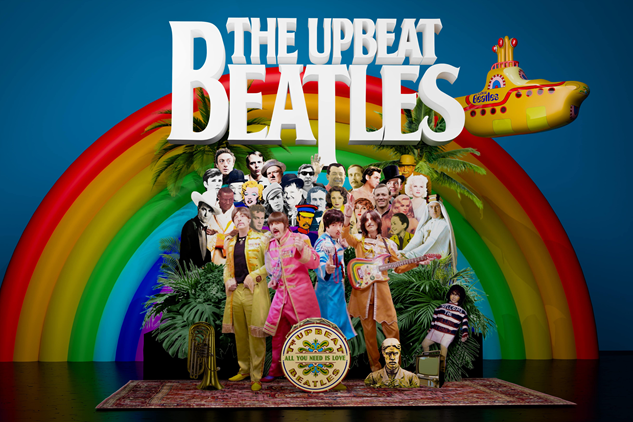
The Upbeat Beatles: Celebrating the Fab Four from the Cavern to Abbey Road at the Joseph Rowntree Theatre
Tribute gig of the week: Joseph Wilson Productions presents The Upbeat Beatles, Joseph Rowntree Theatre, York, tomorrow, 7.30pm
THE Upbeat Beatles travel the Fab Four’s long and winding road from the early Cavern days through Beatlemania and Shea Stadium, New York City, to Sgt. Pepper’s Lonely Hearts Club Band and Abbey Road, with narrative and full multi-media presentation. Box office: 01904 501935 or josephrowntreetheatre.co.uk.
Nobody puts Baby’s poster in the corner: Dirty Dancing In Concert at York Barbican
Film event of the week: Dirty Dancing In Concert, York Barbican, May 28, 7.30pm
RELIVE the film that stole the hearts of generations with this live-to-screen concert event featuring Emile Ardolino’s 1987 American romantic drama projected in full, accompanied by a live band and singers performing every song from the soundtrack.
Feel the romance, rhythm and emotion as the love story of Baby and Johnny (Jennifer Grey and Patrick Swayze) comes to life on a full-size cinema screen. A dance-along encore party follows the final scene. Box office: yorkbarbican.co.uk
John McCusker: Leading his trio at the NCEM on Friday
Recommended but sold out already: John McCusker Trio, York Festival of Ideas, National Centre for Early Music, York, May 29, 7.30pm
SCOTTISH violinist John McCusker is joined by virtuoso multi-instrumentalist and singer Sam Kelly and flute, whistle and guitar player Toby Shaer in his trio to perform a thrilling combination of instrumental dexterity, heartfelt songs and live energy. Their fusion of original compositions, traditional melodies and contemporary folk bursts with innovation, joy and soul. Box office for returns only: 01904 658338 or ncem.co.uk.
The Scott Bradlee’s Postmodern Jukebox poster for the The Future Is Vintage tour, visiting York Barbican on Friday
Retro gig of the week: Scott Bradlee’s Postmodern Jukebox, The Future Is Vintage Tour 2026, York Barbican, May 29, doors 7pm
SCOTT Bradlee’s troupe of singers, dancers and instrumentalists perform a new show in signature time-twisting style, putting a retro spin on everything from Seventies’ rock classics and Britpop hits to the latest chart toppers and movie and video game soundtracks.
“We’re humbly presenting our own unique vision of a spectacular future; one that is built upon the timeless musical genres of the past and the authentically human spirit of creativity that inspired them,” says founder and arranger Bradlee, who invites you to dress in your vintage best for the full time-travel experience. Box office: yorkbarbican.co.uk.
Ben Moor on his ‘Three Thing Day’. Picture: Andy Lane, Barbican, London, January 11 2025
Oddball storytelling of the week: Ben Moor, A Three Thing Day, Theatre@41, Monkgate, York, January 29, 7.30pm
A STORYTELLER for 30 years and counting, Ben Moor has a show opening later, but first he has a family meeting, and before that there’s a funeral. A single day can encompass the past, present and future; friends, family and strangers; the ridiculous, the moving and the inspirational. Like life.
Surreal and ‘melancomic’, Moor’s2025 Edinburgh Fringe hit is crammed with one-liners and observations, alongside beautiful and poetic digressions. Under discussion will be good gullibility, dolphin infestations, snacks and unreliable phones. Box office: tickets.41monkgate.co.uk.
Mike Amber: Performing Joni Mitchell’s Woodstock songs with Lola-Mae at The Basementnext Saturday
Nature lovers of the week: Navigators Art presents Back To The Garden, York Festival of Ideas, The Basement, City Screen Picturehouse, York, May 30, 7.30pm, doors 7pm
NAVIGATORS Art has invited York performers to celebrate and explore the York Festival of Ideas theme of Place and Space with a focus on the peaceful, wild, mythical, inspirational green worlds of gardens.
Original words and music features alongside well-loved works by familiar names in the company of storyteller Lara McClure; Mike Amber & Lola-Mae, taking on Joni Mitchell’s Woodstock; poet and novelist Janet Dean; performance poet Carrieanne Vivianette and alt folk band Sofa Sofa, whose songs are rooted in nature and people, woods, weather, long walks, short thoughts, longing and love. Box office: ticketsource.com/navigators-art-performance or on the door.
Rick Wakeman: Performing with English Rock Ensemble in The Wizard of Prog show at York Barbican next March
Gig announcement of the week: Rick Wakeman, The Wizard of Prog, Ultimate Highlights Concert Tour with English Rock Ensemble, York Barbican, March 11 2027
KEYBOARD player extraordinaire Rick Wakeman, who turned 77 on May 18, will be reuniting with the English Rock Ensemble to focus on a broad sweep across Wakeman’s classic back catalogue, including extracts from epic concept albums Journey To The Centre Of The Earth and The Myths & Legends Of King Arthur & The Knights Of The Round Table, Yes material and surprises.
The band line-up reunites from 2025’s Return Of The Caped Crusader Part 2 tour: Wakeman, Jesse Smith (lead vocals), Adam Wakeman (keyboard, guitars and vocals), Dave Colquhoun (guitars and vocals), Lee Pomeroy (bass and vocals), Adam Falkner (drums) and backing vocalists Sara Davey, Jo Goldsmith-Eteson and Jo Marshall. Tickets go on sale on May 29 at 10am at yorkbarbican.co.uk/whats-on/rick-27.
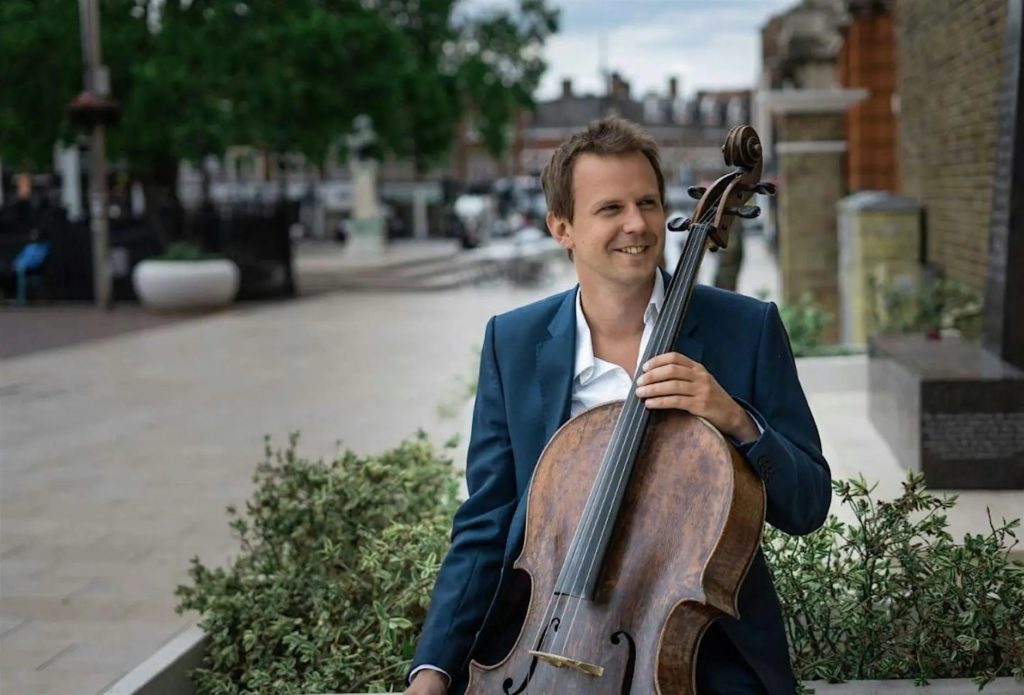
York Chamber Music Festival director and cellist Tim Lowe
THE recital was billed as the Festival Launch Concert – Gems of the Romantic Cello, but as the York Chamber Music Festival itself does not begin until September, I’m not entirely sure the description quite worked.
In truth, it felt more like a “taster” concert: a glimpse of what audiences might expect from this well-established and prestigious event later in the year.
That idea of a “taster” could — just — be applied to the opening work in the programme, Beethoven’s 12 Variations on “See The Conqu’ring Hero Comes”, WoO 45, for cello and piano, written when Beethoven was only 26 years old.
To be sure, he had already published significant works around this period — the Piano Trios, Op.1, the Piano Sonatas, Op.2, and his first two piano concertos — but it was as a virtuoso pianist that he initially established himself in Vienna. That background is reflected in the unusually substantial piano part.
The theme itself is based on the famous chorus from Handel’s Judas Maccabaeus, a composer Beethoven greatly admired. I really enjoyed the way the performers projected the reshaping of this famous ceremonial tune through the work’s changing moods and textures.
At first, the short movements came across as decorative, but from Variation 3 onwards the interplay became far more engaging. Here, cellist Tim Lowe’s agile playing danced around the melody while pianist Stephen Gutman’s accompaniment shimmered in the background.
The expressive cello line in Variation 5 felt almost operatic, while the witty exchanges and unexpected accentuation of Variation 7 were great fun. Even more thrilling were the technical fireworks of Variation 11. Indeed, it was the sheer exuberance of the performance that proved so enjoyable.
If describing the Beethoven as a “taster” work might be a slight stretch, it certainly applies to Richard Strauss’s Cello Sonata in F major, Op.6. Strauss began writing the work at the age of only 17 — an age when most young men are taking their first tentative steps into adulthood via their local pub.
The opening Allegro con brio was full of energy and passion. The roles of both players are very much equal, and Lowe and Gutman clearly relished the challenges. What struck me most was the orchestral nature of the writing: thick textures and an expansive Romantic atmosphere, especially in the development section.
Like the opening movement, the closing Finale: Allegro vivo featured exhilarating quickfire exchanges and extended virtuoso passages, particularly for the cello. The exhilarating dash to the finish line was genuinely thrilling.
Pianist Stephen Gutman
Yet it was the warm intimacy of the central Andante ma non troppo that left the strongest impression. Here, Lowe’s melodic playing glowed, amplified and sustained by Gutman’s tender support. But the partnership was very much one of equals, and the two players complemented each other superbly.
Camille Saint-Saëns’s Cello Sonata No.1 in C minor, Op.32 (1872), is surely one of the great Romantic works for cello and piano. The performers instinctively projected the dark, turbulent character of the opening Allegro. Lowe’s playing possessed the necessary dramatic nobility, while Gutman’s piano drove the music forward with urgency and weight.
The dialogue between the performers was powerful, while the sudden bursts of lyricism and the virtuosity of the closing passages fully convinced. Much the same could be said of the closing Allegro moderato, this time propelled by an almost relentless rhythmic momentum. Echoes of Beethoven? Maybe.
Once again, however, it was the central Andante tranquillo sostenuto that made the deepest impression. The sheer elegance of the playing was genuinely delightful.
One of the most striking features of the work was the dramatic use of the cello’s lowest string — the C string. The sound Lowe produced was dark and resonant, creating an almost orchestral quality throughout the sonata, and not only in the outer movements. In the Andante, that darker quality softened into warmth — a kind of chocolate-rich intimacy that proved utterly seductive.
This is a typical characteristic of Lowe’s instrument – the cello made by Carolus Tononi in Bologna in 1716 – and it may also explain the occasional blurring of the pitch centre in the higher positions.
The programme closed with Robert Schumann’s Adagio and Allegro, Op.70, surely one of the finest short chamber works of the Romantic era. Originally written in 1849 for horn and piano, it was later rearranged — with Schumann’s blessing — by the cellist Friedrich Grützmacher for cello and piano.
I’m glad he did, because Lowe’s warm cello tone drew out and intensified the yearning quality of the Adagio. Both players shaped the movement beautifully, capturing its introspective character withreal sensitivity.
The pivotal transition to the explosive energy of the Allegro was entirely convincing. Schumann marks the music Rasch und feurig (“Fast and fiery”), and indeed it was.
Lowe’s cello playing displayed a dazzling, heroic character, filled with sweeping runs, dramatic leaps and sharp exchanges with Gutman at the piano. What really elevates the movement, however, is the brief glimpse back towards the earlier tenderness — a fleeting glance over the shoulder before the inevitable drive towards the triumphant conclusion.
I don’t usually like encores. They are almost invariably unnecessary, creating a self-indulgent buffer that obscures the impact of a concert’s true ending. But I really did like this one: Schumann’s Five Pieces in Folk Style (Fünf Stücke im Volkston), Op.102, No.2 (Langsam). A sublime melody, beautifully played, reminding me why I fell in love with Robert Schumann’s music all those years ago.
Coming to terms with loss: Alexa Chaplin ‘s Annie in York Musical Theatre Company’s Calendar Girls The Musical. All pictures: Gareth Jenkins *
WRITTEN by two Honorary Yorkshiremen from the Wirral, friends-since-schooldays Tim Firth and Gary Barlow, Calendar Girls The Musical plays an immediate crowd-pleasing ace card by opening with a song called Yorkshire.
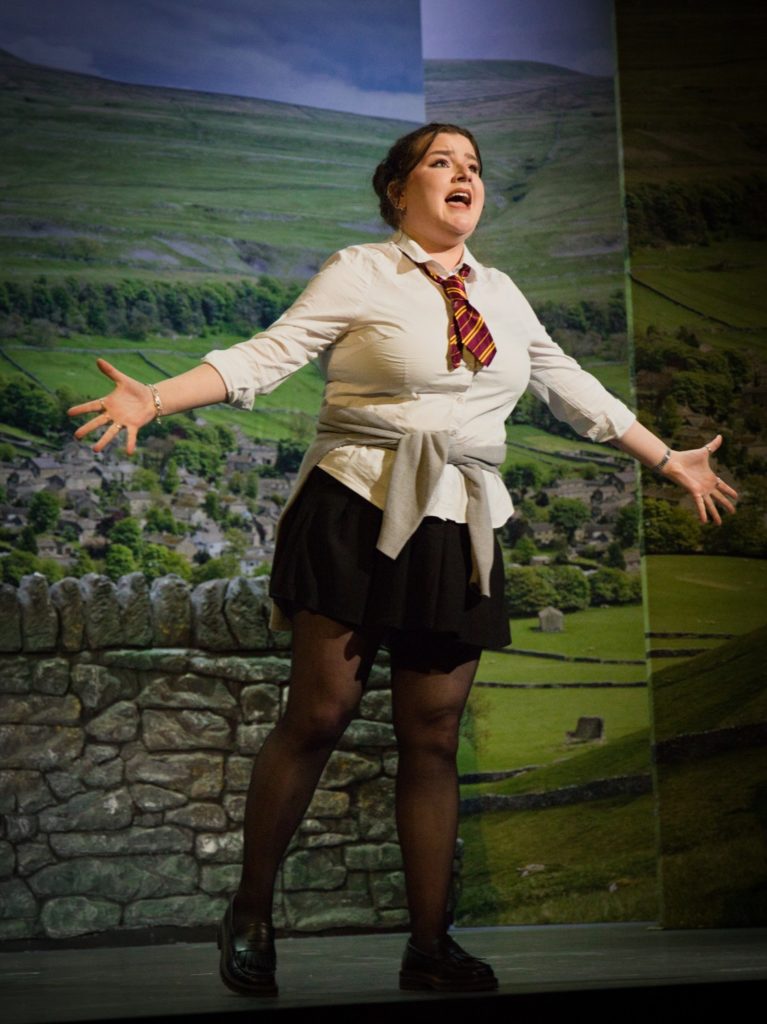
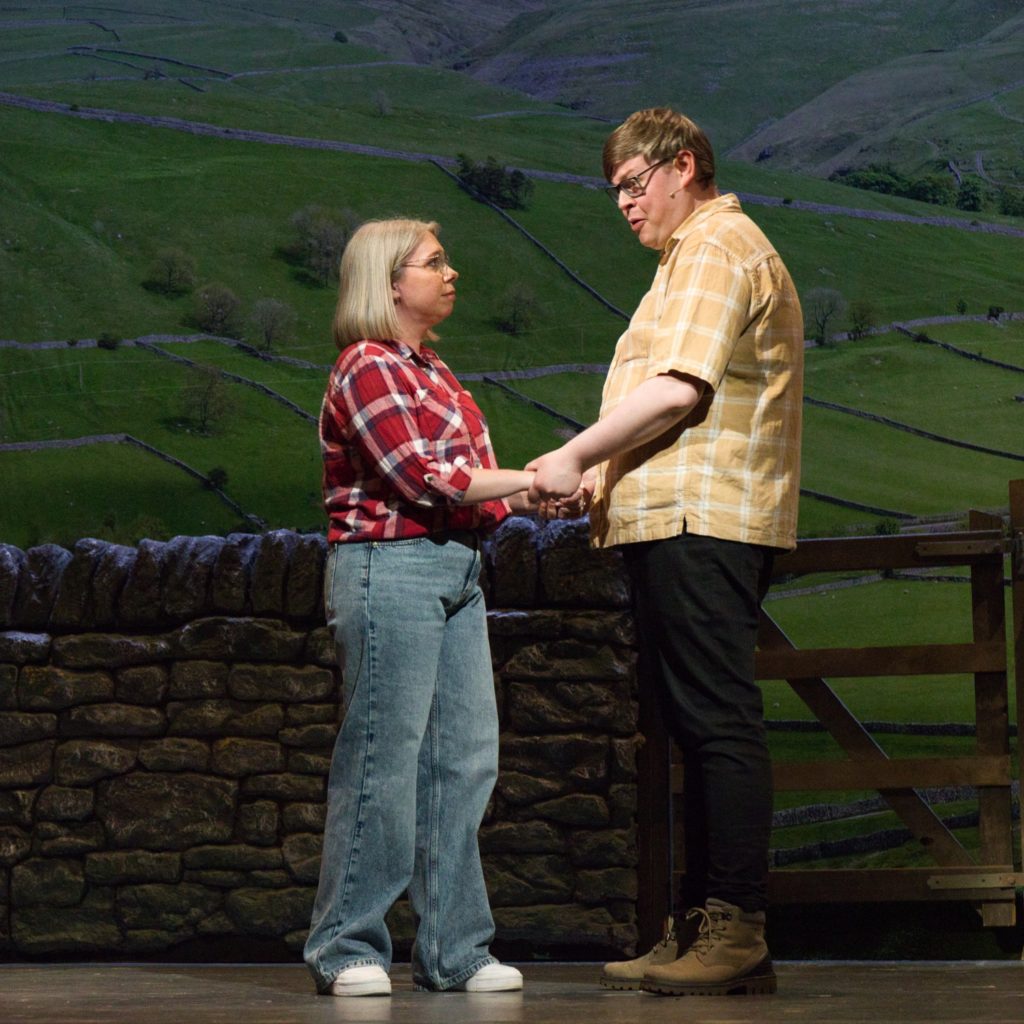
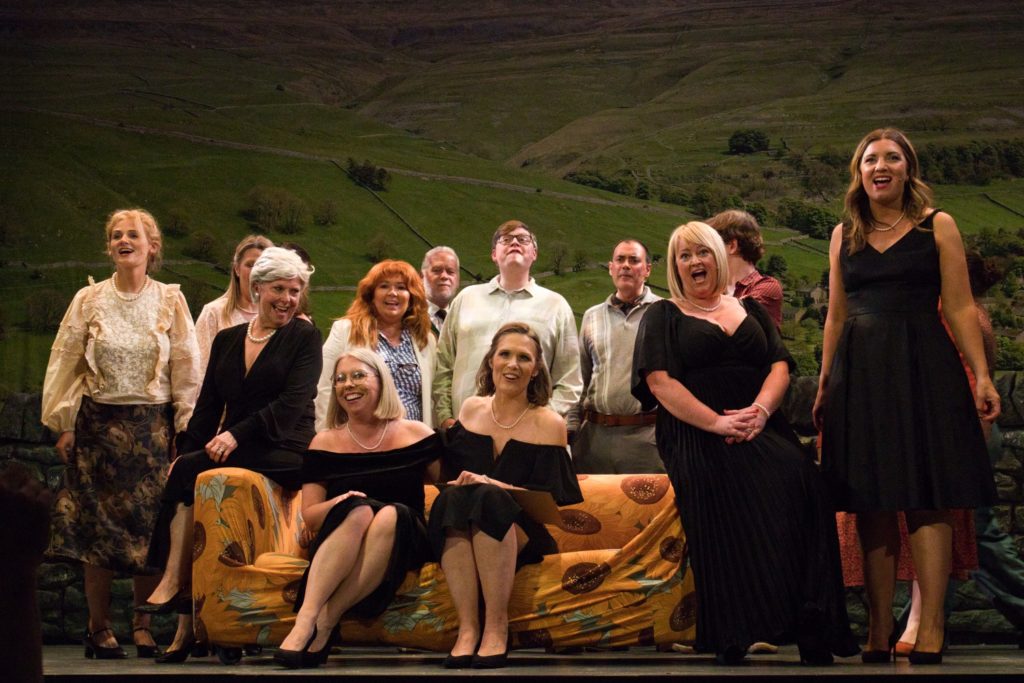
Premiered under the name The Girls at Leeds Grand Theatre in 2015 and first staged in York by York Stage Musicals at the Grand Opera House in 2022, the show now plays out against All In One Productions’ photographic scenery of the rolling Yorkshire Dales at their most green and pleasant pastured. In front is a dry stone wall with a gate. You can almost smell the ‘Yorkshireness’ of it all.
Welcome to director-choreographer Kathryn Addison’s production for York Musical Theatre Company, with musical director John Atkin in the pit to conduct a band wherein Rosie Morris’s piano is to the fore (as to be expected when Take That keyboardist Gary Barlow is the composer), complemented by Cameron McArthur’s keys and guitar, Paul McArthur’s bass, Andy Jennings’ percussion and the emotive Yorkshire brass of Ross Simpson’s trumpet and Martin Farmery’s trombone.
From the Yorkshire-wide grin of that opening number, Firth and Barlow then introduce ‘The Girls’, the Knapely Women’s Institute members who will go on to pose for the fundraising artistic nude calendar that launched so many doppelgangers.
Eve Clark’s Jenny
The new WI chairwoman Marie (Andrea Copeland) may be old-school, all Jam and Jerusalem, dull guest speakers and duller regulations, but as second song Mrs Conventional establishes, these girls can be unconventional, especially Katie Melia’s rebellious Chris, whose sparky individuality so attracted husband Rod (Jack Hooper), who runs a flower shop.
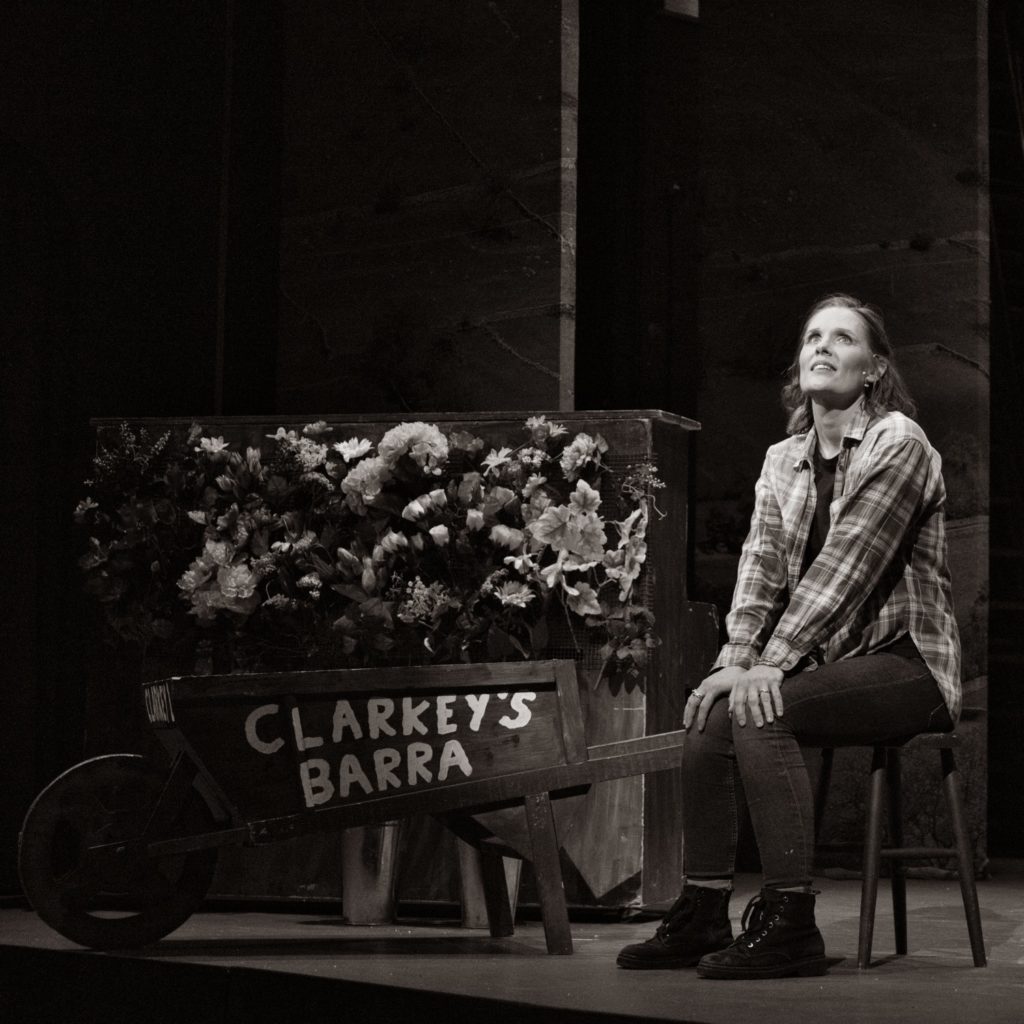
However, the sunshine dims when John ‘Clarkey’ Clarke (Peter Melia), National Park officer, gardener and sunflower-loving husband of best friend Annie (Alexa Chaplin), is diagnosed, spoiler alert, with non-Hodgkin’s lymphoma.
Struggling to come to terms with the impending loss of this gentle, gregarious giant, Chaplin’s Annie delivers a beautiful rendition of Barlow and lyricist Firth’s outstanding number, Scarborough, with its devastating closing lyric: “And who will protect me/While telling me lies/If you’re not here.”
Those lines are typical of the observant golden touch of Firth, whose script judges perfectly what the crescendo should be (the stripping off one by one for the calendar), while also introducing three teenage children (James Hepworth’s Danny, Eve Clark’s Jenny and Frankie Jackson’s Tommo), who show another side to their parents.
Alison Taylor’s Ruth performing My Russian Friend And I
Firth applies the right balance of pathos, sadness, northern humour and bloody-minded defiance, the tears and the cheers, all heightened by the piano-led storytelling songs that show off another side to Barlow’s songwriting in modern musical set-pieces such as Yorkshire, the carol-singing Who Wants A Silent Night (led by Amy Greene’s Cora at the piano) and Sunflower, (fronted by Melia’s Chris).
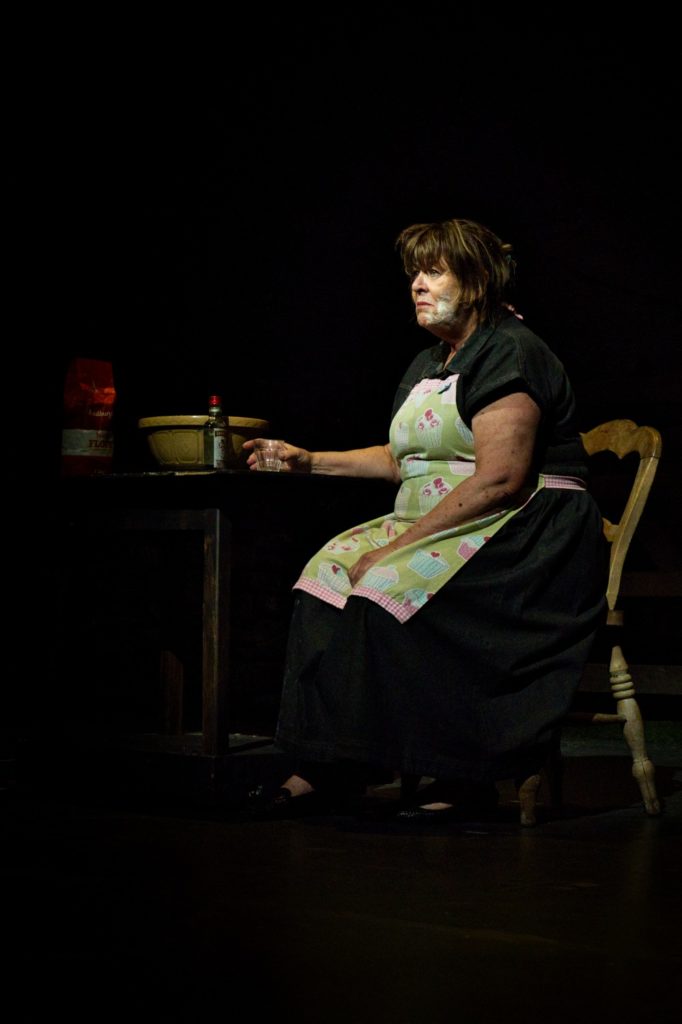
Barlow’s mastery of balladry is affirmed by Chaplin’s performances of not only Scarborough but also Very Slightly Almost and Kilimanjaro, while Firth’s lyrics lend exuberant humour to So I’ve Had A Little Word Done, the big, brassy, belter for Sarah Brown’s Celia, then a darker sting to vodka-swilling Ruth’s My Russian Friend And I, sung with confessional candour by Alison Taylor, bordering on self-loathing.
Melia and Chaplin bring out all sides of Chris and Annie’s friendship, the light and the shade, the highs and the lows , the contrasting temperaments, the fun and the fall-outs, the grief and the renewal. Around them, Greene’s Cora, Brown’s Celia, Taylor’s Ruth, Copeland’s Marie and the ever-wonderful Sandy Nicholson’s former teacher Jessie savour their moment in the spotlight.
So too does Nicola Dawson in her cameo as Knapely show judge Lady Cravenshire, Janie Woolgar’s ill-fated WI lecturer, Brenda Hulse, and Paula Stainton and Samantha Cole’s two Miss Wilsons, a double act forever offering pots of tea and coffee.
Kate Melia’s Chris and Jack Hooper’s Rod in York Musical Theatre Company’s Calendar Girls The Musical
Peter Melia’s John is affable, phlegmatic, humorous, even in the face of a terminal illness, while Jack Hooper’s Rod delivers two homespun homilies on love and marriage that will make even a cynic go all warm and fuzzy.
Hepworth’s disgraced head boy Danny and Clark’s wayward schoolgirl Jenny, who leads him astray, delight in their awkward teenage journey of discovery, joined by Jackson’s ever-cheeky, work-shy Tommo.
No less awkward is Joe Marucci’s Lawrence, the shy photographer who suggests how the traditions of the WI – knitting, baking, piano playing, flower arranging – should be adapted for the calendar shoot featuring the ladies of Knapely in all manner of shapely.
Aside from some technical difficulties with the sound, Wednesday’s opening night reaffirmed what a wonderful celebration of community, Yorkshire, life, flowers, love, humour, humanity and the power of song Calendar Girls remains.
York Musical Theatre Company in Calendar Girls The Musical, Joseph Rowntree Theatre, York, tonight, 7.30pm; tomorrow, 2.30pm and 7.30pm. Box office: 01904 501935 or yorktheatreroyal.co.uk.
In full bloom: Kathryn Addison’s cast in the finale to Calendar Girls The Musical at the Joseph Rowntree Theatre
* Photographer Gareth Jenkins
BASED in Kirkbymoorside, Gareth is “always happy to photograph creative events at no charge”. Any arts organisation in need of a photographer can contact him on 07875 018888 or 01751 430116.
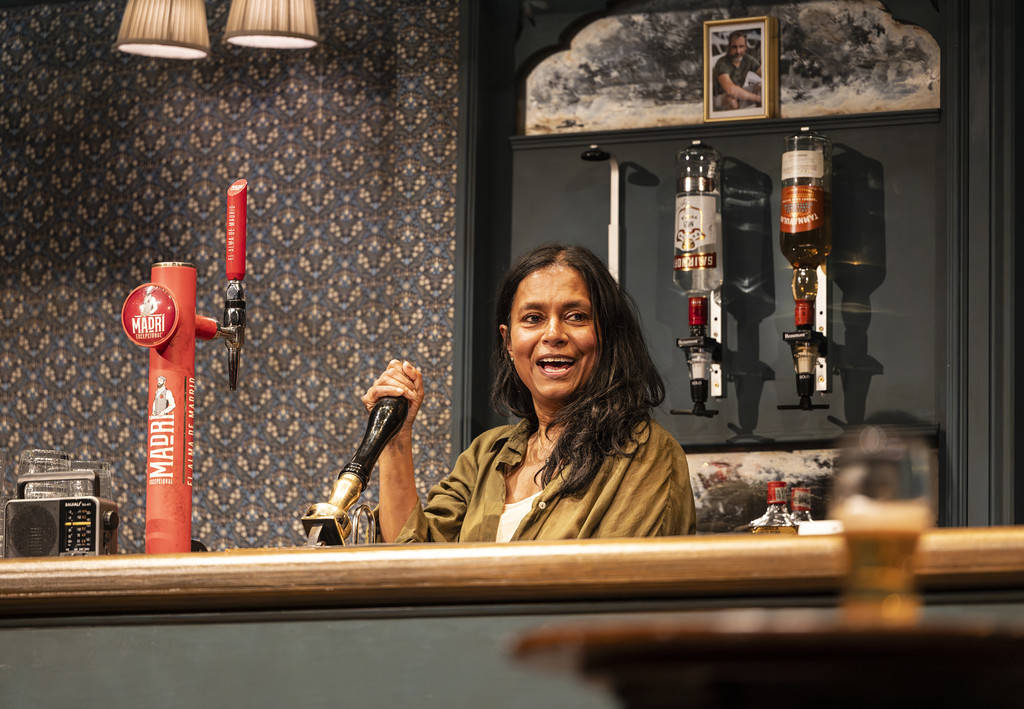
Bharti Patel’s Sanjana, landlady of The Albion in Our Public House. Picture: Pamela Raith
THE premiere of Our Public House, Barney Norris’s big-hearted story of community, connection and what might happen if everyone truly had their say, is running at Leeds Playhouse this week.
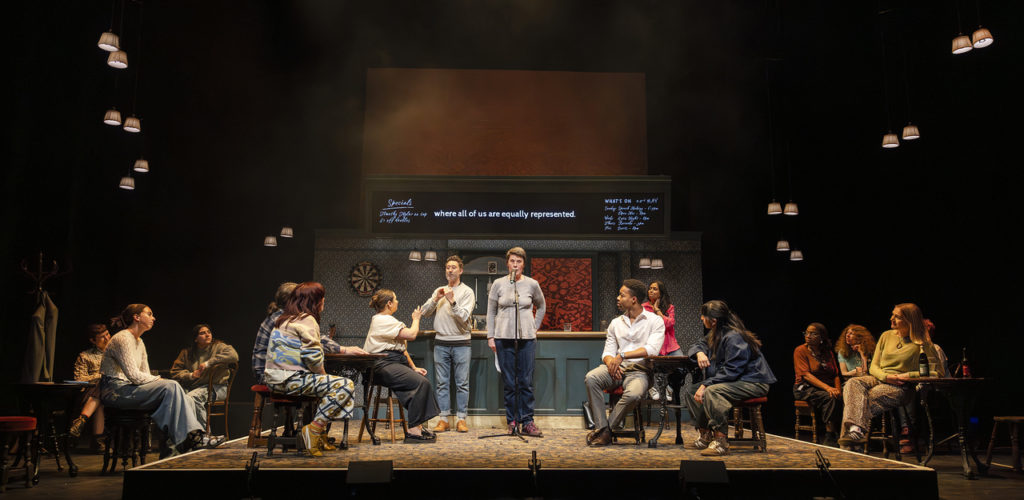
When an entire community spoils its ballot papers and refuses to vote, angry at being unheard but wanting to show those in power they will not to be taken for granted, a pub on the brink of closure becomes the only place left to talk in touring company Dash Art’s agitated agitprop drama.
As a storm rages outside, The Albion landlady Sanjana (Bharti Patel), a family in mourning, familiar regulars, unexpected guests and local Labour MP Mary (Gabriella Leon) are thrown together for a night of debate, confession and open-mic speeches.
In a town divided by politics, secrets spill. Songs rise. Jokes crackle. Ideals clash. People fall in love. People fall out. Something shifts.
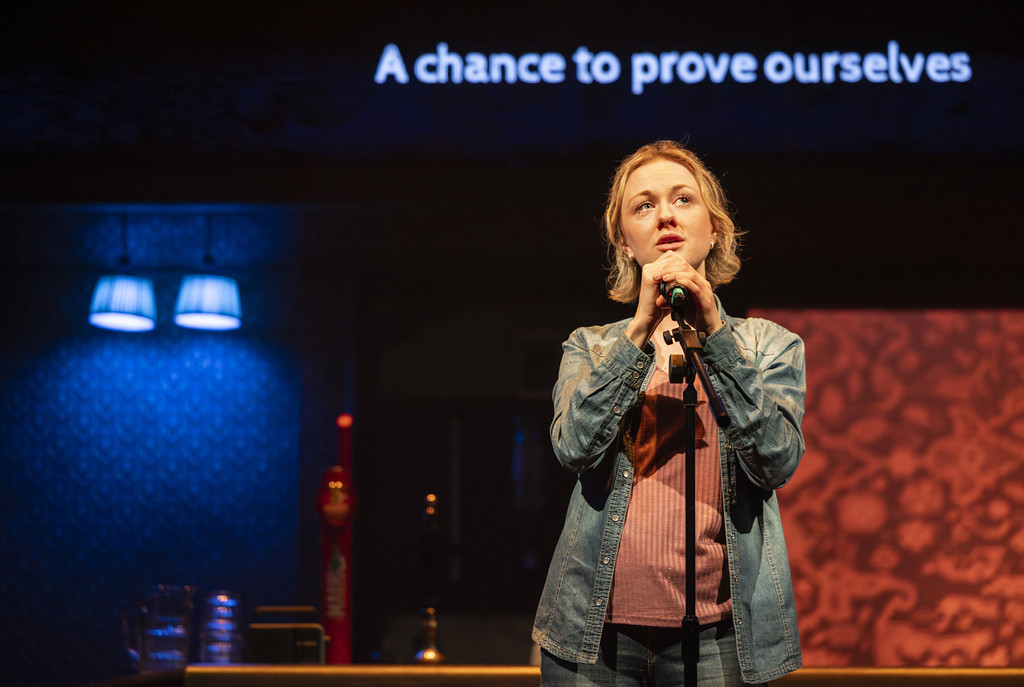
Inspired by the real words of more than 600 people nationwide,Our Public House transforms the state of the nation into a play with original live music where “drama and voices like yours take centre stage”.
At every show, a local community ensemble will be part of the action onstage, performing alongside the cast and highlighting the issues they feel are most important locally. Hence no two performances will be the same on Dash Art’s tour that will take in Prescot, Coventry, Cornwall, Sheffield Playhouse (June 17 to 20) and London’s Marylebone Theatre
Lauren Moakes as released prisoner Jo in Our Public House. Picture: Pamela Raith
Told through spoken English, British Sign Language (BSL), Sign Supported English (SSE), creative captioning and with original live music, Our Public House considers what happens when your voices take centre stage and those with influence start to listen, as explored by Norris, who also wrote the book for Sting’s shipbuilding musical, The Last Ship.
Patel and Leon are joined in Josephine Burton’s cast of hearing and deaf actors by Kit Esuruoso, Chaya Gupta, Lauren Moakes and Fergus O’Donnell for a topical play created over three years of research and workshopping that integrates the words of people from across England – some of whom will appear on stage.
The Albion, such an evocative name for a divided state-of-the-nation play, is an emblematic setting, where landlady Sanjana is the fulcrum. “She is running a speechwriting club early doors in the pub, before punters come in for the open-mic night,” says Dash Art artistic director Josephine Burton. “She’s had enough of the people feeling that they’re not heard, so she’s teaching them how to write and deliver speeches.”
Dialogue is delivered alongside songs, composed by Jonathan Walton, with lyrics co-written by workshop participants from across the country. In addition, every night throughout the play’s run, the audience will hear two speeches written and delivered by local people.
“It will be a new ensemble every night. That’s amazing” says Josephine. “So, all the way down the line, the whole process is really dynamic, and it’s constantly changing and evolving.”
The politics and the pints come with a potent chaser of humour, served with meaty ideas too. “Dash Arts asks the big questions of our time and attempts to answer them over multi-year programmes of work, with artists, with academics, with participants, and with audiences,” says Josephine.
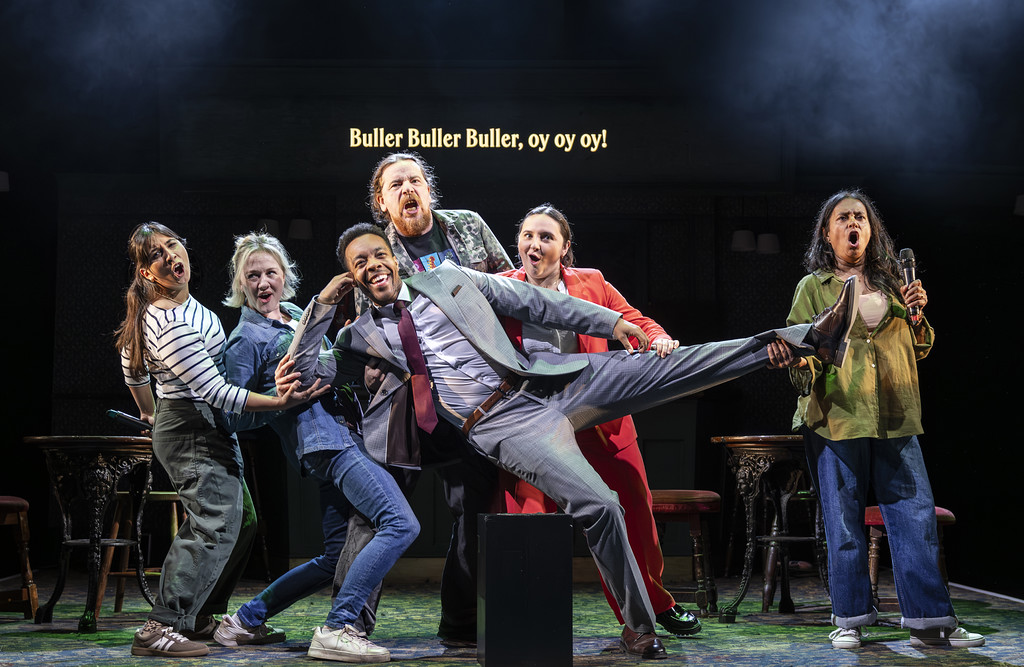
Chaya Gupta, left, Lauren Moakes, Kit Esuruoso, front, Fergus O’Donnell, Gabriella Leon and Bharti Patel in the Buller Buller Buller, Oy Oy Oy! scene in Our Public House. Picture: Pamela Raith
Post-Brexit, she detected a fracturing of British UK identity, stirring her interest in “who we are in England today. What does it mean to be English?”
Three years ago, that question prompted the beginning of a process wherein Dash Art became involved in a speech-writing project, fronted by academic Alan Finlayson, that aimed to help people make and deliver speeches on issues they cared about.
Or as Josephine puts it: “Things that they felt we could do today, that would make tomorrow better. And my instinct was, if we supported the project – went round the country, went into community centres, and deaf communities, and prisons, and schools, and worked with young activists in Sheffield, and in Coventry, and in Norwich, and in Cornwall, and in Prescot – we’d get a real picture of who we are as a country.”
Those early stages “coincided with the dying days of the last Conservative government”. “We were hearing people talk about cost of living, and mental-health crisis, and special-needs education, and social housing. I always knew we were gonna make a play of some sort. I just didn’t know what,” she says.
Inspiration struck when Josephine realised a local pub would best suit those conversations. It was at this point that she brought playwright Barney Norris on board – with source material aplenty to utilise.
“I read 125 speeches before my initial workshop, and it was up to 200 by the time I delivered the first draft – and it’s kept growing,” he says. “So it’s kind of been a continual live document. This is my fourth play set in a pub.
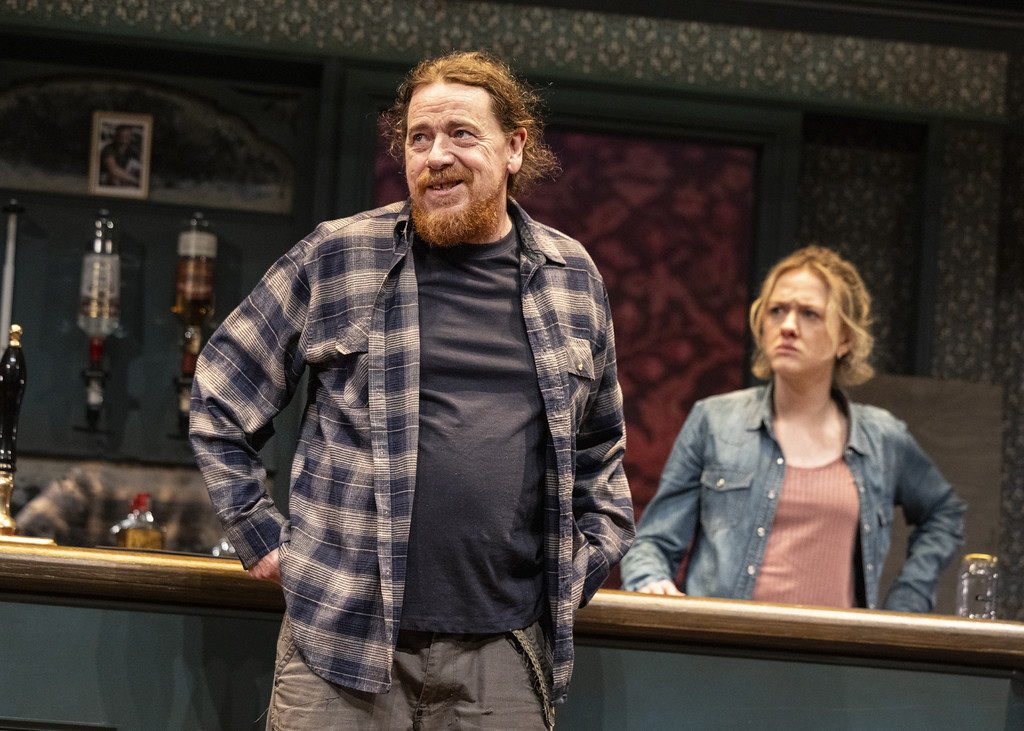
Fergus O’Donnell’s Scott: Pub regular standing for Reform in the local election in Our Public House. Behind the bar is Lauren Moakes’ Jo.Picture: Pamela Raith
“I love a pub play, because I think the complex dynamics of status, and home, and performance in those spaces, are wonderful metaphor territory – for society, and also the kind of toxicity and ‘exclusionary-ness’ of pubs to some people, and the concept of welcome, the concept of a place you’re allowed to go in and get a glass of water, and not spend any money. And all the best stories happen around the fires.”
The creative process with Dash Arts felt very natural for Barney. “It’s a really exciting collaborative culture clash,” he says. “We’ve sustained the social-realist context that’s the basis for the majority of my work, and then, from time to time, we’ve exploded it – with music, or the public getting up on stage and speaking. So the play feels like this interesting meeting place of styles and languages, in the same way that society, of course, is also a meeting place.”
A further influence was Shakespeare’s The Tempest. “Could the Albion be like Prospero’s island, and could our landlady be a version of Prospero, conjuring magic, bringing people into her world?” ponders Barney. “And we’re touring to Shakespeare North, which feels appropriate.”
Barney describes Our Public House as “a play that engages with big ‘P’ politics”. “That’s a real new frontier,” he says. “Obviously, all theatre is political, but I hadn’t done a play about a politician.”
Coincidentally, the playwright had decided to enter politics himself, standing for the Greens in his hometown of Salisbury in the 2024 General Election. “That was really fun – an opportunity to amplify the lessons and share them, because I never imagined a world in which I won the seat of Salisbury off the Tories,” he says.
“But what I could do was to try and learn lessons about that process and feed them into the wider discourse – and the play was so exciting in that context, a way to talk about all that.”
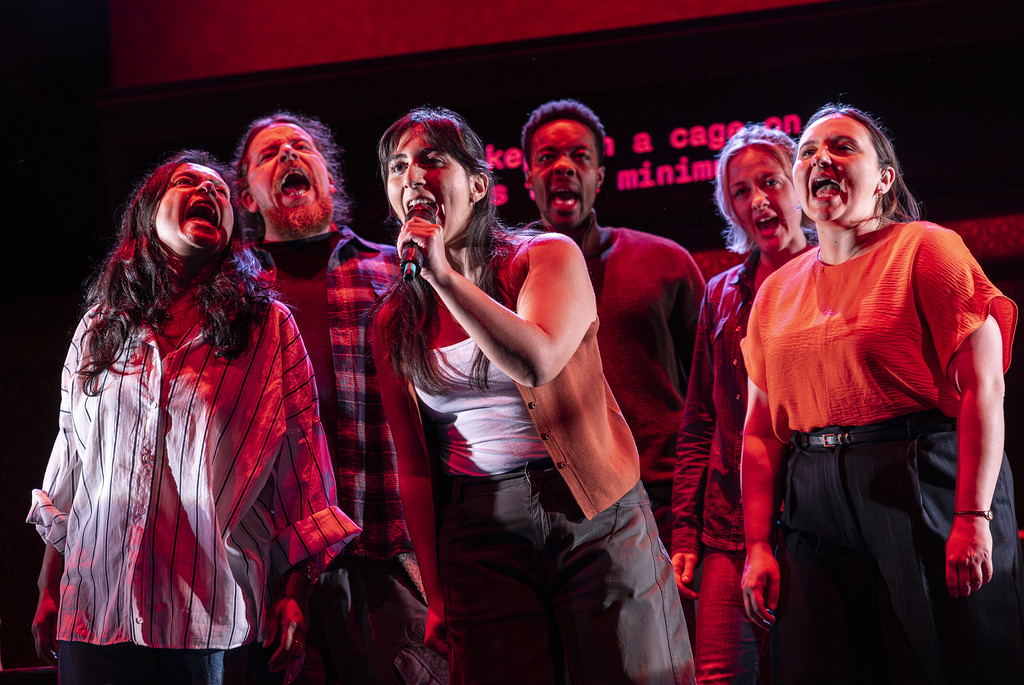
Chaya Gupta, centre, leading the singing in Our Public House with Bharti Patel, left, Fergus O’Donnell, Kit Esuruoso, Lauren Moakes, and Gabriella Leon. Picture: Pamela Raith
Given that political office might seem an unlikely career swerve for a playwright, Barney cheerfully admits that it was not particularly on his to-do list. “I did it partly because I’d been going along to the meetings of the local Green Party, and honestly, at that time, there were only two of us attending the meetings regularly who were still a working age.
“I’d only been in the area for a short time, so I wouldn’t normally have muscled in, but I thought, oh, go on. I’d love that. It was this amazing opportunity to tramp the streets and meet people. One of the secret privileges of it was that I revisited and reintegrated into the landscape of my youth, having not lived in Salisbury since I was 18. You come back, you’re walking down every street you’ve been drunk underage on in your life. It was great.”
More seriously, Barney was struck, both on the doorstep and on the hustings, by the way politicians “have to pretend to listen in order to get a vote, and they will sort of half-promise some stuff or whatever”.
“There’s an extraordinary fakeness around what they’re allowed to say,” he says. “For example, the Labour manifesto had just 85 words on their agricultural policy – and that was what the Labour candidate was allowed to say. He didn’t have any other insight, and couldn’t answer any specific question. That was really interesting: to see the limits of language, the straitjacket of what an individual politician is allowed by head office to say.”
As a writer, Barney relished the colour and flavour of the environment: the Reform candidate was openly an admirer of Putin, “which, in the city of Novichok, felt like a bold move,” he says.
Also standing for election was the king of the Druids, Arthur Pendragon. However, the most significant contribution to the play’s plot from Barney’s brief time in politics was the idea of a vote strike.
Gabriella Leon’s MP Mary holding centre stage in Our Public House. Picture: Pamela Raith
“On election night, you have to look at every single spoiled ballot, and collectively agree that they are spoiled, and that they shouldn’t be counted,” he says. “There were hundreds more than usual at the last election. Many of them were penises drawn on the ballot, which turned out to be a campaign organised by a local anarchist who worked in a bar.
“That felt arresting to me. I thought, well, there’s something in the water, isn’t there? The rage and rejection that people feel towards mainstream politics was there, in those endless daubings on the ballot paper.”
This is not, however, a symptom of disengagement, suggests Josephine. “People are incredibly inspirational. If you give them an opportunity to speak, everyone has ideas about what we could do that would make things better, but they don’t feel heard,” she says. “People feel politics is broken because the system does not enable change. It’s definitely not apathy.”
Key to the play’s vision is the central politician character, MP Mary, being deaf. “We spent time in the deaf community around the UK,” says Josephine. “It was so powerful to hear what they felt, and to be able to provide a platform for those feelings and thoughts to be expressed. It was important for us to bring a deaf actor into the room alongside a hearing cast.”
Actress Gabriella Leon “helped us and gave us permission to build a deaf character,” says Josephine. “That the politician in our play is deaf lends some irony to the fact that she is the first person to listen to the voices of the local community.”
The creation of Our Public House has been rich in its variety of lived experience. “The work that we’ve done in prisons has been unbelievable,” says Josephine, after company members visited HMP Styal, a women’s prison just outside Manchester.
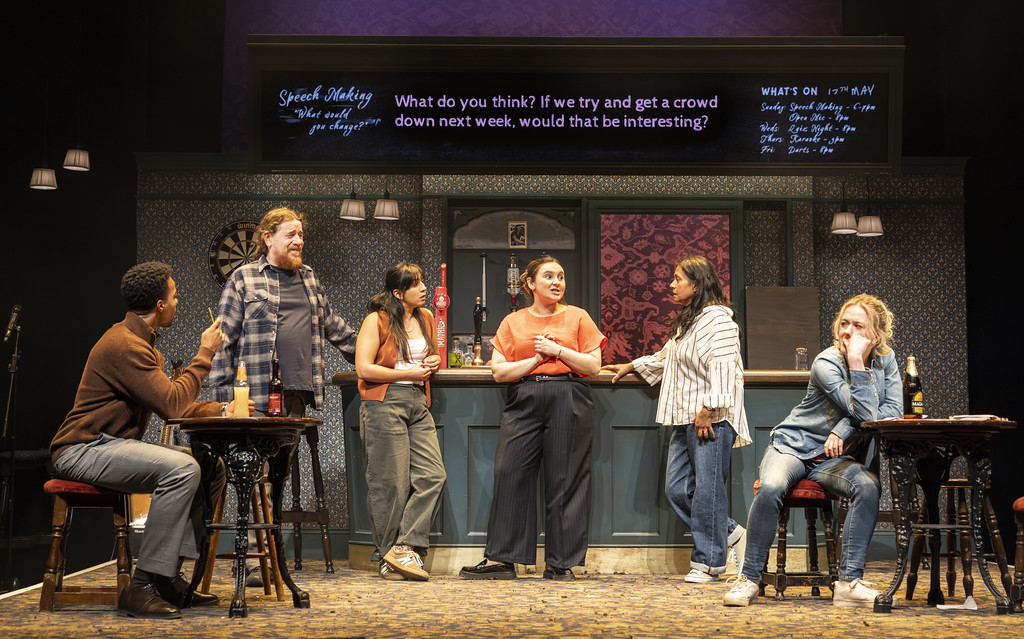
The “community ensemble” supporting cast changes at every performance of Our Public House to represent differing voices from the public. Picture: Pamela Raith
“My heart went out for the women in the room, and they have inspired one of the characters in our play. These are people who are so silenced in society. It was very moving.”
For Harvey, creating the character of a putative Reform councillor was among his most invigorating challenges. “The arc of political zeitgeist across the period that we’ve been making the show has mirrored the journey we’ve been on with that,” he says.
It was essential to avoid approaching the character “from a place of demonisation and snobbery and dismissal,” he posits. “It’s such an incredibly prominent element of our contemporary politics. So I’ve really tried to articulate that empathetically from the inside out.
“My process of writing is very much to ‘be’ the characters, and I write out loud with my mouth, and then I write it down later. I just wander around the fields, talking to myself in their voice until they’re funny, you know?
“And so, to become that person – coming from the modern urban Left – that felt like a stimulating adventure. I hope what we’ve done is write a person of great dignity and integrity, with real concerns and problems – but who is coming up with, to my mind, the wrong solutions for them.”
Both Josephine and Barney emphasise that Our Public House should not feel like a lecture. “It’s just really, really funny,” she says “It’s a comedy. A really good night out.” Crucially, it is relatable too. “It’s a play about everywhere. Your place. Your local.”
Dash Art in Our Public House, Leeds Playhouse, tonight, 7.45pm; tomorrow, 2.30pm & 7.45pm. Box office: 0113 213 7700 or leedsplayhouse.org.uk. Sheffield Playhouse, June 17 to 20; sheffieldtheatres.co.uk.
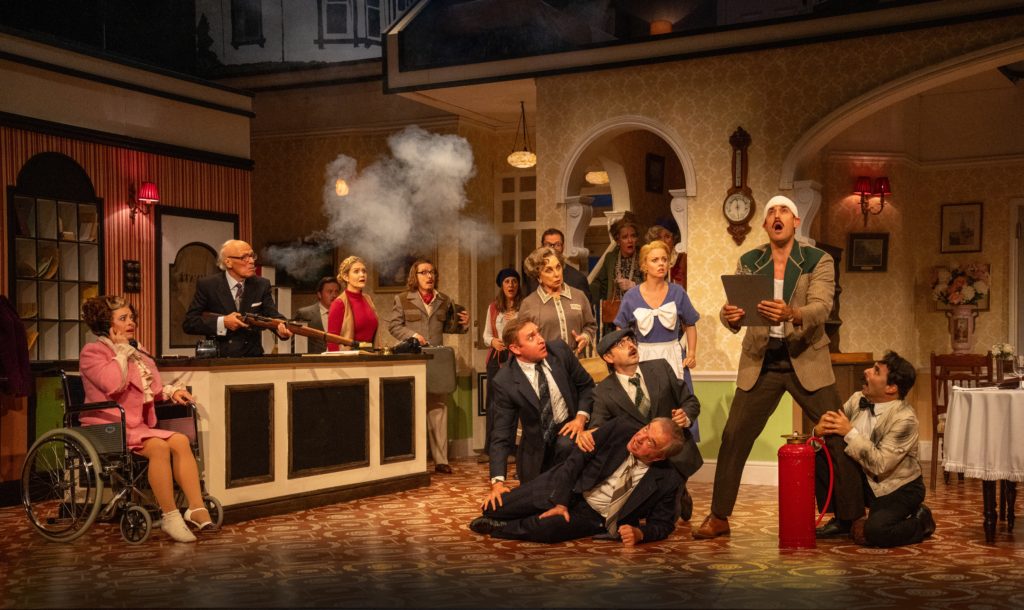
The full cast in the finale to John Cleese’s Fawlty Towers The Play. Picture: Hugo Glendinning
WHEN Monty Python alumnus John Cleese opened Fawlty Towers The Play at London’s Apollo Theatre in May 2024, he was “more confident about it than almost anything I’ve ever done”.
After two sold-out West End seasons, a ten-month 39-venue UK tour was launched in September 2025, visiting Leeds Grand Theatre in early January and now the Grand Opera House in York this week.
“I know all the lines,” said the lady in the stalls row behind your reviewer at Wednesday’s well-attended matinee. Such has been the permeation of the coastal hotel shenanigans of Cleese and Connie Booth’s beloved BBC sitcom, whose 50th anniversary was the trigger for Cleese to mount the stage show, directed with comedic elan by Caroline Jay Ranger.
Just as Eric Idle adapted the 1975 film Monty Python And The Holy Grail for the hit stage musical Monty Python’s Spamalot, so Cleese, now 86, is on to a winner with Fawlty Towers The Play. Hapless Spanish waiter Manuel may say “I know nothing”, but Cleese knows everything about how to transfer Basil and Sybil’s trials and tribulations from small screen to stage.
Whereas Idle affectionately subtitled Spamalot “A New Musical (Lovingly) Ripped Off From The Motion Picture”, Cleese has adapted three of the most cherished episodes – The Hotel Inspectors, Communication Problems and The Germans – to form two Acts, concluding the madcap proceedings with a new finale.
“The English do love a farce,” observed Cleese, whose play has the classic structure, physical silliness and comic verve of the works of Ben Travers, Brian Rix and Ray Cooney. He named Michael Frayn’s Noises Off and Richard Bean’s One Man, Two Guvnors too, and you will be laughing equally as frequently at Basil’s antics in Fawlty Towers live on stage.
There is an added factor here: familiarity, a feeling as comforting as a well worn pair of slippers or a favourite sofa or the sound of Dennis Wilson’s TV theme tune. That familiarity begins the moment you settle in your seat and take in Liz Ascroft’s open-plan set design of the hotel reception desk, the stairs to Mrs Richards’ first-floor bedroom, the dining room and the doors to the kitchen.
Above, to one side, stands a model of the frontage of Fawlty Towers, in the English Riviera town of Torquay. In the middle is a cut-out of the roof; to the other side is the Fawlty Towers sign – and yes, the order of the letters will be changed for Act Two in the tradition of the TV series. The first word becomes ‘Flowery’; over to you to work out the second!
Ascroft’s design sticks faithfully to the British mid-Seventies, with its ghastly colour palette, and her costume design does likewise, from ill-fitting shiny suits for assorted men to Sybil’s trademark pink two-piece The Malcolm Macdonald-style massive sideburns of Adam Elliott’s Mr Walt are a particular retro joy.
Elliott is part of a 17-strong cast – so rare to have such a large troupe for a tour these days – that is led by Danny Bayne as the deluded, crane-legged hotel proprietor Basil Fawlty and Mia Austen as his acerbic, haughty, exasperated but exasperating wife Sybil.
Cleese once described bolshy Basil as “rude but inefficient”, and Bayne’s characterisation captures that essence, relishing Fawlty’s irascibility, his propensity to ingratiate guests one moment, then treat them as a verbal punch bag the next.
Throughout, Bayne’s Basil finds Austen’s always right Sybil to be the bane of his frustrated life, and the more you watch his pratfalls, the more it strikes you how he is the opposite of many comedy favourites.
We love Harold Lloyd, Buster Keaton and Charlie Chaplin because they ultimately win, like Shakespeare’s clowning fools. Fawlty, by contrast, only worsens his situation, tripping himself up with every utterance and foiled plan, and he is all the funnier for that, sharing the loser status of Rowan Atkinson’s Blackadder, albeit but without the intelligence and cunning to keep escaping.
Caroline Jay Ranger chalked up an earlier West End touring hit with the musical version of Only Fools And Horses that shared Fawlty Towers The Play’s sense of celebration of a British classic, while drawing performances from her cast that mirror the television versions but still bring new life to them too.
Especially so here from the veteran Paul Nicholas, still twinkling in marvellously mischievous comic form as the bumbling Major and Hemi Yerohem’s Barcelona waiter Manuel, the butt of so much Basil intemperance. Seeing such characters in the flesh adds still more to the comedic joy.
Joanne Clifton, swapping the song and dance of musical theatre for the straightest role here, is a delight as unflappable chamber maid Polly Sherman, echoing Connie Booth’s distinctive voice too. Jemma Churchill’s Mrs Richards, even grouchier than Basil, is the nightmare hotel guest personified, barking and snapping while refusing to turn up her hearing aid.
Look out too for the double-act cameos of Emily Winter and Dawn Buckland’s old ladies, Miss Tibbs and Miss Gatsby, and Greg Haiste’s Mr Hutchinson, Mrs Richards’ rival as Basil’s most irritating hotel guest.
Fawlty Towers The Play is fawltless: British comedy at its best, farcical and furious, utterly Seventies yet timeless too. Make a reservation, now.
John Cleese’s Fawlty Towers The Play, Grand Opera House, York, until Saturday, 7.30pm plus 2.30pm Thursday and Saturday matinees. Box office: atgtickets.com/york.