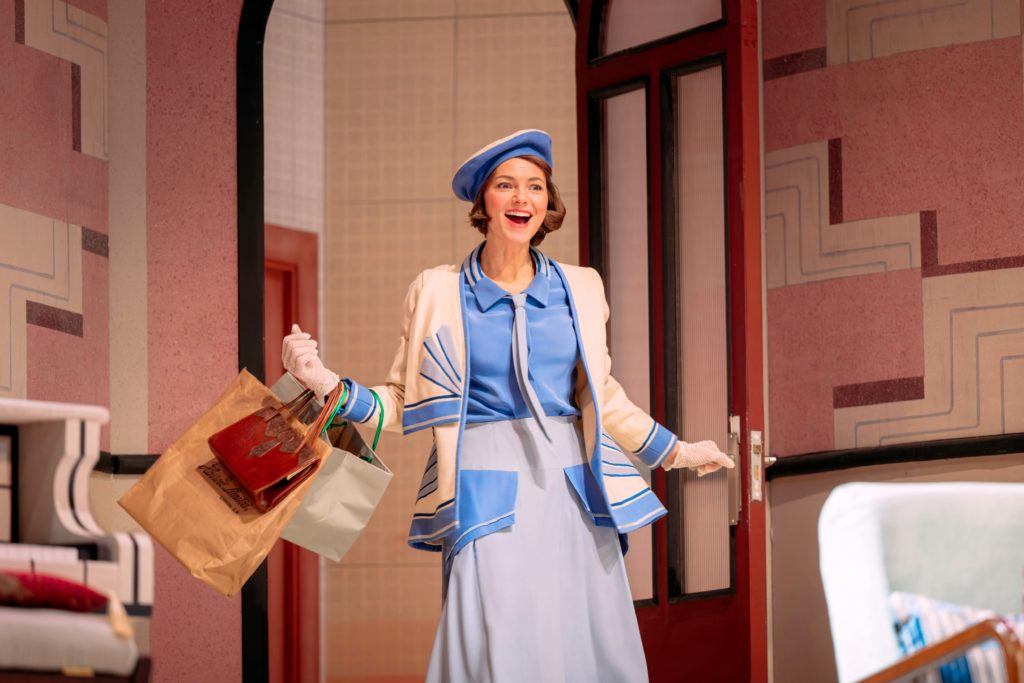
Kara Tointon’s “eloquent and elegant” Constance Middleton in the Royal Shakespeare Company’s The Constant Wife. All pictures: Mihaela Bodlovic; set and co-costume designer Anna Fleischle; co-costume designer Cat Fuller
OLIVIER Award winner Laura Wade and Royal Shakespeare Company co-artistic director Tamara Harvey open up W Somerset Maugham’s 1926 comedy of well-heeled manners for re-examination in 2026, upping the female ante while retaining the elegant period setting.
First staged at the RSC’s Swan Theatre last June, Wade’s sparky, sparkly adaptation chimes with her hit play Home, I’m Darling’s focus on gender roles, feminism, relationships and life choices while echoing the in-flagrante shenanigans of her Disney + television take on Jilly Cooper’s bonkbuster novel Rivals.
All while staying true to the sceptical satire of Somerset Maugham, such a perceptive observer of human behaviour, exposing our foibles and failings, our uncontrolled urges, in the mire of the moral maze, where deceit and deception play out in different ways.
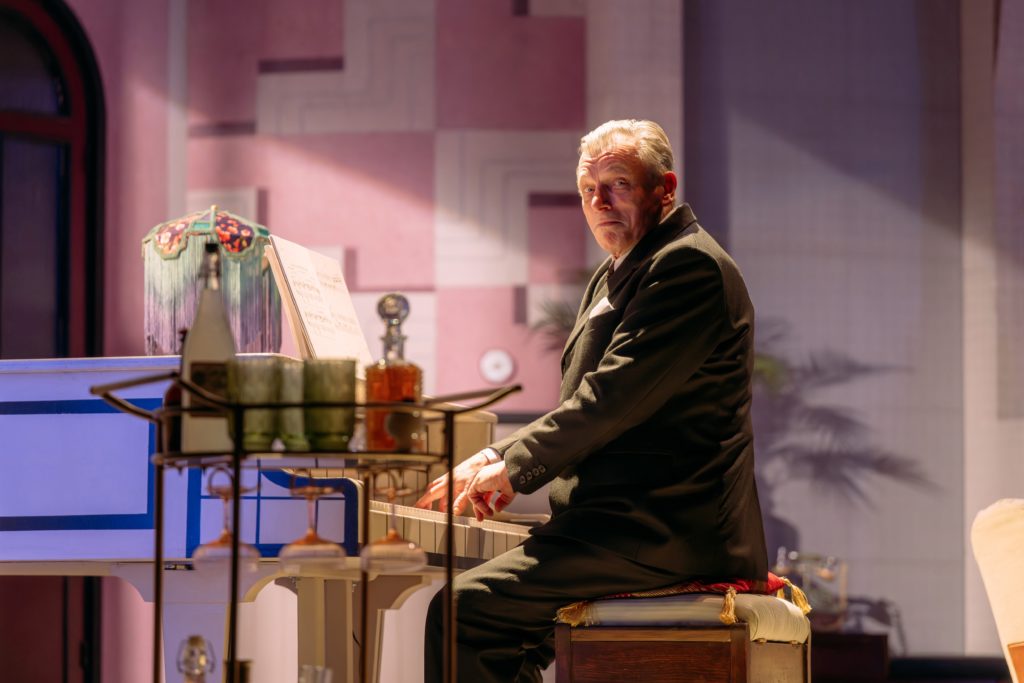
Philip Rham’s Bentley at the piano in The Constant Wife
He does so with a mischievous air, lighting the touch-paper, then stepping back and watching the fireworks fly, his input mirrored by Philip Rham’s immaculate, piano-playing butler, Bentley, ever alert, ever on hand with the right word or action, yet stoically detached as the heat rises around him.
Bentley remains unflappable, unhurried, a quality shared by Harvey’s direction that lets Wade’s dry-witted dialogue breathe to maximum comic effect, revelling in the chess game of words that fizz like an Alka-Seltzer in water.
Wade’s impact is more reinvigoration (like Richard Bean’s One Man, Two Guvnors update of Goldoni’s Italian farce) than reinvention. Whether using “kid” rather than “child”, or “dot dot dot”, she sometimes veers towards modern idioms, but her take on Somerset Maugham’s characters still exudes the high-society 1920s as much as the Art Deco designs and colours of Anna Fleischle’s set for the London flat of Harley Street doctor John Middleton (Tim Delap) and his wife Constance (Kara Tointon, last seen on a York stage in Patrick Hamilton’s Gaslight at the Grand Opera House in 2017).
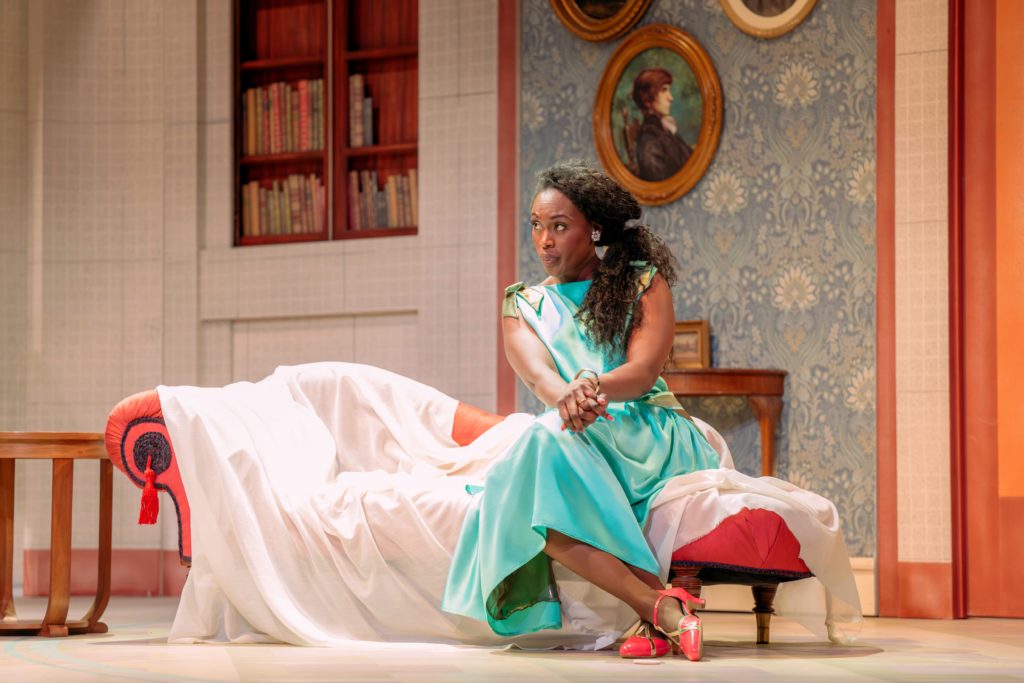
Gloria Onitiri’s gloriously carefree Marie-Louise Durham in The Constant Wife. Picture:
Through gauze, movement on stairways and corridors can be seen, informing the audience of who will be entering, and keeping us one step ahead in the tradition of French farce, although the comedy style is more akin to the drawing-room dramas of Noel Coward (and Oscar Wilde too), played out to Jamie Cullum’s jagged new jazz score.
The year is 1927; Constance’s impetuous interior designer sister, Martha Culver (Amy Vicary-Smith, in height-of-Twenties’ fashion Russian boots) is in heated discussion with their cynical mother, Mrs Culver (Jane Lambert understudying gamely – good voice, but stooped demeanour – for Sara Crowe).
We learn that Constance is deeply unhappy. “Nonsense,” counters her mother in Lady Bracknell mode. “She eats well, sleeps well, dresses well and she’s losing weight. No woman can be unhappy in those circumstances.”
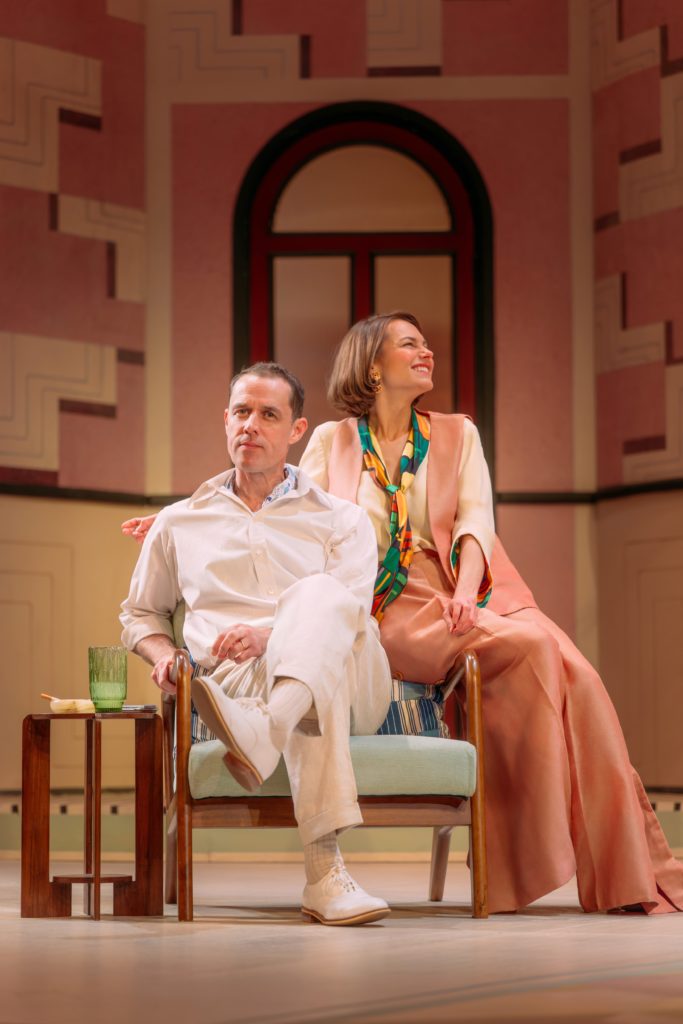
Tim Delap’s John Middleton and Kara Tointon’s Constance Middleton not seeing eye to eye in The Constant Wife
Should they tell Constance that they suspect John is being unfaithful? Enter Tointon’s flapper-dressed, poised, gliding Constance and next her best friend, the whirlwind Marie-Louise Durham (Gloria Onitiri), as Wade front-loads the women in Somerset Maugham’s story.
Spoiler alert, it turns out that Constance already knows of cocksure John’s affair, as the play takes a time-out to go back 12 months to when she walked in John and carefree Marie-Louise without them knowing.
That transition is played out with a directorial and design sleight of hand, as the fireplace, wallpaper and door change to before Martha’s interior re-design (topped off with ‘wallpaper’ rolling down to reveal ‘One Year Earlier’). This is typical of the wit of Harvey’s direction.
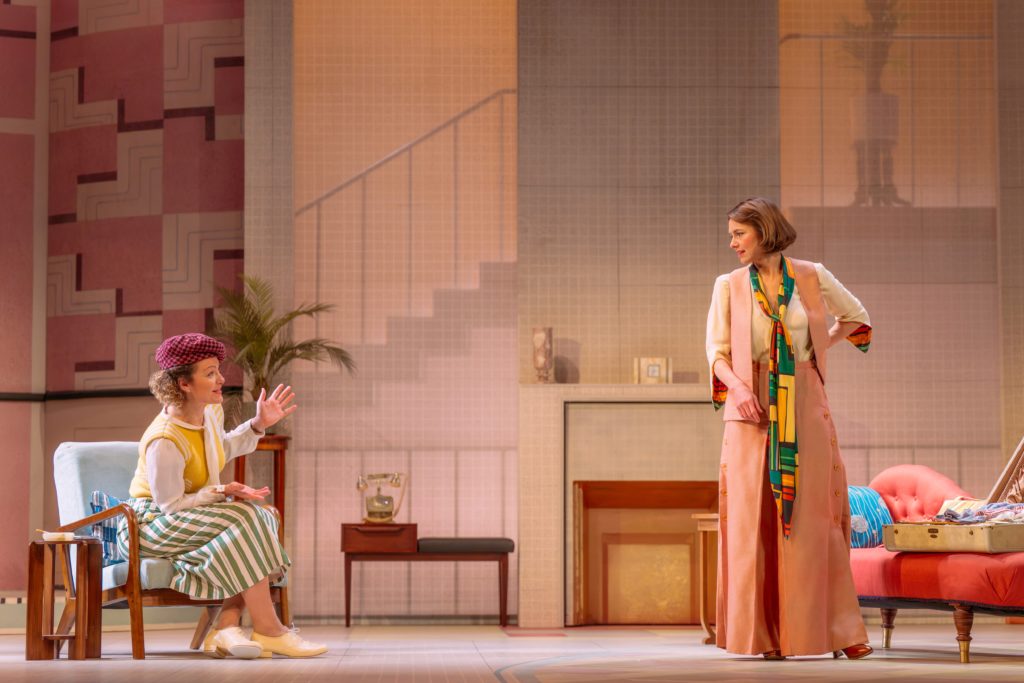
Sisters doing it for themselves…in different ways: Amy Vicary-Smith’s Martha and Kara Tointon’s Constance in The Constant Wife
Vicary-Smith’s Martha, by the way, is a fusion of two Somerset Maugham characters, the sister and an interior-designer friend, and it works a treat, as Constance takes up an invitation to join her business (hence the re-decoration).
In Wade’s most striking interjection, she plays an ace card with her use of that very fashionable device, meta-theatre, (first by having Constance and still-besotted former beau Bernard Kersal (Alex Mugnaioni) heading off to watch a play called The Constant Wife, then by Martha recapping what unfolded and unravelled in Act One at the outset of Act Two.
Aside from Bentley at the very start, the men have been held back until the play’s conceit has been established. We judge them through Wade, Harvey and the women’s filter, but they are still given a fair hearing, each tall, dapper, buttoned up and not as clever as they think, whether over-confident John, malleable Bernard or Jules Brown’s cuckolded Mortimer Durham.
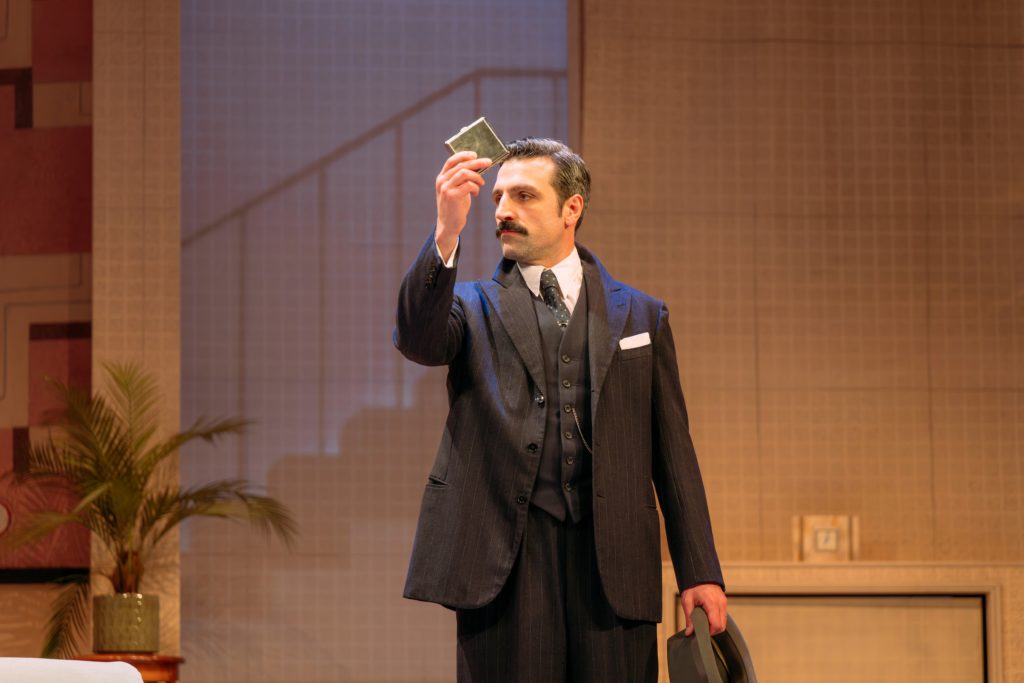
Jules Brown’s thoroughly duped Mortimer Durham
Fleischle and Cat Fuller’s costume designs, especially for Constance, Martha and John’s suits, delight as much as the central performances as Somerset Maugham/Wade posit the question of what happens when a wronged woman does not react in the expected way, so much so that everyone else then objects to how Constance has responded (not least in confiding only in Bentley, who has a secret of his own) as she seeks her route to freedom and fulfilment against the conventional tide.
At the RSC production’s core is an outstanding performance by Tointon on her return to the stage after moving to Norway. Her Constance is elegant, eloquent, quick of wit and mind, mischievously humorous, yet serious, a woman in a relationship where they still have love for each other but are no longer in love.
David Pugh & Cunard present the Royal Shakespeare Company in The Constant Wife, York Theatre Royal, until Saturday, 7.30pm plus 2pm Thursday and 2.30pm Saturday matinees. Box office: 01904 623568 or yorktheatreroyal.co.uk.
By Charles Hutchinson