
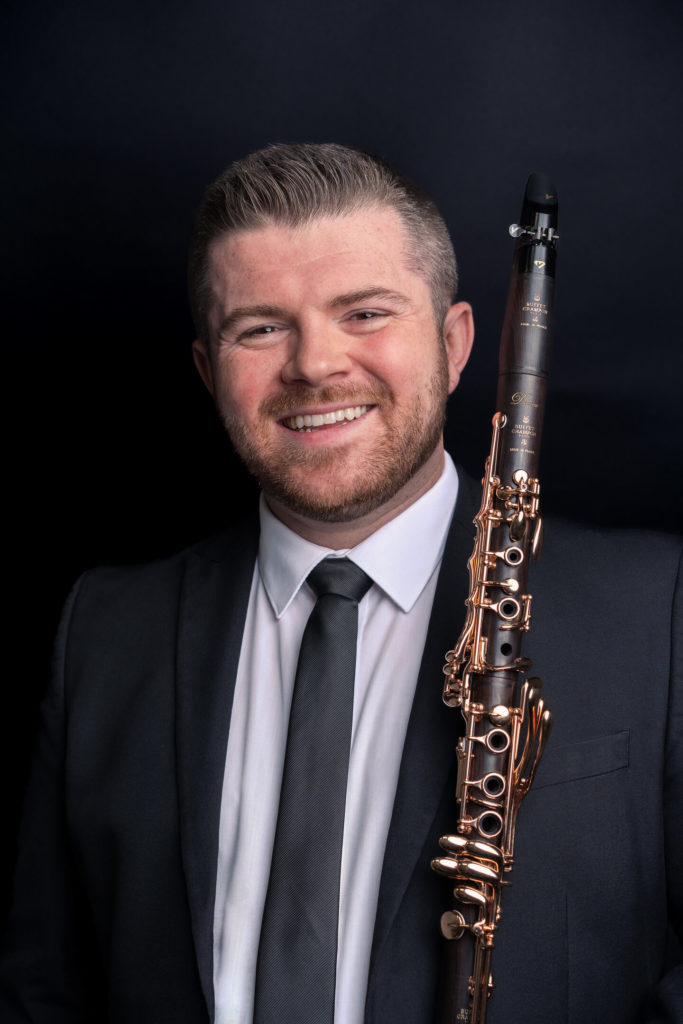
Clarinet soloist Julian Bliss
SUNDAY afternoons with the Guildhall have in a short time become a much-loved feature of York’s musical landscape. A Mozart overture, a Weber concerto and a Mahler symphony offered something for everyone here.
You can tell a lot about a musical organisation’s view of itself by the calibre of soloists it invites. In Julian Bliss they had a clarinettist who was more than a match for the taxing demands of Weber’s Second Clarinet Concerto in E flat.
All but one of his solo clarinet works were composed for Heinrich Baermann, a pioneer in the field and principal with the Munich Court Orchestra: they rank amongst the instrument’s most important repertory.
Bliss launched into the opening runs with panache, but managed to include echo effects and even a distinctive tremolo in the clarinet’s chalumeau register, its lowest octave. A couple of top notes verged on the shrill, laid down skilfully head-to-toe with much lower ones.
Weber’s slow movement, a Romanza, attempts to introduce an elegiac tone, not entirely successfully, but Bliss delivered it with smooth legato, which enabled satisfying contrast with the outer movements. The closing polonaise, virtually a rondo, was delightfully crisp, superbly articulated. All the while the orchestra danced in close attendance, providing a feather-bed underlay.
Mahler’s Fifth Symphony, in C sharp minor, is widely considered a journey from bleak darkness and tragedy towards reassurance and light, although the composer himself vowed that its three parts had no programme as such. Nevertheless this account had that feeling.
The opening Funeral March was made the more stately by the low trumpet, and the frenetic storm that followed, heralded by shrieks in the winds, was enhanced by the six gritty horns.
Thereafter, Mahler leans on them heavily. The concertante solo horn role in the Scherzo was nobly handled by Janus Wadsworth. The movement grew edgier as it progressed and the acceleration into its coda was undeniably exciting.
It was good to hear the Adagietto, so often heard on its own, in proper context. Here some ethereal violin phrasing imparted an air of numinous spirituality, despite its more earthbound central passage.
The closing rondo, the most intricate movement Mahler ever wrote, was rhythmically incisive, an immense aid to clarity. Especially enjoyable was the way the overlapping fanfares came together in the brass chorale, before the triumphant finale for which Wright had kept something in reserve.
The evening had opened with Mozart’s overture to The Impresario. The strings overcame some early sluggishness to deliver fine counterpoint. It conjured anticipation for the larger works to follow.
Review by Martin Dreyer