Fiona Mozley revisits 2000s-era teenage days in York for third novel Awake Awake

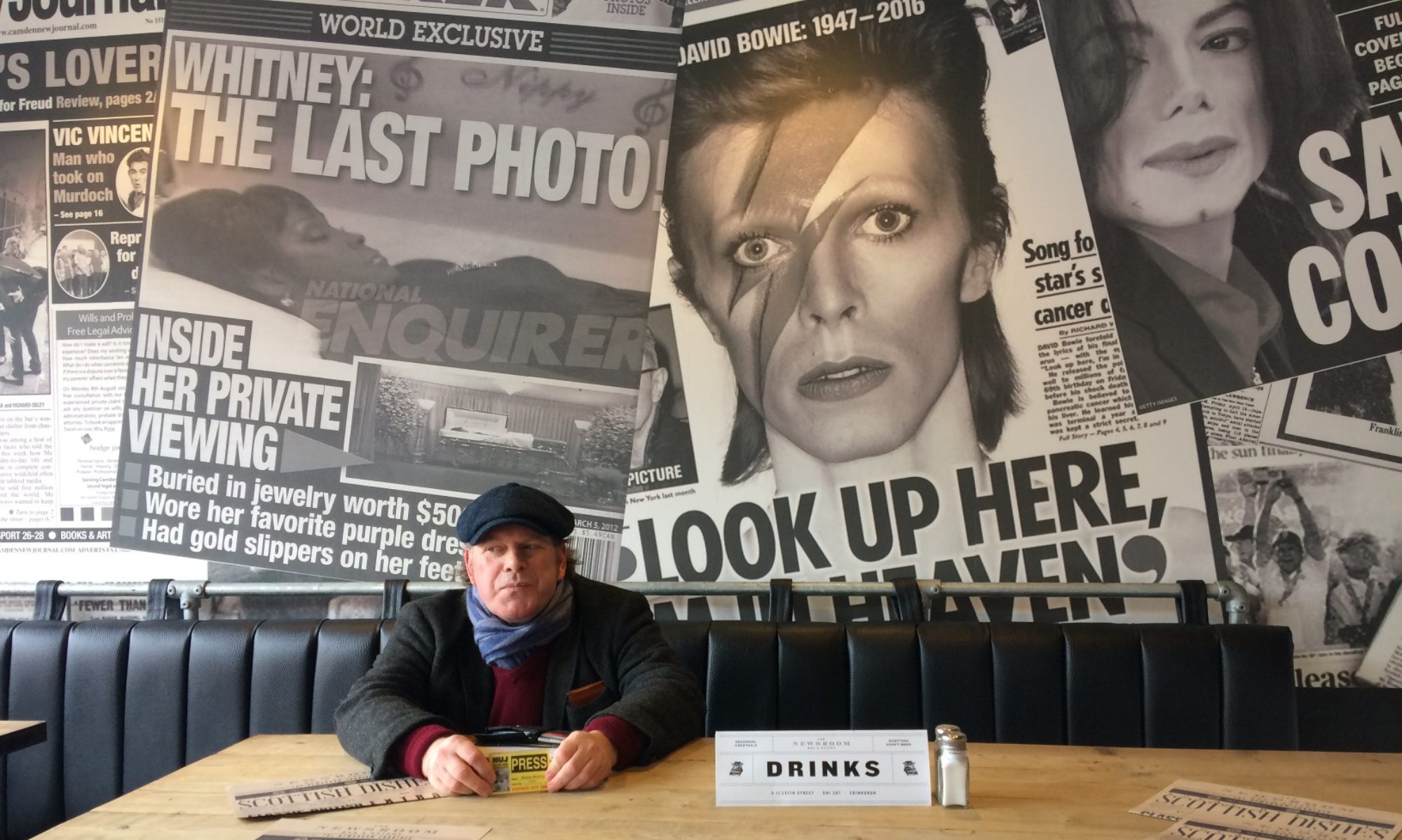
Awake Awake author Fiona Mozley, centre, with Little Apple Bookshop proprietors Tim Curtis and Philippa Morris during her book-selling shift back on familiar book turf

FIONA Mozley returns to her York roots for her first novel in five years, Awake Awake.

Now living in Edinburgh, she headed back to her home city for a promotional day earlier this month, combining face-to-face interviews with a two-hour book-selling shift at Little Apple Bookshop, in High Petergate, where she worked behind the counter from 2016 to 2019.

“It was my favourite ever part-time job, and I’m still friends with Tim Curtis and Philippa Morris, who run it,” says Fiona, settling into a window seat at Waterstones, in Coney Street, where she would give a talk and sign books later that evening.

“Elmet sold 1,000 copies at Little Apple Bookshop alone and it remains their biggest ever-selling selling book.”

After rising to Booker Prize-shortlisted acclaim with that 2017 debut novel, set in Yorkshire, and following it up in 2021 with Hot Stew, set in a Soho brothel, Fiona roots her third novel almost entirely in the York of the 2000s, where her heroine Mary’s father works at York Minster.

“In a five-year period I wrote two and a half novels, and Awake Awake was the one that gained ground,” says Fiona. “Some writers have a ‘difficult second novel’, but mine was already on the way when Elmet came out, though I did ‘um and aarrgh’ because I had a number of ideas and was pursuing them all at once.

“Again, with this new novel, it started as a tandem project, which was that I’d always wanted to write a novel set in the early 2000s, following a bunch of teenagers negotiating those personal and political times.

“I was born in 1988, so in 2002-2003, I was 14-15, when my generation grew up thinking that everything was going to get better; that ‘history’ was over; that conflict had been eradicated; the economy would go from strength to strength and jobs were plentiful. How wrong we were.”

Fiona wanted to examine that moment of optimism and how the world came crashing down as 9/11 and the invasion of Iraq led to a “readjustment of the perception of where we were going”. She would do so through the eyes of teenagers “because they bring an insight and earnestness”, leading to activism and Stop The War marches.

“I decided to set it in a place outside the global capitals, so why not York, which made the perfect setting as I grew up here,” she says. “All my writing is rooted in long history and place – I studied History at King’s College, Cambridge – so the second strand I explored was an examination of the way we think about the past, in particular memories of the Second World War and memories of family histories.

“Awake Awake is very much fiction, but I wanted to think about the story of my grandfather, on my mother’s side, who was born in Leeds and was an officer in the Royal Amy Medical Corps.”

Her grandfather was from the Orthodox Jewish community, but hid it from his wife and his children, prompting Fiona to ponder how and why he did this.   

Fiona toyed with the concept of writing in a “counter-fictional” mode – a narrative or thought process that opposes or subverts the established rules, traditions and tropes of a specific story, genre or fictional world. “I was interested in playing with the idea from Quentin Tarantino’s [2009 black comedy] Inglourious Basterds, which I thought went over the top, but I was keen to see how those ideas spoke to each other.”

In 2023, Fiona and her partner spent a month in Cambridge, Massachusetts. “While I was there, I wanted to read some big American novels, so I read some Philip Roth, who I absolutely love and absolutely hate, but he’s never boring,” she says.

“Reading his books gave me permission to go ‘wild’ in my writing, to not shy away from something that might be controversial. I was struck by how he mixed the personal with the political and the international. Reading him, although I’m a hugely different person and writer, it gave me the opportunity to push in that direction.”

Explaining its impact on Awake Awake, Fiona says: “People are often curious about the relationship between real and fictional, and my response is that I find myself unable to write things as I perceive them and write down events as they happen. I would be a terrible lawyer,  an unreliable witness, because for me the process of writing is immediately creative and a new world emerges in the telling.

“I looked into this, and a lot of memory is constructed. It’s a creative act, so what I wanted to do was to exaggerate that. Put in the most stark terms, the [central] character is totally overcome by fictional memories – and the book is also about how our identities are totally informed by those memories.”

Awake Awake, by Fiona Mozley, is published in hardback, audio and ebook by John Murray Press.

The cover artwork for Fiona Mozley’s Awake Awake

Five talking points in Awake Awake

The war novel: How can contemporary novelists write about war?

2000s’ nostalgia and optimism: Anti-war movement of early 2000s was the backdrop to Fiona’s teenage years in York. How has that shaped how she and her generation think today?

Memory and mental illness: The novel’s heroine and her brother both suffer from mental ill-health as Fiona traces a “kind of intergenerational trauma”

Second World War: Fiona has Jewish heritage. Her maternal grandfather was from the Orthodox community in Leeds but hid it from his wife and children. How and why did he do so? Fiona brings family history into the novel to speculate on what might have happened to him.

Activism: Backdrop to the 2000s’ sections of the novel is the Stop The War movement and marches.

Author Fiona Mozley. Picture: Aleksandra Maciejewska

Fiona Mozley: back story

FIONA grew up in York, appearing in multiple theatrical productions before studying History at King’s College, Cambridge. Worked behind the counter at Little Apple Bookshop, in High Petergate, York, from 2016 to 2019.

Debut novel Elmet, published in August 2017 by JM Originals, was set in the claustrophobic rural West Riding of Yorkshire, exploring themes of family bonds, revenge, land rights, modern society and the ultimate price of freedom. Shortlisted for the 2017 Booker Prize, it was published in the USA in December 2017 and reissued in a JM Classics edition in 2025.

That year too, Elmet was adapted for the stage by Bradford-raised writer-director Javaad Alipoor for Bradford 2025 UK City of Culture, presented by the Javaad Alipoor Company at Loading Bay, with music by North Eastern folk luminaries The Unthanks & Adrian McNally and movement by Ad Infinitum’s Deb Pugh.

Playing like an ancient tragedy reflected in shards of memory, the world premiere ran from October 22 to November 2 2025 with its story of Cathy and Danny living apart from the world with towering bare-knuckle boxer Daddy, who has built them an idyll amid the trees on a land “made of myths”. However, a great reckoning is coming, led by all-powerful landowner Mr Price, threatening to smash apart everything the trio holds dear.

Second novel Hot Stew, published in 2021, was set in Soho, London, where sex workers Precious and Tabitha fight an eviction order from a real-estate heiress. Third novel Awake Awake was published in June 2026 by John Murray Press.

Fiona has won the Somerset Maugham Award and the Polari Prize and been shortlisted for the Booker Prize, the Ondaatje Prize and The Sunday Times Young Writer of the Year Award. She has been longlisted for the Dylan Thomas Prize and the Women’s Prize too.

She is a Fellow of the Royal Society of Literature.

Fiona lives in Edinburgh.

York Theatre Royal nominated for first time for Theatre of the Year in The Stage Awards

Actor-director Gary Oldman and York Theatre Royal chief executive officer Paul Crewes in the auditorium when first planning Krapp’s Last Tape. Picture: Gisele Schmidt

YORK Theatre Royal has been shortlisted for Theatre of the Year in The Stage Awards 2026.

Award winners will be crowned at the Royal Opera House, London, on January 12 2026, when the Theatre Royal will be competing against fellow nominees Almeida Theatre, London, Nottingham Playhouse, Royal Court Theatre, London, Soho Theatre, London, and Watermill Theatre, Newbury.

Chief executive officer Paul Crewes says: “2025 has been such an incredible year for York Theatre Royal and we are so proud to be shortlisted for The Stage’s Theatre of the Year.

“It is the first time for us, and this recognition is a real testament to the remarkable work from the whole York Theatre Royal (YTR) staff team, as well as the talented creative, production and technical teams, performers, stage managers, practitioners, producers, collaborators, partners, funders and volunteers who have worked with us and supported us this year.”

Gary Oldman on stage at York Theatre Royal in Samuel Beckett’s monodrama Krapp’s Last Tape. Picture: Gisele Schmidt

Over the past 18 months, the YTR’s increasing focus has been on building up an ambitious programme of produced work, a strategy spearheaded by Crewes since taking up his CEO role in October 2023.

This year, award-winning actor Gary Oldman worked with York Theatre Royal on Krapp’s Last Tape, directing himself and designing the set for Samuel Beckett’s  melancholic monodrama from April 14 to May 17. He would end the year with a knighthood for outstanding services to drama; producers York Theatre Royal with the award nomination.

They will be in tandem again for Krapp’s Last Tape’s transfer to the Royal Court Theatre, London, from May 8 to 30 2026 as part of the Chelsea theatre’s 70th anniversary celebrations.

Sir Gary started his professional career at York Theatre Royal in 1979-1980 and talked of completing the cycle when he made his return 45 years later. “This was an amazing opportunity for audiences, and York Theatre Royal ensured ticket prices remained accessible,” says Crewes,

Debbie Isitt’s Military Wives – The Musical: Premiered at York Theatre Royal in September. Picture: Danny With A Camera

York Theatre Royal’s revival of The Railway Children with Keighley & Worth Valley Railway for Bradford 2025 UK City of Culture at Oxenhope Station

“The show was a huge success, attracted international press and welcomed people from across the world – 48 per cent of audiences surveyed were coming to the theatre for the first time and every performance sold out. ”

The world premiere of Military Wives – The Musical, written and directed by BAFTA-award winning Debbie Isitt, was another landmark production from September 10 to 27. Isitt’s  musical drama told the story of the first Military Wives choir and the YTR worked closely with choirs across the country to tell their stories through marketing. Feedback found that 93 per cent of those surveyed gave the show five stars. 

Crewes’s ambitious plans to expand the YTR programme of produced work will continue with upcoming spring season productions of a revival of The Secret Garden – The Musicaldirected by Tony award winner and former YTR artistic director John Doyle and the world premiere of The Psychic from Andy Nyman and Jeremy Dyson, the writers of Ghost Stories.  

More widely, the YTR aims to take its work across the UK and the globe, best exemplified by collaborating with Bradford 2025 UK City of Culture to bring director Damien Cruden and York writer Mike Kenny’s Olivier Award-winning stage adaptation of E Nesbit’s The Railway Children  back to the tracks at Oxenhope Station on the Keighley & Worth Valley Railway from July 15 to September 7.

Billy Heathwood, left, and Anthony Jardine (as Seebohm Rowntree) in this summer’s community production, His Last Report. Picture: S R Taylor Photography

Community is at the heart of the YTR too, built around a proactive creative engagement programme that  reaches people from a wide variety of backgrounds and ages, from youth theatre for age five upwards through to adult acting and participation programmes.

At the epicentre this summer was the community co-production of Misha Duncan-Barry and Bridget Foreman’s His Last Report, a premiere staged with York company Riding Lights from July 19 to August 3 that highlighted the life and work of York social reformer Seebohm Rowntree.

This local story with national impact brought together 300 volunteers on and off stage, including  a cast of more than 100. To ensure cost was not a barrier, YTR implemented a pay-what-you-can pricing strategy for opening night that resulted in a sold-out performance.  

In 2025, York Theatre Royal secured funding from the National Lottery Heritage Fund, the Joseph Rowntree Foundation and Garfield Weston Foundation to expand community outreach activities to reach more people through the Sweet Legacies project, putting on fun, free and inclusive activities connected to the Rowntree family and legacy across the city.  

Enjoying the Sweet Legacies project at York Theatre Royal. Picture: James Drury

REVIEW: Bradford 2025 UK City of Culture, Keighley & Worth Valley Railway and York Theatre Royal present The Railway Children, Oxenhope Station *****

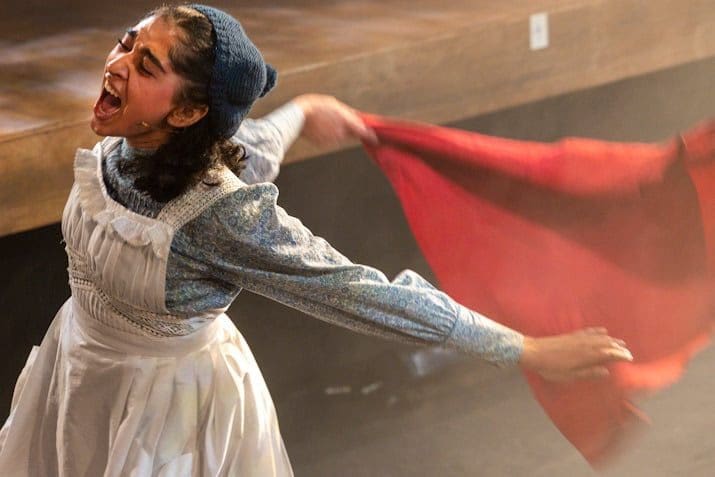
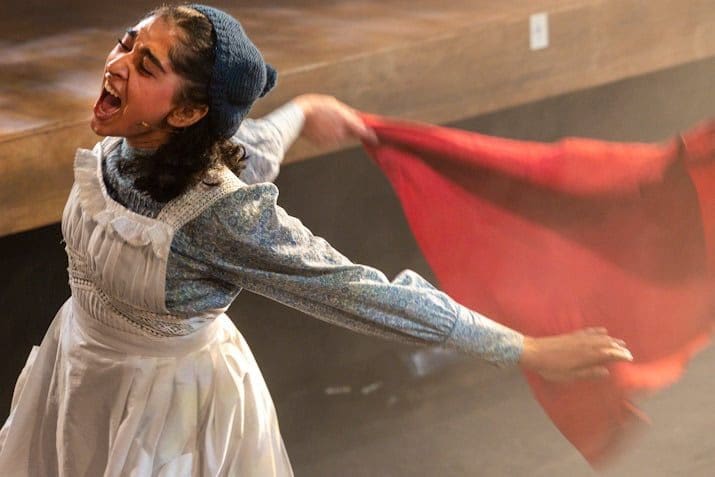
Farah Ashraf’s Roberta in the Bradford 2025 UK City of Culture revival of York Theatre Royal’s The Railway Children at Oxenhope Station. Picture: James Glossop

FULL steam ahead for The Railway Children becomes even fuller steam ahead as E Nesbit’s story returns to the railway line where Lionel Jeffries’s charming 1970 film was filmed, Jenny Agutter’s red petticoat, Bernard Cribiins’s bluster et al.

This re-sparking of York Theatre Royal’s Best Entertainment Olivier Award award winner for Bradford 2025 UK City of Culture becomes even more resonant in highlighting Nesbit’s call for tolerance, integration, safe sanctuary and understanding of “otherness”, in our overheated age of Reform, rejection, division and more overt racism. It reemphasises how Bradford has always been a beacon for multiculturalism, a cornerstone of this year’s festival.

In 2008, in the audacious apex achievement of Damian Cruden’s 22 years as York Theatre Royal artistic director, he teamed up with prolific York playwright Mike Kenny to transform the National Railway Museum freight depot into a tented traverse theatre in the heart of York, the most-storied railway city in the north.

The Railway Children felt right at home there, so much so that it booked a return ticket in 2009. Now, The Railway Children has “come home” to the Keighley and Worth Valley Railway (when Jeffries transferred Nesbit’s rural location from Kent to Oakworth station up north in an inspired move).

Excited City of Culture and Worth Valley volunteers are omnipresent as audience members board the steam train – eight carriages long – at Keighley Station to travel the line’s full money’s worth to Oxenhope Station, to the accompaniment of Stand & Be Counted Theatre’s immersive scene-setting soundtrack on the themes of exile, sanctuary, compassion and kindness.

Stalls are selling beer, pies, railway and E Nesbit & Co merchandise, all part of the 2025 event theatre experience, if you wish, and a large poster is advertising  this winter’s “tale by rail”  production of  The Christmas Carol (Haworth Railway Station, tickets www.kwvr.co.uk).

A sign denotes Oxenhope stands 600ft above sea level – York is only 49ft by comparison – and Tuesday’s audience  is already on a high, its mood best captured by Cruden’s dandy pink linen suit, as we enter the Engine Shed, denuded of its locomotives since work began on site in May.

Normally functioning as the “Exhibition  Shed”, home to the highly recommended autumn beer festival, it has been temporarily renamed the Auditorium (rather less evocative than the Signal Box Theatre at the NRM), as the 500 seats fill either side of a track, divided into Platform One and Platform Two.

The air is filled with the chatter and clatter of the railways: station announcements, the porter’s whistle, engines pumping and Yorkshire bird song, the herald to the brilliant sound design engineered by Craig Vear throughout.

Cruden has got all the old band back together: same director, writer, set and costume designer, Joanna Scotcher, lighting designer, Richard G Jones, composer, Christopher Madin, and sound designer, Vear. If it ain’t broke, don’t fix it, unlike Peter’s model train that needs soldering.

Oxenhope has become Oakworth station, where Scotcher’s design is a work of wonder suffused with a nostalgic Edwardian beauty: a wooden station bridge at one end, the station porter’s office at the other. On the track run wooden pulleys on wheels, pushed along the line by stage hands in railway staff attire to facilitate scenes being played out at various points to ensure everyone has a close-up. Her period costumes are a delight too, from top hat to coat tail, school cap to immaculate suits and the prettiest of dresses.

Jones’s lighting, whether for moorland sunlight, midnight gloom or a murky tunnel, complements every dramatic mood, twist and turn, evoking soot and fresh air alike. Look out especially for the flickering of lights as the rattling sound of  a train thunders by, doing the loco-motion in dazzling style. All the while, Madin’s score could not be more evocative.

In Kenny’s adaptation, the adult “Railway children” look back at their childhood Yorkshire re-location from London, seamlessly morphing into the childhood selves, Farah Ashraf’s concerned Bobby, Raj Digva’s ripping Peter and Jessica Kaur’s puppy-enthusiastic Phyllis.

Equally seamless is Kenny’s nod to Bradford UK City of Culture.  Father (Paul Hawkyard) married Mother (Asha Kingsley) while working in India, then brought his young South Asian family to London, doubling up on their “otherness” when Mother brings her children to Yorkshire in 1905 after Father’s mysterious arrest. 

Kingsley’s Mother stands out with her Indian accent; the children with their refined London airs that can find them putting their foot in it, but always unintentionally.

In a later change, Kenny has transformed Hawkyard’s Russian refugee, the great writer Shepansky, into a Ukrainian Russian: a topical and impactful decision typical of his playwriting prowess.

Dramatic set-pieces, humour, tragedy and triumph combine with the searing social politics in Kenny’s script, the humour exemplified in Graeme Hawley’s portrayal of station porter Mr Perks, sometimes prickly, certainly as punctual as he is punctilious, but avuncular too, topped off by the famous birthday-present scene that moves you to tears.

From the three leads, with their combination of playfulness, squabbling and knowing adult reflection, to Kingsley’s burdened Mother; Moray Treadwell’s grand Old Gentleman to the young people’s ensemble; the multitude of multi-purpose battered suitcases to the delayed-for-maximum-impact of the locomotive, Cruden’s return to The Railway Children is a triumph. Whisper it quietly in York, but bouncing back in Bradford UK City of Culture,  it may be the best production yet.

The Railway Children, Keighley Station and Oxenhope Station, West Yorkshire, on track until September 7. Box office: https://bradford2025.co.uk/event/the-railway-children/.

By Charles Hutchinson 

York Theatre Royal’s The Railway Children back on track for Bradford 2025 UK City of Culture on Keighley and Worth Valley line

Farah Ashraf’s Roberta in the Bradford 2025 UK City of Culture revival of York Theatre Royal’s The Railway Children at Oxenhope Station. Picture: James Glossop

YORK Theatre Royal first staged The Railway Children in the purpose-built Signal Box Theatre at the National Railway Museum, York, in 2008 and 2009, later transferring to London’s Waterloo Station, Toronto in Canada and King’s Cross Theatre, London.

From this evening, York playwright Mike Kenny’s refreshed stage adaptation of E Nesbit’s novel is back on track in Yorkshire, as the Theatre Royal teams up with Keighley & Worth Valley Railway for Bradford 2025 UK City of Culture, in a revival of Damian Cruden’s Best Entertainment Olivier Award-winner.

All on board once more are the same director, writer, set and costume designer, Joanna Scotcher, lighting designer, Richard G Jones, composer, Christopher Madin, and sound designer, Craig Vear. “We’re all still here – somehow!” says Damian.

The setting is the railway line famously used as a location for Lionel Jeffries’ 1970 film, the one starring Jenny Agutter and Bernard Cribbins that transferred Nesbit’s rural setting from Kent to Yorkshire.

Audiences will begin by taking a steam train from Keighley to Oxenhope Station, a journey accompanied by an immersive scene-setting soundscape provided by Stand & Be Counted Theatre on the themes of exile, sanctuary, compassion and kindness.

Damian Cruden: Directing The Railway Children on the Keighley & Worth Valley Railway line. Picture copyright: The York Press

Kenny’s re-worked adaptation will be staged in an adapted engine shed at Oxenhope, a location closest in character to the National Railway Museum premiere with a steam train from the Keighley & Worth stock and the audience on either side of the railway track in the 500-capacity auditorium.

“It’s very similar to when we first did it inside a tent [over the freight depot] at the NRM, partly because it’s another heritage railway environment, whereas Waterloo and King’s Cross had a very different railway atmosphere. Seven hundred volunteers work for Keighley & Worth, which tells you something about our relationship with the steam age,” says Damian.

“We’re using what’s a sort-of museum shed [officially the Exhibition Shed], a proper period engine shed, where they keep the locomotives, and it’s customary to hold live events there [such as the October beer festival], but usually on a much smaller scale, so we’ve had to empty the shed of all its ‘bits’.

“The steam engine we’re using is a full locomotive with a tender, from the 1880s, along with a Third Class carriage and the ‘Gentleman’s Carriage’, shunted from further down the line.”

Damian is delighted to be staging arguably his biggest ever hit again. “Bringing The Railway Children to Bradford this year offered us a unique opportunity to restage the production as part of the UK City of Culture programme, starting on the tracks where the iconic 1970 film was shot in the beautiful Worth Valley.

The poster for the Bradford 2025 UK City Of Culture production of The Railway Children

“It’s great that it’s part of the festival and that it’s coming to the point of origin, the railway line that goes through Oakworth station, the primary location in the film.”

Set in 1905, The Railway Children tells the story of three children forced to move from wealthy Edwardian London to rural Yorkshire after their father, an official in the Foreign Office, is imprisoned falsely on charges of espionage. Living in newly impoverished circumstances, they find adventure and hope on the railway that passes nearby.

“The reality is it’s a made-up story, a construct, set in the past, but very strongly as a metaphor of what a journey does, taking you from one way of being to another, while looking at the nature of being human and the benefit of integrating with others, so in some ways it’s a moral tale  for today, showing us how we can be better as humans and how we can know ourselves better.

“It’s constructed as a mythical tale, but the fact is the train delivers things that are good and brings justice with it, in this case for the Russian political refugee Schepansky.”  

In a significant adjustment by playwright Mike Kenny for the Bradford UK City of Culture production, the children and their mother will be a South Asian family, played by Farah Ashraf (Roberta), Raj Digva (Peter), Jessica Kaur (Phyllis) and Asha Kingsleylatterly seen as  Surinder in York company Pilot Theatre’s Run Rebel. Father (Paul Hawkyard), high-ranking Foreign Office civil servant Charles Waterbury, met and married Mother while working in India, then brought up his family in London.

Farah Ashraf’s Roberta, Raj Digva’s Peter and Jessica Kaur’s Phyllis in a scene from The Railway Children at the gates of Oakworth Station. Picture: James Glossop

Damian notes the story’s resonance with Bradford’s own story: “Bradford is a wonderful example of a city that has welcomed people throughout its history, and this theme of welcome and global connection resonates through The Railway Children, which at its heart is brilliant family entertainment – a classic adventure yarn with a famously emotional ending,” he says.

“In so many ways, Bradford’s strength is the diversity of its community, so it felt important to have that as part of the story this time. Just as the notion of needing to find sanctuary as refugees is an important theme too, when so many people fit that description. It’s up to us to meet them and that need.

“That might be frightening at times…so it’s an interesting time in national and international history to bring the story back to the stage, with a huge amount of paranoia of strangers coming into people’s minds, as being something to be feared, but that fear does not match up to scrutiny.”

York Theatre Royal, Keighley & Worth Valley Railway and Bradford 2025 UK City Of Culture present The Railway Children, Keighley Station and Oxenhope Station, West Yorkshire, July 15 to September 7. Box office: https://bradford2025.co.uk/event/the-railway-children/.

Copyright of The York Press