EX Corde Vocal Ensemble and lutenist and theorbo player Matthew Wadsworth join forces to mark the 400th anniversary of the death of John Dowland at the National Centre for Early Music, York, on September 18.
Dowland’s enduringly expressive lute songs – including Come Again, Sweet Love, Can She Excuse My Wrongs and Flow My Tears – are paired with a selection of his solo lute music in an evening of compelling vocal and instrumental English Renaissance music.
Alongside Dowland’s music, the 7.30m programme explores the work of his contemporary, William Byrd, with contrasting pieces including the penitential motet Ne Irascaris and the lighter, more intimate madrigal When I Was Otherwise.
Christopher Fox’s striking new work, Humble Verses, will be premiered. Setting words by Emilia Lanier – a remarkable female contemporary of Byrd and Dowland – Fox brings a distinctly modern perspective to the voices and ideas of Renaissance England.
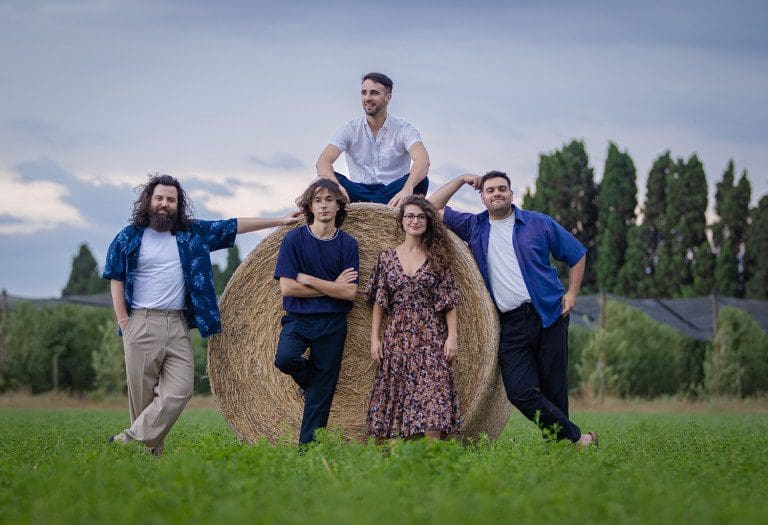
Ex Corde Vocal Ensemble uses vocal music to create, collaborate and connect, bringing composers, performers and audiences closer together. Founded in 2020, the ensemble brings together singers from across the UK, many of them alumni of the University of York.
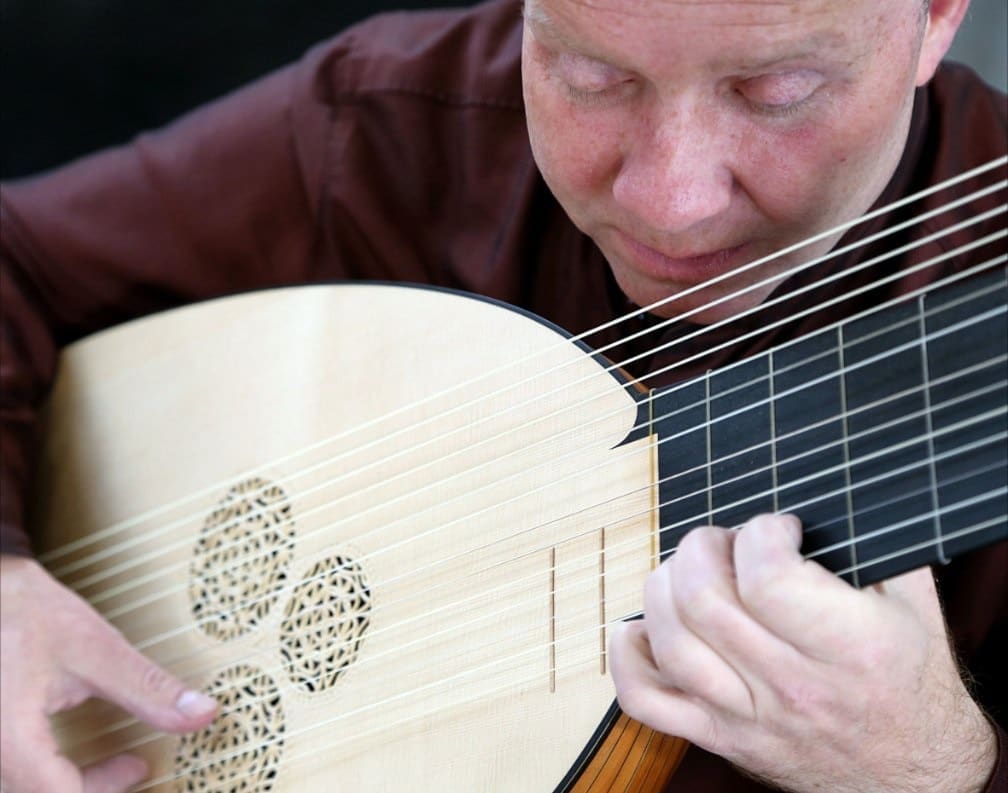
Lutenist Matthew Wadsworth
Its work has included collaborations with York Waits, the Rose Consort of Viols and composers Christopher Fox, David Lancaster and Ambrose Field, alongside appearances on BBC Radio 3’s Early Music Show and at the York Early Music Festival.
Matthew Wadsworth is one of Britain’s leading performers on lute and theorbo, enjoying an extensive international career as a soloist, chamber musician and continuo specialist.
Following his studies at the Royal Academy of Music, he established himself on the international early music scene, performing at major festivals and concert halls throughout Europe, North America and beyond.
His collaborations include performances with the Scottish Chamber Orchestra and Academy of Ancient Music, as well as regular appearances on radio and television. His recordings for labels including Channel Classics and Linn have received numerous accolades, such as Gramophone Editor’s Choice.
Tickets are on sale on 01904 658338, via email to [email protected] or at https://ncem.ticketsolve.com/ticketbooth/shows/1173679361.
I Fagiolini, with director Robert Hollingworth, centre, with sparkler: Performing opening concert of 2026 York Early Music Festival
THE 50th anniversary York Early Music Festival will run from July 3 to 11 with the theme of Beyond Borders.
More than 30 concerts will take place in York’s medieval churches, historic buildings and York Minster over nine days.
The festival was created in 1977 by a small group of Early Music enthusiasts and is long established as the premier British Early Music festival, attracting artists and visitors from far and wide.
Anacronia: Making York Early Music Festival on July 4
The festival will open with Monteverdi’s Vespers of 1610, presented by I Fagiolini with the English Cornett & Sackbut Ensemble, under Robert Hollingworth’s direction, on July 3 at 7pm at the sold-out Sir Jack Lyons Concert Hall, University of York. This concert will be broadcast on BBC Radio 3 on July 8.
Last in York for the 2025 York Early Music Christmas Festival, Solomon’s Knot will provide a spectacular summer festival finale at The Quire, York Minster, on July 10 at 7.30pm, when Jonathan Sells will direct singers and musicians performing Friedrich Nicolaus Bruhns’ St Mark Passion by heart.
The festival will mark the 400th anniversary of the death of the great English composer and lutenist John Dowland by dedicating a whole day to his works on A Day Of Dowland on July 6.
Organist Ben Horden: To Lubeck and Bach concert at Sir Jack Lyons Concert Hall on July 7
Katherine Butler, associate professor at Northumbria University, will open the day with her sold-out 10.30am talk at Bedern Hall entitled Dowland’s Dolour: Music, Melancholy and Self-Fashioning in Elizabethan England.
Lutenist Thomas Dunford will present a selection of Dowland’s 90-plus compositions in The Rarest Musician at the sold-out St Olave’s Church, Marygate, at 1pm, and the Rose Consort of Viols, featuring lutenist Jamie Akers, will perform Dowland’s Teares Of Sorrowe And Gladnesse in the Undercroft, Merchant Adventurers’ Hall (again sold out,) at 6pm. Music by Orlande de Lassus and Alfonso Ferrabosco will complement works both sorrowful and joyful by Dowland.
Dowland’s day will end with Tears Into Light: A Contemporary Reimagining of John Dowland’s Lachrimae, performed by Imago Mundi, directed by Sofie Vanden Eynde, at the National Centre for Early Music, St Margaret’s Church, Walmgate, at 8.30pm.
Top: Lutenist Thomas Dunford. Bottom: Imago Mundi director and lutenist Sofie Vanden Eynde. Both taking part in A Day of Dowland on July 6
Drawing on the insights of scholar-philosophers and the concept of inspired melancholy, Tears Into Light explores how melancholy has been understood through history and how it offers a lens for viewing the present. Dowland’s Lachrimae will be interwoven with American traditional music in a reminder that light can always emerge from darkness.
The opening of the 50th festival will be heralded by the York Fanfare, a specially commissioned piece by Wakefield-born Sam Meredith for the 2026 ensemble-in-residence, the historical wind band [hanse] Pfeyfferey, comprising Lilli Patzold, cornetto, Alexandra Mikheeva, slide trumpet and trombone, and Laura Dumpelmann, shawm.
York Fanfare will herald the festival opening, ahead of July 3’s first concert, on the grass outside the Sir Jack Lyons Concert Hall, and then be performed around the city during the opening weekend, including outside the West Door of York Minster before The Sixteen’s 7.30pm concert there on July 4.
The Sixteen: Presenting Siglo de Oro, Music from the Spanish Renaissance, at York Minster on July 4. Picture: Johnny Millar
Directed as ever by Harry Christophers, The Sixteen will present Siglo de Oro, Music from the Spanish Renaissance, featuring works by Sebastian de Vivanc and Cristobal de Morales, Sir James MacMillan’s Nothing In Vain and the world premiere of NCEM Composers Award alumna Kerensa Briggs’s Lead, Kindly Light. BBC Radio 3 will air this concert on July 9.
The Great Noyze, organised by the International Guild of Town Pipers, has moved from College Green, York Minster, to St Sampson’s Square on July at 4pm.
Further highlights will be Minster Minstrels, From Holborne To Handel, at the NCEM on July 5, 11am; University of York Baroque Ensemble, with Ensemble Hesperi (in-house band at University of York), in The Music Party, NCEM, July 7, 12.30pm; organist Ben Horden, To Lubeck and Bach, Sir Jack Lyons Concert Hall, July 7, 6pm, and Ghent’s B’Rock Orchestra & Vocal Consort, Da Pacem: Sacred Music by Heinrich Schutz and Contemporaries, Sir Jack Lyons Concert Hall, July 7, 7.30pm.
Mezzo-soprano Helen Charlston: Teaming up with tenor Paul Agnew and lutenist Sergio Buchel for A Gentle Air at Merchant Taylors’ Hall on July 9
Clavichord player Steven Devine’s Preludes, Fugues and Fantasies, at All Saints Church, North Street, on July 8 at 12.30pm, has sold out; Yorkshire Baroque Soloists will perform Amphion Anglicus, Chapter House, York Minster, July 8, 7.30pm, and Early Music will meet jazz and modernity in Duo Gambelin’s All’Improviso, Undercroft, Merchant Adventurers’ Hall, July 8, 9.30pm.
On July 9 at 7pm, mezzo-soprano Helen Charlston, tenor Paul Agnew and lutenist Sergio Buchel will feature French songs by Michel Lambert and Sebastien Le Camus in A Gentle Air at the Merchant Taylors’ Hall. In July 10’s Concert by Candlelight at Holy Trinity Church, Goodramgate, soprano Hannah Ely, alto Rebekah Jones and tenor Paul Bentley-Angell will perform songs from the courts of 12th-century France in Love From Afar.
Contre le temps: Le Baiser de la Rose programme at NCEM on July 5
At the heart of the festival is the NCEM’s year-round commitment to supporting emerging talent, this year represented by two young European ensembles, NCEM Platform Artists Anacronía, from Spain, in their festival debut at the NCEM on July 4 at 1.30pm, and the Franco/American medievalists Contre le temps, whose Le Baiser de la Rose programme at the NCEM on July 5 at 8.30pm will be recorded for BBC Radio 3’s Early Music Show for broadcast on a date yet to be confirmed.
Held every two years, the prestigious York Early Music International Young Artists Competition will feature 40 musicians in nine ensembles competing for a series of prizes in a day of thrilling concerts at the NCEM on July 11 from 10am to 5pm.
Duo Gambelin: Early Music meets jazz and modernity in All’Improviso concert at Undercroft, Merchant Adventurers’ Hall, on July 8
This year’s finalists are: I Mastricelli; Il Parrasio; La Mandorle; Lagrime; Nari Baroque Ensemble; Ossian’s Dream; Quarterino; Tra Noi and The Lyons Mouth (formed at the University of York).
The full programme can be found at ncem.co.uk/whats-on/yemf. Box office: 01904 658338; email at [email protected]; ncem.co.uk or in person from the NCEM.
Festival director Dr Delma Tomlin says: “We’re very excited to be staging our 50th festival, which is brimming with musical delights. The very first festival took place in 1977 and has gone from strength to strength, inspiring the restoration of St Margaret’s Church and the creation of the National Centre for Early Music in 2000.”
York Early Music Festival director Delma Tomlin
“Our 50th edition features world-class ensembles and emerging artists; celebrates the genius of John Dowland; hosts the prestigious York Early Music International Young Artists Competitionand has commissioned the York Fanfare to open the proceedings, making sure the festival gets off to a flying start.
“Last but not least, our media partners, BBC Radio 3 will be back, broadcasting the hugely popular Early Music Show live from the NCEM, presented by Hannah French on July 5 at 5pm with a line-up of guest artists from the festival. We hope you can join us in York for this very special celebration.”
The full programme can be found at ncem.co.uk/whats-on/yemf. Box office: 01904 658338; email at [email protected]; ncem.co.uk or in person from the NCEM.
Solomon’s Knot: Festival finale at York Minster on July 10
THIS was an all-English evening and the first this year to include a singer. James Gilchrist lent his eloquent tenor to songs by the first great song-writer John Dowland and by Rubbra and Leighton, alongside instrumental works by Bliss and Britten.
It was a smart idea to include the two Dowland songs upon which Britten based his Lachrymae variations. Both were given in ‘consort’ versions, with a string quartet mimicking the sound of viols. It was certainly satisfactory, although we hardly felt the dance rhythms on which they were built.
What madethem a success, however, was Gilchrist’s intensity, allied to excellent diction. A sole example was his spine-tingling sforzando twice on ‘hell’ in the final verse of ‘Flow my tears’. ‘If my complaints’ was the very essence of melancholy, Dowland’s forte.
Britten wrote his Lachrymae, subtitled ‘Reflections on a song of John Dowland’, in 1950 for viola and piano. But this was his Op 48a, that tiny ‘a’ indicating the version he wrote 26 years later for viola and small string orchestra. It was a treat to hear it in this format, which turns the work into a virtual concerto. Simone Gramaglia was the thoughtful soloist, partnered by a star-studded octet.
Essentially this is a theme and variations in reverse, with Dowland’s ‘Flow my tears’ emerging radiantly at its close after a tortuous journey. Gramaglia led from the front, invigorating his posse with his rhythmic verve and insights.
When bold low strings (built on Will Duerden’s double bass) grew urgent, he soared high above, then asserting his authority in the cadenza. His tremolo led into a rushing passage before the calm dénouement.
In a sense we had also been in the Elizabethan era with Rubbra’s Two Sonnets by William Alabaster (1567-1640). These involved the viola of Simone van der Giessen, along with Gilchrist and the piano of Anna Tilbrook.
They were intense and prayerful, with tenor and viola blending especially well. In ‘Upon the Crucifix’ the pleading was mellowed by more positive thoughts, whereas the quite deliberate tempo of ‘On the Reed of Our Lord’s Passion’, with insistently dissonant viola and piano, underlined the agitation involved in Christian belief. Gilchrist’s delivery was a model of dramatic perplexity.
Gilchrist and Tilbrook also presented two movements from Kenneth Leighton’s cantata Earth, Sweet Earth. ‘Prelude’ sets a passage from Ruskin’s autobiography as a dreamscape, finishing high on a pianissimo falsetto. Gilchrist took it in his stride.
The icy terrain of ‘Contemplation’ by Hopkins grew ever more intense, and demanded particular accuracy from Tilbrook. She delivered in spades.
This left Bliss’s Clarinet Quintet, with Matthew Hunt in the leading role. Benjamin Baker led the strings, with the support of Emma Parker, Simone van der Giessen and Rebecca Gilliver. There was a lovely flow to the dialogue at the start, contrasting strongly with the taut, staccato excitement of the Allegro molto which melted into a contemplative mood.
The Adagietto had an elegiac aroma, progressing into a sighing romanticism. The finale was a real caper, leavened by syncopation right from the start. But there was still room for Hunt’s trademark cantabile before an exciting coda. The strings had kept close order with the clarinet, making their presence felt whenever possible. Teamwork was the order the evening.
AT first glance, this seems to be an unlikely meeting of minds.
Sean Shibe is a classical guitarist, former BBC New Generation Artist specialising in contemporary classical music. Aidan O’Rourke, on the other hand, learned the fiddle in the West Highland style and has his roots firmly planted in Scottish and Irish music. Lùban, the project name, means ‘loops’ (in Scottish Gaelic).
The fear, well, my fear when two very different musical cultures combine, is that we find an all too often lazy ‘cross-over’ music or, as Aidan O’Rourke puts it: a “classical world …trying to reverse-engineer the blurring of boundaries”. Lùban, however, is an entirely different experience.
Joining the party were guests John Dowland and Robert Johnson, both famous 16th-century English Renaissance composers, lutenists and singers, Mr O’Rourke himself and, it goes without saying, John Cage.
The programme opened with Aidan O’Rourke taking centre stage and performing a continuous flow of Scottish folk-inspired tunes and understated dances or reels. As there were no programme notes or playlist, one had to rely on the softly spoken Mr O’Rourke for steerage, I quickly decided to focus solely on the music itself. And it was quite magical.
A lovely folk tune, sometimes singing free and sometimes accompanied, harmonised in a way that had echoes of Bach, transformed into a dance, a jig – all understated yet utterly engaging.
We then returned to the song and accompaniment. I found the playing so poignant. Mr O’Rourke closed this medley (for want of a better term) with a fast, rhythmically-driven dance to round things off.
We then welcomed Sean Shibe to the stage. He began with a Dowland song, well, what sounded like one. He teased out the most beautiful of lute melodies emerging from various lute textures.
The two performers combined to perform some 17th-century dance tunes, jigs. The initial lead was very much fiddle driven where the syncopated, hemiola rhythms added variety, complexity and energy.
The first half closed with a delightful set of violin and lute duets. Each instrument had a distinct musical identity whilst still cohabiting with and enriching each other.
A sober processional ushered in the start to the second half. It wove a kind of minimalist, hypnotic spell, the violin playing just two notes throughout (a major second interval if memory serves). Tonally this demanded resolution, instead it transformed into a lovely Dowland-esque song infused with folksong flavours.
The instrumental roles were then exchanged with the violin singing a gentle, melancholic jig and the lute breathing the air of Dowland. However, it was once again the quirky rhythmic twists that really added to the vitality of the performance.
Now then, seated on a stool on the stage was the elephant in the room in the form of an electric guitar. I was reminded of the ‘infamous’ Bob Dylan response to a folksy heckler (Manchester Free Trade Hall in 1966) objecting to the electric betrayal: “Play it …loud,” he said to the band. I omitted Dylan’s expletive. No such concerns here, though.
Sean Shibe created a gentle cushion of support for the fiddle lament. The electric guitar playing gradually evolved, using a foot pedal and harmonics – the violin lament remaining a constant, into a world of contemporary otherness. Quite brilliant, ingenious and rewarding.
Following a return to the lute and the musical wonderland of 16th-century English Renaissance John Dowland or Robert Johnson, a contemporary musical window reopened. This time it was Aidan O’Rourke playing a violin ostinato or loop, exploiting the colour of the strings and harmonics. How we arrived here was quite as mysterious as the sound-world being expressed: eerily beautiful.
So we met Dowland and, presumably Robert Johnson, and Aidan O’Rourke seemed to be omnipresent. But no sign of John Cage. I suspect, however, that for Cage the sounds of the odd empty beer bottles being knocked over would constitute the ambient sound intended to contribute to the performance. Maybe not.
Finally, Sean Shibe and Aidan O’Rourke promised us a “shared language [we] might find in the backstreets, byways and marginalia of ancient Scottish lute and fiddle manuscripts”. And thanks to their quite remarkable musicianship and insight, we did just that.
YORK’S Late Music concert season resumes with its first programmes of 2022 on Saturday at the Unitarian Chapel, St Saviourgate.
In the lunchtime concert at 1pm, pianist Jacob Fichert presents The Character Piece Throughout Music History, performing music from Bach to a new work by York composer Steve Crowther.
In the evening, at 7.30pm, soprano Jessica Summers and pianist Jelena Makarova’s Living Songs: Songs Of Love And Exile combines works byDowland and Rihm with new pieces by Patrick John Jones and Silvina Milstein.
Jelena Makarova
Opening with Bach’s serene and pastoral Prelude and Fugue in A major, Fichert explores character pieces throughout different styles. Three of Debussy’s iconic preludes are indeed the prelude to lesser known, yet exquisite pieces by Lili Boulanger (Trois Morceaux pour Piano) and Adolf Busch. The finale will be the premiere of Political Prayer, a powerful and thought-provoking piece by Late Music programmer Steve Crowther.
Summers and Makarova’s Living Songs showcases songs by living composers alongside more well-known classical song repertoire. The world premiere of Patrick John Jones’s Elsewhere 137 will be followed by John Dowland’s Flow, My Tears (from 1600) and the world premiere of Silvina Milstein’s Raise No Funeral Song…, composed this year.
Next come Wolfgang Rihm’s Zwei Gedichte von Marina Zwetajewa (2016); David Lancaster’s The Dark Gate (2016); Richard Causton’s Poems Almost Of This World (2005); Edmund Hunt’s There Is A Blue-Green Eye (2022) and Kurt Weil’s Intermezzo (1917).
Don Walls: late York poet
The penultimate composer will be Steve Crowther once more, who composed a setting of Emma And I, a poem written for his daughter Emma by the York poet Don Walls the year he died in 2017. “I admire the man and poet greatly and miss him,” says Steve.
Two Ivor Novello compositions from 1945, Love Is My Reason and We’ll Gather Lilacs, conclude the evening concert, where a collection will be made in aid of Safe Passage, an organisation that helps refugees access legal routes to safety.
Tickets for Fichert cost £5; for Summers and Makarova, £12, concessions £10, students £5, on the door or at latemusic.org/.