REVIEW: Steve Crowther’s verdict on The Chimera Ensemble, Sir Jack Lyons Concert Hall, University of York, May 1

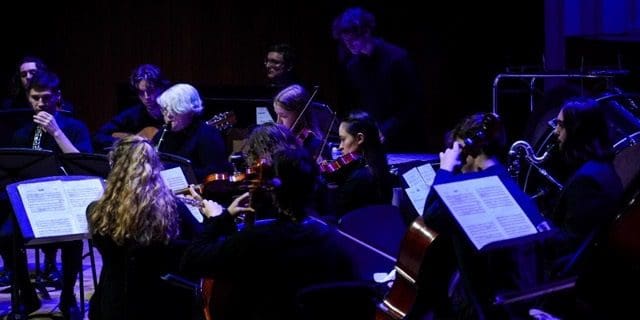
The Chimera Ensemble in concert at Sir Jack Lyons Concert Hall

LAST Friday evening’s concert was dominated by a performance of Julius Eastman’s 1974 work, Femenine, which, given that it lasted one hour plus, is hardly surprising.

Like the best of the minimalist music, I found the performance both hypnotic and radiant. The opening could be likened to that of a musical dawn, beginning with a simple rhythmic figure – semiquaver groupings coupled with a syncopated two-note motif – on vibraphone, inviting the other instruments to join in.

It felt like the players were given freedom – when to come in, how long to repeat material – and this created a fluid, floating quality. This distinguished the effect from the stricter processes of Philip Glass or Steve Reich, in both feel and structure.

The resulting sensual quality may, in part, help explain Eastman’s choice of title, Femenine. As a Black and openly gay composer working outside the classical mainstream, questions of identity and expression inevitably inform how the work is heard.

In the opening section, the instruments don’t simply join in; they overlap, blurring any clear dialogue, harmony or any sense of hierarchy. Yet there was drama, albeit one without a fixed direction. About halfway through, the music kind of disintegrates. Here it becomes fragile, dislocated, vulnerable. As I didn’t see it coming, the effect was striking.
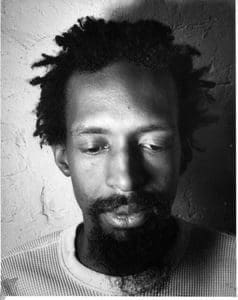
Composer Julius Eastman

The return journey, although covering similar ground – the rhythmic heartbeat still anchoring the music – felt altered, transformed. Drama was further enhanced by the alignment of clear tonal (simple triads) interruptions, signalled by the pianists Catherine Laws and Felix Edwards-McStay.

The locking-in of these tonal events gave the work moments of both clarity and radiance. The ending – a winding down leaving only the vibraphone’s rhythmic heartbeat gently laid to rest – was exquisite.

It would be wrong to single out any of the individual performers – it just isn’t that sort of experience – but credit should go to performance director Catherine Laws, and to percussionists John Rousseau (vibraphone) and Peter Evans (marimba) for their stamina and utterly infectious enthusiasm.

Mercifully, the first half was a short affair, showcasing three works by the university music department’s student composers.

Now then, back in the day – OK, my day – showcasing student compositions meant indecipherable programme notes explaining the unexplainable, accompanied by a performance experience of extremely loud, piercingly dissonant sounds designed toshatter the listeners’ teeth.

I enjoyed Sidney Wood’s Interruptions for solo electric guitar. It opened in a melancholic, reflective mood, but one without a melody or songline to follow. The “interruptions” were sudden distorted attacks with feedback that not only undermined the flow but also continually invited disorder and improvisation.
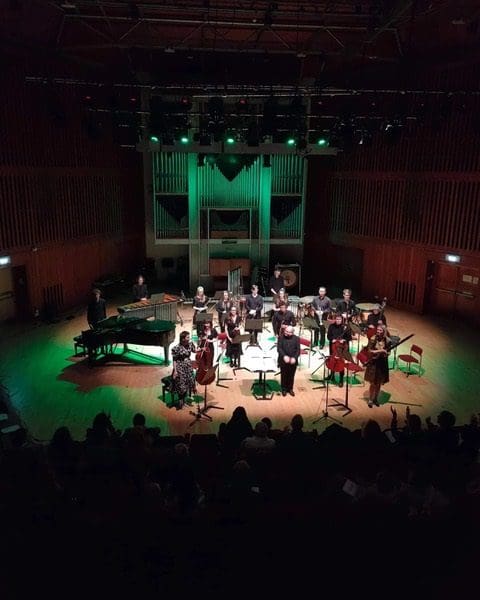
The Chimera Ensemble: Taking a bow at Sir Jack Lyons Concert Hall

To be sure, “harmonic saturation” enriched the sound world, and the interruptions added drama, but they also set up an expectation of virtuosic release. Just to be clear, I wasn’t expecting the piece to go full Pete Townshend, but certain expectations come with it: electric guitar solo = rock music = (some sort of) rebellion. Still, as I said, I enjoyed it.

I also enjoyed Manlu Du’s Landscape – for a pianist and their friend, although I wasn’t entirely convinced by it. There were lovely moments: the opening exchange of gentle clusters between the two performers (Roy Watkins and Manlu Du), and a simple piano pattern delicately distorted by the second pianist – the “friend” – dampening the strings, for example.

However, the second pianist’s movement around the spacedidn’t add anything meaningful, and the use of two pianos weakened the intended intimacy.

Now I’ve never heard of Brian Kernighan nor, mercifully, read his A Tutorial to the Language B, but I thought Danny Saleeb’s Hello World – based on the (simple) computer programme – was inspired.

Arthur Elliott’s performance on solo viola gave the impression of an unfolding landscape. The opening texture was one of fragility created through a range of extended string techniques: sul ponticello (bowing close to the bridge, creating a glassy, metallic quality); sul tasto (bowing over the fingerboard, harmonics), producing a purer, thinner tone and microtones – shifting, unstable ‘out of tune’ notes etc.

Saleeb uses these to create fascinating, layered textures that feel distinctly otherworldly. I heard traces of folksong and even Bach – arpeggiation, implied counterpoint – peeping through the surface. A short but inventive and musically intelligent work, and technically demanding. Full credit to Arthur Elliott. This was by far the standout work of the first half, and Danny Saleeb is clearly a composer to watch.

Review by Steve Crowther

REVIEW: Steve Crowther’s verdict on The Chimera Ensemble, Sir Jack Lyons Concert Hall, University of York, November 17

The Chimera Ensemble performing at the Sir Jack Lyons Concert Hall. Picture: Steve Crowther

GYOGY Kurtág’s Játékok piano pieces formed the main part of this innovative programme, with works by Howard Skempton and Paige Halliwell threaded in between the four groupings and closing with Michael Nyman.

This is the first time I have heard the Játékok pieces live, and they were a revelation. The only real influence I could discern was certainly not Beethoven, nor indeed Bartok, but Webern. In truth they were utterly original.

Each miniature beautifully crafted, each a portrait, a homage to his friends, fellow artistic travellers – Ligeti, Christian Wolff, a nod to Bach and, in the touching Hommage á Kurtág Márta, his wife with whom he played the piano duets.

All four groups were played by different pianists: Brinsley Morrison, Sam Goodhead, Katie Laing and Imogen Weedon & Charlotte Brettell (duets from Book VIII). Their care, the quality of touch, the precision and understanding of these tiny, intricate, aphoristic gems was a delight; polished and professional.

Játékok means games in Hungarian. Indeed, Kurtág said: “The idea of composing Játékok was suggested by children playing spontaneously, children for whom the piano still means a toy.” And this was what the performances created, that sense of innocent wonderment and discovery. 

The Chimera Ensemble was conducted by John Stringer, always a good thing. His precision and quiet authority ensured refinement and clarity in the three dovetailed works.

Howard Skempton’s Sirens (Version 1 and Versions 2 & 3) came across like musical paintings, gentle landscapes of instrumental colour created by simple chords oscillating between the different instrumental groups.

Now I do like Howard’s music, and I like the guy himself. I also like that these pieces were written for CoMA, a contemporary music organisation whose aims and values I share. However, although the performances were genuinely relaxing and engaging, the experience for me at least, was a little underwhelming.

Indeed, I initially thought the second Chimera contribution was also by Skempton – the lights being dimmed for, presumably, a performance-enhanced experience also meant it was difficult to see the actual programme notes – and a more enjoyable one too.

I’d actually written “that’s more like it, Howard” in my notes, only to discover it was a piece called Flux by Paige Halliwell – and a good one too. The Chimera Ensemble delivered its monolithic sound world to great effect where melodic shapes emerged, sometimes for their own sake and sometimes as part of a short musical conversation. Good performance, good piece.

Now to the Nyman, a composer whose music always gives me genuine foot-tapping, pulsating joy. I love the immediacy, intelligence and the physicality of his works. Not here, however. Despite the remarkably disciplined six-piano performance, the velvety textures and quiet jazzy influences, this did not work for me. I found the piece and musical experience a spectacularly self-indulgent, utterly tedious waste of time. I’ll get my coat.

Review by Steve Crowther

Debut online York New Music Weekend launches at University of York on Friday

Christian Mason: Composer and University of York alumnus at the heart of the first York New Music Weekend

THE inaugural York New Music Weekend will be launched on Friday at the University of York.

Running for three days but staying online for longer, this new annual festival celebrates contemporary music in York.

Under the theme of Time-Space-Sound-Light, the weekend centres on the work of Christian Mason, an award-winning composer and alumnus of the University of York’s department of music.

The online event includes premieres of new pieces and music by the composers who have influenced him, performed by members of The Octandre Ensemble, The Assembled, pianist Rolf Hind and The Chimera Ensemble.

Interviews and recordings contribute to a rounded profile of this leading British young composers.

In Friday’s opening 1pm concert, recorded at the Sir Jack Lyons Concert Hall, The Chimera Ensemble, Britain’s largest student-run contemporary music ensemble, present new works by student composers Emily Linane (Flute Miniature), Lucy Havelock (that silk, unrestricted), Joe Bates (Cataracts), Fred Viner (Bells Wrung) and Becky Davidson-Lund (Shade And Light).

Anna Meredith: Composer studied at the University of York. Picture: Owen Richards

After Axeman by University of York alumna and BBC 6 Music favourite Anne Meredith, the concert concludes with a piece as reflective as its title, Pauline Oliveros’s Mirrorrorrim.

Based on the theme of expressing the visual, the Chimera programme weaves its way from mirrors to luminosity and the nature of bells, exploring colour and texture while featuring an unconventional use of fabric, amplification and distortion.

At 7pm on Friday, Rolf Hind’s online piano concert, Nature, Lockdown And Dreams Of Travel, includes Hind’s Bhutani and Hind et al’s Lockdown Sequence (pieces written for Hind in lockdown from a call on Facebook), Matthew King’s When Birds Do Sing, Christian Mason’s Three Waves From Afar, Elaine Michener’s Tree Scream and Messiaen’s Le Loriot from Catalogue d’Oiseaux.

Online on Saturday at 7pm, pianist Hind and Mason (rin bells, harmonica, electronics) join fellow members of The Octandre Ensemble, Audrey Milhères (piccolo, flute) and Corentin Chassard (cello, scordatura cello) to perform Mason’s Just As The Sun Is Always.

In Sunday’s 1pm online concert, pianist Kate Ledger and The Assembled present the world premiere of Androgynette, a multimedia work by Ledger, James Redelinghuys and artist Angie Guyton. Watch Three Refractions Of A Body Etude on Ledger’s YouTube channel for a flavour of what to expect.

At the festival’s second concert by The Chimera Ensemble, the university’s new music ensemble, on Sunday at 7pm, the focus turns to new works by composers, largely from Yorkshire and the North East, alongside student works.

Rolf Hind, Christian Mason and Kate Ledger: Prominent roles in the inaugural York New Music Weekend

Again recorded at the Lyons, the programme comprises: Ed Cooper’s …incantations fixate…; Linda Catlin-Smith’s Knotted Silk; Nicholas Peters, Placebo; Michele Abondano, The Shimmer Beneath: A Scattering Attempt; James McLeish, Crimson; Rossa Juritz, the sound of wooden dusk; Rebecca Peake, Purple Smoke, and Yue Ming’s The Eternal Circle, plus reprises of Anna Meredith’s Axeman and Pauline Oliveros’s Mirrorrorrim.

This programme considers time, colour, texture and fabric, typified by Catlin-Smith’s irregularly spaced Knotted Silk and Peters’ rhythmically forceful Placebo as The Chimera Ensemble inhabit an exhilarating array of sound worlds.

Among other events this weekend is an interactive video collaboration of dance, music and cinematography between the Scottish Ensemble, Scottish Dance Theatre and composer Martin Suckling, entitled these bones, this flesh, this skin. 

This Watch Anytime feature is a digital work for solo violin and solo dancer by composer Martin Suckling, choreographer Joan Clevillé and cinematographer Genevieve Reeves. Through a bespoke online platform, audience members are invited to combine different audio and visual layers to decide how they want to experience the work in multiple iterations.

Born out of this unique period in our lives, the piece “explores how heightened attention can reveal different experiences of time in our bodies and the environment around us”. This layering of simplicity and complexity also manifests in the way the viewer/listener is asked to make decisions.

In a nutshell, “with every new iteration, we discover new perspectives, new nuances waiting for us in the spaces in between music, cinematography and dance, between the traces of our own memories and the aliveness of our attention.”

Composer Martin Suckling: Interactive video collaboration with the Scottish Ensemble and Scottish Dance Theatre, combining dance, music and cinematography

Another Watch Anytime feature, Distanced Modularity, is presented by Jethro Bagust, Lynette Quek and Ben Eyes, who contend that “the pandemic has been a disaster of unimaginable proportions. Making art and music during such a time, while others are suffering and enduring great hardship, seems futile.

“However, music and art are a great comfort to many, perhaps not more so than the musicians themselves and the social interaction that plays an indelible role in music.”

Using the Ninjam server set-up at York to synchronise two geographically distant modular synth set-ups; Bagust and Eyes explore how streams of found audio, real-time modular synthesis, stochastic compositional processes and video (courtesy of Lynette Quek) can be merged online to create a real-time audio-visual miasma. The piece was recorded live in one take after several distanced rehearsals.

Jethro says: “The instrument I play is populated with numerous chance elements that are linked to musical parameters. These elements of uncertainty blur the distinction between the roles of performer, composer, and audience because we are all hearing the music for the first time.

“Improvising with indeterminate instruments such as this, that defer the note by note production to algorithms, might be akin to steering an animal that you can point in a particular direction but not precisely know their behaviour.

“There is a tension between the human and the machine; the player must listen and react, responding to the system at an indirect meta-level.

A still from Jethro Bagust, Ben Eyes and Lynette Quek’s Distanced Modularity

The pre-recorded audio sources are from John Cage and Morton Feldman, In Conversation, Radio Happening I of V, recorded at WBAI, New York City, 1966-1967.

“Ben’s own set-up is based around a custom Max/Msp patch, linked to a modular synth, that allows real-time interaction with musical sequences and rhythms. Influenced by dub and techno, sound sources in the system are filtered, delayed and reverberated live in the mix to create musical form and progression,” says Jethro.

The festival’s five concerts, all recorded live, will be complemented by a round-table discussion on Sunday at 2pm when the speakers will be British composers and musicologists Martin Suckling, Minyung Im, Carmen Troncoso Caceres, Richard Kearns and Catherine Laws, in response to the pandemic-enforced closure of venues generating an explosion of online music-making.

Join the creative teams behind the festival’s Watch Anytime features, these bones, this flesh, this skin, Ceci n’est pas un piano and Between Air, Clay And Woods Of Certain Flutes, as they discuss ways to approach online performance beyond the “filmed concert” paradigm.

“Explore their online features and bring your questions to this interactive session,” comes the invitation to an event hosted on Zoom. Ticketholders will be emailed the Zoom link the day before the event.

All events are free but booking is required at yorkconcerts.ticketsolve.com/shows. Ticketholders can watch all the performances on demand until Sunday, July 11 at 23.59pm.