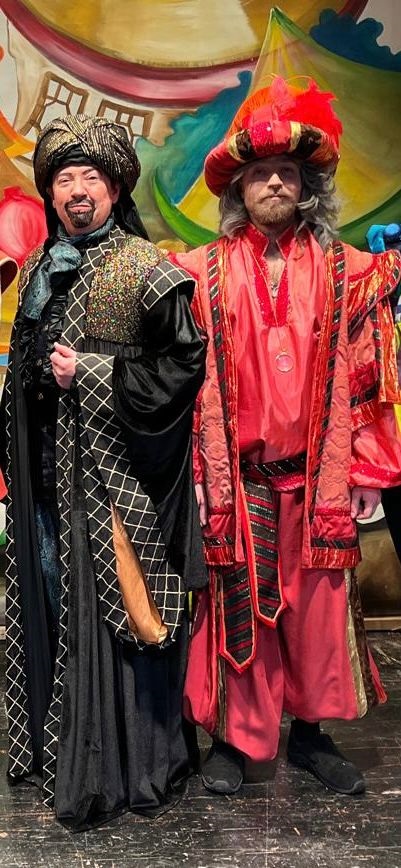
Harry Summers and Thomas Jennings walk the tightrope of panto villainy and goodness in Aladdin at Malton’s Milton Rooms

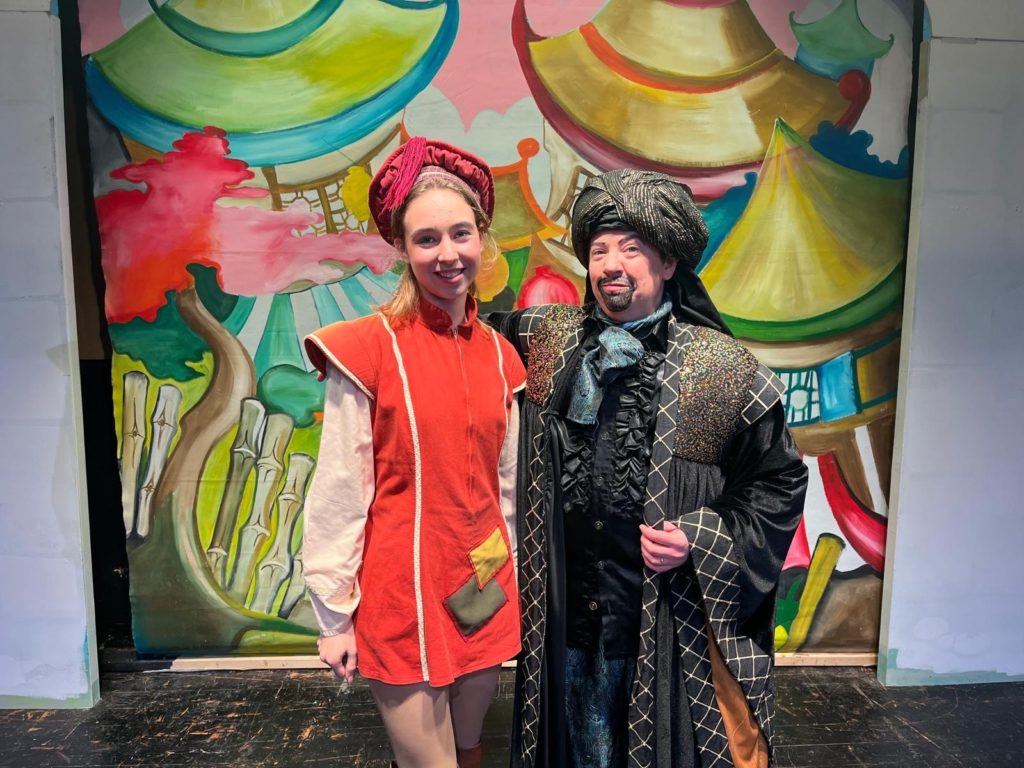
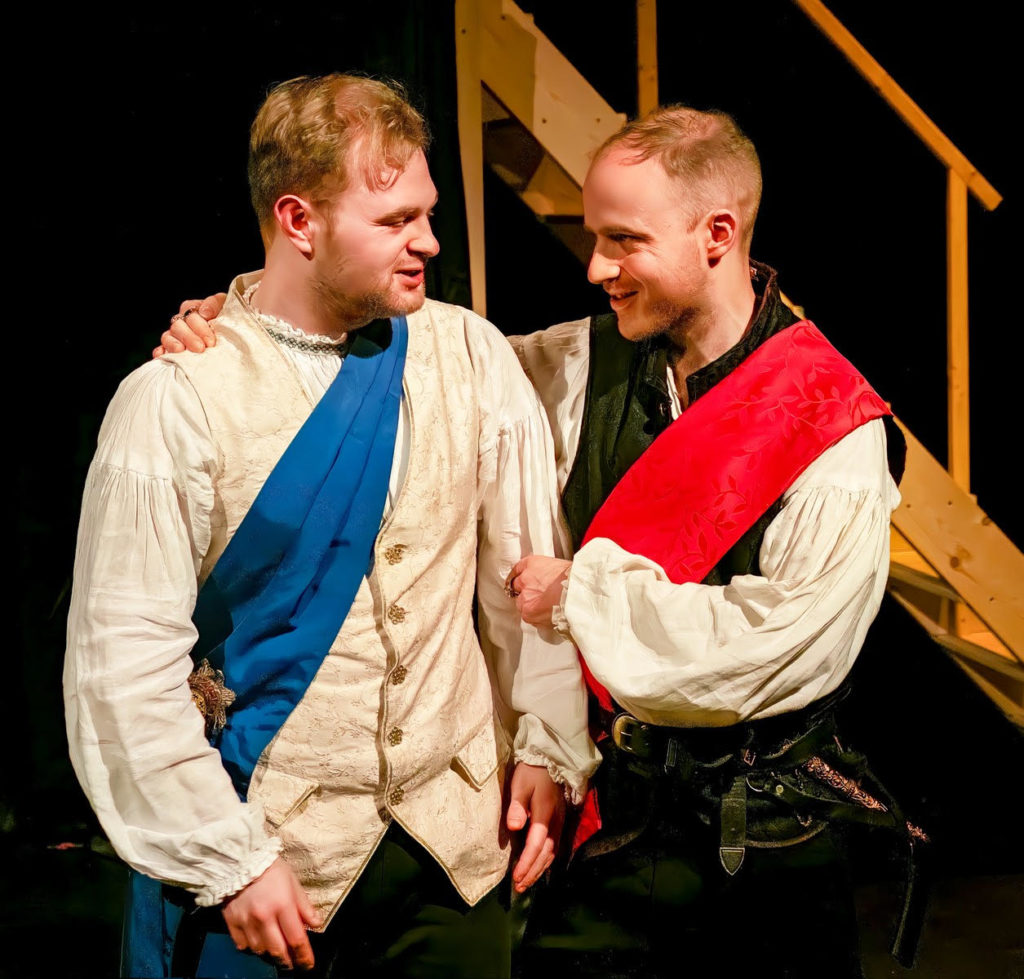
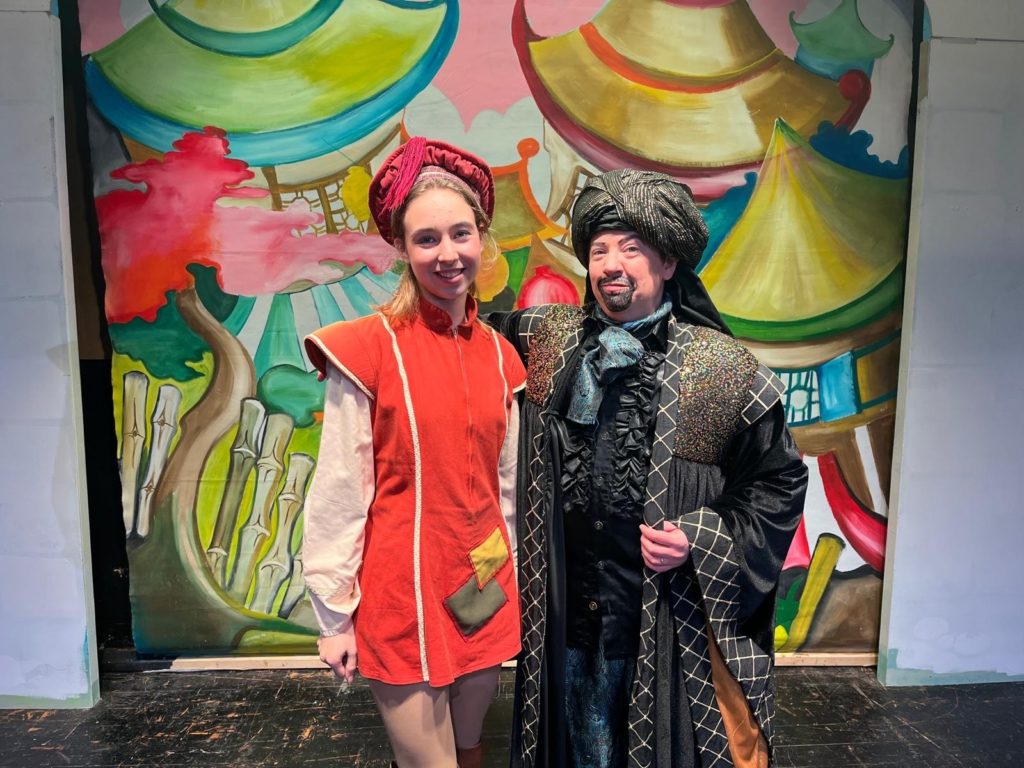
Harry Summers’ Abanazar with Thomas Jennings’s Emperor in Malton and Norton Musical Theatre’s Aladdin – The Pantomime

YORK Shakespeare Project regulars Harry Summers and Thomas Jennings often share the car journey from Malton to York for rehearsals and performances.

No such need – except for this interview, conducted at City Screen Picturehouse – applies to their participation in Malton and Norton Musical Theatre’s Aladdin – The Pantomime.

Thomas has been appearing in the Milton Rooms pantos for more than a decade; from Saturday, Harry will be in his third show after making his debut in Dick Whittington in 2024, opposite Thomas’s King Rat.

“I think I can claim that I got you involved,” says Thomas. “Rory [regular dame Rory Queen] rang me up to ask ‘Do you know anyone who could play Alderman Fitzwarren’, and I suggested Harry.”

“The Alderman was a very nice but not terribly intelligent chap, shall we say,” says Harry. “Then last year I ended up being the third level-rated villain, as Rancid, still two spots below the giant and the witch in the villainy pecking order.

“Thomas was the giant, Buster Gutbucket, who didn’t do any rehearsals and then turned up and got all the glory!”

Harry will be joined in the cast by 17-year-old son Alexander. “I remember when he came to see Thomas as Abanazar, so this year it’s come full circle as I’ll be playing Abanazar and Alexander will be the Executioner,” he says.

In keeping with his York Shakespeare Project performances, and indeed his work at York Dungeon, Thomas tends to be drawn to darker roles. “It’s been 99 per cent baddies, and one per cent kings and fathers to the romantic interest,” he says.

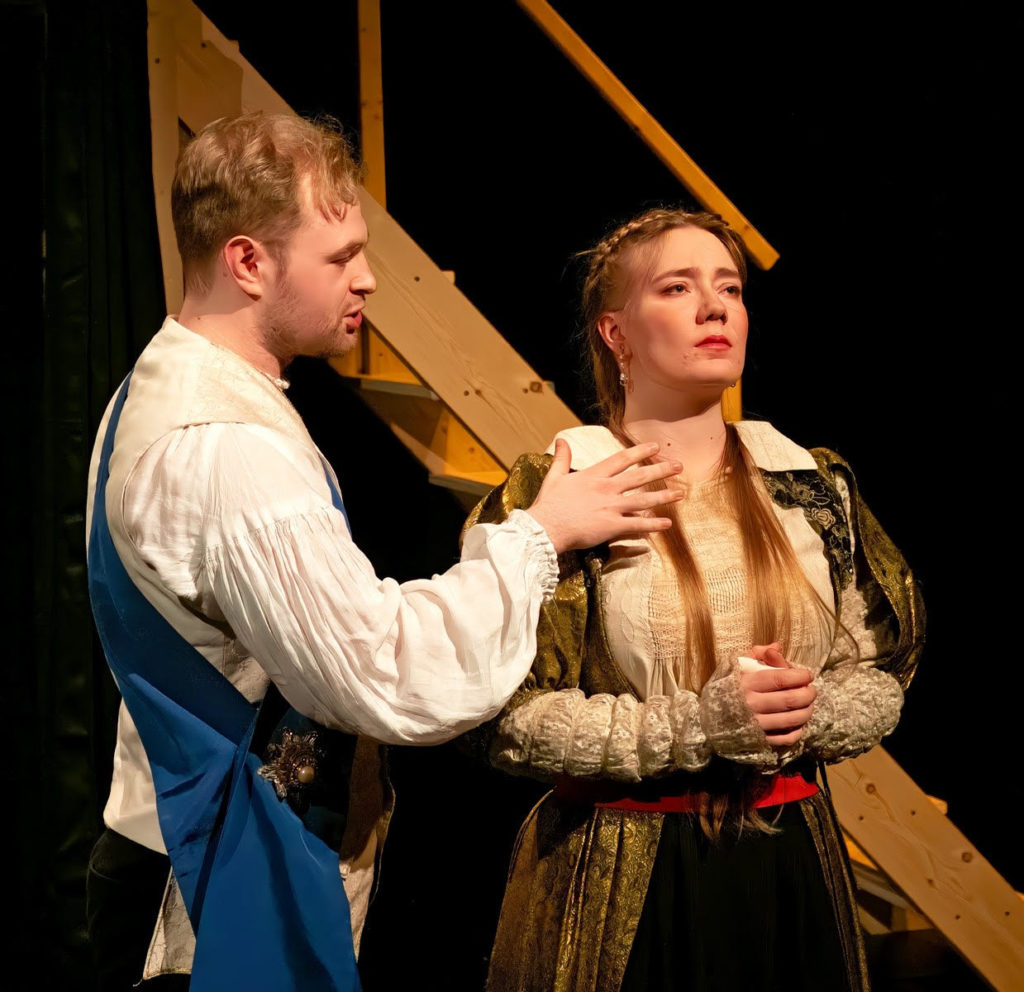
Thomas Jennings’s Emperor with Isobel Davis’s Princess Jasmine in Malton and Norton Musical Theatre’s Aladdin – The Pantomime

“Villains tend to be particularly enjoyable to play, but it’s also a challenge to find the darker elements within a good character, or the goodness in a dark character.

“This year I’m a goody, but still one who employs an executioner and orders his daughter to get married. He’s a little perplexed why she keeps refusing! In truth, the Emperor is a terrible, terrible person, but I love how panto glosses this over!

“The main thing that upsets him is Princess Jasmine getting kidnapped, but if Abanazar had come to him to propose a marriage for her, he would have been interested!”

Harry found himself recalling a past performance as evil magician Abanazar when rehearsing the role. “It’s an absolutely wonderful opportunity to play him. I saw Ian McKellen’s Widow Twankey at the Old Vic [in the 2024-2005 pantomime season], when Roger Allam was Abanazar, which was fantastic.

“In rehearsals, I was thinking ‘why does this remind me of Roger Allam?’, and then I remembered I’d seen him in the London show!”

Abanazar can be played myriad ways. “I find it interesting, having played Abanazar not that long ago, to be watching Harry now and seeing how different his interpretation is,” says Thomas. “When I approached the role, I wanted to make him genuinely dark, whereas what I’m finding interesting about Harry is the naughtiness and mischievousness that he’s bringing to the character.”

Harry, who has played such villainous roles as Shakespeare’s Richard III and Lucifer in the York Mystery Plays, rejoins: “If you play the baddie only one way – all-evil, all-angry, all-ambitious – you miss out on a lot of the jokes in there. There’s a huge enjoyment to be had in the evil in Abanazar, and it does help when you get lines like, ‘oh, I love being evil’.

“I prefer the ‘poetic justice’ that happens in panto. In this one, I don’t change my evil ways! I just get stopped from doing what I was doing.”

Harry Summers’ Abanazar with Harriet White’s Aladdin in Malton and Norton Musical Theatre’s Aladdin – The Pantomime

Thomas comments: “Abanazar is also the anti-dame. There’s a nudge and wink to the audience, and you always get a response out of the audience, just as the dame does.”

He loves playing to pantomime audiences: “It’s interesting how every night that audience can be different,” he says. “Sometimes you get an audience where they’re waiting for someone to give them ‘permission’ to laugh, and you only need one person to make a noise to set off the ripple effect.

“Then sometimes magic can happen when an error is turned into something that is then used every show. Different actors work in different ways, and for some if they have to veer off script, they’re gone, but Harry and I have both been actors at York Dungeon, where we can keep to the script but you should expect to go off script too.”

Coming next for Harry will be Black Treacle Theatre’s Anne Boleyn, playing the dual servant roles of Parrott and Simpkin in Howard Brenton’s exploration of Anne as a revolutionary figure through James I’s perspective, at Theatre@41, Monkgate, from March 3 to 7.

Thomas will be going on tour with Parrabbola, performing Shakespeare works. Watch this space for more details to follow.

Joining them in Mark Boler’s cast for Aladdin will be Harriet White’s Aladdin, Isobel Davis’s Princess Jasmine, Rory Queen’s Widow Twankey, Tom Gleave’s Wishee Washee, Mark Summers’ Genie of the Lamp and Annabelle Free’s Spirit of the Ring, among others.

“We’re also reliant on the army of volunteers who do the set building and back-stage work and make such an important contribution behind the scenes,” says a grateful Harry.

Malton and Norton Musical Theatre in Aladdin – The Pantomime, Milton Rooms, Malton, Saturday, 1.30pm, 5.15pm; Sunday, 2pm; January 20 to 23, 7.15pm; January 24, 1pm, 5.15pm. Box office: 01653 696240 or themiltonrooms.com.
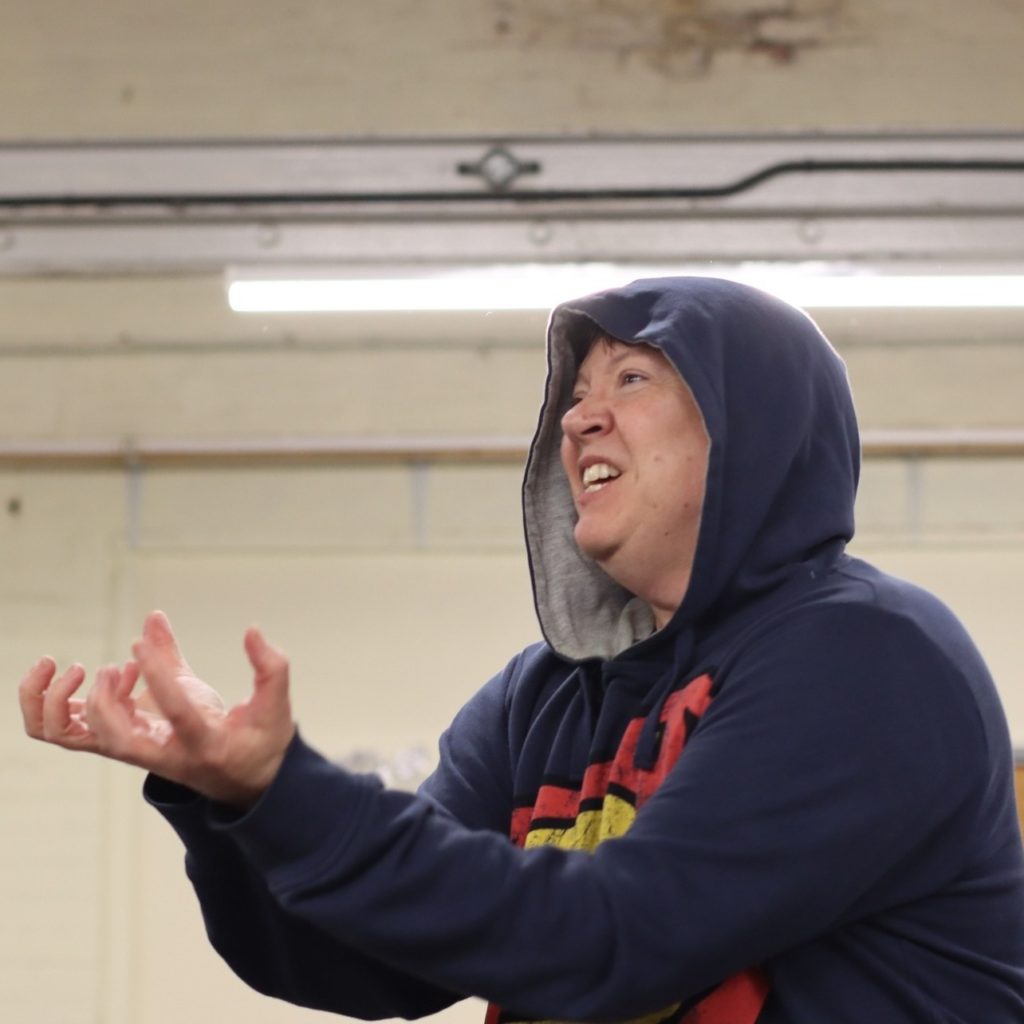
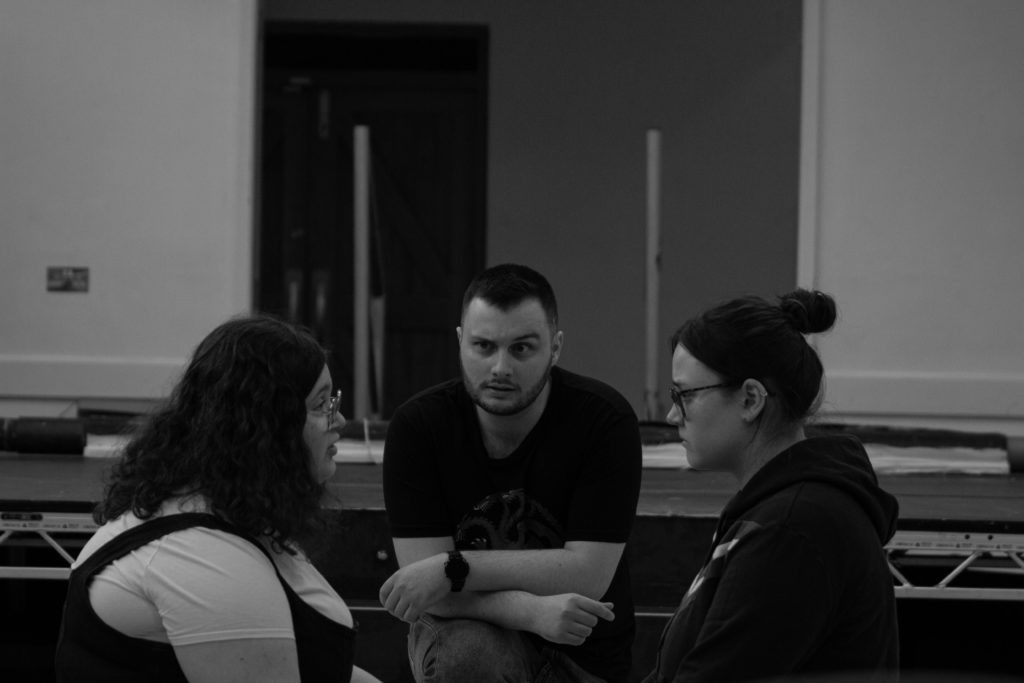
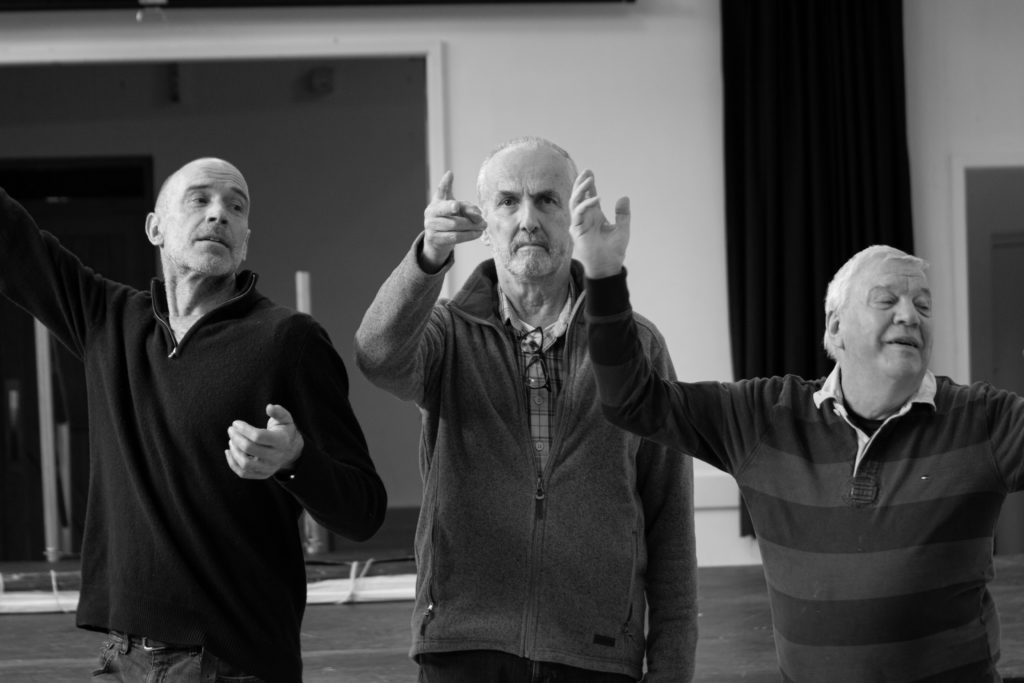
“If you play the baddie only one way – all-evil, all-angry, all-ambitious – you miss out on a lot of the jokes in there,” says Harry Summers, pictured in rehearsal for his role as Abanazar

REVIEW: York Shakespeare Project in The Spanish Tragedy, Theatre@41, Monkgate, York, until Saturday ****

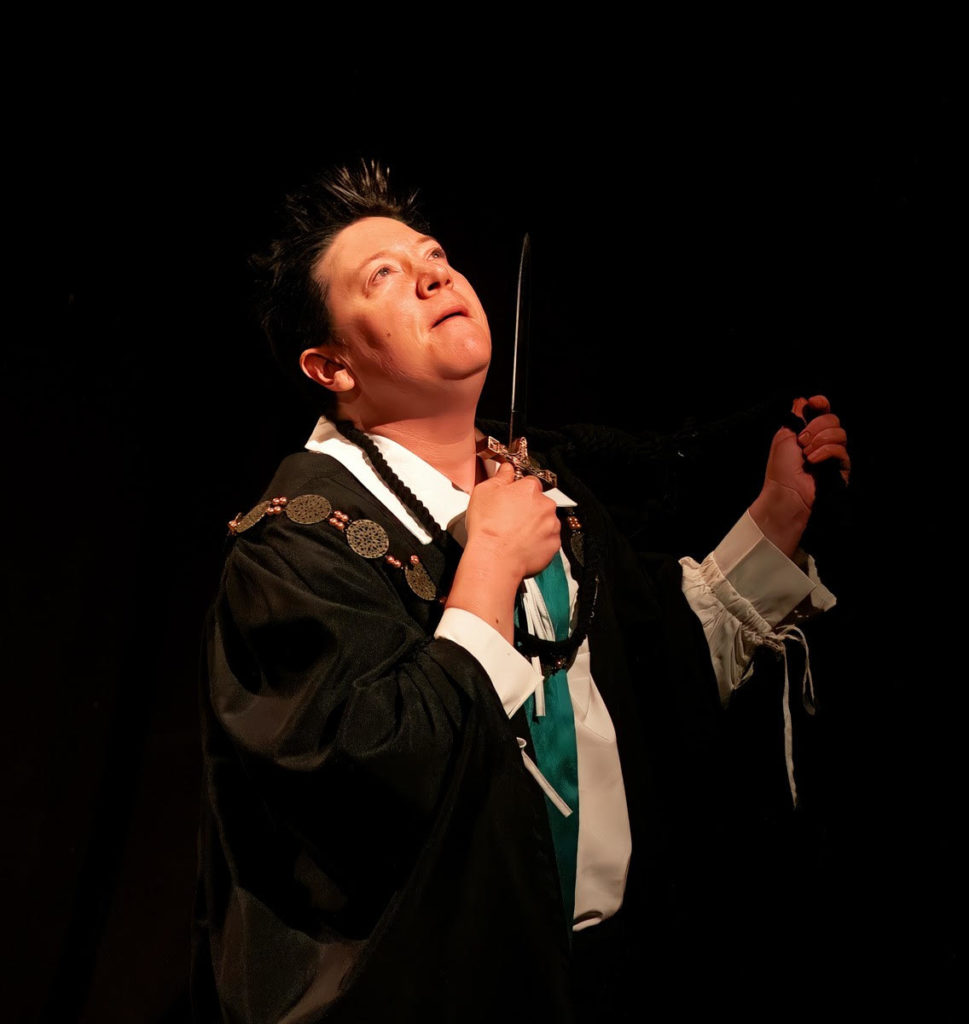
Harry Summers’ Hieronimo: “The Hamlet of the piece” in Thomas Kyd’s The Spanish Tragedy. All pictures: John Saunders

BACK in the Elizabethan day, Thomas Kyd’s The Spanish Tragedy outsold Hamlet.

Truth be told, he was pretty much a one-hit wonder, (even “the one and only” Chesney Hawkes had a minor second hit, I’m A Man Not A Boy in 1991), and Kyd has been long dead and buried, like most of his players in what is now viewed as the groundbreaking template for revenge tragedies.

York Shakespeare Project’s decision to expand the focus beyond the Bard in its 25-year second cycle of the First Folio facilitates the revival of rival works of Ben Jonson, the ill-fated Christopher “Kit” Marlowe and, yes, one Thomas Kyd (1558-1594), the tragic trailblazer.

After the Pop Art explosion and drag and cancel culture of director-designer Tom Straszewski’s take on Marlowe’s Edward II in October 2023, Paul Toy returns to the YSP director’s chair after a 14-year hiatus to steer his fourth YSP production.

Toy had first read The Spanish Tragedy as part of his university Renaissance Theatre course, playing the insouciant wrong’un Pedringano to boot. He was struck by how so many of its ideas – “a ghost seeking revenge, feigned or real madness, a play within a play” – would be echoed in Hamlet by Shakespeare, the alchemist of playwrights. Better lines, better characters, better gags.

The Spanish Tragedy, however, turns out to have been well worth digging up out of its neglected grave. Yes, it is no match for Hamlet, but this is a meaty work, full of myriad theatre styles, as Toy notes, from dumb shows to execution as street theatre, tragedy as classical as Greek dramas, and not least a Last Judgement scene redolent of the York Mystery Plays. And, boy, does Kyd enjoy piling up the bodies till the last man standing.

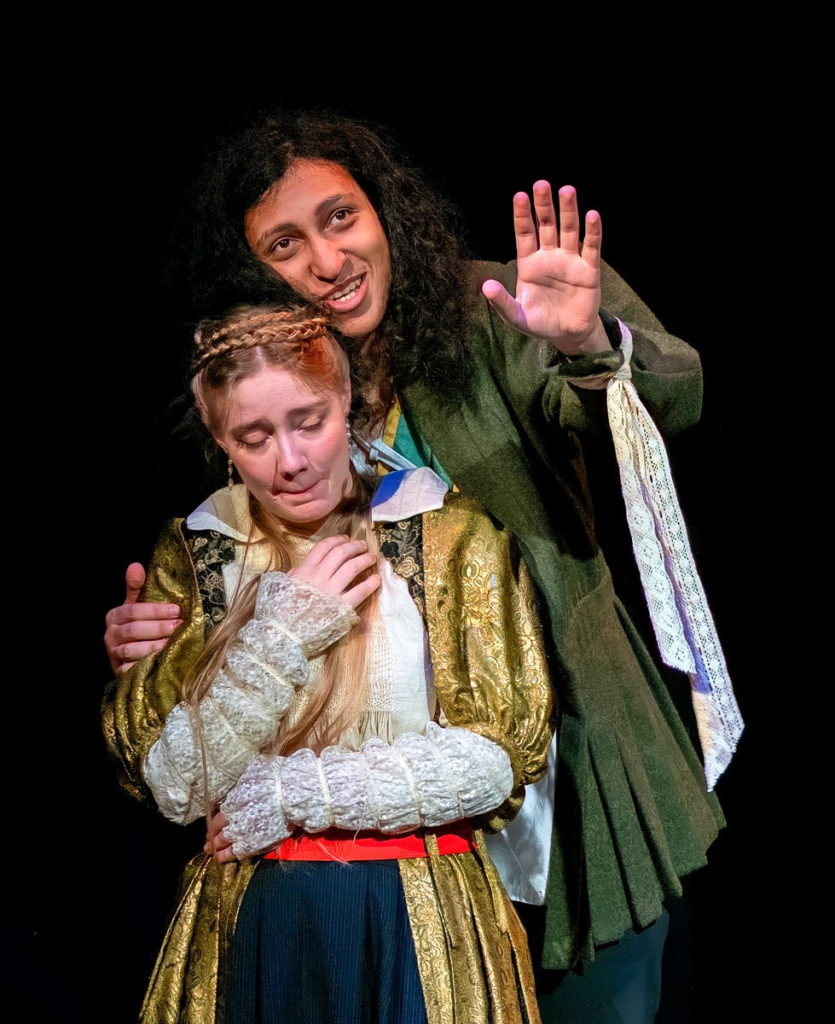
The price of love: Emma Scott’s Bel-imperia and Yousef Ismail’s Horatio in York Shakespeare Project’s The Spanish Tragedy

Working in tandem with set designer and choreographer Viv Wilson and mask maker Tempest Wisdom, plus a rotating team of trainee make-up artists from York College (Grace Gilboy, Beth Shearstone, Keira Hosker, Abigail Horton and Ethan Thorpe), Toy gives The Spanish Tragedy the look of the Day of the Dead, with a nod in Wednesday’s make-up to Heath Ledger’s Joker in The Dark Knight.

Relocated to York from Seattle, Wilson is a sound engineer at Theatre@41, has contributed YSP sets for The Taming Of The Shrew  and Two Gentlemen Of Verona, and once toured the world in a dance group and performed burlesque acts on three continents.

From that portfolio, you see how all life is here in YSP, as it should be in a long-running project, and now Wilson makes her debut in “legitimate theatre” as Revenge, resplendent in red and black, her face skeletal and ghostly white, her voice like a 60-fags-a-day midnight hag. Her mood is intemperate, her mission on a par with the Grim Reaper, but with better putdowns.

Wilson’s Revenge takes her seat to one side of the mezzanine level, reached by a staircase with a platform  above for executions and such like. To the other is the “ghost seeking revenge”, YSP debutant David Lee’s Ghost of Andrea, drained of all colour by way of contrast with Wilson’s crimson Revenge. They will watch on, like the Chorus in Greek dramas, but with an impact more akin to Macbeth’s witches.

At the heart of The Spanish Tragedy is Harry Summers’ Hieronimo, Marshal of Spain, the vengeful Hamlet of the piece, with almost as many lines, but older, enervated. Summers already had his winter of discontent as Richard III and more woe as Coriolanus, and his ninth YSP role is best yet, delivering on “the power of rhetoric” that struck Toy above all else.

The theme of the failure of justice resonates with the rotting modern world, as Toy turns his audience into judge and jury, for Summers’ Hieronimo and Emma Scott’s equally impressive Bel-imperia in particular to make their case. Not for the first time in YSP colours, Scott’s diction is a delight; likewise her emotional range.

Plotters and rotters: PJ Gregan’s Balthazar, left, and Thomas Jennings’s Lorenzo in The Spanish Tragedy

Courtly roles go to YSP stalwarts, Tony Froud’s King of Spain, Emily Hansen’s Duchess of Castile and Nick Jones’s Viceroy of Portugal , while Tim Holman’s makes his first YSP appearance since 2004’s Titus Andronicus in a brace of roles.

On the dark side are Yousef Ismail’s Horatio, YSP newcomer P J Gregan’s Balthazar and Thomas Jennings’ malevolent Lorenzo, breaking the fourth wall with scene-pinching elan, on trademark crop-haired hitman duty again.

Isabel Azar, Cassi Roberts, Martina Meyer and Ben Reeves Rowley fit the the plot-thickening brief to good effect and Sally Mitcham is the play’s moral conscience as Hieronimo’s troubled wife.

Toy directs as playfully as his name would suggest, even using exquisite choral music by the wife-and-her-lover-murdering Gesualdo pre-show and in the interval. When a hanging takes place, darkness descends on the moment of Alan Sharp’s deadpan Hangman administers the drop, whereupon a scroll of The Hanged Man falls into place. Intricate sword-dancing adds to the spectacle, as do all manner of masks.

By the live nature of theatre, anything can happen. What were the odds of a letter dropped from above by Scott’s Bel-imperia landing in the curtain, out of Summers’ Hieronimo’s sight, no matter where he looked. To the rescue rode the director, in the back row. “Top of the curtain,” he bellowed, bringing the house down. Just one of many good decisions he made in this fruitful resurrection of Kyd’s play of men – and women – behaving very badly.

York Shakespeare Project in The Spanish Tragedy, Theatre@41, Monkgate, York, until Saturday, 7.30pm and 2.30pm Saturday matinee. Box office: tickets.41monkgate.co.uk.

The cold touch: PJ Gregan’s Balthazar and Emma Scott’s Bel-imperia in York Shakespeare Project’s The Spanish Tragedy

Husthwaite Players head to the woods in Lottie Alexander’s staging of A Midsummer Night’s Dream at Husthwaite Village Hall

Effie Warboys’ Helena, Sam Strickland’s Lysander and Rachael Williams’s Hermia in rehearsal for Husthwaite Players’ A Midsummer Night’s Dream. All pictures: Jack Wells

LOTTIE Alexander directs Husthwaite Players in Shakespeare’s A Midsummer Night’s Dream at Husthwaite Village Hall, near Easingwold, from April 25 to 27.

“What happens when characters – and audiences and readers – are moved from the known to the unknown, from order to disorder?” asks Lottie. “When they step outside their everyday life and enter into a strange dimension, such as the island in Lord Of The Flies, or Neverland, or the wood in A Midsummer Night’s Dream?

“The wood is the centre of Shakespeare’s play, a place inhabited by fairies, ruled over by Titania and Oberon, whose quarrel has had the effect of altering the seasons. The disruptive interaction of the fairies with the mortals who dare to enter the forest, the lovers, and the artisans rehearsing their play, forms the major part of A Midsummer Night’s Dream.”

Despite the play being set in Athens, the wood and the fairies are thoroughly English, as are the artisans who perform their play for Duke Theseus. “Our production is set in 1918 – and the setting is appropriate,” says Lottie.

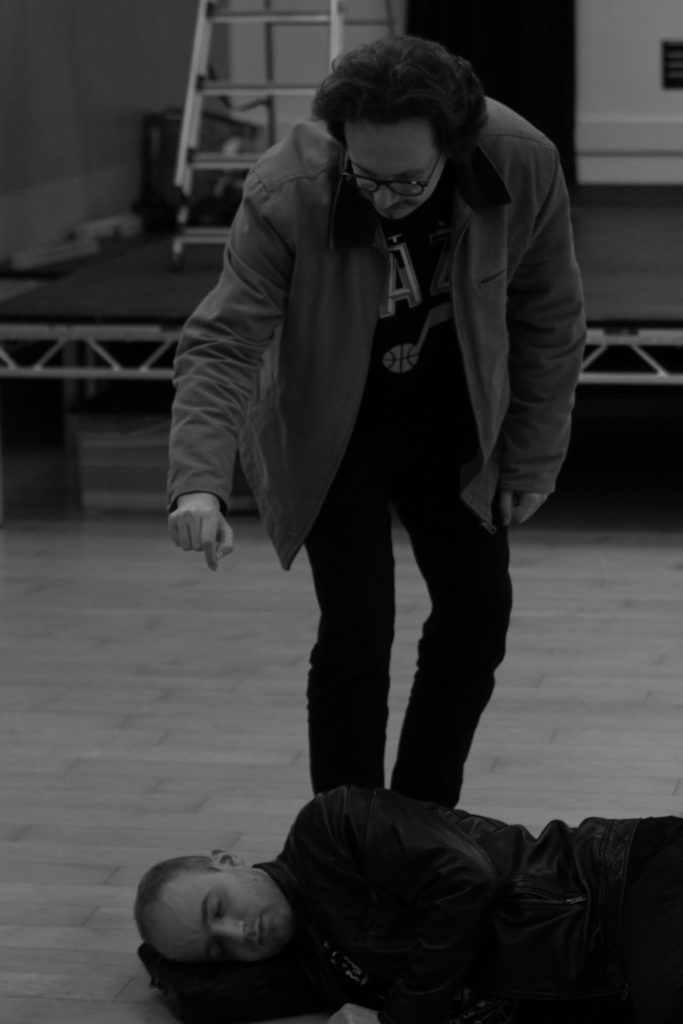
Marcus Pickstone’s Oberon stands overThomas Jennings’s Demetrius as they rehearse for Husthwaite Players’ A Midsummer Night’s Dream

“In 1917, in England, the photographs, taken by two young girls, of cut-out paper fairies deceived many in England, including Sir Arthur Conan Doyle. From the 18th century, England was changed forever, as the Industrial Revolution drove the change from rural life to the new mechanized society, and the countryside was swallowed up by railways and urban and suburban sprawl.

“As a reaction, the interest in stories of fairies and magic abounded, folk tales and ballads were collected by antiquarians, and Spiritualism flourished, particularly post-war.”

Lottie continues: “In the play, Theseus explains to Hippolyta that it is easy for mortal minds to be confused by unusual images and experiences, and, as Puck reminds the audience at the play’s end, it may all have been a dream.”

Casting an eye over her company, Lottie says: “We are a village with a small community, and most of our players are local, but we have been lucky enough to be able to attract outside talent in several of our previous productions.

Thisbe, left, The Wall and Pyramus in the “Wall Play” finale to Husthwaite Players’ A Midsummer Night’s Dream

“For A Midsummer Night’s Dream, we have four talented and dedicated players as our young lovers: Effie Warboys (Helena), Thomas Jennings (Demetrius), Rachael Williams (Hermia) and Sam Strickland (Lysander). Effie and Thomas have most recently performed with the York Shakespeare Project.”

Look out too for Ray Alexander, past director of York Mystery Plays and York Settlement Community Players productions, making an ass of himself in the role of Nick Bottom, the weaver.

“We hope audiences will enjoy our production. After all, as Philip Henslowe says in the film Shakespeare in Love: ‘Comedy, love and a bit with a dog. That’s what they want’!”

Husthwaite Players in A Midsummer Night’s Dream, April 25 to 27, 7.30pm; doors 7pm. Tickets: £10, children £5, family £25; 07836 721775 or email sheila_mowatt@btinternet.com.

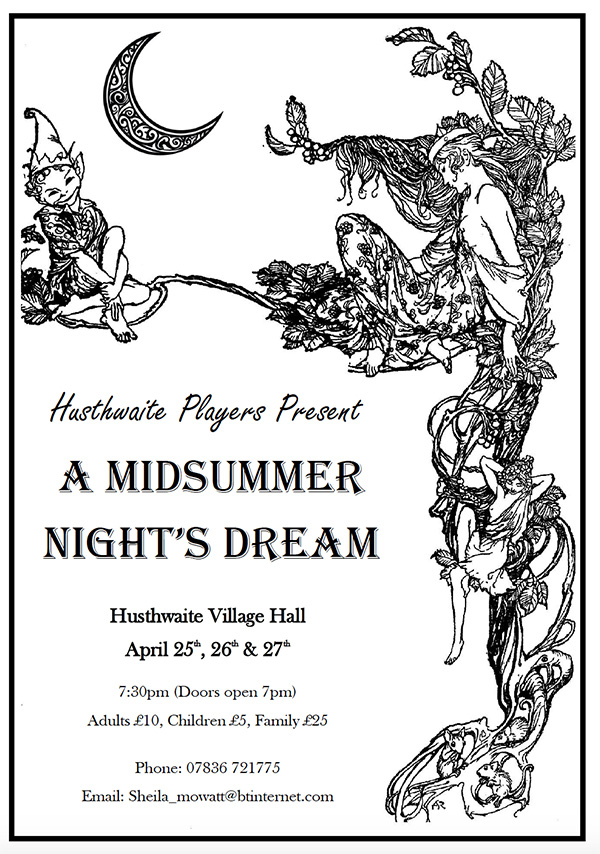
Husthwaite Players’ poster for Lottie Alexander’s production of A Midsummer Night’s Dream

Cast

Duke Theseus: Paul Hampshire

Hippolyta: Rachael Bice

Philostrate: Euan Crawshaw

Egeia: Lydia Ebdon

Hermia: Rachael Williams

Demetrius: Thomas Jennings

Lysander: Sam Strickland

Helena: Effie Warboys

Polly Quince: Stella McDevitt

Nick Bottom: Ray Alexander

Francis Flute: David Aspinall

Robin Starveling: Jane Cluley

Sally Snug: Sheila Mowatt

Puck: Scott Lammas

Celandine: Bethan Simpson

Oberon: Marcus Pickstone

Titania: Emma Kissack

Conker (the dog):  Himself

Fairies and sprites played by Hustwaite children.

Production team

Director: Lottie Alexander

Set design: Ray Alexander

Scenic artists: Sorrel Price, Emma Kissack

Wardrobe: Lynn Colton, Julia Hampshire

Props: Liz Walton, Doreen French

Stage management: Stephen Barker, Simon Eedle