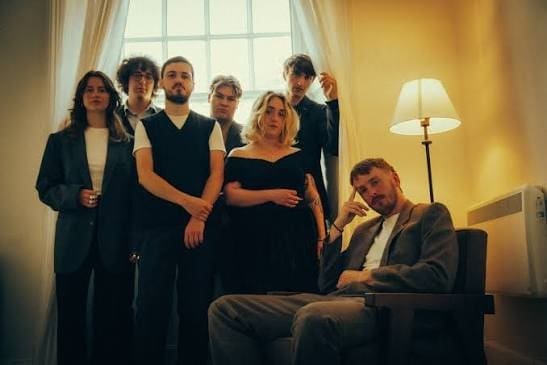
Totally Tom Allen: “Totalling up what life is all about” on his 2027-2028 tour
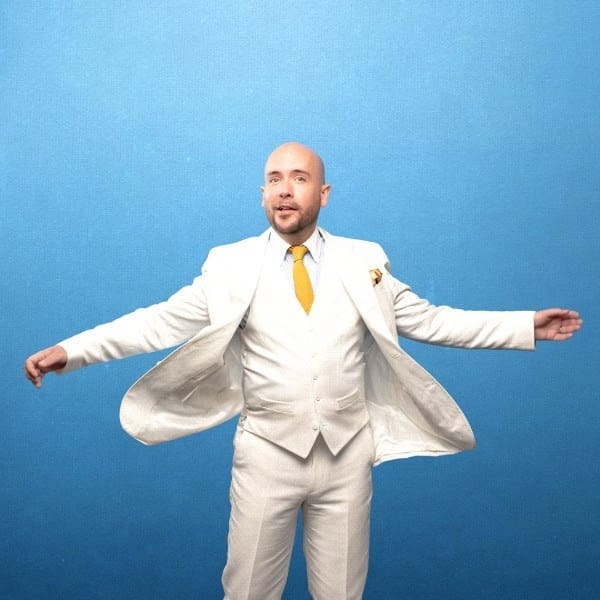
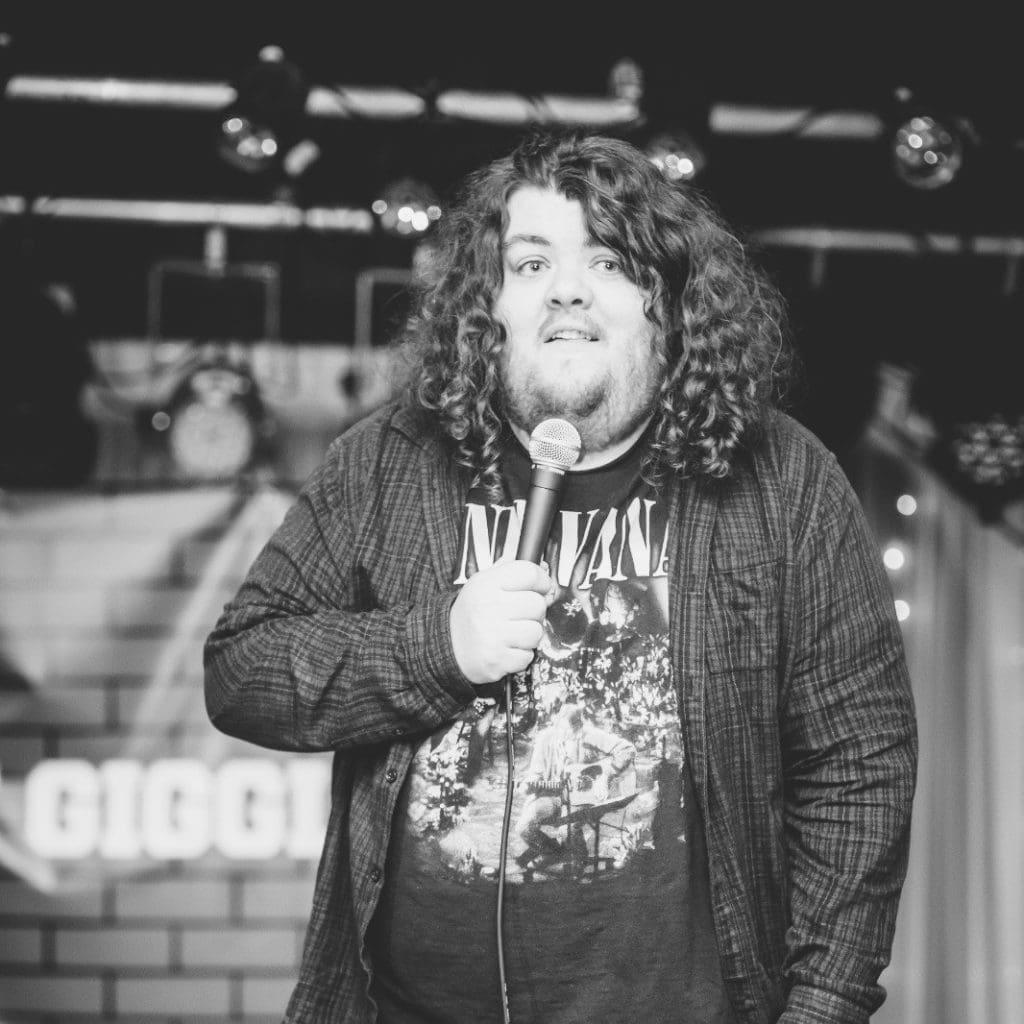
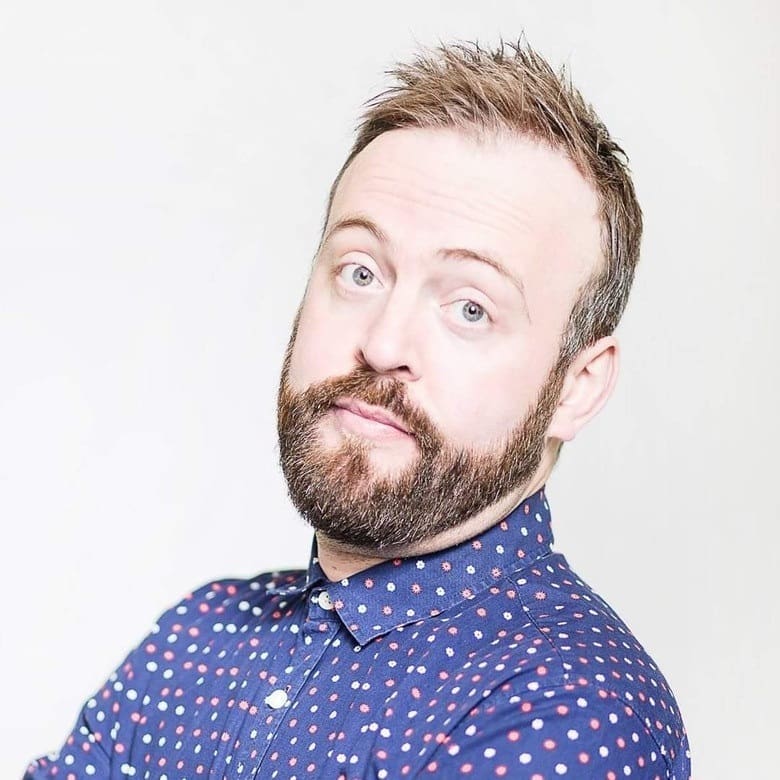
SMART comedian Tom Allen has gone from Completely to Totally in picking his tour titles. Tickets go on general sale at https://tomindeed.com/ at 11am today for his 2027-2028 itinerary that will take in five Yorkshire gigs.
On his Totally travels, Allen, 43, will play York Barbican on December 11 2027, along with Halifax Victoria Theatre, November 25, Hull Connexin Live, November 26, Scarborough Spa Grand Hall, December 10 and Sheffield City Hall as far away as April 28 2028.
In Totally, Allen is totalling up what life is all about. Told to live in the moment, he is distracted by old women on the bus listening to music without earphones. Annoying influencers show him how his house should look, but his kitchen has just flooded and the plumber wants to fit a ‘fanny trap’.
He knows he should be enjoying things, but he still feels that he never quite fits in. Maybe he has been getting life just ever so slightly…wrong?
Bromley-born stand-up comedian, actor, author, TV and presenter and podcaster Allen co-hosts ITV’s Cooking With The Stars and the Like-Minded Friends podcast and hosts gardening visualised podcast Pottering.
He has appeared on The Great British Bake Off: An Extra Slice, Last One Laughing: Halloween Special, Apprentice You’re Fired, 8 Out of 10 Cats , 8 Out Of 10 Cats Does Countdown, Would I Lie To You? and QI.
He starred in the hit musical Titanique in the West End, playing Ruth, Rose’s mother, at the Criterion Theatre, London, from March 4 to April 12 this year. “The laughs and camp spoofing are addictive and exactly what the world needs right now,” he said ahead of his six-week stint.
Allen is the author of two memoirs, No Shame and Too Much, and his debut novel, Common Decency, was published by Hodder & Stoughton on May 21.
On the fence: Pip Cook’s Biddy, left, and Ellen Carnazza’s Buff in Badapple Theatre’s revival of Back To The Land Girls. Picture: Karl Andre Photography
BADAPPLE Theatre, purveyors of theatre on your doorstep near and not so near, are half way through a revival of one of the Green Hammerton company’s best-loved plays from its 28-year track record of original and humorous stories.
Company founder and artistic director Kate Bramley’s Back To The Land Girls is playing 16 rural locations across Yorkshire as part of a wider itinerary featuring a cast of Ellen Carnazza and Pip Cook.
“The show was inspired by interviews with a number of incredible women from Yorkshire who worked on the land during the Second World War,” says Kate. “Their comic and poignant reminiscences led me to create the heart-warming journey of Liverpudlian Buff (Carnazza) and Yorkshire lass Biddy (Cook), who arrive in the countryside not knowing one end of a cow from the other. That soon changes!
“Their camaraderie and friendship sustain them on a journey of back-breaking work, but also one of delightful independence, of dreams of fame and romance and always the hope that the end of the war is just around the corner.”
Kate reflects on a play she first staged in 2009 with music by Sony Award-winning songwriter and BBC Radio 4 host Jez Lowe. “Back To The Land Girls is such a hopeful story, inspired by the interviews I recorded with these women. It was such a privilege to speak with them, and it’s a great joy to share these tall tales once more.”
Kate Bramley: Badapple Theatre’s artistic director and writer
Extracts from three of those stories, by Pauline Dawson, Biddy Cust and Marjorie Waterhouse, can found in the official programme, by the way.
“We did four tours of the play between 2009 and 2011 and now we’re bringing it back after 15 years,” says Kate, whose company is this year’s Associate Company at York Theatre Royal. “I then wrote Lights Out Land Girls in 2013, set between VE Day and VJ Day, where they go on another adventure, trying to get to Blackpool.”
Back To The Land Girls brings together life on the farm, with American airmen and prisoners of war nearby, a brother overseas in the Royal Navy, hopes of Vera Lynn coming to town to sing, a trip to a cinema curtailed by an air raid and the prospect of a visit to the dance hall.
“They’re focused on cows, sowing onions, trying to get the mangle harvest in, with Biddy being distracted by any animal intervention,” says Pip.
“Buff pretty much gets distracted by herself – and boys,” says Ellen. “She’s a bit boy crazy, especially with the Italian prisoner of war, Giovanni.”
Ellen Carnazza’s Buff looking for an elusive mouse in Back To The Land Girls. Picture: Karl Andre Photography
“Biddy is as scared of boys as much as Buff is not enamoured of frogs in the story,” says Pip. “But I love frogs,” says Ellen. “My gran’s house was covered in a collection of frogs, bronze ones, ceramic ones. Anything frog related, she had it! I’ve inherited some of the frogs; some were donated to charity, but there are still plenty of frogs left.”
Pip chips in: “I’m probably a bit more indifferent about frogs. They’re more of a five out of ten creature for me! But one of my best friends is a dairy farmer, Harry. We spent New Year’s Eve at their place, where a calf had just been born.”
Born and bred in Leeds, Ellen has visited a few farms. “I like them,” she says. “I haven’t milked a real cow, but I remember ‘milking’ a fake one in Ripley!”
Pip says: “I feel that Biddy getting distracted by animals is exactly what would happen to me, like when Biddy is waving at a cow but it turns out to be a bull.”
Ellen adds: “I like animals more than Buff does. She likes to think she knows more than she does, but she does get stuck in on the farm and I would do that too.
Ellen Carnazza’s Buff, left, and Pip Cook’s Biddy enjoying rare access to lipstick in wartime in Back To The Land Girls. Picture: Karl Andre Photography
“In the play, the Land Girls have to cling on to the small things, rather than thinking about the future, so the dance becomes a really big thing for them. There’s an element of them being removed from the war in Yorkshire, apart from the air raid. It’s not like being in the Blitz in London.”
Pip rejoins: “But their rural world is interrupted every so often by events in the outside world, so it’s not all just farming.
“What’s really interesting is how they don’t have access to the news that we do now, so they were reliant on word of mouth and the radio, whose information was official and factual.”
Singing features prominently in the show. “In this show, it’s all happening for real, rather than having a song break to heighten the emotion in the tradition of musicals,” says Pip. “Instead, when they sing a song in the air raid, it’s to make themselves feel brave. Or later, when Buff, who has always wanted to be a singer like Vera Lynn, chickens out of performing at the hall, Biddy does it instead.”
Ellen and Pip have been on the road with stage manager and lighting designer Duncan Hands on hand since September 9, continuing their association with Badapple after Ellen appeared most recently as hot and flustered TV baking queen Petronella Parfait, disgraced and on the rapidly downward spiral in Bramley’s one-woman-but-many-parts play Crumbs and Pip toured in The Thankful Village, the pantomime mash-up Sleeping Beauty And The Beast and The Regalettes.
On song: Pip Cook’s Biddy takes to the microphone in Back To The Land Girls. Picture: Karl Andre Photography
They are into week four of the Land Girls tour. “We’ve always come away from performances thinking ‘that was a really warm audience’, with a lot of chat afterwards, like recalling how women would draw lines on their legs to mimic stockings and talking about Land Girls in their families,” says Ellen.
“They feel comfortable watching these two Land Girls, feeling they’re going on a journey with them,” says Pip. “It’s very wholesome.”
Badapple Theatre in Back To The Land Girls, on tour until October 25, including Yorkshire shows at Settle Victoria Hall, October 6, 7pm (tickets: 01729 825718); Eggborough Methodist Chapel , October 8, 7.30pm, sold out; St Joseph’s Church Hall, Wetherby, October 9, 7.30pm, for Wetherby Arts Festival (tickets: wetherbyfestival.co.uk) and Hampsthwaite Memorial Hall, near Harrogate, October 21, 7.45pm (tickets: 01423 331304). For the full itinerary and ticket information, go to: https://www.badappletheatre.co.uk/show/back-to-the-land-girls/.
Did you know?
ELLEN Carnazza will play the Ellen will play the Wicked Fairy, Carabosse, in Harrogate Theatre’s pantomime, Sleeping Beauty, from November 25 to January 17.
Pip Cook launches her own company, Paper Mouse Theatre, with the festive favourite A Christmas Carol at Micklegate Social, Micklegate, York, on December 12 and 13 at 2pm and 7.30pm.
Whichever way the cook crumbles:Ellen Carnazza’s disgraced TV baking queen Petronella Parfait falls apart in Badapple Theatre’s Crumbs
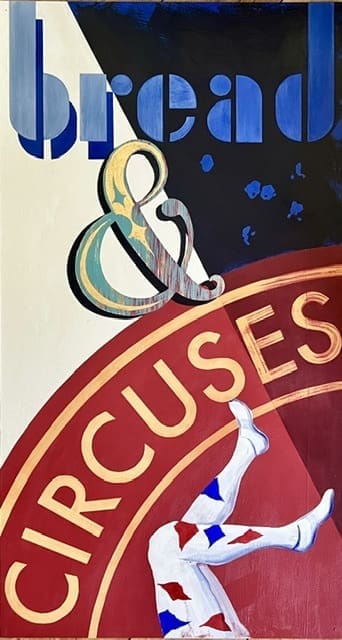
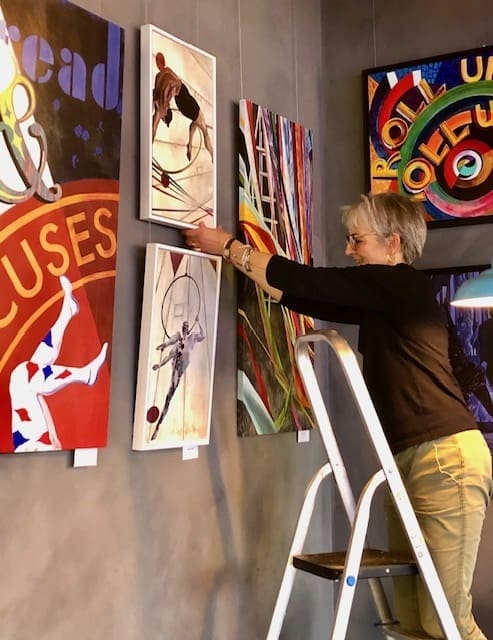
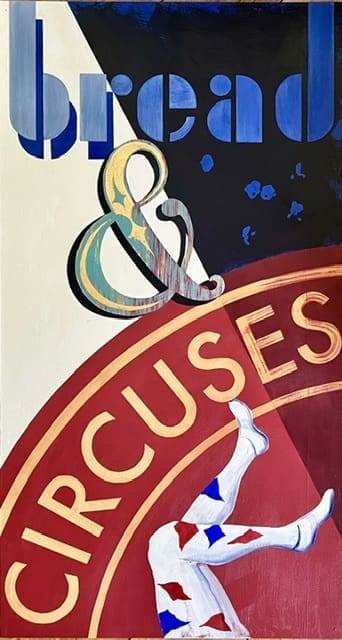
Bread & Circuses, board, house paint, acrylic and metal leaf on plywood, the title piece from Sarah Hall Baqai’s exhibition. Note the harlequin balancing the letter ‘S’ on his foot
IN the words of Juvenal, the Roman poet circa 100AD, “give them bread and circuses and they will never revolt”.
Roll forward to Autumn 2026AD when York mixed-media, multi-disciplinary artist Sarah Hall Baqai adapted that title for her Bread & Circuses exhibition at where else but the Bluebird Bakery in Acomb Lane, Acomb, York.
As chance had it, Russells International Circus pitched up on Knavesmire in the week when she launched her show.
Sarah Hall Baqai assembling her Bread & Circuses exhibition at Bluebird Bakery, Acomb
“My work is inspired by traditional folk art and popular art forms, which include theatre and street performance, stories and decorative arts,” says Sarah, whose playful artworks draw on exuberant festivals and fiestas that bring people together with the aim of “delighting the senses and adding colour to life”.
Noted for her papier-mâché sculptures, paintings, collage and illuminated willow lanterns, Sarah has a particular interest in circus and fairground and folk traditions from around the world.
This has led to her, making lanterns and installations for Giffords Circus in Gloucestershire, as well as the Royal Botanic Gardens Kew (Wakehurst), and making props and developing her sign-writing skills, along with behind-the-scenes painting and drawing the performers, at Fools Delight Circus, Lil Rice and Dave Cross’s dinner cabaret circus at Ham Court, Bampton, Oxfordshire.
Roll Up Roll Up…for Sarah Hall Baqai’s Bread & Circuses exhibition at Bluebird Bakery
“The slim format of many of the paintings echoes the traditional circus poster format,” says Sarah of her Bread & Circuses works, created at her home studio in Main Street, Fulford. “Also, the paintings are done on plywood, cut to size and then prepped for painting. I hand-build the boards on the workmate outside – part of my set-building skill set.”
Lettering echoing the Art Deco and Jazz Age of the Twenties and Thirties, graphic work celebrating York Minster and large willow lanterns in the shape of jugglers’ sticks are prominent in the new show too.
Raised in North Yorkshire, Sarah completed an art foundation course at Harrogate College of Art before training as a graphic designer at London College of Printing, graduating in 1989.
TA-DA!, by Sarah Hall Baqai, house paint and metal leaf on MDF
Composition, design, typography and letter forms have always significant in much of her work, but after a period of working in Andalucia, Spain, in the 1990s she began experimenting with working in papier-mâché to create sculptural forms inspired by the many fiestas held throughout the year.
Her years of working in Shoreditch and Amsterdam, along with travel to far-off places, inspired her work too, where paper, wire, found objects and other things, together with folklore and a desire to make you smile at the familiar or ordinary made different, have been central to her creativity.
Exhibitions and major commissions for large-scale installations in London and Paris fashion stores came her way, while her work has been commissioned widely and exhibited in the UK, France, the Netherlands and the United States.
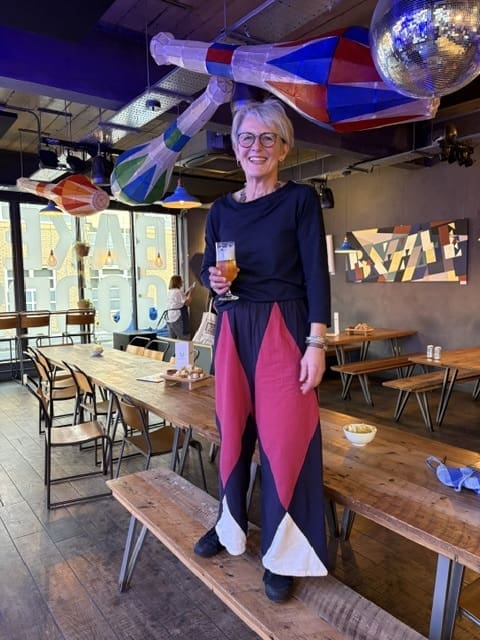
Artist Sarah Hall Baqai, in harlequinesque attire, stands beneath her willow lantern juggling sticks as she raises a glass to the launch of her Bread & Circuses exhibition
Sarah, who moved back to Yorkshire in 2010 and last took part in York Open Studios in 2025, is exhibiting at Rise@Bluebird Bakery for the first time. Among the exhibits is the Cabaret series. “Recent travels to Berlin gave me food for thought,” says Sarah.”I’ve included a four-part Cabaret series which relates to the themes of escapism in challenging times.
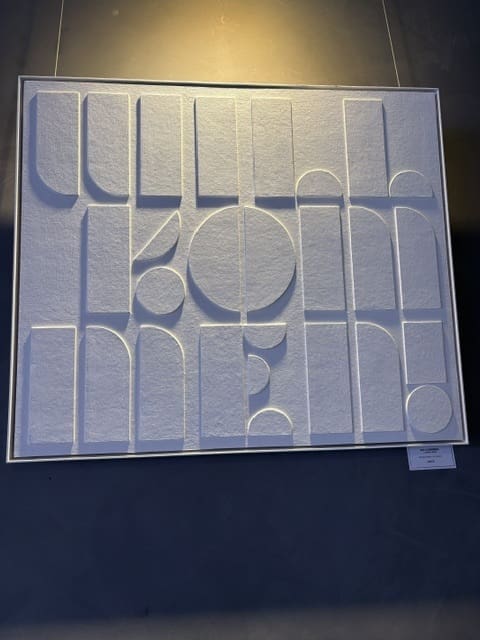
“The opening lyrics of the musical Cabaret welcome an international audience to the Kit Kat Klub with signs in three languages, Wilkommen, Bienvenue, Welcome and Fremde, Etranger, Stranger, painted in waxed gesso – a very opaque chalk point – on grey board, which mirror the Bauhaus designs.”
Look out for Box Act (acrylic on plywood). “It’s based on a contemporary contortionist performer, Bendy Em, from Australia, who squeezes herself into a tiny 40cm Perspex cube, the same dimensions as my painting,” says Sarah.
Box Act, by Sarah Hall Baqai, compressing Australian contortionist Bendy Em into a 40cm by 40cm painting, replicating the dimensions of the box into which she squeezes in her act
Twin Towers Of Human Endeavour (Anniversary Edition) is available in a limited edition of ten pairs. “In 2027 York Minster celebrates the 1,400th anniversary of its founding, dating back to the baptism of King Edwin of Northumbria in 627AD,” says Sarah.
“Inspired by the mass-produced ‘New York’ poster, I took ten of the posters, cut up and collaged, to create one ‘York’ poster. The similarities in the name and the architectural status and function of the buildings reflect the shift from religious to commercial power over the 450 years which separate their construction.
“Both cities are impressive, historic monuments of human endeavour in different ways and both are magnets of mass tourism, defined by their iconic buildings.”
Twin Towers Of Human Endeavour (Anniversary Edition), by Sarah Hall Baqai, available in a limited edition of ten
Sarah has printed an unlimited anniversary edition of Blue York too. “It’s a nod to Bluebird Bakery and Blue Note Records,which gave musicians complete artistic autonomy to rehearse, experiment and play what they wanted,” she says.
Summing up an exhibition rooted in Juvenal’s assertion that bread and circuses would provide distraction from more grave matters to prevent unrest and revolution, Sarah says: “Bread & Circuses represents glamour laced with all sorts of other elements, seeking escapism while Rome burns, which is where we are now.”
Fellow Yorkshire artist David Hockney passed away [on June 11], while Sarah was working on the title work, Bread & Circuses. “I was painting the legs when I heard the news, and I wanted to do an homage, so I painted the harlequin figure, without being too specific,” she says.
Wilkommen, waxed gesso on board, from Sarah Hall Baqai’s four-part Cabaret series on show at Bluebird Bakery
As for her love of circus and festivals, Sarah says: “There’s something about being in a muddy field, with the lights and the sequins, or watching a village pilgrimage in Spain or a fire festival in Valencia, where it’s all over in a blink of an eye. I’m so absorbed by it. Rather like ballet, circus skills can make something look effortless despite all the hours that go into it.”
Sarah concludes: “The circus theme is a fixture with me now. The day this exhibition comes down I’m back at the circus, at Giffords’ winter show at Fennells Farm, Lypiatt, just outside Stroud.”
Sarah Hall Baqai, Bread & Circuses, Rise@Bluebird Bakery, Acomb Road, Acomb, York, until November 19
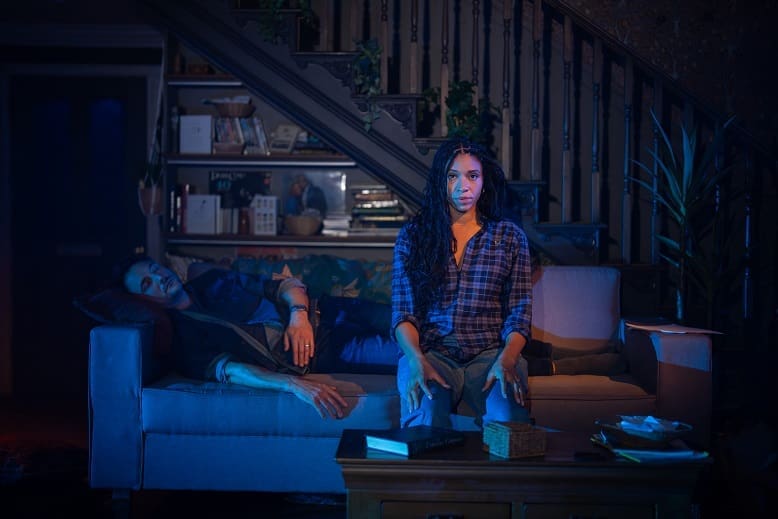
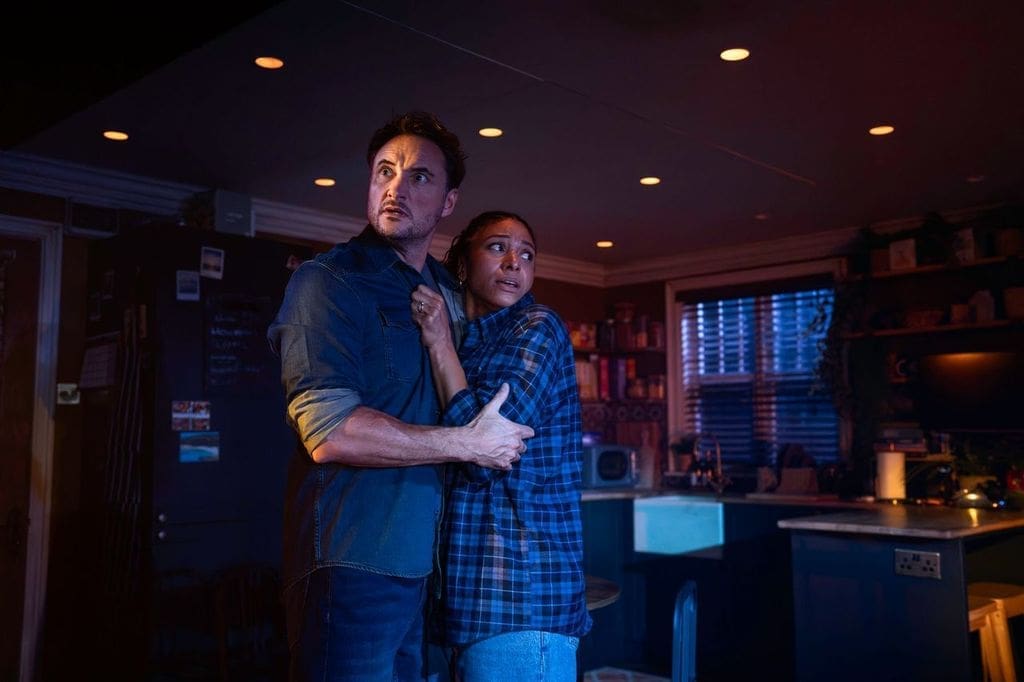
On terror alert to the max: James Bye’s James and Hannah Sinclair Robinson’s Lou in Paranormal Activity. Picture: Johan Persson
WHEN Paranormal Activity premiered at Leeds Playhouse in August 2024, the Playhouse website stated: “American couple James and Lou move to London to escape their past…we can’t say anything else.”
Obviously, a review has to say rather more than that, but the Playhouse poster’s instruction of “Shhh! No spoilers” remains pertinent two years later, even if Punchdrunk theatre director Felix Barrett’s immersive account of American playwright Levi Holloway’s self-contained offshoot from the movie franchise has since enjoyed a hit West End run at the Ambassadors Theatre.
Now the Melting Pot, Simon Friend and Hanna Osnolska touring production is in its early weeks, visiting York, the city that trades as the most haunted in Europe.
“Good horror is personal,” reads the headline in blood-red capitals to introduce writer Holloway’s programme note. “Good horror doesn’t rob you of your sleep, it rules it,” he writes. When the house lights go out, there are people waiting for you in the dark, he declares. “Later, when you try to bed down, when you close your eyes and the dark comes again, you know who to blame.”
Rest far from assured, when your reviewer wended his way to bedfordshire, the landing light remained on all night and no internal doors were closed.
The senses had been scrambled and fried by encountering Paranormal Activity, whose late opening – delayed by 15 minutes on opening night – only heightened the tension. Once Nirvana’s Lithium kicked in at deafening decibels, there would be no escape from sound designer Gareth Fry’s aural assaults, Barrett’s directorial sleights of hand, Anna Watson’s restless lighting and the tricks of the eye of Chris Fisher’s illusion designs that not even the interval could assuage.
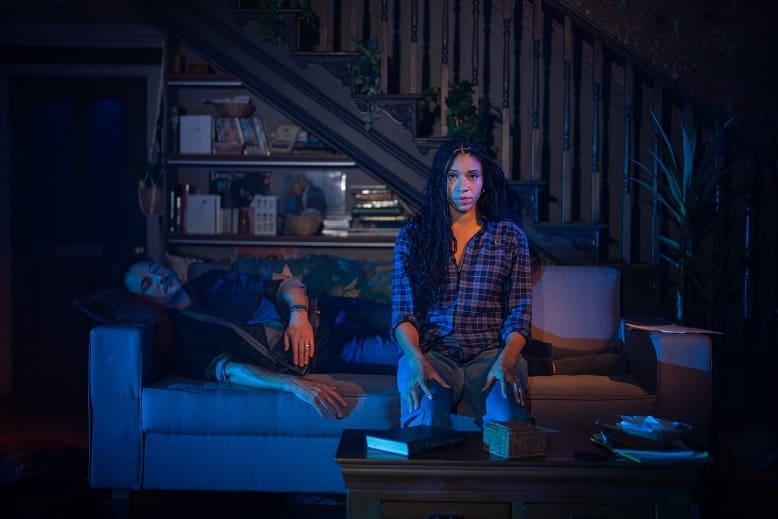
The audience is cast into deepest darkness before that Lithium cacophony, an instantly unsettling feeling, whereupon we are invited to take in the full scope of Fly Davis’s two-storey house design: downstairs, an open-plan kitchen-cum-sitting room and dining area; upstairs, the main bedroom, a bathroom, and in between another bedroom, bare now, but potentially a child’s room, should newly-weds James (James Bye) and Lou (Hannah Sinclair Robinson), newly arrived in London from Chicago, make plans.
The stairway will be in constant use in horror movie tradition, and the profusion of doors may be more befitting of a farce, but Paranormal Activity is no laughing matter, albeit it that it starts that way with James (or Jimmy as everyone calls him) and Lou in playful mood, captured in the freedom of movement given to the actors by the director deliberately not “blocking” the opening scenes in rehearsal.
However, we know that the couple have left the USA to “escape their past”, and already the pipes are making funny noises, the lights and the television are playing up, and soon we learn that Lou is on medication for depression. The laughter starts to look nervously over its shoulder.
Each scene ends with being plunged into darkness, the black-out accompanied by the screech or hiss of distorted industrial sound, as deliberately disorientating as interrogation techniques, before the next scene opens with a heightened sense of blind terror,
Bye is appearing in his second psychological thriller of the year at the Grand Opera House after playing opinionated scientist Sam in Danny Robins’s 2:22 A Ghost Story in April. If that play was as much a commentary on the changing culture of living in modern-day London as a ghost story, booted with telegraphed jump scares, Paranormal Activity is not as socially savvy or quick-witted, but it lays its traps with greater subtlety, cranking up the nerve-shredding with delicious timing while consistently adding new layers of mystery, then shredding them before the devastating final revelations.
Jo Castleton’s spiritualist, Etheline Cotgrave, and Caroline Faber’s Carolanne, James’s hyper-religious mother, add to the intrigue, and as the surprises and the scares mount up, Bye and Sinclair Robinson (last seen in York in Frantic Assembly’s Lost Atoms last October) fray at the edges as the couple disintegrates. The truth will out, the theatrical magic will ramp up, and you won’t experience a louder play in York this year.
One word of warning: it has come to your reviewer’s attention that according to one colleague “visibility was heavily restricted from further back in the Grand Circle, where the overhang from the ceilings on the set meant that you couldn’t see the actors’ faces unless they were in the front half of the set”. Bear that in mind when booking.
Paranormal Activity, Grand Opera House, York, no sleep until Saturday; performances at 7.30pm plus 2.30pm Saturday matinee. Box office: atgtickets.com/york.
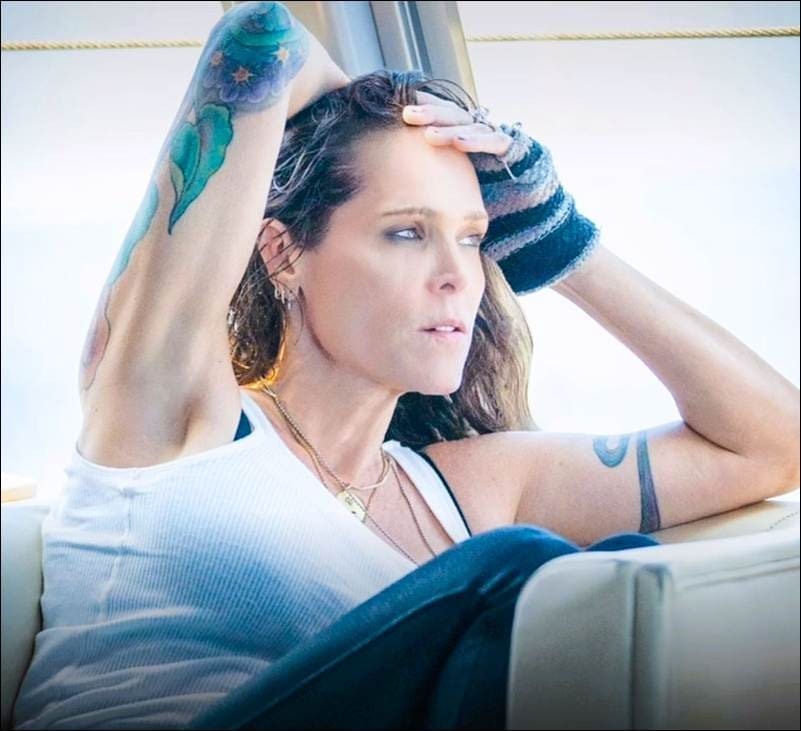
Beth Hart: Returning to York Barbican on 2027 tour. Picture: Roxanne de Roode
CALIFORNIAN singer-songwriter Beth Hart will play York Barbican on September 23 as one of only four dates on her 2027 British tour. Tickets go on general sale at 10am on Friday, October 2 at https://www.yorkbarbican.co.uk/whats-on/beth-hart-2027/.
Multi-award-winning and Grammy-nominated Hart, 54, plays by her own rules. She has collaborated with legends such as Jeff Beck, Guns N’ Roses’ Slash and Joe Bonamassa, traversed the globe, topped the Billboard Blues charts six times, gone double platinum and had a string of Top Ten- charting albums across Europe and Top 30 Official Billboard US-charting albums, while surpassing 600 million streaming figures and counting.
Infusing her music with raw, soulful energy, Hart has played Nashville’s Ryman Auditorium, Amsterdam’s Ziggo Dome and London’s Royal Albert Hall.
Los Angeleno Hart released her latest album, You Still Got Me, on October 25 2024 on Provogue/Mascot, followed by an expanded digital deluxe edition on June 17 2026. Watch the official lyric video for latest single Mean Ole Man of Mine on YouTube at https://www.youtube.com/watch?v=BPY6FDOhjwA.
In the wake of 2019’s War in My Mind and 2022’s A Tribute To Led Zeppelin, she recorded You Still Got Me with producer Kevin Shirley at Ocean Way Studios in Nashville, Tennessee, housed in a 100-year-old Gothic revival grey-stoned church in the heart of Music Row.
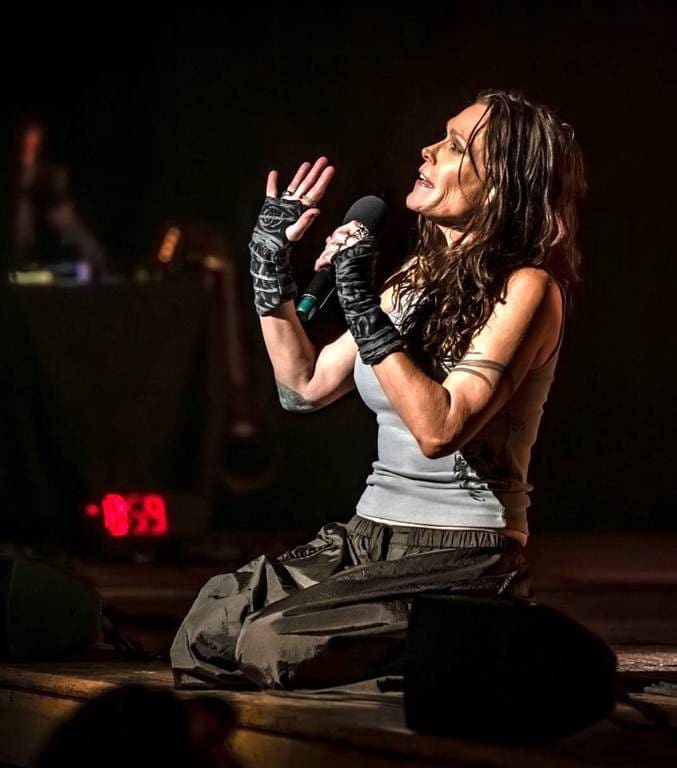
“When I write, it’s always for the joy of writing or for the challenge of writing, to seek what’s going on,” says Beth Hart. Picture: Mal Whichelow
Hart says of You Still Got Me’s title track: “This is a true story. I had a moment where I wasn’t in a positive mood, and I was hanging out on the couch, crying pretty hard, and Scott [her husband] said, ‘Hey, do you need a hug?’. I said, ‘I’ve got nothing inside left to love’, and he said, ‘you still got me’. I said, ‘hang on a minute; I’ll be right back’.
“I went downstairs and used those words and how he said it. You say something like that, and someone you love says back, but you’ve still got me. It’s true. If I’ve still got him, I’ve still got everything.”
Reflecting on her songwriting process over three decades, she says: “I never write in terms of thinking it’s going to be an album or go to people. When I write, it’s always for the joy of writing or for the challenge of writing, to seek what’s going on.
“Sometimes, I go just when I’m sad or scared. If I check in on the piano, it sometimes reveals itself. Sometimes a song comes, and sometimes one doesn’t. Either way, there’s comfort there.”
Explaining the messaging within her songs, she says: “I leave that up to the listener to decide. Personally, I know what it is for right now. One of the beautiful things I love about songs and albums is that over time, that meaning changes.
“I like to keep that open because there’s a lot I can learn from it. Often, when I write a song, I know what that means to me at that moment. But a year will go by, and it means something totally different.”
“I’m always very controlling and protective of the songs,” says Beth Hart. Picture: Ali Burnam
Producer Kevin Shirley calls Hart a “diamond, a living contradiction”. “She is rough and hard at the core – shining, sophisticated and polished at presentation,” he says. “Beth is one of the most formidable musicians I’ve ever worked with. Immensely talented and gifted.
“This album shows all the facets of the giant gem that is Beth Hart. Razor-edged tracks that have a samurai sword edge, soft and sultry ballads and heartfelt emotional messages just made recording this album one of the most special I’ve ever done. You have to love her. There is nobody else like her. She is the best.”
Hart responds: “I’m always very controlling and protective of the songs. One of the things Kevin told me was, ‘You gotta make sure to keep in mind that this is going to be really fun. Have fun. Let it go. Don’t be so momma-bear protective of these songs’. I really had to meditate on that, but I did let go and thank God I did.”
You Still Got Me’s soaring rocker Savior With A Razor features Slash on guitar. “Beth Hart is one of my favourite artists to work with. She is an incredible singer/lyricist on many levels. Beth’s also as sincere and genuine a friend. She’s amazing.”
Hart last played York Barbican on October 31 2021 on her Thankful tour, when her set list comprised: Isolation: Boogieman; House Of Sin; Spirit Of God; Swing My Thing Back Around; Bottle Of Jesus; Easy; Rub Me For Luck; Picture In A Frame; Good As It Gets; Waterfalls; Saved; Without Words In The Way; Sugar Shack; Can’t Let Go; Spanish Lullabies; Good Day To Cry; Caught Out In The Rain; encores, Trouble, Chocolate Jesus, Leave The Light On, Thankful and War In My Mind.
Bread & Circuses, by Sarah Hall Baqai, from her exhibition at Rise@Bluebird Bakery, Acomb, York
FROM the terrors of Paranormal Activity to circus art, York’s four-day jazz festival to Brian Bilston’s egg-laying poetry, Charles Hutchinson looks ahead to October cultural opportunities.
Exhibition opening of the week: Sarah Hall Baqai, Bread & Circuses, Rise@Bluebird Bakery, Acomb Road, Acomb, York, until November 19
YORK artist Sarah Hall Baqai’s new collection of artworks has the theme of Bread & Circuses, a phrase taken from Roman poet Juvenal’s work Satire X, written in 100AD. In a nutshell, “give them bread and circuses and they will never revolt”, on account of being distracted.
Distraction does not come brighter and more entertaining visually than Sarah’s paintings inspired by life behind the scenes at the circus (from her work with Gifford’s Circus and Fools Delight Circus at Ham Court, Bampton), complemented by lettering and graphic work celebrating York Minster and willow lanterns in the shape of jugglers’ sticks.
James Bye’s James arms himself with a baseball bat in Paranormal Activity. Picture: Credit: Johan Persson
Psychological thriller of the week: Paranormal Activity, Grand Opera House, York, until Saturday, 7.30pm plus 2.30pm Wednesday and Saturday matinees
IN a new story inspired by the worldwide horror phenomenon, Paranormal Activity is directed by immersive theatre pioneer and Punchdrunk artistic director Felix Barrett and written by Levi Holloway, the playwright behind Broadway hit Grey House.
When James (James Bye) and Lou (Hannah Sinclair Robinson) move from Chicago to London to escape their past, soon they discover that places are not haunted, but people are. Can you hold your nerve in the face of this chilling production on its first British and Irish tour? Box office: atgtickets.com/york.
Roham Bayat’s poster for the inaugural YorkJazzFest
Festival of the week: YorkJazzFest, tomorrow to Sunday
BEPPE Lombardo, soprano saxophone player in his Italian teenage days and supremo of Trinicria Sicilian Ristorante in Bishopthorpe Road for 15 years, is running the inaugural YorkJazzFest with funding from York and North Yorkshire Combined Authority Mayor David Skaith.
Angel On The Green, York Arts Barge, Young Thugs Studio, the Phoenix Inn and The Winning Post play host to concerts on the first three days, culminating in the Bishopthorpe Road Car Park Finale on Sunday, topped off by sets by Dennis Rollins’ Funky-Funk and Ian Chalk. For full listings and tickets, go to: yorkjazzfestival.com.
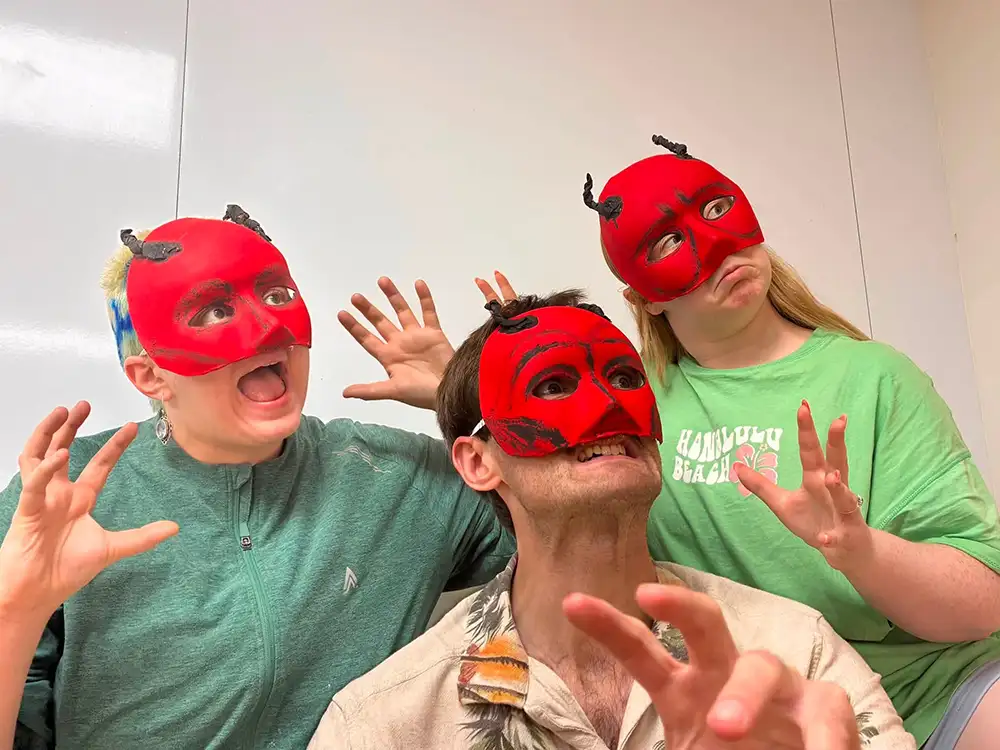
Masked up: Pop Yer Clogs Theatre in Doctor Faustus. Picture supplied
Devil in the detail of the week: Pop Yer Clogs Theatre in Doctor Faustus, Theatre@41, Monkgate, York , tomorrow to Saturday, 7.30pm plus 2.30pm Saturday matinee
YORK company Pop Yer Clogs Theatre delivers a devilishly clever new twist on Doctor Faustus, placing a woman, Doctor Joan Faustus, at the epicentre of Christopher Marlowe’s late-16th century cautionary tale of ambition, temptation and damnation.
Director Lydia McCudden plays Faustus, who strikes a terrible deal by selling her soul to Lucifer in exchange for knowledge, power and worldly pleasures, only to encounter the Seven Deadly Sins. Cue masks, commedia dell’arte, dark comedy and gothic tragedy as Hell awaits. Box office: tickets.41monkgate.co.uk.
Ben Portsmouth: Performing Presley’s pearls with his Taking Care Of Elvis Band at York Barbican
King of The King tribute shows: Ben Portsmouth: This Is Elvis, York Barbican, Friday, 7.30pm
REGARDED as the “closest living performer to the legendary Elvis Presley”, Ben Portsmouth has enjoyed success in more than 20 countries and became the first European to be crowned by Elvis Presley Enterprises as the Worldwide Ultimate Elvis Tribute Artist in Memphis in 2012.
This Is Elvis takes an immersive journey through Presley’s greatest hits from his rockabilly roots to the dazzling Las Vegas years in the company of Portsmouth and the Taking Care Of Elvis Band. Box office: yorkbarbican.co.uk.
The Bar-Steward Sons Of Val Doonican: Satirical comedy lyrics on folk instruments from Barnsley
“Sexy knitwear” gig of the week: The Bar-Steward Sons Of Val Doonican, Milton Rooms, Malton, Friday, 7.30pm
FOUNDED in Barnsley Rock City in 2006 by their outspoken and energetic ringleader Scott Doonican, The Bar-Steward Sons Of Val Doonican are on a mission.
Anything but a typical folk ensemble, this collective of like-minded knitwear enthusiasts – Scott, Mo-Jo Doonican, Dave Doonican and the Reight Reverend Jeremiah Rickenbacker III – are determined to follow in their spiritual father’s immortal footsteps, keeping his legacy alive while Bar-Stewardising other famous people’s songs with satirical comedy lyrics on folk instruments, from Jump Ararnd to Goat Yoga. Box office: 01653 696240 or themiltonrooms.com.
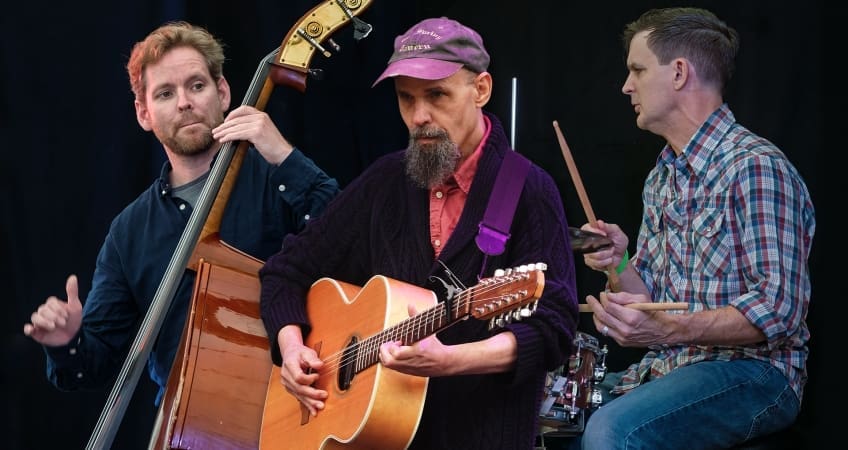
Mark Harrison Band: Songs and stories at Helmsley Arts Centre
Where folk meets the blues: Mark Harrison Band, Helmsley Arts Centre, Saturday, 7.30pm
MARK Harrison writes original songs for today in the spirit of the great troubadours, coupled with stories to make you smile, move and think in a world where blues, roots and folk collide.
Finger-picking and slide guitarist Harrison is joined by Charles Benfield on double bass and Ben Welburn on drums and percussion to create a rhythm section that defies convention, as heard on eight albums to date. Box office: 01439 771700 or helmsleyarts.co.uk.
Alchemy Live: Performing the songs of Dire Straits at Kirk Theatre, Pickering
In Dire Straits: Alchemy Live, Kirk Theatre, Pickering, Saturday, 7.30pm
ALCHEMY Live were formed in 2020 by life-long Mark Knopfler fans and full-time musicians Martin Ledger and Neil Scott, who used the Covid pandemic and resultant lockdowns to put their Dire Straits tribute project in motion. Rehearsals started in 2021 after the worst of the pandemic was over, their first show being scheduled in York for Friday the 13th of May 2022 (what could possibly go wrong)?
They have never looked back, progressing to playing theatres since 2023. “It’s always been our ethos to concentrate on getting the music and sound right, rather than just putting on headbands and shiny jackets,” says frontman Ledger. Box office: 01751 474833 or kirktheatre.co.uk.
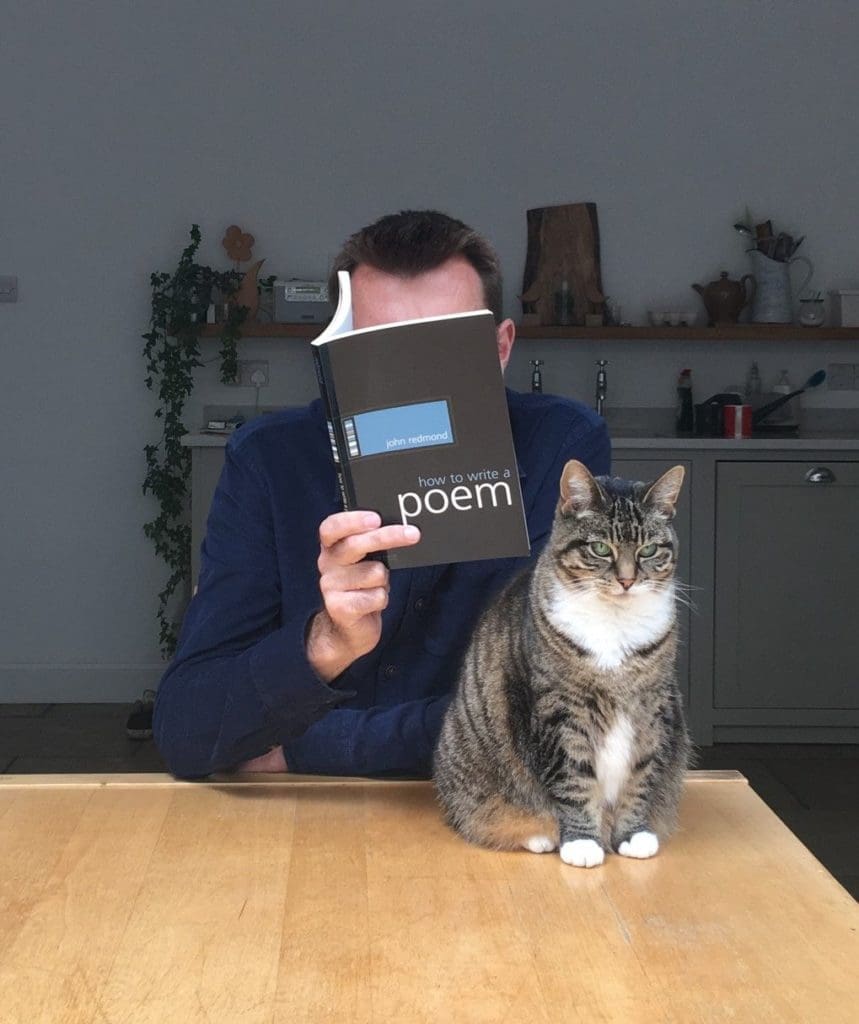
Brian Bilston: Showcasing his latest poetry collection at Milton Rooms, Malton
Poet of the week: Brian Bilston, How To Lay An Egg With A Horse Inside, Milton Rooms, Malton, Sunday, 7.30pm
BRIAN Bilston, a poet with more than 500,000 followers on social media, returns to the stage this autumn with his latest book, How To Lay An Egg With A Horse Inside, as he takes a journey through the hows, whys and whats of reading, writing and enjoying poetry every day.
Bilston has published such collections as You Took The Last Bus Home, Alexa, What Is There To Know About Love? and Days Like These, along with debut novel Diary Of A Somebody, poetry for younger readers and his 2025 album of poetry set to music, Sounds Made By Humans, recorded in collaboration with The Catenary Wires. Box office: 01653 696240 or themiltonrooms.com.
Olly Murs: Enjoying a Knees Up at Live At York Museum Gardens next July
Gig announcement of the week: Futuresound presents Olly Murs, Live At York Museum Gardens, July 9 2027
ESSEX singer-songwriter and The Voice UK coach Olly Murs is the first headline act to be confirmed for next summer’s Live At York Museum Gardens 2027 season, when the event will be expanded to two weekends for the first time. Special guests for that day’s bill are still to be announced.
Murs, 42, returns to the York outdoors after his hat trick of appearances at York Racecourse in 2010, 2017 and 2024. He rose to fame on The X Factor in 2009, since when he has released eight studio albums of pop, indie, ska and disco, the latest being last November’s Knees Up. Box office: York postcode pre-sale from today at https://futuresound.seetickets.com/event/olly-murs/york-museum-gardens/3730256?pre=postcode; general sale from Friday, 10am, at https://futuresound.seetickets.com/event/olly-murs/york-museum-gardens/3730256.
In Focus: Carlos Acosta’s Acosta Danza in Cuban Baroque, York Theatre Royal, October 1, 7.30pm, October 2, 2pm, and October 3, 2.30pm and 7.30pm
Acosta Danza in Cuban Baroque. Picture: Johan Persson
IN this new double bill from Acosta Danza, the lush artistry of the Baroque period intersects with the energy, creativity and vibrancy of Cuban dance. Emerging from the 17th and 18th centuries, the creative movement was characterised by deep colour, elaborate detail and intricate decoration.
Produced by Valid Productions in collaboration with York Theatre Royal, Cuban Baroque opens with the world premiere of Andonis Foniadakis’s new work Pearls, a journey to the rhythmic heart of Baroque, followed by choreographer and set designer Goyo Montero’s 2011 work Chacona.
Artistic director Carlos Acosta says: “I am very excited about this programme which will encapsulate the essence of Acosta Danza, fusing as it will, classical, Cuban and contemporary vocabularies and styles.
“I am, of course, a big fan of both choreographers and am delighted that Andonis will create a brand-new piece on my dancers. I look forward to seeing how that develops over the coming months.
“The flavour of the evening is summarised neatly by the title Cuban Baroque, but essentially this is a programme that anyone interested in any kind of dance can enjoy. I look forward, as always, to seeing how audiences react to the atmosphere this programme will create at its premiere in our first-ever visit to the wonderful York Theatre Royal.”
Theatre Royal chief executive Paul Crewes says: “It is truly wonderful that York audiences will be the first to experience this phenomenally exciting dance programme on our stage and we are really looking forward to working in collaboration with Carlos Acosta and his company on the show.”
Set to Esteban Sallas’s Salve Regina, the work explores the classic chaconne-looping structure that circles through phases of acceleration, fracture and rebound. As the score shifts from Baroque lyricism toward Cuban drive, Foniadakis showcases the fusion between memory and contemporary.
Andonis Foniadakis says: “The piece is being built as a chaconne in the broadest sense: a looping architecture that keeps circling back to the same theme like a mantra, each return opening a new variation in colour, density and impulse.
Cuban rhythmic principles will seep into the texture (clave, layered pulses, dance-derived momentum) and begin to tilt the baroque theme from within — bringing Sallas’s music fully into the present.
“In this dialogue, contrast becomes fusion: baroque memory meets Cuban propulsion; choral breath meets percussive drive; live sound meets a discreet electronic halo — shaping a single energetic trajectory that stays clear, intense, and emotionally resonant.”
Closing the 1hr 20 min programme is Goyo Montero’s powerful Chacona, a piece that originally was created for the Staatstheater Nürnberg Ballett during Montero’s 17-year tenure as director. Chacona is the final movement of Bach’s masterwork Partita No.2 in D Minor for violin, accompanied in this performance by guitar and piano. Physically and musically demanding, classical in sound and contemporary in heart, it requires total cohesion from the ensemble of 16 dancers.
Goyo Montero says: “This is going to be my fourth collaboration with Acosta Danza since 2015. To bring this work to them and adapt it to their fearless and exceptional dancers is something I am looking forward to very much. To restage this early work and revisit it for them will develop the work further and keep it alive, relevant and ever changing, a choreographer’s dream!”
A Q&A with the company will follow tomorrow’s performance. In addition, Acosta Danza will hold an Open Class on Saturday at 10am on the Theatre Royal stage in an exclusive opportunity to watch how the dancers warm up and prepare ahead of a performance. This non-participatory event is open to all ages.
The York Theatre Royal premiere of Cuban Baroque will be followed by performances at Sadler’s Wells in London and Norwich Theatre Royal with further 2027 dates to be added. Box office for shows and Open Class: 01904 623568 or yorktheatreroyal.co.uk.
Closing the 1hr 20 min programme is Goyo Montero’s powerful Chacona, a piece that originally was created for the Staatstheater Nürnberg Ballett during Montero’s 17-year tenure as director. Chacona is the final movement of Bach’s masterwork Partita No.2 in D Minor for violin, accompanied in this performance by guitar and piano. Physically and musically demanding, classical in sound and contemporary in heart, it requires total cohesion from the ensemble of 16 dancers.
Goyo Montero says: “This is going to be my fourth collaboration with Acosta Danza since 2015. To bring this work to them and adapt it to their fearless and exceptional dancers is something I am looking forward to very much. To restage this early work and revisit it for them will develop the work further and keep it alive, relevant and ever changing, a choreographer’s dream!”
A post-show discussion with the company will follow Thursday’s 7.30pm show. In addition, Acosta Danza will hold an Open Class on Saturday (3/10/2026) at 10am on the Theatre Royal stage in an exclusive opportunity to watch how the dancers warm up and prepare ahead of a performance. This non-participatory event is open to all ages.
The York Theatre Royal premiere of Cuban Baroque will be followed by performances at Sadler’s Wells in London and Norwich Theatre Royal with further 2027 dates to be added. Box office for shows and Open Class: 01904 623568 or yorktheatreroyal.co.uk.
Will Young: The Evergreen 25th Anniversary Tour heads for York and Sheffield. Picture: Joseph Sinclair
POP Idol’s first winner, Will Young, will mark the silver jubilee of that landmark victory on the Evergreen 25th Anniversary tour next year.
His celebratory 16-date itinerary with a full band will feature two Yorkshire venues: York Barbican on February 25 2027 and Sheffield City Hall on February 27. General sales for the York show open at 10am on October 2 athttps://www.yorkbarbican.co.uk/whats-on/will-young-27/; for Sheffield, same time, same day, at https://www.sheffieldcityhall.co.uk/will-young/.
Young, 47, says: “To reach 25 years is a privilege and an honour. Who knew entering a competition by cutting out a piece from the newspaper would lead to the most exciting 20 weeks of my life in Pop Idol and a relationship with the public that has lasted for so long.
“People voted and trusted me and that has forever been a dream come true. I can’t wait to celebrate with the full band and get to play Evergreen, as well as all the songs that have come since, from Light My Fire to You And I to Leave Right Now to Jealousy and onwards. Can’t wait to see everyone who trusted in me during Pop Idol and since at the anniversary shows.”
Wokingham-born and Wellington College, University of Exeter and Arts Educational School-educated Young was catapulted virtually overnight into international fame from winning the inaugural Pop Idol talent competition in 2002.
Soul-pop singer Young has carved a career in music, on stage in musical theatre (Cabaret and Strictly Ballroom The Musical) and on screen (Mrs Henderson Presents), earning two BRIT Awards, an Olivier Award nomination, four number one and 11 UK Top Ten albums.
He has 11 Top Ten singles to his name too: Anything Is Possible/Evergreen (number one); Light My Fire (number one); The Long And Winding Road (with Bradford’s Gareth Gates, number one); Don’t Let Me Down/You And I (number two); Leave Right Now (number one); Your Game (number three); Friday’s Child (number four); Switch It On (number five); All Time Love (number three ); Changes (number ten) and Jealousy (number five), his last Top Ten success in 2011. In the same year, Who Am I just missed out, peaking at number 11.
Will Young’s 16-date itinerary for his Evergreen 25th Anniversary Tour next February and March
For the record, in 2021, he released a single called Elizabeth Taylor that failed to match its inspiration’s glittering career by not bothering the Top 100.
On the Evergreen 25th Anniversary Tour, Young will play “all the hits across his two-decade-plus journey in music” that has seen him “captivate listeners through a diverse palette of original songs by Burt Bacharach, Sia, Groove Armada and Nithin Sawhney”.
To mark the tour announcement, Young has unveiled a new performance of Evergreen (Live from The Evergreen 25th Anniversary Sessions). Watch the video at https://www.youtube.com/watch?v=gWzflgKUQiw.
His 2002 debut hit Anything Is Possible/Evergreen sold more than 1.7 million copies, making it the second best-selling single of the 21st century in the UK and one of Britain’s Top 20 best-selling singles of all time.
The Evergreen 25th Anniversary Tour will be Young’s first since his intimate acoustic tour in 2024, in support of his August 2024 Top Five album, Light It Up, when he played the Grand Opera House, York, on September 8.
He last appeared at York Barbican on October 13 2022 on his 20 Years Tour, following his October 20 2019 performance there on his Lexicon Tour travels.
To complement his music career, Young is an author (Funny Peculiar: The Autobiography, To Be A Gay Man, Be Yourself And Happier: The A-Z Of Wellbeing), podcaster in the mental health, wellbeing and LGBTQ+ space and campaigner for animal welfare and rights.
He shares his passion for gardening through Will Young’s Garden Diary on social media, garnering more than 5.6 million views already. September 1 marked the debut of his Young’s first garden design, Out Of The Shadows, created in collaboration with designer Jamie Butterworth for the RHS Wisley Flower Show.
Michael Shafar: Headlining Laugh Out Loud Comedy’s brace of gigs at The Basement, City Screen Picturehouse, York, on Saturday.
LAUGH Out Loud Comedy Club promoter Damion Larkin has added an extra 4pm show in response to ticket demand for Saturday’s 8pm bill of Michael Shafar, Ant Dewson, Mike Carter and Gary Jennison at The Basement, City Screen Picturehouse, York.
Michael Shafar has taken plenty of big steps in his career as a comedian, not least leaving his native Australia to ply his comedy trade in the UK.
Before that, he left a career in law for comedy and has been working hard ever since to win his Jewish mother’s forgiveness. He has (somewhat) achieved that, having performed around Australia, New Zealand, Asia, the United States and on international waters.
Ant Dewson
In 2016, Shafar burst onto the comedy scene in the RAW Comedy National Final, represented Australia in the Laugh Factory’s Funniest Person in the World competition and toured across Asia, headlining the continent’s biggest clubs.
He has since appeared on Network 10’s The Project and Studio 10, ABC’s Comedy Bites and triple j’s Good Az Friday and toured four shows around the country, regularly selling out at Australia’s major festivals, not least the Melbourne International Comedy Festival.
Shafar has drawn more than 70 million views to his comedy videos online and has a comedy special, A(LIVE), available on Amazon Prime and a second special, Alright, Next Joke, on YouTube.
Mike Carter
“Amazingly there’s a rare chance to see him in town soon, so don’t miss this one!” advises Larkin.
Ant Dewson is a comedian, mediocre piano player and singer of silly songs, many of them rude. He has written comedy for BBC Radio 4 and Sky TV and commercials for many brands, performs on BBC Radio London and is the co-host of Carpet Martin’s Comedy Market on Riverside Radio.
Dewson has sung at the Royal Festival Hall, Guildford Cathedral, Fairfield Halls, New WimbledonTheatre, Southwark Cathedral, Cadogan Hall and even on the pitch at Wembley before the Rugby eague Challenge Cup Final.
Gary Jennison
Mike Carter broke into stand-up comedy after accidentally signing up for a comedy course intended to help middle-aged men suffering from depression. He was 27 and just happy to be out of the house.
Carter covers everything from living with your nan in your 30s to the realities of engaging in “kinky stuff” when you have a coordination disorder and brings a fearless yet friendly approach to comedy. His clips have attracted more than one million views on Facebook, YouTube & Instagram.
Force of nature Gary Jennison promises dance-offs, game shows, magic and unbridled chaos, and he may even try something dangerously funny, as he delivers surreal, energetic humour like a toddler with a Tommy gun. Cue 100 per cent unscripted, unsupervised comedy full of observations with a twist.
Doors open at 3.30pm and 7.30pm respectively. Box office:lolcomedyclubs.co.uk.
Gripping scene: James Bye’s James and Hannah Sinclair Robinson’s Lou in Paranormal Activity. Picture: Johan Persson
JAMES Bye is making a habit of spooking theatre audiences in York, the city that trades as “the most haunted in Europe”.
In April he played self-righteous, hyper-opinionated, sceptical but irritatingly always-right scientist Sam in Danny Robins’s smart, modern-day London supernatural thriller 2:22 A Ghost Story.
From tonight (29/9/2026) to Saturday, he returns to the Grand Opera House to play James in Paranormal Activity, the first British and Irish tour of a new story inspired by the horror film phenomenon, scripted by Levi Holloway, the Chicago writer, director, actor and teacher behind Broadway hit Grey House, and directed by immersive theatre pioneer and Punchdrunk artistic director Felix Barrett.
When American couple James (Bye) and Lou (Hannah Sinclair Robinson, last seen in York as Jess in Frantic Assembly’s Lost Atoms at the Theatre Royal) move from Chicago to London to escape their past, soon they discover that rather than places being haunted, people are.
“York is a fantastic city to host this show,” says James. “We’ll fit right in here! I think a theatre [building] definitely brings another dynamic to a performance, and we’re fortunate to be visiting some of the older theatres in the country on this tour. York [the Grand Opera House] is one of the oldest, and everyone will lean into that.”
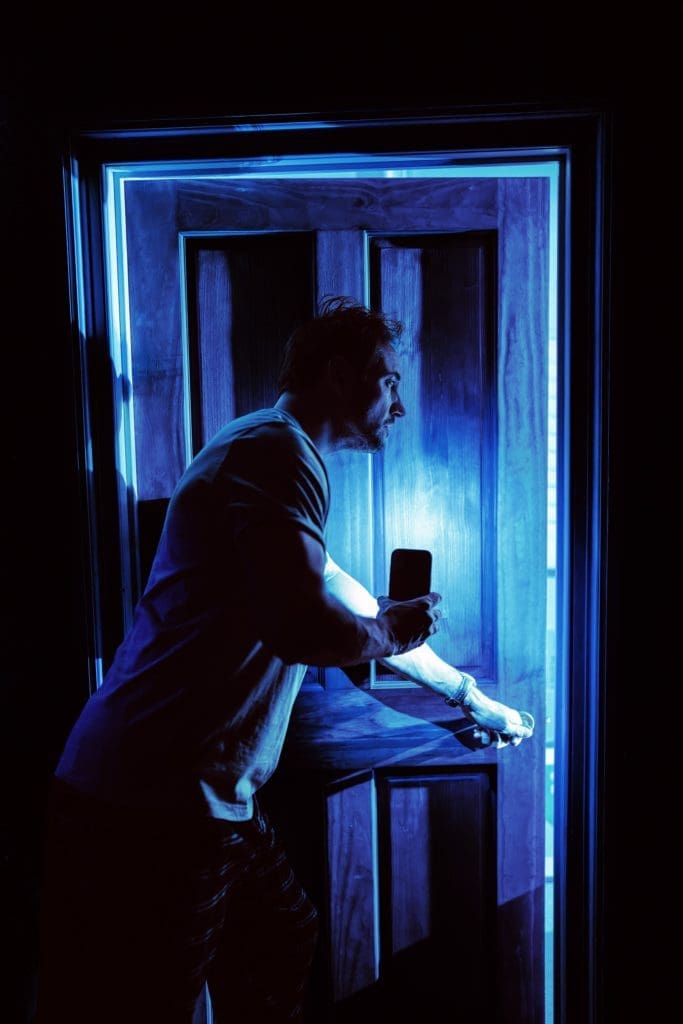
Who…or what’s there? James Bye’s James in the doorway in Paranormal Activity. Picture: Johan Persson
As he prepares to return to York, how would James compare Paranormal Activity with 2:22 A Ghost Story? “For people who have not seen either or have seen 2:22 and are thinking about coming to Paranormal Activity, I would say 2:22 leans more towards being a thriller with jump scares, whereas with Paranormal Activity what we’re trying to achieve is straight-out old-school horror, where we want the audience to be on the edge of their seats,” says James.
“Not that we don’t want them to enjoy it but we really want to scare them, but it’s done in a more subtle way than in 2:22. This play has a very naturalistic style that is more like television, where the audience feel like they’re in the room with us.”
James continues: “The set design by Fly Davis in incredible: it’s an actual two-storey house, like a doll’s house, with a bedroom, empty bedroom and bathroom upstairs, stairs, and an open-plan kitchen and living area downstairs. We use the whole house, which is lit throughout, which really helps to bring the audience into the ‘room’.
“The audience will see the set before they see any actors and they all just love it! Their breath is taken away before we do anything.”
James joined the tour cast on the back of Paranormal Activity’s hit West End run at the Ambassadors Theatre. “I was asked if I wanted to see it, but I very deliberately said ‘No’ as I didn’t want to copy something subconsciously when it’s such a rich piece in its own right and it becomes very much my own creation,” he says.
James Bye’s Sam takes a vote on a point of debate with Shvorne Marks’s Jenny, Natalie Casey’s Lauren and Grant Kilburn’s Ben in 2:22 A Ghost Story, on tour at Grand Opera House, York, in April 2026
“It’s one of those shows that’s right up the audience’s street. It’s in the horror genre, but very funny too, keeping them entertained with comedy but then flipping it on its head, so the scares are for real.
“This is the challenge: doing something scary on stage while keeping the audience with you. which the director [Felix Barrett] has done brilliantly, blurring the line between 2D and theatre.
“The show absolutely has a cinematic element to it, and that’s very deliberate. We definitely want the audience to lean into that.”
Describing his American character in Paranormal Activity, James says: “He’s like a Labrador: high energy, always fun, trying to make his wife laugh all the time. They’re newly married, they’ve just moved to the UK and they’re super-happy together. He needs her so much and leans on her so much too.
“Then there’s another character, Jimmy’s mum, who’s still in America, so they have moments where they Zoom-call. He’s just a fun-loving guy, but as it progresses, you learn more about him and Lou, and maybe they’re not as much in love as we first thought. Maybe they’re not squeaky clean; maybe they’re living a lie with each other.”
The poster for the 2026 tour of Paranormal Activity
Praising Levi Holloway’s script, James says: “It’s so well crafted: the way the audience laugh genuinely at the start, but then there’s a pitch change, where it becomes nervous laughter. I don’t think I’ve ever been in a show where the audience has been so vocal.
“It’s lovely to get that response from the audience, and I would ask anyone who’s thinking of coming to the show to feel they can vocalise their response , as we’re going on a journey together. You can really embrace being in a room together where it feels like more of an experience.
“Levi brings this super-naturalistic style to the play, where I couldn’t put the script down when I read it. It’s like a work of art how he takes you through the story, one minute making you laugh, the next, sob. I don’t have to force anything. I just have to trust it.”
James is working with Punchdrunk artistic director Felix Barrett for the first time. “It’s very naturalistic style, where a lot of time was spent on thinking about how does fear go through me, how does it affect me, and then the complete opposite: joy. How does joy affect me? It’s very freeing to be able to work like that.
“A lot of time was spent on thinking about how does fear go through me, how does it affect me, and then the complete opposite: joy. How does joy affect me? It’s very freeing to be able to work like that, working on getting into an emotional state, where it’s all about being in the moment.”
What awaits James Bye’s James on the other side of the door? Find out at the Grand Opera House from tonight until Saturday. Picture: Johan Persson
James continues: “The first scene between Jimmy and Lou, which takes up the majority of Act One, is not blocked, so every night has been different. Sometimes Hannah and I just so playful because they’re such a super-fun couple. When we started, that could be quite scary, but we always trusted each other.
“Then there are parts of the play where it’s very specific that things have to happen at a certain time.”
Paranormal Activity, Grand Opera House, York, tonight (29/9/2026) to Saturday, 7.30pm plus 2.30pm Wednesday and Saturday matinees. Box office: atgtickets.com/york.
Did you know?
JAMES Bye played market trader Martin Fowler in the BBC One soap opera EastEnders from December 5 2014 to February 20 2025. The long-running character was killed off in a special live episode for the show’s 40th anniversary, dying of a cardiac arrest after a steel beam crushed him during an explosion at the Queen Victoria pub.
He competed in series 20 of BBC One’s Strictly Come Dancing in 2022, reaching Week 6, Halloween Week, when he and professional partner Amy Dowden were the fifth couple to be eliminated, beaten in the October 30 dance-off by Fleur East and Vito Coppola.
“Maybe they’re not as much in love as we first thought,” says James Bye. “Maybe they’re not squeaky clean; maybe they’re living a lie with each other.” Picture: Johan Persson
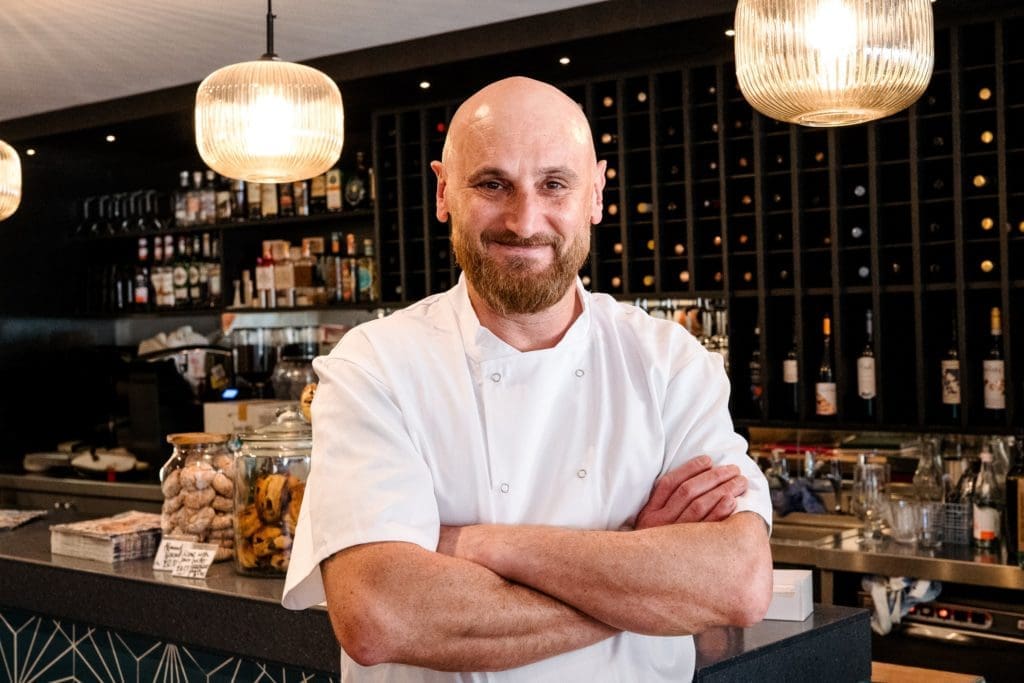
Trinacria restaurateur and YorkJazzFest promoter Beppe Lombardo
BEPPE Lombardo, soprano saxophone player in his Italian teenage days and supremo of Trinacria Sicilian Ristorante in Bishopthorpe Road for 15 years, is running the inaugural YorkJazzFest from Thursday to Sunday.
No fewer than 28 acts will celebrate jazz in all its forms in a festival that vows to “bring together classic sounds, contemporary sounds, great venues and live music lovers across York”.
YorkJazzFest adds up to Four Days, Six Venues, One City. “Jazz is not one sound, one age, one room or one crowd,” says Beppe, who has put together a diverse programme with funding from York and North Yorkshire Combined Authority Mayor David Skaith.
Angel On The Green, York Arts Barge, Young Thugs Studio, the Phoenix Inn and The Winning Post play host to concerts on the first three days, culminating in the Bishopthorpe Road Car Park Finale on Sunday, topped off by sets by the Fergus Quill Quintet and Dennis Rollins’ Funky-Funk, followed by Ian Chalk at the Phoenix.
Dennis Rollins: Promising Funky-Funk! at the Bishopthorpe Road Car Park Finale to YorkJazzFest on Sunday
In part inspired by his father-in-law, Jim Morgan, who runs Catwick Live folk music nights at Catwick Village Hall, near Beverley, Beppe decided to launch YorkJazzFest, noting how his adopted home city had never previously held a city-wide dedicated jazz festival.
“Jim went to Celtic Connections in Glasgow and told me about how impressed he was by this multi-venue festival,” he says. “I thought it was a brilliant idea, so that’s where I started getting inspiration for a festival with lots of venues and a big finale at the Bishy Road car park.”
Beppe already had received more than £4,000 funding for an open-sided marquee – now to be used in the Bishopthorpe Road Christmas Bazaar on November 28 – when he decided on staging the YorkJazzFest finale on a 42 square ft trailer, again open-sided, framed in decorative lighting too, supplied by Event Equipment Hire. “I’ll be co-ordinating the bar on the last day,” he adds.
“The first idea for running a festival came just after Covid, when the council put up some funds to refresh the high street, providing Christmas lights and summer bunting for Bishopthorpe Road.
Lo Vu: Playing YorkJazzFest at Young Thugs Studio at 9.15pm on Thursday
“Then David Skaith came along as the Mayor [of the York & North Yorkshire Combined Authority] and created the [Sustainable] High Street Fund. His office has provided £11,600 funding to enable this festival to go ahead.”
Flamboyant chef and restaurateur he may be, but music has always played a part in Beppe’s life too. “I used to play saxophone in a brass band in Sicily, the Vittoria Youth Brass Band, which was set up to get kids off the streets, with the local council providing funds for free music lessons in schools, studying theory first from [age] nine or ten and paying 75 per cent towards the cost of an instrument,” he says.
“I wanted a tenor sax, but I was told ‘for my height, you should have a soprano saxophone’ as I was 11. It was a bit harder to play, because it has a higher pitch, and it’s easier to get wrong, but I played for seven or eight years, at festivals and funerals, and I loved it.”
Beppe continues: “My father loved reggae, blues and soul, not really jazz, but because I had a sax, I started listening to Charlie Parker and John Coltrane, and I really got into jazz, Miles Davis, Stan Getz, Sonny Rollins, Gerry Mulligan, Chet Baker – and I did like Kenny G too.
Olivia Cuttill: Leading her quintet at York Arts Barge on Saturday at 8.30pm
“But then I went into the Italian army and let the music go, and afterwards I started working on the family farm, in my father’s greenhouses.. He was a strict dad, teaching me a lot – and growing up in Sicily in the 1980s, with the Mafia bosses there, you learn to look after yourself and stay on the straight path.”
Beppe did not want to be a farmer – “I thought it was too risky” – and instead took on a job as a waiter in a Vittoria, learning the skills of making customers comfortable and relaxed, telling jokes: social skills that still apply in running Trinicria and promoting a jazz festival.
Drawing on his mother’s cookery prowess, he became a chef, picked for one of 30 jobs from 1,000 applicants by ClubMed to work in France and Sardinia. York beckoned. “I knew I wanted to learn English, and a friend had done the Erasmus course in York and said it was the Florence of England,” Beppe recalls.
“I arrived on 21st October 2001 at five minutes to midnight and didn’t have anywhere to sleep. My first experience was these four English guys helping me to find a hostel.”
SwanNek: Booked into Young Thugs Studios for 7pm on Saturday
Looking out over Lendal Bridge the following morning, Beppe thought, “Oh my God, this is a beautiful city. It took me only a few days to fall in love with it.”
He has never left, working at Bari, in Shambles, Silvano’s, where he met his wife, and The Dormouse, in Clifton Park Avenue. “That’s where I really learnt English, covering every role, and became ‘the star’ of the place!”
Emboldened, he opened Trinacria in 2012, its name taken from the ancient name of the island of Sicily (whose roughly triangular shape is defined by three headlands). His restaurant runs on a triple bill of “best ice cream, best pizza, best ingredients). “I will not save on ingredients,” says. “I only use ingredients that I would eat.”
As a Sicilian, by the way, he prefers to use semolina as 33 per cent of the pizza base to complement the flour, referring to the softer Neapolitan version as “wet paper”!
After watching gigs at The Crescent and the Phoenix Inn and running a regular Thursday jazz night at his restaurant – now discontinued – he is staging his first jazz festival.
Alina Bzhezhinska: Whispers Of Rain concert at York Arts Barge on Friday at 8.30pm
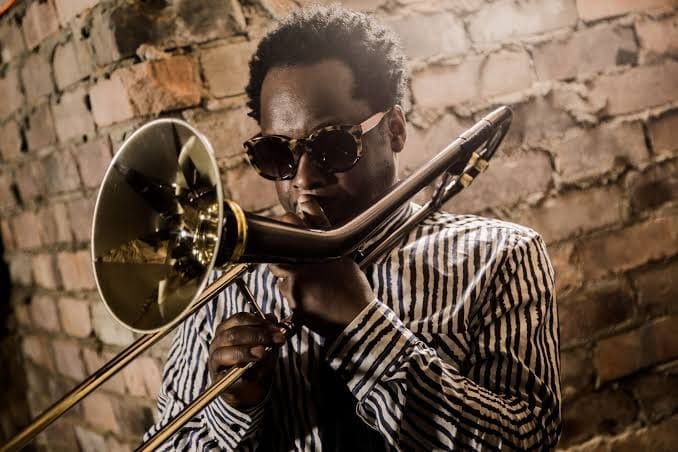
From Jonny Hooker at Young Thugs Studio to Christian Topman, who runs the York Bargestra Big Band, New York Brass Band trombonist Will Osborne to spreadsheet maestro Philip Thornhill and Miles Lindley, with his contact book of York acts, Beppe has received support for his venture.
Ouroboros promoter Harkirit Boparai helped him to set up the festival website and secured Dennis Rollins and Ukrainian-born harpist and composer Alina Bzhezhinska for the event, while graphic designer Roham Bayat designed the neo-vintage festival poster. Beppe himself signed up Newcastle jazz collective SwanNek and up-and-coming cabaret-style act Rivkala after spotting their talent at Manchester Jazz Festival in May.
Already Beppe has plans for expansion next year, when he may look to switch the festival to early September. “The vision is to make this a legacy event, thinking ‘why have Scarborough, Leeds, Manchester run jazz festivals for so long, but not York?’. York has never had a proper jazz festival. I want to change that,” he says.
“This year we wanted to focus on the South Bank and Bishopthorpe Road area, but my vision is to expand over the city, maybe to church halls, venues that already do jazz concerts, like the National Centre for Early Music, and The Crescent definitely wants to be involved next year.
“This is just a vision, though we don’t know what path we will take yet, but maybe one day we could have a two-day finale with a big headliner at the racecourse? This is only the beginning, but slowly, slowly, we will get bigger and stronger, watering the seeds we’ve sown, and hopefully attracting Arts Council England support.” Watch this space, but watch this week’s festival acts first.
For full listings and tickets, go to: yorkjazzfestival.com.
Roham Bayat’s poster design for the inaugural YorkJazzFest
YorkJazzFest programme, October 1 to 4
Venues: Angel On The Green, Bishopthorpe Road; York Arts Barge, Foss Basin Moorings, Tower Street; Young Thugs Studios, South Bank Social Club, Ovington Terrace; The Phoenix Inn, George Street; The Winning Post, Bishopthorpe Road, and Bishopthorpe Road Car Park for Sunday finale.
Thursday
6pm, Balanco Malandra, Young Thugs Studios
7pm to 8.15pm, Harrison & Morrison Duet, Angel On The Green. Admission free
8pm to 10pm, Brendan Duffy Band, The Phoenix Inn. Admission free
8.30pm, Alligator Gumbo, York Arts Barge
9pm to 10.15pm, The Shandog Swingers, Angel On The Green. Admission free
9.15pm, Lo Vu, Young Thugs Studios
Rivkala: Performing at Young Thugs Studios on Friday at 7pm
Friday
6pm, DB Trio, Angel On The Green. CANCELLED
6pm, York Bargestra Big Band, The Winning Post
6.30pm, Danny Lowndes Hot Club, York Arts Barge
7pm, Rivkala, Young Thugs Studios
8pm, Stephen Swing Wilson, The Winning Post
8pm, Karl Mullen & Friends, The Phoenix Inn. Admission free
8.30pm, Alina Bzhezhinska: Whispers Of Rain, York Arts Barge
9pm, Mike Conliffe Trio, Angel On The Green. Admission free
9.15pm, Afrodesia, Young Thugs Studio
Saturday
6pm, Flowerden, The Winning Post
6pm, Mutant DJ Jazz, Angel On The Green. Admission free
6.30pm, Emma Foulds Quintet, York Arts Barge
7pm, SwanNek, Young Thugs Studios
8.30pm, Al Morrison Quartet, The Winning Post
8.30pm, Olivia Cuttill Quintet, York Arts Barge
9pm, Borgia, Angel On The Green. Admission free
9pm, Lovedancin’ DJ, Young Thugs Studio
Sunday
Bishopthorpe Road Car Park Finale. FREE ENTRY, no ticket required.
12 noon, YorkJazzFest Orchestra
1pm, Vipertime
2.15pm, Big Bamboo
4.15pm, Fergus Quill Sextet
6pm, Dennis Rollins’ Funky-Funk!
8pm to 10.30pm, Ian Chalk, The Phoenix Inn. Admission free.
Ian Chalk: Closing YorkJazzFest at The Phoenix Inn on Sunday at 8pm