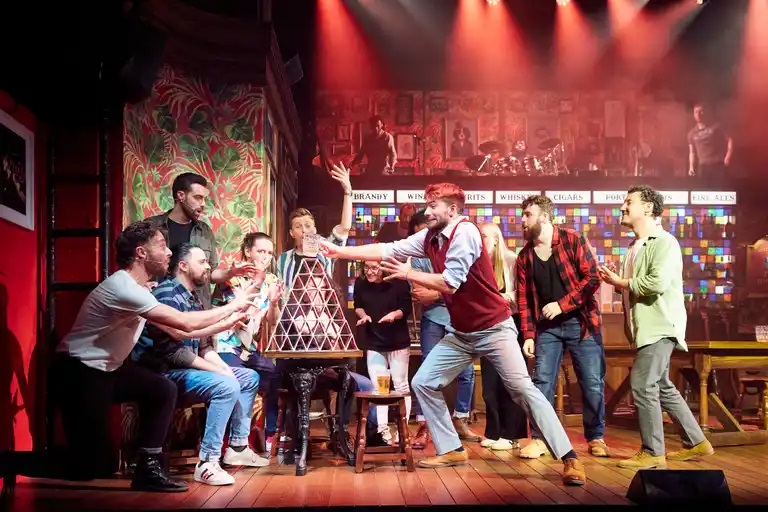
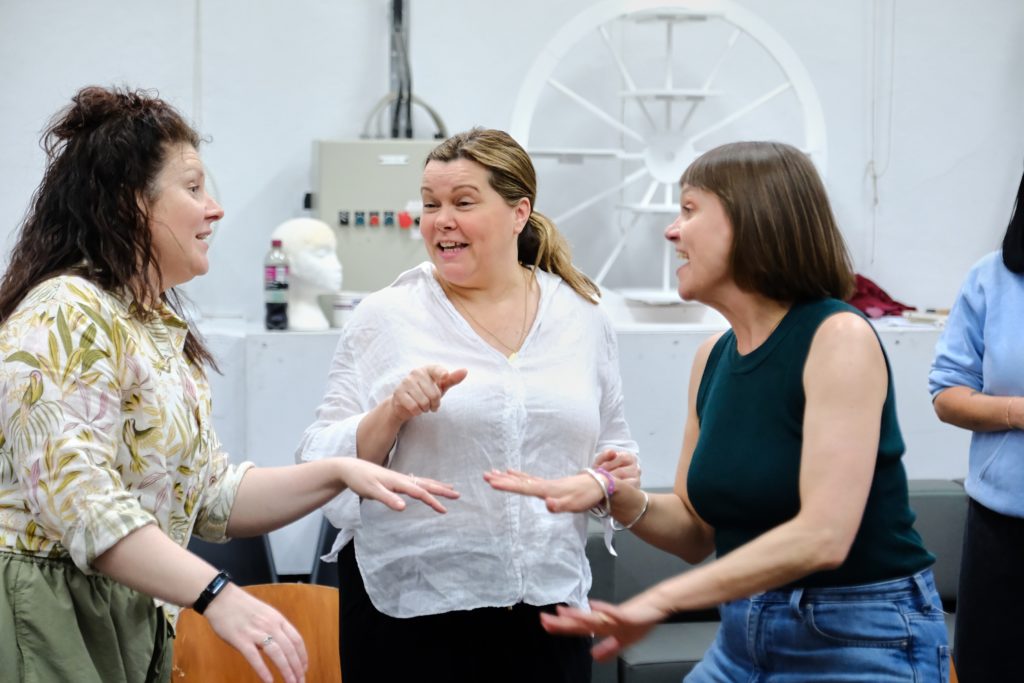
REVIEW: Here & Now: The Steps Musical, Grand Opera House, York, until Sunday ***

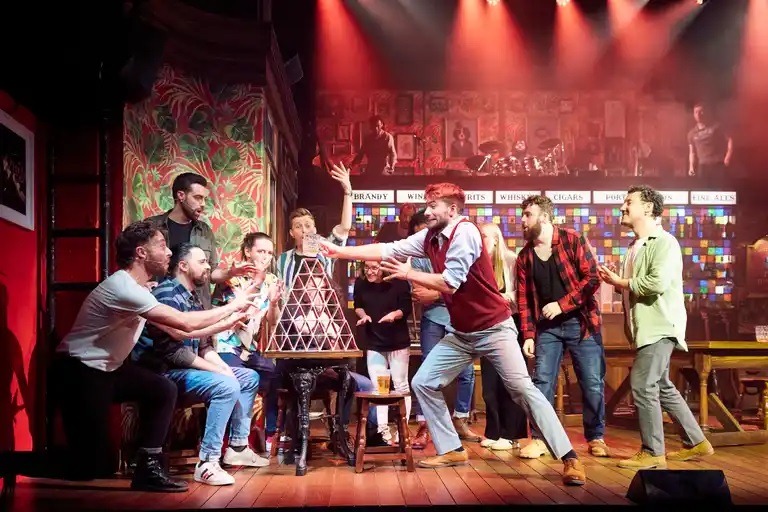
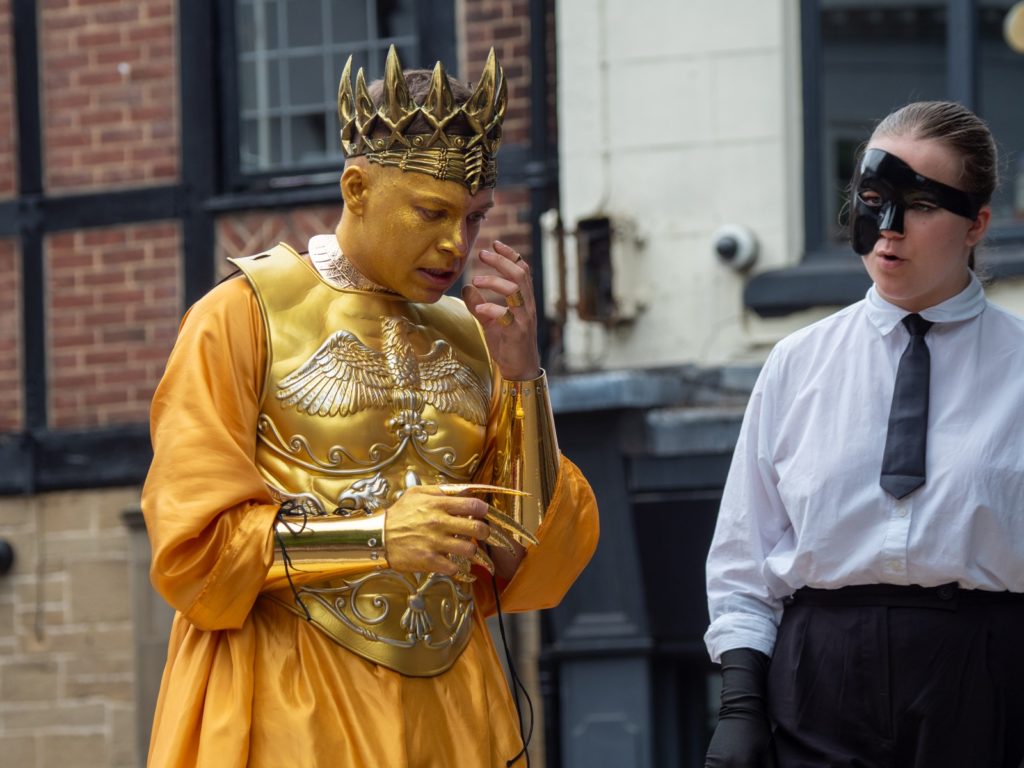
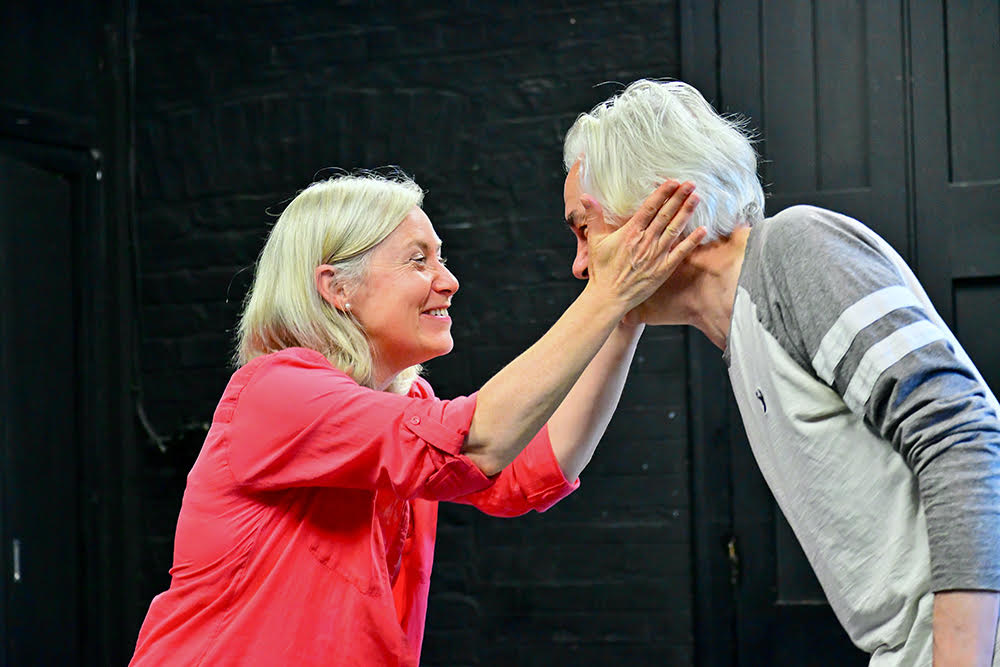
River Medway’s Jem, centre, in the Code Fabulous rendition of Chain Reaction in Here & Now: The Steps Musical. Picture: Pamela Raith

A JUKEBOX musical is defined as a stage or film musical that “generally uses songs everyone knows and loves, creating a sense of instant familiarity and singalong fun”.

Then add a storyline, a plot structure, a reason to use those songs, from comedian, playwright and screenwriter Ben Elton’s futuristic, dystopian, flash script for Queen’s We Will Rock You to fellow playwright and screenwriter Tim Firth’s cheeky-boy, kitchen-sink tale of love, choices and destiny for Madness’s Our House.

Now add Steps, the boy/girl-next door purveyors of late-Nineties’ high-energy, synth-fuelled Europop, a late runner from the Stock, Aitken and Waterman stable beloved of bubblegum pop radio, hen-party club nights, post-school Iberian summer holidays and supermarket aisles. Never fabber than Abba, but once almost as ubiquitous.

Enter playwright, screenwriter and journalist Shaun Kitchener – who writes a fortnightly pop culture column in the Metro – to take Steps to musical jukebox heaven after participating in the Royal Court’s New Writers’ Group, writing for Soho Theatre, Channel 4’s Hollyoaks and Comedy Central’s Queerpiphany and premiering his plays Positive and All That in London.

Sally Ann Matthews’ supermarket boss, Patricia, left, with Lara Dennning’s Caz in Here & Now: The Steps Musical. Picture: Danny Kaan

Steps one: make it camp, make it cheesy, make it bright and breezy. Steps two, stick to the everyday soap-opera stuff of love, love rats, troubled pasts and hopeful futures, escapism and inertia, in the quotidian setting of a seaside supermarket. Steps three, find myriad ways to splice Steps’ hits to that storyline, however contrived.

Steps four, use every Steps’ trope and insignia, from typeface to palette of colours (pinks and blues), from calling the supermarket Better Best Buys (in a nod to Better Best Forgotten) to naming an airline Buzz (after the album of that title).

Look out too for the supermarket checkout aisles being numbered 5, 6, 7, 8 (Steps’ 1997 chart debut). All these in-jokes play well with the target audience – yes, Steps fans – who just about observed the pre-show supermarket-announcement request not to sing along until the Megamix finale at Wednesday’s matinee.

Steps five: build this Steps, ROYO and Pete Waterman-backed show around a high-quality production team, led by Rachel Kavanaugh, esteemed Royal Shakespeare Company, West End, Regent’s Park and Chichester Festival Theatre director and former Birmingham Rep artistic director. Alongside her are choreographer Matt Cole, musical supervisor and arranger Matt Spencer-Smith, set designer Tom Rogers and costume designer Gabriella Slade.

In the trolley: Lara Denning’s Caz being spun a lie by Chris Grahamson’s Gareth in Here & Now. Picture: Pamela Raith

All contribute to the sassy show’s sights and sounds, playing playfully with the Steps iconography in the cause of a fun and hit-filled party night out (or matinee, if you want to make a day of it) on an open-plan set that has towers of immaculately stacked shelves to each side, pier railings and blue sea behind  and bluer sky above.

Here, in the tradition of Jeremy Lloyd & David Croft’s Are You Being Served? and Victoria Wood’s dinnerladies, the focus is on the staff, rather than interaction with customers, which leaves Here & Now to play out largely in an eerie vacuum (although that could provide an alternative explanation for why the store will, spoiler alert,  close in a week’s time).

While that blinkered focus is understandable, surely it would not have been too far a step to have had ensemble members dressed as shoppers on occasion.

Jacqui Dubois’ Vel, left, and Rosie Singha’s Neeta on the supermarket floor in Here & Now. Picture: Pamela Raith

At the heart of Here & Now is the outstanding Lara Denning’s Caz and her co-workers, who promise her a Summer Of Love (after rotter husband Gareth (Chris Grahamson) reneges on their plan to adopt a child on the eve of her 50th birthday.

Jacqui Dubois’s ever-comforting Vel has eyes for delivery worker Tracey (Lauren Woolf); Rosie Singha’s Neeta is tongue-tied over fancying co-worker Ben (Ben Darcy); Blake Patrick Anderson’s Robbie is struggling to overcome his father’s rejection, stultifying his craving for a relationship with town celebrity drag act, Drop Dead Diva Amanda Smooth (RuPaul’s Drag Race star River Medway’s Jem), one of only two customers to be woven into Kitchener’s tick-the-boxes storyline.

The other is Edward Baker-Duly’s Max, or Frenchman ‘Henri’ as supermarket boss Patricia (Coronation Street alumna Sally Ann Matthews) thinks he is, practising her dodgy French pronunciations on her staff while failing to hide her fancy Francais fling from them. Acquisitive businessman Max turns out to be the Machiavellian villain of the piece, playing his part to the 2D, six-pack max.

Save Our Store: Lara Denning’s Caz, centre, leads the supermarket staff in their protest. Picture: Pamela Raith

Matthews has fewer scenes than the central quartet but, along with Caz, Patricia is the show’s best-written role: blunt, in urgent need of more self-awareness, but with a waspish bite to her. Better still is Denning’s Caz, whose characterisation carries the most depth, not least the back story of child loss, against the grain of  Kitchener’s tendency towards cliché. She sings bangers and ballads alike with panache and poignancy.

All the hits are here and now, from 5, 6, 7, 8 being transformed into a Half-Price Hoedown to the washing- machine spin cycle of Medway’s Code Fabulous rendition of Chain Reaction. Even 2012 flop Story Of A Heart turns out to be rather better than its number 173 chart placing might have suggested.

Do not go seeking hidden depths – the songs never had them – but Here & Now has both comedy and Tragedy, (the Bee Gees cover), happiness and sadness, fun and games, bad behaviour and good, baskets and trolleys, love and loss, Steps and more Steps. A Summer Of Love to perk up a wet winter with fizz, friction and fancy fondant pop.

Here & Now: The Steps Musical, Grand Opera House, York, tonight and tomorrow, 7.30pm; Saturday, 2.30pm and 7.30pm; Sunday, 3pm. Box office: atgtickets.com/york.
Martyn Knight to make exit with Annie after 21 years of directing York Light Opera Company at York Theatre Royal

Chloe Jones’s Lily St Regis and Martin Lay’s Rooster in York Light Opera Company’s Annie. Picture: Matthew Kitchen Photography

MARTYN Knight directs York Light Opera Company for the last time in its first staging of Annie in 25 years at York Theatre Royal from tomorrow to February 21.

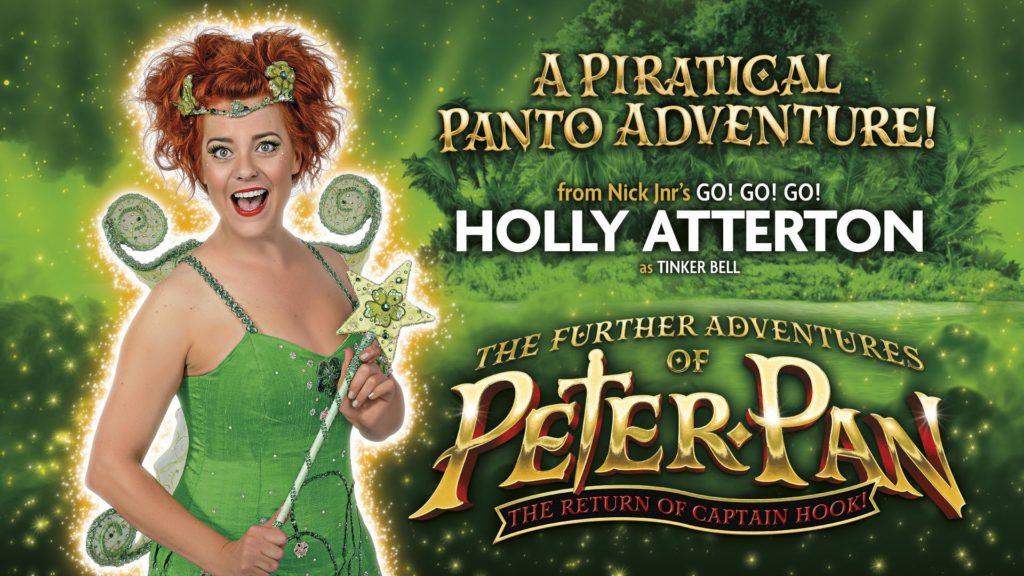
“It’s my swan song for York Light after 21 years,” says Martyn. “I’m nearly 70, I’m still haring up and down the country – and I’ve just finished the panto season in Eastbourne, where I’ve been the dame for 21 years [at the Devonshire Park Theatre], playing Sally Smee, Smee’s mum, in The Adventures Of Peter Pan this winter.

“You have people coming through as performers all the time, and you need to have directors coming through too. There are only so many dance numbers you can do over the years.”

To prove the point, Martyn is directing Annie for the fifth time. “That spans several years,” he says. “Until now, they’ve all been in the south, High Wycombe, Taunton, Weymouth and… the other one eludes me. York Light is the first one in the north.”

Reflecting on more than two decades at the helm of York Light shows, he says: “As a company, they have brought me friendship and family, as I’ve made so many friends over the years, working with incredible people, with all the joy of giving back to amateur theatre.

“What I get out of it is amazing. I started in the amateurs, never training in dancing and singing, but got the chance in 1976 o start working as a dancer in Portugal at Casino Estoril, the biggest casino in Europe at the time.

Annabel van Griethuysen’s Miss Hannigan. Picture: Matthew Kitchen Photography

“I was in the floor show, I was 19/20, in my ‘gap year’, and being paid to do it, then went to Japan, Hong Kong and Singapore – onwards and upwards.”

Martyn continues: “I was never excellent in the three disciplines, but I could act, sing and dance, did lots of rep things, and ultimately went into the West End in one of those shows. In around 1990, I was in panto with Hinge & Bracket, alongside these 18 and 19-year-olds, when I was in my 30s, and I remember thinking, ‘I should get a proper job’, just as my mum always suggested.”

Cue Martyn directing and choreographing shows at the Watford Palace Theatre, where he had first performed at the age of 11 “when my mum got me into theatre”. “My dad was very high up in management at Heinz, but I have always been a rebel, going against what’s expected,” he says.

Directing has brought him much joy, not least when revisiting a musical such as Annie, a heart-warming tale of hope, family, and second chances with music by Charles Strouse, lyrics by Martin Charnin and book by Thomas Meehan, packed with such knockout songs as Tomorrow, Hard Knock Life and You’re Never Fully Dressed Without A Smile

“I think it’s the children’s element of the show that makes Annie so popular, the chance to see your local talent on stage. We have 18 girls, aged seven to 13, and we auditioned far more than that,” says Martyn.

Annie at the double-trouble: Hope Day, left, and Harriet Wells sharing the title role in York Light Opera Company’s Annie. Picture: Matthew Kitchen Photography

“They really have that wow factor, and to me it’s all about the next generation of young performers. That’s what I like, when you see the talent coming through.”

Harriet Wells and Hope Day will be sharing the title role in the heart-warming tale of hope, family and second chances with music by Charles Strouse, lyrics by Martin Charnin and book by Thomas Meehan, packed with such knockout songs as Tomorrow, Hard Knock Life and You’re Never Fully Dressed Without A Smile.

“Harriet and Hope have very different qualities and different approaches to playing the part, which I love,” says Martyn. “Harriet is very expressive; Hope was among the first ones I saw in the auditions, where you’re looking to spot someone who has star quality, and she really made me watch. She has a beautiful face.

“They’re both lovely singers and very good actresses, with demanding songs that they do so well, and though the hardest part is the dancing, they’re coming to terms with that too.”

Expect dazzling choreography, stunning costumes and a full live band in Martyn’s production, alongside a stellar cast of York talent, led by Annabel van Griethuysen as Miss Hannigan after her forgetful but unforgettable Sister Mary Amnesia in  Nunsense: The Musical at Theatre@41, Monkgate, in Summer 2024   and hostess Marlene Cabana in Eurobeat: Pride Of Europe at the same theatre last summer.

Sarah Craggs and Neil Wood in York Light Opera Company’s Annie. Picture: Matthew Kitchen Photography

“Annabel is someone who didn’t cross my mind…until I saw her in the audition; slightly younger than she should be for Miss Hannigan, but her performance said ‘Cast me’,” says Martyn.

“Her last lead for me, [as Sarah Brown in 2018] in Guys And Dolls, was very different, which shows she is a very diverse, powerful performer. Put her together with Martin Lay’s Rooster and Chloe Jones’s Lily St Regis, and they’re really good together.”

Martyn is as busy as ever – also working on a production of Priscilla Queen Of The Desert The Musical in Watford at present– and he is exacting in his standards. “You play to your strengths, but I also change,” he says. “As a director, I always think I could do it better, so I do alter things.”

York Light Opera Company in Annie, York Theatre Royal, February 12 to 21, 7.30pm, except February 15 and 16; February 14, 15 and 21, 2.30pm; February 19, 2pm. The February 17 show will be British Sign Language Interpreted. Box office: 01904 623568 or yorktheatreroyal.co.uk.


Beverley & East Riding Early Music Festival 2026 announces Mysteries & Miracles programme. Who will be playing in May?

The Tallis Scholars: Performing Mysteries and Miracles at Beverley Minster on May 23. Picture: Hugo Glendinning

TICKETS are on sale for Beverley & East Riding Early Music Festival 2026, running from May 22 to 24 with the theme of Miracles & Mysteries.

Celebrating music and new partnerships in its 38th year, this annual festival is a ‘jewel in the crown’ of Beverley’s musical calendar, attracting visitors and residents to enjoy concerts and talks by experts and participate in workshops.

Each year, the festival attracts international musicians of the highest quality and is well known for seeking out and nurturing emerging talent, as well as drawing on this historic East Riding market town’s medieval musical tradition.

This year’s theme of Miracles & Mysteries intertwines the story of St John of Beverley, one of the most powerful miracle-workers in England in medieval times, with music by the world-renowned Tallis Scholars and a host of musicians from across the UK and Europe.

There are more ways than ever to participate in the music this year with young people invited to join in the fun both before and during the festival. In a new partnership with East Riding Libraries, the festival will be on the road with Baroque Around The Books, staging free concerts at Pocklington Library, on May  11, 11am, Market Weighton Library, May 11, 2pm, Goole Library, May 12, 11am, and Beverley Library, May 12, 4pm.

The scheme began in 2023 in York, where it has been a big success and has featured a variety of outstanding ensembles. This year, the Beverley festival is delighted to welcome Dowland’s Foundry lutenist Sam Brown and tenor Daniel Thomson, who will perform a free concert mixing music by Dowland and Morley with words by William Shakespeare. More details can be found at www.ncem.co.uk/baroque-around-the-books.

After a series of bespoke workshops in East Riding Schools, recorder wizards Palisander Recorder Ensemble will stage a pre-festival concert for all the family, Recorder Revolution!, at Beverley Memorial Hall on March 17 at 6.30pm. Cue magical music-making with an array of recorders ranging from six inches to six feet tall; more details at palisanderrecorders.com.

Rune: Lost In Contemplation concert on May 24

The three-day festival will open on May 22 with Près de Votre Oreille, directed by gamba specialist Robin Pharo, presenting Lighten Mine Eies as part of a European tour in this northern premiere by the French instrumental ensemble at St Mary’s Church at 7.30pm.

The evening will feature music by William Lawes, who enjoyed a brief but dazzling career as a singer and lutenist to Charles I.

Près de Votre Oreille’s European tour is backed by the Centre National de la Musique (CNM) with the support of Institut Français du Royaume-Uni. The ensemble’s main sponsor is the Société Générale Foundation, with further support from the Orange Foundation.

The Tallis Scholars, directed by Peter Phillips, will perform Mysteries and Miracles, a programme that highlights the festival theme through music inspired by the stories of the life of Christ, at Beverley Minster on May 23.

Suited to the Minster’s glorious acoustics, the 7.30pm concert will begin with a depiction of Christ’s birth as envisaged by two of the Renaissance’s most renowned composers, Gabrieli and Victoria.

The Telling will present Purcell: The Musical, featuring Niall Ashdown as Purcell, soprano Héloise Bernard and violinist Joanna Lawrence, in a return to the East Riding Theatre, Beverley, on May 24 at 7.30pm after performing Into the Melting Pot there previously.

This drama, based on the life of 17th-century London composer Henry Purcell, features assorted instrumental and vocal compositions by Purcell, from bawdy theatre ballads and joyful celebrations of love to slow airs and numbers from his semi-operas.

Beverley & East Riding Early Music Festival director Delma Tomlin

The festival’s focus on emerging young talent will complement three NCEM Platform Artists, Pseudonym, Intesa and Rune, with the newly appointed New Generation Baroque Ensemble, Bellot Ensemble, who are supported by BBC Radio 3, the Royal College of Music and the National Centre for Early Music, York.

On May 23, at St Mary’s Church, Pseudonym’s Liane Sadler, flutes, Maya Webne-Behrman, violin, Stephen Moran, gamba, and Gabriel Smallwood, harpsichord, will perform Discret et Distrait at 1pm.

After performing in York in 2024 and at an Antwerp showcase last summer, this endearing young ensemble will return to the UK to play 18th-century French music in a sophisticated intermingling of Italian virtuosity and Polish folk rhythms, featuring works by Couperin, Rameau and Telemann.

This concert is made possible thanks to EFFEA’s artist-in-residence Discovery programme, in partnership with AMUZ, Antwerp and Early Music Sweden.

On May 23, at St Mary’s Church, Intesa’s Nathan Giorgetti and Lucine Musaelian (viols and voice) will celebrate their union between Armenian and Italian traditions in Voices Of San Lazzaro at 4pm.

Intesa will explore the connections between sacred and secular love, both in their pain and redemption, highlighting the Armenian story of faith and the women’s story of misunderstanding.

On May 24, in The Quire at Beverley Minster, Rune will perform Lost In Contemplation with a line-up of Angela Hicks soprano, Daniel Thomson tenor, May Robertson voice and vielle, Jean Kelly harp, and Daniel Scott, recorder and positive organ.

Bellot Ensemble: From The Sound Of Battle To The Silence Of Peace

At 3pm, four remarkable medieval miracle stories will be paired with music from across Europe. From the contemplative vision of Ero the monk and Saint Elizabeth’s Miracle of the Roses, to English songs honouring the Virgin Mary and the extraordinary life of Joseph of Schönau, these tales reveal the medieval imagination at its most profound, accompanying stories that explore faith, transformation and the intersection of the miraculous with human experience.

On May 24, at Toll Gavel United Church, Bellot Ensemble will undertake a vivid journey from the clamour of conflict to the quiet miracle of peace in From The Sound Of Battle To The Silence Of Peace.

Edmund Taylor and Maxim Del Mary, violins, Nathan Giorgetti and Lucine Musaelian, viola da gambas, Daniel Murphy, theorbo, baroque guitar and lute, and Matthew Brown, keyboards, will perform music by Lawes, Schmelzer, Biber and Falconieri in a 5pm concert to be recorded for broadcast by BBC Radio 3.

Festival director Delma Tomlin says: “We’re very excited to be returning to Beverley for what promises to be a spectacular weekend of music in one of the UK’s most beautiful settings, celebrating the extraordinary wealth of the medieval musical traditions of the town.

“This year’s theme is Miracles & Mysteries, presenting a line-up of international concerts of the highest quality, including our opening concert by Près de Votre Oreille, made possible by our partnership with France.

“The festival also provides a showcase for young talent with Bellot Ensemble, the current New Generation Baroque Ensemble, and NCEM Platform Artists, Pseudonym, Intesa and Rune. Finally, thanks to a new partnership with East Riding Libraries, we’ll be ‘on the road’ for the very first time in Beverley, with Baroque Around The Books, when music lovers can enjoy free concerts by Dowland’s Foundry in several of the region’s libraries.”

Find the full programme at https://www.ncem.co.uk/whats-on/bemf/. Tickets are on sale on 01904 658338, at ncem.co.uk, via email to boxoffice@ncem.co.uk or in person from Beverley Tourist Information Centre, Customer Service Centre, Champney Road, Beverley, HU17 8HE.

The artwork for Beverley & East Riding Early Music Festival 2026

What’s On in Ryedale, York and beyond. Hutch’s List No. 6, from Gazette & Herald

Sally Ann Matthews in the role of supermarket boss Patricia in Here & Now, The Steps Musical, on tour at Grand Opera House, York. Picture: Danny Kaan

MUSICALS aplenty and a posthumous debut exhibition for two York artists are among Charles Hutchinson’s choices for February fulfilment.

Comedy and Tragedy show of the week: Here & Now, The Steps Musical, Grand Opera House, York, tonight to Saturday, 7.30pm; Wednesday & Saturday, 2.30pm; Sunday, 3pm

PRODUCED by Steps, ROYO and Pete Waterman, Here & Now weaves multiple dance-pop hits by the London group into Shaun Kitchener’s story of supermarket worker Caz and her fabulous friends dreaming of the perfect summer of love.

However, when Caz discovers her “happy ever after” is a lie, and the gang’s attempts at romance are a total tragedy, they wonder whether love will ever get a hold on their hearts? Or should they all just take a chance on a happy ending? Look out for Coronation Street star Sally Ann Matthews as supermarket boss Patricia. Box office: atgtickets.com/york.
Josh Woodgate’s Pilate in Inspired By Theatre’s Jesus Christ Superstar. Picture: Dan Crawfurd-Porter

Boundary-pushing theatre show of the week: Inspired By Theatre in Jesus Christ Superstar, Joseph Rowntree Theatre, York, tonight to Saturday, 7.30pm plus 2.30pm Saturday matinee

YORK company Inspired By Theatre’s gritty, cinematic and unapologetically powerful staging of Jesus Christ Superstar presents director Dan Crawfurd-Porter’s radical new vision of Andrew Lloyd Webber and Tim Rice’s 1971 musical.

On Gi Vasey’s shifting building-block set design, part temple, part battleground, the story unfolds through visceral movement, haunting imagery and a pulsating live score, capturing Jesus’s final days as loyalties fracture, followers demand revolution and rulers fear rebellion. Box office: 01904 501935 or josephrowntreetheatre.co.uk.

Annabel van Griethuysen’s Miss Hannigan in York Light Opera Company’s Annie. Picture: Matthew Kitchen Photography

The sun’ll come out tomorrow: York Light Opera Company in Annie, York Theatre Royal, tomorrow until February 21, 7.30pm, except February 15 and 16; matinees on February 14, 15 and 21, 2.30pm; February 19, 2pm

MARTYN Knight directs York Light Opera Company  for the last time in the company’s first staging of Charles Strouse, Martin Charnin and Thomas Meehan’s Annie in 25 years.

This heart-warming tale of hope, family and second chances, packed with such knockout songs as Tomorrow, Hard Knock Life and You’re Never Fully Dressed Without A Smile, stars  Annabel van Griethuysen as Miss Hannigan, Neil Wood as Daddy Warbucks and  Hope Day and Harriet Wells, sharing the role of Annie. Box office: 01904 623568 or yorktheatreroyal.co.uk.

Jez Lowe & The Bad Pennies: Northern English folk at Helmsley Arts Centre

Folk gig of the week: Jez Lowe & The Bad Pennies, Helmsley Arts Centre, Friday, 7.30pm

JEZ Lowe & The Bad Pennies have been playing their northern English and Celtic folk and acoustic songs and tunes for more than two decades around folk festivals, clubs and concert stages, while making a dozen albums.

Touring the United States, Canada, Australia, New Zealand, Holland and Belgium, as well as Great Britain and Ireland, singer, guitarist and composer Lowe performs with fiddle player, vocalist and Badapple Theatre writer-director Kate Bramley, Northumbrian small-pipes, accordion and whistle player Andy May and fretless bassist David De La Haye. Box office: 01439 771700 or helmsleyarts.co.uk.

Fladam Theatre duo Florence Poskitt and Adam Sowter in Astro-Norma And The Cosmic Piano at Helmsley Arts Centre

Children’s show of half-term week: Fladam Theatre in Astro-Norma And The Cosmic Piano, Helmsley Arts Centre, Sunday, 2.30pm

FLADAM Theatre, the actor-musician York duo of Adam Sowter and Florence Poskitt, returns with an intergalactic musical adventure ideal for ages four to ten. Meet out-of-this-world pianist Norma, who dreams of going into space, like her heroes Mae Jemison and Neil Armstrong, but children can’t go into space, can they? Especially children with a very important piano recital coming up.

When a bizarre-looking contraption crash-lands in the garden, is it a bird? Or a plane? No and twice no, it’s a piano, but no ordinary piano. This is a cosmic piano! Maybe Norma’s dreams can come true in a 45-minute show packed with awesome aliens, rib-tickling robots, and interplanetary puns that will have children shooting for the stars. Box office: 01439 771700 or helmsleyarts.co.uk.

Crime fiction author Elly Griffiths: Discussing new novel The Killing Time at Milton Rooms, Malton

Kemps Books’ literary event of the week: An Evening With Elly Griffiths, Milton Rooms, Malton, February 16, 7.30pm

ELLY Griffiths, award-winning crime fiction author of The Ruth Galloway Mysteries, The Brighton Mysteries and The Postscript Murders, discusses new novel The Killing Time and the inspirations behind her time-twisting mysteries, compelling characters and gripping storytelling. Expect lively conversation, fascinating insights and a book-signing finale. Tickets: 01653 696240 or themiltonrooms.com.

Jodie Comer’s lawyer Tessa in Prime Facie, on tour at Grand Opera House, York. Picture: Rankin

Recommended but sold out already: Jodie Comer in Prima Facie, Grand Opera House, York, February 17 to 21, 7.30pm plus 3pm Thursday and Saturday matinees

JODIE Comer returns to her Olivier and Tony Award-winning role as lawyer Tessa in the “Something Has To Change” tour of Suzie Miller’s Prime Facie in her first appearance on a North Yorkshire stage since her professional debut in Scarborough as Ruby in the Stephen Joseph Theatre’s world premiere of Fiona Evans’s The Price Of Everything in April 2010.

Comer’s Tessa is a thoroughbred young barrister who loves to win, working her way up from working-class origins to be at the top of her game: prosecuting, cross examining and lighting up the shadows of doubt in any case. An unexpected event, however, forces her to confront the lines where the patriarchal power of the law, burden of proof and morals diverge. Box office for returns only: atgtickets.com/york.

Craig David: PerformingTS5 DJ set at York Racecourse Music Showcase Weekend in July

Gig announcement of the week: Craig David presents TS5, York Racecourse Music Showcase Weekend, Knavesmire, York, July 24

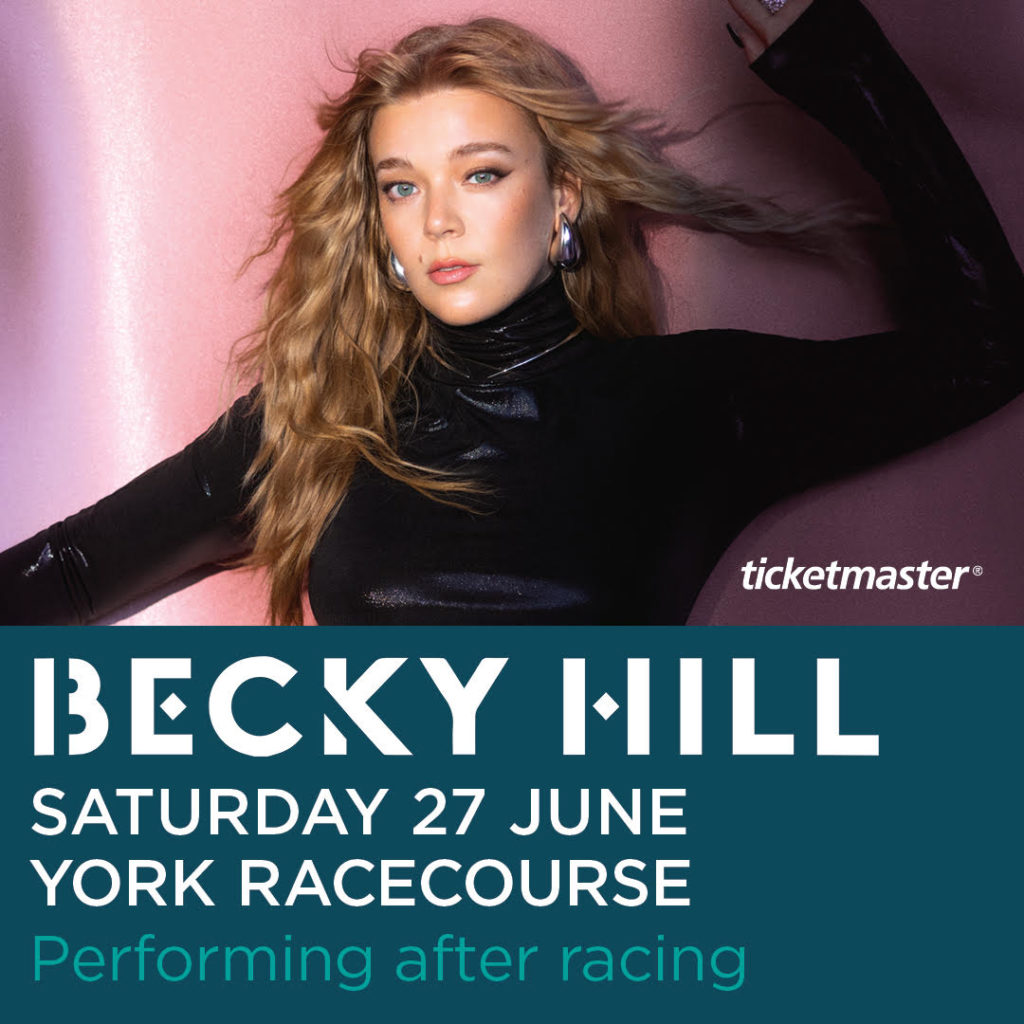
SOUTHAMPTON singer-songwriter and DJ Craig David will complete this summer’s music line-up at York Racecourse after earlier announcements of Becky Hill’s June 27 show and Tom Grennan’s July 25 concert.

David, 44, will present his TS5 DJ set on Music Showcase Friday’s double bill of racing and old-skool anthems, from R&B to Swing Beat, Garage to Bashment, plus current House hits, when he combines his singing and MC skills. Tickets: yorkracecourse.co.uk; no booking fees; free parking on race day.

Deathly Dark Tours to launch ticket office & retail shop in Grape Lane on Friday the 13th

Deathly Dark Tours tour guide in chief Dr Dorian Deathly

FRIDAY the 13th. Could there be a more perfect date for York’s Deathly Dark Tours to open their doors?

After five years of meeting guests on Grape Lane, Dr Dorian and Dede Deathly – Jamie and Laura McKeller – are overjoyed to have acquired a good old bricks-and- mortar property that will serve as new ticket office and space for spooky, tour-themed retail.

“To celebrate the opening, we are offering an opportunity for people to pop down to explore the shop and also to join a free tour on Friday 13th February,” says Dr Dorian.

“Due to the January weather carrying on stubbornly into February, the tours will be just half the usual length of the public tours at a snappy 45 minutes. Our guide will take guests on a whistle-stop tour of some of York’s most spooky spots, parting ways on Shambles, which is perfect for a post-tour tipple.”

The doors to the shop, at 4 Grape Lane, will open at 5pm and all are welcome to attend. “We will be running a free tour at 6pm and again at 7pm, starting from the shop, with 30 spaces available on each one,” says Dede Deathly (Laura).

“If you would like to grab some tickets for either of the tours, please send an email with the name of the lead guest, which time slot you would like and how many tickets you need to DORIAN@DEATHLYDARKTOURS.COM. The tickets will then be sent over to you.”

Jodie Comer returns to North Yorkshire stage for first time since her 2010 SJT professional debut, now starring in sold-out Prima Facie at Grand Opera House, York

“It is a huge privilege to return to Prima Facie for one last time,” says Jodie Comer, as she plays defence barrister Tessa Ensler on tour. Picture: Rankin

JODIE Comer will revive her Olivier and Tony Award-winning solo performance in Suzie Miller’s sexual assault drama Prima Facie “one last time” on a 2026 tour booked into the Grand Opera House, York, from February 17 to 21.

The Killing Eve, The Bikeriders and 28 Years Later  star last appeared on a North Yorkshire stage in her professional debut as spoilt, mouthy but bright, privately educated Ruby, playing opposite York actor Andrew Dunn in the world premiere of Fiona Evans’s The Price Of Everything, at the Stephen Joseph Theatre, Scarborough, in November 2010.

Tickets for the only Yorkshire venue on Prima Facie’s nine-city “Something Has To Change” tour went on sale on March 25 2025, for pre-sale to members at 10am and the general public at 12 noon, selling out only 20 minutes later.

Looking forward to reprising Miller’s monodrama on tour – directed by Justin Martin with music by Self Esteem’s Rebecca Lucy Taylor – Comer says: It is a huge privilege to return to Prima Facie for one last time and take this important play on tour across the UK & Ireland. The resonance of Suzie Miller’s writing, both in London and New York, exceeded anything we could have imagined.

Jodie Comer in her professional theatre debut as Ruby in Fiona Evans’s The Price Of Everything at the Stephen Joseph Theatre, Scarborough, in 2010. Picture: Tony Bartholomew

“I’m so thrilled to have the opportunity to get the team back together and take the production to theatres around the country, including my hometown of Liverpool. On a personal note, I can’t think of a better finale to what has been such an incredible and deeply rewarding chapter in my life.”

In criminal lawyer-turned playwright Miller’s Olivier Award winner for Best Play, Comer, 32, will play thoroughbred Tessa Ensler, a young, brilliant barrister who loves to win.

Ambitious Tessa has worked her way up from Liverpool and Luton council estates, via Cambridge University, to be at the top of her game in her early 30s as a criminal defence barrister for an esteemed London chambers: defending the accused, cross examining and lighting up the shadows of doubt in any case.

However, an unexpected event forces her to confront the lines where the patriarchal power of the law, burden of proof and morals diverge.

Jodie Comer in Prima Facie at the Harold Pinter Theatre, London, on April 25 2022. Picture: Helen Murray

“She played by the rules, but the rules are broken,” as the sleeve to Miller’s script puts it, when Tessa, the woman who defends men accused of rape, is assaulted herself and ends up in the witness box.

In her 90-minute play, Miller, who was a lawyer for 15 years before focusing on writing since 2010, drew on research from trials at the Old Bailey to address how the legal system conducts sexual assault cases.

“I couldn’t be more thrilled about the Prima Facie 2026 tour,” says the Australian playwright, screenwriter, librettist, visual artist, novelist and human rights lawyer, who has degrees in both science and law.

“This play has already achieved more than we all could have dreamed, and Jodie’s commitment to the story reaching so many new venues and communities means more people can be part of the conversation, and the solution.”

“Jodie’s commitment to the story reaching so many new venues and communities means more people can be part of the conversation, and the solution,” says Prima Facie playwright Suzie Miller. Picture: Rankin

Liverpool-born Comer won the Olivier Award for Best Actress for her 2022 performance as Tessa in her sold-out West End debut at the Harold Pinter Theatre, London, repeating that feat in the Tony Awards when Miller’s play transferred to Broadway in 2023.

The NTLive (National Theatre) and Empire Street Productions live capture of Prima Facie has enjoyed two record-breaking cinema releases, with streaming on National Theatre At Home too, and Comer also has recorded an audiobook adaptation by Miller.

Now, opening at Richmond Theatre, Surrey, on January 23, Comer will complete the “perfect full circle by concluding the tour in her home city at the Liverpool Playhouse from March 17 to 21.

In an exclusive interview with Harpers Bazaar journalist Helena Lee on January 22, (https://www.harpersbazaar.com/uk/culture/a70089560/jodie-comer-prima-facie-play-tour/), Comer said: “Honestly, it’s just such a gift. I’ve got a fair chance to revisit Tess, to see how the character can develop and what further truth I can find. It’s rare.

Jodie Comer’s Tessa Ensler, the young, brilliant barrister who loves to win in Prima Facie. Picture: Rankin

“I’ve had so many different life experiences [since she first played Tess]. I’m coming into the room feeling a little more confident, a little more knowing, which is making for more detailed and revelatory discoveries.”

Comer’s Harpers Bazaar interview concluded: “We’re going out to regional, smaller cities and presenting Tess to the people she probably speaks to most. To go on this tour and have the final week in Liverpool – a homecoming for both Tess and myself – feels really quite magical.”

Jodie Comer in Prima Facie, Grand Opera House, York, February 17 to 21, 7.30pm plus 3pm Thursday and Saturday matinees, all sold out. Box office for returns only: atgtickets.com/york.

NO press tickets are being provided for Prima Facie’s visit to the Grand Opera House, York. Frustratingly, CharlesHutchPress will not be reviewing the hottest ticket of the year, so hot that he was unable to purchase one in the booking tsunami on March 25 last year.

Jodie Comer in the tour poster for Prima Facie

REVIEW: Steve Crowther’s verdict on The Kleio Quartet, BMS York, Sir Jack Lyons Concert Hall, University of York, February 6

The Kleio Quartet. Picture: Sophie Williams

THE Kleio Quartet  – Juliette Roos, Katherine Yoon (violins), Yume Fujise (viola) and Eliza Millett (cello) – opened opened the programme with an impressive account of Elgar’s String Quartet in E minor, Op. 83.

How this young group of players managed to embrace the emotional depth of this remarkable work was beyond me, but they did.

Although the Quartet was written in 1918, the final year of the First World War, it does not emerge as a wartime statement. It instead signals the collapse of the Edwardian world and Elgar’s withdrawal from public life.

Gone is the public voice of the Enigma Variations and the symphonies; Elgar retreats instead to the private, intimate world of chamber music. The Quartet is therefore shaped by introspection, cultural rupture and disillusionment.

This was most evident in the Kleio’s performance of the central Piacevole (poco andante): the emotional core of the work. The opening cantabile melody – played by the first violin – unfolded in a tender, sustained line, aided by minimal vibrato and superbly natural phrasing.

The lines were passed between the instruments with great sensitivity. The viola’s tone added a warm glow to the texture, suggesting nostalgia. There was noticeable role reversal with the second violin, which generally played a supporting role to the first, while the cello provided vital support through its countermelodies. The balance was impeccable.

If the opening Allegro moderato can be labelled dramatic, it is surely through the restrained tension beneath the surface. Again, the Quartet’s interpretation and judgement were admirably on display.

The thematic material is shared across all four instruments, and the balance and clarity of the inner voices – particularly the second violin and viola – were vital in maintaining the movement’s flow. The phrasing and dynamics were beautifully judged.

The closing Allegro molto was driven by a restless energy. The rhythmic playing was invariably precise, and the contrasting lyrical passages that emerged from the ensemble texture – with excellent contributions from viola and cello – carried that glance-over-the-shoulder, reflective quality. The end of the movement avoided any sense of triumph or resolution, but was satisfying nonetheless.

Beethoven’s String Quartet in D major, Op. 18 No. 3 came as a breath of fresh air. The opening Allegro was deceptively relaxed: the witty conversational interplay and the speed at which themes were passed around were a hoot. The rhythmic energy was light rather than driven, and the elegance of the playing made for an impressive opening.

Their playing in the Andante con moto had emotional warmth and lovely poise, while conveying a subtle tension beneath the calm surface. The third movement Allegro came across as a robust minuet, but one with both bite and humour. Sharp accents and crisp articulation added to the character, giving the dance a distinct rhythmic edge.

The closing Presto shone with sparkle and wit. The light articulation and clarity in the fast passagework were thrilling. Great fun too.

The interval usually gives me time to clear my head before the second half. This time, however, my companion pointed out that the Beethoven quartet opens with the same minor seventh as There’s A Place For Us from West Side Story. From that moment on, Bernstein refused to leave my head – a damned good tune, admittedly.

I have always found Mendelssohn’s String Quartet in E flat major, Op. 44 No. 3 to be texture-driven rather than theme-driven, with much of its character emerging from the interaction of inner voices rather than overt melodic statements.

It was a relief to hear a performance in which the texture was kept both clear and buoyant. This was evident from the opening Allegro vivace, where the movement’s brilliance lay in the quick exchanges between the instruments. Not for the first time, the viola and second violin ensured a strongly conversational quality.

The light, almost weightless playing in the second movement, Scherzo: Assai leggiero vivace, had a delightful, wispy, magical character, while the turbo-charged energy of the closing Molto allegro con fuoco – cleanly articulated and crackling with kinetic energy – nearly sent an instinctively animated first violin, Juliette Roos, into orbit.

For me, the movement that lingered most was the Adagio non troppo, the still point of the quartet. The long cantabile lines shared across the ensemble, shaped with warmth but without indulgence, and the intimacy of the phrasing made the performance genuinely affecting.

Review by Steve Crowther

REVIEW: Martin Dreyer’s verdict on Angela Hewitt, Sir Jack Lyons Concert Hall, University of York, February 4

Angela Hewitt: Focus entirely on Bach

WHEN you walk out of a concert feeling that it may have been the musical event of the year and it is still only early February, you have certainly experienced something special.

In the case of pianist Angela Hewitt, it was extraordinary. Not that we should be surprised by now. This was at least her fourth visit to York in the past ten years: she must like it here.

Her focus was entirely on Bach. She played all but one of six works from memory. The exception was the huge Prelude & Fugue in A minor, BWV 894 (not one of the ‘48’), where her tablet could not be more than an aide-memoire, given the rapid tempos both halves demand. She kept it until last, yet after a whole evening her intensity was as strong as ever.

In the fugue, her relaxation was so engrossing that it was as if she were unveiling a brand-new narrative, despite its complexities.

It was about 20 seconds into the opening Toccata in D major, BWV 912, that she had the packed audience in the palm of her hand. While its moods were distinctive, there was also a sense of excitement building throughout: the final gigue, which happens also to be a fugue, was intoxicating for its sheer enthusiasm. As with so much of the evening, she used her sustaining pedal sparingly: clarity was the watchword.

By now her palpable enjoyment had become infectious. In the Fifth French Suite, in G major, there was an elegiac transparency to the Sarabande and a gentle lilt to the majestic Loure, both standing in contrast to the commanding virtuosity elsewhere and testimony to Hewitt’s feeling for the romantic side of Bach, an aspect too widely ignored. The taxing gigue, needless to say, was at once colourful and percussive.

The Chromatic Fantasia and Fugue, in D minor, was an ear-opener, the first part dazzling in its harmonic daring, right at the limits for the composer’s time, the second incredibly crisp, with subtle weighting of the various voices.

That clarity was maintained in the Fifth Partita (a suite in all but name), despite the cracking pace at the start. There were supple dabs of rubato along the way, before a finale of mesmerising brilliance.

In the Italian Concerto, published in 1735 and the latest work in this programme, we could feel Bach letting his hair down: the sun sparkling on the Mediterranean in the exhilarating opening, the flowing song of the Andante with teasing ornamentation, and the balletic momentum of the final Presto, this was Italy in a nutshell. Jesu, Joy Of Man’s Desiring made a deeply touching encore.

Angela Hewitt has once again confirmed her already legendary status as a player of Bach. We must hope that she will continue to make frequent returns to York.

Review by Martin Dreyer

REVIEW: The Last Picture, York Theatre Royal Studio, until February 14 ****

Robin Simpson’s Sam, the emotional support dog, in Catherine Dyson’s The Last Picture. Picture: S R Taylor Photography

“I CAN’T think of anyone better to play a dog than Robin,” said York Theatre Royal creative director Juliet Forster at Saturday night’s post-show discussion.

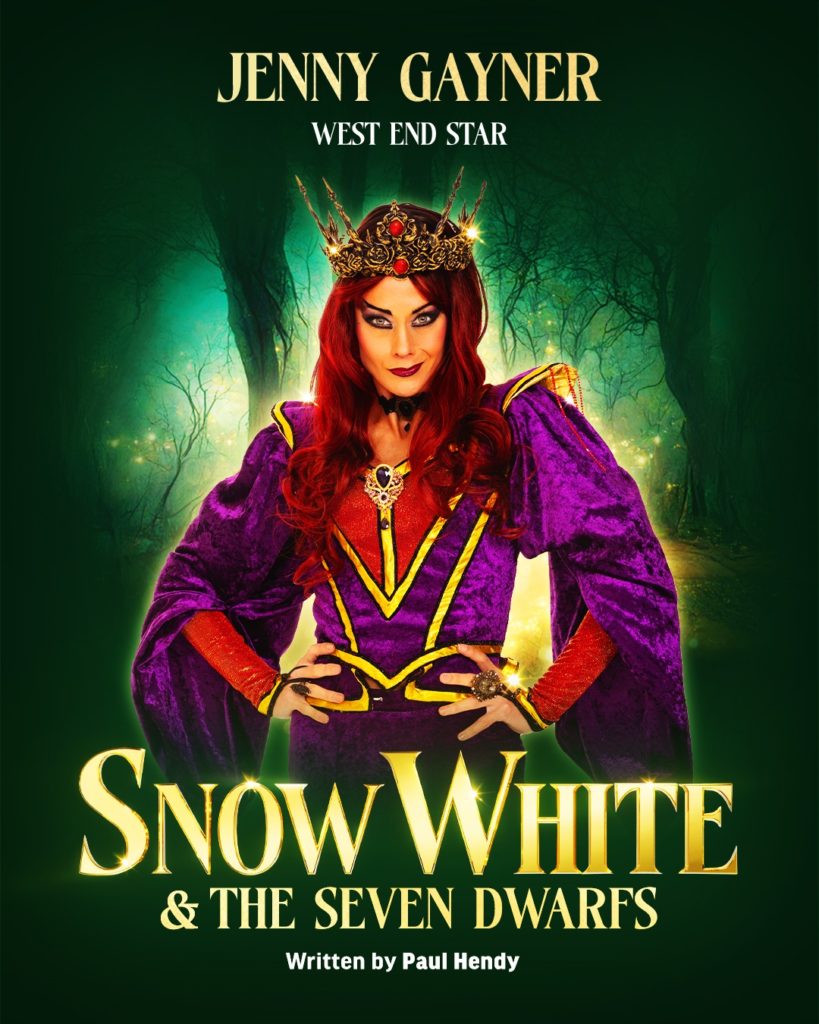
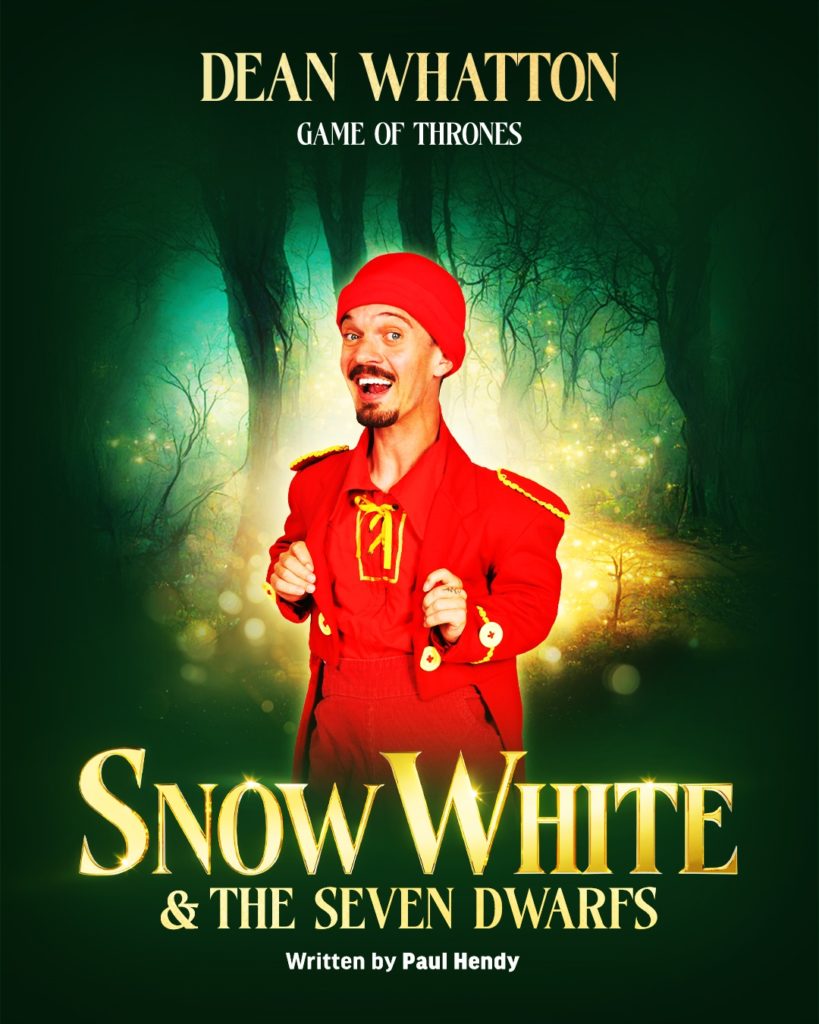
She is referring to West Yorkshire actor and storyteller Robin Simpson, best known in York for his six seasons as the Theatre Royal’s pantomime dame – and already confirmed for next winter’s Snow White & The Seven Dwarfs too.

Simpson’s ability to connect with audiences is “extraordinary”, said director and associate artist John R Wilkinson, an ability needed for both his panto role and now York Theatre Royal, English Touring Theatre and An Tobar and Mull Theatre’s world premiere co-production of Catherine Dyson’s one-act solo play.

In a nutshell, what links the two parts is the requirement for “direct address” to the audience. Here Simpson is playing Sam, an emotional support dog on a Year 9 school trip to a museum (unspecified but the Imperial War Museum in all but name).

Robin Simpson: Storytelling prowess in The Last Picture. Picture: S R Taylor Photography

Simpson is not dressed as a canine, nor does he walk on all fours, but his tabard bears the message “Don’t Pet Me I’m Working” and his roll-neck jumper and trousers evoke the colours of a Golden Retriever or Labrador.

This dog talks, taking the narrator’s role, while evoking the school head of history and a particularly sensitive schoolboy, and taking the audience by the hand as he invites us to imagine being in a theatre in 2026,then the group of school children, on the bus trip and in the museum, and most hauntingly, the victims of the Nazi Holocaust  in each Second World War picture.

Writer Dyson decreed only a few stage instructions, the most significant being that the pictures being described by Sam should never be shown. Instead, the images should be formed in our imagination – one of theatre’s most powerful tools – but such is the impact of Kristallnacht  (the Night of Broken Glass), the children’s exodus from Poland, the Jewish ghettos and the concentration camps that, when combined with Dyson’s descriptions and Simpson’s storytelling prowess, we readily draw on imagery from history books, films and documentaries.

Dyson’s structure is methodical, building momentum all the while. A head count is taken as regularly as Simpson’s Sam asks us how we are feeling after each picture. Simpson’s narrator explains how Sam can sense our emotions, our distress, without having the capacity to understand the play’s greater question: Why?

Director John R Wilkinson in rehearsal with actor Robin Simpson for the world premiere of The Last Picture

Gradually, we see teacher, breakaway 13-year-old pupil and dog all break down in reaction to what they are encountering, all  conveyed so expressively by Simpson. 

We learn too of other children’s reactions: wanting to know when lunch will be; wondering why something that happened so long ago in a different country should matter to them as they head from room to room, one marked Escalation, Deportation, Final Solution. They reach for the mobile phones at the earliest opportunity to flick through the latest posts.

Interestingly, contrary to myth, dogs do see in colour, but not in the same way we see colour, and here Wilkinson and set designer Natasha Jenkins complement Dyson’s descriptions of colour used by Sam to sum up the mood of each scene.

The back wall is covered with a plain cloth (an aid for us to build up a picture); the flooring has a metallic black sheen, framed by Isle of Skye lighting designer Benny Goodman’s strip lighting that changes from white to yellow. When the cloth drops suddenly, the stage is bathed in fiery orange.

Natasha Jenkins’s set design for York Theatre Royal’s production of The Last Picture. Picture: S R Taylor Photography

The minimalism stretches to the props: one table to the side, with a water bottle marked Sam (for Simpson’s vocal lubrication) and five lecture hall/school room chairs that Simpson uses in differing ways, most disturbingly to portray dead children when lain on their side.

Every detail has been thought through to the max, honed in four weeks of rehearsals, a research visit to Holocaust Centre North in Huddersfield, and in Wilkinson’s bond with Dyson over the power of abstract, non-literal  theatre and European drama, as well as in Simpson’s remarkably adroit performance.

The Last Picture had begun life as one of 37 new plays picked from 2,000 entries to mark the500th anniversary of Shakespeare’s First Folio in 2023 with a national playwriting initiative, when Wilkinson directed a rehearsed reading at York Theatre Royal and saw its potential for a full-scale production.

Robin Simpson’s Sam in a rueful moment in The Last Picture. Picture: S R Taylor Photography

This is that production, the full picture of The Last Picture, and what a fitting, moving first show for the Theatre Royal to make for the Studio space since the accursed Covid pandemic.

Add Max Pappenheim’s sound design, a devastating use of Mendelssohn’s music – deemed “degenerate” by the Nazis – and movement direction full of circular rhythm by Alexia Kalogiannidis, and Dyson’s play is unique, wholly original, thoroughly theatrical.

The Last Picture is unmissable, unforgettable, urgently needed theatre at its best.

The Last Picture, York Theatre Royal Studio, until February 14, 7.45pm plus 2pm Wednesday and Saturday matinees, then on tour. Box office: 01904 623568 or yorktheatreroyal.co.uk. The tour will visit HOME Manchester, February 18 to 21; Bristol Old Vic, February 24 to 28; Yvonne Arnaud Theatre, Guildford, March 5 to 7;  Mull Theatre, March 11 and 12; Bunessan Village Hall, March 13; Iona Village Hall, March 14.  

Exhibition launch of the week: Liz Foster, Deep Among The Grasses, Rise@Bluebird Bakery, Acomb, February 12 to April 10

York abstract artists Liz Foster

YORK artist, art tutor and mentor Liz Foster launches her Deep Among The Grasses exhibition at Rise@Bluebird Bakery, Acomb, York from 6pm to 9pm on February 12. All are welcome.

On show until April 10, the eight abstract oil paintings continue Liz’s personal exploration into memory, place and landscape in this first showing of her new series.

The exhibition invites viewers into a world of painterly abstraction full of colour and atmosphere in works that consider Liz’s relationship with the landscape of her childhood, drawing on memory and imagination to create expansive and gestural canvases, depicting into rich, expansive imagined spaces.

Her largest piece, Green Air, takes its title directly from a passage in Virginia Woolf’s 1931 novel The Waves. The fictional children play outside, absorbed in the garden, up to their necks in soil, stems and leaves. As if underwater, they imagine sinking through the green air of the leaves, just touching the ground with the tips of their toes.

Like the fictional characters, Liz’s real memories of being immersed in the space, rather than viewing it from a safe distance, are at the core of what she is exploring.

Drawing on her background and experience of growing up in the flat-lands of East Yorkshire, the works speak to broader themes of changes to the environment and childhood freedoms and isolation.

Liz studied at the Glasgow School of Art and has exhibited works spanning oil painting, watercolour, collage and print at the Royal Academy, Royal West of England Academy, London Art Fair and the Mercer Art Gallery in Harrogate.

Paper Tree, oil on canvas, 100cms x 100cms, by Liz Foster

Here Liz discusses Deep Among The Grasses with CharlesHutchPress.

How did this exhibition come about? You have exhibited at Bluebird Bakery previously…

“Yes, I had a solo show back in 2023, when I was invited  by their curator, artist Jo Walton. I’d  worked with Jo a few years earlier, so I already knew her.

“In 2023, she was looking for new artists who made large-scale work that could fill the space. She asked, and I said ‘yes’. A couple of years later, I was delighted that she asked again!

In combining memory and landscape in your work, do you paint landscapes from memory or from existing material?

“My paintings aren’t direct representations of places, so I don’t use reference materials such as photos. Although I don’t work from sketches either, I do draw a lot, especially plants and trees.

“I like to observe and take notes of how things look or are put together – all of this ‘research’ feeds into my work tangentially, so my painting remains loose and intuitive.”

Your work takes in watercolour, collage and print too, so why paint these particular works in oils? 

“For works on canvas, I nearly always use oils. The buttery texture of the paint, slow drying time and saturated colour allow me to paint in an expansive, gestural and fluid way.

“I’m a process-led painter, which means that I don’t have a fixed image in mind when I begin. It’s very open ended. I add paint, wipe it off, come back the next day and it’s still malleable. I think of oil as a very generous and patient paint.” 

Swoop, oil on canvas, 45cm x 70cm, by Liz Foster

Does a relationship with landscape change from childhood to adulthood?

“Yes, I think so. There is certainly a sense of wonder that we lose as adults. I think also the sense of scale shifts; as children a small garden can feel like a kingdom. We move through it differently, hiding, climbing, digging.

“I remember, as a kid, I used to play in the mud and dig up worms; it was messy and physical. As an adult, I suspect I sit and look more. I love how landscapes are scarred over time with pathways and ancient markings.” 

Your body of work “speaks to broader themes of changes to the environment and childhood freedoms and isolation”. Develop that statement further….

“Growing up in the 1970s and early 1980s, I felt isolated. I lived in a hamlet of industrial farms and distant neighbours. We played outside a lot, cycled everywhere, space felt endless and we had time to get really bored.

“I think the leap from that world to today’s hyper-connected world is astonishing. I’m conscious of how different the world appears to my son, where information and knowledge is only a click away.

“There are advantages, but real damage too. I was watching coverage of the California fires last year and, as the reporter spoke, there were flecks of red embers floating around against the pitch black sky. It was both beautiful and horrifying. “Although my work is abstract, these are the kinds of things I think about while painting.” 

Deep Among The Grasses, 2025, oil and acrylic on canvas, 140cm by 140 cm, by Liz Foster

What made you choose York for your home?

“I don’t think I really chose York; it was never a plan to stay here this long. I did know it quite well already as my dad moved here in the late 1980s and I’d worked here, on and off, in my late teens and early twenties.

“I’ve always enjoyed moving around – and still have itchy feet – but about 20 years ago my then husband and I both started teaching jobs, and York sat at the mid-point between our workplaces, so it made sense.

“Priorities shift and families change, but my son started school (he’s now in sixth form) and he’s been really happy here, so I stayed put.”

What’s in a title, Liz?

“Titles can provide a way in, holding the door open for the viewer to enter the artist’s world. Personally, I like short titles. Ones that give you a flavour of what I’ve been thinking about, but without telling you what to think…it’s a balance.

“Sometimes a title comes while I’m working and just seems to land in my lap. On other occasions, it’s a real struggle to get the right phrase or word; it can feel harder than the actual painting process itself.

“After having decided on a few titles in this series, including Deep Among the Grasses, I went to poetry and literature – my reliable aids – to help me generate the words I needed. In The Waves, Virginia Woolf describes children playing in a garden before school: it  encompasses the magic, wildness and timeless quality that I was reaching for in my own work. Green Air are just two words from a sentence in that book; the right two words.”

For more of Liz’s reflections on creating Green Air, visit https://www.lizfosterart.com/blog/the-story-of-a-painting-green-air.

Green Air, 2025, oil and acrylic on canvas, 150cm x 150cm, by Liz Foster. “Green Air is constructed from four smaller panels, sewn together and then stretched to create one painting,” says Liz. “I’ve used a combination of acrylic and oil paint; both paints hold different qualities that add to the work”